

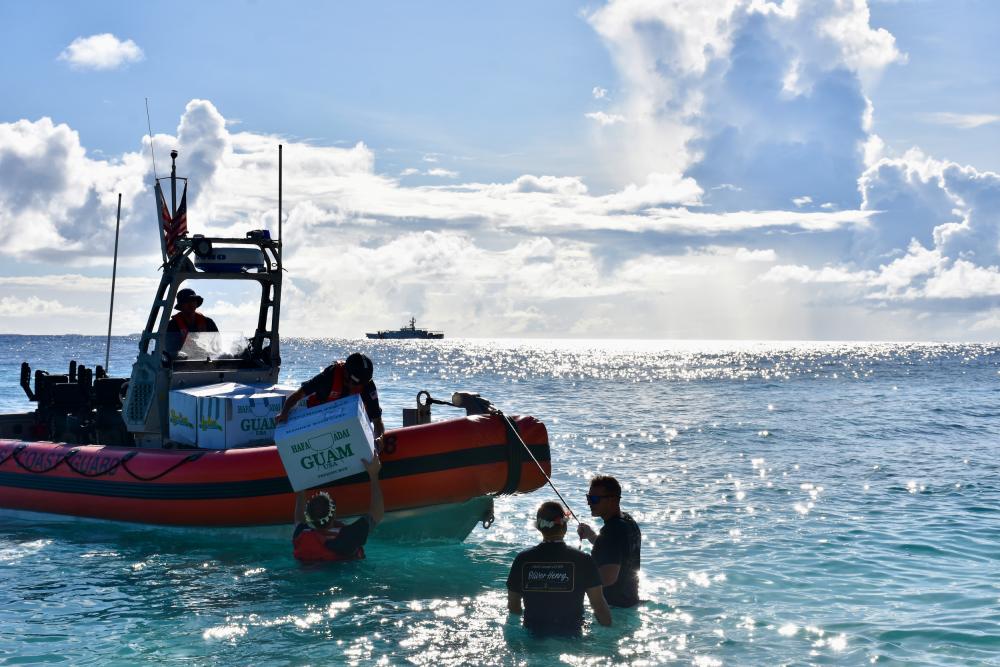
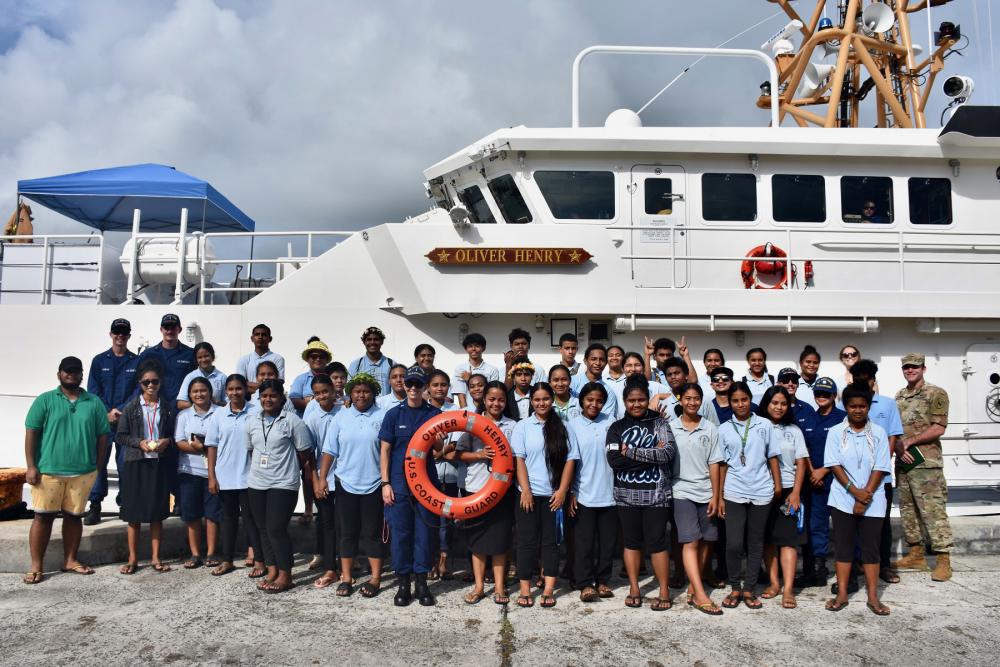
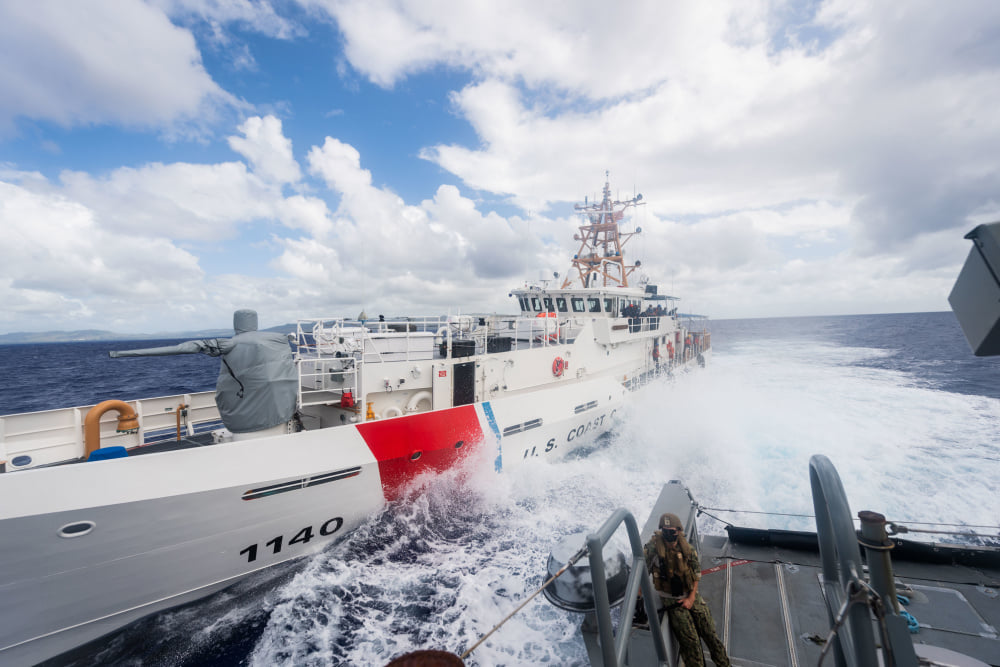
The crew USCGC Oliver Henry (WPC 1140) visit Ulithi Atoll on Oct. 31, 2022, the first time a fast response cutter visited the atoll and delivered 20 boxes of supplies, 50 personal floatation devices, and sporting equipment donated by the cutter crew, the extended U.S. Coast Guard Guam family, Ulithi Falalop Community Action Program, Guam Island Girl Power Foundation, and Ayuda Foundation. Ulithi was a central U.S. staging area during World War II, and home to a U.S. Coast Guard Loran-C communications station from 1944 to 1965 before operations relocated to Yap and ultimately shuttered in 1987. (U.S. Coast Guard photo by Petty Officer 3rd Class Zena Suzuki)
Below is a press release by US Coast Guard Forces Micronesia/Sector Guam, part of District 14. The photo above shows how loaded Oliver Henry was for the trip to Ulithi. I have included a photo of only part of the US Fleet at anchorage in the Ulithi Lagoon in WWII to show how important this location was to us in WWII. Looks like the crew had quite an adventure.
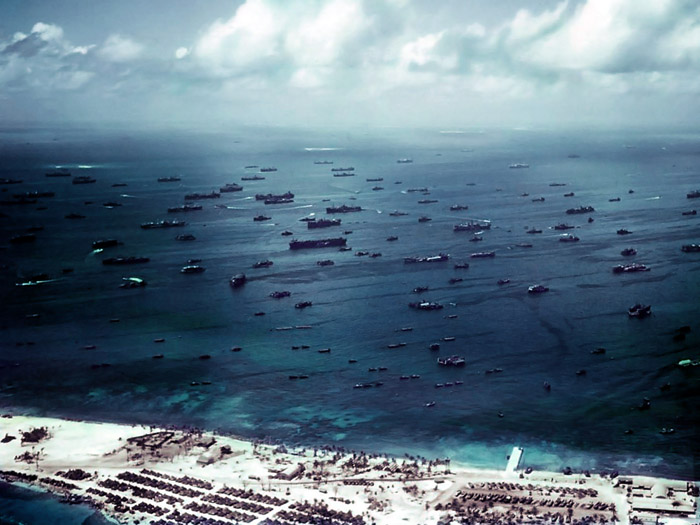
Ulithi Atoll north anchorage and Sorlen Island, late 1944.
| News Release |
U.S. Coast Guard Forces Micronesia / Sector Guam |
U.S. Coast Guard invests time with Oceania partners, initiates Operation Rematau


Editor’s Note: Click on the images above to view more or download high-resolution versions.
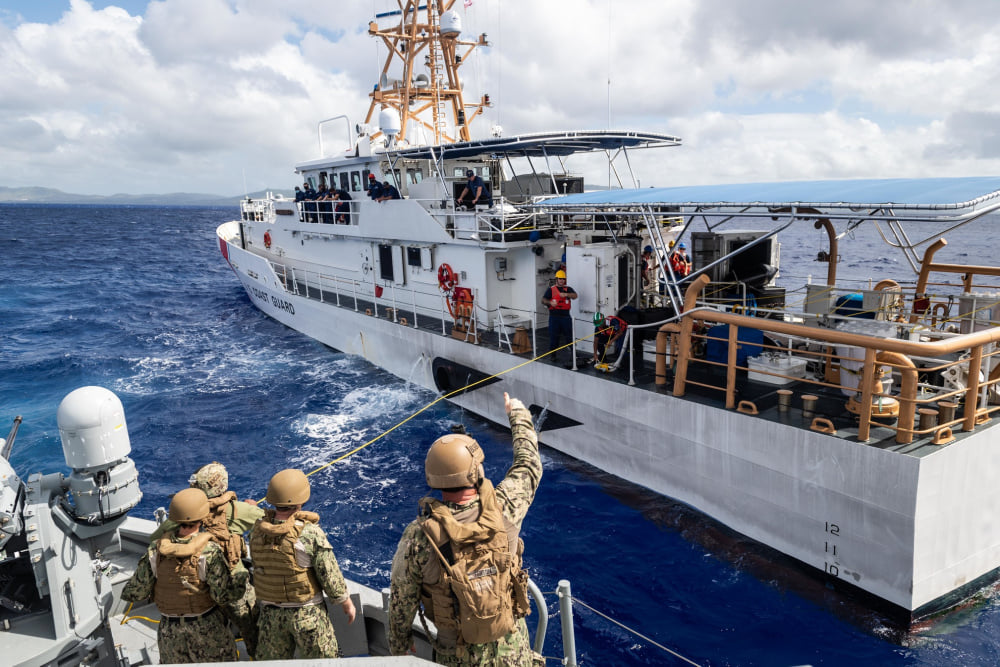
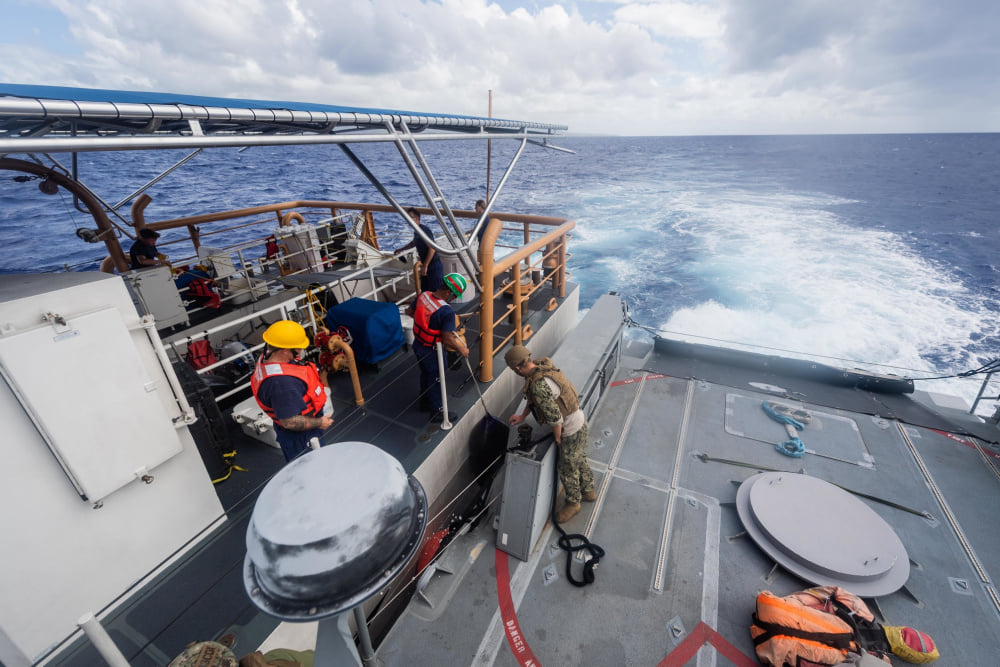
SANTA RITA, Guam — The crew USCGC Oliver Henry (WPC 1140) kicked off Operation Rematau conducting a two-week, nearly 2,000 nautical mile deployment to the high seas and the Federated States of Micronesia countering illegal fishing and strengthening partnerships from Oct. 24 to Nov. 6.
“Operation Rematau is how U.S. Coast Guard Forces Micronesia Sector Guam supports the overarching Coast Guard endeavor Operation Blue Pacific to promote security, safety, sovereignty, and economic prosperity in Oceania,” said Capt. Nick Simmons, commander, CGFMSG. “Rematau means people of the deep sea. It recognizes what our Pacific Island Forum leaders know — securing the future requires long-term vision and a carefully considered regional strategy for the Blue Pacific Continent. It reinforces our commitment to working together to advance Pacific regionalism based on the Blue Pacific narrative, action which supports our national security objectives, bolstering maritime governance and security.”
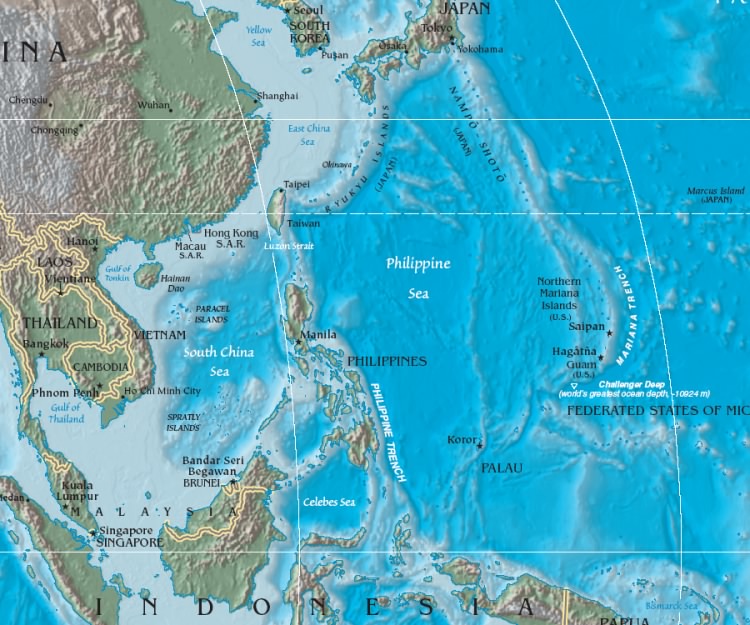
The Oliver Henry crew conducted multiple engagements and patrolled the exclusive economic zone of FSM during the deployment. FSM is a group of more than 600 islands in the North Pacific Ocean spanning a swath of ocean 1,480 nautical miles end to end. It sits about three-quarters of the way from Hawaii to Indonesia, consisting of four states – Pohnpei, Chuuk, Yap, and Kosrae.
“The U.S. Coast Guard, present in the region since before World War II, continues operations in the Federated States of Micronesia, supporting our partners to ensure their sovereignty and resource security,” said Simmons. “I am proud of this team. We consider this a regular patrol for our cutters at Forces Micronesia, but regular still means transiting over 460 nautical miles to reach our partners.”
Oliver Henry’s first stop was Ulithi Atoll, the first time a fast response cutter visited the atoll. Ulithi was a central U.S. staging area during World War II, and home to a U.S. Coast Guard Loran-C communications station from 1944 to 1965 before operations relocated to Yap and ultimately shuttered in 1987. Oliver Henry delivered 20 boxes of supplies to Ulithi, 50 personal floatation devices, and sporting equipment donated by the cutter crew, the extended U.S. Coast Guard Guam family, Ulithi Falalop Community Action Program, Guam Island Girl Power Foundation, and Ayuda Foundation.
Their second stop was Yap. With coordination from the U.S. Department of State and U.S. Army Pacific colleagues, the crew undertook several community engagements and Subject Matter Expert Exchanges, meeting leaders, working with students, and providing tours to interested residents.
“It was a privilege to host Yap’s Council of Pilung – the council of traditional chiefs aboard the cutter,” said Lt. Freddy Hofschneider, commanding officer of Oliver Henry. “The council protects the traditions and customs of the people, and to be welcomed in by them is no small matter. Our visit culminated in our invitation to attend Yap’s first-ever World Coconut Day celebration as honorary guests. It was a whole of community event that included a parade, a large spread of island cuisine, ceremonial dances, and fun activities.”
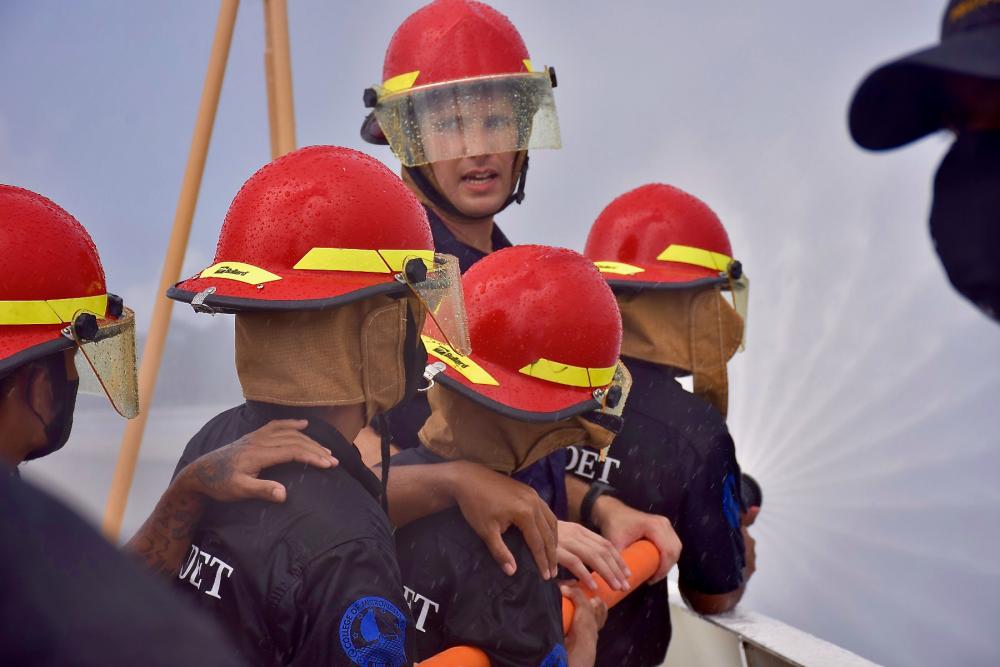
The SMEE took place with 42 cadets and 28 faculty from FSM’s Fisheries and Maritime Institute, which included shipboard familiarization covering seamanship, navigation, law enforcement, damage control, engineering casualty control, and small boat operations. In addition to the knowledge exchange, the Oliver Henry crew presented FSM FMI with 100 PFDs donated by CGFMSG.
“We appreciate Dean Tioti Teburea’s time and support to make this event a success. The cadets truly enjoyed their time with us, and it is always an honor for the crew to showcase shipboard life and Coast Guard operations across the island communities. It was a mutually beneficial event, where we exchanged nautical knowledge and best practices,” said Hofschneider. “Numerous cadets showed strong interest in maritime work and the Coast Guard. We look forward to expanded engagements and underway opportunities with the cadets.”
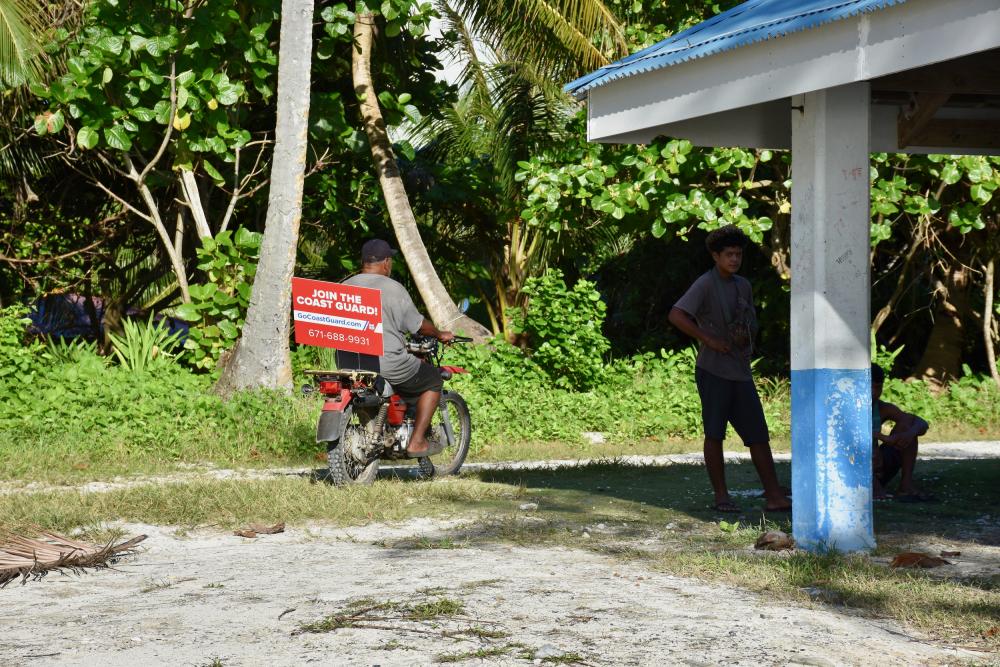
The Oliver Henry team held recruiting events in Yap with visits to two local high schools and speaking with juniors and seniors. The crew provided ship tours to interested students from both schools, with 65 students visiting the cutter.
The U.S. and its Allies are trusted partners in Oceania. Regular regional patrols support the shared goals of Indo-Pacific Command and the Pacific Quadrilateral Defence Coordination Group (Australia, France, New Zealand, and the United States) in support of PIF countries to combat the significant threat of illegal, unregulated, and unreported fishing in their EEZs and improve food security. The scope of U.S. Coast Guard activities helps address maritime security concerns expressed by the PIF in the 2018 Boe Declaration, echoed in the recent U.S.-Pacific Island Country Summit held in Washington, D.C.
“Our Service’s capability and reach were noted during the biannual FSM joint committee meeting last month,” said Simmons. “Sending Oliver Henry now and doing further engagements in the country soon delivers on U.S. commitments to our Blue Pacific partners. Our exchanges enhance good maritime governance and build capacity that continues a generational legacy of positive bilateral relations with FSM.”
The Oliver Henry is the 40th 154-foot Sentinel-class fast response cutter named for Oliver T. Henry, Jr., an enlisted African American Coast Guard member first to break the color barrier of a then-segregated Service. During World War II, Henry served under Lt. Cmdr. Carlton Skinner. The latter became the first civilian Governor of Guam and played a critical role in developing the Organic Act in 1950. Henry blazed a trail for minorities in the U.S. military as he climbed from enlisted ranks while serving on ten Coast Guard cutters, finally retiring as a chief warrant officer in 1966.
The U.S. Coast Guard commissioned Oliver Henry, along with sister ships Myrtle Hazard (WPC 1139) and Frederick Hatch (WPC 1143), in Guam in July 2021. These cutters are a vital part of the U.S. Coast Guard’s enduring regional presence serving the people of the Pacific by conducting 10 of the Service’s 11 statutory missions with a focus on search and rescue, defense readiness, living marine resources protection, and ensuring commerce through marine safety and ports, waterways, and coastal security.
For more U.S. Coast Guard Forces Micronesia/Sector Guam news, visit us on DVIDS or subscribe! You can also visit us on Facebook or Instagram at @USCGForcesMicronesia or Twitter @USCGFMSG.

 Chuck Hill's CG Blog