“Coast Guard Cutter Midgett to return to Honolulu following Operation Blue Pacific patrol” –D14

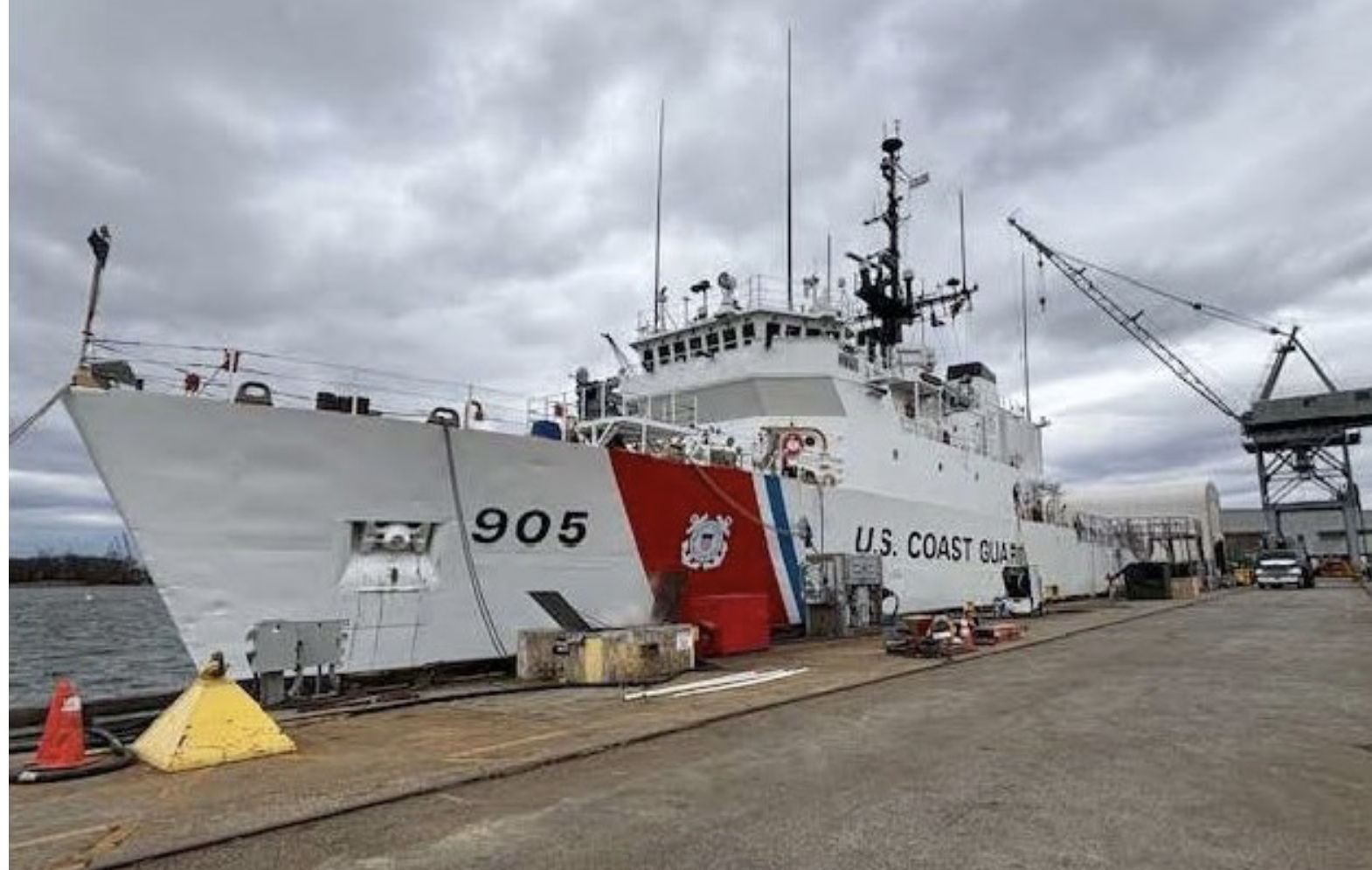
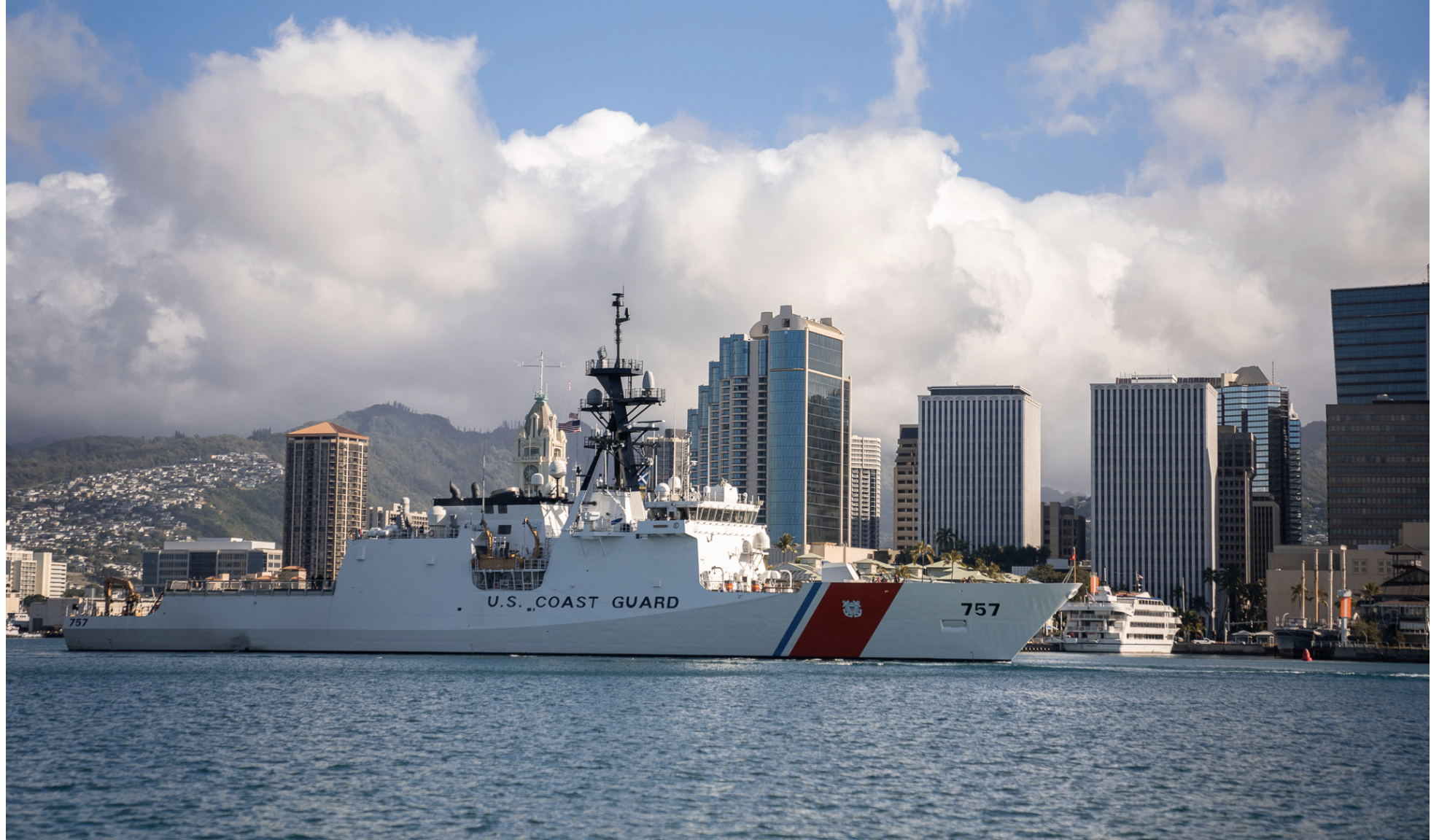
USCGC Midgett (WMSL 757) get underway from Honolulu to conduct sea trials off the coast of Hawaii, Dec. 13, 2024. Midgett is the eighth Legend-class national security cutter, suited to support various missions such as maritime security, law enforcement, and search and rescue. (U.S. Coast Guard photo by Petty Officer 2nd Class Tyler Robertson)

Below is a US Coast Guard District 14 news release.

I like the fact that they included links for previous releases about Midgett’s patrol. Presumably she departed on or about January 15. Really think these types of releases should include departure dates and list of port calls.


March 31, 2025

Media Advisory: Coast Guard Cutter Midgett to return to Honolulu following Operation Blue Pacific patrol

Who: U.S. Coast Guard Capt. Matthew Rooney, commanding officer of Coast Guard Cutter Midgett (WMSL 757) and crew.

What: Coast Guard Cutter Midgett and crew are scheduled to return home following a 76-day Operation Blue Pacific patrol in Oceania. Media are invited to watch the Midgett and crew moor at Sand Island and families reunite with crew members. Media will be able to film the cutter’s return and interview crew members.

Where: Coast Guard Base Honolulu, 400 Sand Island Parkway, Honolulu, HI 96819

When: Tuesday, April 1 at 8 a.m.

HONOLULU – The crew of Coast Guard Cutter Midgett (WMSL 757) is slated to return to Coast Guard Base Honolulu Tuesday.

The Midgett’s crew deployed in support of Operation Blue Pacific, the Coast Guard’s multi-mission campaign that enhances maritime governance and security in Oceania, from January 16 to April 1.

During the patrol, the Midgett crew conducted shiprider operations, key leadership engagements, and community relations activities in Tuvalu, Fiji, New Zealand, Australia, Papua New Guinea, Republic of Marshall Islands, and American Samoa. The crew also conducted astern refueling with Coast Guard Cutter Frederick Hatch (WPC 1143) and escorted the Hatch to dry dock in Honolulu.

For more information about the Midgett’s patrol:

Commissioned in 2019 and homeported in Honolulu, Midgett is the eighth Legend-class National Security Cutter. At 418-feet, these cutters are the largest and most capable in the U.S. Coast Guard fleet. Equipped with advanced technology, they are ideally suited to support a wide range of missions, including maritime security, law enforcement, and search and rescue operations.

For more information follow us on FacebookX, and Instagram.

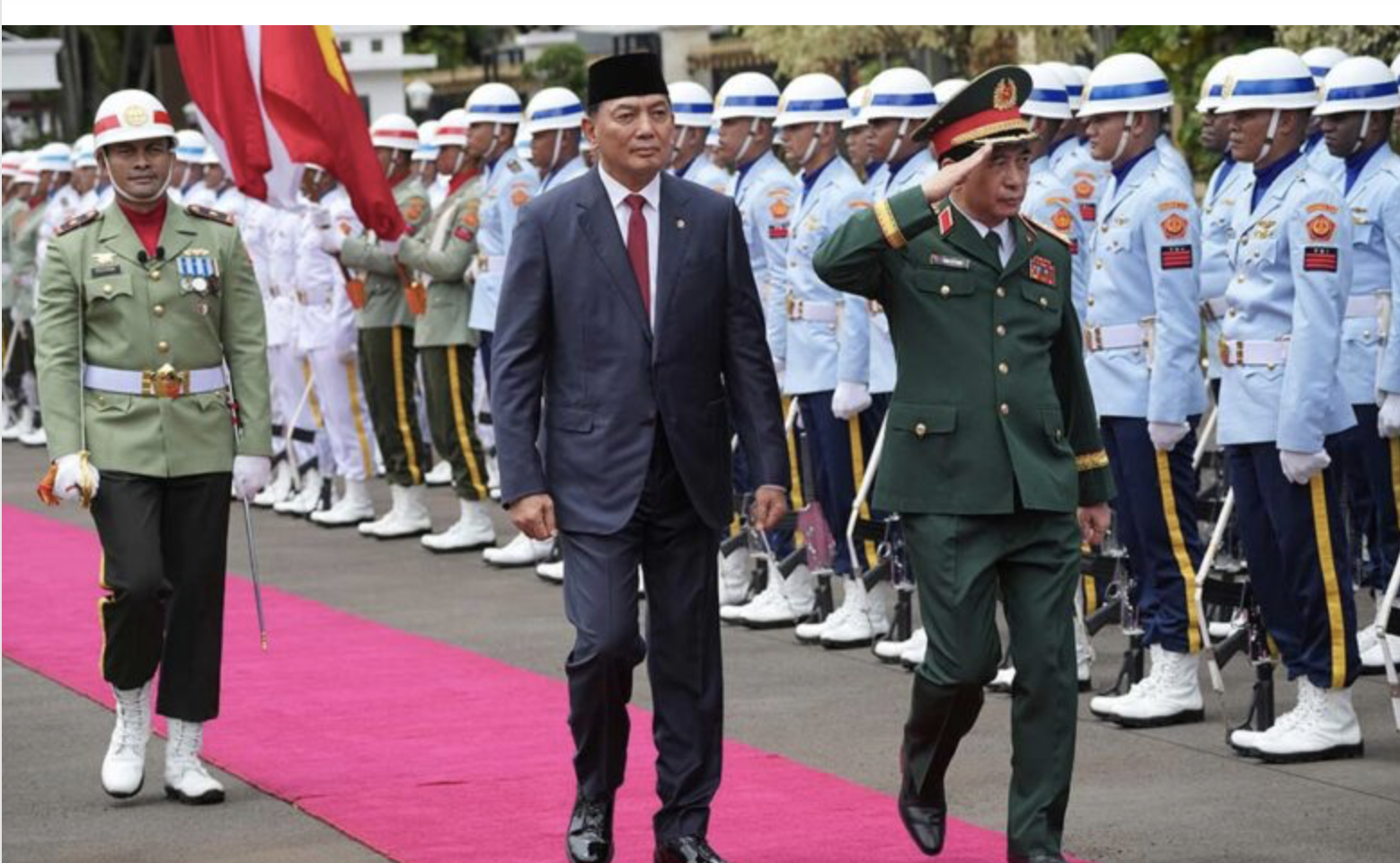
“Indonesia-Vietnam EEZ deal upholds international law, sends message to China” –Indo Pacific Defense Forum

Indonesian Defense Minister Sjafrie Sjamsoeddin, left, and Vietnamese Defense Minister Gen. Phan Van Giang inspect honor guards before their meeting in Jakarta, Indonesia, in March 2025. IMAGE CREDIT: THE ASSOCIATED PRESS

INDOPACOM’s on-line magazine, Indo-Pacific Forum reports,

Indonesian and Vietnamese leaders said their countries expect to formally agree in 2025 on exclusive economic zone (EEZ) boundaries. The move not only settles a long-standing debate on the countries’ overlapping maritime territories, but it also presents a united front to oppose China’s expansive and illegal claims on the South China Sea.

This is the way it should be. All the claimants to the South China Sea should settle their disputes by arbitration or submitting the dispute to the international tribunal set up under UNCLOS. This will expose the Chinese claims as unreasonable and illegal.

Other similar settlements are in the works.

Meanwhile, Philippine and Vietnamese officials have said they are ready to negotiate overlapping claims to the continental shelf in the South China Sea. “Both the Philippines and Vietnam agree that the way to move forward … is for dialogue and consultation,” Jonathan Malaya, the Philippine National Security Council’s assistant director general, said in July 2024, according to The Philippine Star newspaper.

Settling these disputes will also facilitate cooperation in search and rescue, fisheries management, and pollution response.

“Wash the Sky Clean of Drones” –USNI

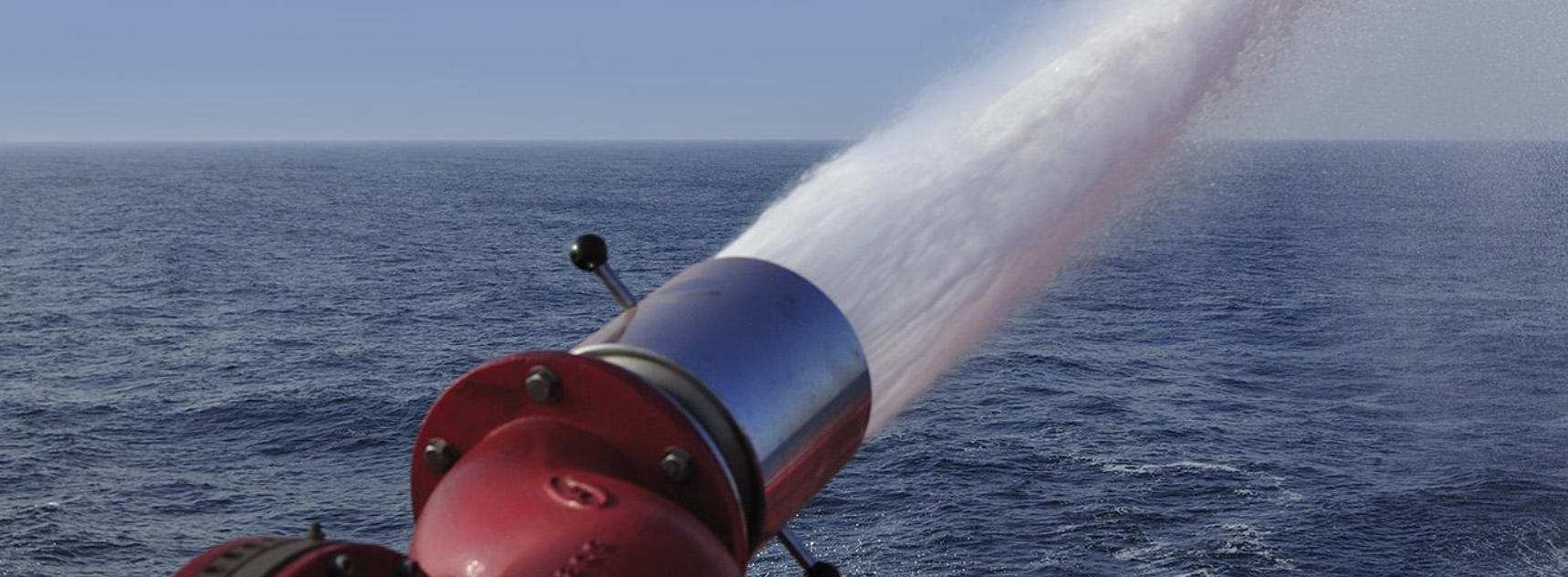
Powerful shipboard firefighting monitors can operate with flow rates in the vicinity of 16,000 gallons per minute, generating nozzle pressures and forces capable of knocking down or destroying drones with seawater. SHUTTERSTOCK

Captain Karl Flynn, U.S. Marine Corps, offers a novel counter to small drones,

It is well established that unmanned aerial systems (UASs) and vehicles (UAVs) are cheap, ubiquitous, and deadly against ground forces. While U.S. Navy ships and aircraft have proven themselves effective at shooting them down in the Red Sea, unmanned aircraft could soon become more dangerous in multiple environments: busy ports, canals, straits, the littorals, and other choke points. The Navy should explore using high-powered water cannons—also known as firefighting monitors—as ship-based counter-UAS (cUAS) weapons.

Now, I don’t think this would work against anything, but the small First Person Video drones that are now extremely common, but that is what the Coast Guard is most likely to encounter. At close range, water under high pressure can be damaging, but it’s not likely to cause collateral damage, like firearms could.

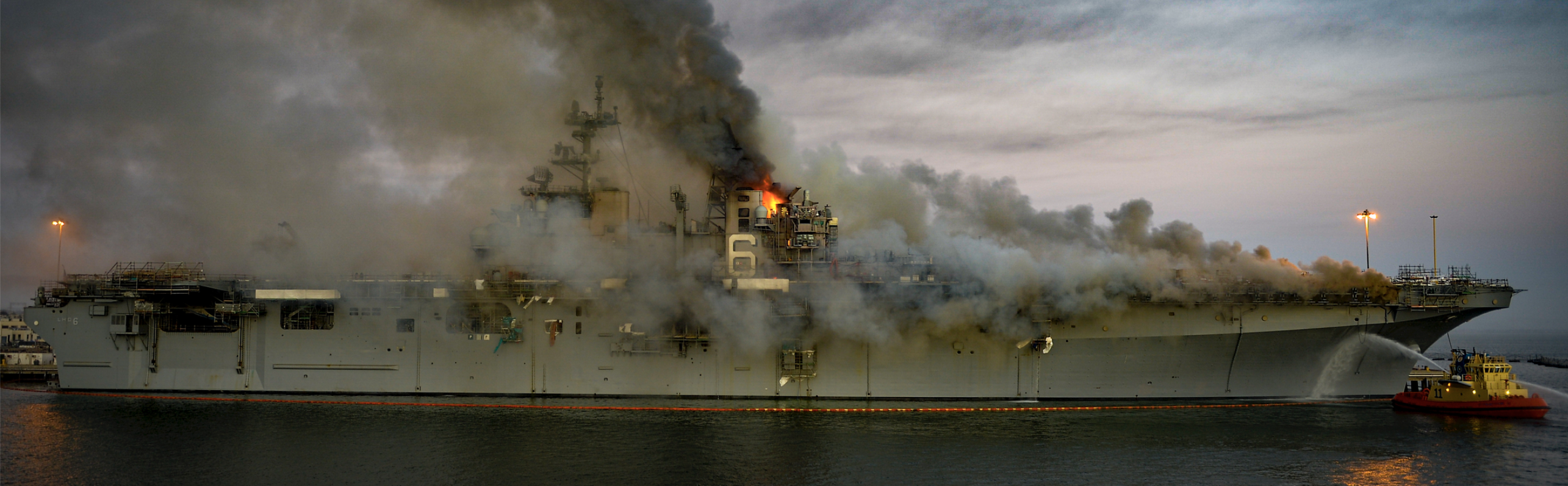
There are, of course, other reasons we might want to have powerful fire monitors.

SAN DIEGO (July 12, 2020) The U.S. Navy amphibious assault ship USS Bonhomme Richard (LHD-6) on fire at Naval Base San Diego, California (USA), on 12 July 2020. On the morning of 12 July, a fire was called away aboard the ship while it was moored pier side at Naval Base San Diego. Base and shipboard firefighters responded to the fire. Bonhomme Richard was going through a maintenance availability, which began in 2018. The fire was extinguished on 16 July.

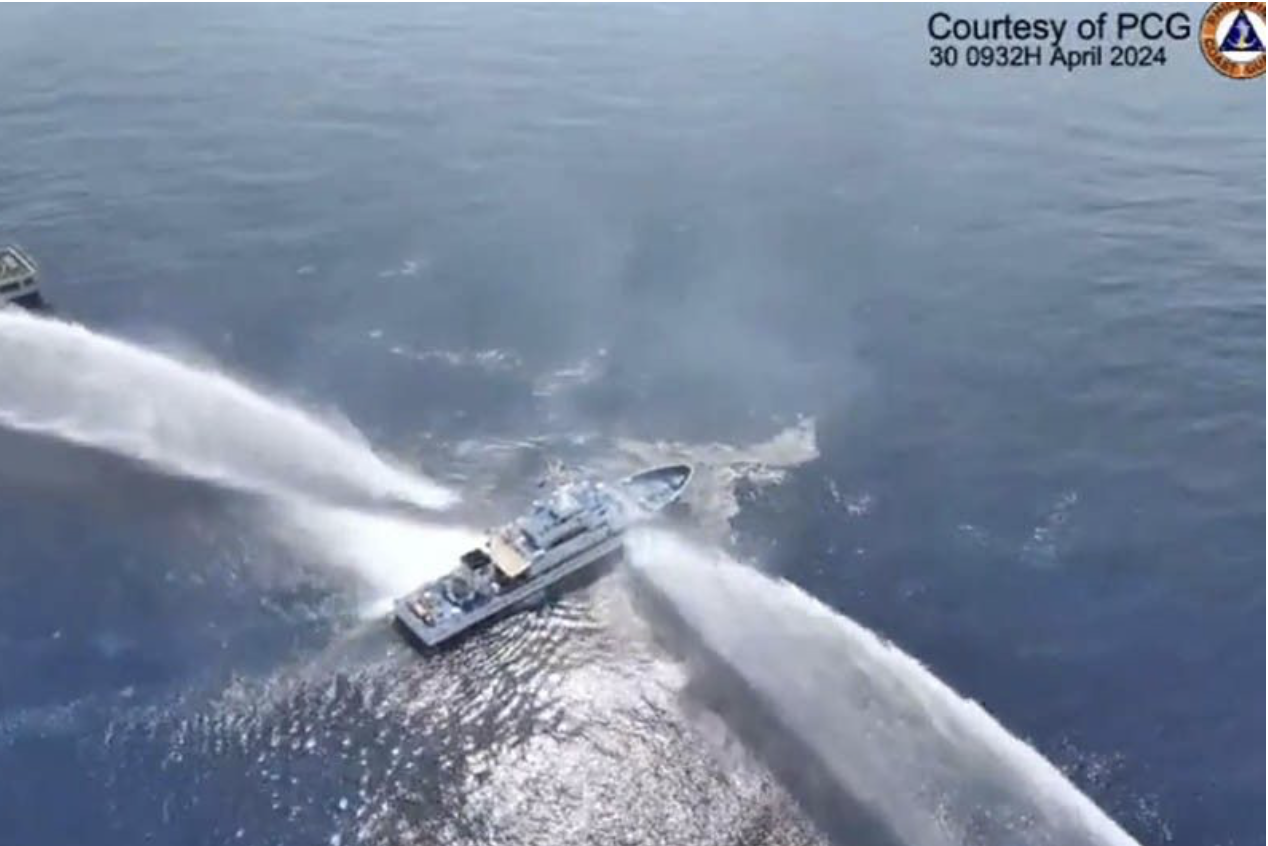
They can also be used in less than lethal confrontations.

Screengrab from Philippine Coast Guard shows a Philippine vessel being water cannoned by the China Coast Guard on April 30, 2024.

They have become a regular feature of Gray Zone activities in the Western Pacific.

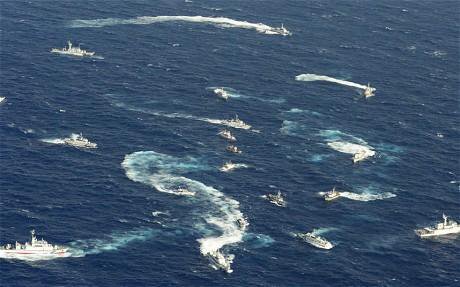
A water cannon battle between Taiwanese and Japanese Coast Guard vessels.

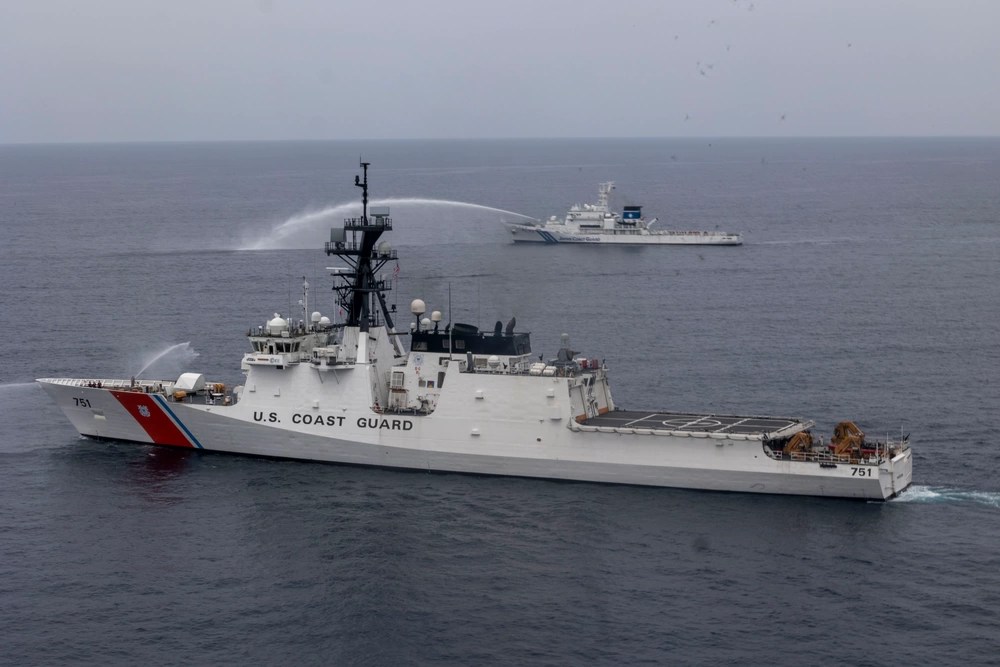
Frankly, what we have now looks kind of wimpy by comparison.

U.S. Coast Guard Cutter Waesche and Japan Coast Guard vessel JCGC Wakasa (PL-93) test their water cannons during a trilateral search and rescue exercise in the East Sea, June 6, 2024. Coast Guardsmen from Japan, Republic of Korea and the United States used the trilateral training as an opportunity to rehearse cohesion between the nations when operating together. The U.S. Coast Guard has operated in the Indo-Pacific for more than 150 years, and the service is increasing efforts through targeted patrols with our National Security Cutters, Fast Response Cutters and other activities in support of Coast Guard missions to enhance our partnership. (U.S. Marine Corps photo by Cpl. Elijah Murphy)

“Coast Guard Cutter Spencer completes service life extension program” –CG-9

Coast Guard Cutter Spencer, at Coast Guard Yard in Baltimore, prepares for sea trials at the conclusion of its service life extension work. U.S. Coast Guard photo.

Below is a news release from the Acquisition Directorate (CG-9).

As can be seen in the accompanying photo, the 76mm Mk75 gun and Mk92 fire control systems have been removed, replaced by a 25mm Mk38, presumably a Mod3. The AN/SLQ-32 antennas remain. There is now, apparently, no multi-function/air search radar capability.

All six ships chosen for SLEP were “B Class” 270s built by Robert Derecktor Shipyard. Unlike the four “A Class” ships they are able to operate MH-60 helicopters.

USCGC Spencer had been home-ported in Portsmouth VA, but I suspect she like USCGC Harriett Lane will be transferred to the Pacific Area.


Coast Guard Cutter Spencer completes service life extension program

Coast Guard Cutter Spencer, a 270-foot Famous-class medium endurance cutter, departed Coast Guard Yard in Baltimore on March 8, 2025, having successfully completed its 20-month service life extension program (SLEP).

Managed by the Coast Guard’s In-Service Vessel Sustainment (ISVS) Program, the SLEP ensures mission readiness, improves reliability and reduces maintenance costs of the Coast Guard’s operational fleet. The program extends the service life of legacy cutters by replacing obsolete, unsupportable or maintenance-intensive systems, enabling the cutter to continue meeting mission demands in the most cost-effective manner.

The SLEP for the medium endurance cutters includes updates and replacements of electrical power generation and distribution systems, main diesel propulsion engines, and gun weapon systems. Spencer is the first of six medium endurance cutters scheduled to receive all major system overhauls including new main propulsion engines. This intensive work, which began in July 2023, will allow the cutter to operate for an additional decade, sustaining operational capability as the Coast Guard transitions to the offshore patrol cutter (OPC) fleet.

“These cutters have been essential for Coast Guard operations for over four decades, conducting missions from drug interdiction and fisheries enforcement to search and rescue,” said Kenneth King, ISVS program manager. “Investing in their sustainment is critical to ensuring these cutters remain operationally relevant and capable of executing the service’s most demanding missions until the next generation – the OPCs – are fully deployed.”

Five additional medium endurance cutters – Legare, Campbell, Forward, Escanaba and Tahoma – will complete SLEPs by 2030. Seneca and Harriet Lane previously served as prototypes for the electrical and structural work but did not receive new engines. Harriet Lane also served as the prototype for the MK38 gun weapon system.

For more information: In-Service Vessel Sustainment Program page and Offshore Patrol Cutter Program page

“U.S. Coast Guard cutter arrives in Papua New Guinea, embarks law enforcement officers to conduct joint maritime patrol” –News Release

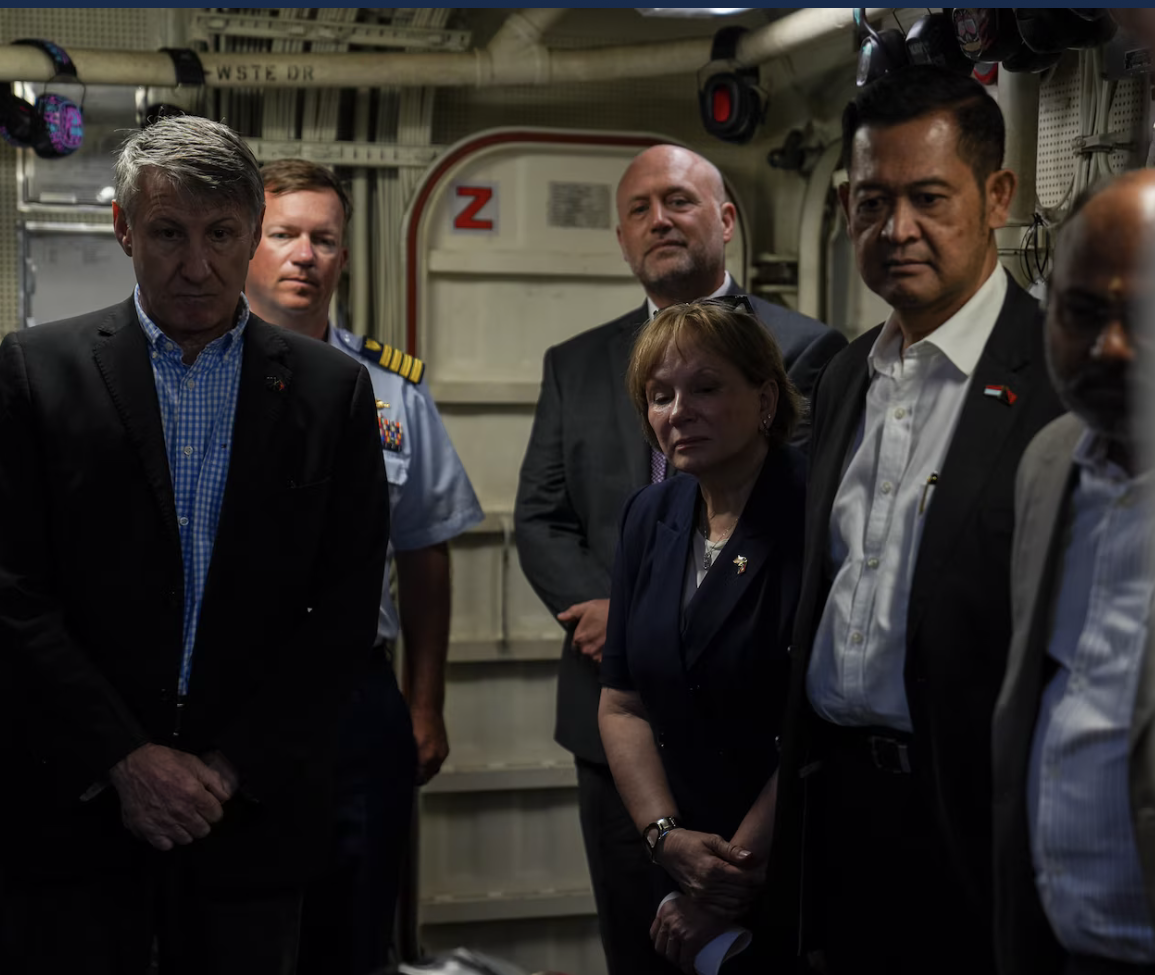
Officials from multiple agencies stand in the engine control room of the Coast Guard Cutter Midgett (WMSL 757) in Papua New Guinea Mar. 6, 2025. Papua New Guinea lies in the heart of key shipping routes, where freedom of navigation for the transport of global goods and fisheries and deep-sea resources abounds. The Coast Guard and Papua New Guinea collaborate to mitigate shared maritime challenges and threats, promoting regional security and stability within Oceania. (U.S. Coast Guard photo by Petty Officer 3rd Class Jennifer Nilson)

Below is a Coast Guard news release.

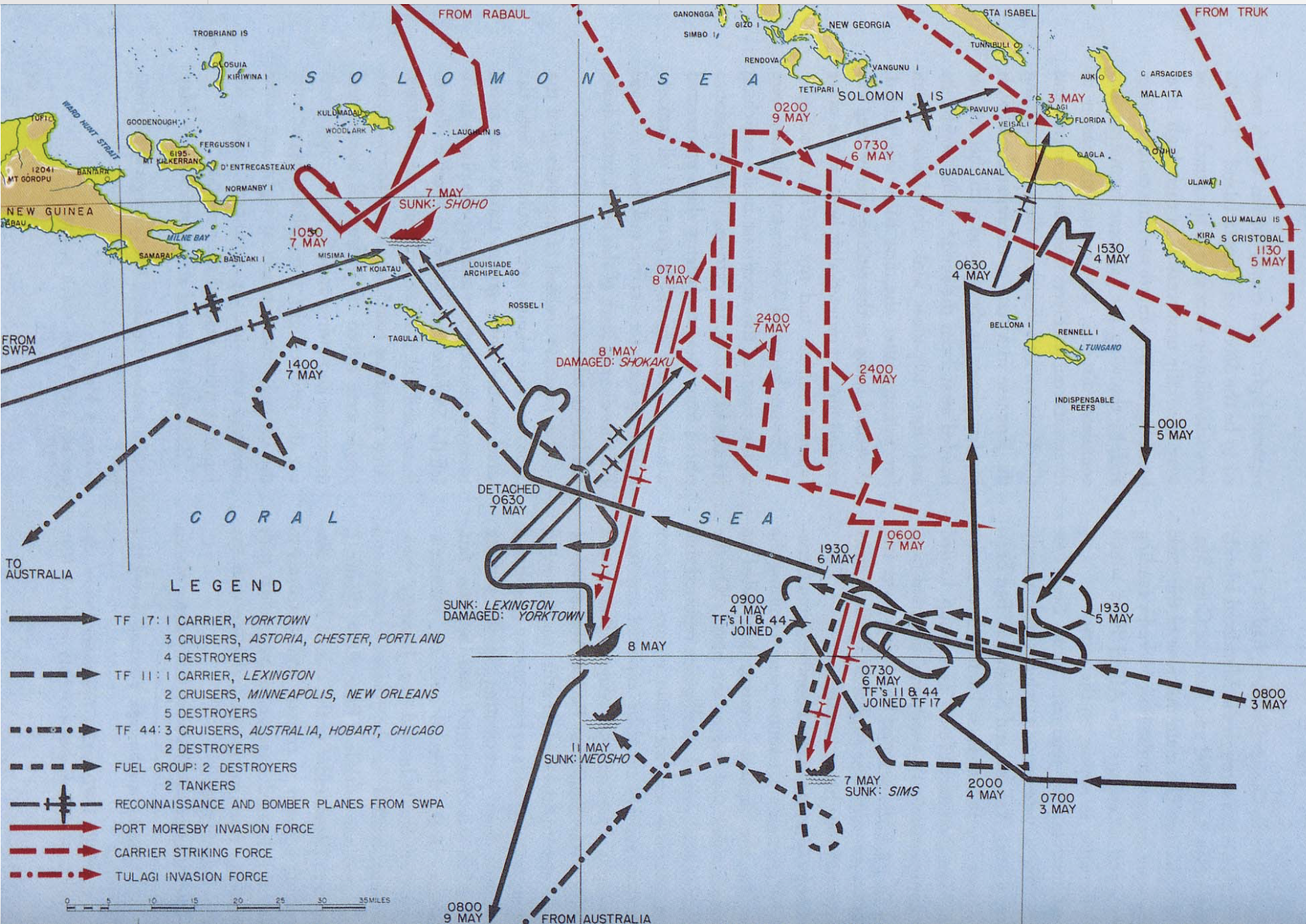
For those with an interest in World War II history. The Battle of the Coral Sea turned back a Japanese force that had planned to attack Port Moresby on the East end of New Guinea.

Battle of Coral Sea. United States Army Center of Military History. The Campaigns of MacArthur in the Pacific, Volume I. Reports of General MacArthur., p. 48, Plate 14. Port Moresby, NewGuinea is in the upper left; Guadalcanal, Tulagi and other Solomon Islands in the upper right; Australia to the South and West

March 12, 2025

U.S. Coast Guard cutter arrives in Papua New Guinea, embarks law enforcement officers to conduct joint maritime patrol

PORT MORESBY, Papua New Guinea — At the invitation of the Papua New Guinea government, the U.S. Coast Guard Cutter Midgett (WMSL 757) arrived in Port Moresby, Thursday, to embark Papua New Guinean law enforcement officers. This visit directly supports Papua New Guinea’s leadership in the Pacific Islands and its commitment to maritime security, specifically in combatting illegal, unreported, and unregulated fishing.

Midgett’s presence reinforces the U.S. Coast Guard’s commitment to deeper relations with Pacific Island nations and regional stability. This collaborative effort marks the first time a national security cutter, the U.S. Coast Guard’s most capable law enforcement cutter, will conduct bilateral maritime law enforcement operations in Papua New Guinea’s Exclusive Economic Zone (EEZ), under the existing bilateral agreement that was singed in May 2023.

This joint patrol will represent a tangible demonstration of the bilateral agreement between the United States and Papua New Guinea, strengthening maritime governance within the Pacific and deterring illegal activities within Papua New Guinea’s EEZ to promote the sustainable use of marine resources.

Midgett, commissioned in 2019 and homeported in Honolulu, is the eighth Legend-class national security cutter. These 418-foot vessels are equipped with advanced technology and a range of capabilities, making them ideally suited to support a wide range of missions, including maritime security, law enforcement, and search and rescue operations. Midgett’s deployment to Oceania highlights the United States’ enduring commitment to promoting a peaceful, secure, prosperous, and resilient Pacific Islands region.

USCGC Midgett Visits Australia

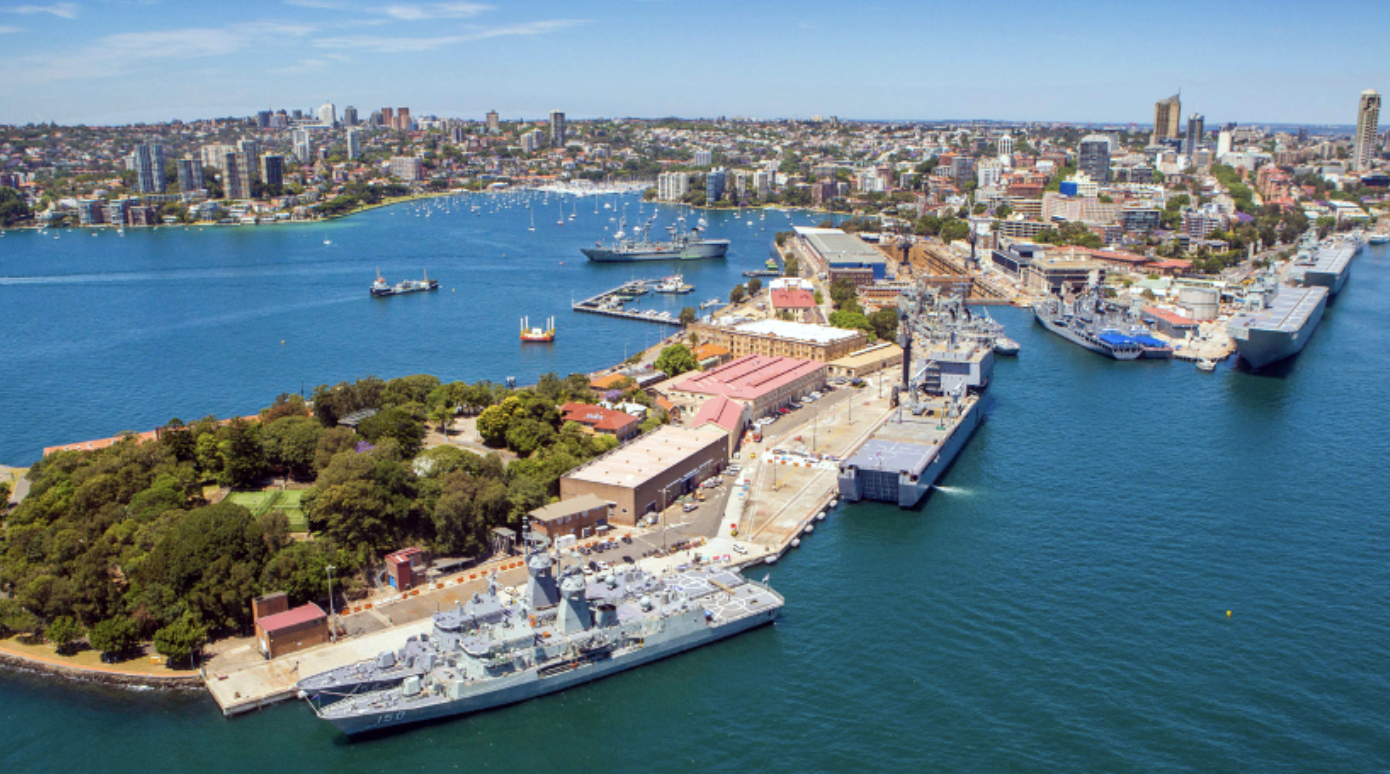
Aerial view of His Majesty’s Australian Station, HMAS Kuttabul. Note the very large dry dock between the island and the city. I was not able to identify all the Australian Navy ships in the photo, but there appear to be eleven Visible in the photo are both Canberra class helicopter dock landing ships (LHD, uppep right); two ANZAC class frigates (FFG, foreground), HMAS Choules (L100, center fight). The photo was probably taken between 2015 and 2018–the ship anchored in the center appears to be HMAS Tobruk which was scuttled in 2018.

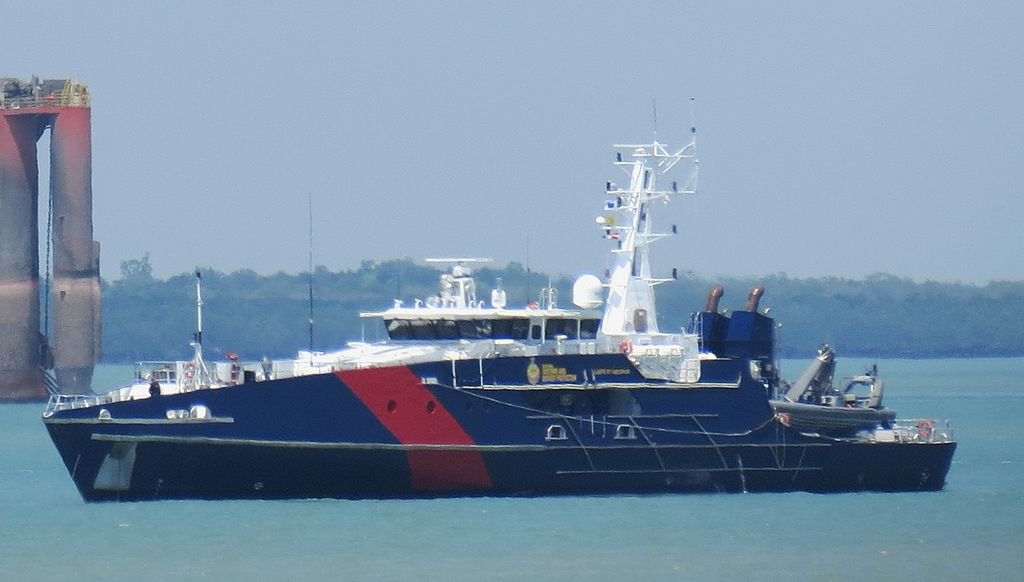
The Australian Customs patrol boat ACV Cape St George on Darwin Harbour in 2014, Photo by Ken Hodge

Below is a news release. The linked news release includes several photos of the people involved. Midgett was hosted by the Australian Navy but also interacted with the Marine Unit of the Australian Border Force, which performs some Coast Guard type missions. The Border Force was formed in 2015, the Marine Unit having come from their Customs service. Currently the Marine Unit includes one large former Offshore Support Vessel and eleven patrol craft.

There are suggestions that they may be given the Arafura class OPVs being built for the Australian Navy.

The Australian Border Force also has an aviation Coast Guard component operating a fleet of ten privately contracted Dash 8 aircraft which operate alongside the Royal Australian Air Force (RAAF) in the Maritime Border Command (a joint Border Force, Navy, and Air Force command under a Navy flag officer–Chuck).

Notably the Marine Unit of the Australian Border Force is not a SAR agency, but given the nature of their assets and patrols, they will be doing some SAR, just as the Revenue Cutter service did.

It seems probable the Marine Unit of The Australian Border Force will evolve in the direction of the USCG model.


March 4, 2025

U.S. Coast Guard cutter visits Australia, furthers collaboration and maritime security

SYDNEY – The U.S. Coast Guard Cutter Midgett (WMSL 757) recently completed a port call in Sydney, Feb. 25, 2025, conducting several engagements with Australian partners that strengthened ties and furthered collaborative maritime security throughout Oceania. Reflecting the spirit of the Pacific Quadrilateral Defense Coordinating Group (Australia, India, Japan, and the US–Chuck), the U.S. Coast Guard continues its vital collaboration with Australian law enforcement to identify maritime vulnerabilities and cooperate on solutions that reduce risks to safety, health, and security throughout the region.

While in Sydney, Midgett hosted a law enforcement partnership event with Australian and United States stakeholders. Participants, including U.S. Consul General in Sydney Christine Elder, U.S. Coast Guard Attaché Capt. Amanda Ramassini, representatives from U.S. Homeland Security Investigations, U.S. Secret Service, and Australian law enforcement and maritime security partners, joined the crew for breakfast and roundtable discussions in the wardroom, followed by a tour of the cutter. Law enforcement partners received a briefing on Midgett’s capabilities and its current mission in the Pacific. Highlighting the close bond between the two nations and their agencies, Midgett’s Lt. Jake Behne recently deployed to the Torres Strait as an observer with the Australian Border Force (ABF) Fast Response Boat unit, and now an ABF Officer in Charge is set to sail aboard Midgett as an observer.

Separately, Sydney media outlets were invited aboard with the assistance of U.S. Consulate Sydney; the subsequent reporting on partnerships reached more than a million Australians.

Beyond official engagements, the crew of Midgett embraced the opportunity to experience Australian culture and history during a visit to the Australian National Maritime Museum.

“This visit to Sydney was more than just a port call; it was a chance to reinforce the vital link between the U.S. Coast Guard and our Australian counterparts,” said Capt. Matthew Rooney, Midgett’s commanding officer. “The support we received from HMAS Kuttabul was first rate and the warm welcome from our Royal Australian Navy shipmates made our time here truly memorable.”

The United States’ alliance with Australia remains a cornerstone of peace and stability in the Indo-Pacific region. The U.S. Coast Guard looks forward to continuing partnerships with Australia’s maritime and border forces to ensure a connected, prosperous, secure, and resilient Pacific.

Midgett, commissioned in 2019 and homeported in Honolulu, is the eighth Legend-class national security cutter. These 418-foot vessels are equipped with advanced technology, making them ideally suited to support a wide range of missions, including maritime security, law enforcement, and search and rescue operations.

Coast Guard teams deploy to American Samoa to patrol border, conduct boardings” –News Release

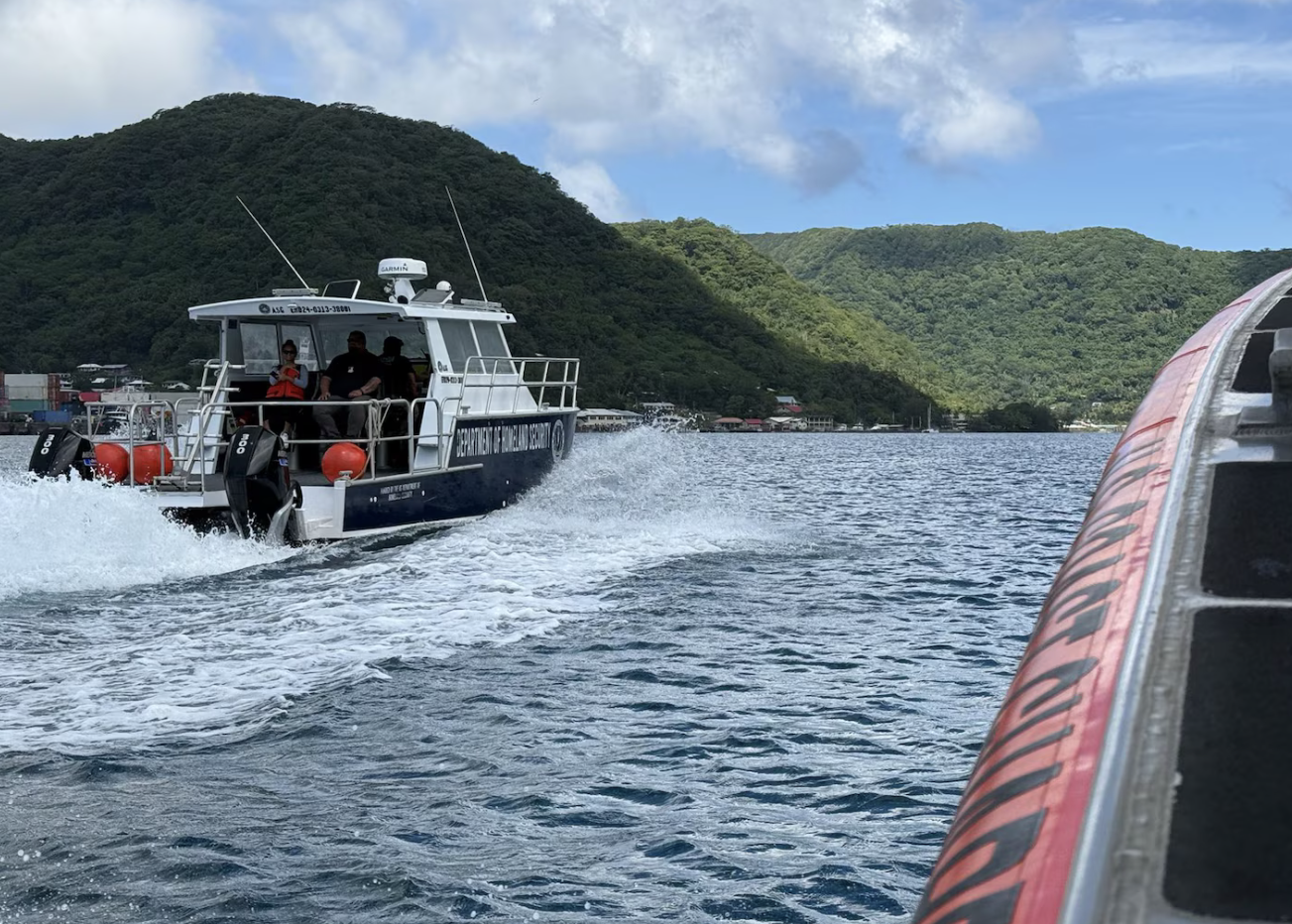
A boat crew assigned to U.S. Coast Guard Maritime Safety and Security Team Honolulu gets underway alongside an American Samoa Department of Homeland Security boat crew to conduct search and rescue training offshore Pago Pago, American Samoa, Feb. 24, 2025. MSST Honolulu and Coast Guard Sector Honolulu personnel deployed to American Samoa to train alongside agency partners, patrol the U.S. maritime border, and enforce U.S. laws and regulations. (U.S. Coast Guard photo, courtesy Maritime Safety and Security Team Honolulu)

Below is a District 14 news release. Link has short video of boats underway and a additional photo.

The long term answer to providing Coast Guard services to this part of the United States is to have a Coast Guard base in American Samoa. There are indications this will happen. I think we will ultimately base three Webber class WPCs there.


March 4, 2025

Coast Guard teams deploy to American Samoa to patrol border, conduct boardings

HONOLULU – Coast Guard Maritime Safety and Security Team Honolulu personnel and a boarding team from Coast Guard Sector Honolulu deployed to American Samoa from Feb. 10-27 to protect the U.S. maritime border, enforce U.S. laws and regulations, enhance maritime domain awareness and coordinate with agency partners.

During the deployment, team members boarded six U.S.-flagged commercial fishing vessels, six foreign-flagged commercial fishing vessels, and five recreational boating safety boardings, resulting in the termination of one recreational voyage due to deficient safety equipment.

Crews patrolled the U.S. territorial maritime border and the U.S. Exclusive Economic Zone surrounding American Samoa, which extends up to 200 miles offshore.

Additionally, MSST Honolulu and Sector Honolulu personnel conducted over 26 hours of training with the American Samoa Department of Homeland Security and American Samoa Marine Patrol, a law enforcement unit within the American Samoa Department of Marine and Wildlife Resources. Training primarily focused on boarding procedures and weapons proficiency.

“Working closely with partners in American Samoa heightens our awareness of any illicit activities in the area and hones our combined ability to safeguard the maritime border,” said Lt. Cmdr. Nic Iannarone, enforcement division chief, Sector Honolulu. “Teamwork is a key component of taking a stand against threats to our ports and waterways.”

In accordance with the President’s Executive Orders and direction from Adm. Kevin Lunday, the acting commandant of the Coast Guard, the Coast Guard is increasing cutter patrols and operations in American Samoa. The Coast Guard is surging assets to increase presence in key areas to protect America’s maritime borders, territorial integrity, and sovereignty.

Maritime Safety and Security Team Honolulu is a specialized unit of the Coast Guard dedicated to enhancing maritime security and safety in the Pacific region. With a highly trained personnel team equipped to conduct law enforcement operations, port security assessments, and emergency response activities, MSST Honolulu collaborates closely with local, state, and federal agencies to safeguard vital maritime infrastructure and natural resources.

Sector Honolulu serves a broad expanse of the Pacific that includes 200 nautical miles surrounding the State of Hawaii, the islands and atolls of the Hawaiian Island Chain and American Samoa. The sector’s primary missions include ensuring maritime security, conducting search and rescue operations, enforcing environmental protection laws, and facilitating law enforcement activities.

“Strengthening Pacific Security: U.S. Shiprider Agreements” –Real Clear Defense

Following efforts with Kiribati partners, the USCGC Oliver Henry (WPC 1140) crew transit in the Republic of Marshall Islands Exclusive Economic Zone during the next leg of their expeditionary patrol on Feb. 24, 2024. Underway in support of Operation Blue Pacific, the cutter crew showcased the effectiveness of the U.S. and RMI maritime bilateral agreement, conducting a shared patrol with shipriders emphasizing collaborative efforts in maritime safety, security, and stewardship in terms of resource protection. (U.S. Coast Guard photo)

Real Clear Defense provides an overview of the nature and importance of Coast Guard ship rider agreements with Pacific Island nations.

U.S. Coast Guard Forces Micronesia Sector Guam Commander Capt. Nicholas R. Simmons and the Honorable Joses R. Gallen, Secretary of Justice, Federated States of Micronesia, signed an expanded shiprider agreement allowing remote coordination of authorities, the first of its kind aboard the USCGC Myrtle Hazard (WPC 1139) in Guam, on Oct. 13, 2022. The agreement will enable to U.S to act on behalf of the FSM to combat illicit maritime activity and to strengthen international security operations. (U.S. Coast Guard photo by Chief Warrant Officer Sara Muir)

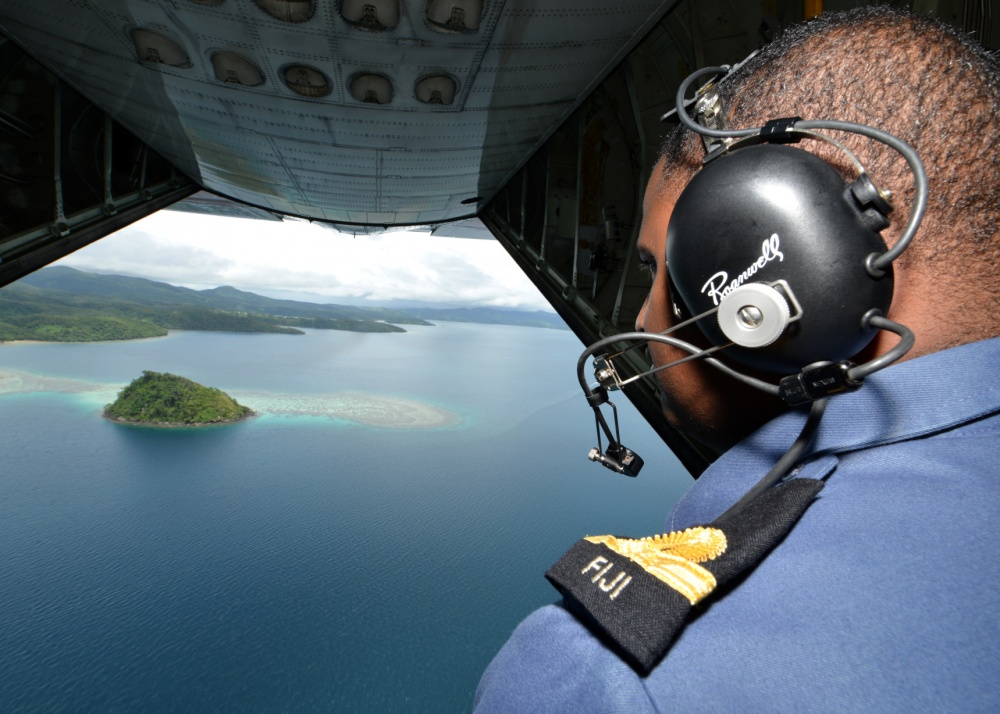
Fijian navy Sub-Lt. Opeti Enesi looks out from an Air Station Barbers Point HC-130 Hercules over the Fijian Islands, Dec. 8, 2018. The Hercules aircrew was providing support for a Fijian navy patrol boat during law enforcement operations. (U.S. Coast Guard photo by Petty Officer 3rd Class Matthew West/Released)

After China invades Taiwan

Real Clear Defense offers what I believe is an insightful article about the aftermath of a Chinese invasion of Taiwan, “China and Taiwan: Beware the Law of Unintended Consequences.

It also suggests that the invasion is likely in the near future.

For the Coast Guard, the one thing I want to point out is that there will be a blockade.

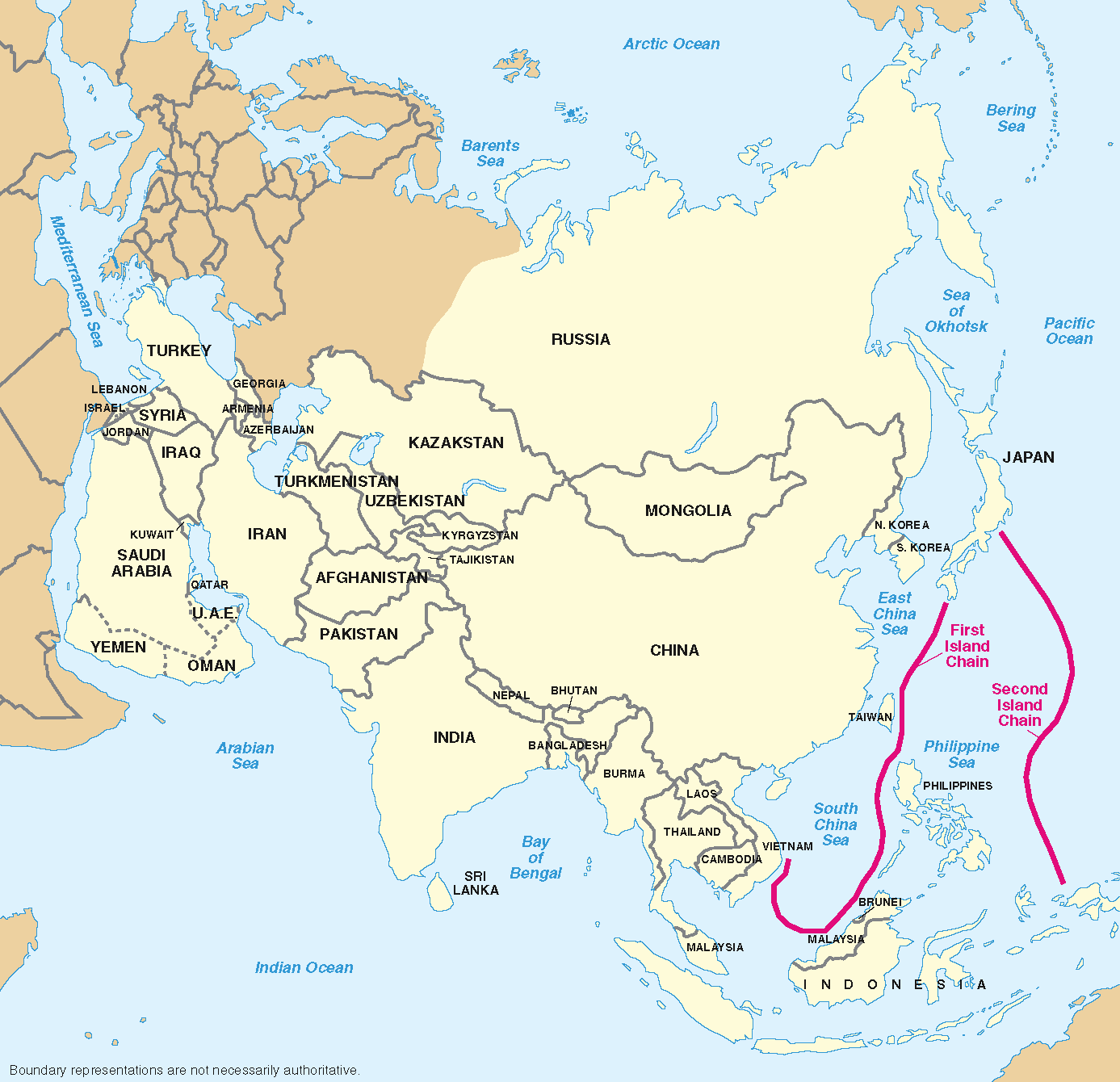
Geographic Boundaries of the First and Second Island Chains. Image:China Report 2006.pdf. DOD.

The blockade will not be a close one like Markettime, it will be executed in the Tsushima Strait between Japan and Korea and outside the “first island chain.”

It would need to be discriminating in that ships with cargos for China’s neighbors would have to be allowed through, if those cargos were not ultimately intended for China. The US could not simply use Air Power to sink anything that crosses into the East or South China Sea.

Undoubtably the Coast Guard will have a role; certainly with existing special teams and likely a need to form more and with FRCs and larger cutters to host and deploy boarding teams and custody crews. Even buoy tenders might be used in this role.

The CG forces will need to be able to forcibly stop even the largest ships, just as they need this capability to address the peacetime terrorist threat.

CG forces might be able to call in DOD assets to provide the necessary persuasion, but those resources might be in demand elsewhere. Larger cutters with their current armament of 57 and 76mm guns might be sufficient. Merchant ship crews are less likely to be willing to die to reach their objectives than a terrorist crew would be, but it would be best if cutters had organic weapons that were more convincing than the 25mm.

USINDOPACOM Exercises & Engagements

INDOPACOM Defense Forum Special Features has a post that includes the map above that shows where “Exercise, Joint Combined Exchange or Training Teams” are located.

On the linked post, you can hover over the dots, and it will list activities in that location. Coast Guard is associated with dots identified as Solomon Islands, Federated States of Micronesia (FSM), Guam, Palau, Papua New Guinea, and Australia. It should have included the Marshall Islands as well. All these are also associated with Operation Blue Pacific.

Federated States of Micronesia, the Marshall Islands, and Palau are Compact of Free Association states. Guam and the Northern Mariana Islands are US territory.

The same post also has a different map that shows the location of DOD units normally located in the AOR (area of operations) that may be of interest.