Coast Guard Drug Enforcement “Totally Ineffective” –The President

The statement above impacts the Coast Guard’s reputation and potentially its budget. Youtube indicates that this was recorded on October 15.

I would be the first to acknowledge that the Coast Guard has not been 100% effective in cutting off the supply of drugs flowing from Latin America, but if it is ineffective, so is every other US law enforcement agency.

The Coast Guard seizes more illegal drugs than any other US law enforcement agency. Perhaps more than all others combined.

Since early August, Coast Guard authority has resulted in 34 interdictions, apprehension of 86 people, and the seizure of 100,000 pounds of Cocaine, in the Eastern Pacific alone, where most of the maritime drug smuggling actually occurs.

The Pesident’s claim of eliminating sea borne drugs smuggling and the number of lives saved per boat sunk are wildly unrealistic.

Earlier, I talked about why blowing up boats off Venezuela would not result in a large reduction in deaths by. drug overdose.

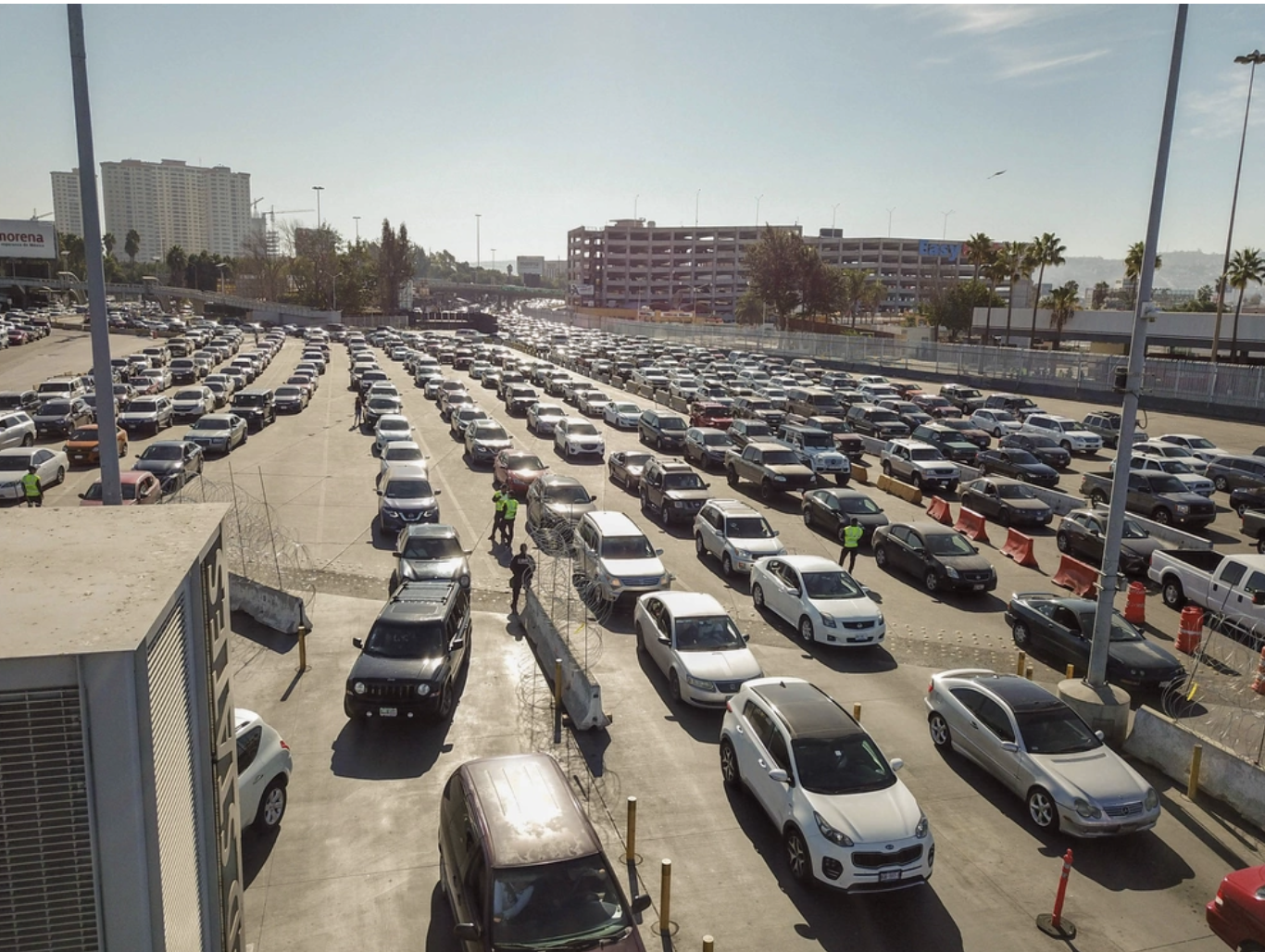
Most drug overdoses were by the use of synthetic opioids, primarily fentanyl. Fentanyl is not generally transported in the go fast boats we have seen destroyed. Because fentanyl is so compact, it usually crosses the borders over land at regular ports of entry., usually being transported by US citizens who blend in with the heavy cross border traffic.

SAN YSIDRO, CALIFORNIA, UNITED STATES, Port of Entry
Photos by Mani Albrecht, U.S. Customs and Border Protection

The President is claiming that each boat destroyed saves the lives of 25,000 Americans. If that were true, there should be no deaths due to overdose this year the rate of deaths due to overdose was a bit over 100,000 per year during the Covid pandemic but has been reduced to about 80,000 by the end of 2024. That is still a lot, but the recent success suggests there may be other things we can do to cut deaths due to overdose that may be more effective than relying on kinetic interdiction.

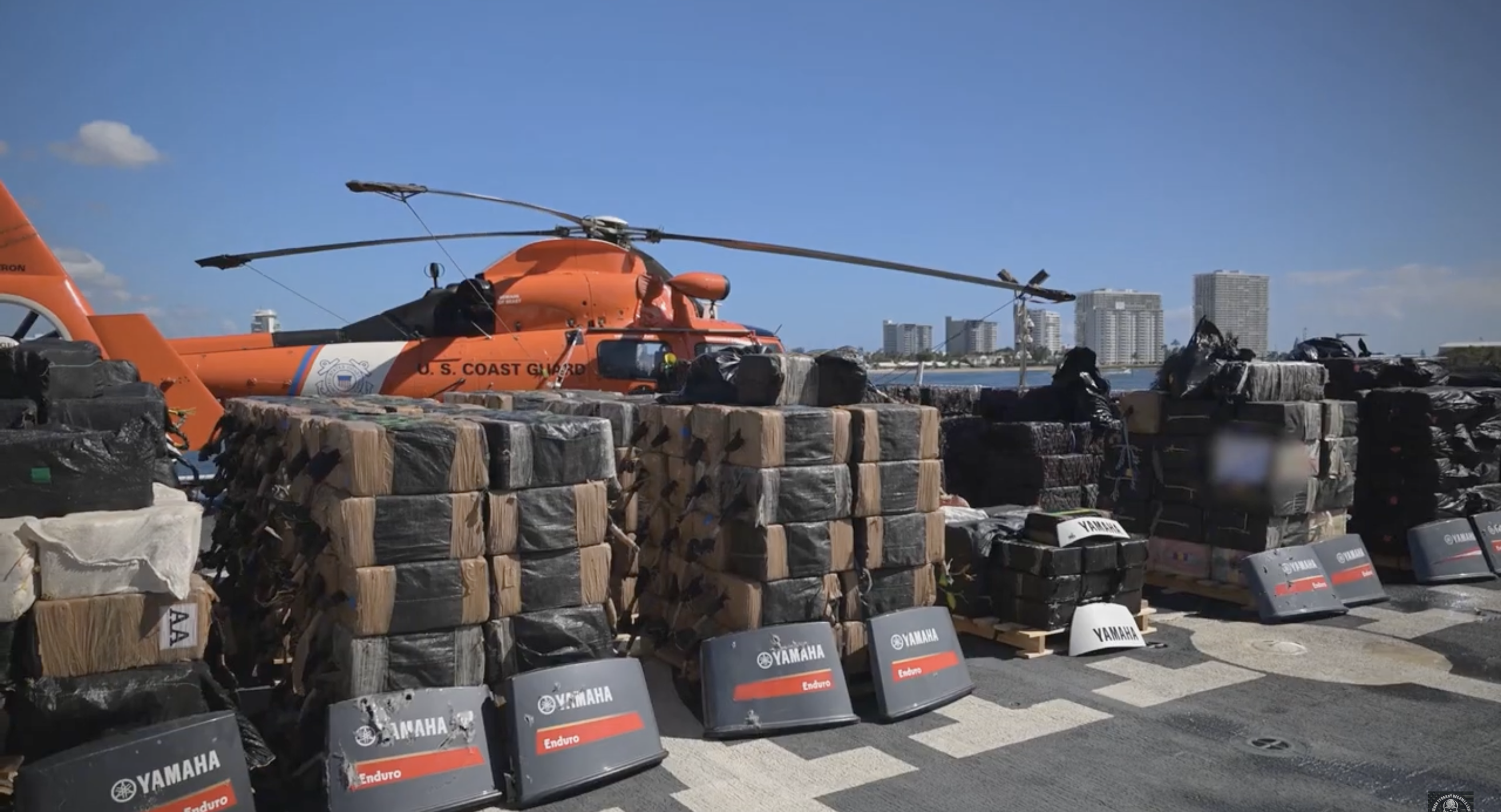
USCGC Stone (WMSL-758) delivers $517.5 million in illicit drugs interdicted in Eastern Pacific Ocean. Along side are displayed cowlings of outboard motor disabled by the Airborne Use of Force crew from the Coast Guard’s Helicopter Interdiction Tactical Squadron (HITRON) based in Jacksonville, FL.

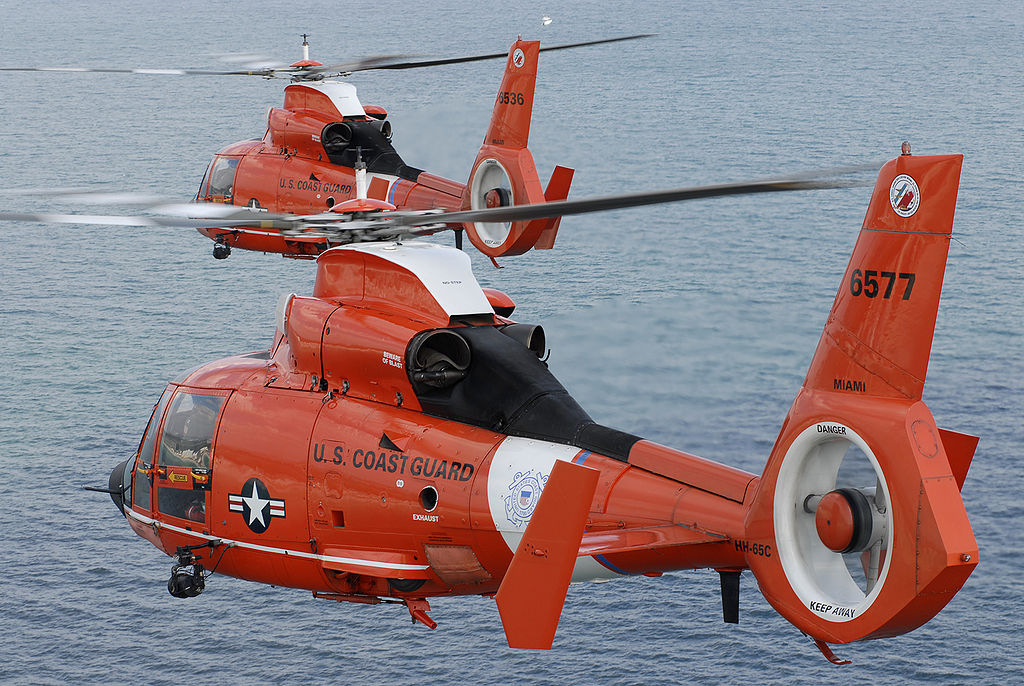
Suggestions that the smugglers are consistently able to outrun the Coast Guard are completely false. The cutters carry smaller high speed craft that can generally out run the smugglers and where they cannot, the Coast Guard has snipers in helicopters with specially trained crews who can disable the smugglers engines. The smugglers can’t outrun a missile but they also cannot out run Coast Guard helicopters. This special squadron just celebrated their 1000th interdiction.

Lately, I have been hearing the word accountability being thrown around a lot, and it is a good word. Who is responsible for the epidemic of drug use and the resulting deaths due overdose? Gangs in Mexico, Colombia, and Venezuela may have helped, but demand by American users created this problem. Most of the distributors and pushers were American citizens. Americans own this problem. Blaming it on foreigners is more comfortable, but not really helpful because, as long as the demand exists, there will be a source.

“Coast Guard celebrates 40 years of service with H-65 helicopter” –CG-9

Great article about the history of the H-65 in Coast Guard service by the Acquisitions Directorate, CG-9 reproduced below.

Don’t get the impression that the H-65 is going away anytime soon. Expect at least another decade of service. The last of the parent design AS365 Dauphin was manufactured in 2021. The closely related Eurocopter AS565 Panther is still being manufactured and has seen service in eleven countries.


Coast Guard celebrates 40 years of service with H-65 helicopter

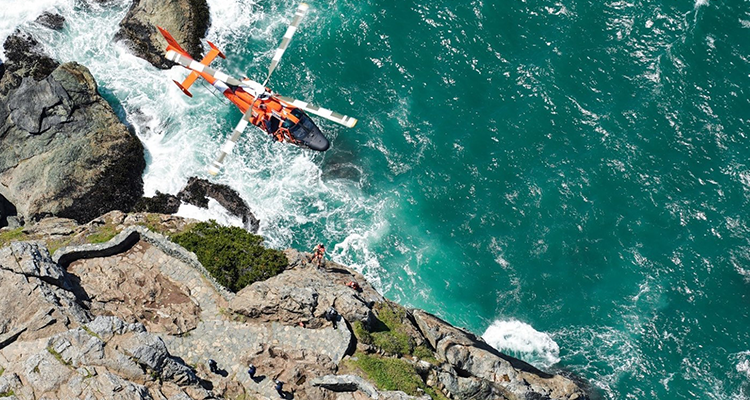
Upgrades throughout the 40-year history of the H-65 were strategically completed to allow for expanding missions and operations in the most challenging maritime conditions, such as cliff rescues. Here an MH-65 crew conducts vertical surface training off the coast of Humboldt Bay, California, to hone critical skills to ensure precise and efficient hoisting techniques in this rugged, coastal environment. U.S. Coast Guard photo.


It’s 2007. Coast Guard Air Station Port Angeles, Washington, receives a call about an injured mountain climber at the summit of The Brothers, a pair of prominent mountain peaks in Olympic National Park near Seattle. The elevation: 6,866 feet. And it’s snowing.

A search and rescue mission was deployed using the HH-65C short range recovery helicopter. “We were right up against that line where it was clear. If we had gone much further toward the peak, we would have been in blizzard conditions. We had to dump fuel at altitude to get light enough,” recalled Cmdr. Christian Polyak, co-pilot on the rescue mission and now commanding officer of Coast Guard Air Station Detroit. “We were able to reach the summit, pluck the injured mountain climber off the peak and get back to the airport in about 15 minutes.”

Unknown to the mountain climber, the Coast Guard H-65 Conversion/Sustainment Program had been working for years – and would continue working in subsequent years – to update the H-65 fleet and support missions like the one that brought the mountain climber to safety. “The rescue couldn’t have been done without the HH-65 and the engine upgrade from Bravo to Charlie,” Polyak explained.

In November 2024, the Coast Guard marked the 40th anniversary of the initial H-65 operation, but the tenure of this critical asset in supporting Coast Guard missions is slowly coming to an end. The service has completed the transition from the MH-65D to the MH-65E, the final upgrade of this airframe. Obsolescence challenges with the MH-65 will lead to the sundowning of aircraft as they reach the end of their service lives.
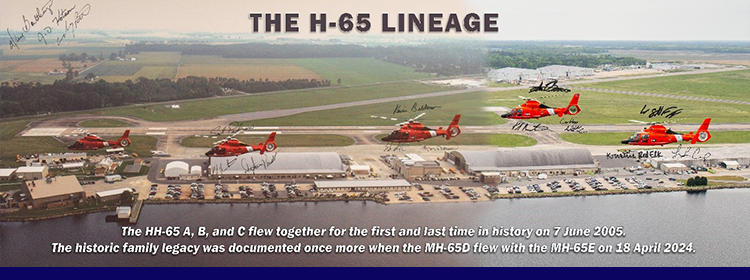
HH-65A HH-65B HH-65C/MH-65C  MH-65D MH-65E
Began operations: 1984 Began operations: 2001 Began operations: 2004 Began operations: 2009 Began operations: 2015
Original Coast Guard version. Avionics upgrade undertaken on a portion of the fleet, including a night vision goggle compatible integrated flight management avionics suite. Engines replaced with Turbomeca Arriel 2C2-CG engines, adding 40% more power. Airborne use of force capability added, including 7.62 mm general-purpose machine gun and a .50-caliber precision rifle. Obsolete subsystems replaced, such as replacing navigation systems and gyros with digital GPS and inertial navigation systems. Remaining obsolete subsystems modernized, including replacing analog automatic flight control with digital systems, installing digital weather radar systems and installing digital glass cockpit instruments.
Other program milestones included purchase of seven new MH-65 aircraft to identify and intercept non-compliant light aircraft operating within the Washington, D.C., Air Defense Identification Zone and execution of a service life extension program to extend the service life of the helicopters by an additional 10,000 flight hours.

Since their introduction more than 40 years ago, Coast Guard H-65s have been credited with rescuing approximately 26,000 people. For nearly two decades, the Coast Guard has planned and executed targeted improvements to enhance reliability and performance of the operational fleet. Across each iteration, starting with the initial designation of the HH-65A (Alpha) to the current MH-65E (Echo), every upgrade enhanced the airframe’s capabilities, enabling crews to complete lifesaving, law enforcement and national security missions more efficiently and effectively.

Retired Capt. Keith Overstreet has flown every model of the H-65, starting with the Alpha in 1995 at Air Station Savannah, Georgia. “I started flying the 65 when it was relatively new … when we purchased the H-65 it was really an advanced aircraft with advanced avionics. It allowed us to fly coupled approaches down to the water with a fairly precise position. It could control not only the lateral, the guiding left to right, but vertically down to the water as well.”

As modern as it was for its time, regular upgrades kept it relevant.

“The Alpha had a small navigation screen where you could create a flight plan. It had a forward-looking radar that would map out vessels and terrain,” said retired Cmdr. Kevin Barres, who flew 65s throughout his entire 25 years in the Coast Guard. “Then Bravo came up and you had a color display that differentiated some terrain,” which helped in developing flight plans.

“Charlie meant changes to the engine, and the engine control. It went from mechanical control using air and linkages to digital control. Echo replaced analog avionics components with a digital cockpit that has significant commonality with the H-60 fleet. There were enhancements to the automatic flight control system and there was a complete rewire of the aircraft. Its modern glass cockpit is standard across the board,” Overstreet said.
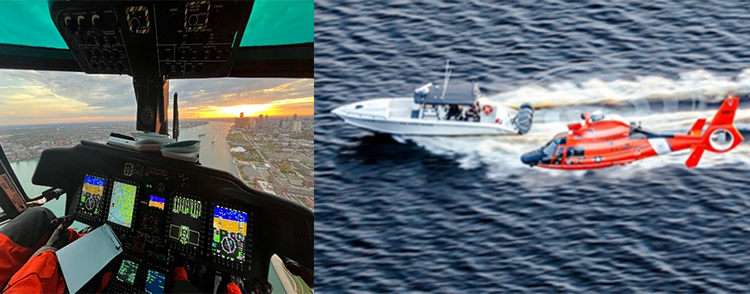
LEFT: A glass or digital cockpit replaced analog instruments in the MH-65E. RIGHT: The updates for missions requiring airborne use of force capability got underway in August 2006. The Helicopter Interdiction Tactical Squadron specializes in those missions, often used for drug-interdiction, and moved to the MH-65 from the Agusta MH-68A Stingray in 2008. U.S. Coast Guard photos.


“Every upgrade was significant and addressed a specific problem or modernization to accommodate how the mission, aviation and airspace were changing,” Barres said.

Cumulatively, these three pilots have flown nearly 16,000 hours in the H-65 and remember missions completed with fondness and pride.

Barres remembers when a bear-watching float plane split in half in the water, stranding six tourists, the bear guide and the pilot in Haro Bay, Alaska. It was 2006, and he was on his first deployment in Kodiak.

“It was a very windy day. The seas in the bay had built a little bit. When the aircraft tried to take off, the tube that goes across the front that connects the two floats failed and split. The aircraft did a nosedive into the wave and was swamped. They were all able to get out and were standing on the wing while it floated for a little while.”

The Coast Guard responded with an HC-130, an MH-60 and an MH-65. Barres was in the office and volunteered to pilot the MH-65.

“The C-130 got on scene and dropped two survival rafts to them. The bear guide was able to climb up on the capsized life raft and hang on. All the other people were hanging on to the float plane. The plane sunk, and they all ended up in the water for about 10 to 20 minutes.”

They were able to float due to their safety devices, but they all were hypothermic. The two helicopters were able to retrieve everyone, and all survived.

Another “miraculous” search and rescue mission Barres recalls was when he was stationed in Barbers Point, Hawaii. He was involved in rescuing a family that was stranded on a very small skiff in ocean waters for just short of two weeks, surviving on sea water and flying fish, after their small outboard motor malfunctioned. When the family was taken back to their home in Kiribati aboard an H-65, they were met with ecstatic school children and an elected official showered them with gifts of bananas and coconuts.

H-65 does more than search and rescue

“The H-65 has been heavily relied upon for all our aviation special missions,” said Polyak, who currently ranks as the most senior active-duty H-65 aviator.

During a deployment to Japan from Kodiak on a mission to enforce an international fisheries treaty, Polyak was grateful for the enhancements of the satellite communications on the MH-65C.

“Without that upgrade, we wouldn’t have been able to maintain radio communications with the cutter at the distances we were operating the helicopter,” he said. “As a pilot I always want to be able to talk to the ship if I’m 100 miles away from it. When you’re thousands of miles away from land and there’s nowhere else to go, you need to be able to talk to the ship so you can find out where they are and get back to them.”

The stories of the missions are endless. But without the behind-the-scenes mechanics that keep the aircraft operational, none of this would be possible.

“It takes 21 maintenance labor hours for every flight hour,” said Polyak, who served as the branch chief for the H-65 Echo conversion at the Aviation Logistics Center (ALC) in Elizabeth City, North Carolina, leading a team of 36 to deliver MH-65 Echoes to the fleet from 2017 to 2020. “There’s a lot of work happening on the hangar deck. Our enlisted mechanics work very hard to allow this aircraft to continue to operate and do lifesaving missions. There’s an equally important component at the ALC where the overhaul for the aircraft occurs. And there are hundreds of active-duty members, civilians and contractors that only support the H-65 fleet. These quiet professionals are supporting frontline operations. Along that same vein, the Aviation Training Center in Mobile, Alabama, has continued to provide excellent standardization and training support so that pilots and air crews can work together and execute these challenging missions.”

Looking forward, pilots are grateful they had the opportunity to fly the H-65s.

“It’s amazing the way we in the Coast Guard were able to bring it online,” Barres said. “Basically, going from 1960s helicopters to the most modern helicopters in the world at that time and then over 40 years keeping the aircraft upgraded and relevant.”

“At one point we had nearly 100 airframes in the fleet,” he continued. “The 65 never let me down on a mission or my crew or the folks that we were out there trying to help, whether it was law enforcement, or a fisheries patrol or a search and rescue case.”

All three pilots find immense career fulfillment in completing search and rescue missions made possible by the capabilities of the H-65.

“That day when you look somebody in the eye,” Overstreet said. “And you know, and they know that they would not be on this earth alive if you hadn’t been there. That makes it easy to put your all into your work every day.”
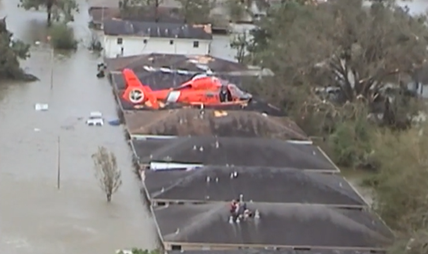
An airman from Air Station New Orleans, who was on the first helicopter that returned following the Hurricane Katrina, recounted, “The second that everyone heard us on Channel 16, Channel 16 just blew up with mayday calls.” Flying on waivers, he did rescues for five days and nights straight. At the time, this was considered the biggest search and rescue event in U.S. history. U.S. Coast Guard photo.


Related:

40 years in service!

Genesis of the Coast Guard HH-65 Helicopter

For more information: MH-65 Short Range Recovery Helicopter Program page


“Coast Guard completes air station transitions to upgraded MH-65E with delivery to Corpus Christi” –CG-9

MH-65E cockpit

Below is news from the Acquisitions Directorate (CG-9).

This is a very large deal. The MH-65E looks very much like the Dolphins that entered service about 40 years ago, but they are very different aircraft with more power, a different radar, air borne use of force, and very different avionics.

Extending their life to 30,000 hours, that is 1,250 x 24 hour days or almost three and a half years airborne. Looks like we are getting our money’s worth out of these aircraft.

Looks like his we will be continuing to use the H-65s for some time. This indicates that we will not see an all H-60 rotary wing fleet until the 2040s. By then, all the WMECs should be out of service.


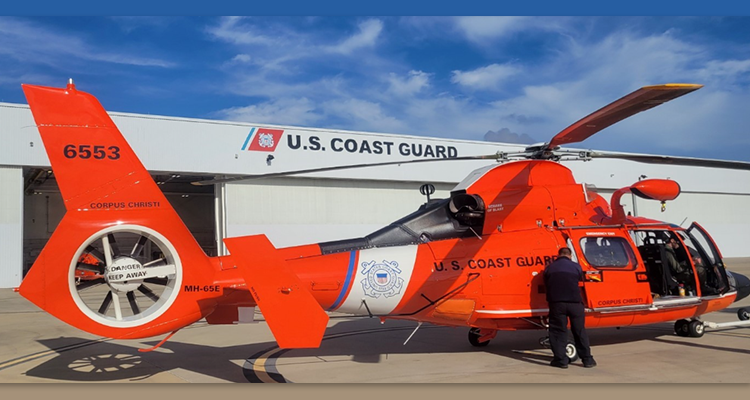
Upgraded MH-65E Dolphin CGNR 6553 is delivered to Air Station Corpus Christi, Texas, Feb. 7, marking the full transition of Coast Guard air stations to the upgraded Dolphin short range recovery aircraft. U.S Coast Guard photo


The Coast Guard reached an important milestone in its MH-65 Conversion and Sustainment program on Feb. 7 when it delivered CGNR 6553 to Air Station Corpus Christi, Texas. This was the third and final upgraded MH-65E for Corpus Christi, which is the last air station to transition to the upgraded short range recovery helicopter.

“The third and final MH-65E delivery to Air Station Corpus Christi marks a significant accomplishment for the H-65 Conversion/Sustainment Program,” said Cmdr. Jen Ahearn, program manager. “All H-65 operational units have now been fielded with modernized aircraft that have received improvements to address reliability and obsolescence issues as well as increase the service life of the asset from 20,000 to 30,000 flight hours. We have heard from the fleet through operational assessments, transition working groups and post-flight reports that the MH-65E upgrade enhances situational awareness and decreases pilot workload, things that are valued by crews executing high-risk, dynamic missions.”

CGNR 6553 was the 79th Dolphin upgraded to the Echo or “E” configuration. The upgrade includes an improved automatic flight control system; enhanced digital weather/surface search radar; installation of a robust command, control, communications, intelligence, surveillance and reconnaissance and computers suite; and modernization of the digital flight deck.

“Successfully fielding this asset to the fleet is a testament to the years of hard work and dedication of professionals committed to improving the Coast Guard’s readiness and short-range recovery capabilities,” Ahearn said. “We still have work ahead of us, but it’s nice to take a pause and recognize this program milestone, especially as we celebrate the H-65’s 40th anniversary this year.”

Another 11 conversions will be completed, for a total of 90, to allow operational aircraft to rotate into programmed depot maintenance, an intensive maintenance process completed at the Coast Guard Aviation Logistics Center that keeps the fleet in its best condition possible.

Continued operation of the MH-65E fleet is needed to maintain the Coast Guard’s rotary wing capability while preparing for the eventual transition to an all MH-60T medium range helicopter fleet sometime in the 2040s.

The MH-65E Conversion/Sustainment program of record was reduced from 98 aircraft based on the notional MH-60T transition schedule. Stopping the program at 90 conversions will help mitigate shortages of Echo replacement parts, sustaining the existing fleet longer.

The upgraded MH-65E aircraft increases aircrew situational awareness through its standardized “glass cockpit” technology. In addition to improved search and rescue capabilities, the advanced navigation systems allows pilots to safely maneuver through the highly congested, complex air traffic that can be encountered during a disaster response.

Adding a third MH-65E to Air Station Corpus Christi enhances the station’s ability to carry out its missions throughout its 11,250 square-mile jurisdiction. That area covers Texas from the U.S. southern border, north to the Colorado River and westward, including the entire state of New Mexico as well as 200 nautical miles offshore in the Gulf of Mexico.

“Being the last unit in the Coast Guard to transition to the 65E was a unique experience,” said Cmdr. Mary Bender, Air Station Corpus Christi deputy of operations. “We had the advantage of watching each unit transition before us and we tried to use the wisdom gained to create as seamless of a transition as possible. Our maintenance team has been truly amazing as they work to understand and repair this model.”

Bender recalls the first search and rescue case they conducted with the upgraded Echo. “It was a week after we received our second bird, and it was the ‘standard Coast Guard Day,’ low visibility, fog and icing on the way. A man had experienced anaphylactic shock, was intubated and running out of oxygen on a rig 180 nautical miles offshore. Our crews safely transported the patient to land, and he survived.

“We were so thankful to have all the new modes and ADS-B (Automatic Dependent Surveillance-Broadcast) while conducting the very unique mission during less-than-ideal conditions,” Bender said.

For more information: MH-65 Short Range Recovery Helicopter Program page
“Coast Guard reports fatality following counter drug mission in Caribbean Sea” –Coast Guard News

Below is a press release from Coast Guard news.

Coast Guard reports fatality following counter drug mission in Caribbean Sea

MIAMI – A Coast Guard crew’s airborne use of force to stop a non-compliant vessel suspected of smuggling illicit narcotics in the Caribbean Sea resulted in a fatality, Jan. 2, 2024.

Two other suspected smugglers were apprehended and face prosecution in U.S. federal courts by the Department of Justice. The seized contraband, approximately 385 kilograms of cocaine with an estimated wholesale value of $11.1 million, will be transferred ashore at a later date.

On Jan. 1, a U.S. Coast Guard law enforcement detachment deployed aboard a U.S. Navy ship in the Caribbean Sea for a counter drug patrol identified a vessel suspected of smuggling narcotics and attempted to stop the vessel. The vessel failed to stop and Coast Guard District Seven authorized airborne use of force in accordance with policy, including warning shots and disabling fire, for a non-compliant vessel suspected of smuggling illicit narcotics in international waters.

The law enforcement boarding team arrived on scene and identified that one of the crewmembers suffered an injury as a result of the use of force. Navy and Coast Guard members performed first aid and transferred the injured individual to the Navy ship before they were medically evacuated by a Navy helicopter to higher level care ashore in the Dominican Republic. The Coast Guard later received a report from Dominican authorities that the patient, a Dominican national, succumbed to their injuries.

“The critical homeland security missions the Coast Guard conducts every day as America’s primary maritime law enforcement agency are inherently dangerous,” said Lt. Cmdr. John W. Beal, Coast Guard District Seven public affairs officer. “The Coast Guard takes any loss of life seriously and is working to investigate the incident in accordance with Coast Guard policy.”

Detecting and interdicting illegal drug traffickers on the high seas involves significant interagency and international coordination. Once interdiction becomes imminent, the law enforcement phase of the operation begins and control of the operation shifts to the U.S. Coast Guard throughout the interdiction and apprehension phases. Interdictions in the Caribbean Sea are performed by members of the U.S. Coast Guard under the authority and control of the Coast Guard’s Seventh District, headquartered in Miami.

Another Rotary Wing Air Intercept (RWAI) Mission

MH-65E interior.

Below is a news release from the Acquistions Directorate (CG-9). This is only the second “Rotary Wing Air Intercept” (RWAI) unit that I have heard of, but this may be a trend. The first unit has been flying over the Washington DC area since the 9/11 attack. Over time, it is likely the realization of a need for air policing will grow, and it looks like at the low and slow end of the spectrum, the Coast Guard is getting the job. 


Air Station Savannah plays key role in airspace security during SpaceX launches

SpaceX Crew-6 launch

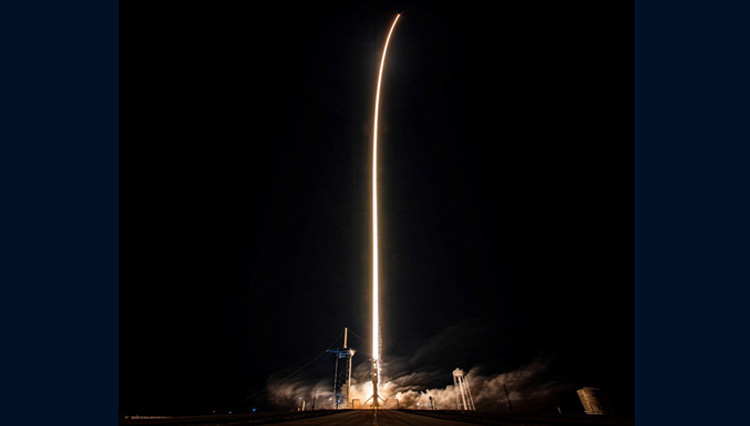
The SpaceX Crew-6 launch underway March 2, 2023. Photo courtesy of SpaceX.


Pilots from Air Station Savannah’s Rotary Wing Air Intercept (RWAI) unit stood ready to take to the skies March 2 in the air station’s new MH-65E Dolphin helicopter to provide security support for the manned SpaceX launch from Cape Canaveral, Florida. While this is the first time that the new Echo model was deployed, it marked the seventh launch for which the air station has provided critical flight restriction enforcement since NASA resumed manned space flights in 2020.

All airspace surrounding a space launch is restricted by the Federal Aviation Administration. The highly trained RWAI crew is poised to fly in very close quarters and intercept any unfamiliar aircraft that might trespass into the restricted airspace during a launch. Pilots who fly for the unit possess exceptional flight skills and decision-making abilities as the mission dictates pilots fly in extremely close quarters with other aircraft in order to intercept them.

The upgraded MH-65E helicopter is also more qualified for the task – the Echo configuration automates more flight control functions through use of the Common Avionics Architecture (CAAS) and Automatic Flight Control systems, allowing pilots to set parameters like altitude limits to prevent accidental overclimb into uncontrolled airspace. This and other upgrades ensure that pilots are able to focus on flying the mission with heightened awareness.

“The Echo drastically increases situational awareness and allows for much more complex mission calculations,” says RWAI pilot Lt. Cmdr. Sam Ingham. “This creates larger safety margins in an inherently dangerous environment.”

According to Aviation Special Missions policy director Lt. Cmdr. Mike Gibson, Air Station Savannah has sent NASA-requested RWAI resources to every official U.S. Government human spaceflight launch as part of Operation Noble Eagle. The latest launch was supported by Lt. Cmdr. Felipe Guardiola, Lt. Cmdr. Michael Gonzales and Petty Officer 2nd Class Connor Covert.

“NASA and the Coast Guard have a great relationship, and we’re happy to come down and help where we can,” said Ingham. “Also, it’s cool to have front row seats to watch rockets go to space.”

The MH-65 Conversion and Sustainment Program regularly receives feedback from the operational fleet on how the capabilities of the upgraded Echo allow the crew to continually be safer and more efficient when executing the mission. “It’s really incredible to hear from these crews that the upgrades to the Echo model are increasing their situational awareness,” said Cmdr. Karyn Forsyth, acquisition program manager for the MH-65. “Crews have more confidence in CAAS and its capabilities, especially when performing these special missions.”

The Coast Guard short range recovery helicopter program delivered the fifth and final MH-65E to Air Station Savannah Jan. 18, making it the ninth air station to fully transition to the upgraded configuration.

For more information: MH-65 Short Range Recovery Helicopter Program page
“The Coast Guard’s MH-65 Helicopter Fleet Is Headed For Trouble” –Forbes + Maybe MQ-8Bs

US Coast Guard photo, by PAC Dana Warr

Craig Hooper, writing for Forbes, brings us a warning about the status of the H-65 fleet.

We knew the Coast Guard was in the process of replacing H-65s with H-60s because they have become increasingly difficult to support.

The Coast Guard has on-going life extension programs for both H-60s and H-65s, but the author thinks progress is too slow.

There are two issues here.

  1. Replacing land-based H-65s
  2. Having helicopters that can operate off the WMECs.

I would like to think the Coast Guard has a workable plan to replace the land based H65s but waiting way too long to start replacement programs does seem to be part of the Coast Guard’s DNA.

As to the helicopters for WMECs, Cooper notes,

“At sea, the Coast Guard’s 27 aged mid-sized cutters cannot fully support the larger footprint of an MH-60 platform. Delays in getting the Coast Guard’s highly anticipated Offshore Patrol Cutter into service means the old cutters will remain in the fleet—and needing Dolphin helicopters—for years.”

As I recall, the 13 WMEC 270s were designed to operate H-60s and Alex Haley looks like her facilities may be large enough as well. Certainly, operating H-60s from the 14 WMEC 210s is a non-starter.

The number of H-65s required solely to support 210 operations is relatively small. Judicious use and cannibalization could probably keep a few operational until the last 210 goes out of service.  That should happen about 2032.

If that is not possible, there is another alternative, UAVs. They could certainly operate Scan Eagle. Another possibility is Fire Scout.

The Navy is phasing out their MQ-8B VTOL drone in favor of the larger MQ-8C. Perhaps the Coast Guard could take over some or all 30 ot the B models and operate them from 210s. They might also be operated alongside H-60s from Bertholf class NSCs and Argus class OPCs. Although they probably cannot do armed overwatch (or maybe they could), they might be a better search asset than the H-65, given their greater endurance. This would also prep the Coast Guard to also participate in the MQ-8C at some time in the future.

PACIFIC OCEAN (Sept. 18, 2019) Sailors push an MQ-8B Fire Scout assigned to the Wildcards of Helicopter Sea Combat Squadron (HSC) 23 on the flight deck of the Independence-variant littoral combat ship USS Gabrielle Giffords (LCS 10).  (U.S. Navy photo by Mass Communication Specialist 3rd Class Josiah J. Kunkle/Released)190918-N-YI115-1004

Interestingly, there is also a comment about the Coast Guard’s role in DOD’s Future Vertical Lift (FVL) Program,

“Replacement helicopters will be slow to arrive. The U.S. Coast Guard Commandant, Admiral Karl L. Schultz, says the Service is “looking fifteen or so years down the road at our rotary wing aviation program.” Unless the Coast Guard acts quickly to have their basic performance requirements folded into the Department of Defense’s Future Vertical Lift Initiative, a Coast Guard variant of whatever the Navy gets will likely take two decades—or more—to obtain and field.”

The FVL program is expected to produce at least two airframes, one to replace the H-60 and a smaller aircraft to replace the Army’s scout helicopters.

Thanks to Paul for bringing this to my attention. 

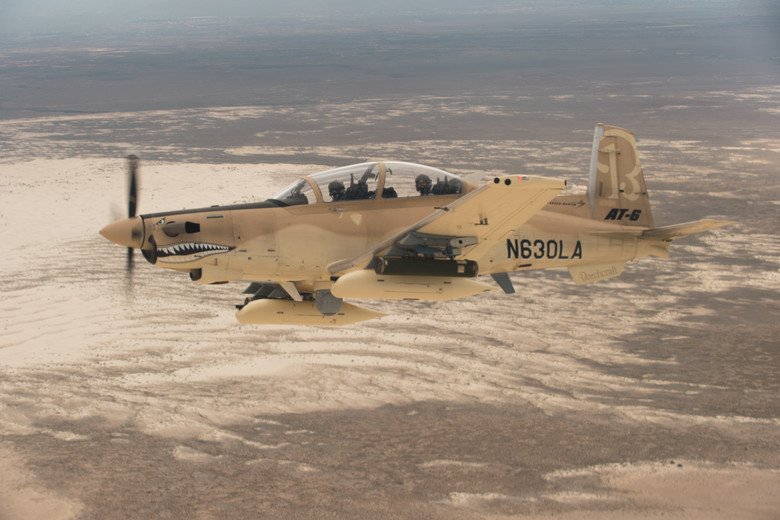
Thailand Buys AT-6 for Coast Guard Type Missions

Defense News reports that Thailand has become the first international customer for the Textron Beechcraft AT-6 light attack aircraft.

Thomas Hammoor, president and CEO of Textron Aviation Defense, said in a statement that the Royal Thai Air Force selected the Beechcraft AT-6 to conduct a broad array of missions in support of border security as well as anti-smuggling, counternarcotics and anti-human trafficking operations.

This is basically the same aircraft Coast Guard aviators train on before they get their wings, but with upgrades. I can’t help but think something like this or the similar Embraer A-29 Super Tucano could handle a lot of ISR missions more economically than what we are using now.

They could be used to scout for D7 Webber class FRCs doing drug or migrant interdiction and provide shots across the bow and over-watch in lieu of a helicopter.

The Washington DC air intercept mission in particular comes to mind. Local searches for overdue boats is another possibility. As you can see these aircraft support integrated electro-optical sensors.

An AT-6 Beechcraft is on display at the 2021 Dubai Airshow. (Agnes Helou/Staff)

Armed, these could also provide a response to terrorist attacks. My earlier ramblings on Coast Guard aircraft missions here.

“US Navy helicopters and Coast Guard snipers are firing on suspected drug traffickers ‘daily,’ top admiral says” –Business Insider

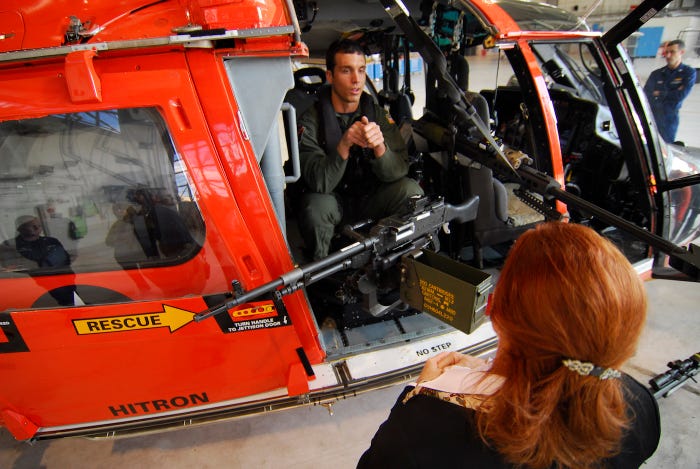
Petty Officer 2nd Class Anthony Phillips, a precision marksman at Helicopter Interdiction Tactical Squadron, displays the weaponry used by a HITRON during missions, February 23, 2010. US Coast Guard/Petty Officer 1st Class Bobby Nash

Business Insider has a story touting the success of the Navy/Coast Guard team effort in drug interdiction. This seems to be a report on Adm. Craig Faller’s (SOUTHCOM) remarks at the Surface Navy Association symposium in mid-January.

There is strong praise for the HITRON personnel.

“Coast Guard HITRON teams, which are sniper teams, have integrated into US Navy helicopters. So our Navy crews are involved in decisions to use … warning shots and disabling fire daily. I mean, it is a daily event,” Faller added. “We average numbers, sometimes large numbers, of events daily, and they’ve done it safely, effectively, completely in compliance with all the law of war and with precision. [I’m] very proud of that.”

I have to believe the “daily” claim is at least a slight exaggeration, since presumably HITRON was involved in all the cases and the report quotes Cmdr. Ace Castle, public affairs officer for US Coast Guard Atlantic Area, as saying they prosecuted 56 in 2020.

In any case, HITRON is getting a workout and proving their value. Worth noting that they and other Coast Guard law enforcement detachments, also serve on foreign ships working for SouthCom, including British, Canadian, Dutch, and French vessels.