Canadian Coast Guard’s New Shipboard Helicopter

Bell B429

Defense Industry Daily is reporting the Canadians have selected the Bell B429 as their new shipboard Coast Guard helicopter

“The request for proposals closes on May 27, but rivals AgustaWestland, Airbus Helicopters Canada and Sikorsky have all signalled they won’t be submitting bids, leaving Bell and its model 412 chopper (actually the B429–Chuck) as the only contender…. The companies declining to take part are doing so because their aircraft are heavier than the maximum of 4,989 kilograms (11,000 pounds), a safety limit established for the decks of coast guard ships in the 1970s.

Industry sources said at least one potential bidder expressed concern that the standard was outdated and asked the federal government for data on how the weight restriction was calculated. The intention was to prove the decks could handle higher ratings, but officials just came back and said the standard was the standard.”

The Bell B429 is a twin engine helicopter with the capability of allowing single pilot flight in IFR (instrument flight rules) conditions, designed for the medivac market. It is about 2000 pounds lighter than the MH-65 but is otherwise similar in performance. There are a number of door options including clamshell doors in the rear and an option for retractable wheeled landing gear.

Aviation News

DefenseNews reports on Admiral Papp’s comments regarding Coast Guard aviation. Two basic messages, The Coast Guard may be able to ride the coat tails the Air Force’s procurement of replacement H-60s, and The C-27s will be put to work very quickly.

Replacement of existing MH-60s is still a long way away. There is also the Army’s procurement of new rotary wing aircraft that might produce a more capable replacement.

Unfunded Piority List

The US Naval Institute has published an online copy of the DOD’s unfunded priority list. The Navy’s list runs pages 9-13 of the 49 page document reproduced there.

Which got me to thinking, where is the Coast Guard’s unfunded priority list? Do we have one? If not, shouldn’t we? The FY2015 budget proposal includes only two Fast Response Cutters. First on the list, four more. The additional 14 C-27Js still leave us four Maritime Patrol Aircraft short of the program of record. Four more C-144s (or C-27s) please. There is a documented requirement for three heavy and three medium icebreakers. Lets fix the Polar Sea. To do all its statutory missions, the Coast Guard Fleet Mix Study  indicated we need nine National Security Cutters not eight and not 25 Offshore  Patrol Cutters but 57. We are not ready to order the OPCs yet, but a ninth NSC is something we could use right now. Plus the Coast Guard needs replacements or rebuilds for the inland fleet of tenders and the 65 foot icebreaking tugs. Incidentally the Fleet Mix Study says the Coast Guard need 65 Maritime Patrol Aircraft (listed as C-144s in the study) not the 36 in the program of record or the 32 in the works currently.

The Commandant has been saying the Coast Guard needs $2.5B a year in AC&I. Why not tell Congress how we would spend it. If I remember correctly, Congress has in fact asked for this. The Coast Guard would be remiss in not providing it.


Bird’s Eye View for Ships

 Photo:  Valkyrie Virtual Mast System model   Kelsey D. Atherton 

ThinkDefence reports L3 is resurrecting an old idea to extend the horizon distance for  surface vessels. Their “virtual mast” puts sensors at high altitude without the need for a helicopter or UAV. Popular Science has a bit more detail, reporting that the proposed system could fly as high 5,000 feet. Sensors at that altitude would have a radar and visual horizon of 76 nautical miles.

Not sure how they would warn off air traffic that might otherwise hit the cable or the autogyro.

Historical Note: During WWII German U-boats used a similar unpowered tethered autogyro to take a lookout aloft, but their altitude was much more limited.

New International Cooperation

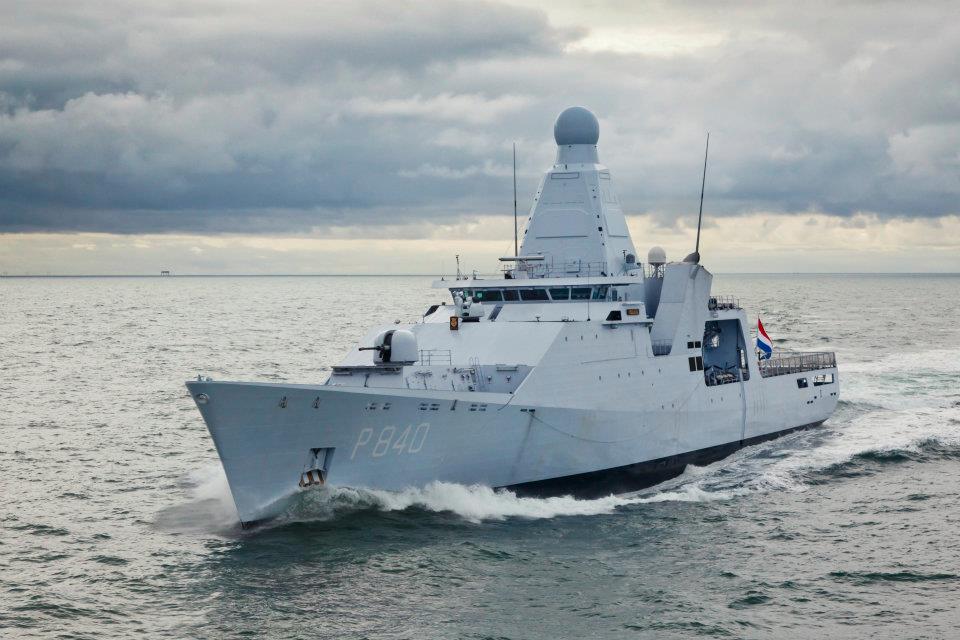
File:HNLMS Holland.jpg
Photo credit: DelamontagneNL, via Wikipedia, Zeeland’s sistership HNLMS Holland
Putting Law Enforcement Detachments on foreign ships is now relatively routine, but a reader (thanks Gils) has informed me of a new level of cooperation. “HNLMS Zeeland, one the new Dutch (Holland class–Chuck) OPVs, left for the Dutch Caribbean yesterday. They will first go to Key West to pick up a USCG helicopter.
Additionally he tells me, “On January 11 the Facebook page of the Dutch MoD in the Caribbean & Caribbean Coast Guard (section) posted the following text: Yesterday a formal agreement has been agreed upon between the United States and the Netherlands to station helicopters from the U.S. Coast Guard on Dutch ships engaged in counter-narcotics operations.  The ultimate form of cooperation for safety on and from the sea!”
The Holland class are a new class of relatively large OPVs. At 3,750 tons full load they are sized between the Hamilton class and the Bertholfs. Zeeland was commissioned only last year. Deliveries of new NH90 NATO frigate helicopters to the Netherlands Navy have been delayed, this explains the need for a Coast Guard helicopter.

Coast Guard to help the Forrest Service–Fire Aviation

Fire Aviation is reporting an interesting wrinkle in the story of the transfer of Coast Guard C-130s to the Forrest Service,

“We were surprised to hear from Mrs. Jones (a Public Affairs Specialist for the Forest Service at the National Interagency Fire Center-Chuck) …that a joint U.S. Coast Guard and U.S. Forest Service program office will provide logistics, operations, training, maintenance, and support for the C-130H aircraft. The Coast Guard has been managing a fleet of C-130s since 1959, using them for long range search and rescue, drug interdiction, illegal migrant patrols, homeland security, and logistics. They have 24 older C-130Hs which are being upgraded with new center wing boxes and cockpit equipment with new multi-function displays. In 2008 they began replacing some of the C-130Hs with new C-130Js; they have six now with three more on order. All these numbers were valid before the Coast Guard agreed to send seven C-130Hs to the USFS if the Coast Guard could get the 14 almost new C-27J aircraft from the military that had been earmarked for the Forest Service.”

Tribute to the Aviators

File:Douglas Dolphin at the US National Museum of Naval Aviation.jpeg
Photo: U.S. Navy National Museum of Naval Aviation photo No. 2003.145.001 A Douglas Dolphin at the U.S. National Museum of Naval Aviation at Pensacola, Florida (USA). This aircraft was originally purchased in 1934 by William E. Boeing, founder of Boeing Airplane Company, for use as a transport. It was sold in 1941 and subsequently flew with the Civil Aviation Administration and Alaska Airlines before Dr. Colgate W. Darden, III, purchased it. Darden’s father, Colgate Whitehead Darden, Jr. former French Army and Lt. USMC, a U.S. congressman and Governor of the Commonwealth of Virginia, was Naval Aviator Number 871. Darden later donated the aircraft to the museum. It is painted as a U.S. Coast Guard RD-4.
This is over two years old, but I don’t remember seeing it. Some history worth knowing. “The Coast Guard’s Role in Naval Aviation

CG to get C-27J

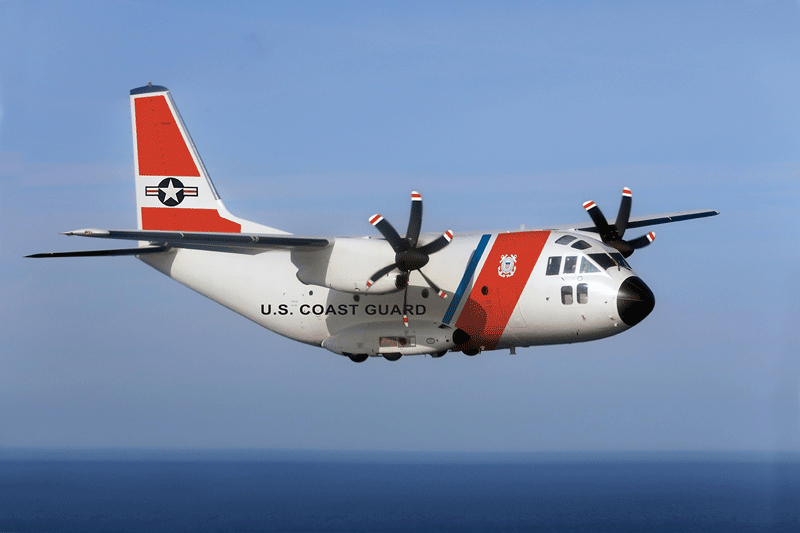
uscg-c-27j-impression
Alenia Aermacchi impression of a C-27J Spartan in U.S. Coast Guard livery. (Photo: Alenia Aermacchi)

I did note this in a comment on the previous post about this, but its probably too important to not to have its own post. Apparently we have confirmation that the Coast Guard will be getting the Air Force’s excess C-27Js.

Question is, if we were going to buy 36 HC-144s and we have bought 18, doesn’t getting 14 C–27s still leave us 4 planes short? and if we are giving some older C-130s to the Forrest Service perhaps a few more?

Does it mean the Coast Guard will be getting more C-130Js?