“Trump Bill Secures $9 Billion for U.S. Arctic Surge, Six New Icebreakers to Counter Russian and Chinese Dominance” –gCaptain

gCaptain reports,

“President Trump’s vast tax and spending bill has secured funds the U.S. Coast Guard has been searching for since the early 2010s. The “One Big Beautiful Bill Act” appropriates close to $9 billion for the expansion of the Coast Guard’s Arctic icebreaker fleet.”

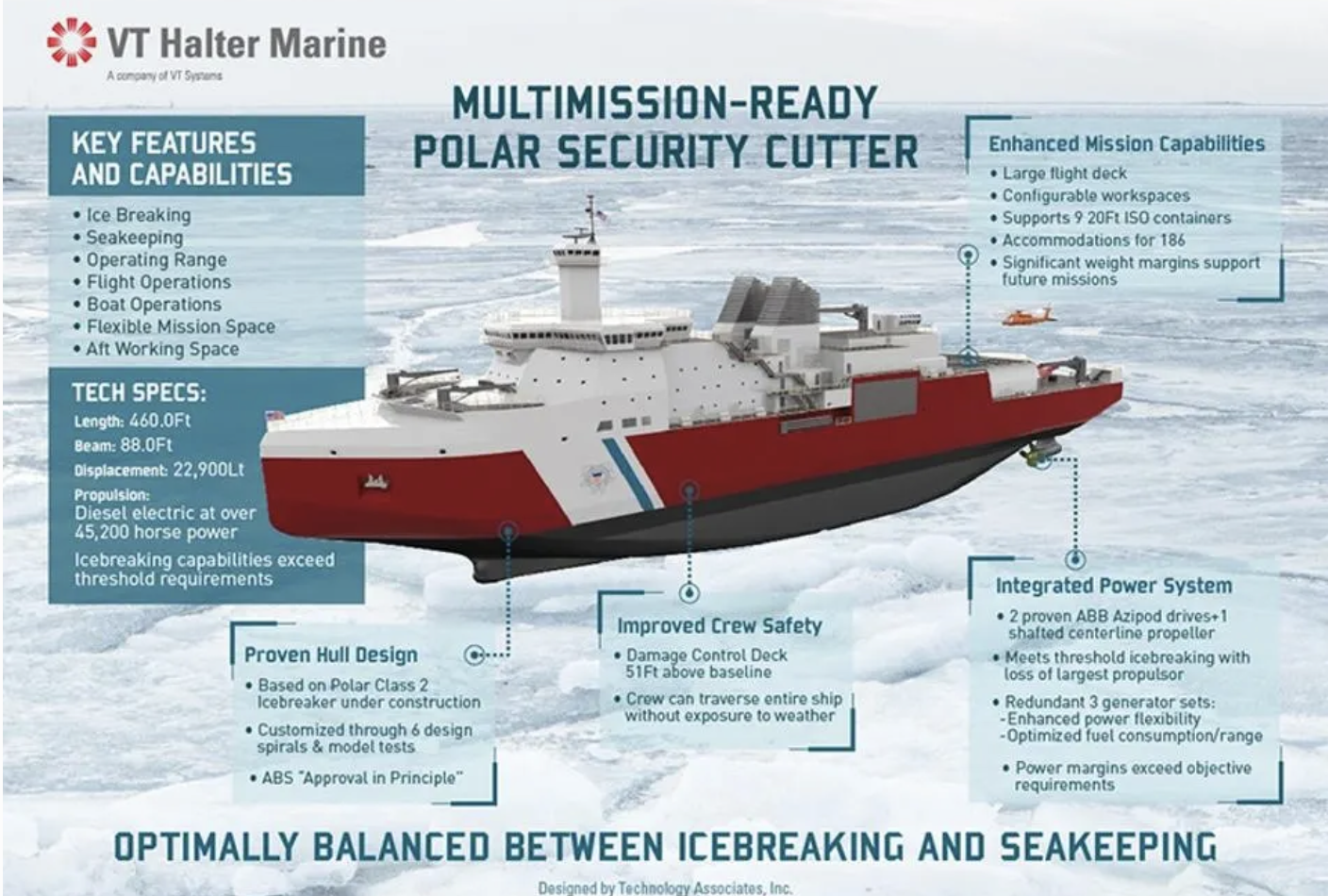
The report provides a breakdown of the appropriations that includes money for Polar Security Cutters, Arctic Security Cutters, and infrastructure in Juneau to support USCGC Storis,

Interestingly it also states,

“Rounding out the Arctic package, the U.S. Navy will also receive $115 million for the exploration and development of existing Polar infrastructure.”

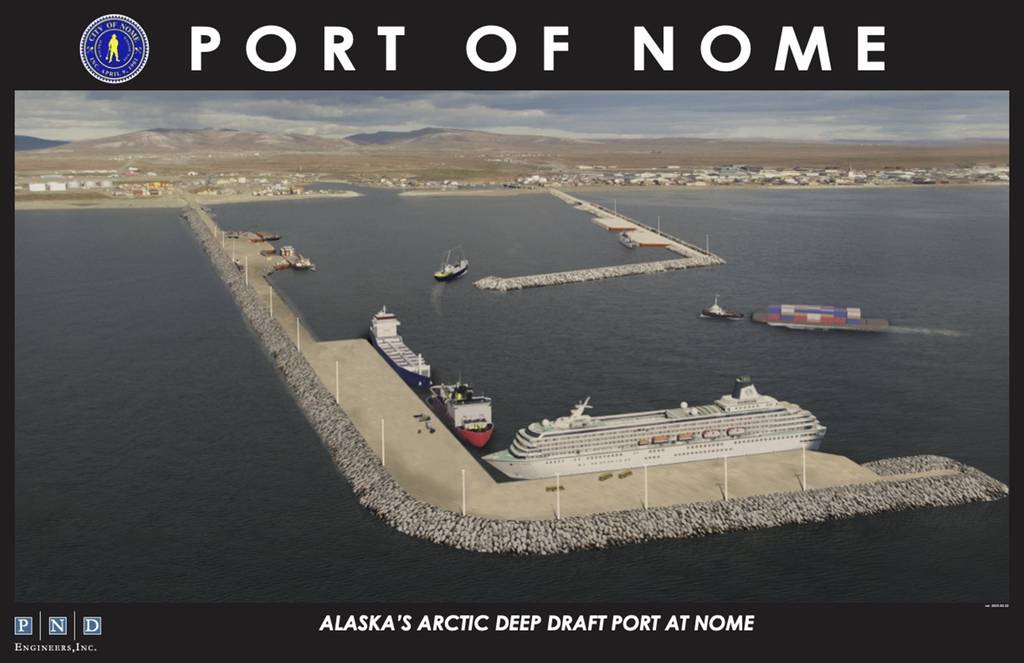
That sounds like improvements in Adak that the Coast Guard might also exploit. It might also refer to development of facilities at Nome but it is not nearly enough to fund plans for a deepwater port that had been shelved by the previous administration.

This rendering provided by the City of Nome shows how the Port of Nome, Alaska, will appear following an expansion project that will cost more than $600 million. Shipping lanes that were once clogged with ice for much of the year along Alaska’s western and northern coasts have relented thanks to global warming, and the nation’s first deep water Arctic port should be operational in Nome by the end of the decade. (PND Engineers Inc./City of Nome via AP)

“Canada’s HMCS Margaret Brooke embarks on historic Antarctic mission” –The Watch

2022. HMCS Margaret Brooke finished warm weather trials on the ships cooling systems. HMCS Harry DeWolf conducted an Op Caribbe with the USCG.

NORTHCOM’s online magazine, “The Watch” reports,

For the first time, a Royal Canadian Navy (RCN) vessel will circumnavigate South America and visit Antarctica, as the HMCS Margaret Brooke marks the debut of Operation Projection 2025. The Harry DeWolf-class vessel left Halifax, Nova Scotia, on January 10, 2025, on the historic four-month mission.

So presumably she is in or near the Antarctic now.

“…National Research Council scientists will join the ship in Punta Arenas, Chile, for a two-week tour south of the Antarctic circle…”

The US Coast Guard would consider HMCS Margaret Brooke a light icebreaker because her 12,000 HP, same as the old Wind Class, falls below their 20,000HP lower limit for a “medium icebreaker.” As an Arctic Offshore Patrol Vessel, this is not a type the US Coast Guard has identified a requirement for.

In addition to a helicopter she reportedly is equipped with a vertical take-off and landing drone. 

Polar Star on the Way to Antarctica, Stop in Hawaii

USCGC Polar Star (WAGB-10) transits across Elliott Bay after departing Coast Guard Base Seattle, Washington, Nov. 22, 2024. US Coast Guard

The “USNI News Fleet and Marine Tracker: Dec. 2, 2024” reports Polar Star had arrived in Pearl Harbor (November 30).

Below is the news release that announced her departure from Seattle, November 22.


 Nov. 26, 2024

Coast Guard heavy icebreaker departs Seattle for months-long deployment bound for Antarctica

USCG Pacific Area

SEATTLE – The U.S. Coast Guard Cutter Polar Star (WAGB 10) and crew departed Seattle, Friday, beginning their deployment to Antarctica in support of Operation Deep Freeze.

Operation Deep Freeze (ODF) is an annual joint military mission to resupply the United States Antarctic stations in support of the National Science Foundation (NSF), the lead agency for the United States Antarctic Program (USAP). This marks the 28th year that the Polar Star has supported ODF.

Each year, the Polar Star breaks a navigable channel through the ice, allowing fuel and supply ships to reach McMurdo Station, which is the largest Antarctic station and the logistics hub of the USAP.

“I am thrilled to lead Polar Star back to Antarctica for ODF 25. After months of pre-deployment preparation and working together through various challenges, the cutter and crew are ready to embark on this enduring and critical mission,” said Capt. Jeff Rasnake, Polar Star’s commanding officer. “I couldn’t be prouder of this crew’s tremendous dedication and teamwork. They have met or exceeded all my expectations in the maintenance and training phases and continue to push themselves to build upon those successes as we now shift into the cutter’s operations phase.”

The U.S. Coast Guard is recapitalizing its polar icebreaker fleet to ensure continued access to the polar regions and to protect the country’s economic, environmental, and national security interests in the high latitudes. Each year, the Polar Star’s crew commits significant time and effort preparing the 48-year-old cutter for the annual deployment in support of ODF. This year the Polar Star completed the fourth of five planned phases of the service life extension project (SLEP).

The U.S. Coast Guard provides direct logistical support to the NSF and maintains a regional presence that preserves Antarctica as a scientific refuge working under Joint Task Force-Support Forces Antarctica (JTF-SFA). JTF-SFA provides Department of Defense support to the NSF and the USAP through ODF. Every year, a joint and total force team works together to complete a successful ODF season. Active, Guard, Reserve service members from the U.S. Air Force, Army, Coast Guard, and Navy work together to forge a strong JTF-SFA that continues the proud tradition of U.S. military support to the USAP.

Polar Star is Home–Finally

Polar Star at Mare Island Dry Dock LLC undergoing the fourth phase of its five-year Service Life Extension Project. U.S. Coast Guard photo by Cmdr. Jeremy Courtade.

Below are two news releases, first one from Coast Guard News, the second from the Acquisitions Directorate (CG-9).

The Coast Guard has been working very hard to make sure that Polar Star can meet her annual commitment to open a path for resupply of the Antarctic Base at McMurdo, but it has to have been hard on the crew. They just completed the fourth phase of a five-part Service Life Extension Program (SLEP), but unlike the single phase SLEPs and MMAs we are seeing with the buoy tenders and medium endurance cutters at the Coast Guard Yard, here the crew stays aboard. After 138 days on the resupply mission, instead of returning to Seattle, their homeport, they went to Vallejo, California, where they spent about 140 days. Altogether, 285 days away from homeport, and over a one-year period, more days in Vallejo than in homeport.

Polar Star has only one more of these to go, but it looks like the Crew of USCGC Healy is going to go through the same 5-year SLEP cycle, where they will spend more time in Vallejo than in their homeport. This is just wrong. There are only two yards on the West Coast that can accommodate ships of this size. The Navy, with its huge presence, is a strong competitor for the use of the one in Seattle. By contrast the Bay Area has virtually no Navy presence. It is likely the Icebreakers will have to use the yard in Vallejo for almost all their drydocking. Maybe it is time to change their homeport to somewhere in the San Francisco Bay Area, maybe even Vallejo.

Improvements are planned for Base Seattle, largely on the assumption that the Polar Security Cutters (PSC) will be based there, but they can expect to run into the same problem. Given the greater size of the PSCs and the long-term probability the Navy presence in Seattle will remain large and may well increase, the problem is not going away. The dry dock in Vallejo was built to accommodate battleships. It is big enough.


U.S. Coast Guard Cutter Polar Star (WAGB 10) (left) sits moored next to U.S. Coast Guard Cutter Healy (WAGB 20) at Coast Guard Base Seattle, Aug. 25, 2024. The Polar Star and Healy are routinely deployed to Arctic and Antarctic locations to support science research or help resupply remote stations. (U.S. Coast Guard photo by Lt. Chris Butters)

Aug. 28, 2024

Coast Guard heavy icebreaker returns to Seattle following Antarctic deployment, months-long Service Life Extension Project in California

SEATTLE — The U.S. Coast Guard Cutter Polar Star (WAGB 10) and crew returned to Seattle, Sunday, after 285 days away from the cutter’s home port.

Following a 138-day deployment to Antarctica supporting Operation Deep Freeze 2024, the Polar Star reported directly to Mare Island Dry Dock (MIDD) LLC. in Vallejo, California, to commence the fourth phase of a five-year Service Life Extension Project (SLEP).

The work completed at MIDD is part of the in-service vessel sustainment program with the goal of recapitalizing targeted systems, including propulsion, communication, and machinery control systems, as well as effecting significant maintenance to extend the cutter’s service life.

Polar Star’s SLEP work is completed in phases to coordinate operational commitments such as the cutter’s annual Antarctic deployment. Phase four began on April 1, 2024, targeting three systems:

  • Boiler support systems were recapitalized, including the electrical control station that operates them.
  • The heating, ventilation and air conditioning (HVAC) system was refurbished through the overhaul of ventilation trunks, fans and heaters that supply the cutter’s berthing areas.
  • The flooding alarm system was redesigned, providing the ability to monitor machinery spaces for flooding from bow to stern.

Additional work not typically completed every dry dock included removing and installing the starboard propulsion shaft, servicing and inspecting both anchor windlasses, inspecting and repairing anchor chains and ground tackle, cleaning and inspecting all main propulsion motors and generators, installation of an isolation valve to prevent seawater intrusion into the sanitary system, and overhauling the fuel oil purifier.

Phase four of Polar Star’s SLEP took place over approximately 140 days and represented a total investment of $16.8 million. By replacing outdated and maintenance-intensive equipment, the Coast Guard will mitigate lost mission days caused by system failures and unplanned repairs. The contracted SLEP work items and recurring maintenance is taking place within a five-year, annually phased production schedule running from 2021 through 2025.

The Coast Guard is investing in a new fleet of polar security cutters (PSC) that will sustain the service’s capabilities to meet mission needs in both the Arctic and Antarctic regions. The SLEP allows Polar Star to continue providing access to the Polar regions until the PSCs are operational and assume the high latitude missions. Polar security cutters will enable the U.S. to maintain defense readiness in the Polar regions; enforce treaties and other laws needed to safeguard both industry and the environment; provide ports, waterways and coastal security; and provide logistical support – including vessel escort – to facilitate the movement of goods and personnel necessary to support scientific research, commerce, national security activities and maritime safety.

“Completing a dry dock availability is a positive milestone, and despite challenges due to being away from home port, our crew’s energy and resilience inspires me every day,” said Capt. Jeff Rasnake, Polar Star’s commanding officer. “The amount of time and effort put into Polar Star and its mission is truly remarkable. The dedication and teamwork displayed across all stakeholders exemplifies the Coast Guard’s flexibility and commitment to ensuring the continued success of Operation Deep Freeze as well as strengthened partnerships among nations invested in the Antarctic latitudes. I look forward to observing how this crew will continue to grow as a team and to discovering what we can accomplish together.”

Along with the rigorous maintenance schedule, Polar Star held a change of command ceremony on July 8, 2024, in Vallejo, where Rasnake relieved Capt. Keith Ropella as the cutter’s commanding officer. Rasnake served as the deputy director for financial management procurement services modernization and previously served as Polar Star’s executive officer. Ropella transferred to the office of cutter forces where he will oversee the management of the operational requirements for the cutter fleet and develop solutions for emerging challenges facing the afloat community.

Polar Star is the Coast Guard’s only active heavy polar icebreaker and is the United States’ only asset capable of providing year-round access to both polar regions.

Commissioned in 1976, the cutter is 399 feet, weighing 13,500 tons with a 34-foot draft. Despite reaching nearly 50 years of age, Polar Star remains the world’s most powerful non-nuclear icebreaker with the ability to produce up to 75,000 horsepower. Polar Star’s SLEP is important to the survival of the Antarctic mission and crucial to the well-being and success of Polar Star and crew during these long missions.


Coast Guard completes fourth phase of service life extension work on Polar Star

Coast Guard Cutter Polar Star completed the fourth phase of its five-year Service Life Extension Project (SLEP) at the Mare Island Dry Dock LLC in Vallejo, California. The cutter departed the San Francisco Bay Area on August 22, for its homeport in Seattle.

The SLEP, a key initiative within the Coast Guard’s In-Service Vessel Sustainment (ISVS) Program, aims to extend the service life of the Polar Star by modernizing targeted systems, including propulsion, communication, and machinery control systems. Concurrent with the SLEP work, crews conducted significant maintenance efforts to ensure the cutter remains capable of operating within some of the most extreme environmental conditions on earth.

SLEP work on the Polar Star is conducted in phases to align with the cutter’s operational commitments, such as the cutter’s annual Antarctic deployment. Phase four began on April 1, 2024, focusing on the following systems:

  • Heating, ventilation and air conditioning systems were refurbished with ventilation trunks, fans and heaters to improve air circulation and maintain comfortable living environment for the ship’s crew during extended deployments.
  • Boiler support systems were recapitalized, including the electrical control station that operates them to generate reliable heating and steam supply to the water maker.
  • The flooding alarm system was redesigned to enable the crew’s ability to monitor the ship’s machinery spaces for flooding from bow to stern.

Additional work completed during this phase, beyond routine dry dock maintenance, was critical to ensuring the Polar Star’s operational readiness. This included significant overhauls and inspections of key propulsion and anchoring systems that are essential for the cutter’s operational performance.

Kenneth King, Program Manager for the ISVS Program, commented on the milestone, saying, “I am tremendously proud of the joint In-Service Vessel Sustainment Program, the Long Range Enforcer Product Line team and their significant efforts in completing Phase 4. Our dedicated professionals continue to exemplify our service’s core values to ensure Polar Star meets its multifaced missions in the polar regions until the arrival of the Polar Security Cutter Fleet.”

For more information:In-Service Vessel Sustainment Program page and Polar Security Cutter Program page.

“Russia’s war on Ukraine stalls PRC’s Arctic momentum” –The Watch

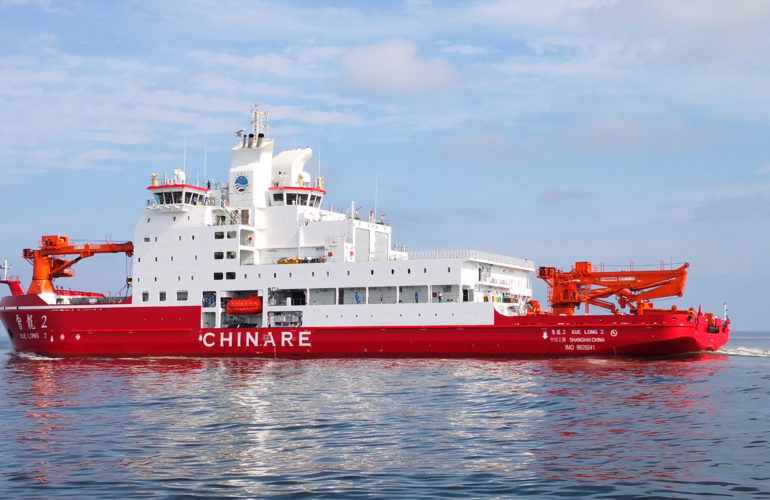
Xue Long 2 on sea trials. Photo by PRIC.

This is about a year old, but somehow, I apparently missed commenting on it when it first came out.

The Watch Reports,

As the largest non-Arctic country, and one which has often referred to itself as a near-Arctic state, the People’s Republic of China (PRC) finds itself in a more precarious position in the region as compared to five years ago when it launched its ambitious white paper, which proclaimed Chinese interests in being a key stakeholder in the far north. Beijing’s plans for the Arctic assumed that the region would be open and amenable to the development of three main pillars of Chinese Arctic policy, namely scientific diplomacy, economic partnerships and participation in regional governance initiatives. All three of these pillars are now under pressure, which has underscored the PRC’s limitations in the Arctic and will inevitably force a rethinking and likely a retrenchment of the country’s far-northern interests.

The report notes,

Despite hopes in Beijing that the PRC’s Polar Silk Road initiative would emerge as an integral part of the overall Belt and Road framework, many centerpiece projects of the infrastructure initiative have either failed or are in doubt because of financial constraints, political opposition or some combination thereof.

The “no limits” partnership between China and Russia has always been one of opportunism. There is a natural antipathy between the two countries. China has never forgotten the unequal treaties imposed on them by European powers including Russia, that stripped away Chinese territory, including important parts of what is now Russia’s Asian holdings.

Facing frustration in the Arctic. Do not be surprised to see China double down on its efforts in Antarctica.

Chile’s New Icebreaker

Chilian Icebreaker “Almirante Viel”.

Andrés Tavolari, a lawyer and Chilean Marine Reserve Officer, who wrote one of our most popular posts, Three Nations Share German OPV Design has stayed in touch and tells me, on July 3rd the Chilean Navy commissioned their new Icebreaker/Antarctic supply ship, “Almirante Viel”. This is how he described it.

The ship is a PC-5 icebreaker equipped with a flight deck and has a hangar for two medium helicopters of the Super Puma or Cougar type. The crew is 86 people + 32 scientists. It can transport 19 containers of 20 feet, 2,202 m³ of fuel, 153 m³ of fresh water, and 86 m³ of aviation fuel for the helicopters. Its maximum speed is 15 knots and 3 knots in ice 1 meter thick. Its range is 14,000 miles and it has an autonomy of 60 days. Its length is 111 meters, it has a beam of 21 meters, and a draft of 7.2 meters. Its propulsion plant is composed of 2 main engines of 6,303 hp and a bow thruster of 670 hp.
With Andrés’ help we did a 2016 post on the ship when it was in the planning stages that, with the attached comments, has a lot of discussion about the ship’s mission, Chile’s coast guard counterpart, the Chilean Navy and Marines.
Andrés sent along a link to the YouTube video of the commissioning ceremony I have posted below. It is off course in Spanish. He suggested that “…it is most interesting from minute 31 to minute 34 and from minute 57 up to the end.”
We see the crew board the ship beginning about 31:30. Something I have not seen at a USCG commissioning, the entire crew was singing beginning about 37:00 to 39:30. They sing again 57:50 to 1:00:00 during which the video shows some drone footage of the ship’s exterior and photos of interior compartments.
The Chilean Navy has a long association with the British Royal Navy. I think you can see it in their uniforms.

“Argentina’s Navy gets even closer to US Navy” –ArmyRecognition

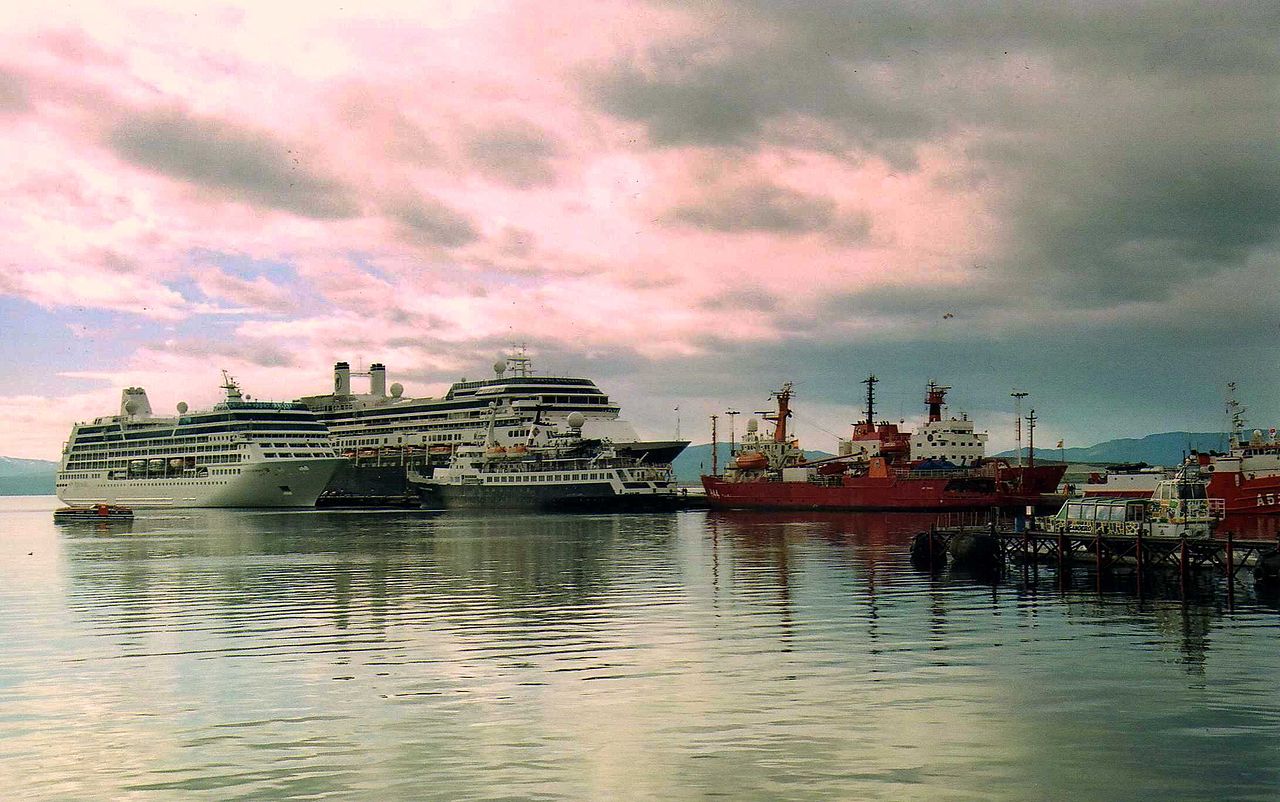
Cruise ships at dock, Ushuaia, Tierra del Fuego, Argentina. Photo Credit: Rodolfo Pace

Army Recognition reports interaction between the US and Argentine Navies as part of Exercise Southern Seas 2024, being conducted as USS George Washington (CVN-73) transits from the East Coast to her new Homeport in Japan.

There is a particularly interesting note here,

“A central aspect of this evolving partnership is the establishment of an integrated naval base in Ushuaia, the southernmost city in Argentina. This base is strategically important as it faces the Strait of Magellan and is close to Antarctica. The collaboration on this base is intended to enhance logistical capabilities for both countries and serve as a critical point for repair and resupply operations for commercial and military vessels. This move is part of a broader strategy to assert Argentina’s sovereign rights in Antarctica.”

This may suggest that the US is recognizing that the Southern Ocean and Antarctic may be an area of future conflict.

Aside from the obvious relevance of a new logistics base that US Coast Guard icebreakers may use for support of the US contingent in Antarctica, another Coast Guard asset, USCGC James, has been working with Argentina as well,

“Argentina has also agreed to joint naval training exercises with the U.S. Coast Guard to protect its fishing resources. This proposal includes allowing the U.S. Coast Guard Cutter James to patrol Argentine waters, a move that has sparked debate within the Argentine Congress regarding national sovereignty and the presence of foreign military forces​​.”

“The huge, resource rich territory China will snatch while the West dithers” –The Telegraph

The Telegraph has an opinion piece by retired Royal Navy Commander and former CO of the Ice Patrol Vessel HMS Endurance, Tom Sharpe OBE.

He feels, as I do, that we are headed for conflict over claims to Antarctica. It is after all, the last land area on earth where no nation exercises sovereignty.

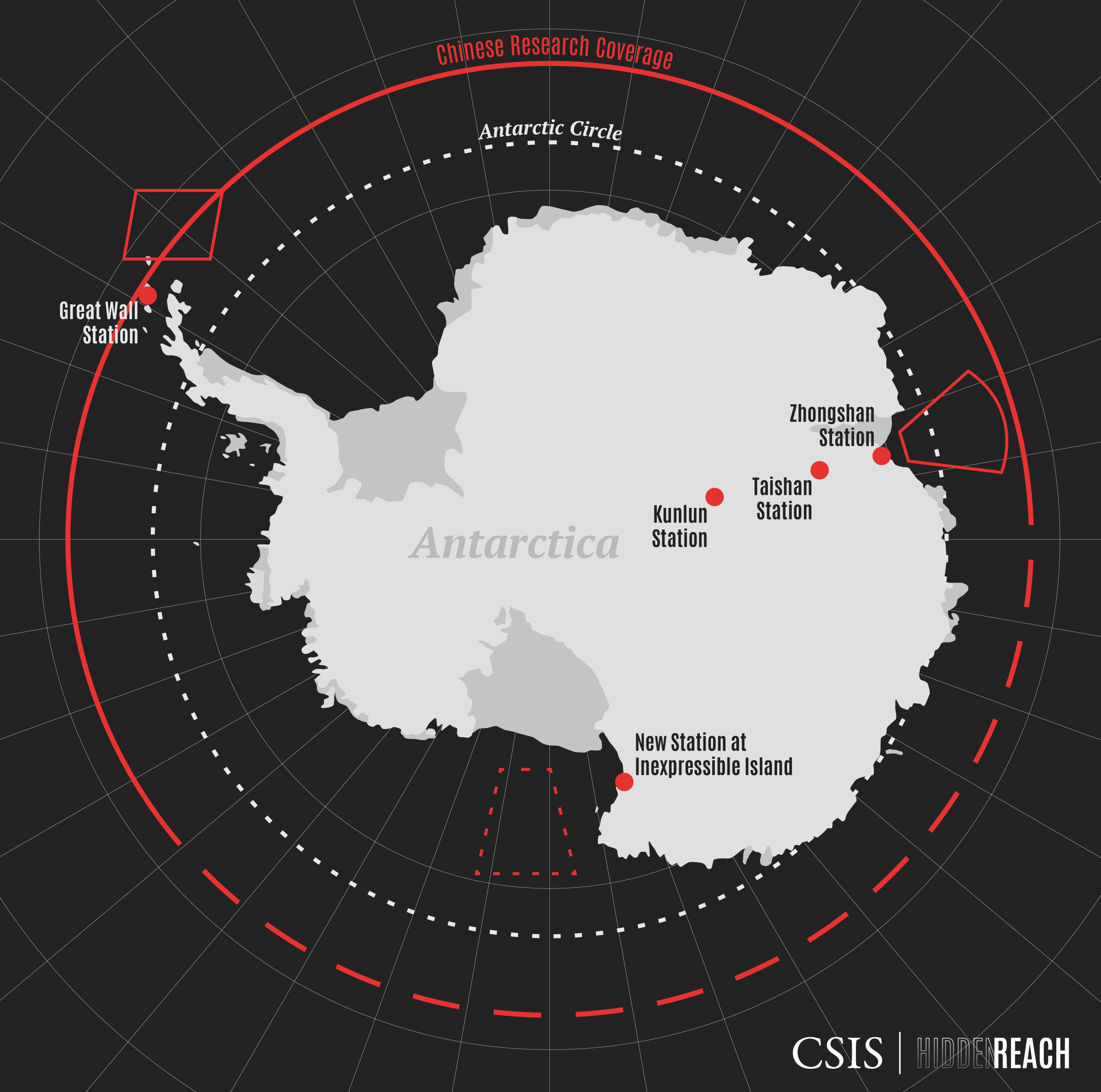
China’s presence in the Antarctic is growing rapidly and, as they have shown in the South China Sea, they may choose not to accept the decisions of international courts.

Adapted from a 2021 Chinese environmental evaluation report submitted to the Secretariat of the Antarctic Treaty. Source CSIS

What this boils down to is that, after courts make their decisions, we may have to fight in Antarctic to make those decisions stick.

We don’t seem to have given much thought to the possibility of combat in and around Antarctica, but I believe it is a real possibility, perhaps not soon, but beginning in 2048 when the Antarctic Treaty comes up for renegotiation. 24 years may seem to be a long way off, but we are building now the assets that will be available in 2048.

By then the rapidly growing Chinese presence in Antarctic, as well as their Navy are likely to be in a very strong position. We are already seeing the Chinese apparently establishing dual use (civilian and military) facilities in Antarctica.

In the interim, we can expect China and perhaps others to try to skirt the rules to strengthen their presence. We need to monitor and challenge any gray zone operations.

Command Structure:

These are the Unified Combatant Commander’s Areas of Responsibility.

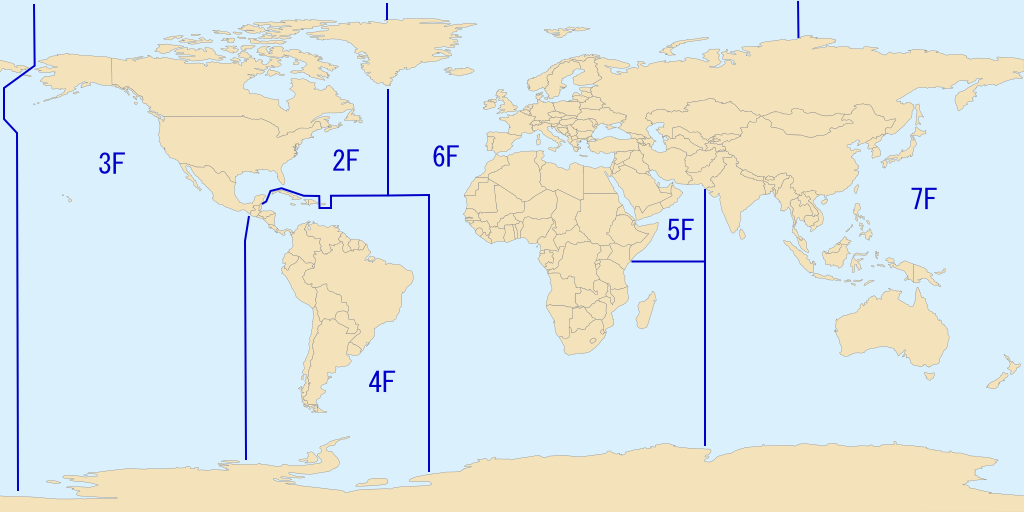
There is an obvious reason that Antarctica does not seem to be on anyone’s radar. Looking at who is potentially responsible for operations in the Antarctic, it is a hodgepodge. Various parts of the Continent might fall under SOUTHCOM, AFRICOM, and INDO-PACOM.

US Navy Fleet Organization

3rd Fleet, 4th Fleet, 6th Fleet, and 7th Fleet all have a nominal slice, but none of these commands consider the area their primary concern.

World map of oceans : English version. By Pinpin via Wikipedia.

There is no single national command authority that covers all of Antartica or the Southern Ocean. Really no one is in responsible for the area below 60 degrees South.

It seems likely that in the near term, Southern Ocean fisheries will require some protection. The only nation I have heard of doing fisheries protection in the Southern Ocean outside their own EEZ is New Zealand.

The Coast Guard currently operates the only US polar icebreakers. At some point the Coast Guard may become involved in fisheries protection in the Southern Ocean. If there is conflict in Antarctica, Coast Guard assets will likely be needed to gain access.

Related: 

“U.S. Coast Guard Cutter Polar Star completes Operation Deep Freeze 2024 mission, departs Antarctica” –News Release

Below is a Pacific Area news release. I followed the link in the editor’s note and there are some great photos and interesting stories, including the fact that while in McMurdo Sound, divers went under the ice to repair a leaking shaft seal.  

ANTARCTICA, 02.03.2024,Photo by Petty Officer 2nd Class Ryan Graves
U.S. Coast Guard Lt. Cmdr. Don Rudnickas, the Coast Guard Cutter Polar Star (WAGB 10) operations officer, salutes Cmdr. Jayna McCarron, Polar Star’s executive officer, prior to a medal ceremony for Polar Star’s crew on the Ross Ice Shelf, Antarctica, Feb. 3, 2024. The U.S. military’s support of U.S. Antarctic research began in 1955. U.S. Indo-Pacific Command continues to lead the Joint Task Force-Support Forces Antarctica team in providing logistic support for the United States Antarctic Program. (U.S. Coast Guard photo by Petty Officer 2nd Class Ryan Graves)

Feb. 23, 2024

U.S. Coast Guard Cutter Polar Star completes Operation Deep Freeze 2024 mission, departs Antarctica

Editor’s Note: For more imagery of Operation Deep Freeze, click here. 

SOUTHERN OCEAN — The U.S. Coast Guard Cutter Polar Star (WAGB 10) and crew departed McMurdo Station, Antarctica, Feb. 12, after operating for 51 days below the Antarctic Circle in support of Operation Deep Freeze 2024.

The Polar Star and crew broke a 38-mile channel through fast ice to create a navigable route for vessels to reach McMurdo Station and escorted a cargo vessel and oil tanker through the ice to and from the station.

“This year, the fast ice in McMurdo Sound was exceptionally thick due to the winds and temperature at the end of last season” said Lt. Cmdr. Don Rudnickas, operations officer. “It challenged our ship and our crew in almost every way, but we met those challenges to achieve our ultimate concern – the resupply of McMurdo Station by sea.”

Before departing the Antarctic Region, the cutter also visited the Bay of Whales, where members from all three of the Coast Guard Regional Dive Lockers dove 90 miles south of the previously documented record for southernmost scuba dive. The crew also went ashore adjacent to the Ross Ice Shelf in the Bay of Whales where they conducted their Antarctica Service Medal ceremony and were able to walk up to the ice shelf.

“Operation Deep Freeze demands more than just breaking ice; it requires navigating the complexities of keeping a 48-year-old cutter operational while subjecting her to the most extreme conditions possible,” said Capt. Keith Ropella, commanding officer. “We rely on the crew’s technical expertise, teamwork, and their commitment to overcoming the relentless obstacles posed by time and nature. It’s also the collaboration of a Joint Task Force, comprised of servicemembers from the U.S. Air Force, Army, and Navy, that play a crucial role in mission success.”

Operation Deep Freeze is the annual logistical support mission provided by the Department of Defense to the National Science Foundation (NSF) managed by the U.S. Antarctic Program (USAP). This includes coordination of strategic inter-theater airlift, tactical intra-theater airlift and airdrop, aeromedical evacuation support, search and rescue response, sealift, seaport access, bulk fuel supply, port cargo handling, and transportation requirements supporting the NSF. This is a unique mission demonstrating U.S. commitment to the Antarctic Treaty and to research programs conducted for the betterment of all humanity. The Polar Star and crew contribute to this yearly effort through icebreaking to clear the channel for supply vessels.

The Polar Star is the United States’ only asset capable of providing access to both Polar Regions. It is a 399-foot heavy polar icebreaker commissioned in 1976, weighing 13,500 tons and is 84-feet wide with a 34-foot draft. The six diesel and three gas turbine engines produce up to 75,000 horsepower.

“U.S. Coast Guard Cutter Polar Star departs Seattle to begin Operation Deep Freeze in Antarctica” –CG News

USCGC POLAR STAR departs for Operation Deepfreeze, Nov. 16, 2023. US Coast Guard photo.

Below is a news release from Coast Guard news.


Nov. 16, 2023

U.S. Coast Guard Cutter Polar Star departs Seattle to begin Operation Deep Freeze in Antarctica

SEATTLE – The U.S. Coast Guard Cutter Polar Star (WAGB 10) and crew departed Seattle, Wednesday, and are scheduled to transit to Antarctica in support of Operation Deep Freeze.

Operation Deep Freeze (ODF) is an annual joint military mission to resupply the United States Antarctic stations in support of the National Science Foundation (NSF), the lead agency for the United States Antarctic Program (USAP). This marks the 27th year for the Polar Star to render support.

Each year, the Polar Star crew breaks a navigable channel through ice, allowing fuel and supply ships to reach McMurdo Station, which is the largest Antarctic station and the logistics hub of the USAP.

“Operation Deep Freeze is a unique and important mission that Coast Guard Cutter Polar Star undertakes each year,” said Capt. Keith Ropella, Polar Star’s commanding officer. “This mission requires year-round effort from the crew to prepare this 47-year-old cutter for the 20,000 nautical mile round trip and extreme environmental conditions we will face. We have an incredible and dedicated team; I couldn’t be more excited or more proud to make this journey with them.”

The U.S. Coast Guard is recapitalizing its polar icebreaker fleet to ensure continued access to the polar regions and to protect the country’s economic, environmental, and national security interests. Each year, the crew is asked to put forth an immense amount of time and effort to prepare the cutter for their annual deployment in support of ODF. The Polar Star completed the third of five planned phases of the service life extension project (SLEP), costing $15.6 million over a 132-day maintenance period.

“The U.S. Coast Guard is pleased to continue partnering with the National Science Foundation and the U.S. Antarctic Program to enable a durable U.S. presence on Antarctica and across the Southern Ocean,” said Vice Adm. Andrew Tiongson, Pacific Area commander. “Our commitment to the Antarctic region is unwavering, and we have been pleased to increase our maritime cooperation with like-minded members of the Antarctic Treaty, as well as investing in new technologies and vessels to ensure our presence is enduring.”

Joint Task Force-Support Forces Antarctica, provides Department of Defense support to the NSF and the USAP through ODF. Every year, a joint and total force team works together to complete a successful ODF season. Active, Guard, Reserve service members from the U.S. Air Force, Army, Coast Guard, and Navy work together to forge a strong JTF-SFA that continues the proud tradition of U.S. military support to the USAP. The U.S. Coast Guard provides direct logistical support to the NSF and maintains a regional presence that preserves Antarctica as a scientific refuge.