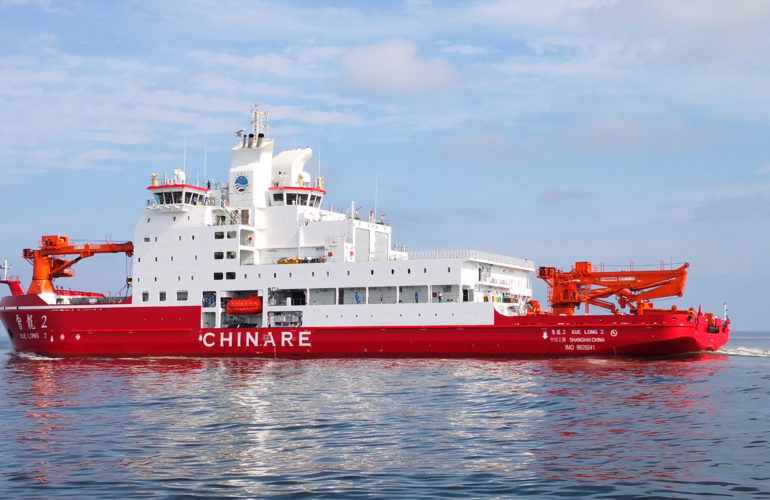
Why Russia Should be Worried, “ARCTIC PRC’s 13th Arctic expedition creating concerns for Russia” –The Watch

Xue Long 2 on sea trials. Photo by PRIC.

NORTHCOM’s online magazine, “The Watch,” gives us a balanced, non-alarmist, look at Chinese Arctic activity, but also tells us why maybe Russia should be worried.

I have contended for a long time that sometime in the future, China will turn on Russia and recover those parts of China ceded to Russia as a result of unequal treaties (and here) in the 19th Century, during what China calls the Century of Humiliation, and while they are at it, maybe a bit more. They have neither forgotten nor forgiven.  
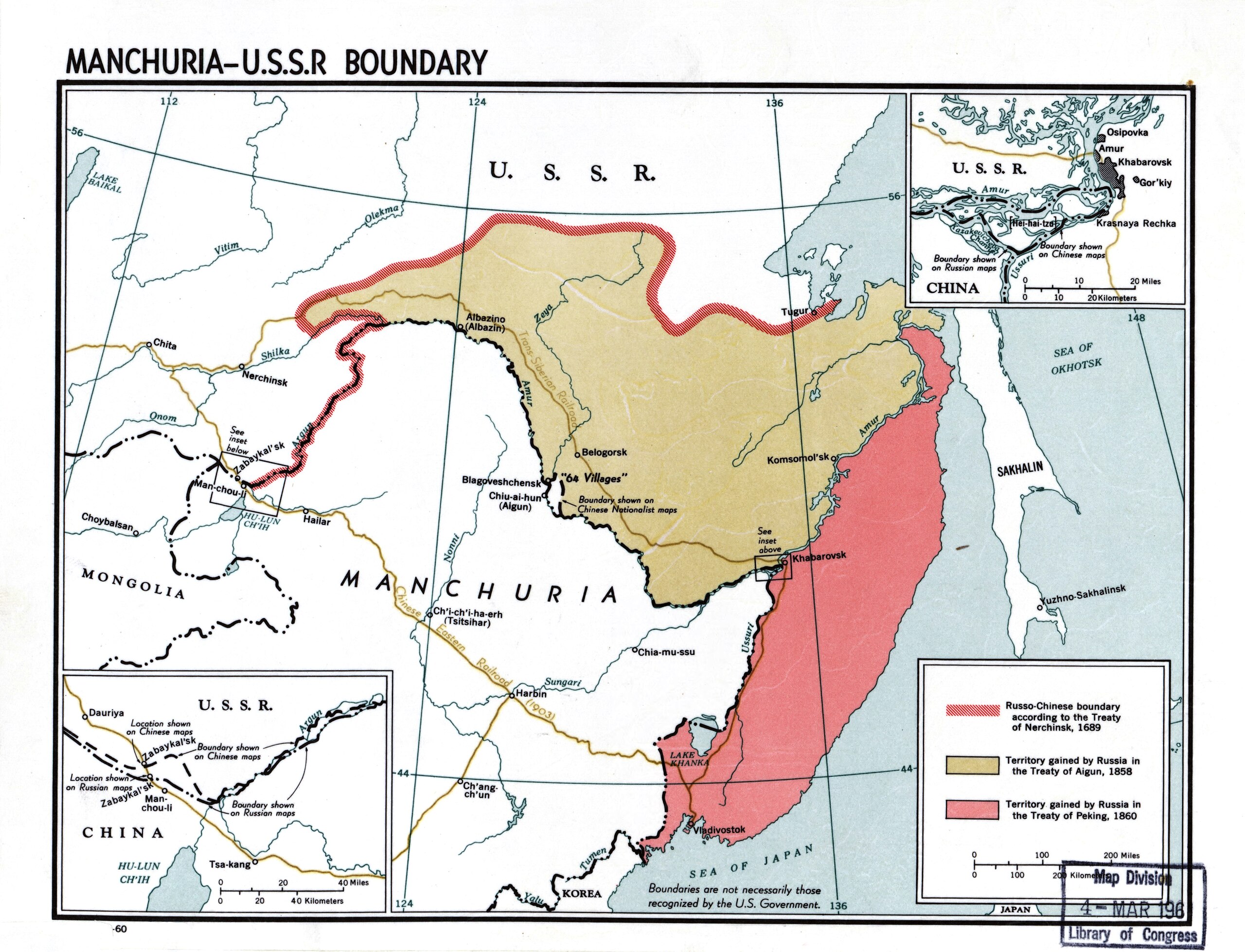
Library of Congress Geography and Map Division Washington, D.C. 20540-4650 USA
DIGITAL ID g7822m ct002999 http://hdl.loc.gov/loc.gmd/g7822m.ct002999

China and Russia have a long history of conflict (here, here, here and here), There was a border conflict between China and Russia (then the Soviet Union) in 1969, when China was clearly the weaker of the two, that lead to China opening to the West and Nixon’s trip to China.

Russia and China’s current partnership has mostly benefited China. China benefited from technology transfers and reverse engineered Soviet and Russian weapon systems.

Now China is clearly stronger than Russia in just about everything except nuclear weapons, and they are now rapidly growing their nuclear capability.

If China should decide retaking Taiwan, which has 215,000 active military and 2,310,000 reservists, a tech savvy population of about 24 million, and is protected by the 100-mile-wide Taiwan Strait and has potential help from powerful allies, may be too risky, they may decide recovery of Outer Manchuria is a good consolation prize.

Population of the Russian Far East, 1990-2015 Data source: Fedstat. Author: Underlying lk. (About four million of these live in former Chinese territory.)

The Russian population in the Far East is small and declining. Russian infrastructure connecting industrialized European Russia with the FarEast is weak. Most of the Russian military is in Europe, and their weakness has been exposed in Ukraine.

If China attempted to retake land formerly part of China, they would want to cut Russia’s East/West logistics links. Taking out the few railroad links using airpower would be relatively easy. Air links can’t carry much in the way of heavy equipment. Most Russian supplies and material reinforcements would have to come by sea. Even if the Chinese did not interdict Russian traffic on the Norther Sea Route as suggested in the linked post, China’s Navy and Air Force could dominate Russian access to the Sea of Japan, including the primary Russian Pacific Fleet base in Vladivostok. Chinese submarines and their rapidly expanding force of aircraft carriers could probably cut off access to the Sea of Okhotsk and Petropavlovsk.

From a Chinese point of view recovery would be justified and perhaps far less costly than an amphibious invasion of Taiwan.

If the Russians can be made to see the righting on the wall, they might even be willing to sell the territory back to their friend at wholesale.

“U.S., Canada Coast Guards, Royal Canadian Air Force conduct search and rescue exercise near Herschel Island, Yukon” –D17

Herschel Island in the arctic, location circled. Basic map is NASA Blue Marble image, with the circle drawn in Inkscape. via NASA World Wind

Below is a press release from District 17 (Alaska). Except for the mention of the Arctic, this sounds like a pretty routine SAR exercise but look at the map above. This was more than 150 miles north of the Arctic Circle, on the Northwest Passage, North of the Canadian mainland. The helicopter would have deployed from Kodiak on the South side of Alaska more than 800 miles South. Click on the link above to see the video.

Oct. 3, 2023

(VIDEO AVAILABLE) U.S., Canada Coast Guards, Royal Canadian Air Force conduct search and rescue exercise near Herschel Island, Yukon

ANCHORAGE, Alaska – The U.S. Coast Guard and Canada Coast Guard conducted a cooperative search and rescue training exercise near Herschel Island, Yukon, Canada, on Saturday.

The exercise centered around the French cruise ship Le Commandant Charcot, whose crew simulated an onboard fire with severe personal injuries and a complete evacuation of the vessel.

The crew of a U.S. Coast Guard HC-130 aircraft from Air Station Kodiak were first to respond to the simulated distress call and acted as the on-scene commander for the exercise, coordinating response efforts and relaying communications.

Later a Royal Canadian Air Force HC-130 crew responded to drop medical supplies and response personnel onto Herschel Island where exercise participants that were acting as injury victims awaited treatment.

A U.S. Coast Guard MH-60 Jayhawk helicopter crew from Air Station Kodiak also responded by lowering a rescue swimmer onto the deck of the cruise ship to hoist mannequins acting as injured crew members.

“The increase in human activity in the arctic means there may be a potential for increased Search & Rescue response there as well,” said Captain Brian McLaughlin, Chief of Incident Management at U.S. Coast Guard District Seventeen. “Exercising the Coast Guard’s capabilities to operate in one of the most demanding and remote regions in the world, while simultaneously identifying the associated challenges, highlights the critical importance of these joint exercises and their influence on future operational success along our shared maritime border with Canada.”

The exercise, which took more than a year to plan, is part of the Coast Guard’s ongoing commitment to a safe and secure arctic.

Correction: The title of this press release was changed to reflect all entities involved.


“USNI News Fleet and Marine Tracker: Oct. 2, 2023”

Royal Navy vessel HMS Spey (P234) (foreground) conducts coordinated ship maneuvers with U.S. Coast Guard Cutter Munro (WMSL 755) Sept. 17, 2023, in the South China Sea. US Navy Photo

Not much new in the US Naval Institute Oct, 2nd Fleet and Marine Tracker. Still only two Navy ships operating under 4th Fleet. I don’t expect that to change much if at all. With Jacksonville based LCS being decommissioned, it may actually get worse. But the Naval Institute did give us a couple of great photos.

USCGC Healy (WAGB-20) and the Norwegian Coast Guard Vessel Svalbard sail in formation while en route to conduct joint exercises in northern Norway in the Barents Sea. US Coast Guard Photo

USCGC Healy has a long way to go to get back to her homeport, Seattle. Incidentally Svalbard, like Healy has made it to the North Pole. In 2020, when Healy was having difficulty, Svalbard took over a mission for Healy.

“US Coast Guard Cutter Forward returns home following 78-day deployment in the high northern latitudes” –News Release + Second Look at Harriet Lane

Below is a news release reporting an unusual 270 foot East Coast WMEC deployment including a high latitude multi-national exercise, deployment of a Navy Unmanned Underwater Vessel (UUV), enforcing fisheries on behalf of an international organization, hosting 40 international guests at the 2023 U.S.-Pacific Island Country Summit, and helping U.S. Navy’s Afloat Training Group Atlantic develop their Arctic training program. (Note–more photos at the link above.)

In the photo above and particularly at the end of this video of the homecoming, you can also see USCGC Harriet Lane (WMEC-903), second from the left in the photo, fresh from its Service Life Extension Program (SLEP) refit, with its Mk92 firecontrol removed and her 76mm Mk75 replaced by a 25mm Mk38 (presume she did not get the newer 30mm). I think I was mistaken earlier, in thinking her AN/SLQ-32 electronic warfare system had been removed. I believe I see it still installed on the video. Harriet Lane is expected to assume duties as a dedicated Central and Western Pacific asset in the near future.

Sept. 26, 2023

US Coast Guard Cutter Forward returns home following 78-day deployment in the high northern latitudes

PORTSMOUTH, Va. – The crew of the U.S. Coast Guard Cutter Forward (WMEC 911) returned to their homeport in Portsmouth, Tuesday, following a 78-day deployment in the North Atlantic Ocean.

Throughout the deployment, Forward supported the U.S. Coast Guard’s Arctic Strategy and partnered with allied nations and agencies during Operation Nanook 2023, an annual Canadian-led military exercise to strengthen maritime objectives in the high northern latitudes.

Alongside Canadian and French forces navigating the waters of the North Atlantic Ocean, Forward’s crew performed training evolutions including towing and formation steaming, replenishment at sea, visual communications tactical signaling, and cross-deck exercises. In addition, an attached team from Coast Guard Tactical Law Enforcement Team Pacific conducted a boarding exercise with French Navy vessel BSAM Garonne to demonstrate at-sea capabilities and assist in enhancing partner training curriculums.

During the deployment, Forward also completed two living marine resources enforcement patrols. The first was carried out in support of the First Coast Guard District’s living marine resources mission. The second, conducted alongside international partners, was focused on commercial fishing vessels inspections as part of the Northwest Atlantic Fisheries Organization. The NAFO fisheries patrol ensured compliance with international fishing norms while safeguarding natural resources and preserving fish stocks, all reinforcing U.S. dedication to combatting illegal, unregulated, and unreported fishing.

Forward collaborated with embarked U.S. Navy personnel from the Unmanned Undersea Vehicle Flotilla-1 team to launch their Razorback UUV. The undersea vehicle, equipped with mapping and sonar capabilities, deployed deeper than any U.S. Navy submersible and traveled to a depth of nearly 2,000 feet (600 meters).

Members from the U.S. Navy’s Afloat Training Group Atlantic were also embarked aboard Forward to help build their service’s Arctic Vision Initiative, which will serve to inform U.S. Navy training entities of seamanship, navigation, engineering, and medical considerations necessary for operating naval vessels in the polar regions.

Forward sailed more than 10,500 nautical miles while the crew liaised with international partners through a series of port calls. Forward visited Halifax, Nova Scotia, Canada, during their Natal Day celebration to observe the province’s birthday. Crew members then traveled to Nuuk, Greenland, and completed a short visit to St. John’s, Newfoundland, Canada, before transiting back to the United States.

Forward ended the deployment by hosting several Indo-Pacific heads of state who were participating in the 2023 U.S.-Pacific Island Country Summit in Baltimore, Maryland. Approximately 40 international guests joined Forward for a tour and reception ahead of the transfer of U.S. Coast Guard Cutter Harriet Lane (WMEC 903) to a Pacific Ocean homeport.

“We had the opportunity to advance objectives of the Arctic Strategy and support the IUU Fishing Strategic Outlook,” said Cmdr. Staci Rutsch, commanding officer of Forward. “Acting as true ambassadors, we represented the nation in diplomatic engagements with NATO partners, reinforcing U.S. interests and solidifying the USCG as being the partner of choice. This crew’s ability to shift to perform highly in our non-standard missions leaves me impressed and motivated every day.”

For information on how to join the U.S. Coast Guard, visit www.GoCoastGuard.com to learn more about active duty and reserve officer and enlisted opportunities. Information on how to apply to the U.S. Coast Guard Academy can be found here.

For more, follow us on FacebookInstagram and Twitter.

OSK Design for Proposed Danish Arctic Frigate

Below the break, you will find an OSK Design news release regarding their proposal for Arctic frigates to replace the four ship Thetis class, which performs many of the functions of coast guard cutters. Earlier reports had seemed to indicate the Thetis class would be replaced by a different design, OMT’s MPV-80, but apparently the Danish government has not yet made a choice.

The OSK Design’s Arctic frigate proposal is featured in the video above, beginning at time 5:00.

The two designs look very different. The MPV-80 is short (84 meters) and portly (17.6 meters of beam). The OSK “Arctic Frigate” has more conventional proportions but is larger than the OPC in every dimension and may be larger than the NSC.

Still, they do share some characteristics. Both feature the SH Defence “CUBE” modular system. Both are ice class designs. Both appear to be equipped with two Rheinmetall Oerlikon 35mm Millennium Guns as CIWS. 

The Danes have created some widely admired designs lately, including the Absalon class and the Iver Huitfeldt class which has evolved into the British Type 31 “Arrowhead 140” frigate also being built for Indonesia and Poland. There are not many Arctic frigate designs out there. This will be interesting. We might want to reconsider our Arctic Security Cutter requirements.


Danish naval architects OSK Design unveils latest concept for an Arctic frigate

Leaders in maritime innovation, OSK Design, is proud to introduce their latest design, the Arctic frigate, an exceptional vessel meticulously crafted for operations in the North Atlantic, High North, and Greenland regions. This multi-purpose Arctic frigate is set to redefine maritime capabilities with its significant features and capabilities. One of the notable features of the Arctic frigate is its fully operational helicopter, ready to take on a key role in its missions. This helicopter is a critical asset for Arctic operations, allowing for airborne scouting, transport, and search and rescue missions in the challenging Arctic environment.

Mission-ready versatility, arctic-ready and an exceptional mobility
The Arctic frigate is a true workhorse, designed to excel in a wide range of missions.
The Arctic frigate is classed for year-round operation in the arctic, capable of withstanding the most challenging ice conditions while maintaining optimal performance. With a length of 125 meters, a beam of 18.0 meters, a maximum draught of 6 meters, and a top speed of 23+ knots, this frigate is built for swift and agile navigation in the most unstable waters.

Equipped to handle any situation, the Arctic frigate boasts an impressive arsenal, including a gun, missile launcher, and overhead weapon systems, ensuring readiness for both offensive and defensive maneuvers. Operating in one of the harshest environments on Earth demands extraordinary capabilities.

Mission flexibility redefined
The Arctic frigate is powered by a state-of-the-art diesel-electric system (PODs), offering both efficiency and maneuverability. A crew capacity of 60-125+ depending on the task, a fully equipped helicopter, and a drone capacity for air, surface, and underwater operations ensure that the Arctic Frigate is ready for any mission. With two RHIBs (Rigid-Hulled Inflatable Boats) up to 9 meters in length and one stern-launched boat up to 12 meters, the vessel is equipped for swift and effective search and rescue missions.

The mission bay is designed to accommodate various modular systems and stores, such as the ACTAS ASW system, mine-laying modules, oil spill booms and equipment for the Arctic Standby Force, allowing for mission-specific adaptability. With its large, modularized mission bay, this vessel is adaptable for Anti-Submarine Warfare (ASW), surface and air surveillance, maintenance of sovereignty, search and rescue, disaster relief and enhanced self-defense.

With the Arctic frigate, OSK Design has designed a vessel that represents the pinnacle of maritime engineering and innovation. It is uniquely prepared to meet the demands of operations in the Arctic, offering a combination of versatility, power, and adaptability.

For more information about the Arctic frigate and OSK Design’s commitment to pushing the boundaries of maritime design, please contact Lars Povl Jensen, Head of Defence at OSK Design, Phone: +45 31 43 75 60 or mail: lpj@oskdesign.com

“MDSU-1 DIVES THE ARCTIC WITH U.S. COAST GUARD” –Seapower

BEAFORT SEA (August 11, 2023) A military diver swims behind the icebreaker USCGC Healy (WAGB 20) during a scientific mission in the Beaufort Sea with USCG divers of Regional Dive Locker West and Navy divers of Mobile Dive and Salvage Unit (MDSU) 1 Aug. 11, 2023. Together, the Coast Guard and Navy conducted 42 military dives, totaling 656 minutes of bottom time to depths of 40 feet in the Arctic Ocean. As a component of Explosive Ordnance Disposal Group One, MDSU-1 provides ready, expeditionary, rapidly deployable mobile diving and salvage companies to conduct harbor and waterway clearance, salvage, underwater search and recovery, and underwater emergency repairs in any environment. (U.S. Navy Courtesy Photo)

The Navy Leagues online magazine, “Seapower,” reports Navy divers have deployed with USCGC Healy, now in the Beuford Sea. There was this interesting note,

“They [the Coast Guard] don’t have a decompression chamber, but they’re getting one,” said Hanson. “We let them use ours for this mission conducted for the Office of Naval Research (ONR), and we helped train the Coastguardsmen divers on the operation, maintenance and transport of a decompression chamber.”

and this nice quote,

“We’re trained to call the Coast Guard if a diver gets in trouble,” Hanson said. “But in this case, we were diving right off the side of a Coast Guard cutter, so we might have been in a super remote place, but the exact people we count on for help were right there.”

The description of diving under the ice is surprising.

“US Coast Guard Icebreaker Sails in Proximity to Russia’s Northern Sea Route” –High North News

Nansen and Amundsen Basins Observational System (NABOS) moorings Healy is expected to visit. (Source: UAF)

High North News reports,

The US Coast Guard icebreaker Healy finds itself in unfamiliar waters as it becomes the first US government surface ship to venture into proximity of Russia’s Northern Sea Route (NSR) in the East Siberian Sea in several decades.

Russia claims the right to regulate traffic along the Northern Sea Route, a right the US does not recognize.

Healy is engaged in support of scientific research, but the Russians may view it as a challenge to their regulatory regime. The voyage, which originated in Seattle will end in Norway. Of course, Healy will then have to return to the US.

It is likely the US would like to do a Freedom of Navigation Operation through the Northern Sea route, but we have not had the facilities to do it with confidence.

Intentionally or not, Healy may be dipping a toe into the Northern Sea Route. So far, the Coast Guard is not saying.

Check out the article for a more complete discussion.

Thanks to Tups for bringing this to my attention.

“NPS Research on Coast Guard Icebreaker to Enhance Arctic Readiness” –Marine Link

During a seven-week Arctic transit aboard the U.S. Coast Guard icebreaker USCGC Healy (WAGB 20), Dr. Nita Shattuck from the Naval Postgraduate School (NPS) will study the impact of the extreme environment on crew performance and potential mitigations. Additional research includes assessment of an Amos01 3D printer installed by David Dausen from NPS’ Consortium for Advanced Manufacturing Research and Education (CAMRE), and specially instrumented to measure the impact of adverse Arctic sea conditions.

Marine Link reports the Naval Post Graduate School is doing some interesting studies on the working environment experienced by USCGC Healy’s crew.

To study the effects of these conditions on a ship’s crew at sea, Shattuck and her team will collect physiological data from the Healy’s crew members. Using innovative wearable technology, they will continuously monitor physiological processes such as sleep, heart rate, heart rate variability, respiration, oxygen saturation, and skin temperature. Study participants indicate that the rings are an improvement over wrist-worn wearables. The team will also use other sensors to monitor ambient light, noise levels, motion, and vibration aboard the ship.

The report also mentions that Healy will be going to Tromsø, Norway. How they get there will be interesting. Will they go the Northwest Passage through the Canadian EEZ or the Northern Sea Route through Russia’s EEZ?

“U.S. Coast Guard Cutter Healy, National Science Foundation embark on Arctic Ocean mission”

News Release from Coast Guard News. There is a second video on the link showing the preparation and launching of an Unmanned Underwater Vehicle (UUV).


Aug. 26, 2023

U.S. Coast Guard Cutter Healy, National Science Foundation embark on Arctic Ocean mission

KODIAK, Alaska – U.S. Coast Guard Cutter Healy (WAGB 20) crew and embarked researchers departed Kodiak, Saturday, for the cutter’s second mission this year in the high latitudes of the Arctic Ocean.

Healy’s next mission takes the cutter west, where the crew and a new team of researchers will support work of the National Science Foundation and International Arctic Research Center by servicing the Nansen and Amundsen Basins Observational System (NABOS).  The month-long mission’s objective is to recover, service, and deploy nine long-term subsurface mooring arrays, stretching from the Eurasian Basin to the East Siberian Sea.

These moorings will give insight into the how water from the Atlantic Ocean is being introduced into the Arctic at the shelf water level, deep basin interior, and the upper ocean; as well as help develop an understanding of water circulation in the region. Another key capability Healy will provide is the ability to execute Conductivity, Temperature, and Depth (CTD) casts, sampling the water column in areas normally inaccessible due to pack ice.

“The Siberian Arctic, one of the regions of the Arctic where changes in sea ice and ocean are currently most noticeable, will be the area of this high-latitude mission onboard the Healy,” said Igor Polyakov, NABOS project lead. “However, this region is also one of the least observed, making this cruise crucial if we want to create a trustworthy observing and forecasting system.”

The NABOS project’s foundational goal since beginning in 2002 is to gain understanding of the circulation and the transformation of Atlantic waters into the Arctic Ocean. Missions from 2021 to 2025 are directed at quantifying the freshwater introductions and their impact on the transportation of heat from Atlantic waters into the region.

With these observations, NABOS looks to inform the scientific community and public on the potential impacts to Arctic sea-ice coverage and marine ecosystems, and the expanding effect on the mid-latitudes. The success of NABOS since its earliest days has always been reliant on international partnerships, researchers of diverse backgrounds, and assets like Healy achieving the results for which the project is known.

During July and August, the Healy’s mission supported and collaborated with the Office of Naval Research (ONR) experts from across a broad spectrum of disciplines, deploying and servicing instruments for ONR’s Arctic Mobile Observing System (AMOS) in the Beaufort Sea.

Under the leadership of U.S. Coast Guard Capt. Michele Schallip, Healy’s commanding officer and mission chief scientist, Dr. Craig Lee, Healy’s crew and research teams completed an array of science stations, including mooring very low frequency acoustic devices to the sea floor, deploying subsurface gliders, and conducting science equipment installations on ice floes.

The naturally hazardous environment of the Arctic required Healy to remain on-scene for lengthy periods to ensure proper function of instrumentation. In one instance, the ship was forced to send a repair part to the ice after a polar bear damaged equipment overnight. Healy’s unique capabilities are essential to the AMOS program, being the only U.S. platform able to provide researchers with access to the most remote reaches of the Arctic Ocean.

In addition to the NABOS and AMOS missions, the U.S. Coast Guard Research and Development Center is running and coordinating numerous scientific research efforts for the U.S. Coast Guard and partner research organizations. These projects will focus on several key areas pertaining to Arctic operations, including search and rescue, communications, crew performance, and atmospheric monitoring and characterization. The expanded knowledge base this research will provide will help the U.S. Coast Guard and partners improve Arctic operations and systems.

Healy is the Coast Guard’s only icebreaker specifically designed for Arctic research, as well as the nation’s sole surface presence routinely operating in the Arctic Ocean. The platform is ideally specialized for projects like NABOS; providing access to the most remote reaches of the Arctic Ocean; areas barricaded by pack ice and insurmountable by most research vessels.

The Healy deploys annually to the Arctic to support multiple science missions and Operation Arctic Shield, the service’s annual operation to execute U.S. Coast Guard missions, enhance maritime domain awareness, strengthen partnerships, and build preparedness, prevention, and response capabilities across the Arctic domain.

Commissioned in 1999, and homeported in Seattle, Healy is the largest ship in the U.S. Coast Guard at 420-feet with a displacement of over 16,000 tons. The crew compliment of 84 supports the ship’s primary mission of scientific support. It is one of two active polar icebreakers in the Coast Guard’s fleet. The Seattle-based Coast Guard Cutter Polar Star (WAGB 10) is a Polar icebreaker commissioned in 1976.

The Coast Guard is recapitalizing its Polar icebreaker fleet to ensure continued access to both Polar regions and support the country’s economic, commercial, maritime, and national security needs.

“USNI News Fleet and Marine Tracker: Aug. 21, 2023”

USCGC Munro (WMSL-755) escorts USNS Fisher (T-AKR-301) in the East China Sea on Aug. 12, 2023. US Navy Photo

Looking at the latest US Naval Institute “Fleet and Marine Tracker,” I am a bit surprised to see there are still 3 Navy ships operating under 4th Fleet, presumably doing drug interdiction. This is an uptick.

Again, they report on atypical Coast Guard operations:

  • Legend-class National Security Cutter USCGC Munro (WMSL-755) departed South Korea last week and is in the Korea Strait. (As I mentioned earlier, there is a possibility, cutters may encounter the new North Korean corvettes.)
  • Coast Guard Cutter USCGC Healy (WAGB-20) continues its work in the Beaufort Sea. Healy is on a five-month deployment in partnership with ONR and the National Science Foundation.
  • Coast Guard Cutter USCGC Forward (WMEC-911) is currently supporting Operation Nanook. Operation Nanook is an annual Canadian-led exercise that fosters international cooperation and shared responsibility in the Arctic and the northern Atlantic Regions. The cutter recently made a port call in Nuuk, Greenland.

You can use Control F “USCGC” if you want to quickly find the Coast Guard cutters mentioned in the USNI posts.

PATFORSWA is mentioned again.

The link in the Healy entry, “U.S., Canadian Icebreakers Conduct Operation, Rendezvous en Route to Arctic Ocean” is interesting, plus there is more in the USNI post including an “adorable” polar bear photo.