“Trump Administration Opens Pacific Remote Islands Marine Monument to Commercial Fishing” –gCaptain

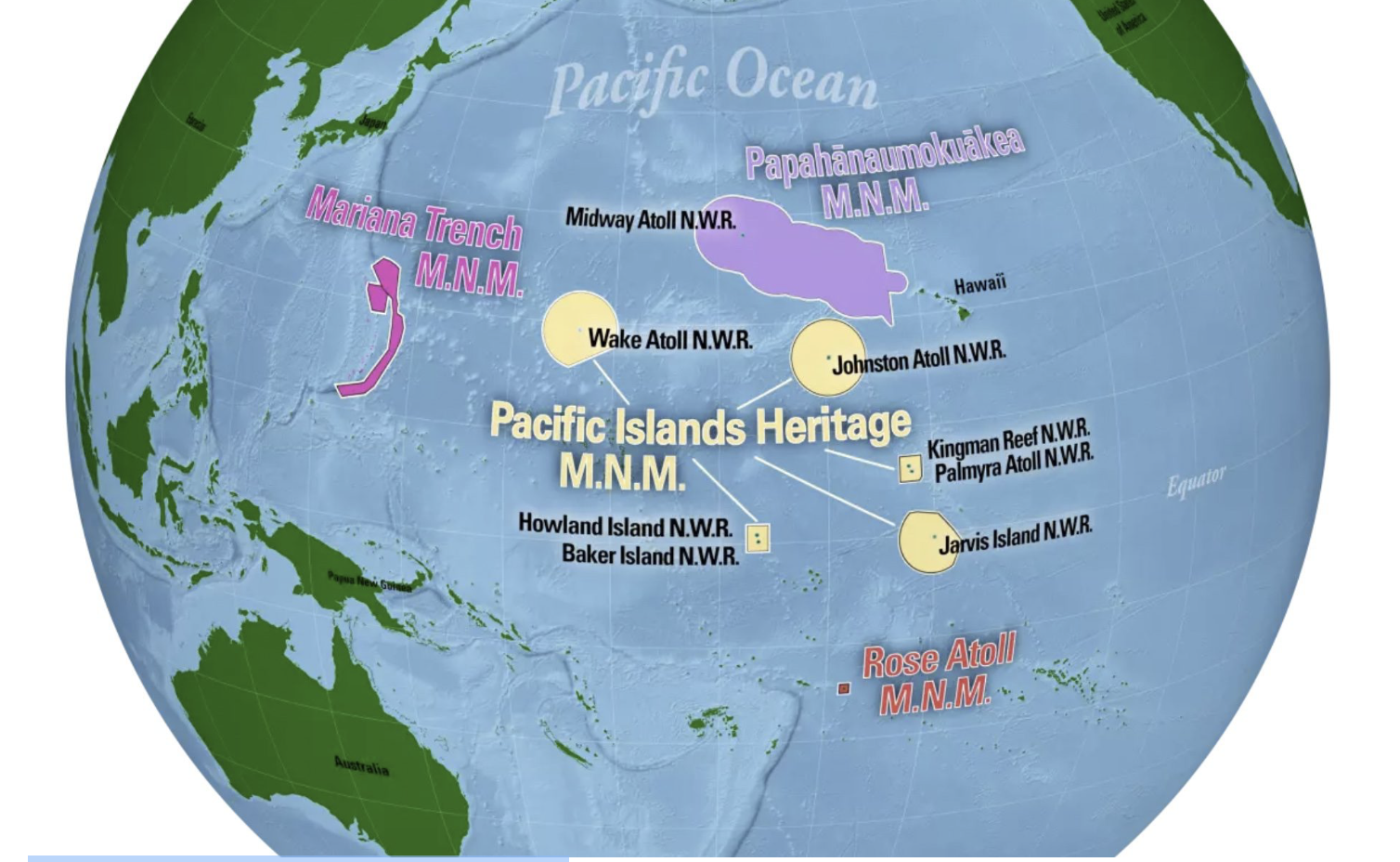
Pacific Remote Islands Marine Monument. Map courtesy U.S. Fish and Wildlife Service

gCaptain reports,

President Donald Trump signed a proclamation on Thursday opening the Pacific Remote Islands Marine National Monument (PRIMNM) to commercial fishing, marking a substantial change in U.S. fishing policy.

The proclamation specifically permits U.S.-flagged vessels to conduct commercial fishing operations within 50 to 200 nautical miles of the PRIMNM’s boundaries. This decision affects an expansive marine protected area spanning approximately 495,189 square miles in the central Pacific Ocean – a region nearly five times the size of all U.S. National Parks combined.

This would seem to provide additional justification for a Coast Guard base and cutters (presumably Webber class WPCs) in American Samoa to provide additional safety for US fishermen and to keep unwelcome foreign fishermen out.

“U.S. Coast Guard cutter arrives in Papua New Guinea, embarks law enforcement officers to conduct joint maritime patrol” –News Release

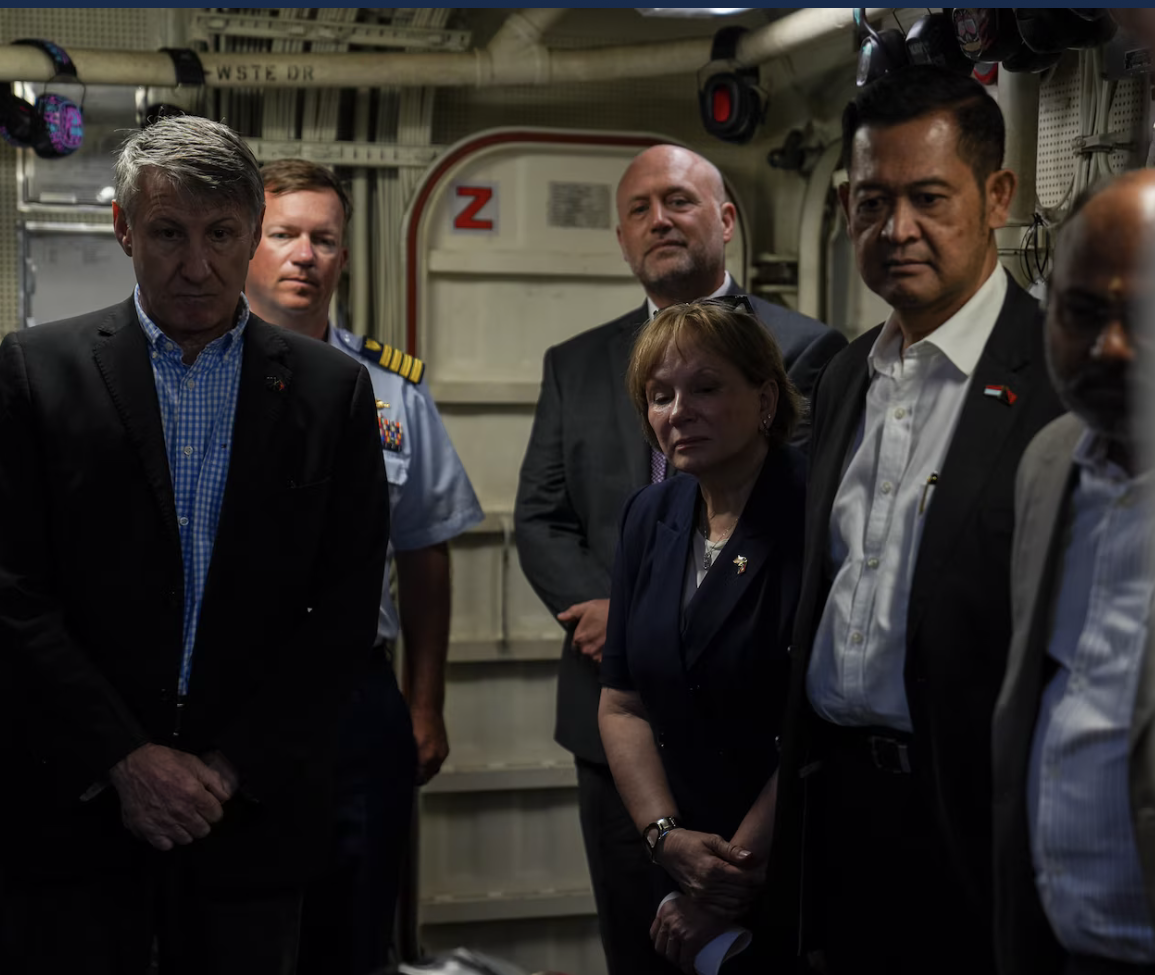
Officials from multiple agencies stand in the engine control room of the Coast Guard Cutter Midgett (WMSL 757) in Papua New Guinea Mar. 6, 2025. Papua New Guinea lies in the heart of key shipping routes, where freedom of navigation for the transport of global goods and fisheries and deep-sea resources abounds. The Coast Guard and Papua New Guinea collaborate to mitigate shared maritime challenges and threats, promoting regional security and stability within Oceania. (U.S. Coast Guard photo by Petty Officer 3rd Class Jennifer Nilson)

Below is a Coast Guard news release.

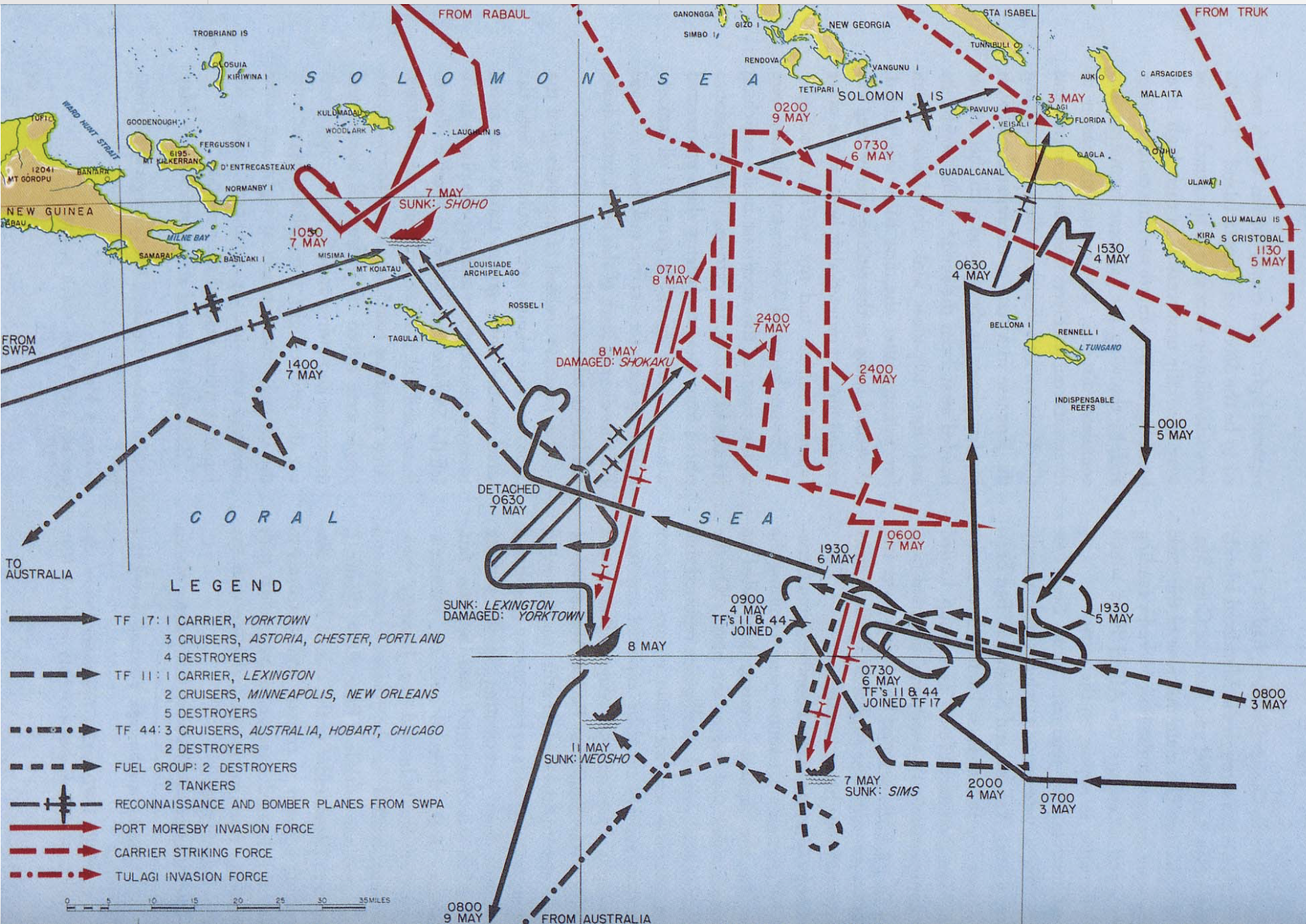
For those with an interest in World War II history. The Battle of the Coral Sea turned back a Japanese force that had planned to attack Port Moresby on the East end of New Guinea.

Battle of Coral Sea. United States Army Center of Military History. The Campaigns of MacArthur in the Pacific, Volume I. Reports of General MacArthur., p. 48, Plate 14. Port Moresby, NewGuinea is in the upper left; Guadalcanal, Tulagi and other Solomon Islands in the upper right; Australia to the South and West

March 12, 2025

U.S. Coast Guard cutter arrives in Papua New Guinea, embarks law enforcement officers to conduct joint maritime patrol

PORT MORESBY, Papua New Guinea — At the invitation of the Papua New Guinea government, the U.S. Coast Guard Cutter Midgett (WMSL 757) arrived in Port Moresby, Thursday, to embark Papua New Guinean law enforcement officers. This visit directly supports Papua New Guinea’s leadership in the Pacific Islands and its commitment to maritime security, specifically in combatting illegal, unreported, and unregulated fishing.

Midgett’s presence reinforces the U.S. Coast Guard’s commitment to deeper relations with Pacific Island nations and regional stability. This collaborative effort marks the first time a national security cutter, the U.S. Coast Guard’s most capable law enforcement cutter, will conduct bilateral maritime law enforcement operations in Papua New Guinea’s Exclusive Economic Zone (EEZ), under the existing bilateral agreement that was singed in May 2023.

This joint patrol will represent a tangible demonstration of the bilateral agreement between the United States and Papua New Guinea, strengthening maritime governance within the Pacific and deterring illegal activities within Papua New Guinea’s EEZ to promote the sustainable use of marine resources.

Midgett, commissioned in 2019 and homeported in Honolulu, is the eighth Legend-class national security cutter. These 418-foot vessels are equipped with advanced technology and a range of capabilities, making them ideally suited to support a wide range of missions, including maritime security, law enforcement, and search and rescue operations. Midgett’s deployment to Oceania highlights the United States’ enduring commitment to promoting a peaceful, secure, prosperous, and resilient Pacific Islands region.

“Sails on an OPV? Vessel Design, with French Flair” –MarineLink

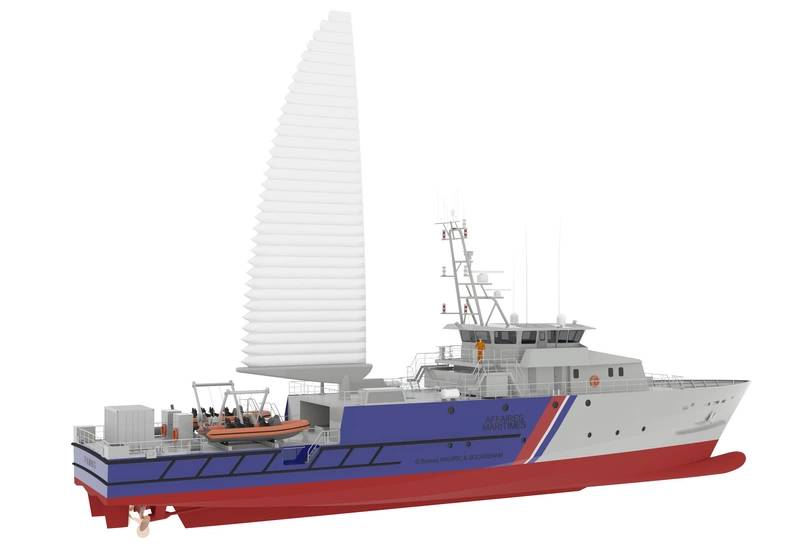
3D rendering of the PAMNG. Image ©MAURIC

Marine Link reports a contract for construction of a small Offshore Patrol Vessel (OPV) for the French Directorate General for Maritime Affairs, Fisheries and Aquaculture (DGAMPA).

I have been seeing reports of sails of various sorts being added to merchant vessels in order to reduce fuel consumption, but this is the first time I have seen this applied to a modern OPV.

It is just part of their efforts to make the ships fuel efficient while minimizing emissions,

The wind-assisted propulsion solution, combined with diesel-electric hybrid propulsion and IMO TIER III compliant engines, are designed to position the vessel “at the forefront of maritime ecological transition,” wrote DGAMPA.

As with all vessel designs, there is not a silver-bullet solution to increased efficiency, and this vessel will also have a hull design optimized through computational fluid dynamics, enhanced insulation with optimized energy management, photovoltaic panels, and an active trim control system.

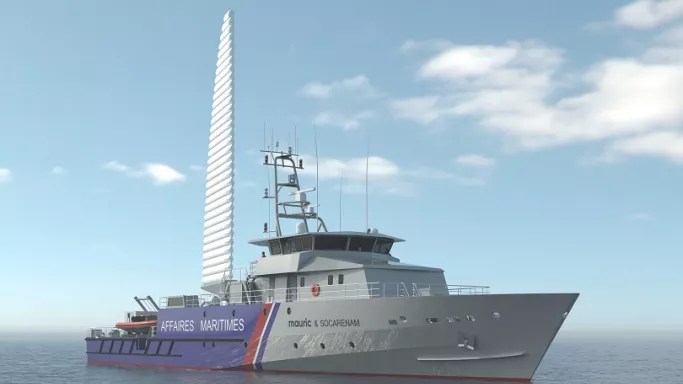
Based on some modest experience with sailing craft, the sail may also have the effect of steadying the ship, slowing the roll and making it more comfortable as well. In addition, with the mast apparently stepped a bit aft of amidships, and the sail aft of that, it appears that the ship would drift with its head into the wind and seas rather than broadside as most ships do.

Rendering of the PAMNG. Image ©MAURIC

54m OPV Main Particulars

  • Crew: 16 persons
  • Duration: 12 days, up to 200 days at sea per year
  • Length: 53.7 m
  • Construction: Steel hull, aluminum superstructure
  • Propulsion: Diesel-electric hybrid system with wind assisted propulsion
  • Maximum speed: 17 kts
  • Endurance: 3,600 nm at 12 kts
  • Nautical equipment: 2 semi-rigid boats of 6.50m (speed: 35 kts)

Main Missions

  • Protection of national interests
  • Maritime fisheries surveillance and control
  • Environmental regulations compliance
  • Pollution and navigation monitoring
  • Assistance to persons
  • Public service missions and representation of French Maritime Affairs Administration

USINDOPACOM Exercises & Engagements

INDOPACOM Defense Forum Special Features has a post that includes the map above that shows where “Exercise, Joint Combined Exchange or Training Teams” are located.

On the linked post, you can hover over the dots, and it will list activities in that location. Coast Guard is associated with dots identified as Solomon Islands, Federated States of Micronesia (FSM), Guam, Palau, Papua New Guinea, and Australia. It should have included the Marshall Islands as well. All these are also associated with Operation Blue Pacific.

Federated States of Micronesia, the Marshall Islands, and Palau are Compact of Free Association states. Guam and the Northern Mariana Islands are US territory.

The same post also has a different map that shows the location of DOD units normally located in the AOR (area of operations) that may be of interest.

“U.S. Coast Guard Cutter Munro holds a change of command ceremony” –News Release

Royal Navy vessel HMS Spey (P234) (foreground) conducts coordinated ship maneuvers with U.S. Coast Guard Cutter Munro (WMSL 755) Sept. 17, 2023, in the South China Sea. Munro is deployed to the Indo-Pacific to advance relationships with ally and partner nations to build a more stable, free, open and resilient region with unrestricted, lawful access to the maritime commons. (U.S. Navy photo by Chief Petty Officer Brett Cote)

Below is a news release. Routine change of command, but the Munro’s recent activities are interesting for their variety, three very different activities in widely dispersed areas, Eastern Pacific, Western Pacific, and far Northern Pacific. More info in these earlier news releases:


 May 31, 2024

U.S. Coast Guard Cutter Munro holds a change of command ceremony

SAN DIEGO — The U.S. Coast Guard Cutter Munro (WMSL 755) held a change of command ceremony Thursday in San Diego.

Vice Adm. Andrew J. Tiongson, Commander, U.S. Coast Guard Pacific Area, presided over the ceremony in which Capt. James O’Mara IV relieved Capt. Rula Deisher as Munro’s commanding officer.

Deisher served as Munro’s commanding officer from May 2022 to May 2024, sailing over 73,000 nautical miles to 17 ports, including eight foreign countries during patrols in the Bering Sea, Western Pacific, and Eastern Pacific.

Most recently, Munro and the crew were responsible for the interdiction and seizure of illegal narcotics worth an estimated $460 million in wholesale value and over $2 billion in street value while patrolling the Eastern Pacific Ocean in support of the Joint Interagency Task Force-South. Munro’s crew also supported Operation Southern Shield during their recent patrol by conducting 16 fisheries boardings in the Southern Pacific Regional Fisheries Management Organization convention area, upholding the maritime rules-based order.

During Munro’s Western Pacific patrol, the cutter and crew hosted multiple engagements with foreign partners, including a discussion about the SAPPHIRE agreement with Japanese Coast Guard officers, a subject matter expert exchange, an at-sea engagement with the Korea Coast Guard, and participated in CARAT Brunei, where Munro worked alongside the Royal Brunei Navy in professional subject matter expert exchanges, leadership conferences, and an at-sea engagement.

While patrolling the Bering Sea, Munro conducted 24 fisheries boardings and two search-and-rescue cases, including the medical evacuation of a critical patient from Dutch Harbor, Alaska, to Anchorage, Alaska.

“To the crew of Munro, thank you,” said Deisher. “I am so proud of your endless dedication and care toward each other and our mission. This crew is phenomenal, and it has been an honor and privilege to sail with them and learn from them.”

Deisher’s next assignment is to serve as the Seventeenth District’s Response Division chief.

O’Mara, the incoming commanding officer, brings a wealth of experience to Munro.

Reporting from the Coast Guard’s Eleventh District as the Enforcement Branch chief, O’Mara oversaw assets across 1,000 miles of shoreline from the California-Oregon state line to the Mexico border and 73 federal waterways. He also worked closely with the Department of Defense Joint Interagency Task Forces and the Department of Homeland Security Joint Task Force West to conduct effective drug and law enforcement interdiction efforts across the Eastern Pacific.

Munro will be O’Mara’s seventh ship and fourth command, following previous commands aboard the Coast Guard Cutters Active (WMEC 618), Farallon (WPB 1301), Monomoy (WPB 1326), and Narwhal (WPB 87335).

The change of command ceremony, a time-honored tradition, is a significant event conducted before the assembled company of a command. It confirms to the unit’s men and women that the authority of command is maintained. The ceremony symbolizes a transfer of total responsibility, authority, and accountability from one individual to another, marking a new chapter in the command’s history.

Commissioned in 2017, Munro is one of four Coast Guard Legend-class national security cutters homeported in Alameda. National security cutters, measuring 418 feet long and 54 feet wide, boast a top speed of over 28 knots, a range of 12,000 nautical miles, endurance of up to 90 days, and can hold a crew of up to 170. The advanced technologies of the national security cutter class ships support the national objective of maintaining the security of America’s maritime boundaries and providing long-range search and rescue capabilities.

“US Coast Guard says boardings of Chinese fishing vessels in South Pacific legal” –Reuters

Australian Royal Navy personnel stand in formation on a pier as the U.S. Coast Guard Cutter Harriet Lane (WMEC-903) and crew prepare to moor at HMAS Cairns, Queensland, Australia, March 7, 2024. The Harriet Lane and crew had a five-day port call in Cairns during its inaugural 2024 Operation Blue Pacific patrol in Oceania. (U.S. Coast Guard photo by Petty Officer 2nd Class Ty Robertson)

Reuters reports,

The U.S. Coast Guard has rejected comments by a Chinese diplomat that its recent boardings of Chinese fishing boats in the Pacific Islands alongside local police are illegal, saying the joint patrols are at the behest of Pacific nations to protect coastal fisheries…In the letter, Wang (China’s Ambassador to New Zealand Wang Xiaolong–Chuck) claimed the agreements are not binding on China’s fishing fleet.

Does this mean Chinese Fishing Vessels will resist boardings originating from US Coast Guard vessels even if they are headed by agents of the coastal state? or when USCG officers are acting on behalf of the Coastal State?

“Media Advisory: U.S. Coast Guard Cutter Harriet Lane is scheduled to return to home port following inaugural Operation Blue Pacific Patrol in Oceania” –CG News

Australian Royal Navy personnel stand in formation on a pier as the U.S. Coast Guard Cutter Harriet Lane (WMEC-903) and crew prepare to moor at HMAS Cairns, Queensland, Australia, March 7, 2024. The Harriet Lane and crew had a five-day port call in Cairns during its inaugural 2024 Operation Blue Pacific patrol in Oceania. (U.S. Coast Guard photo by Petty Officer 2nd Class Ty Robertson)

Below is a Coast Guard News release. The release has some videos including interaction with children in Port Vila, Vanuatu (very cute).

One thing that caught my eye was the use of the plural in this statement, “The Coast Guard plans to use medium endurance cutters (emphasis applied–Chuck) for responsibilities in Hawaiian waters, as well as an increase Coast Guard presence throughout the Indo-Pacific and Oceania.”

Was this just a misstatement by the PAO or does this mean we will see more WMECs in 14th District?

I would also note that Harriet Lane apparently made this patrol without a helicopter. Barbers Point does fly H-65s, but last I heard, they only have three. Did the cutter at least have a Scan Eagle?


April 4, 2024

Media Advisory: U.S. Coast Guard Cutter Harriet Lane is scheduled to return to home port following inaugural Operation Blue Pacific Patrol in Oceania

Editor’s Note:  Media should RSVP by Monday, April 8 by 4 p.m. to Petty Officer 2nd Class Ryan Fisher at ryan.m.fisher@uscg.mil
Imagery of Harriet Lane’s patrol can be found here: Operation Blue Pacific 

Who: U.S. Coast Guard Rear Adm. Michael Day, commander U.S. Coast Guard Fourteenth District, and Cmdr. Nicole Tesoniero, commanding officer U.S. Coast Guard Cutter Harriet Lane (WMEC 903).

What: U.S. Coast Guard Cutter Harriet Lane and crew are expected to return to home port after their inaugural Operation Blue Pacific patrol in Oceania. Media are invited to watch Harriet Lane and crew moor at Pearl Harbor and families be reunited after being away for more than 70 days. Media will be able to hear remarks from Day and Tesoniero regarding Operation Blue Pacific and the increased Coast Guard presence in Oceania.

Where: Joint Base Pearl Harbor-Hickam, 1000 North Rd, Honolulu, Hawaii, 96860

When: Tuesday, April 9 at 10 a.m.  

Harriet Lane and crew partnered alongside allies and several Pacific Island countries from January to April 2024. Among those countries were Samoa, Fiji, Vanuatu, Australia, Papua New Guinea, Nauru and Marshall Islands. The focus was on advising and sharing best practices, along with bolstering our partners’ capabilities to promote and model good maritime governance in the region.

Harriet Lane and crew expanded U.S. Coast Guard presence in Oceania alongside Pacific Island countries exercising bilateral maritime law enforcement agreements with shiprider provisions to strengthen maritime domain awareness and support efforts to combat illegal fishing activities with partners with whom we have existing relationships.

The Harriet Lane is U.S. Coast Guard Pacific Area’s newest Indo-Pacific support cutter and spent more than 15 months in a Service Life Extension Program (SLEP) in Baltimore, Maryland, to prepare for the transition in missions and operations.

The Coast Guard plans to use medium endurance cutters for responsibilities in Hawaiian waters, as well as an increase Coast Guard presence throughout the Indo-Pacific and Oceania. The ship is especially suited for longer-range six-to-eight week joint operational and training patrols in the Pacific, taking pressure off shorter range Hawaii-based cutters more suited to service closer to home port.

Commissioned in 1984, Harriet Lane is a 270-foot medium endurance cutter homeported in Pearl Harbor, Hawaii, to support Coast Guard missions in the Pacific region. The service’s medium endurance cutter fleet supports a variety of Coast Guard missions including search and rescue, law enforcement, maritime defense, and protection of the marine environment.

“U.S. and Independent State of Samoa sign addendum to existing maritime law enforcement agreement in the Pacific” –CG News

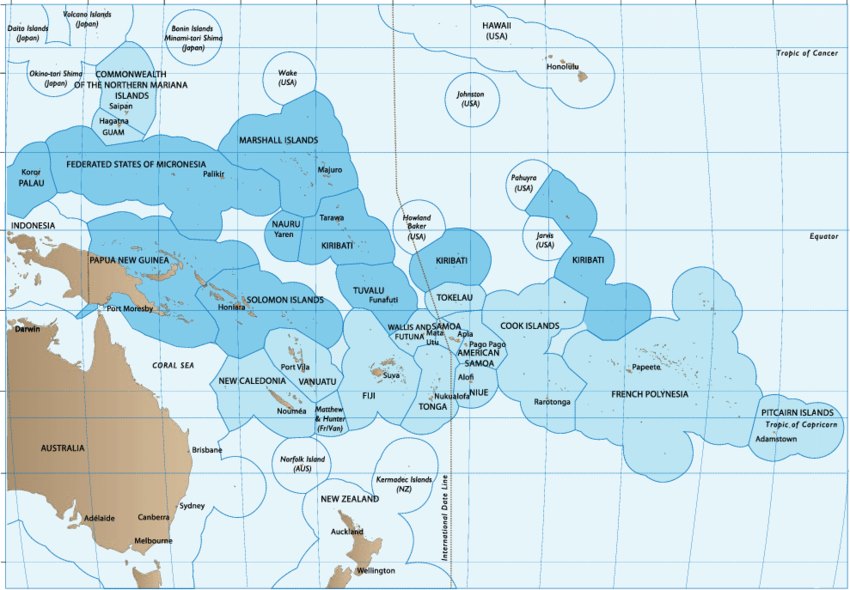
Estimated exclusive economic zones (EEZs) of Pacific Island countries and territories (PICTs). The EEZs of countries that are the Parties to the Nauru Agreement are shown in darker blue. Note that not all EEZs of PICTs have been officially delineated under the United Nations Convention on the Law of the Sea. Source: Patrick Lehodey

Below is a CG news release (includes photos of the signing). The State of Samoa, like Papua New Guinea, is not one of the three nations included in the Compacts of Free Association that include the Federated States of Micronesia and the Republic of Palau that have similar agreements. Of the three Compact of Free Association nations, only the Republic of Marshall Islands does not have the enhanced agreement that permits the US Coast Guard to act in their behalf without a national law enforcement officer on board.

All these island nations have a huge combined EEZ. We are offering help, but our assets in the Western Pacific are thin compared to the assets we have in Atlantic Area policing a much smaller EEZ.

If the illegal fishermen know where the few cutters are, they may just fish illegally in a different area and wait until the cutter leaves. The long-term solution is to help these nations control their own waters and provide enough assets to effectively police the US EEZ in the 14th District. Over and above ships, we need a multinational domain awareness system that can track the illegal fishing and provide intelligence driven enforcement. It looks like we are working on that in the form of the Indo-Pacific Partnership for Domain Awareness (IPDMA) program.


PRESS RELEASE | April 5, 2024

U.S. and Independent State of Samoa sign addendum to existing maritime law enforcement agreement in the Pacific

HONOLULU — The United States and the Independent State of Samoa had the honor to share and sign an addendum to the existing 2012 Bilateral Agreement, at U.S. Embassy Apia in Samoa, to continue and expand operational cooperation to suppress illicit transnational maritime activity, on April 5, 2024.

“In partnership with Samoa, the United States stands committed to safeguarding and ensuring security of Samoa’s economic exclusive zone, by preserving its marine resources, environment, promoting sustainable development for future generations” said U.S. Embassy Apia, Samoa’s Charge d’Affaires, Noriko Horiuchi.

The U.S. Coast Guard and Independent State of Samoa signed the addendum to the existing Bilateral Agreement allowing enhanced maritime law enforcement operations, maritime domain awareness and assists with implementation of integrated operations between the U.S. and Samoa by extending U.S. Coast Guard operability to deter predatory and illegal fishing activities in Samoa’s Exclusive Economic Zone (EEZ).

The enhanced maritime law enforcement agreement represents another tool for Samoa to use to help combat transnational illicit maritime activity and illegal fishing activities within its EEZ. This enhanced agreement enables Samoa to request the U.S. Coast Guard to inspect vessels and enforce their coastal state regulations without a Samoan officer present. This agreement does not replace the joint work conducted with Samoan shipriders; rather, it augments the capability and plays a crucial role in protecting marine ecosystems and the sustainable livelihoods they support.

These enhanced agreements demonstrate the United States’ commitment to a stable, secure and prosperous Pacific region. The strengthened partnerships in the Pacific have been invaluable in increasing the number of boardings within partners’ EEZs, which in turn has led to the deterrence, observation and reporting of vessel crew activities and fishing operations for partner nation’s enforcement agencies.

This advancement follows the similar agreements signed by the Federated States of Micronesia in October 2022, the bilateral defense agreement signed with Papua New Guinea in May 2023, and the enhanced maritime bilateral agreement with the Republic of Palau in August 2023.

“We’re honored to sign this enhanced maritime bilateral agreement with our valued partner, the Independent State of Samoa. This agreement strengthens our collaborative efforts within the region,” said Capt. Tom D’Arcy, chief of response for U.S. Coast Guard District Fourteen in Honolulu. “This agreement serves as a testament to the importance of maritime security in maintaining national sovereignty and regional stability, and we look forward to working even closer with Samoa to effectively address common maritime challenges in the Pacific.”

Through bilateral law enforcement agreements, community engagements and senior leader visits, like the recent U.S. Coast Guard Commandant visit, and subject matter exchanges between maritime agencies, we continue to demonstrate how these partnerships significantly enhance our collective capacity to safeguard shared resources and build a prosperous Oceania that is inclusive and secure for all law-abiding nations.

South Korea Seizes Chinese Fishing Vessels –Newsweek

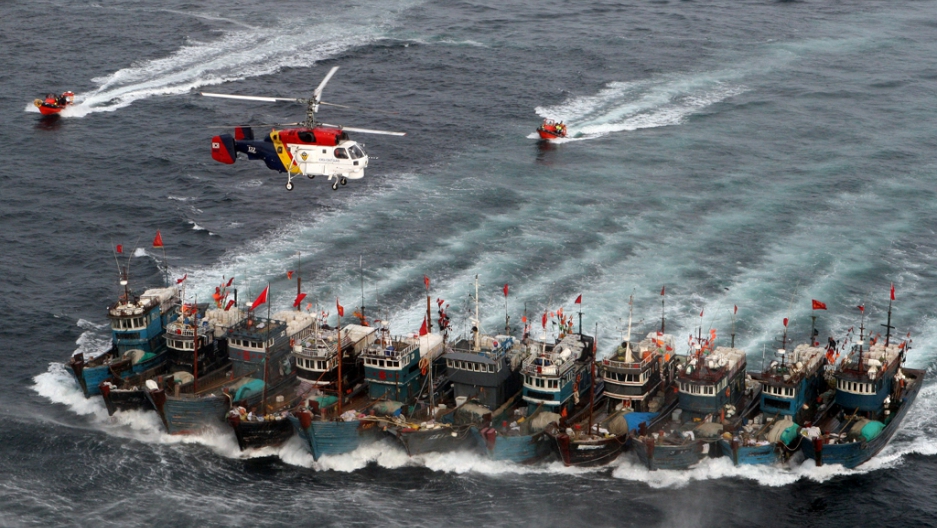
A picture taken on November 16, 2011 from a South Korean helicopter shows Chinese fishermen wielding sticks to stop an attack by South Korean coastguard commandoes armed with clubs aboard rubber boats during a crackdown on alleged illegal fishing in South Korean waters in the Yellow Sea off the southwestern coast county of Buan. South Korea’s coastguard mobilized 12 ships, four helicopters and commandoes for a special three-day crackdown on illegal fishing by Chinese boats this week. REPUBLIC OF KOREA OUT AFP PHOTO / DONG-A ILBO (Photo credit should read DONG-A ILBO/AFP/Getty Images)

Newsweek reports,

“South Korea’s Coast Guard seized five Chinese vessels for allegedly fishing illegally in the country’s waters late last month, confiscating boats and deporting several crew members…The joint patrol’s 30 participating vessels and three aircraft waters were operating in the vicinity of Jeju Island from March 25-31, Korea JoongAng Daily reported.

“The country’s coast guard said that, on average, 300 Chinese vessels fish illegally in the country’s exclusive waters each day, with that figure dropping to an estimated 140 during periods of intensified crackdowns.”

As you can see from the photo above and below. This is not a new problem.

A picture taken on November 16, 2011 from a South Korean helicopter shows Chinese boats banded together with ropes, chased by a coastguard helicopter and rubber boats pacted with commandoes, after alleged illegal fishing in South Korean waters in the Yellow Sea.
Credit: Dong-A-Ilbo

In many cases these encounters have become violent. The South Koreans have not been afraid to seized Chinese fishing vessels, but on the other hand they have not been successful in stopping large scale illegal fishing.

“DHS Center for Countering Human Trafficking Year-in-Review” –MyCG

A Coast Guard Cutter Campbell law enforcement crew stopped a grossly overloaded, unsafe vessel near Turks and Caicos, May 9, 2022. (U.S. Coast Guard photo by Petty Officer 3rd Class Erik Villa-Rodriguez)

Below is a news release from MyCG regarding a new DHS report. 


March 19, 2024

DHS Center for Countering Human Trafficking Year-in-Review

By DHS Center for Countering Human Trafficking

In FY 2023, the Coast Guard screened 257 unaccompanied children for human trafficking after encountering them during migrant interdictions at sea. The children were then referred to interagency partners as part of our service’s efforts to address human trafficking in collaboration with the U.S. Department of Homeland Security (DHS)

You can learn more about these and similar efforts in the DHS Countering Human Trafficking: Year-in-Review, just released by the DHS Center for Countering Human Trafficking (CCHT). The report is designed to help readers understand DHS’s multifaceted work, and to use the many available resources to support their own counter-trafficking work.

Employees of DHS and its components work every day to end sex trafficking and forced labor through a wide range of efforts, including:

  • Identification and screening for victims of human trafficking
  • Victim protection and assistance
  • Criminal investigations of human trafficking crimes
  • Enforcement of laws related to the importation of goods produced with forced labor and
  • Training, outreach and engagement with law enforcement, government, industry, non-governmental organizations, and the public.

In 2023, approximately 13,000 Coast Guard personnel completed the DHS Blue Campaign Human Trafficking Awareness Training module to ensure they were prepared to identify potential indicators of human trafficking while conducting maritime operations.

Coast Guard Pacific Area went further during its third Forced Labor and Human Trafficking tabletop exercise. During this training, participants honed interagency response to the discovery of forced labor during inspection of a foreign fishing vessel outside of the U.S. Exclusive Economic Zone. The exercise included representatives from the National Oceanic and Atmospheric Administration, Department of State, Department of Justice, and DHS, and DOJ. Lessons learned from this exercise were leveraged to create a curriculum for a first-of-its-kind multinational maritime labor seminar.

Every year, nearly 25 million men, women, and children are trafficked worldwide – including here in the United States. DHS is a global leader in this fight and works with partners at every level to prevent this heinous crime, identify and protect victims, and bring perpetrators to justice.

The DHS Center for Countering Human Trafficking (CCHT) integrates the efforts of 16 Agencies and Offices within DHS that carry out our anti-trafficking mission. These efforts range from criminal investigations, victim assistance, and combating forced labor in exports destined for the United States to external outreach and public education, intelligence, and training.

All Coast Guard members are encouraged to read the report here.