Combined Maritime Security Task Force Pacific

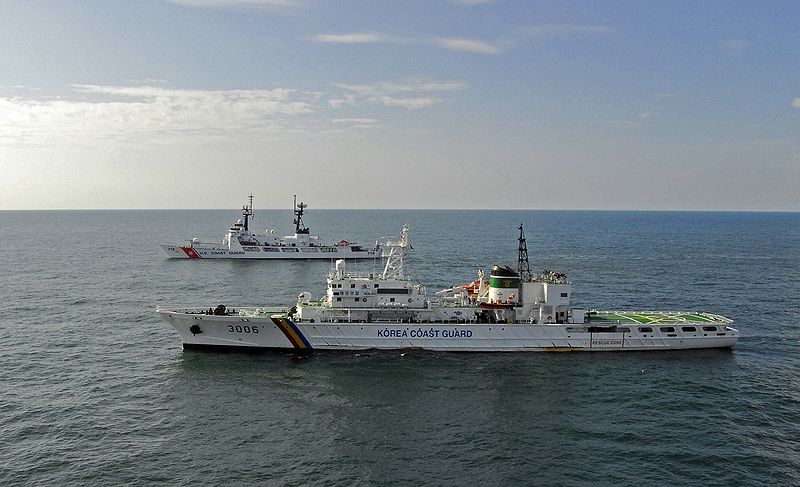
Republic of Korea Coast Guard vessel #3006 in company with U.S. Coast Guard cutter USCGC Boutwell (WHEC-719) during the North Pacific Coast Guard Forum in August 2007. This forum was created to increase international maritime safety and security in the Northern Pacific Ocean and its borders. The Boutwell worked with the Korean coast guard while on their way to Yokosuka, Japan. The Japanese coast guard is one of the six nations involved in the forum.

War on the Rocks offers a suggestion as to how to build greater cooperation and trust and support international norms in the Western Pacific.

“…establishment of a Combined Maritime Task Force Pacific that would be modeled off the Standing Naval Forces Atlantic construct that NATO operated in the 1970s and 1980s… It included 6-10 surface ships (destroyers, cruisers, frigates and support ships) that attached to the squadron for up to six months at a time…the real utility was that its permanent and consistent nature allowed contributing navies to work together to build interoperability during peacetime…it was always signaling contributing navies’ growing alignment and desire to work together.”

This seems like a pretty good idea, but I would suggest one change. Make the purpose of the force Law Enforcement (particularly fisheries), SAR, and Disaster Relief/Humanitarian Assistance and use primarily Offshore Patrol Vessels instead of conventional warships.

Signaling a shared belief in the norms of international behavior, and a determination to uphold those norms, would be the primary objective.

There are lots of potential participants beside the USCG, they might include navies or coast guards of Vietnam, Indonesia, Brunei, Singapore, Australia, India, Malaysia, Thailand, Japan, S. Korea, and the Philippines. COM7thFleet has already asked for a USCG presence, but this would not be under the COCOM. It would be a cooperative enterprise between participating nations, in most cases, coast guard to coast guard.
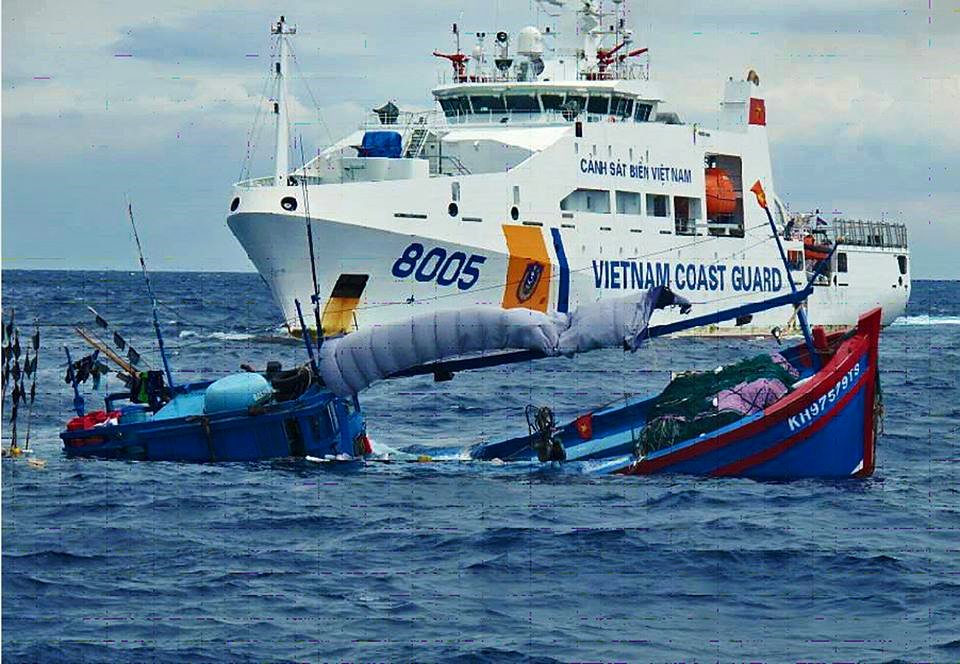
Vietnamese Coast Guard Damen 9014 Offshore Patrol Vessel. Photo: lancercell.com

All the vessels involved could host ship riders from the nation(s) where the force is operating.

We already plan to have most of the Bertholf class cutters in the Pacific, and putting three OPCs in Guam could further facilitate the arrangement.

This avoids the complications of a military alliance, but strengthens the hand of SE Asian nations that might otherwise be intimidated by China.
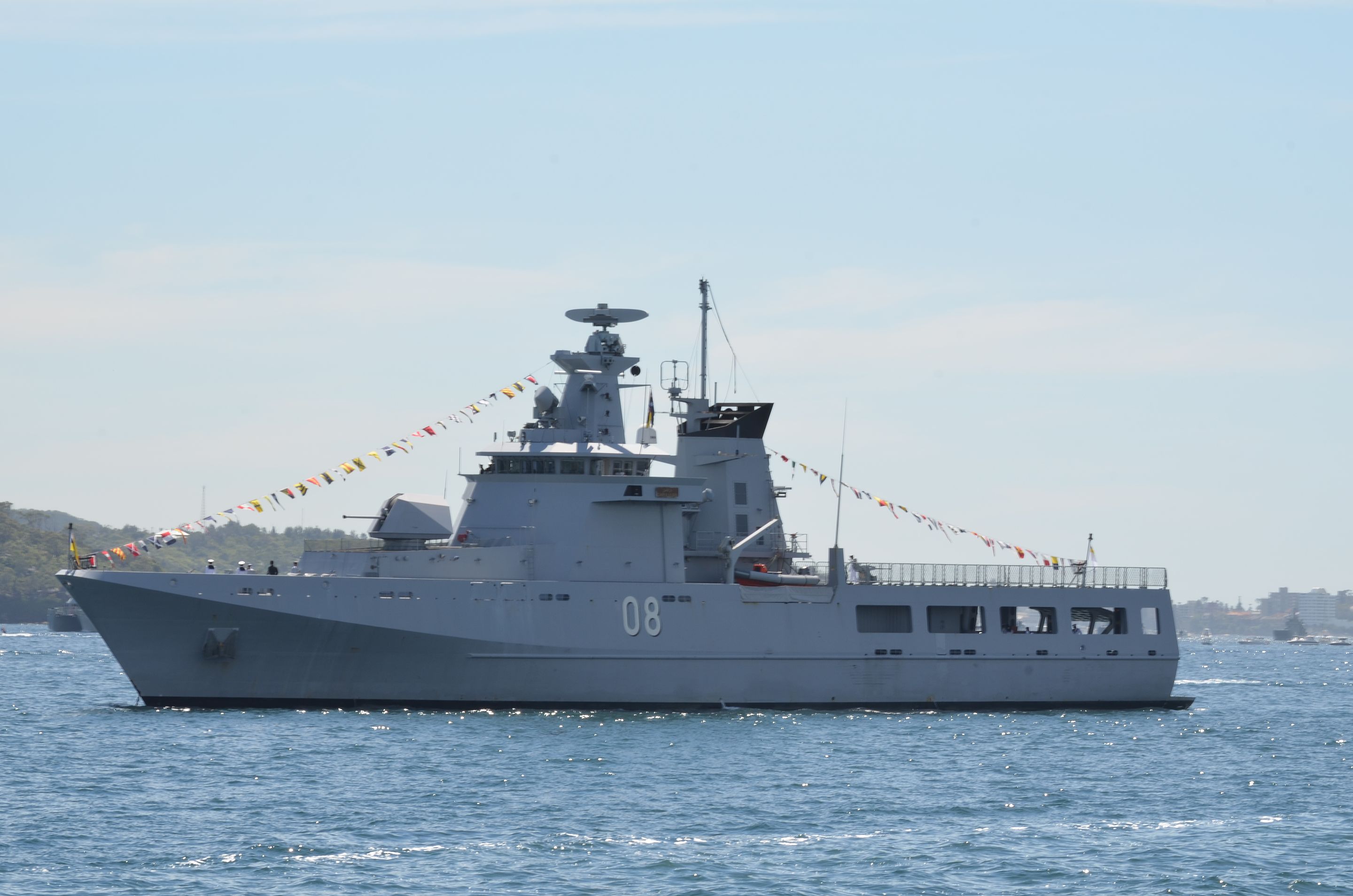
Photographs taken during day 3 of the Royal Australian Navy International Fleet Review 2013. The Bruneian patrol vessel Darulaman moored in Sydney Harbour. Australia is building 12 similar ships. Photo by Saberwyn.
 

Indonesia Uses Google to Stop Fish Pirates

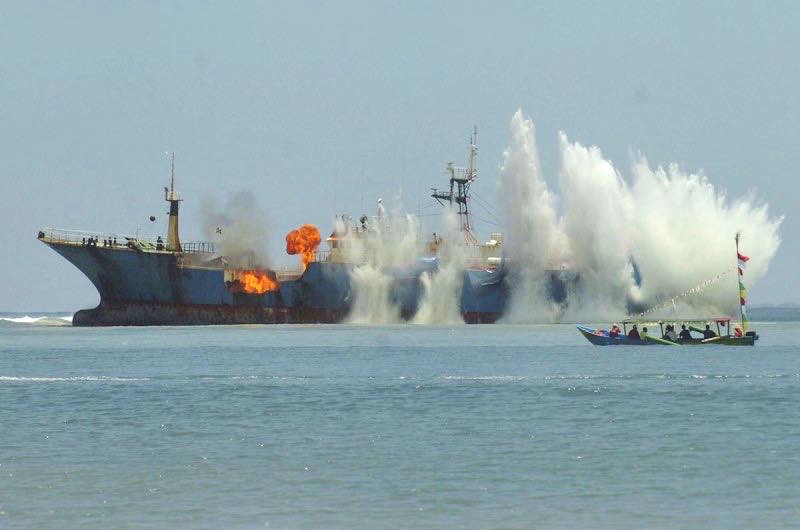
The Indonesian Navy and the Ministry of Maritime Affairs and Fisheries blow up an illegal fishing vessel near Tanjung Batumandi, Pangandaran, West Java, on March 14, 2016. Photo credit: REUTERS/Adeng Bustomi/Antara Foto

gCaptain reports Indonesia has had great success in using Google to crack down on Illegal, Unreported, and Unregulated (IUU) fishing.

“After hunting down violators and blowing up their boats in public spectacles, Pudjiastuti’s approach has become more sophisticated. In a global first, the minister has teamed up with Google to use satellites to spot illegal fishermen from space. It’s paying off: Indonesia’s fish stocks have more than doubled in two years, and an industry plundered by foreigners for decades is once again contributing to economic growth, which Widodo has pledged to boost to 7 percent.

“See Also: Scientists Use AIS Data to Map Global Fishing Activity in Extraordinary Detail

“In a sprawling archipelago of 17,000 islands, the potential is vast. While fishing currently accounts for just 2.6 percent of Indonesia’s gross domestic product, that portion has grown about 40 percent since Pudjiastuti started her role. At that time, there were some 10,000 foreign vessels fishing illegally in Indonesia’s territory. She says they’re now all but gone.

Here is an earlier post on the Google system.

“Small Dots, Large Strategic Areas: US Interests in the South Pacific”

The Commandant talks about how the Coast Guard goes to areas the DOD tends to overlook, the Eastern Pacific and the Arctic. There is another area that the US seems to have taken for granted, These are the island nations of Micronesia, the Marshall Islands, and Palau joined with the U.S. in “Compacts of Free Association.”

The Lowy Institute has a reminder of how important these little “dots” on the map are and what we have to loose if we don’t pay attention.

The Coast Guard is uniquely qualified to provide the help these nations need in terms of capacity building for policing their fisheries resources.


Japan Coast Guard expands Liquid-Robotics’ Wave Glider Fleet–NavyRecognition

We have discussed the Liquid Robotics Wave Glider before, as a way to improve Maritime Domain Awareness, noting it is being used by the Brits for fisheries monitoring and by Boeing in support of the US Navy.

Now NavyRecognition brings us a report that the Japanese are using it to monitor the environment providing real time information

Certainly better information about surface currents could help us in search planning.

EU Charters Fisheries Enforcement Vessel

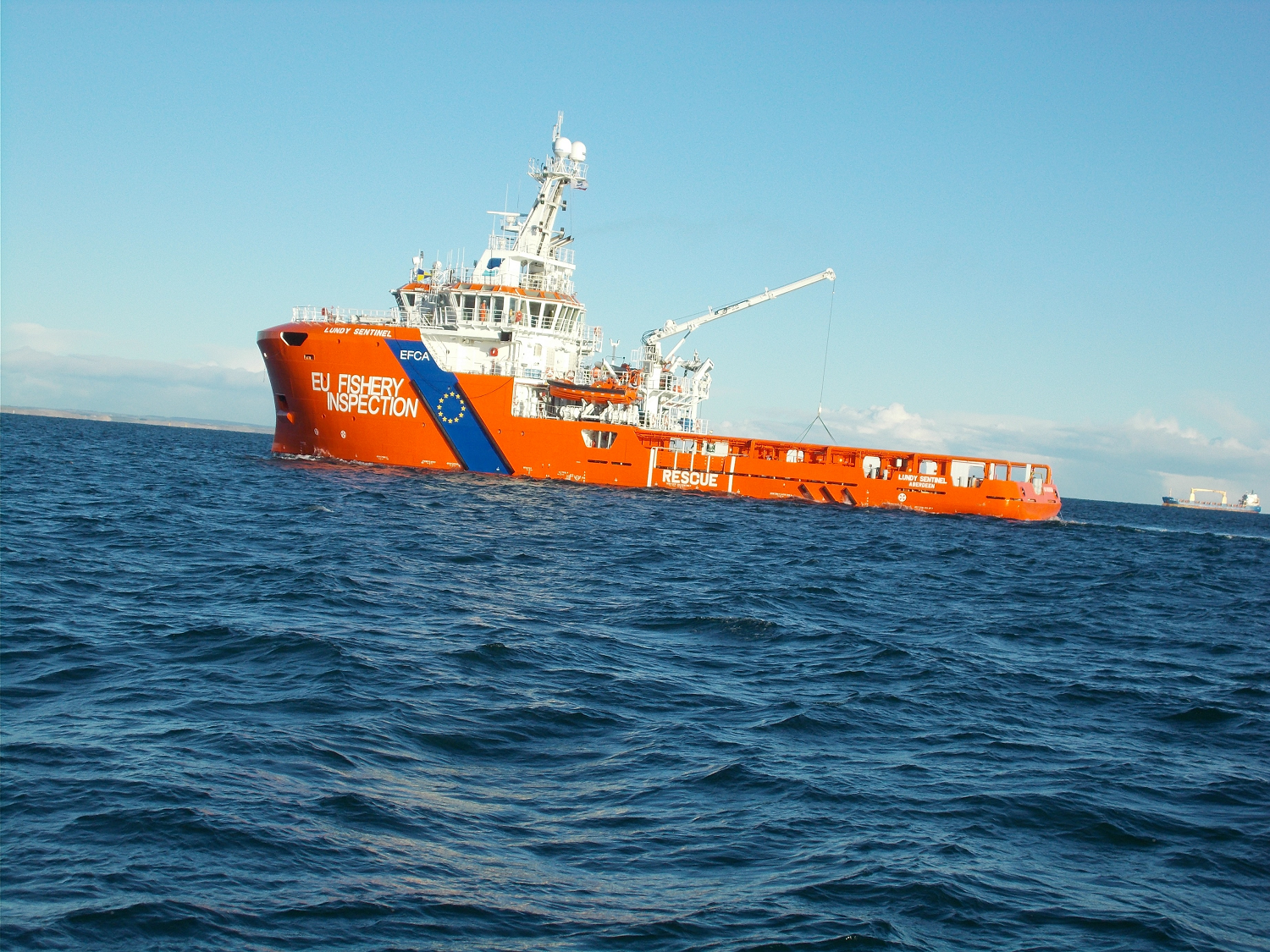
MarineLink reports the European Fisheries Control Agency (EFCA) has chartered a 61 meter (200 foot) multi-role emergency response and rescue vessel to perform fisheries enforcement.

“It is possible that Lundy Sentinel will also be used for other operations besides fisheries control, in the framework of the European coastguard cooperation, including search and rescue, border control, disruption of trafficking routes, detection of criminal activities and enforcement of EU and national legislations.”

249 Warning Shots

Republic of Korea Coast Guard vessel #3006 in company with U.S. Coast Guard cutter USCGC Boutwell (WHEC-719) during the North Pacific Coast Guard Forum in August 2007. This forum was created to increase international maritime safety and security in the Northern Pacific Ocean and its borders. The Boutwell worked with the Korean coast guard while on their way to Yokosuka, Japan. The Japanese coast guard is one of the six nations involved in the forum.

The Independent reports a South Korean Coast Guard vessel fired 249 warning shots when it was reportedly swarmed by 44 Chinese fishing vessels fortified with iron bars and steel mesh.

The U. S. Coast Guard in the South China Sea: Strategy or Folly?–CIMSEC

CIMSEC has a brief discussion of the possibility of deploying a Coast Guard presence in the South Chia Sea.

First let me say, I don’t think using cutters for Freedom of Navigation demonstrations would be an improvement. Our warships have every right to be there. Substituting Coast Guard Cutters to be less offensive to the Chinese might be seen as a sign of  weakened resolve, and it would be a whole lot easier for them to make a move against a cutter than a DDG.

The presumption in these discussions seems to be, that if we do put a presence in the South China Sea, it will be a large cutter. There is another alternative. If we want a Coast Guard presence in the area, perhaps we should start small. We could move three 110 foot WPBs to a port in the South China Sea. When enough Webber class become available, we could replace the WPBs with the newer WPCs and donate the 110s to a navy or coast guard in the area. (It would not hurt if some of the members of the WPB crews were of Asian descent.)

They could do the same kind of capacity building our cutters in South West Asia do. They could help with local fisheries enforcement, particularly the increasingly aggressive members of Chinese maritime militia units. If our cutters occasionally provide force protection or operate with a DDG conducting a Freedom of Navigation Exercise, that’s good too.


More Than One Way to Crack Down On IUU Fishing

Navigateum.com reports that more than twenty insurance companies have responded to a UN request.

They agreed to “not knowingly insure or facilitate the insuring of vessels that have been officially blacklisted for their involvement in IUU (Illegal, Unregulated, Unreported–Chuck) fishing.”

gCaptain reports

“Microsoft Corp. co-founder Paul Allen…will spend $40 million to develop a system that uses satellite imagery and data-analysis software to help countries spot and catch unlicensed fishing boats.

“Illegal fishing accounts for about 20 percent of the world’s catch, costing up to $23.5 billion a year, according to the World Wildlife Foundation, … the risk of hunger and joblessness in an industry that provides employment for more than 1 in 10 of the world’s people..”

About 90 percent of the world’s fishing grounds are being harvested at or beyond sustainable limits. Some species, such as the southern bluefin tuna, are threatened with extinction. Shrinking supplies off the central and western coast of Africa have raised concerns about future food shortages there. In the Mediterranean and Black seas, catches have fallen by a third since 2007.
SkyLight, which will be broadly available in the first half of next year, takes multiple data sources from satellite images, to shipping records to information manually collected by officials standing on docks, and uses machine learning software to track and predict which vessels might be operating illegally.
The service is cloud-based and will enable different countries to communicate and share information as boats move from one country’s waters to the next, a challenge currently.

Sounds like SkyLight could be very useful to the Coast Guard, particularly in the Western Pacific where the US has a huge part of its Exclusive Economic Zone, but very few Coast Guard resources.