Helicopter Door Gunner Takes Down Kamikaze Drone

French Armed Forces via X

The War Zone reports, “A French Navy helicopter used machine gun fire to shoot down a Houthi drone over the Red Sea today.”

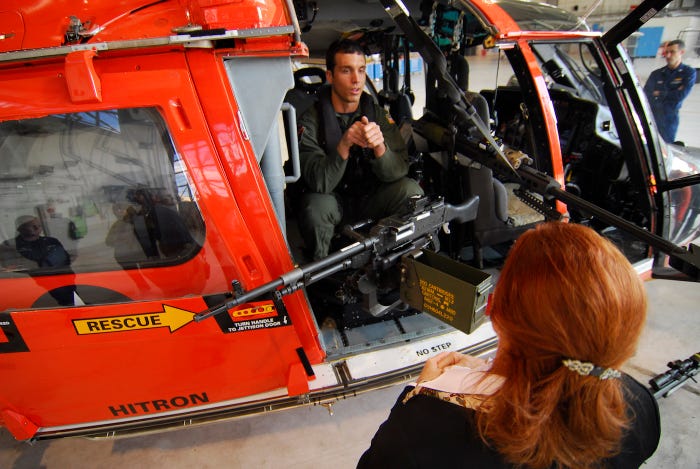
This is a potential Coast Guard capability, given its airborne use of force capability includes a door mounted rifle caliber machine gun, though I do not know if every Coast Guard Air Station has qualified gunners. The .50 caliber sniper rifle included in the package might even be more effective than the machine gun.

I am not suggesting the Coast Guard send helicopters to the Red Sea, but when the Coast Guard provides protection for vessels transiting to sea, it has generally been done with small boats with crew served rifle caliber machine guns. Ballistic Missile submarines have been an exception. They may be escorted by 82 foot patrol boats with .50 caliber machine guns in remote weapon stations. Perhaps the Coast Guard should consider providing an armed helicopter overwatch. An armed helicopter could be effective against hostile surface systems as well as air systems.

Petty Officer 2nd Class Anthony Phillips, a precision marksman at Helicopter Interdiction Tactical Squadron, displays the weaponry used by a HITRON during missions, February 23, 2010. US Coast Guard/Petty Officer 1st Class Bobby Nash

Below is a video taken by the French helicopter (an AS565 Panther, similar to the Coast Guard’s H-65s) as it shoots down the drone.

A US Navy helicopter demonstrated this capability over eight years ago. It is certainly less expensive than bringing down a drone with a missile. On the other hand, I would not want to be in a helicopter near a drone if the Navy decides to use a missile to destroy the drone.

“Coast Guard completes air station transitions to upgraded MH-65E with delivery to Corpus Christi” –CG-9

MH-65E cockpit

Below is news from the Acquisitions Directorate (CG-9).

This is a very large deal. The MH-65E looks very much like the Dolphins that entered service about 40 years ago, but they are very different aircraft with more power, a different radar, air borne use of force, and very different avionics.

Extending their life to 30,000 hours, that is 1,250 x 24 hour days or almost three and a half years airborne. Looks like we are getting our money’s worth out of these aircraft.

Looks like his we will be continuing to use the H-65s for some time. This indicates that we will not see an all H-60 rotary wing fleet until the 2040s. By then, all the WMECs should be out of service.


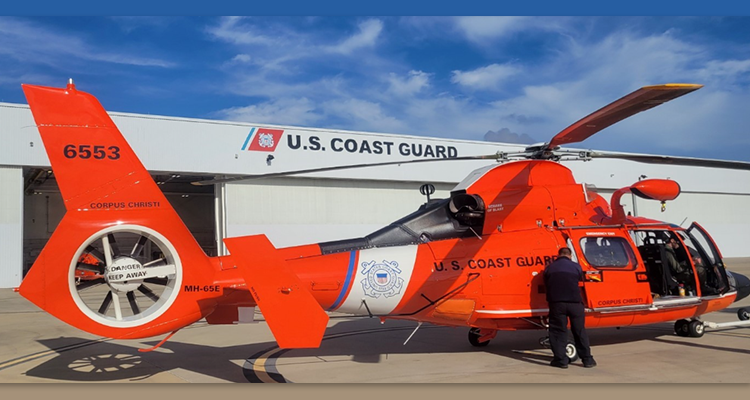
Upgraded MH-65E Dolphin CGNR 6553 is delivered to Air Station Corpus Christi, Texas, Feb. 7, marking the full transition of Coast Guard air stations to the upgraded Dolphin short range recovery aircraft. U.S Coast Guard photo


The Coast Guard reached an important milestone in its MH-65 Conversion and Sustainment program on Feb. 7 when it delivered CGNR 6553 to Air Station Corpus Christi, Texas. This was the third and final upgraded MH-65E for Corpus Christi, which is the last air station to transition to the upgraded short range recovery helicopter.

“The third and final MH-65E delivery to Air Station Corpus Christi marks a significant accomplishment for the H-65 Conversion/Sustainment Program,” said Cmdr. Jen Ahearn, program manager. “All H-65 operational units have now been fielded with modernized aircraft that have received improvements to address reliability and obsolescence issues as well as increase the service life of the asset from 20,000 to 30,000 flight hours. We have heard from the fleet through operational assessments, transition working groups and post-flight reports that the MH-65E upgrade enhances situational awareness and decreases pilot workload, things that are valued by crews executing high-risk, dynamic missions.”

CGNR 6553 was the 79th Dolphin upgraded to the Echo or “E” configuration. The upgrade includes an improved automatic flight control system; enhanced digital weather/surface search radar; installation of a robust command, control, communications, intelligence, surveillance and reconnaissance and computers suite; and modernization of the digital flight deck.

“Successfully fielding this asset to the fleet is a testament to the years of hard work and dedication of professionals committed to improving the Coast Guard’s readiness and short-range recovery capabilities,” Ahearn said. “We still have work ahead of us, but it’s nice to take a pause and recognize this program milestone, especially as we celebrate the H-65’s 40th anniversary this year.”

Another 11 conversions will be completed, for a total of 90, to allow operational aircraft to rotate into programmed depot maintenance, an intensive maintenance process completed at the Coast Guard Aviation Logistics Center that keeps the fleet in its best condition possible.

Continued operation of the MH-65E fleet is needed to maintain the Coast Guard’s rotary wing capability while preparing for the eventual transition to an all MH-60T medium range helicopter fleet sometime in the 2040s.

The MH-65E Conversion/Sustainment program of record was reduced from 98 aircraft based on the notional MH-60T transition schedule. Stopping the program at 90 conversions will help mitigate shortages of Echo replacement parts, sustaining the existing fleet longer.

The upgraded MH-65E aircraft increases aircrew situational awareness through its standardized “glass cockpit” technology. In addition to improved search and rescue capabilities, the advanced navigation systems allows pilots to safely maneuver through the highly congested, complex air traffic that can be encountered during a disaster response.

Adding a third MH-65E to Air Station Corpus Christi enhances the station’s ability to carry out its missions throughout its 11,250 square-mile jurisdiction. That area covers Texas from the U.S. southern border, north to the Colorado River and westward, including the entire state of New Mexico as well as 200 nautical miles offshore in the Gulf of Mexico.

“Being the last unit in the Coast Guard to transition to the 65E was a unique experience,” said Cmdr. Mary Bender, Air Station Corpus Christi deputy of operations. “We had the advantage of watching each unit transition before us and we tried to use the wisdom gained to create as seamless of a transition as possible. Our maintenance team has been truly amazing as they work to understand and repair this model.”

Bender recalls the first search and rescue case they conducted with the upgraded Echo. “It was a week after we received our second bird, and it was the ‘standard Coast Guard Day,’ low visibility, fog and icing on the way. A man had experienced anaphylactic shock, was intubated and running out of oxygen on a rig 180 nautical miles offshore. Our crews safely transported the patient to land, and he survived.

“We were so thankful to have all the new modes and ADS-B (Automatic Dependent Surveillance-Broadcast) while conducting the very unique mission during less-than-ideal conditions,” Bender said.

For more information: MH-65 Short Range Recovery Helicopter Program page

“Army Cancels High-Speed Armed Reconnaissance Helicopter Program” –The WarZone

Sikorsky’s Raider X, advanced compound helicopter design (FARA prototype)

The Warzone reports,

The U.S. Army says it is cancelling its Future Attack Recon Aircraft (FARA) program which had been centered on the acquisition of a new type of high-speed armed scout helicopter. This is part of a larger restructuring the Army plans for its future fleets of helicopters and other crewed and uncrewed aircraft.

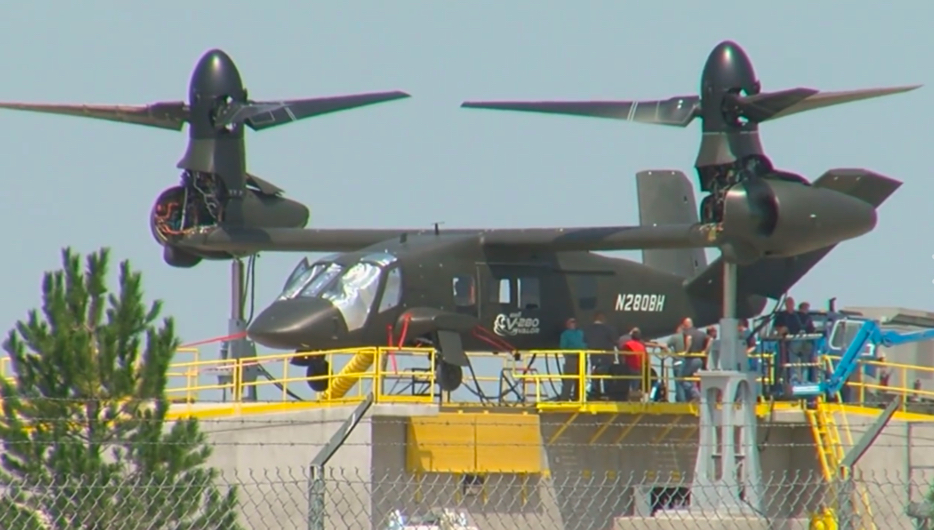
This is essentially half of the Army’s Future Vertical Lift program. The Coast Guard has been following the program in anticipation of development of vertical takeoff and landing aircraft that would offer “twice the range and twice the speed” of existing helicopter types. We might still see that in a version of the Bell V-280 for land-based operations.

Note this video is four years old, so the prototype has been flying for a long time. I have heard concern about the downwash, but if you look at the windsock visible from time 2:20, downwash does not seem to be excessive. My back of the envelope calculations suggests the overpressure directly under the rotor discuses would be about 67% higher under the V-280’s props compared to the H-60J’s rotor. That might be mitigated at the hoist pickup point because, unlike in the H-60, the props are not rotating over the fuselage of the V-280.

It does appear that the H-60s may have a new engine option in the future.

The FARA cancellation is part of what the Army is currently calling the Aviation Investment Rebalance. The service says it will delay production of the General Electric T901 turboshaft engine developed under the Improved Turbine Engine Program (ITEP), which had been heavily tied to FARA, as part of this plan. The immediate focus will now be on integrating T901s onto existing AH-64 Apache attack helicopters and UH-60 Black Hawk utility helicopters.

GE Aerospace claims, “The T901 engine provides 50% more power 25% better specific fuel consumption, and reduced life cycle costs -with fewer parts, a simpler design, and proven, reliable technology.” 

Basically, the Army has decided that Unmanned aircraft and Satellites can do the job of scouting better and cheaper, as well as safer, than a helicopter. This means they will be putting more money into those areas.

The Coast Guard might still benefit in its maritime domain awareness and its search function. I have not put much thought into the possibility that UAS (and perhaps satellites) might supplement or replace fixed wing for the SAR search function or MEP detection, but those are real possibilities.

I am disappointed that we are not likely to see a ship-based helicopter with twice the range and twice the speed any time soon, but on the other hand, we are already using UAS for search that have many times the endurance of the H-65 or even the H-60. For that function, endurance is more important that speed.

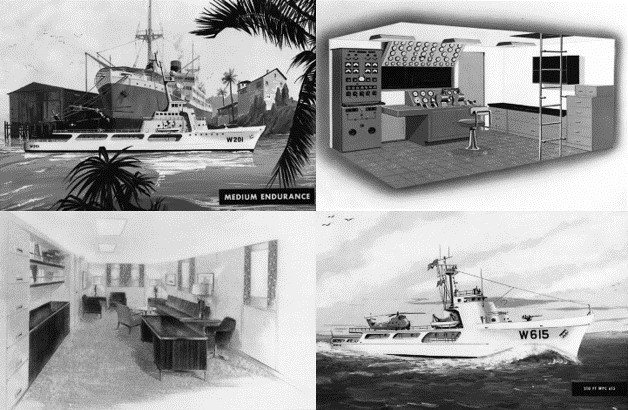
WMEC 210s in Retrospect

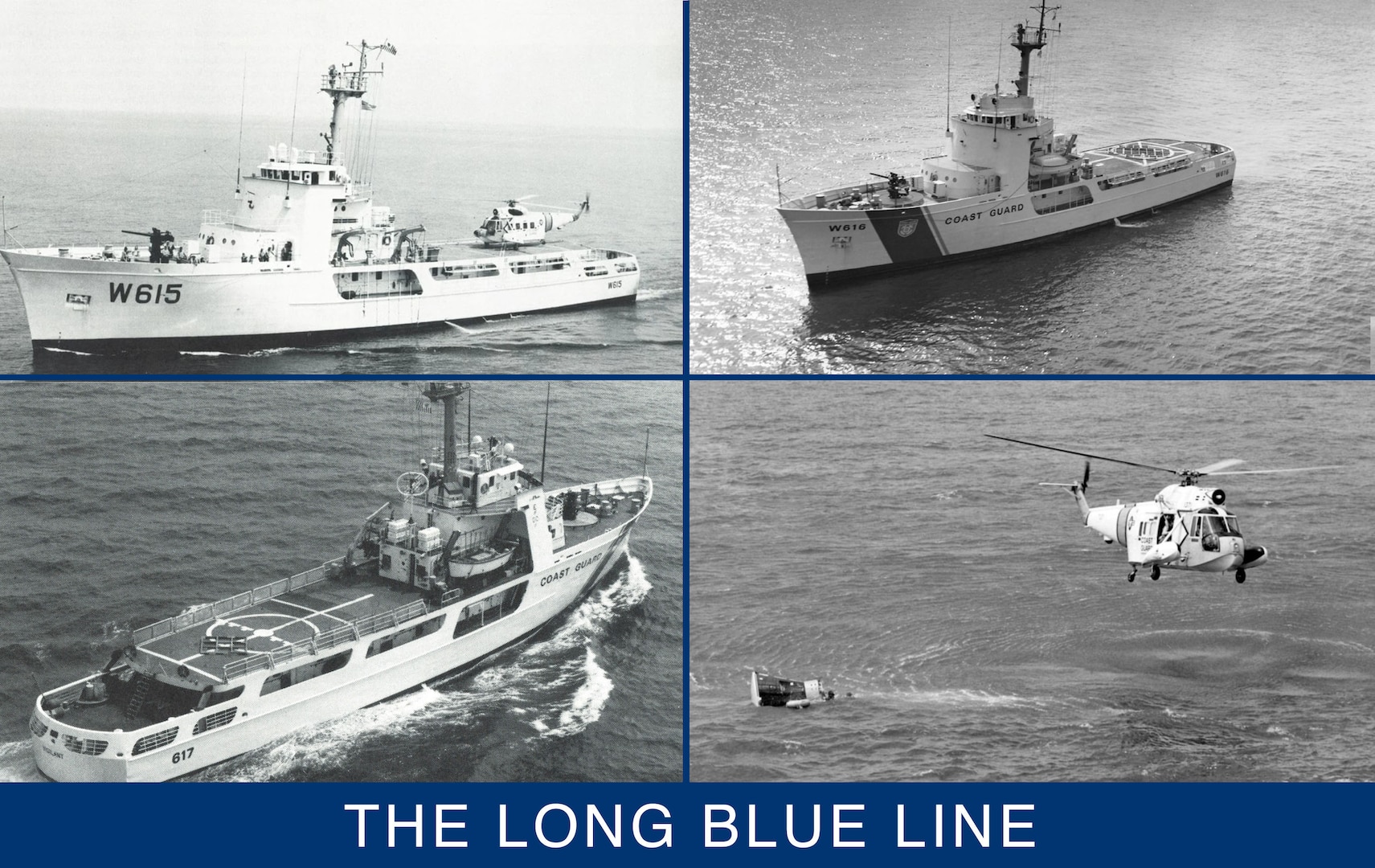
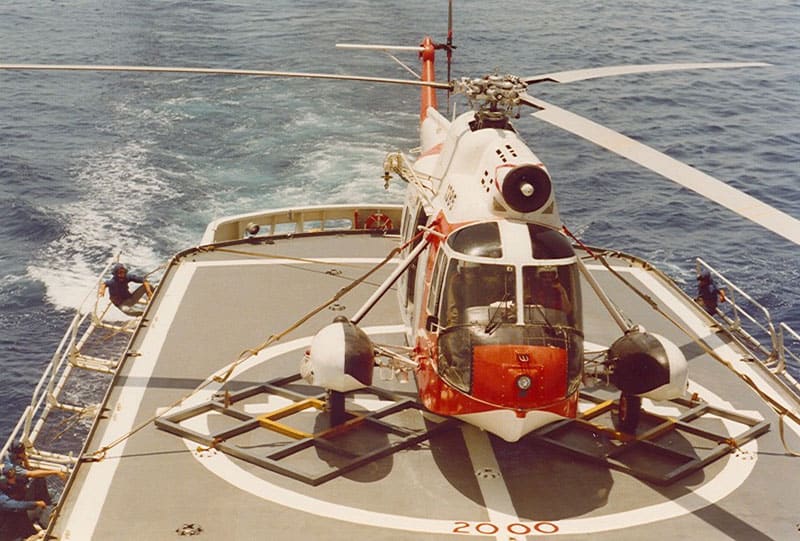
Coast Guard cutter Reliance conducting helicopter operations circa 1964. (U.S. Coast Guard photo).

Coast Guard cutter Diligence shown with the prototype “racing stripe” painted on the bow in December 1966. (Coast Guard Historian’s Archive).

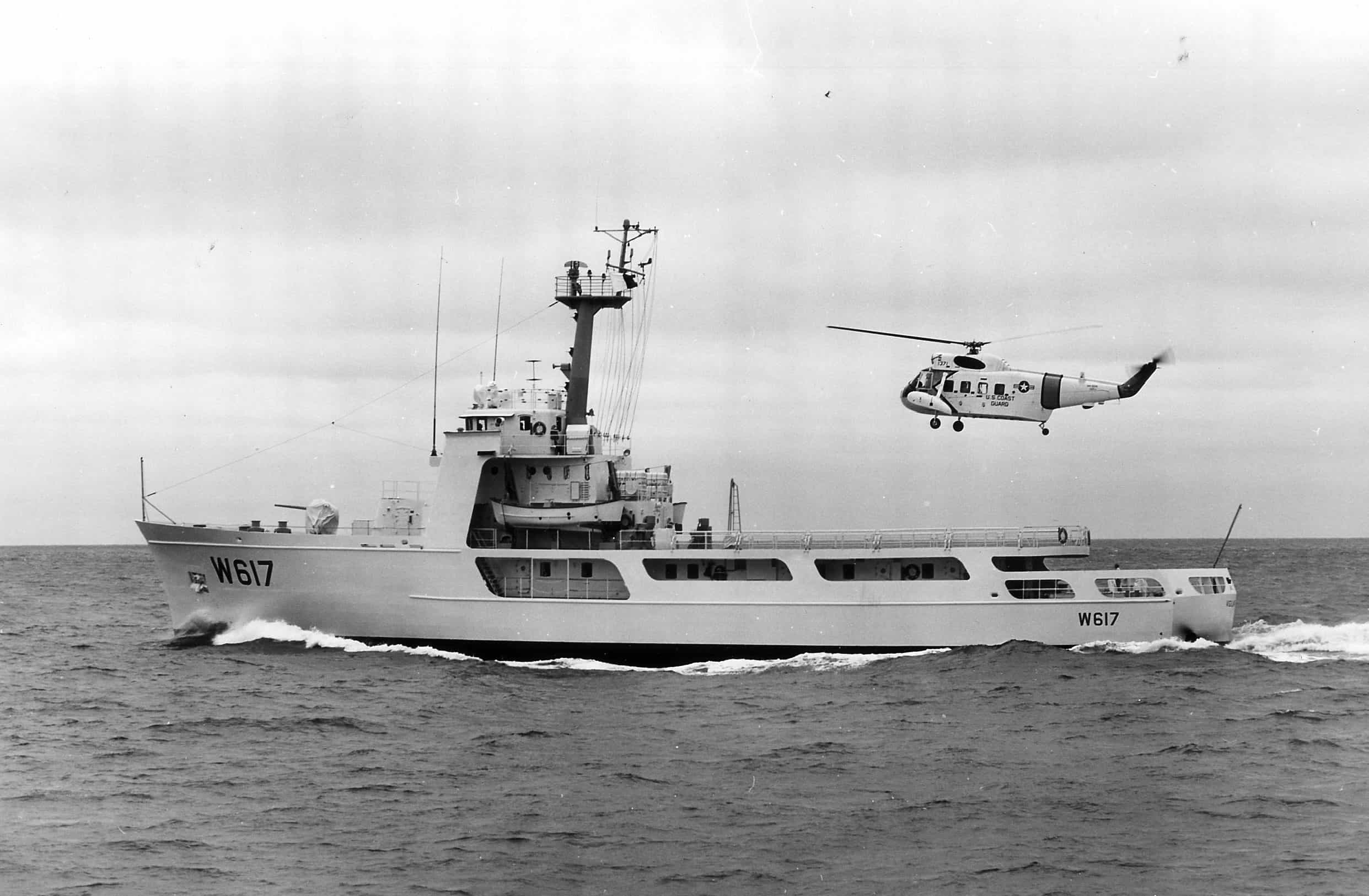
The extensive accommodation for helicopter operations is shown by this photo of third-in-class 210 cutter Vigilant. (U.S. Coast Guard photo)

A Coast Guard HH-52A launched from Diligence hovers over the Gemini III space capsule in 1965. (U.S. Navy National Museum of Naval Aviation photo)

USCGC Diligence with SOAR Little Bird Attack Helicopter –Remembering Operation Prime Chance

USCGC Diligence recently completed a 52-day counterdrug patrol in the Caribbean Sea. Mostly it was a typically successful patrol, but they did do something a bit unusual.

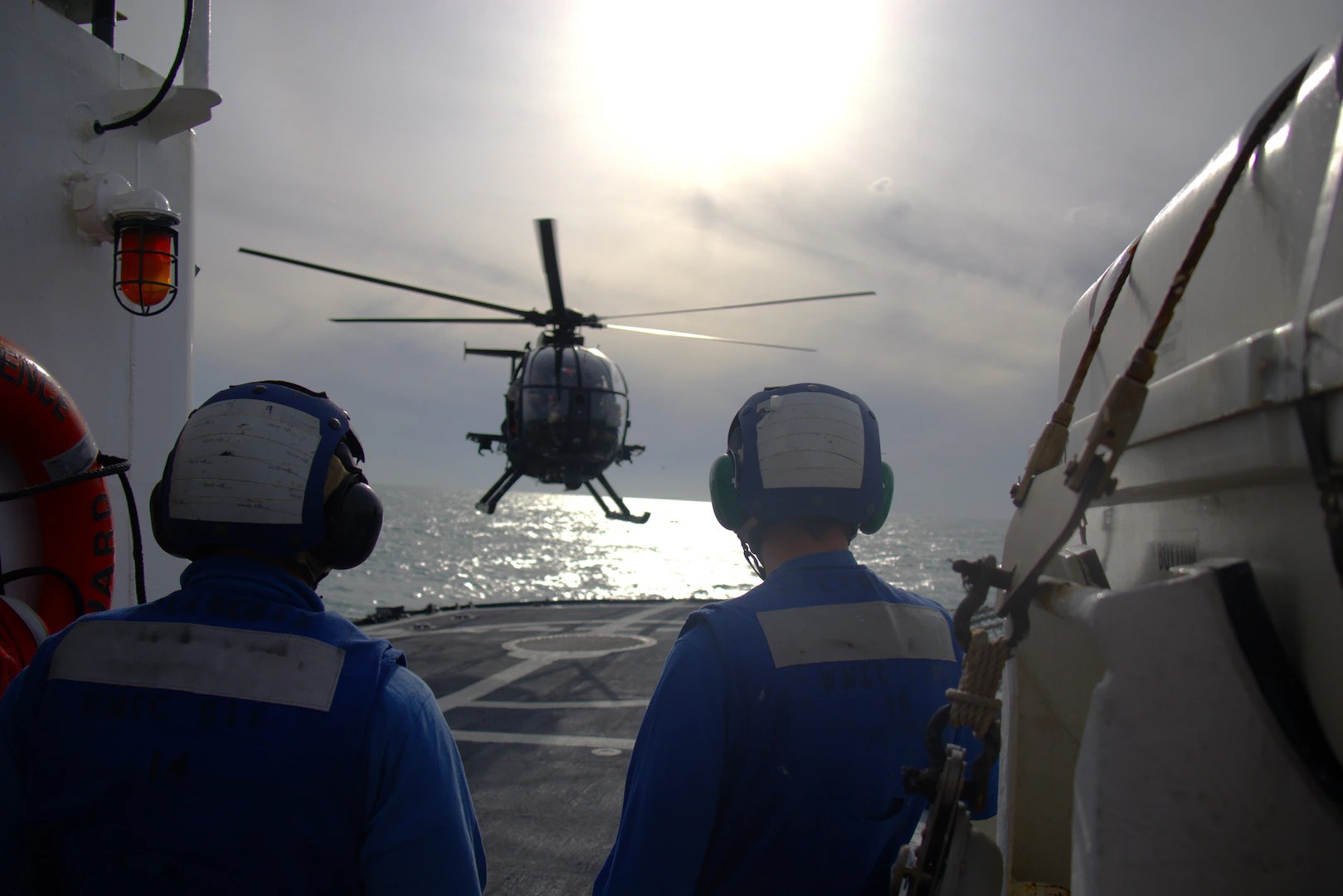
“Diligence also conducted a joint training exercise with the Army’s 160th Special Operations Aviation Regiment (SOAR). During the exercise, the Diligence crew and pilots from SOAR completed daytime and nighttime helicopter landing evolutions.”

The Helicopters were AH-6s. The 160th SOAR has a history of flying off of floating units.

Between 1987 and 1989 the U.S. Army’s 160th Special Operations Aviation Regiment, also known as “The Night Stalkers,” flew Little Bird helicopters from barges and Navy frigates in the Persian Gulf. Operation Prime Chance paired the U.S. Army helicopters with Navy SEALs, Marines, and Special Boat Units in an undeclared war against Iranian Revolutionary Guards units harassing civilian shipping. Six Little Birds, both MH-6 utility and AH-6 attack versions equipped with SEAL snipers, rockets, and machine guns, flew patrols as low as thirty feet.

This might be a reminder that Army and Marine helicopters could be operated from Coast Guard Cutters for limited periods for Special Operations, particularly in areas where there are few Navy assets such as the high North and 4th Fleet.

Wikipedia’s report on Operation Prime Chance here.

More photos of Diligence’s operation with AH-6 here.

Thanks to Peter for prompting me to write about this. 

“Coast Guard to SLEP, Expand MH-60T Helicopter Fleet as Sikorsky Delivers First New Airframe” –Seapower / Implications for Cutters

Coast Guard to SLEP, Expand MH-60T Helicopter Fleet as Sikorsky Delivers First New Airframe

The Navy Leagues on line magazine, Seapower, reports,

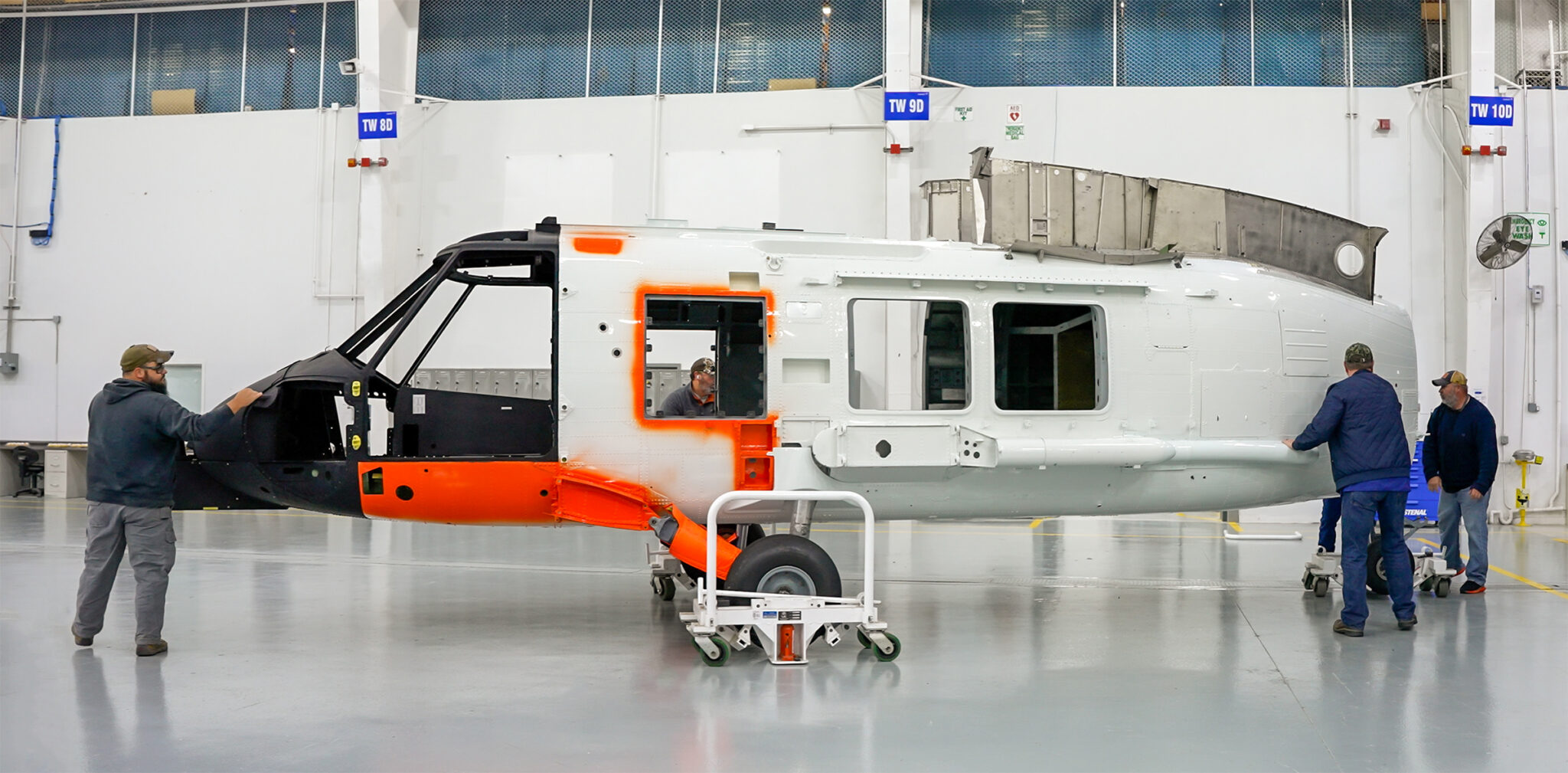
“The U.S. Coast Guard has confirmed plans to expand is MH-60T Jayhawk helicopter fleet and make it the standard service-wide helicopter. The service life-extension of the current MH-60T fleet is being highlighted as Sikorsky, a Lockheed Martin company, delivers the first of 45 replacement MH-60T airframes to the Coast Guard.”

There is a lot of information here.

  • The Coast Guard currently has 48 MH-60T.
  • Generally, six are being overhauled.
  • 45 of these will receive new hulls.
  • 12 new hulls will be delivered annually.
  • Electric tail folding will be added to MH-60s beginning in 2024.

That suggests the SLEP program for the existing Fleet will go through FY 2027, but there is also an intent to replace all H-65s with H-60s. Ultimately the Service expects to have 127 H-60s. That is 79 additional H-60s. Growth will involve both new construction and additional Navy conversions. Sounds like we may still be as much as 13 years from full conversion to a full H-60 fleet, about 2036, but perhaps earlier.

H-65s will continue to operate from cutters for some time.

So, what about the H-65s and the smaller cutters that may not be able to operate the H-60? The nine “B class” 270s should be able to operate H-60s, but the 210s and four “A Class” 270s cannot. The last of those will probably be decommissioned about 2032, certainly no later than 2035.

Aviation Logistics Center (ALC), CGAS Elizabeth City should be wrapping up the MH-65E SLEP program about now, having begun full rate production in November 2019 at a rate of 22 aircraft a year. The SLEP reportedly added 10,000 hours to the life of each aircraft, so the H-65s will probably outlast the cutters that can only operate the smaller helicopter.

“U.S. Coast Guard, Guam Fire Department conduct rescue hoist training in Guam” –Forces Micronesia / Sector Guam

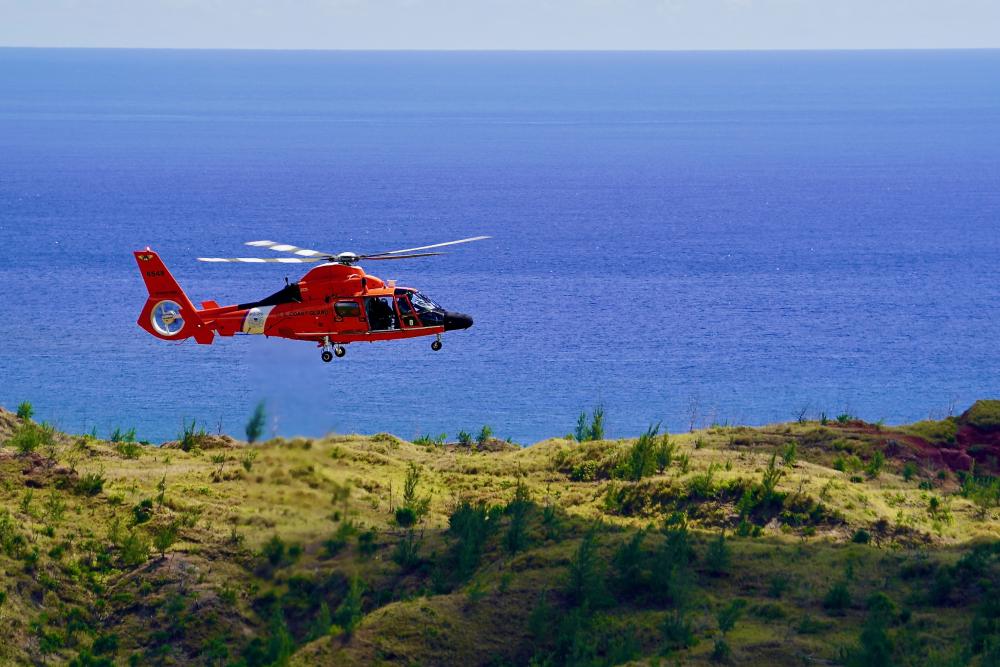
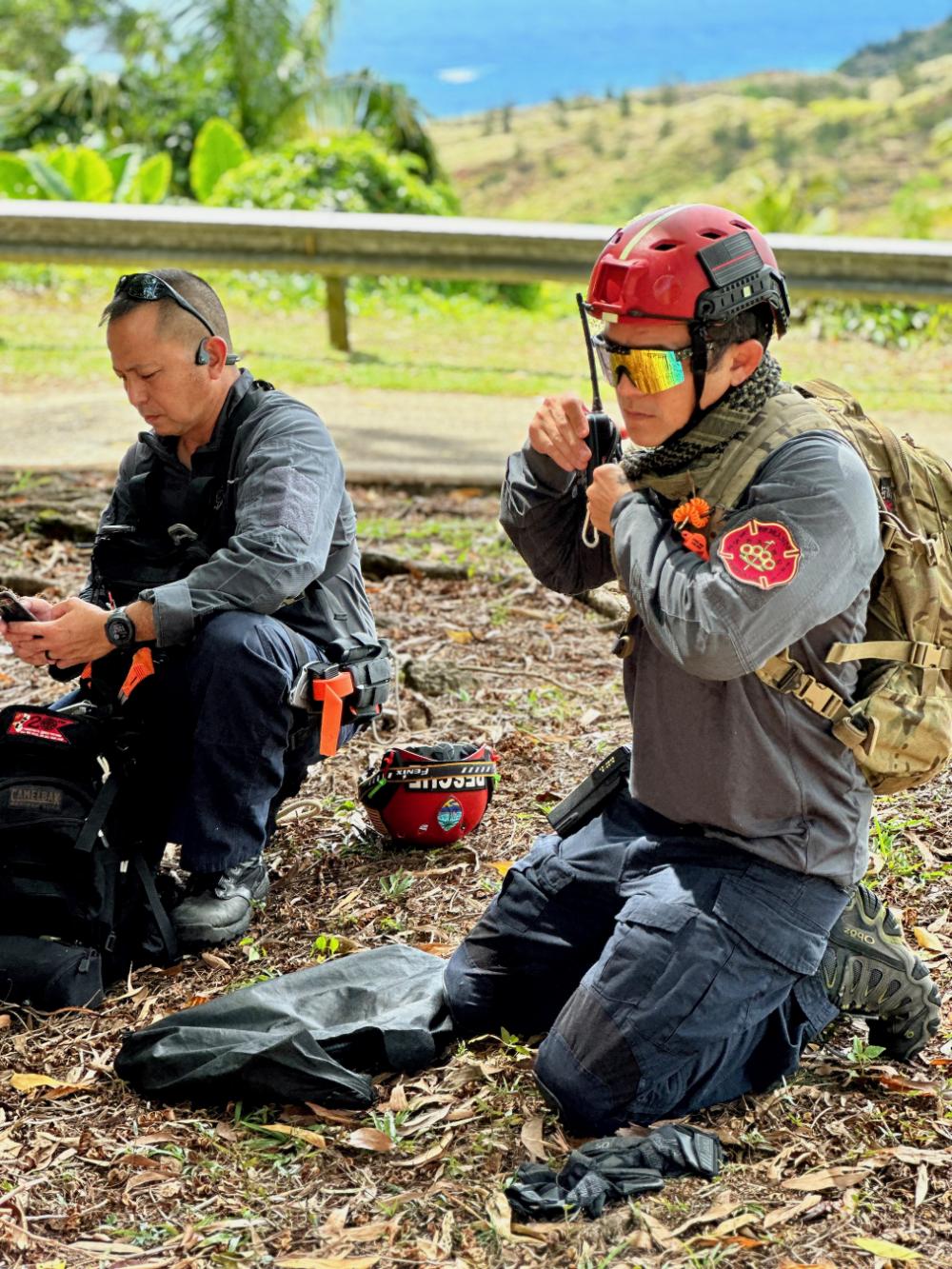
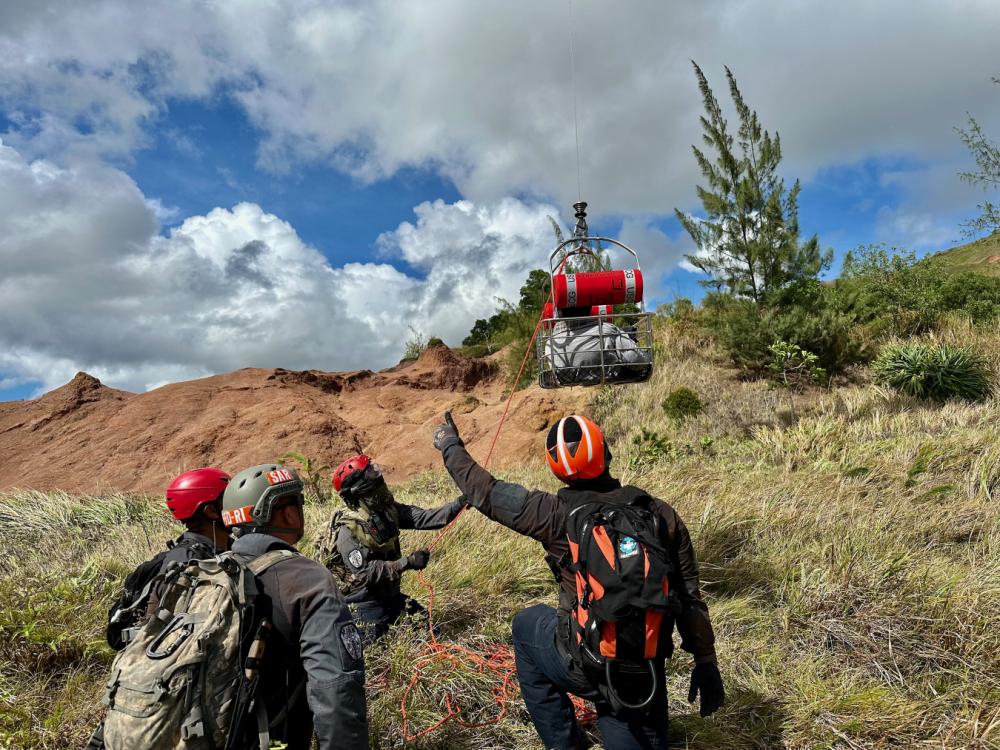
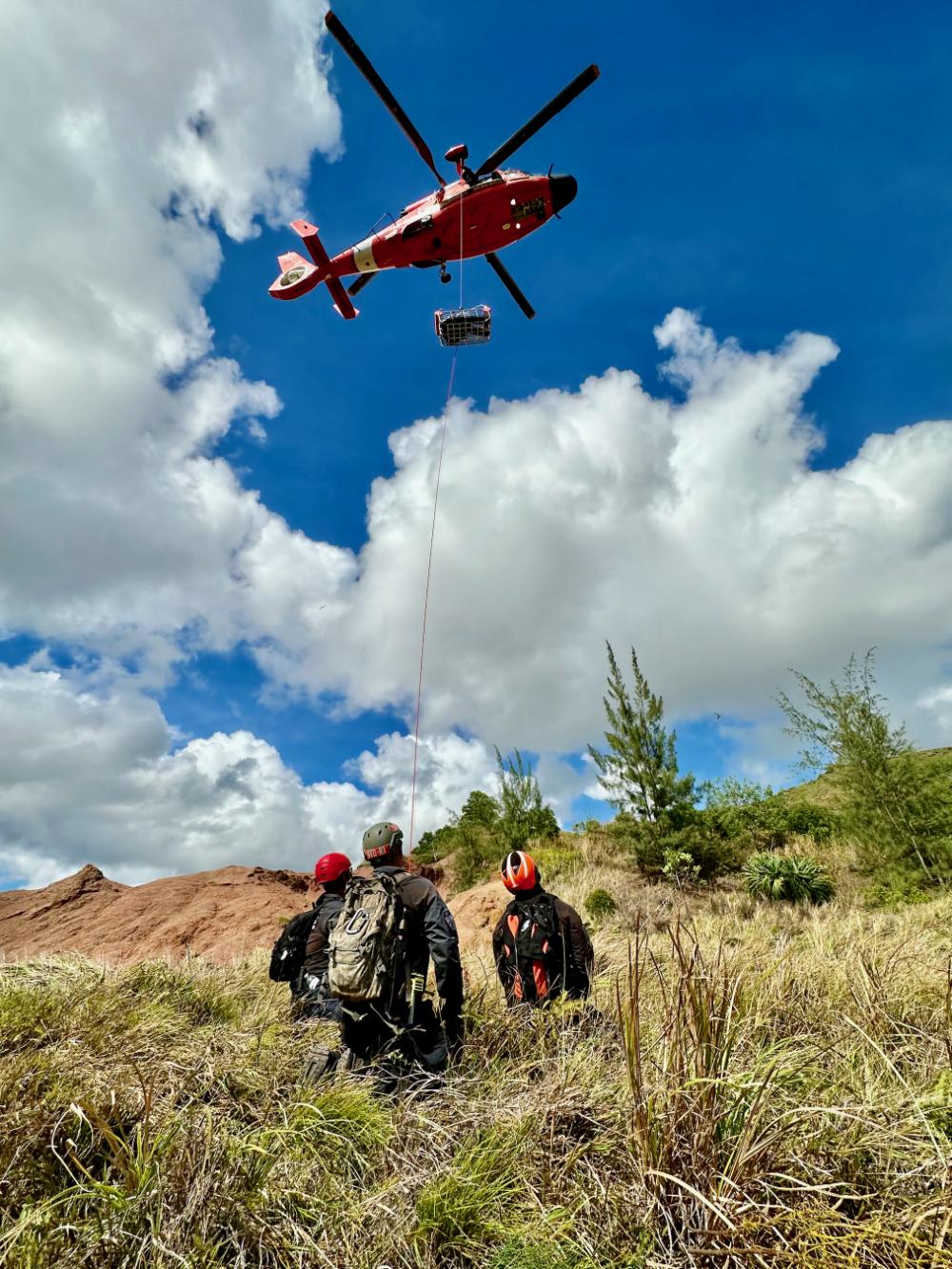
Guam Fire Department and U.S. Coast Guard members conduct rescue hoist training at Sella Bay Overlook in Guam on March 8, 2023. The exercise allowed the crews to assess the procedures each agency is familiar with and practice hoisting a rescue basket and a rescue swimmer from the aircraft. For the aircrew, it also served as an area familiarization to better understand the terrain and winds common on Guam’s southwest coast. (U.S. Coast Guard photo by Petty Officer 2nd Class Ethan Bray)

The news release below is surprising and raises some questions. A helicopter from Barbers Point, Hawaii conducts training with the Guam Fire Department. How did the Helicopter get there? There is currently no Coast Guard airstation in Guam. A Navy helicopter squadron provides SAR coverage for Guam, so what was the point? Is the Coast Guard going to establish an aviation facility of some kind in Guam?

News Release

U.S. Coast Guard Forces Micronesia / Sector Guam

U.S. Coast Guard, Guam Fire Department conduct rescue hoist training in Guam

An MH-65 Dolphin helicopter crew deployed to Guam from U.S. Coast Guard Air Station Barbers Point in Hawaii flies patterns to assess winds and terrain before conducting rescue hoist training at Sella Bay Overlook in Guam on March 8, 2023. Members of the Guam Fire Department prepare to hike down from Sella Bay Overlook for rescue hoist training in Guam with a deployed MH-65 Dolphin helicopter crew from Hawaii on March 8, 2023.  Guam Fire Department and U.S. Coast Guard members conduct rescue hoist training at Sella Bay Overlook in Guam on March 8, 2023.  Guam Fire Department and U.S. Coast Guard members conduct rescue hoist training at Sella Bay Overlook in Guam on March 8, 2023.

Editor’s Note: Click on the images above to view more or download high-resolution photos and b-roll videos.

SANTA RITA, Guam — Guam Fire Department and U.S. Coast Guard members conducted rescue hoist training at Sella Bay Overlook in Guam on March 8, 2023.

“We appreciate the ongoing strong relationship with Guam Fire and are eager to bring any capability to bear that benefits the people of Guam and our partners,” said Capt. Nick Simmons, commander of U.S. Coast Guard Forces Micronesia/Sector Guam. “As the U.S. Coast Guard continues to adapt our approach to service in the region, we are working closely with U.S. Coast Guard District 14 and the team from the Air Station at Barbers Point to find the best ways to employ our aircrews and increase the amount of organic aviation support we have for search and rescue and law enforcement missions here.”

Eight members of GFD’s Battalion A worked with the aircrew of an MH-65 Dolphin helicopter deployed to Guam from U.S. Coast Guard Air Station Barbers Point in Hawaii and personnel from the U.S. Coast Guard Forces Micronesia/Sector Guam response department. Guam Fire Department crews execute the majority of on-land search and rescue operations. They also maintain the best capability for on-land response with a wealth of experience regarding the terrain and conditions.

“Our partnership with the U.S. Coast Guard on Guam has expanded dramatically over the years. The increase in U.S. Coast Guard assets assigned to Guam extends our potential for positive outcomes in search and rescue missions benefiting our island community,” said Battalion Chief Roderick Meno, GFD rescue commander. “The opportunity to train together provided an avenue to test capabilities and share best practices. The U.S. Coast Guard helicopter’s availability gives us another valuable resource to conduct the diverse array of missions we perform here on Guam.”

The training allowed the crews to assess the procedures each agency is familiar with and practice hoisting a rescue basket and a rescue swimmer from the aircraft. For the aircrew, it also served as an area familiarization to better understand the terrain and winds common on Guam’s southwest coast. This training occurred near the location of a recent case of a missing hiker, a common place for foot traffic. The trail quickly descends from the trailhead into the jungle with steep ravines and many trip hazards, and it is very hot whether people are under tree cover or exposed to the sun. The conditions may easily overcome inexperienced hikers.

The MH-65 Dolphin helicopter is a short-range recovery helicopter used by the crew to perform search and rescue, law enforcement, and homeland security missions. It is certified for all-weather and night-time operations, except for icy conditions, and it routinely deploys aboard certified cutters providing manned airborne surveillance and interdiction capabilities. The airframe was first added to the Coast Guard inventory in 1984 and has undergone several upgrades.

In recent memory, these operations mark the first deployment of a Dolphin helicopter crew to Guam. The District 14 assigned aircraft are primarily used as a search and rescue platform in the Main Hawaiian Islands and as an augment aboard major cutters on deployment to extend their range for search and rescue, law enforcement, and surveillance while at sea. The aircrews frequently participate in community relations events and subject matter exchanges to build awareness for service capabilities and encourage interest in the aviation career field.

“This asset is not a replacement for any other agency but another resource to help us accomplish our missions and serve the people of Guam and the Commonwealth of the Mariana Islands,” said Simmons. “They are currently here on a six-week deployment as we field test the feasibility of their operating here in a greater capacity. This approach is an innovative way to employ aircrews in the Indo-Pacific for increased presence and value. We hope to get them out here more frequently and are pleased to have the support of the Air Station and the District 14 command.”

The operations have precedent. In 1947 the service established a Coast Guard air detachment consisting of one PBY-6A Catalina, an amphibious aircraft, and crew at the Naval Air Station in Agana, Guam, to provide aerial logistics support for LORAN stations in the southern Marianas and Western Caroline Islands. The Catalina was well suited to operations in the islands, able to haul cargo but also land in the shallow lagoons and offload to skiffs. The primary mission of the air detachment was to resupply the Marianas section LORAN stations, although they did assist in search and rescue missions when needed. The need for Coast Guard air support decreased as the LORAN mission shifted over time and commercial aviation services became more readily available. The Coast Guard air detachment, by then called an air station, was disestablished in 1972.

U.S. Coast Guard Forces Micronesia/Sector Guam comprises nearly 300 personnel throughout the response, prevention, administrative, and logistics departments supporting the Joint Rescue Sub-Center, three fast response cutters, a small boat station, and a marine safety detachment in Saipan. The unit provides a significant portion of the U.S. Coast Guard’s enduring regional presence serving the people of the Pacific by conducting our six major operational mission programs: maritime law enforcement, maritime response, maritime prevention, marine transportation system management, maritime security operations, and defense operations.

For more U.S. Coast Guard Forces Micronesia/Sector Guam news, visit us on DVIDS or subscribe! You can also visit us on Facebook or Instagram at @USCGForcesMicronesia or Twitter @USCGFMSG. 

“USNI News Interview: Coast Guard Commandant Adm. Linda Fagan”

Adm. Linda Fagan in front of the Coast Guard Cutter Eagle in New London, Conn., Aug 19, 2022. US Coast Guard Photo

The US Naval Institute has an excellent interview with the Commandant. The lead off is about steps being taken to lower barriers to both service entry and long-term service.

“The Coast Guard commandant has a message for the country – she’s hiring.

“The Coast Guard is feeling an acute recruiting crunch across both officer and enlisted ranks, so reforming the service workforce is at the top of Adm. Linda Fagan’s agenda and the centerpiece of the Coast Guard’s latest strategy that rolled out in October.”

But there is a lot more to the interview. She also talks about cutter recapitalization, the helicopter fleet, and the Coast Guard’s increasing role internationally.

You may have noticed that “we are hiring” signs are up all over the country. There is a structural labor shortage in the country as job creation is way up, unemployment is at record lows, and “boomers” are finally leaving the work force. As a result, the Commandant is looking hard at ways to recruit and retain members, including recognizing prior work experience. Likely the average age of the workforce is going to increase. This is all to the good. Experience and guile beat youth and enthusiasm every time.

It is worth noting that, over the last 30 years, the number of Coast Guard personnel authorized has increased while the size of the other four military branches, not surprisingly, have decreased. (DOD active-duty personnel are down 36%.) While I don’t have a figure for 1993, in Oct 1989, it appears the Coast Guard’s active-duty allowance was 36,899 personnel. Current authorization is 44,500. That would be a 20.6% increase.

“US Army makes largest helicopter award in 40 years” –Defense News

Bell’s V-280 prototype

And the Winner is — The Bell V-280 Valor

Defense News reports the winner of the Army’s “Future Long-Range Assault Aircraft” competion to find a replacement for the H-60.

With a demonstrated cruise speed of 305 knots, if it can do the SAR mission, this has real potential for the Coast Guard.

“The service wants FLRAA to be capable of traveling roughly 2,440 nautical miles (or 2,810 miles) without refueling, but also to be agile enough to maneuver troops into dangerous hot spots.”

1,725 nautical miles one way, was the threshold requirement.

Unless they add folding blades and a stowable wing like on the V-22, it really doesn’t look like it would be easily adaptable for shipboard use, but there is still another aircraft to be selected under the Future Vertical Lift program and it will be smaller. There are currently two competitors, The Bell Invictus and the Sikorsky Rader X. My money is on the Raider X compound helicopter. It also looks like it would require less modification to convert to civilian and Coast Guard use and seems to offer more improvement over existing aircraft.  

I also don’t think we can assume the Sikorsky competitor for FLRAA will completely disappear.

“MH-65 upgrades were invaluable to mission success in the aftermath of Hurricane Ian” –CG-9

The report below is from the CG-9 website

MH-65 upgrades were invaluable to mission success in the aftermath of Hurricane Ian

Air Station Miami crew during Hurricane Ian

The Air Station Miami crew evacuates a person in the aftermath of Hurricane Ian. In addition to Air Station Miami’s MH-65Es and HC-144Bs, the coordinated rescue included one MH-65E from Air Station Houston and two MH-65Ds from Air Station Savannah. Total statistics for the coordinated rescue: 46 lives saved, 36 lives assisted and 19 pets saved. U.S. Coast Guard photo by Air Station Miami.


Hurricane Ian caused nearly 150 fatalities when it swept through Florida in late September 2022 and has been cited as the deadliest hurricane to hit Florida since 1935. In the search and rescue efforts that followed, Air Station Miami crewmembers played a pivotal role in rescuing both human and animal survivors. According to the pilots, upgrades on the Coast Guard’s MH-65E proved vital during multiple rescue missions. In the days following the storm they were faced with harried conditions when fuel stops were limited, communications were intermittent and lives depended on the speed and awareness of the crew.

The upgraded MH-65E, or Echo, sports an all-glass cockpit and Common Avionics Architecture System (CAAS) that replaced legacy analog components. The new system aligns with Federal Aviation Administration next-generation requirements that call for performance and space-based navigation and surveillance, allowing for more three-dimensional approaches and flight patterns as well as higher visibility of the helicopter by other on-scene aircraft.

Integral to the CAAS is the automatic dependent surveillance-broadcast, or ADS-B, which allowed command aircraft (both Coast Guard HC-144 and Navy P-3) to track the MH-65E even when it was no longer visible to the crews. The moving map on the pilot screens can be overlayed with the traffic collision avoidance system (TCAS), which helps deconflict airspace with multiple aircraft maneuvering in tight quarters. The display can be placed across four multi-function display (MFD) screens and is accessible to both pilots.

“The TCAS was immensely helpful, especially being able to use the moving map overlay,” said Lt. Audra Forteza. “There were so many aircraft in the area, both military and civilian, and not everyone was making traffic calls as they should be – the TCAS allowed us to quickly and efficiently find the most imminent threat and maneuver to maintain separation. Knowing where exactly to look for a target made identification much faster and allowed us to focus on the mission at hand vice continually searching for other aircraft.”

The crewmembers were equally impressed by the bingo fuel alerts, an aviator term used to describe the minimum fuel an aircraft requires to land safely at its designated landing site. Fuel stops were severely limited because of widespread power outages on the ground. This meant that finding an airport with a generator strong enough to facilitate refueling was largely based on recommendations from other parties in communication with the aircrews. “Word of mouth was key to success for aircrews operating the area to determine which airports had fuel,” Forteza said. “And the people at the airfields were extremely accommodating in getting crews food, fuel, water and bathrooms.”

The MFD screens were also very useful when it came to hoisting survivors out of difficult situations while maintaining situational awareness and control of the aircraft. Forteza was able to monitor her co-pilot safely and effectively while they operated the hoist in a series of challenging urban environment rescues over the course of several days.

Additionally, utilizing the upgraded radar weather mode allowed for safe navigation between hurricane bands as the crews searched for survivors by painting a clearer, more accurate picture of the evolving weather situation even when their in-flight tablets did not have reception. In response to Hurricane Ian, Air Station Miami pilots flew a total of 46 hours over several days. Forteza and Lt. Danielle Benedetto personally contributed to saving the lives of 16 people, as well as five cats and three dogs. The air station fully transitioned to the MH-65E in July 2021.

Air Station Miami crew

Air Station Miami crew, from left: Petty Officer 2nd Class Tyler Kilbane, Petty Officer 2nd Class Nick Rodriguez, Lt. Audra Forteza and Lt. Danielle Benedetto. U.S. Coast Guard photo.

Live shots taken by Minotaur-equipped HC-144

Live shots of Hurricane Ian damage taken by Minotaur-equipped HC-144 aircraft were used to support the Incident Management Team. U.S. Coast Guard photos.

MH-65E transition
The Coast Guard has completed 52 out of 98 total conversions including avionics upgrades to the Echo configuration and Service Life Extension work. Air stations that have completed the transition and number of aircraft:

Houston 3
Miami 5
Port Angeles, WA 3
Barbers Point, HI 4
North Bend, OR 5
Helicopter Interdiction Tactical Squadron 12
Humboldt Bay, CA 3
San Francisco 7

Next up for conversion are Atlantic City, N.J., and Savannah, GA

For more information: MH-65 Short Range Recovery Helicopter Program page and Minotaur Mission System Program page