“Coast Guard delivers upgraded multi-mission helicopters to Air Station Atlantic City” –D5 News Release

MH-65E interior.

While you may have heard the Coast Guard is headed for an all H-60 rotary wing fleet, it seems we will continue to have H-65a for some time.

The upgrades comply with the Federal Aviation Administration’s Next Generation Airspace Transportation System requirements, and extends the aircraft service life to the late 2030s.

The Coast Guard plans to convert all 98 of its Dolphin helicopters to the MH-65E configuration by the end of 2024.

News Release U.S. Coast Guard 5th District Public Affairs North
D5 Public Affairs North, Baltimore, Md

Coast Guard delivers upgraded multi-mission helicopters to Air Station Atlantic City 

ATLANTIC CITY, N.J. — Coast Guard Air Station Atlantic City received its first upgraded MH-65E Dolphin helicopter Monday to replace the legacy MH-65D helicopters that serve out of the Coast Guard’s largest MH-65 helicopter unit. 

The avionics upgrade to the Echo or “E” configuration will provide enhanced search and rescue capabilities including modern “glass cockpit” technology that increases pilot and aircrew situational awareness. 

The Dolphin upgrades also include reliability and capability improvements for the automatic flight control system, enhanced digital weather and surface radar, and multifunctional displays with more accurate fuel calculations.

The upgrades comply with the Federal Aviation Administration’s Next Generation Airspace Transportation System requirements, and extends the aircraft service life to the late 2030s.

The transition of Air Station Atlantic City’s 12 MH-65D helicopters to the upgraded “E” configuration is expected to take approximately 10 months. 

During the upgrade period, the unit’s 62 pilots and 104 aircrew members will undergo a three-week transition course at the Aviation Training Center in Mobile, Alabama. Aircrew and mechanics will undergo formal training specific to their roles and duties during this course.

“The upgrades and advanced training will enhance the situational awareness of our aircrews and improve mission planning capabilities aboard the Coast Guard’s most prolific rotary-wing asset,” said Cmdr. Christian Polyak, engineering officer at Air Station Atlantic City. “The replacement and inspection of key aircraft components as a part of the upgrade are also expected to extend the aircraft’s service-life and enable us to continue safeguarding and securing our coasts for years to come.”

Air Station Atlantic City Dolphin helicopter crews perform search and rescue, provide aids to navigation support, and maritime law enforcement and marine environmental protection to the mid-Atlantic region from Long Island, New York, to the Maryland/Virginia border. 

Air Station Atlantic City helicopters and aircrews also provide continuous support for the North American Aerospace Defense Command’s airspace security mission in Washington, D.C., and throughout the country as necessary.

Additionally, the upgrades also include advanced navigation capabilities that will allow pilots to safely maneuver through highly congested, complex air traffic that can be encountered in situations such as disaster response.

The Coast Guard plans to convert all 98 of its Dolphin helicopters to the MH-65E configuration by the end of 2024.

For more information visit the MH-65 Program page at SRR – MH-65 (uscg.mil) .

“Coast Guard aircrews putting MH-65E new capabilities to good use” –CG-9

MH-65E interior.

The Acquisitions Directorate (CG-9) has an excellent post about the upgrades that bring the MH-65s up to the “Echo” standard.

While there is a long term intent to ultimately move to an all H-60 fleet, the H-65 fleet still has a future.

In conjunction with the upgrades, the Coast Guard is completing service life extension program activities on the Dolphin fleet to replace five major structural components: the nine-degree frame, canopy, center console floor assembly, floorboards and side panels. These mission-critical improvements are designed to extend the service life of the helicopter by 10,000 flight hours.

The Coast Guard plans to convert all 98 aircraft to the MH-65E configuration by the end of fiscal year 2024.

French Navy’s New SAR Helicopter, Looks Familiar

The first H160 helicopter for the French Navy. French Navy picture.

Naval News reports that the French Navy has recieved the first of six H160 helicopters. This is a bit larger successor to the Eurocopter AS365 Dauphin, a variant of which is the USCG H-65. 

“169 H160M Guépards are foreseen to replace five types of helicopters in service with the French armed forces.”

These first few are not the fully militarized H160M versions. They are lightly upgraded civilian aircraft for use as SAR aircraft, including a Safran Euroflir 410 electro optical system and winching system. The aircraft are certified for night vision google use.

The Very First US Naval Helicopters and Their Coast Guard Pilot

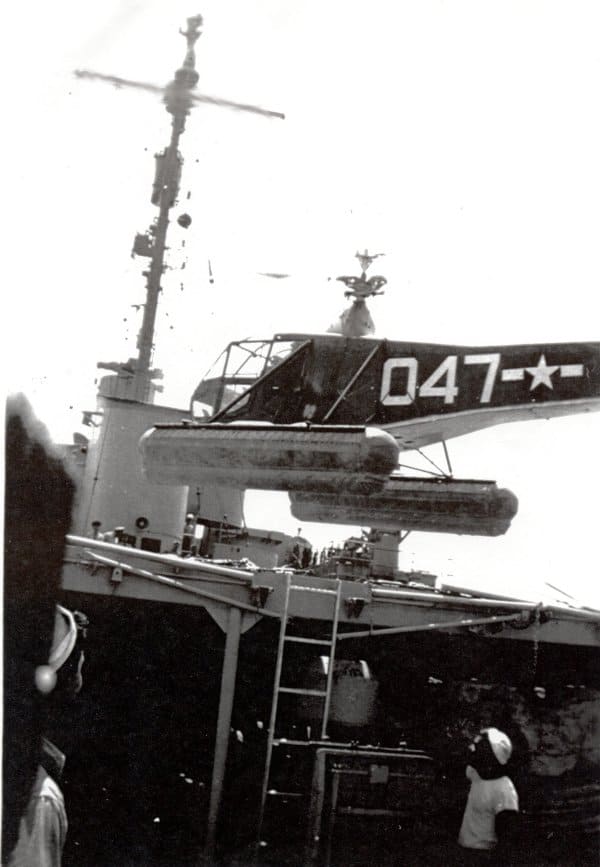
CDR Frank Erickson, USCG, the first US Naval Aviation helicopter pilot.

I am sharing a post written by Coast Guard Aviator, Capt. Sean M. Cross, that appeared on his Facebook Page. Captain Cross’s Facebook page provides daily stories about Coast Guard aviation history. I have a bit of a personal connection, because his dad, former Vice Commandant, VAdm. Terry M. Cross, USCG (ret.), served with me, on my first active duty station, USCGC McCulloch. Even then, it was clear he was a standout.


TODAY IN COAST GUARD AVIATION HISTORY – 03 SEPTEMBER 1943: On 3 September, the U.S. Navy Chief of the Bureau of Aeronautics requested that Coast Guard CDR Frank Erickson, who was assigned to the Sikorsky Factory in Bridgeport, CT, prepare a weekly report for the Bureau outlining the progress made on various model helicopters, estimates of completion, trial and delivery dates; and in addition, such other technical information determined from time to time which had or may have a bearing on present or future operations of this type aircraft.
[Some excerpts from “1943: Coast Guard Assigned the Sea-going Development of the Helicopter” on the Coast Guard Aviation History website] This arrangement came about because U.S. Navy CDR Charles Booth, the naval aviator in the initial helicopter training class at Sikorsky, was involved in moving the Navy’s flight test facility from NAS Anacostia to the Naval Test Center at Patuxent River, Maryland and as a result had not followed through on his qualification. Erickson thus remained the only naval aviator qualified in the helicopter. Hence, in the summer of 1943 Erickson had taken charge of the Navy’s helicopter development program.
Erickson submitted his first report on 18 September. It noted that the YR-4s for the joint evaluation program were on schedule. The two British helicopters had been completed but had not yet been delivered because of rotor problems. He further stated the problems were being addressed. On 25 September a YR-4A was released to the British. On October 16, 1943 – the U.S. Navy accepted its first helicopter, a Sikorsky YR-4B, Navy designation XHNS-1, BuNo 46445, at Bridgeport, Connecticut. However, and this is rich, Coast Guard LCDR Frank Erickson, CGA ’31 flew the one-hour acceptance test flight because the Navy had no helicopter pilots. I will admit – they were pretty busy fighting WWII and winning.
Regardless, the Navy celebrates 16 October as the Birthday of Navy Helicopter Aviation^^^. CDR Charles T. Booth, USN, went to Bridgeport to qualify as a helicopter pilot and to fly the XHNS-1 to the Naval Air Test Center (NATC), NAS Patuxent River, MD. CDR Booth was the first U.S. Navy Officer to become qualified to fly helicopters.
With the acceptance of two additional helicopters at the end of October 1943, the Sikorsky facilities became very crowded. Erickson sought to transfer all operation to Coast Guard Air Station Brooklyn at Floyd Bennett Field. The Chief of Naval Operations approved and designated the Coast Guard Air Station Brooklyn as the Helicopter Training and Development Base. On 20 November, LCDR John Miller, USN and LTJG Stewart Graham, USCG completed flight training. Graham received Coast Guard Helicopter Pilot Designation Number Two.
[NOTE: the Coast Guard celebrates this anniversary on 15 June 1943 when LCDR Erickson was designated Coast Guard Helicopter Pilot #1 at the Sikorsky Aircraft plant]

Why Did USCGC Midgett Embark an ASW Helicopter For RIMPAC 2022?

PACIFIC OCEAN (July 30, 2022) U.S. Navy Petty Officer 1st Class Humberto Alba, a naval aircrewman tactical-helicopter, attached to Helicopter Maritime Strike Squadron (HSM) 37, deployed on U.S. Coast Guard Legend-class cutter USCGC Midgett (WMSL 757), looks down at a USCGC crewmember after taking off during flight operations during Rim of the Pacific (RIMPAC) 2022. (U.S. Coast Guard photo by Petty Officer 3rd Class Taylor Bacon)

The Drive reported on Cutter Midgett’s participation in RIMPAC 2022 with a look at flying Navy MH-60R ASW helicopters from the National Security Cutters. I wanted to talk about why this might have been done, but first let’s clarify something.

This and other reports may have left the impression that a Coast Guard Officer leading a task force at RIMPAC was a first and that it was the first time a Navy H-60 had flown from an NSC. Neither is not really the case.

  • During RIMPAC 2020, USCGC Munro embarked a Navy MH-60S, the surface warfare and logistics counterpart to the MH-60R. It is not clear if they ever hangared it.
  • Reportedly USCGC Bertholf headed a Task Force during RIMPAC2018.
  • In RIMPAC 2014 USCGC Waesche also headed a task force. “The maritime interdiction operation involving the Chinese destroyer, frigate and oiler was referenced in December by the Navy as being under the Coast Guard cutter Waesche and including two Royal Brunei Navy ships, a French frigate, a U.S. frigate and the Pearl Harbor-based cruiser USS Port Royal.”

Since NSCs are skippered by Captains, while the US Navy and our allies captain Burke class DDGs and similar ships with commanders, it is not uncommon for the Coast Guard commanding officer to be the senior officer among the captains of a group ships, if there is no commodore assigned. So, frequently, the Coast Guard CO is task force commander by default. This happened to 327 skippers early in WWII as well. For a period, Spencer’s CO was an escort group commander until the Navy assigned a Commodore. Fortunately Spencer got some good training allowing her to sink two of the less than 40 U-boats sunk by US surface ships.

So what was the reason an ASW helicopter was embarked on Midgett? The Coast Guard’s motivation and the Navy’s?

Could be as simple as because they could, but I don’t think so. Both services expected to get something out of this.

Interoperability is always nice, so Navy helo on CG cutter allows both to get some training. Still think there must be more to it than that.

The Navy wants to more widely distribute their forces so this might have been something of a dry run to see what they could do in terms of command and control from a Frigate sized ship and crew.

For the Coast Guard, it could have been an opportunity to get used to operating an H-60 with folding tail from a Bertholf class. It was certainly a rare opportunity to exercise LINK 16. We might have wanted to find out if a system included in the MH-60R should also be included in Coast Guard H-60s.

Or it might have been a first small step toward reviving a Coast Guard ASW mission. Unless the National Security Cutters could operate an ASW helicopter there would be no point in trying to add an additional ASW capability such as a towed array. Confirming ship/helo compatibility would be a first step, along with identifying what changes might be necessary to provide for the helicopters’ additonal needs for weapons, sonobuoys, etc.

Maybe Supporting MH-60R helicopters is reason enough

The US Navy has alot of H-60s. The numbers I have seen are 237 MH-60S (the surface warfare and logistics type) and 291 MH-60Rs (the multi-mission/ASW type). It is probably a bit less than that now, but about 500 plus the MQ-8 helicopter drones that they will also want to take to sea.

The Navy obviously does not have as many ships capable of hosting H-60s as they would like. Every US Navy surface combatant commissioned in the 21st century (DDG and LCS–there have been no cruisers or frigates) has had the capability to hangar two H-60s, and the planned FFGs will have this capability as well.

Navy requirements seem to be always changing,

  • The proposed 355 ship navy included 104 large surface combatants (cruisers and destroyers) plus 52 small surface combatants (frigates and LCS).
  • The latest from July 2022 calls for 96 large and 56 small.

Let’s say a minimum of 116 ASW capable escorts, probably about 120. Right now they have about 90 with no ASW capable LCS, 22 cruisers all now 22 to 36 years old (five of which are slated for retirement in the current budget), and about 70 Burke class DDGs of which 13 will reach 30 years old by the end of 2025 while the first FFG is not expected until 2026. Clearly the number is ASW capable escorts is unlikely to increase significantly any time soon and number may actually decline.

So how many MH-80R/MQ-8 spots are there?

The ten carriers typically host about six MH-60R. The cruisers and Burke class flight IIA and III have two each, but 28 of the Burke class DDGs (Flights I and II), almost a third of our large surface combatants, have flight decks and LAMPS ASW electronics, but no hangar. So roughly 72 ships with 204 spots. Eleven National Security Cutters would provide 22 additional spots, about a 11% increase. The Offshore Patrol Cutters protentially offer another 25 spots about 12% more.

With the Navy hoping to more widely distribute their surface combatants, rather than keeping them firmly attached to a carrier, a couple of additional MH-60Rs could substantially improve ASW capabilities of a small surface action group (SAG).


“Coast Guard Cutter Diligence returns to homeport after 60-day Eastern Pacific Ocean patrol” –News Release

PHOTOS AVAILABLE: Coast Guard Cutter Diligence returns to homeport after 60-day Eastern Pacific Ocean patrol

09Feb22 DILIGENCE conducting small boat training in the Eastern Pacific Ocean. (Credit: BM3 Cayne Wattigney)

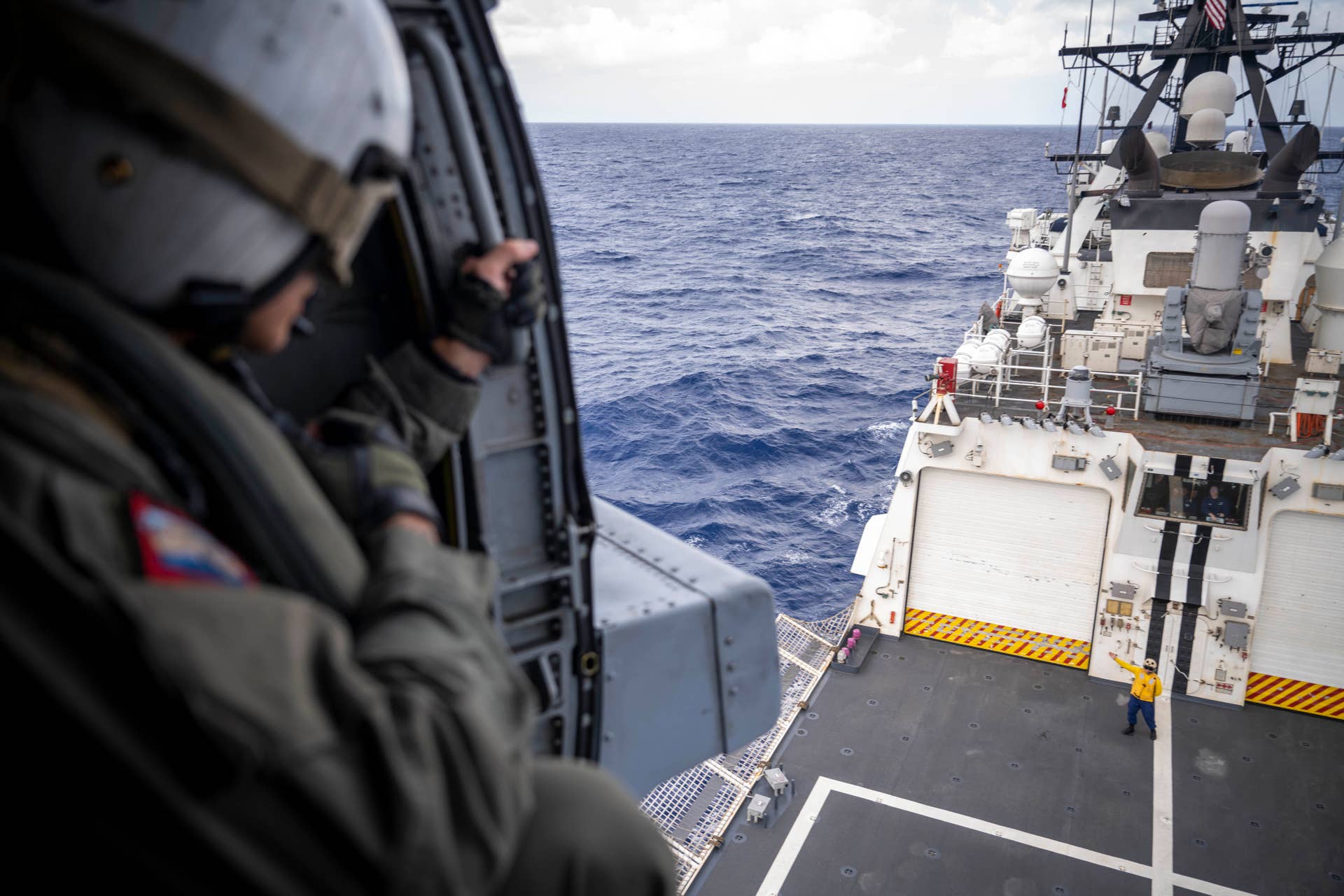
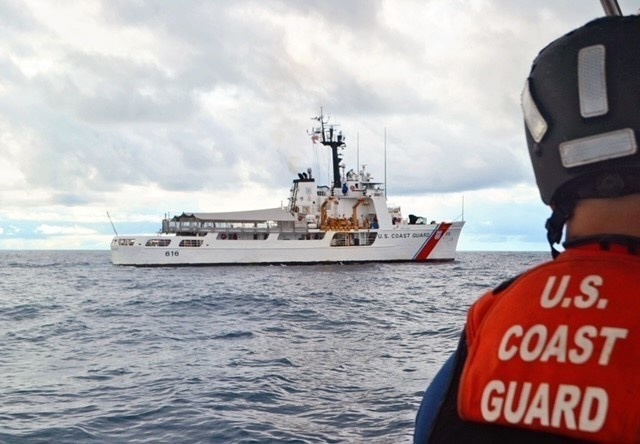
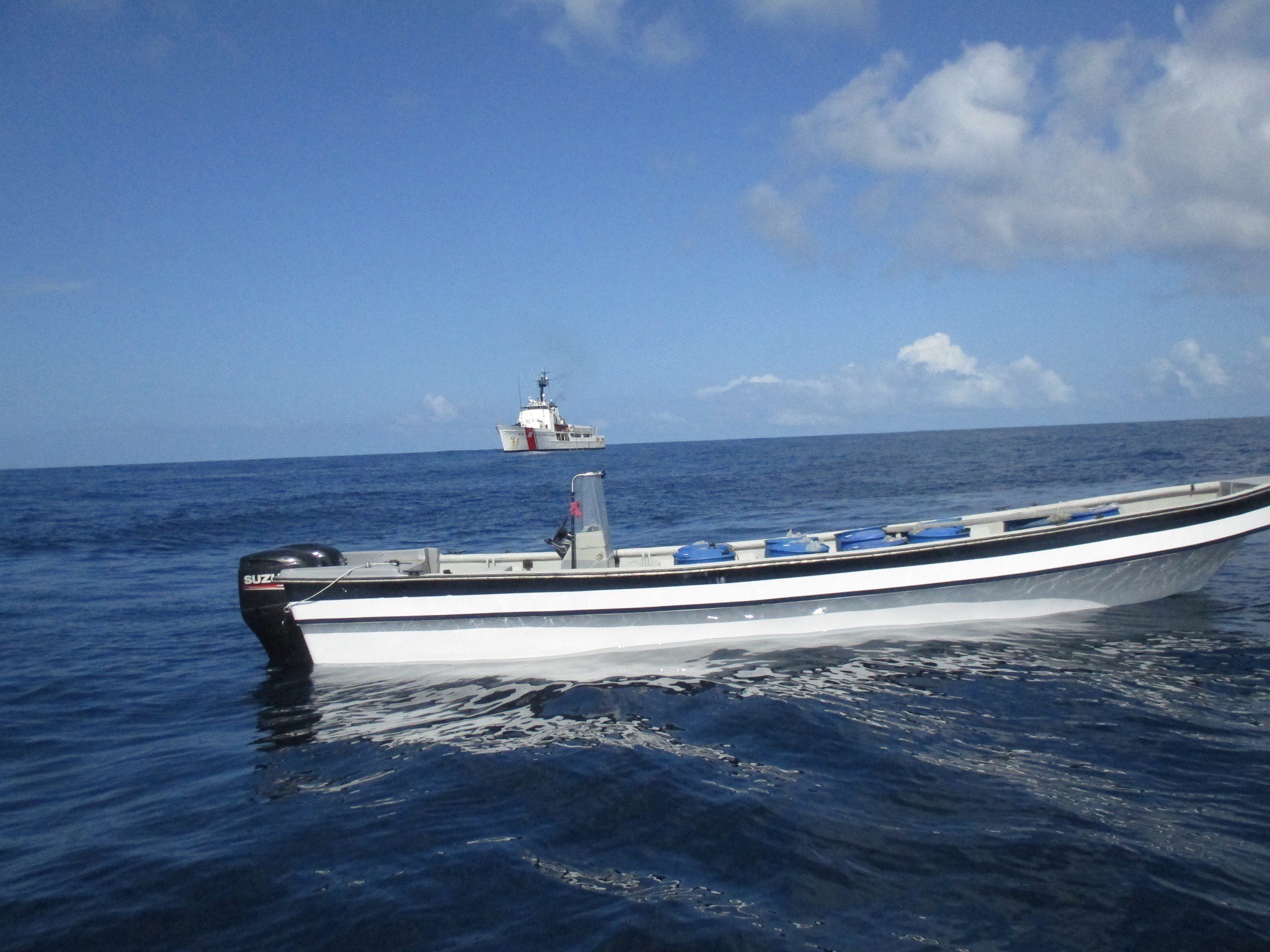
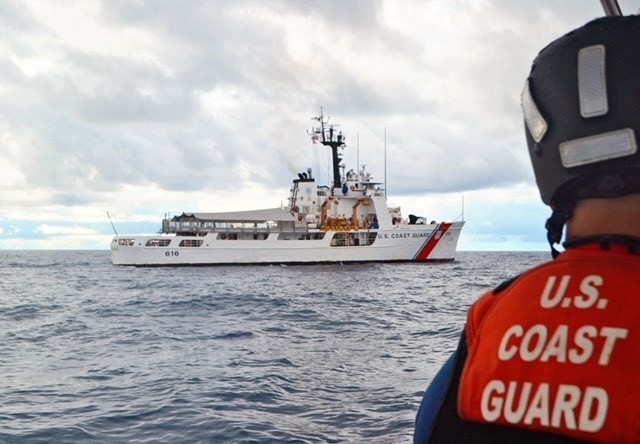
Below is a D8 news release. Sounds like a pretty typical WMEC Eastern Pacific patrol, but I would point out something I think is a bit unusual–they carried no helicopter. Awning over the flight deck and no mention of HITRON in the news release. Was this because of H-65 availability or because adequate air support was available from land bases? Maybe some other difficulty? Without a helicopter there is no armed overwatch and no way to chase down boats that may be faster than ship’s boats.

Looks like they left homeport a few days before Christmas.


News Release

U.S. Coast Guard 8th District Heartland

Coast Guard Cutter Diligence returns to homeport after 60-day Eastern Pacific Ocean patrol

Coast Guard Cutter Diligence returns to homeport after 60-day Eastern Pacific Ocean patrol 2/2 Coast Guard Cutter Diligence returns to homeport after 60-day Eastern Pacific Ocean patrol

Editor’s Note: Click on images to download high-resolution version.

PENSACOLA, Fla. — The crew of Coast Guard Cutter Diligence returned to their homeport of Pensacola Sunday following a 60-day counter-drug patrol in Eastern Pacific Ocean.

Partnering with three other Coast Guard cutters, Diligence interdicted three suspected drug-smuggling vessels resulting in the apprehension of 12 detainees and the interdiction of more than 4,321 lbs of cocaine with a street value of approximately $82 million.

“Diligence’s crew demonstrated professionalism, resilience and perseverance while conducting complex high-speed boat pursuits in the drug transit zone,” said Cmdr. Jared Trusz, Diligence’s commanding officer. “I am honored to serve with and proud of the crew’s superlative efforts that directly support the United States national security interests.”

Numerous U.S. agencies from the Departments of Defense, Justice and Homeland Security cooperated in the effort to combat transnational organized crime. The Coast Guard, Navy, Customs and Border Protection, FBI, Drug Enforcement Administration, and Immigration and Customs Enforcement, along with allied and international partner agencies, play a role in counter-drug operations.

The fight against drug cartels in the Eastern Pacific Ocean requires unity of effort in all phases from detection, monitoring and interdictions, to criminal prosecutions by international partners and U.S. Attorneys’ Offices in districts across the nation. The law enforcement phase of counter-smuggling operations in the Eastern Pacific Ocean is conducted under the authority of the Coast Guard 11th District, headquartered in Alameda, California. The interdictions, including the actual boardings, are led and conducted by members of the U.S. Coast Guard. 

The Diligence is a 210-foot medium-endurance cutter homeported in Pensacola with78 crewmembers. The cutter’s primary missions are counter-drug operations, migrant interdiction, enforcing federal fishery laws and search and rescue in support of Coast Guard operations throughout the Western Hemisphere.

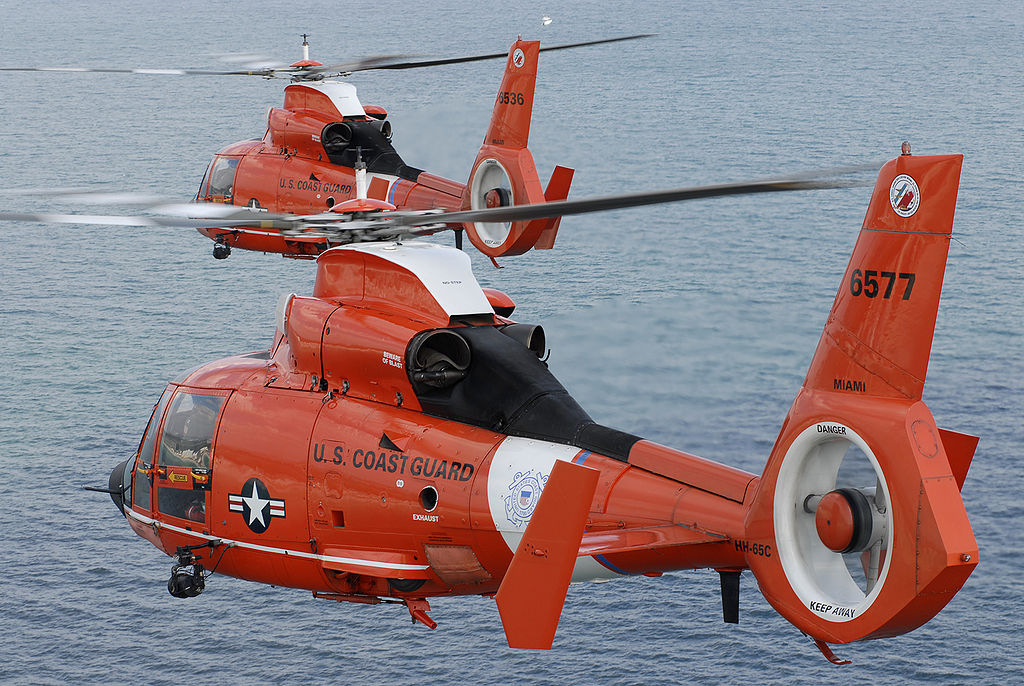
“The Coast Guard’s MH-65 Helicopter Fleet Is Headed For Trouble” –Forbes + Maybe MQ-8Bs

US Coast Guard photo, by PAC Dana Warr

Craig Hooper, writing for Forbes, brings us a warning about the status of the H-65 fleet.

We knew the Coast Guard was in the process of replacing H-65s with H-60s because they have become increasingly difficult to support.

The Coast Guard has on-going life extension programs for both H-60s and H-65s, but the author thinks progress is too slow.

There are two issues here.

  1. Replacing land-based H-65s
  2. Having helicopters that can operate off the WMECs.

I would like to think the Coast Guard has a workable plan to replace the land based H65s but waiting way too long to start replacement programs does seem to be part of the Coast Guard’s DNA.

As to the helicopters for WMECs, Cooper notes,

“At sea, the Coast Guard’s 27 aged mid-sized cutters cannot fully support the larger footprint of an MH-60 platform. Delays in getting the Coast Guard’s highly anticipated Offshore Patrol Cutter into service means the old cutters will remain in the fleet—and needing Dolphin helicopters—for years.”

As I recall, the 13 WMEC 270s were designed to operate H-60s and Alex Haley looks like her facilities may be large enough as well. Certainly, operating H-60s from the 14 WMEC 210s is a non-starter.

The number of H-65s required solely to support 210 operations is relatively small. Judicious use and cannibalization could probably keep a few operational until the last 210 goes out of service.  That should happen about 2032.

If that is not possible, there is another alternative, UAVs. They could certainly operate Scan Eagle. Another possibility is Fire Scout.

The Navy is phasing out their MQ-8B VTOL drone in favor of the larger MQ-8C. Perhaps the Coast Guard could take over some or all 30 ot the B models and operate them from 210s. They might also be operated alongside H-60s from Bertholf class NSCs and Argus class OPCs. Although they probably cannot do armed overwatch (or maybe they could), they might be a better search asset than the H-65, given their greater endurance. This would also prep the Coast Guard to also participate in the MQ-8C at some time in the future.

PACIFIC OCEAN (Sept. 18, 2019) Sailors push an MQ-8B Fire Scout assigned to the Wildcards of Helicopter Sea Combat Squadron (HSC) 23 on the flight deck of the Independence-variant littoral combat ship USS Gabrielle Giffords (LCS 10).  (U.S. Navy photo by Mass Communication Specialist 3rd Class Josiah J. Kunkle/Released)190918-N-YI115-1004

Interestingly, there is also a comment about the Coast Guard’s role in DOD’s Future Vertical Lift (FVL) Program,

“Replacement helicopters will be slow to arrive. The U.S. Coast Guard Commandant, Admiral Karl L. Schultz, says the Service is “looking fifteen or so years down the road at our rotary wing aviation program.” Unless the Coast Guard acts quickly to have their basic performance requirements folded into the Department of Defense’s Future Vertical Lift Initiative, a Coast Guard variant of whatever the Navy gets will likely take two decades—or more—to obtain and field.”

The FVL program is expected to produce at least two airframes, one to replace the H-60 and a smaller aircraft to replace the Army’s scout helicopters.

Thanks to Paul for bringing this to my attention. 

Customs and Border Protection Air and Marine Gets 16 New Helicopters

Dmitry Shulgin reports that,

Airbus Helicopters, Inc. (AHI) has delivered the first of 16 new H125 helicopters uniquely configured for U.S. Customs and Border Protection (CBP) Air and Marine Operations (AMO). AMO collaborated with AHI as part of a long-term fleet upgrade initiative, and the resulting configuration has led to one of the most advanced, high-tech law enforcement helicopters ever developed.

This light (Max takeoff weight: 2,250 kg (4,960 lb)), single engine helicopter, previously designated the AS350, has enjoyed great success with CBP. Wikipedia notes,

By 1999, the AS350 had become the prime helicopter being used by the United States Customs Service for light enforcement operations; by 2007, the agency had become the single largest operator of the type in the world.

Apparently these are being procured via GSA contract.

FY2019 Budget


US Capital West Side, by Martin Falbisoner

With a bit of help from a friend, the actual FY2019 budget documents were located:  “The Joint Explanation” and “The Conference Report.”

I found the Joint Explanation easiest to wade through. The Budget breakdown is found on pages 65 to 69 of the 612 page pdf.

Note in some cases I have rounded to the nearest $0.1M


Our total Coast Guard FY2019 budget is $12,015,921,000. This is $91,803,000 less than last year, but $577,720,000 more than the budget request.

The Operations and Support allocation is $7,808.2M. That is $434.9M more than last year (a 5.6% increase), and $215.1M more than requested.

I have provided information on the PC&I budget below including a complete list of line items that I was unable to provide before.

PROCUREMENT, CONSTRUCTION, AND IMPROVEMENTS (PC&I) $2,248.26M

Vessels and Boats

  • Survey and design:                      5.5M
  • In service vessel sustainment:   63.25M
  • National Security Cutter:              72.6M (Follow up on ships already funded)
  • Offshore Patrol Cutter:                  400M (Second of class + LLTM for third)
  • Fast Response Cutter: 340M (Six Webber class including two for PATFORSWA)
  • Cutter boats                                       5M
  • Polar Security Cutter:                     675M (First of class + LLTM for second)
  • Waterways Commerce Cutter:           5M
  • Polar sustainment:                            15M (Polar Star Service Life Extension)

—-Vessels Subtotal:  $1,581.35M

Aircraft

  • HC-144 Conversion/Sustainment:         17M
  • HC-27J Conversion/Sustainment:         80M
  • HC-1330J Conversion/Sustainment:   105M
  • HH-65 Conversion/Sustainment:           28M
  • MH-60 Conversion/Sustainment:         120M
  • Small Unmanned Aircraft:                        6M

—Aircraft Subtotal:  $356M

Other Acquisition Programs:

  • Other Equipment and System:                                               3.5M
  • Program Oversight and Managemen:                                    20M
  • C4ISR                                                                                    23.3M
  • CG-Logistics Information Management System (CG-LIMS):   9.2M

—Other Acquisitions Programs Subtotal:   $56M

Shore Facilities and Aids to Navigation:

  • Major Construction; Housing; ATON; and Survey and Design: 74.51M
  • Major Acquisition Systems Infrastructure:                                 175.4M
  • Minor Shore                                                                                      5M

—Shore Facilities and Aids to Navigation Subtotal:  $254.91M

The PC&I total, $2,248.26M, was $446.48M less than FY2018, but it was $361.51M above the budget request.

R&D was cut by almost a third. This is probably a place to spend more not less.

Reserve Training disappeared as a separate line item, so I can’t tell what happened there.

Also included in the new budget is $5M for the National Coast Guard Museum

Incidentally, the total amount appropriated for the polar security program includes $359.6M (FY2018 and prior) + $675M (FY2019), or $1,034.6M, of which $20M is for Long Lead Time Material for the second ship, and the remainder is for the first ship and other program-related expenses.

With Operations and Support up more than 5% over 2018 and Procurement Construction &Improvement (PC&I) over $2B for the second year in a row, this is the kind of budget we can live with. It just needs to keep happening.