Coast Guard Yard Gets Navy 76mm Guns

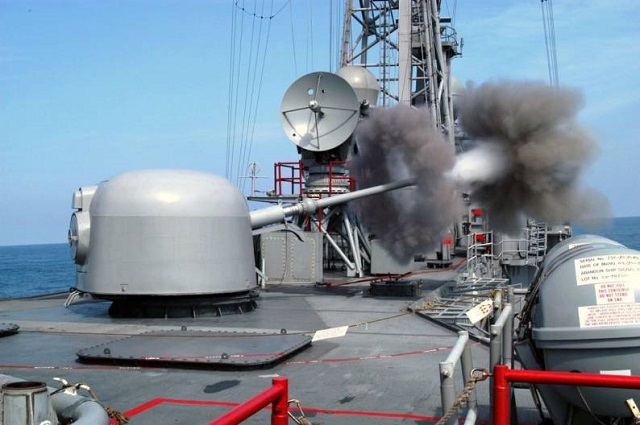
76mmMk75
Photo: Mk-75 3”/62 caliber naval gun aboard USS Curts (FFG-38). U.S. Navy photograph

NavyRecognition is reporting that the Navy and Coast Guard are in the process of stripping five FFGs of weapons components that will be used to support Coast Guard Mk75 gun systems on Bear Class WMECs that are expected to be in service into the 2030s. It is not apparent from the post if Mk92 fire control system parts were also scavenged.

It is clear that soon virtually all US expertise in the Mk75 gun will reside in the Coast Guard. We can expect that some of those nations that have received (or will receive) former USCG 378s are likely to ask for help with these system for both training and maintenance.

Huge New Marine Reserve, Pacific Remote Islands Marine National Monument

Pacifci Marine Reserve
Photo Credit: Marine Conservatory Institute, Click to enlarge.

We knew this was coming. gCaptain reports implementation and gives more detail.

“The proclamation expands the existing Pacific Remote Islands Marine National Monument to six times its current size, resulting in 490,000 square miles (about 390,000 square nautical miles) of protected environment around tropical islands and atolls in the south-central Pacific Ocean. At that size, it is now the largest protected area on the planet, land or sea. The protected area encompasses the seven islands and reefs of Wake, Johnston, Baker, Howland, Kingman, Jarvis and Palmyra, as well as the ocean around them.”

If I read this right, the area encompassed in larger than the entire US Atlantic Coast EEZ (considering Gulf of Mexico separate) and the difficulty policing it is exacerbated by the fact that it is in several pieces separated by hundreds of miles. As I noted earlier, this sure looks like justification for at least one more cutter in Hawaii, and possibly other additional ships and air assets there or in Guam. A ninth NSC added to the FY2016 budget appears well justified.

Whaling Conundrum

gCaptain reports that the Japanese will resume whaling in spite of rulings against it by the International Court of Justice and the International Whaling Commission.

Mostly, whaling has been done in the waters off Antarctica, although there has been some Arctic Whaling, where the US currently makes no specific territorial claim, but has reserved the right to make claims at a later date. Leaving the policing of these waters by others may be seen as weakening any future US claim and strengthening the hand of Nations that actually police these waters.

Will the US in the person of the Coast Guard attempt to stop Japanese whaling in either the Arctic or the Antarctic?

Video Screens as Communications Devices

CIMSEC has an interesting post that talks about using video devices for a number of unconventional purposes in the naval environment, “Camouflage: You Ain’t Screen Nothin’ Yet.”

The post includes several innovative ideas that might stimulates thinking, but one relatively simple idea caught my eye, that of using video displays (think jumbo-tron) to communicate with another vessel possibly using multiple languages or graphics. Might be useful in boarding situations involving non-English speakers to supplement the methods currently used.

Singapore Builds “Cutter X”

SingaporeLittoralMissionVesselPortBow

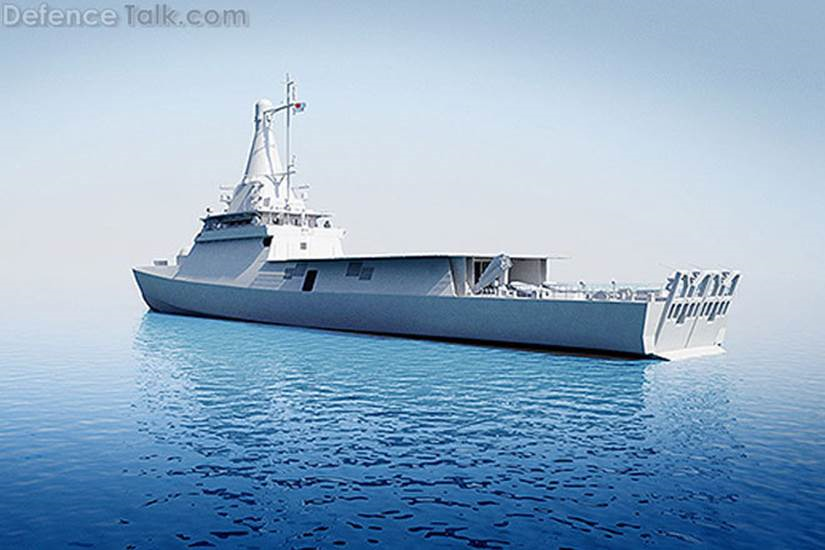
Singapore is building a new class of patrol vessels that look very much like my proposal for “Cutter X”, trading some Webber class and some larger ships for an intermediate design, costing about half what an OPC would cost, basically putting the equipment and crew (with some augmentation) of a Webber Class into a larger more seaworthy hull, to allow them to be used for extended operation in environments that do not require the ice strengthened hull and ability to launch and recover helicopters and boats in sea state five provided by the OPC.

Singapore is building eight of the ships under the project name “Littoral Missions Vessel” to replace eleven smaller, 500 ton, Fearless class patrol vessels that are approaching 20 years old. These ships are reportedly 80 meters in length (262.5 feet), displace 1200 tons (probably a light displacement), have a beam of 12 meters (39.4 feet), a range of 5,000 nautical miles at 15 knots, and a speed of 27 knots, all with a crew of only 30, though they do include additional accommodations for 30 more. (more here)
SingaporeLittoralMissionVesselPortQuarter

It appears these ships will use the same engines as the Webber Class. It is not clear how many of these engines they are using. Two would give them almost 12,000 HP which would almost certainly be good for at least 24 knots, but it might require three or four engines to make 27 knots.  (reports now indicate the class has two engines totallin about 12,000 HP)

In some respects these ships are more capable than the proposed cutter, in that they will have a 76mm gun and firecontrol system, in addition to smaller remotely operated weapons. It also appears to have space reserved for a small AAW missile system. On the other hand, while the flight deck can handle an H-60, the ship, unlike the French L’Adroit which was my model for “cutter X”, has no helicopter hangar, although it might be possible to add one using the same solution employed on L’Adroit (putting it under the bridge).

Soon, I expect to do an update of the “Cutter X” proposal, based on where we are now in the cutter recapitalization program.

Azerbaijan Coast Guard to Get 6 OPVs and 6 WPBs


Sa’ar 62 OPV

Janes is reporting the Azerbaijan Coast Guard is procuring twelve new Israeli designed vessels to be built in Azerbaijan. These include six 62 meter OPVs (203 foot, the Greek ships of this class are about 450 tons full load) based on the Sa’ar 4.5 missile corvette and six 31.2 meter (102 foot, 95 ton) Shaldag patrol vessels.


SHALDAG Fast Patrol Craft (earlier, slightly smaller version)

Azerbaijan is one of five countries bordering the land locked (and reportedly oil rich) Caspian Sea. The others are Russia to the North, Iran to the South, and Turkmenistan and Kazakhstan on the other side of the Caspian. Russia has several missile corvettes and Iran has both corvettes and small submarines in the Caspian.

Azerbaijan’s total EEZ and total internal area is only 86,600 sq. km. The comparable figure for the US is over 250 times larger.

I’m afraid this may be another area where, in the not too distant future, Americans will get a geography lesson via troubling news reports.

Martime Facilities Security–Swimmer Defense

The Israelis are marketing a anti-swimmer sensor system that claims increased range, believed necessary because increased speed of swimmer delivery systems shortens reaction time.

“The AquaShield ER offers unprecedented detection ranges against all marine threats. The AquaShield ER passed rigorous sea trials achieving detection ranges of up to 3.5 kilometer for Swimmer Delivery Vehicle targets, 1.8 kilometers for Open Circuit Divers and 1.2 kilometers for divers using closed-circuit apparatus.”

Perhaps I am reading to much into this, but this capability may have played a part in intercepting five Hamas commandos who swam ashore in Israel recently as reported here.

I have been out of the loop for a long time, but I suspect the Coast Guard is still not integrated into a multiservice network capable of reacting to a terrorist incursion the way the Israelis reported did.

The Tammuz missile referred to in the report is in the same class as the Hellfire, but with a much longer range (25 km, that is more range than a WWII light cruiser). It has been previously referred to as the Spike NLOS (Non-line of Sight). Since they referred to this being mounted on an OPV rather than a corvette or missile boat, I suspect they are talking about it having been mounted on something relatively small, about the size of an 87 footer.

Other “Coast Guards'” New Ships and Early Disposals

Some news on fleet changes in the UK and New Zealand Navies with regard to their ships that do Coast Guard type work.

The Brits are building three new offshore patrol vessels. They will be built (before the first USCG Offshore Patrol Cutter) to essentially the same design as the three Offshore Patrol Vessels built for Trinidad and Tobago (video above) that I encouraged the Coast Guard to buy or lease four years ago when Trinidad and Tobago refused to pay for the ships they had contracted and BAE was looking for a buyer. Brazil subsequently purchased the vessels and the rights to the design. The remarkable thing about this decision is that the vessels are being built primarily to keep a ship yard busy and they will replace three River class offshore patrol vessels that were commissioned in 2003.


Photo Credit Benchill, Protector-class inshore patrol boat HMNZS Hawea (P3571) entering Otago Harbour, New Zealand

DefenseNews is reporting that New Zealand is considering disposing of two recently build Protector Class Inshore Patrol Vessels that entered service in only 2009 (similar to the Webber class FRCs) and building an additional much larger Offshore Patrol Vessel presumably a third Otago class.

What will happen to these five relatively new ships?

–Australia, in the middle of an alien migrant interdiction crisis, just had a fire on HMAS Bundaberg, a vessel very similar to the New Zealand Protector Class Inshore Patrol Vessels, that is likely to result in total loss. Perhaps they will take the excess New Zealand vessels, they were after all built in an Australian shipyard, but they really need something larger, perhaps the excess British River class.
–The Philippine Navy and Coast Guard also needs more modern patrol vessels to deal with Chinese incursions into their EEZ. The Philippine Coast Guard already has 56 meter vessels built in the same yard that made the New Zealand vessels but they could also use larger vessels like the Rivers.