New Chinese Cutters–How Many?–Sorry, I’ve Lost Count

The China Defense Blog has three new posts with several photos of new Chinese Coast Guard Cutters.

The first is news of the award of a contract for four new 5,000 ton cutters. and while the text says they will be similar to an earlier 5,000 ton cutter (CMS01), the illustration that accompanies the story shows a very different ship, in many ways similar to the National Security Cutter. It appears there is a medium caliber gun on the bow. (This would be a significant but not unexpected change for the Chinese Coast Guard.) There is a frame over what appears to be a stern ramp not unlike that on the NSC. The hull shape also appears similar to the NSC.

The second post reports the commissioning of the second of two 4,000 cutters commissioned this month.

A third post asks, “What would a 12,000 ton Coast Guard Cutter Look Like?” reports as was reported here earlier, China’s intention to build the world’s largest Offshore Patrol Vessel. They don’t have any illustration of the new ship, but they do say it will have a 76mm gun, two 30mm, facilities to support two Z-8 helicopters, and a top speed of 25 knots.The size of the helicopters is notable. The Z-8 is a large, three engine, 13,000 kg helicopter based on the Aérospatiale SA 321 Super Frelon. The transport version of this helicopter can transport 38 equipped troops. The same airframe is also used for SAR, ASW, and vertical replenishment. The post also says it shows photos of new 3,000 ton cutters, but all the photos except those of hull number 3306 were referred to elsewhere as 4,000 ton cutters.

New hull numbers seen in this series of posts are 1401, 2401, 3401, 3306, and MSA-01). Unlike most earlier Chinese cutters, all of these ships have helicopter decks.

This is the fruition of their earlier stated ambition to build 36 cutters in three years for the Chinese Maritime Surveillance Agency (CMS, only one of four agencies that combined to form their Coast Guard).

Chinese to Build World’s Largest Cutter

File:JapanCoastGuard Shikishima.jpg
Japanese Coast Guard Cutter Shikishima, this class of two are currently the largest offshore patrol vessels in the world. Photo from Japanese Wikipedia; ja:ファイル:JapanCoastGuard Shikishima.jpg

German Navy blog “Marine Forum” reports (21 January) that the

China Ship-building Industry Corporation has been contracted with developing and building a 10,000-ton and another 4,000-ton surveillance ship.
(rmks: for paramilitary China Coast Guard or China Marine Surveillance)

Meanwhile, in a move designed to bolster their claims in the South China Sea, they also report,

With Vietnam: China will expand paramilitary infrastructure at Sansha City (Paracel Archipelago) in the South China Sea … permanently base a 5,000-ts patrol ship (rmks: prob. China Marine Surveillance – CMS) and begin regular patrols.

Don’t expect China’s new 10,000 ton cutter to look like a US Coast Guard Cutter. The Chinese seem to measure their Coast Guard primarily in comparison to the Japanese Coast Guard which has until now operated the largest cutters in the world, two 9,350 full load, Shikishima class high endurance helicopter carrying cutters. Like their Japanese counterparts, they are likely to be built to merchant standards, will be only lightly armed, but will have excellent aviation facilities. The additional tonnage is likely to give them an advantage if they get in a “shoving match” with opposing coast guards, and they are likely to have a secondary military transport role. With a relatively large number of boats, they could probably land a fair number of personnel in a relatively short time. By way of comparison the National Security Cutters are 4,500 tons full load.

Honoring More CG Heroes–Naming Ten More Cutters

File:Proposed modification to the Damen Stan patrol vessel for the USCG.jpg

US Coast Guard Illustration

As names were announced for the first fourteen Webber class Fast Response Cutters, the official USCG blog, “Coast Guard Compass” gave a short description of the service of the enlisted heroes these ships were named for. (You can find links to these fourteen posts here.)

Now ten more names have been selected and Coast Guard Compass is again posting descriptions of their service. The first five are:

Enhancing the Integration of USCG w/ USMC and USN–SLD

Second Line of Defense has an editorial “Enhancing the Integration of the USCG with the USMC and the USN: Synergy and Mission Effectiveness as Key 21st Century Efforts,” advocating a more “naval” Coast Guard. In particular, it supports the building of more large ships that might be used as adjuncts to the Navy/Marine Corps Amphibious Ready Group/Marine Expiditionary Unit (ARG-MEU) teams.

It also raises the question, can the MV-22 Osprey land and take off from our ships so that they might act as “lily pads.”

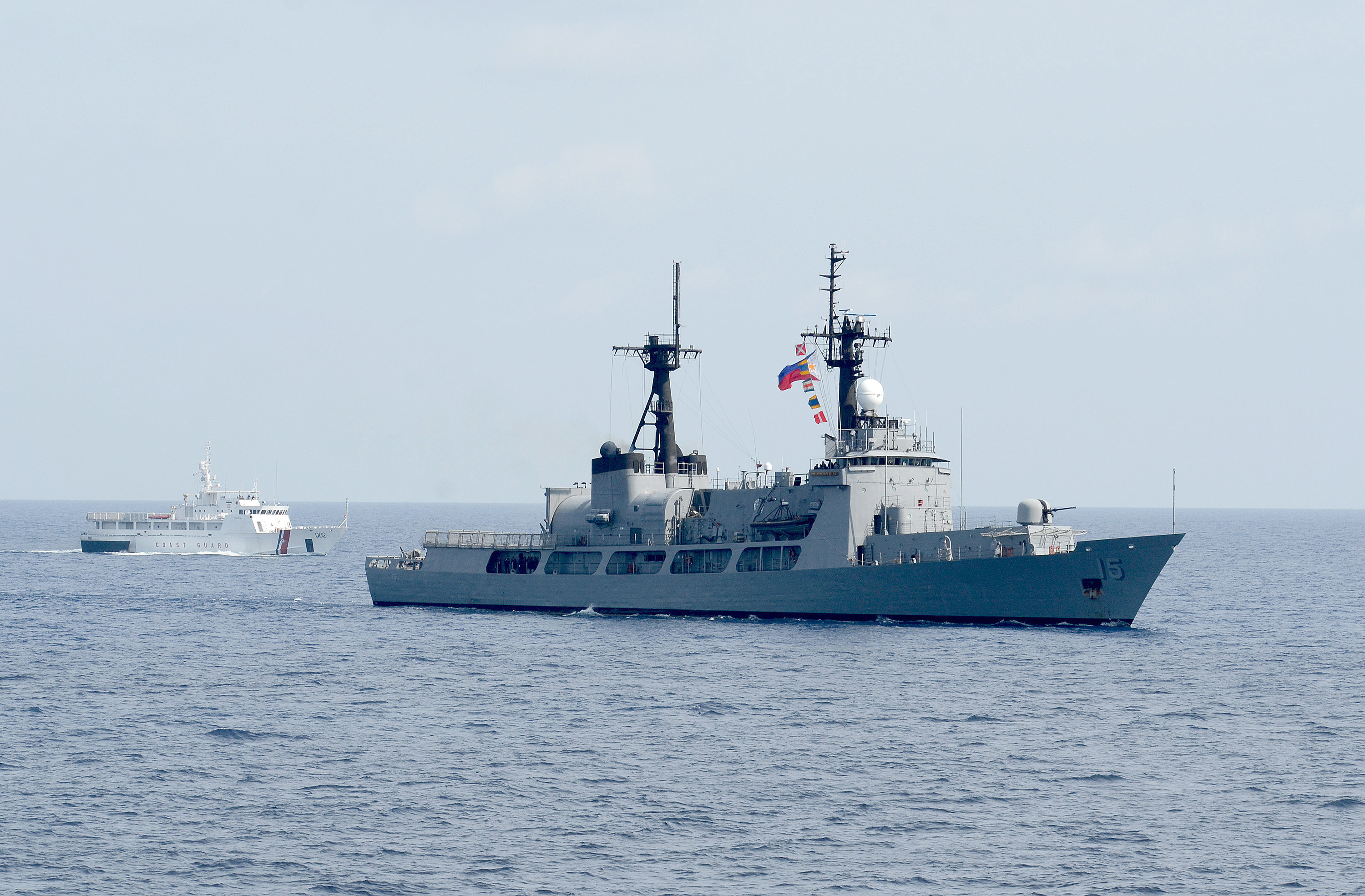
Two More WHECs, if You Please–Philippines?

File:PF-15 and SARV-002 CARAT 2013.jpg

Photo Credit: United States Navy with the ID 130629-N-YU572-530, by Mass Communication Specialist 1st Class Jay C. Pugh, PHILIPPINE SEA (June 29, 2013) The Philippine Coast Guard vessel Edsa (SARV 002), left, and the Philippine Navy frigate Gregorio Del Pilar (PF 15) steam in formation during Cooperation Afloat Readiness and Training (CARAT) Philippines 2013.

Global Post is reporting the Philippines is looking for two more “frigates” from the U. S. It is not clear they are referring to Hamilton Class Cutters, but it seems likely. Referring to the two WHECs they already have, the article states,

“The Philippines has already acquired two refurbished American frigates in the past two years, and they now lead patrols in the South China Sea.”

The request might conceivably refer to retiring Perry Class navy frigates, but that would introduce an additional set of systems to the Philippine Navy and the gas turbine powered FFG-7s are not as economical to operate as the normally diesel powered Hamiltons with their combined diesel or gas turbine (CODOG) power plant. The redundancy offered by the cutters’ four engine, two shaft power plant may also be seen as an advantage over the FFG-7’s two engine, single shaft propulsion.

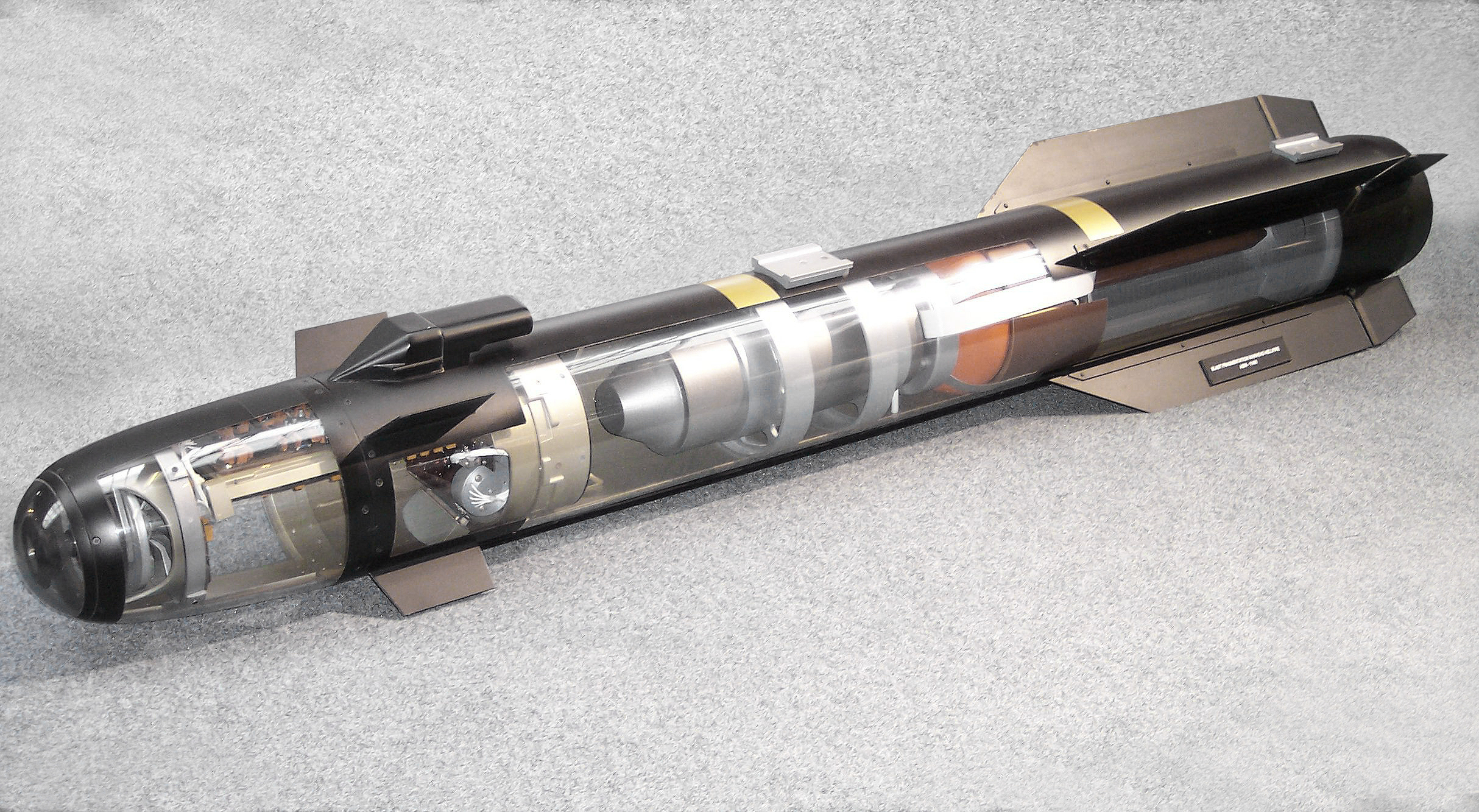
Another Weapon Option, Longbow Hellfire

File:Lockheed Martin Longbow Hellfire.jpg

Photo credit: Wikipedia, Stahlkocher, Lockheed Martin Longbow Hellfire.

The US Navy is looking at weapons to arm the Littoral Combat Ships (LCS) for operations against swarming small craft. These weapons will be relatively small and low cost, so they are potentially applicable to Coast Guard vessels as small WPBs. The first system selected was the Griffin, but while it may be improved, it currently has only a very short range.

Earlier, we talked about one of the contenders, the Brimstone, also called the Sea Spear. Another contender has surfaced, including both a missile and a firecontrol system that is already in the US inventory, the LONGBOW system employing the fire-and-forget LONGBOW HELLFIRE AGM-114L missiles. This missile is similar in size to the Brimstone, and like the Brimstone has a millimeter wave guidance, fire and forget capability.

Unlike the Brimstone, there is no claim of a man-in-the-loop capability, which would appear to be a desirable feature, particularly for the Coast Guard, where the target may be surrounded by innocent vessels that we would want to avoid targeting. On the other hand the vertical launch capability does appear to offer some packaging advantages. Lockheed claims “…Nearly 400 radars and more than 14,000 missiles have been contracted for the U.S. Army and international customers” so it is already an established product line with advantages in economy of scale. These systems are currently mounted on Attack Helicopters, so we can be assured that the weight and space requirements are not too demanding for installation on even relatively small craft.

NavyRecognition reports that the Army, Navy, and Lockheed Martin has demonstrated that these missiles can be vertically launched from a 65 foot Navy boat simulating a section of an LCS. The Navy may also want to fit this, or whatever system is ultimately chosen, to their new patrol boat.

Specifications for the AGM-114L Longbow Hellfire from Wikipedia:

  • Range: 8,000 m (8,749 yd)
  • Guidance: Fire and forget Millimeter wave radar seeker coupled with Inertial guidance, homing capability in adverse weather and the presence of battlefield obscurants
  • Warhead: 9 kg (20 lb) tandem shaped charge high explosive anti-tank (HEAT)
  • Length: 176 cm (69.2 in)
  • Weight: 49 kg (108 lb)

Here is Lockeed Martin’s description:

The LONGBOW system is built by a Joint Venture of Lockheed Martin and Northrop Grumman. U.S. Army testing shows integrated capabilities enhance the Apache lethality fourfold and survivability sevenfold. The mission equipment package is in production for the U.S. and several international customers. The Apache LONGBOW system is a proven force multiplier that has been battle-proven in Operation Enduring Freedom and Operation Iraqi Freedom. The LONGBOW Weapon System has been in full-rate production since 1996, with First Unit Equipped in 1998. Nearly 400 radars and more than 14,000 missiles have been contracted for the U.S. Army and international customers. For the Apache Block III upgrade, a new Radar Electronics Unit (REU) will replace two line-replaceable units. The REU will provide growth capabilities to the LONGBOW FCR and will reduce maintenance cost.

LONGBOW FCR
The LONGBOW FCR has a very low probability of intercept. It rapidly and automatically searches, detects, locates, classifies, and prioritizes multiple moving and stationary targets on land, water and in the air in all weather and battlefield conditions from standoff ranges. Target coordinates are automatically available to other sensors and weapons for target confirmation, rapid engagement, and reduced fratricide. Target data is digitally available through the data modem for real-time transfer to other platforms and command posts. The self-contained Radar Frequency Interferometer provides rapid and accurate identification and azimuth to enemy air defense units. High system reliability and two-level maintenance maximize operational availability and reduce support costs.

LONGBOW HELLFIRE Missile
The LONGBOW system employs fire-and-forget LONGBOW HELLFIRE AGM-114L missiles that can be launched from defilade, increasing battlefield survivability. The LONGBOW HELLFIRE missile locks on targets before or after launch and has been used in Operation Enduring Freedom and Operation Iraqi Freedom.

The M299 Smart Launcher has a fully digital interface to the Apache helicopter and fires all types of HELLFIRE missile.

French to Build New Multipurpose Vessels

NavyRecognition has information on a new class of vessels the French Navy is building,

“…According to the French Procurement Agency (DGA), these vessels:
– have the ability to project 20 personnel (joint, police or gendarmerie) with two 4×4 vehicles along with their weapons and ammunition.
– will ensure the evacuation of citizens and have the ability to deploy and support divers and equipment (including drones) to conduct underwater interventions.
– Under the state action at sea, they will provide fisheries police missions, and contribute to the fight against illegal immigration, drug trafficking and piracy.”
– They will assist ships in distress and participate in safeguarding people and property, through their firefighting means and towing capacity of up to 30 tons

They are planning three with an option for a forth. The French have the second largest EEZ in the World, only slightly smaller than that of the US, and in many places it is based around small isolated islands.

These vessels, which appear to be based on Offshore Petroleum Industry Support ship designs, will likely replace existing fishery protection vessels that are themselves former trawlers and hydrographic survey ships. They will also likely be tasked with a variety of Coast Guard like missions including disaster response.

A Quick Look at Guam.

File:Guam in Oceania (-mini map -rivers).svg

BreakingDefense has a post on the inadequacies of Guam’s infrastructure for support of additional Military presence. I’m referencing it here because, I think in the long run we are going to need to put more assets in Guam, to look after the huge Western Pacific EEZ. Ultimately I think it would be a good idea to base two or three Offshore Patrol Cutters there. Right now the Coast Guard has a 225 foot buoy tender and two 110s. The Navy supplies SAR helicopter assets in lieu of CG air assets.

To see how much of our EEZ is in the Western Pacific, look here, and keep in mind that Mercator projections are deceptive, making areas in the high lattitudes looks disproportionately large. The US has the Largest EEZ in the World and 85% of it is in PACAREA.

Late addition: Incidentally, it is about 3300 nautical miles from Guam to Hawaii, long way. The HC-130Js can fly that far unrefueled, if we had any in the Pacific, but the older “H” models at CGAS Barbers Point can’t. Even the “J”s would not have a lot of excess for doing searches flying between Oahu and Andersen AFB. It is almost 600 miles further from Kodiak. Maybe we ought to have some fixed wing there too.

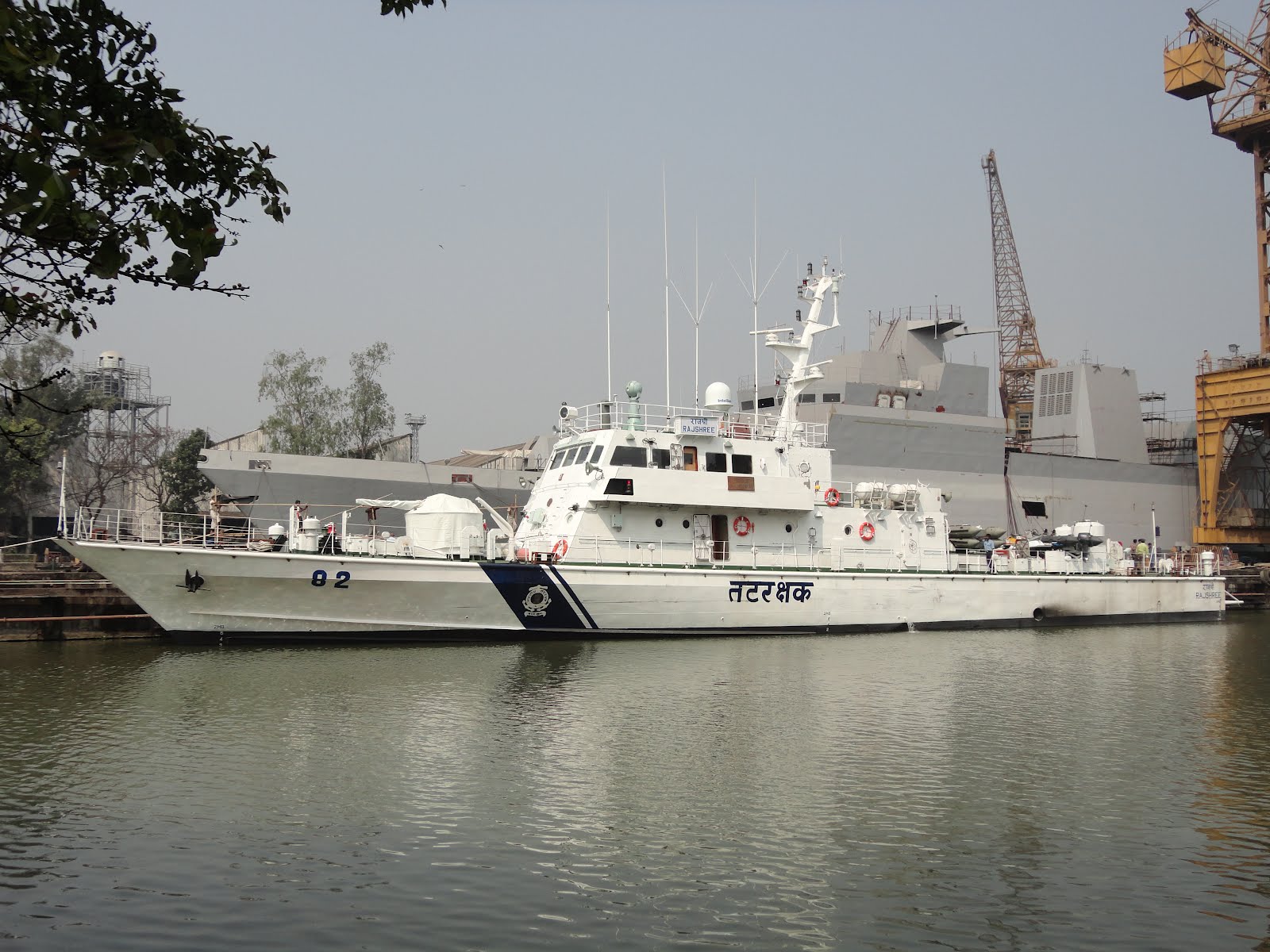
Indian CG Commisions their Eighth “FRC”

Photo: Rajshree class IPV (Wiki Info) Click on the photo for larger size

Indian Coast Guard is on a roll. NetIndian is reporting they have just commissioned their eighth new Inshore Patrol Vessel, CGS Rajdhwaj, essentially a fast response cutter, except that theirs is a bit larger, faster, and more heavily armed. Doesn’t have quite the range though. The ship is the last in the series of eight.

The first of these Rajshree-class Inshore Patrol Vessels was commissioned only in Feb. 2012.