New Military Law Concerning Domestic Violence and Sexual Assault

I  am quoting here some information received via email from the Service Women’s Action Network (SWAN) regarding legislation signed into law on August 13, 2018 as part of the John S. McCain National Defense Authorization Act (NDAA) for Fiscal Year 2019.  Changes include:

  • Adding a new punitive article dealing with domestic violence to the Uniform Code of Military Justice (UCMJ).
  • Requiring a report of the feasibility of extending Special Victim Counsel availability to victims of domestic violence.
  • Establishing a uniform Command Action Form for reporting the final disposition of sexual assault offenses when the perpetrator is subject to the UCMJ and the victim has filed an unrestricted report.
  • Standardizing of policies across the Services related to expedited transfer in cases of sexual assault or domestic violence.
  • Requiring the development of a plan for implementation of oversight of DoD’s Sexual Harassment Prevention and Response policy.
  • Requiring oversight of the Registered Sexual Offenders’ Management Plan.
  • Requiring the DoD and the Department of Labor’s Veterans Employment and Training Service to update the Transition Assistance Program (TAP) to establish new pathways for more individualized counseling.  Also, all those departing the military will receive information on resources available to them in the local community where they have chosen to reside to include resources for those suffering from Military Sexual Trauma (MST).

“Ready, Responsive, Relevant?” a Public Affair Critique, USNI

USCGC Rollin A. Fritch (WPC-1119)

August has brought the US Naval Institutes annual “Coast Guard Issue” of their magazine, Proceedings, which is mostly not about the Coast Guard. Never the less there are Coast Guard related articles included and there is one on this side of the pay wall that really deserves the service’s attention, “Ready, Responsive, Relevant?” It looks at the Coast Guard’s Public Affairs program. Its written by Lieutenant Commander Krystyn Pecora, USCG, XO on Seneca (WMEC-906), an Academy graduate and permanent cutterman, a former external affairs officer for District Five with a master’s degree in media and communications studies.

She needs to be listened to, because as she points out, the Budget is linked to Public Perception of Value. 

She found that the program lacked focus, leadership, and resources.

Considering “focus”:

In her examination of focus, she refers to a 2001 USNI article, “Branding the Coast Guard” also worth a read. It points out.

“Never has a governmental agency been such a success and failure at the same time. The Coast Guard is lauded daily in the nation’s press for spectacular operational successes, yet is chronically unable to obtain an adequate budget from the nation it serves. This dichotomy was illustrated quite graphically in March 2000 when the Coast Guard won the accolades of Government Executive magazine for being the nation’s most efficient and best run federal agency but was ridiculed in the same article for its naiveté and repeated failures in the budget process. “

His solution:

“The Coast Guard’s travails will never be addressed adequately until it abandons the myth that it is a single, monolithic organization and accepts the reality that it is a “holding company” for a number individual, mutually supporting, maritime service organizations. It also must focus on the individual services, not the holding company, in the competition for federal dollars and support.”

In a modern interpretation of the argument LCdr Pecora suggests, 

if 11 strategic teams were developed, each devoted to defining and promoting one of the Coast Guard’s missions. All 11 missions have millions of constituents interested in the specific services the Coast Guard provides. For example, northern constituents care more about domestic icebreaking capabilities compared to constituents in warmer climates. Realistically, the Coast Guard cannot use the same communications playbook for each of these constituent groups. Strategic teams translating national intent to regional audiences through the district external affairs offices would ensure each mission receives ongoing attention to daily operations, akin to the U.S. Navy’s type commander construct.

This dedicated effort would be a far cry from today’s whack-a-mole operations in which the service focuses its efforts on the mission currently most in need of acquisition funding. Instead of having missions fighting for pieces of the funding pie, the Coast Guard could grow support for funding all constituent interests concurrently. In addition, this construct takes advantage of the current information environment, in which audiences select news sources that resonate with their personal interests rather than relying on traditional media outlets. It would not matter which brand image is imagined when asked to envision a Coast Guardsman; that brand image would have been a result of calculated microtargeting based on a person’s region and interests.

Considering Leadership:

Compared to the professionalism of DOD public affairs.

“The experience disparity for the Coast Guard is substantial; this is the second public affairs–related tour for its current Chief of Public Affairs. His predecessor served his first public affairs tour in this leadership position. This lack of experience is a service-wide failure. The Coast Guard would not place a novice in charge of any operational program but consistently accepts this scenario for its communications program. “

Considering Lack of resources: 

There is much more in the article, but a single paragraph,

“On average, there is one enlisted public affairs watchstander representing 22 Coast Guard units of varying size, in geographically diverse locations, often across multiple states, with varied missions. The folly of the current footprint was identified by the service’s own reports in the aftermath of both the Cosco Busan (2007) and Deepwater Horizon (2010) oil spills. These reports called for the public affairs program to be increased in size to decrease public affairs response times to sustain messaging during long-term events. 11 For context, the public affairs response to the 2017 Atlantic hurricane season consisted of half the rate, leaving skeleton crews across the nation to cover daily operations. The program simply cannot handle two national-level events at the same time. “

Please read the entire article, there is much, much more. 


ALCOAST 269/18 – AUG 2018 SOLICITATION FOR RESEARCH DEVELOPMENT TEST AND EVALUATION (RDT&E) IDEA SUBMISSIONS

The following ALCOAST is quoted directly with minor reformatting to better fit the page..

R 020955 AUG 18
FM COMDT COGARD WASHINGTON DC//CG-9//
TO ALCOAST
UNCLAS//N07044//
ALCOAST 269/18
COMDTNOTE 7044
SUBJ: SOLICITATION FOR RESEARCH DEVELOPMENT TEST AND EVALUATION (RDT&E) IDEA SUBMISSIONS
1. The RDT&E Program is calling all Coast Guard Innovators to submit new potential project ideas for the FY20 R&D portfolio! Do you have a creative or innovative idea that could help address a current operational challenge or improve mission effectiveness? Now is the time to share them! All active duty personnel, civilians, contractors, and key stakeholders are encouraged to submit. Please check out our current portfolio and website here:http://www.dcms.uscg.mil/acquisition/rdte.
2. We will be collecting ideas through the CG_Ideas@Work website (https://cg-ideasatwork.ideascale.com), the Coast Guard’s idea crowdsourcing platform. You can submit your ideas directly to: https://cg-ideasatwork.ideascale.com/a/ideas/top/campaigns/21252. You can also upload a video (up to 1 minute in duration) to accompany idea submissions. If you do not yet have a CG_Ideas@Work account, you will need to register using your ‘.mil’ email address. If you are unable to access the idea submission form, you can submit your idea via email to: innovation@uscg.mil. Be sure to include the title, the problem statement, operational impact, and your contact information.
3. The deadline to submit ideas for the FY20 Project Portfolio is 12 September 2018. Submitted ideas will be reviewed and ranked according to their potential impact on CG missions; regardless of funding, feasibility, or policy. Stakeholders from across the service will meet 17-18 October 2018 to conduct the annual Idea Submission Review (ISR). ISR rank-ordered results are critical to the process of building the annual RDT&E Project Portfolio.
4. POC: Ms. Alexandra Swan, COMDT (CG-926), at: 202-475-3056 or Alexandra.P.Swan@uscg.mil.
For any questions or assistance with CG_Ideas@Work, please contact innovation@uscg.mil.
5. RADM M.J. Haycock, Assistant Commandant for Acquisition and Chief Acquisition Officer, sends.
6. Internet release authorized.
Call for Articles: Bringing Back Sea Control–CIMSEC

Center for International Maritime Security (CIMSEC) had issued a call for articles on the topic of bringing back sea control. Here is a copy of their post.

By Dmitry Filipoff

Articles Due: September 3, 2018
Week Dates: September 10-14, 2018

Article Length: 1000-3000 words 
Submit to: Nextwar@cimsec.org

Great power competition is back, and with it new demands for capability and deterrence. After years of focusing on power projection and low-end missions, many first rate navies have allowed high-end skillsets to erode. As security priorities shift, navies too must change.

One vital mission for winning and deterring great power conflict is sea control, the ability to secure command of the seas. Today sea control has morphed into something of enormous complexity. It can be a convoluted contest, with platforms and payloads projecting influence across multiple domains. Navies are ever more reliant on electronic effects for warfighting functions, turning cyberspace and electronic warfare into pivotal battlegrounds for sea control. Sea control is the sum of many elements of oceanic warfare, requiring diverse skills and tactics.

In spite of technological change, sea control will remain an important mission so long as the oceans remain crucial to human progress. It is the vital prerequisite for projecting power and securing access via the maritime domain. It can enable blockades and commerce raiding, allowing a navy to exert tremendous pressure on a nation’s vitality. Sea control is a mission as timeless as naval power itself, and one deserving of thorough preparation.

How can the navies of today revitalize their sea control capabilities? How can they become proficient in high-end missions and tactics? What will achieving sea control require, and how best to use it once attained? Authors are encouraged to consider these questions and more as navies around the world reconsider their development in the context of renewed great power competition.

Dmitry Filipoff is CIMSEC’s Director of Online Content. Contact him at Nextwar@cimsec.org

This is an opportunity for some of our readers here to express their opinions and practice their writing skills.

Does the Coast Guard have a role? I think so. Sea Control first has to be won and the USN is prepared for that fight, but it also has to be exercised. That requires a lot of low tech grunt work, not unlike boarding fishing boats. It requires separating good guys from bad guys who may try to conceal their true nature. We did this off Vietnam as part of Operation MarketTime. The Navy really has few units capable of this sort of work, but it is the sort of work the Coast Guard does every day.

I have worked with Dmitry Filipoff and he is a good guy. Time to start writing.

Reviewing the Status of Cutter Procurement

Belatedly, I have taken a look at the July 6, 2018 edition of the Congressional Research Service’s Naval Expert, Ronald O’Rourke’s Coast Guard Cutter Procurement: Background and Issues for Congress. It was published less than seven weeks after the previous edition.

Thought perhaps a short review of the status of the three programs addressed might be welcome.

NSC: The program of record was eight ships, but eleven ships have been funded through FY2018. Six have been commissioned. One additional delivery is expected each year, 2018, 2019, 2020 and presumably 2021 and 2022. The Senate sub-committee has expressed its intention to procure a twelfth NSC, but the FY2019 budget request did not include funding for an addition NSC. FY2020 would not be too late to fund NSC#12 and keep the delivery schedule at one per year.

OPCstarboardbow

OPC: The program of record is for 25 ships. The First ship was funded in FY2018. The Second ship is in the FY2019 budget request along with long lead time items for OPC#3. If all contract options are exercised, we should see one ship delivered each year 2021, 2022, and 2023. Beginning in 2024 the program anticipates delivery of two ships per year. If they hold to that modest rate, as planned, the last OPC will not be delivered until at least 2033 at which time the newest 270 will be 42 years old. Also at that rate, the newest 210 will be 60 years old when presumably, the last of the class is replaced in 2029. (If you think keeping 40 and 50 year old cutters operational is challenging, wait until you try a 60 year old. Particularly since the Coast Guard plans no major life extension work on the 210s.) 

FRC: The program of record is for 58 vessels. There is also a requirement for six more to replace the six Island class 110 foot cutters currently homeport in Bahrain as part of PATFORSWA, that are not included in the program of record. 50 Webber class have been funded through FY2018, with 28 currently in commission. Funding for four additional vessels was included in the FY2019 budget request. The Coast Guard is commissioning Webber class at the rate five vessels annually. The remaining 28 vessel will presumably be commissioned by 2024. Six additional for PATFORSWA would extend that through 2025. Apparently the Congress intends the DOD to fund the six that would go to FATFORSWA so presumably the last Coast Guard funding would be in the FY2020 budget.

If my understanding is correct, it is likely that major funding for the NSC and FRC programs will be complete in FY2020, the same year the third OPC should be funded. At some point, in the not too distant future, we will need to start the process of replacing the 87 foot WPBs, but hopefully we will find a way to accelerate the OPC procurement to something more than two a year.

Photo Journal: RDC Arctic Technology Evaluation 2018

USV&drone

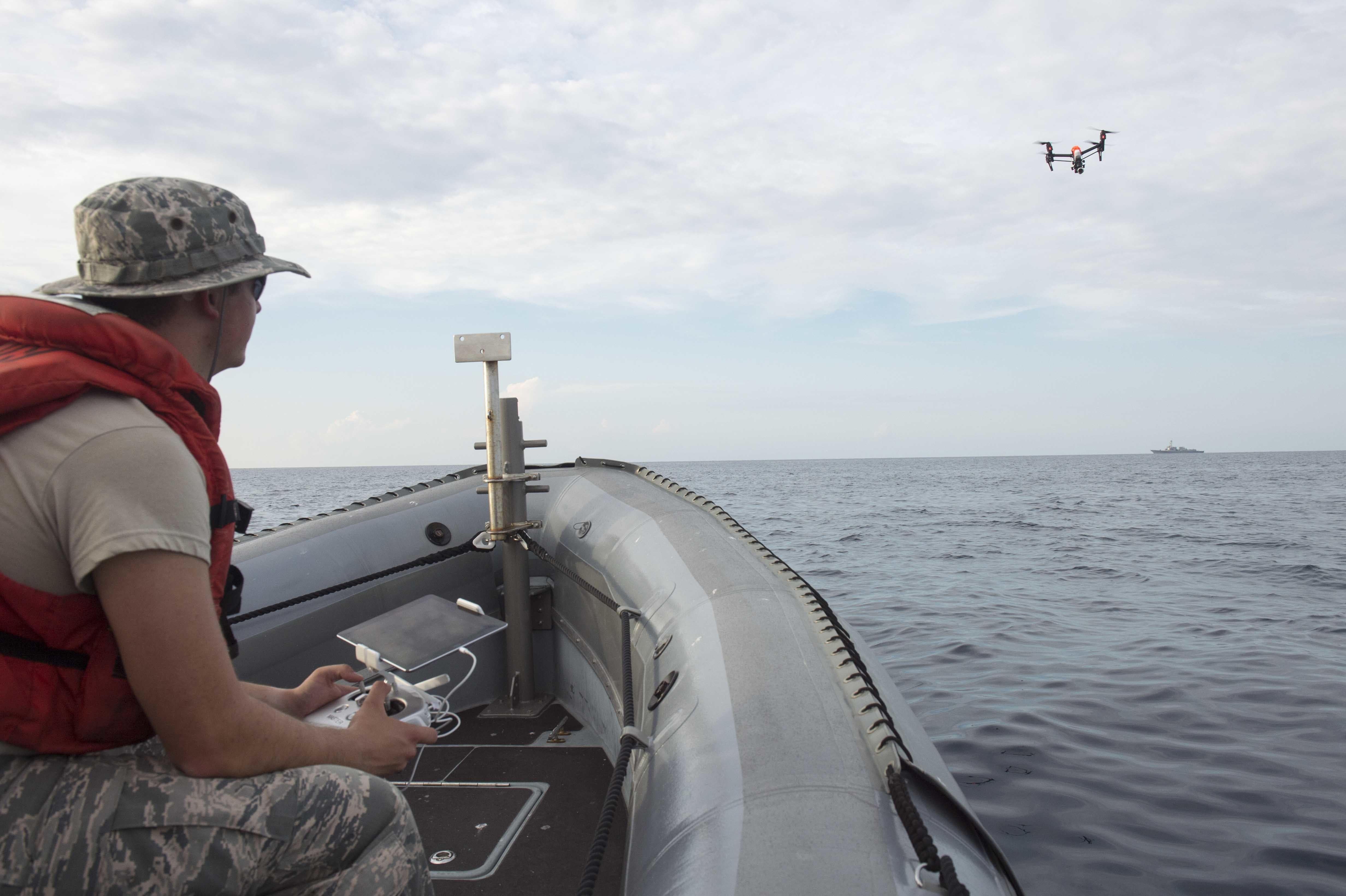
RDC researchers test the effectiveness of pairing the USV and the Splash Drone on a mission. U.S. Coast Guard photo by Alexandra Swan.

The Acquisitions Directorate (CG-9) web site is running a series to show the R&D Centers activities in the Arctic.

The Coast Guard Research and Development Center is conducting its annual operation in the Arctic, Arctic Technology Evaluation 2018, in Prudhoe Bay, Alaska, July 21 to Aug. 3. This year’s research will focus on evaluating how unmanned aircraft systems (UAS), unmanned surface vehicles (USV) and an aerostat balloon can work together as a network, and includes search and rescue and environmental mission scenarios.

“New Coast Guard Leader Focusing on Readiness”–National Defense

File:Adm. Karl L. Schultz.jpg

National Defense Magazine reports and interview with the new Commandant, Admiral Karl L. Schultz.

These two paragraphs pretty much sum up his stance.

““My intention would be to not deviate too much,” he said. “Obviously, every change brings some different thinking, different ideas, but at our core it’s … steady as you go with trying to pick up speed a little bit.”

“As part of his guiding principles over the next four years, Schultz — who took over in June — said he is focusing on making the Coast Guard a ready, relevant and responsive service.”

He intends to push readiness in terms of operating budget.

“While the service is replacing many of its aging assets, it still has 50-year-old cutters in operation, he noted. Those vessels are expensive to maintain and the newer ships coming down the pipeline will be costly as well, he added.”

Of the new cutters, only National Security Cutters look like they might actually cost less to run than the vessels they replace, based on their smaller crew, but even that is questionable. The Webber class and the Offshore Patrol Cutters are much larger, more powerful, and have larger crews than the 110s and WMECs they will replace. While we may end up with fewer NSCs than 378s (10 v 12) and fewer OPCs than WMEC (25 v 28) it looks like we will have substantially more FRCs than 110s (only 41 WPB 110s were operational when the FRC program began and it looks like we will get at least 58).

The piece goes on to discuss icebreakers and the “waterways commerce cutter” (inland tenders). Additionally, don’t expect any change in the Coast Guard’s commitment to drug interdiction, “…we’re all in.”

Original Music for the Coast Guard

Saw this on Facebook. Michael Harrington shared a link to the group: U.S. Coast Guard Retired. It was a year ago, but it resurfaced and thought I would pass it along. Below is the information that accompanied the video on YouTube.

An original musical and visual tribute to the Coast Guard written by Coast Guard veteran, singer/songwriter, Brad Fitch, Estes Park, Colorado. Music and photos © 2011 Brad Fitch. All rights reserved. Produced by Summertown Studios, Fort Collins, CO http://www.SummertownStudios.com Bob Buford, Producer