Coast Guard Releases Request For Information For Polar Star Service Life Extension Project

The following is a quotation in full of a post from the Acquisition Directorate (CG-9)

Coast Guard Releases Request For Information For Polar Star Service Life Extension Project

July 19, 2018

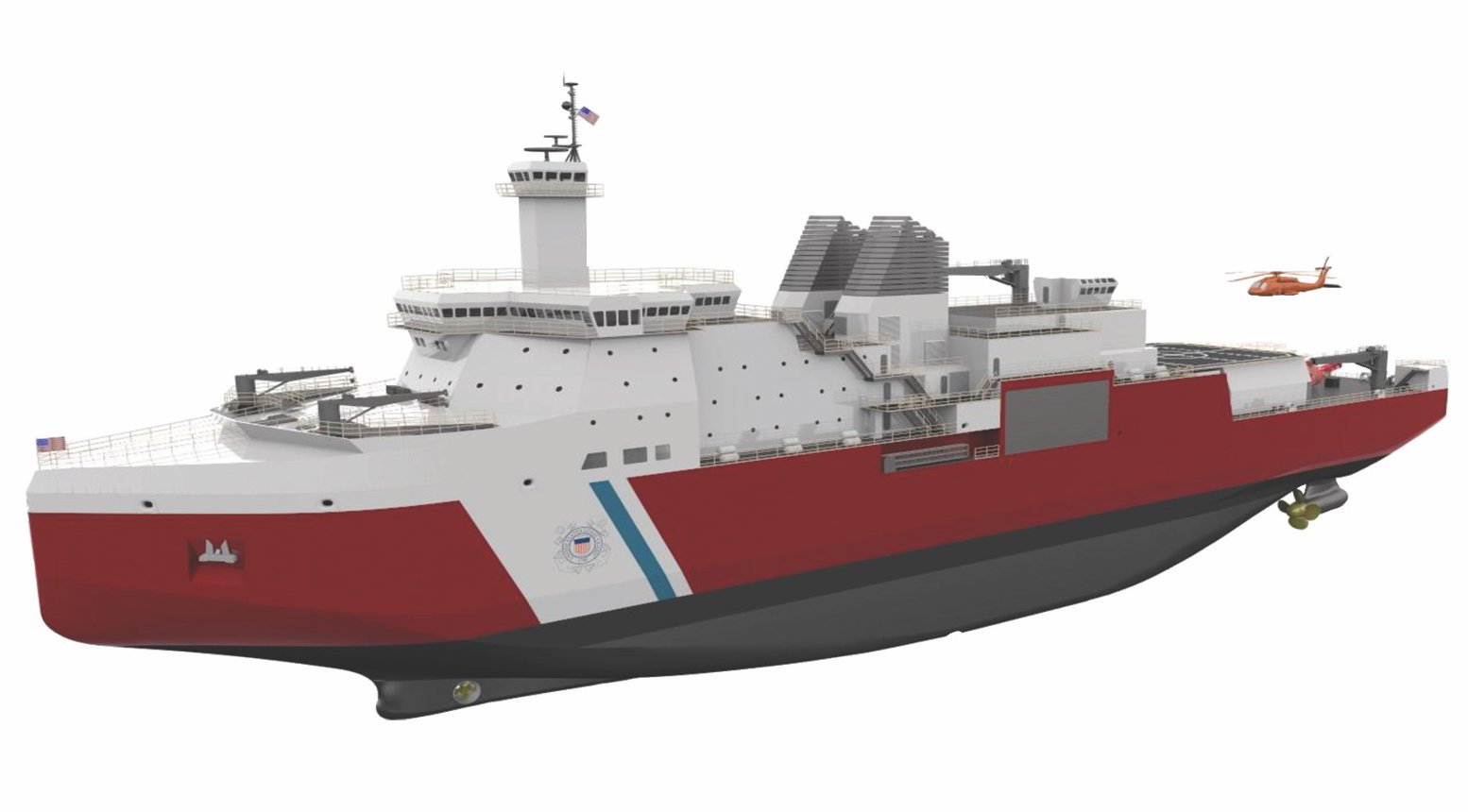
The Coast Guard released a request for information (RFI) July 18 to gather market research for the Coast Guard Cutter Polar Star service life extension project (SLEP) as part of the In-Service Vessel Sustainment Program (ISVS). The SLEP effort will recapitalize a number of major systems – including machinery control and propulsion power distribution systems – and extend the service life of the cutter by four years. The work will include a six-month long lead time material procurement and detailed design phase, followed by a minimum of three annual repair execution phases between 2021 and 2024.

The RFI is available here.

Polar Star, the Coast Guard’s only active heavy icebreaker, was commissioned in 1976. The 399-foot ship is currently responsible for nine of the 11 Coast Guard statutory missions. Each winter, the cutter travels to McMurdo Station in Antarctica as part of Operation Deep Freeze, which supports the National Science Foundation-managed U.S. Antarctic Program.

“The SLEP for Polar Star is essential to maintain year-round access to the polar regions until new heavy polar icebreakers are delivered,” said Ken King, program manager for the ISVS program. “The challenge for this program will be to balance phased SLEP work with continued Polar Star operational deployments.”

The deadline to submit responses is Aug. 3, 2018 at 4 p.m. EDT.

For more information: In-Service Vessel Sustainment program page  

Two Small Surface to Surface Missile Systems and a Patrol Boat from Israel

Rafael_Typhoon_MLS_ER_naval_missile_system

Photo: Typhoon MLS-ER (Missile Launch System–Extended Range)

Just ran across a manufacturer’s web page that I thought might be interesting as an example of what can be accomplished in terms of arming smaller vessels. It is not the missiles so much as the launchers I found interesting.

These are two systems from Rafael. Rafael is the designer of the Typhoon gun mount we know as the Mk38 Mod2/3 being installed on the Webber Class WPCs and planned as the secondary weapon for the Offshore Patrol Cutter.

Typhoon MLS-ER

The first of these is the Typhoon MLS-ER (Missile Launch System–Extended Range) seen in the illustration above. The system includes the 8 km range Spike ER missile and reportedly can be installed on vessels as small as RHIBs. It is similar to Hellfire in capability, except that it has the potential advantage of providing for a man in the loop who can retarget or abort after launch.

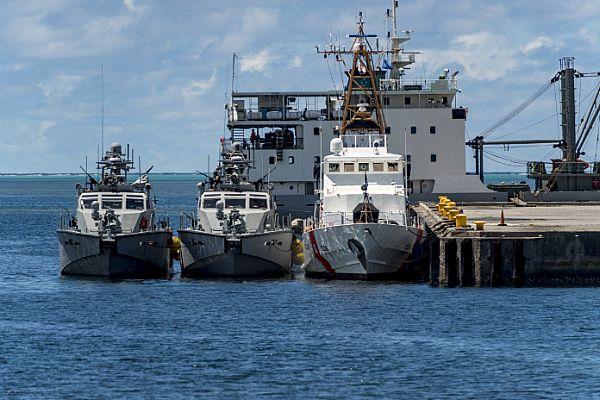
You can see what appears to be a four round launcher mounted aft on the aft superstructure. The boat seen in the photograph is, I believe, a Super Dvora III. These boats are slightly longer than the Coast Guard 87 foot Marine Protector class WPBs, but are lighter displacement.The description of this boat says that they are armed with the Typhoon gun mount, Spike ER, and Hellfire. This makes me wonder if the missile launcher can launch Hellfire as well as Spike ER.

You can see the Spike ER, as well as the 25 mm gun in the Mk38, in operation in the video below.

Below is the Wikipedia description of the Spike-ER

Extended range or extra-long range version of the weapon. It was formerly also known as the NT-Dandy or NT-D. It has a minimum range of 400 m and a maximum range of 8,000 m (5.0 mi).[23] It has a larger diameter and is heavier than the other (older Spike missile–Chuck) systems, and is usually vehicle mounted. It is used by infantry, Light Combat Vehicle (LCVs), and helicopters. The Finnish Navy’s Coastal Jaegers also operate the version in the anti-ship role. The weight of the missile is 34 kg (74 lb 15 oz), the launchers are 30 kg (66 lb 2 oz) and 55 kg (121 lb 4 oz) respectively for the vehicle and air-launched versions. Penetration is around 1,000 mm (39 in) of RHA (Rolled Homogenous Armor–Chuck).

Typhoon MLS-NLOS (e.g. Non (greater than) Line of Sight)

The second system uses the Spike NLOS, a larger, longer ranged missile. We have seen this eight cell launcher before, on 62 meter Israeli designed patrol vessel built for Azerbaijan.

TYPHOON MLS NLOS configuration has eight Spike NLOS missile launchers and integrated Toplite stabilized observation and target acquisition system. Photo: RAFAEL

TYPHOON MLS NLOS has an eight cell Spike NLOS missile launcher and integrated Toplite stabilized observation and target acquisition system (same as on the Mk38 mod2). Photo: RAFAEL via defense-update.com

The Toplite is the same Electro-optic system mounted on our Mk38 mod2 gun mounts. The missile itself is about 50% larger than a Hellfire. The Wikipedia description is quoted below.

“Non Line Of Sight” is an ultra long-range version of the weapon, with a claimed maximum range of 25 km (16 mi). It is a significantly larger missile than other Spike variants, with an overall weight of around 70 kg (154 lb 5 oz). It can be launched from the ground or from helicopters. It was developed following lessons learned in the Yom Kippur War, which showed a need for a high-precision guided tactical ground-to-ground battlefield missile. Codenamed Tamuz (תמוז), the first variants entered service with the IDF in tandem with the Pereh missile carrier in 1981, though the existence of both was not revealed to the public until 2011. The Spike NLOS uses a fiber optic link similar to other Spike versions, but only out to 8 km, after which it employs a radio data link for command guidance.

In 2011 it also became known that in a highly unusual move, the British Army was hastily equipped with the missile, drawn directly from IDF inventory after being exposed to increasing insurgent attacks in Iraq and Afghanistan beginning in 2007. The UK initially acquired 600 missiles, which it designated EXACTOR-1 in British service, later procuring a more advanced variant designated EXACTOR-2. In a deal concluded on 6 September 2011, the South Korean government had agreed to purchase an unknown number of Spike NLOS missiles.

Rafael is working on expanding the missile’s versatility by enhancing the existing EO-IR/CCD seeker with semi-active laser (SAL) capability and different anti-armor, blast-penetration, and high-explosive fragmentation warheads to meet specific applications.

The Super Dvora III Class Patrol Boat:

While I started this post to talk about the missile systems, it seemed the Super Dvora III also has features worth discussing.

This boat is very similar in size to the Marine Protector Class WPBs. Dimensions are 90×18.6×3.6 feet for the Israeli and 87×19.4×5.6 feet for the WPB. The all aluminum construction of the Israeli boat has yielded much lighter displacement, ranging from 58 to 72 tons full load for the Israeli boat compared to 91 tons for the WPB. The lighter displacement would presumably result in both higher speed and lower fuel consumption. I am hoping the next WPB will be composite construction on the assumption that that would combine these advantages with corrosion resistance and lower maintenance.

The Israeli boat initially used an articulated surface drive but switched to a water jet. Both allowed these boats to operate in very shallow water. The Israeli boat is also much faster than the WPB (45 knots compared to 25 knots) for a relatively modest increase in power. (4,175 v 2,950 HP).

The Super Dvora Mk III’s weapons can be slaved to a mast-mounted, day/night, long range electro-optic systems. We will probably want such a system on our next WPB. It could aid in SAR, Law Enforcement, and navigation as well as weapons control.

The Israeli boat does not have a stern boat ramp and may not be as sea worthy as the WPB, but WPBs really are our “fast response cutters” so dash speed is a significant characteristic. I would expect the next WPB to be larger, faster, and better armed. If it could also operate in shallower water than our current WPBs that would also be desirable.

IsraeliShipyardsShaldag

Photo: Israeli Shipyards’ Shaldag Patrol Boat with Spike ER launcher on superstructure aft. 

Thanks to Lee for bringing these systems to my attention. 

47-Ship RIMPAC Exercise Kicks Off Tomorrow–USNI

USS Sterett (DDG-104), front, participates in a photo exercise with Chilean Frigate Almirante Lynch (FF-07), second, Royal Canadian Navy Halifax-class frigate HMCS Ottawa (FFH-341), third, French Navy Floreal-class frigate FS Prairial (F-731), fourth, United States Coast Guard Cutter USCHC Bertholf (WMSL-750), fifth, the dry cargo and ammunition ship USNS Charles Drew (T-AKE 10), sixth, and Royal Canadian Navy commercial container ship Asterix. US Navy Photo

US Naval Institute has an excellent post on the upcoming PIMPAC exercise including photos of many of the participants.

USCGC Bertholf will be there as well as a former USCG WHEC.

BRP Andrés Bonifacio (FF-17), the former USCGC Boutwell.

There are going to be a number new type exercises we have not seen in this exercise.

“During the course of the exercise, a series of live-fire events are scheduled, including: a long-range anti-ship missile (LRASM) shot by a U.S. Air Force aircraft; a surface-to-ship missile shot by members of the Japan Ground Self-Defense Force; and a naval strike missile (NSM) shot by the U.S. Army from a launcher on the back of a palletized load system (PLS), marking the first time a land-based unit is participating in a RIMPAC live-fire event, according to the 3rd Fleet statement.”

Administration Considers Diversion of CG budget to Southern Border Protection

A small news story from the Washington Post, that the administration is considering transferring some of the Coast Guard’s budget allocation to other parts of the Department of Homeland Security.

Most of the funding would go to Immigration and Customs Enforcement, which also is part of Homeland Security. The department has the authority to move money around between its components and may also shift other funding to pay for ICE operations.

The Coast Guard message stated that $77 million could be shifted and that several courses of action have been presented to Adm. Karl Schultz, the Coast Guard commandant. The Coast Guard Reserve also “may be required to provide a contribution,” the message said.

Not the first time diverting money from the Coast Guard has been considered. $77M is not a lot of money, but perhaps they would be better off diverting ICE personnel now manning check points well inside the US border that have mostly proven good at catching minor amounts of marijuana.

Executive Order Regarding the Ocean Policy to Advance the Economic, Security, and Environmental Interests of the United States

I will not try to interpret the intent or implications of the President’s Executive Order of 19 June, reproduced below, but I do welcome comments. It mentions the Coast Guard specifically only once, but the CG is clearly the DHS’ primary agent in performing its role.

______________

By the authority vested in me as President by the Constitution and the laws of the United States of America, it is hereby ordered as follows:

Section 1Purpose.  The ocean, coastal, and Great Lakes waters of the United States are foundational to the economy, security, global competitiveness, and well-being of the United States.  Ocean industries employ millions of Americans and support a strong national economy.  Domestic energy production from Federal waters strengthens the Nation’s security and reduces reliance on imported energy.  Our Armed Forces protect our national interests in the ocean and along the Nation’s coasts.  Goods and materials that support our economy and quality of life flow through maritime commerce.  Our fisheries resources help feed the Nation and present tremendous export opportunities.  Clean, healthy waters support fishing, boating, and other recreational opportunities for all Americans.

This order maintains and enhances these and other benefits to the Nation through improved public access to marine data and information, efficient interagency coordination on ocean-related matters, and engagement with marine industries, the science and technology community, and other ocean stakeholders.  To advance these national interests, this order recognizes and supports Federal participation in regional ocean partnerships, to the extent appropriate and consistent with national security interests and statutory authorities.

Sec. 2Policy.  It shall be the policy of the United States to:

(a)  coordinate the activities of executive departments and agencies (agencies) regarding ocean-related matters to ensure effective management of ocean, coastal, and Great Lakes waters and to provide economic, security, and environmental benefits for present and future generations of Americans;

(b)  continue to promote the lawful use of the ocean by agencies, including United States Armed Forces;

(c)  exercise rights and jurisdiction and perform duties in accordance with applicable domestic law and — if consistent with applicable domestic law — international law, including customary international law;

(d)  facilitate the economic growth of coastal communities and promote ocean industries, which employ millions of Americans, advance ocean science and technology, feed the American people, transport American goods, expand recreational opportunities, and enhance America’s energy security;

(e)  ensure that Federal regulations and management decisions do not prevent productive and sustainable use of ocean, coastal, and Great Lakes waters;

(f)  modernize the acquisition, distribution, and use of the best available ocean-related science and knowledge, in partnership with marine industries; the ocean science and technology community; State, tribal, and local governments; and other ocean stakeholders, to inform decisions and enhance entrepreneurial opportunity; and

(g)  facilitate, as appropriate, coordination, consultation, and collaboration regarding ocean-related matters, consistent with applicable law, among Federal, State, tribal, and local governments, marine industries, the ocean science and technology community, other ocean stakeholders, and foreign governments and international organizations.

Sec. 3Definitions.  For the purposes of this order, the following definitions apply:

(a)  “Ocean-related matters” means management, science, and technology matters involving the ocean, coastal, and Great Lakes waters of the United States (including its territories and possessions), and related seabed, subsoil, waters superadjacent to the seabed, and natural resources.

(b)  “Regional ocean partnership” means a regional organization of coastal or Great Lakes States, territories, or possessions voluntarily convened by governors to address cross-jurisdictional ocean matters, or the functional equivalent of such a regional ocean organization designated by the governor or governors of a State or States.

Sec. 4Interagency Coordination.  (a)  To ensure appropriate coordination by Federal agencies on ocean-related matters, there is hereby established the interagency Ocean Policy Committee (Committee).

(i)  The Committee shall consist of the following:

(1)  The Chairman of the Council on Environmental Quality (CEQ) and the Director of the Office of Science and Technology Policy (OSTP), who shall serve as Co-Chairs;

(2)  The Secretary of State, Secretary of Defense, Attorney General, Secretary of the Interior, Secretary of Agriculture, Secretary of Commerce, Secretary of Transportation, Secretary of Energy, Secretary of Homeland Security, Administrator of the Environmental Protection Agency, Director of the Office of Management and Budget, Administrator of the National Aeronautics and Space Administration, Director of the National Science Foundation, Director of National Intelligence, Chairman of the Joint Chiefs of Staff, Under Secretary of Commerce for Oceans and Atmosphere, Assistant Secretary of the Army (Civil Works), and Commandant of the Coast Guard;

(3)  The Assistants to the President for National Security Affairs, Homeland Security and Counterterrorism, Domestic Policy, and Economic Policy;

(4)  A representative from the Office of the Vice President designated by the Vice President; and

(5)  Such other officers or employees of the Federal Government as the Co-Chairs may from time to time designate.

(b)  The Co-Chairs, in coordination with the Assistants to the President for National Security Affairs, Homeland Security and Counterterrorism, Domestic Policy, and Economic Policy, shall regularly convene and preside at meetings of the Committee, determine its agenda, and direct its work, and shall establish and direct subcommittees of the Committee as appropriate.  The Committee shall, as appropriate, establish subcommittees with responsibility for advising the Committee on matters pertaining to ocean science and technology and ocean‑resource management.

(i)    Committee members may designate, to perform their Committee or subcommittee functions, any person who is within their department, agency, or office who is:

(1)  a civilian official appointed by the President;

(2)  a member of the Senior Executive Service or the Senior Intelligence Service;

(3)  a general officer or flag officer; or

(4)  an employee of the Office of the Vice President.

(ii)   Consistent with applicable law and subject to the availability of appropriations, OSTP or CEQ shall provide the Committee with funding, including through the National Science and Technology Council pursuant to title VII, section 723 of the Consolidated Appropriations Act, 2018 (Public Law 115-141), or any successor provision, or through the Office of Environmental Quality pursuant to the Office of Environmental Quality Management Fund, 42 U.S.C. 4375.  OSTP or CEQ shall, to the extent permitted by law and subject to the availability of appropriations, provide administrative support as needed to implement this order.

(iii)  The Committee shall be administered by an Executive Director and such full-time staff as the Co‑Chairs recommend.

Sec. 5Functions.  To implement the policy set forth in section 2 of this order, the Committee shall, to the extent permitted by law:

(a)  provide advice regarding policies concerning ocean-related matters to:

(i)   the President; and

(ii)  the head of any agency who is a member of the Committee;

(b)  engage and collaborate, under existing laws and regulations, with stakeholders, including regional ocean partnerships, to address ocean-related matters that may require interagency or intergovernmental solutions;

(c)  coordinate the timely public release of unclassified data and other information related to the ocean, coasts, and Great Lakes that agencies collect, and support the common information management systems, such as the Marine Cadastre, that organize and disseminate this information;

(d)  coordinate and inform the ocean policy-making process and identify priority ocean research and technology needs, to facilitate:

(i)   the use of science in the establishment of policy; and

(ii)  the collection, development, dissemination, and exchange of information between and among agencies on ocean-related matters;

(e)  coordinate and ensure Federal participation in projects conducted under the National Oceanographic Partnership Program through the Committee’s members, as appropriate, to maximize the effectiveness of agency investments in ocean research; and

(f)  obtain information and advice concerning ocean-related matters from:

(i)   State, tribal, and local governments; and

(ii)  private-sector entities and individuals.

Sec. 6Cooperation.  To the extent permitted by law, agencies shall cooperate with the Committee and provide it such information as it, through the Co‑Chairs, may request.  The Committee shall base its decisions on the consensus of its members.  With respect to those matters for which consensus cannot be reached, the Assistant to the President for National Security Affairs shall coordinate with the Co-Chairs to present the disputed issue or issues for decision by the President.  Within 90 days of the date of this order, agencies shall review their regulations, guidance, and policies for consistency with this order, and shall consult with CEQ, OSTP, and the Office of Management and Budget (OMB) regarding any modifications, revisions, or rescissions of any regulations, guidance, or policies necessary to comply with this order.

Sec. 7Revocation.  Executive Order 13547 of July 19, 2010 (Stewardship of the Ocean, Our Coasts, and the Great Lakes), is hereby revoked.

Sec. 8General Provisions.  (a)  Nothing in this order shall be construed to impair or otherwise affect:

(i)    the authority granted by law to an executive department, agency, or the head thereof;

(ii)   the functions of the Director of OMB relating to budgetary, administrative, or legislative proposals; or

(iii)  functions assigned by the President to the National Security Council or Homeland Security Council (including subordinate bodies) relating to matters affecting foreign affairs, national security, homeland security, or intelligence.

(b)  This order shall be implemented consistent with applicable law and subject to the availability of appropriations.

(c)  This order is not intended to, and does not, create any right or benefit, substantive or procedural, enforceable at law or in equity by any party against the United States, its departments, agencies, or entities, its officers, employees, or agents, or any other person.

DONALD J. TRUMP

THE WHITE HOUSE,
June 19, 2018.

Night Vision Devices

Binocular Night Vision Device (BNVD) with Clip-on Thermal Imager (COTI)

The Navy League’s online “Seapower Magazine” has a short post about new equipment being used by Marine Recon and EOD reminded me once again that perhaps the Coast Guard could use more night vision and thermal imaging devices.

Do ships’ look-outs have the use of night vision devices? They could help even normal operations, particularly in rain or fog. Might help find a person in the water in low vis situations or detect a Self Propelled semi-submersible.

We probably don’t need the depth perception provided by the binocular devices. Wonder if there are any of the earlier versions might be available from DOD as excess property?

CBS Reports on MSRT Exercise

CBS New had a June 14, report on the Coast Guard’s Maritime Security Response Team (MSRT). Their report includes a video of the exercise. The video of the same exercise, above is a bit different. It shows the exercise as a bit more complex. It included at least three boats and two helicopters. It also looks like both helicopters conducted fast roping.

As a former exercise planner I have a few observations and comments.

The Exercise:

First I would have to acknowledge that we don’t know how far along the teams are in their training or exactly what the training objectives were.

This may have been more PAO effort than training.

Only bad guys died, none of the good guys. Miles gear and a smart, well trained, agressive red cell would have made this much more meaningful.

These had to be the dumbest opposition forces in history. They made no coordinated effort to prevent the boarding.

There were no warning shots or other evidence of an effort stop the vessel and determine if the vessel and crew were in fact hostile. If the crew and vessel were known to be hostile, we probably should have shot it up before the boarding.

It looks like the “fast rope” boarding from the helicopter not only happened before the boarding from boats, it happened before the boats were in position to provide supporting fire to pen down the terrorists and prevent them from engaging the helicopter and the team fast roping from it. Members of the fast roping team were standing around on the stern waiting for the team from the RHIB while bad guys were still on the same deck hanging out forward.

I have to wonder why they used a Navy H-60 instead of a Coast Guard helicopter. I thought all Coast Guard helicopters were now capable of air-borne use of force. While there are certainly plenty of Navy H-60s in San Diego, that is not the case in other West coast ports.

The vessel was unusually easy to board. A different configuration would have been much more challenging.

The Concept:

Unfortunately when you create an “elite team” there is a tendency to say that is their job, the rest of us don’t have to worry about it. Unfortunately the rest of the Coast Guard cannot simply go back to SAR and stop worrying about this terrorist stuff.

We have, I believe, only two Maritime Security Response Teams, while we have at least 30 ports that are potential terrorist targets. For rapidly developing threats the probability that an MSRT will be in the right place at the right time, or that they will be able to get there is slim.

During WWII both the Germans and the Japanese formed elite fighter squadrons that did extremely well but the concept was disastrous. What worked was what the US did. The US used its best fighter pilots to train others. It raised the general level of competence of the entire force.

The MSRTs could certainly be useful in a slow developing scenario like a cruise ship take-over, but perhaps their greatest role might be as OPFOR, training local units in how to respond, a sort of Red Flag/Top Gun role.

Thanks to Daniel for bringing this to my attention. The criticisms are mine not his. 

Fisheries as a National Resource

Tuna Purser ALBATUN DOS – Port Victoria harbor – Seychelles Islands

Baird Maritime has an interesting post that reports a study has found that, “…up to 54 per cent of the high seas fishing industry would be unprofitable without large government subsidies.” and “The research suggests that through targeted subsidy reforms, governments could save taxpayers money, rebuild fish stocks, and eventually lead to higher value, lower volume fisheries.”

In too many places, too many fishing vessels are chasing too few fish, depleting the stocks and leading to a downward spiral in catch. That governments would encourage this is appalling.

The World Trade Organization (WTO) has been trying to do something about this since 2001, and apparently they have decided to decide.

WTO members agreed to continue to engage constructively in the negotiations, with a view to adopting by the Ministerial Conference in 2019, an agreement on comprehensive and effective disciplines that prohibit certain forms of fisheries subsidies that contribute to overcapacity and overfishing, and eliminate subsidies that contribute to illegal, unreported and unregulated (IUU) fishing. The decision recognizes that appropriate and effective special and differential treatment for developing country members and least-developed country members should be an integral part of the negotiations.

With this decision, the WTO has made a multilateral commitment to fulfil Sustainable Development Goal 14.6, which calls for the prohibition and elimination, by 2020, of fisheries subsidies that contribute to IUU fishing and to overcapacity and overfishing, with special and differential treatment for developing and least-developed country WTO members to be an integral part of the negotiations.

Frankly I think countries are going at this ass backward. Instead of paying people to fish, commercial fishermen should be paying for a limited number of licenses to take limited numbers of fish. At least fish within the EEZ are a national resource, same as offshore oil deposits. We put the rights to exploit those resources up for bid. It should be no different for fisheries.