Two posts have recently appeared that make a case for Coast Guard involvement in Mine Counter-Measures (MCM) in peacetime. “Terror in the Water: Maritime Terrorism, Mines, and our Imperiled Harbors,” Second Place Mine Warfare Essay Contest, sponsored by the U.S. Naval Institute with the Mine Warfare Association. by Lieutenant (junior grade) Daniel Stefanus, U.S. Navy, advocates a stronger working relationship between the Navy and Coast Guard, mentioning the Coast Guard 13 times in a relatively short essay.
The January 2018 USNI Proceedings has a short post, “Coast Guard Needs Mine Countermeasures,” by Peter von Bleichert, suggesting that the Coast Guard has a mission implicit in its Ports, Waterways, and Coastal Security mission to deal with Naval mines and underwater improvised explosive devices (M/UWIED) and that the Coast Guard should be equipped and trained for the mission.
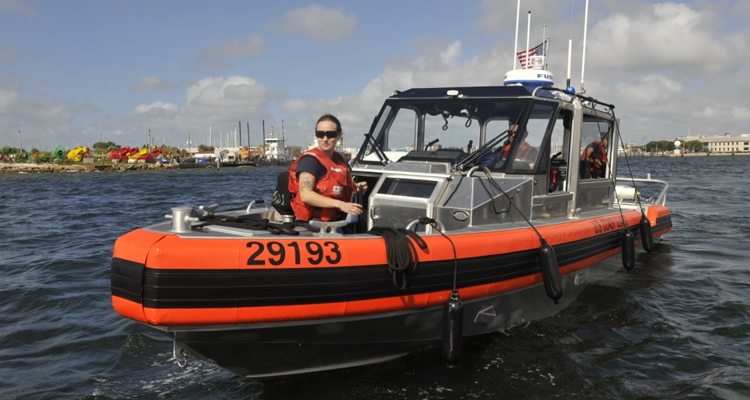
“Hardware for a Coast Guard mine countermeasures (MCM) capability could be harvested from the Navy’s Littoral Combat Ship MCM mission package, which existing or planned Coast Guard platforms could use in part or as a whole. These platforms could include hulls such as coastal and seagoing buoy tenders, the National Security and Offshore Patrol Cutters, and Coast Guard aircraft, both fixed- and rotary-wing. Training Coast Guardsmen for MCM operations could be concurrent with that of Navy sailors. As shown during the 2014 International Mine Countermeasures Exercise in the Arabian Gulf and the 2015 Field Training Exercise in homeland waters, the U.S. sea services already train and exercise together for such operations. Further combining MCM hardware acquisition and training will reduce duplication, generate economies of scale, encourage innovation, and increase preparation for joint operations.
“As the tripwire guarding against a conflict or terrorist incident in U.S. waters, and as a security component for naval bases and forces abroad, the U.S. Coast Guard must be given the expertise and tools to protect commercial and military vessels from the ever-growing threat of M/UWIEDs. At the very least, the service’s vessels must be able to detect such weapons. They should also be able to classify and localize them, and ideally to identify and neutralize them.”
Mining one or more US ports might not be that difficult, and while I don’t think the general population would be terrified by a ship sinking, the economic effect could be severe.
The Navy has never been very enthusiastic about the MCM mission, in spite of the fact that, since World War II, more of their ships have been damaged by mines than any other hostile agency.
As Lt(jg) Stefanus points out,
The United States’ mine countermeasures (MCM) triad consists of surface vessels (minesweepers), aircraft, and explosive ordinance disposal (EOD) teams. The surface vessels are the twelve ships of the worn-down Avenger class: homeported overseas with the exception of two in San Diego, and in poor readiness conditions due to repeated life-cycle extensions because of the slow development of the littoral combat ship’s (LCS) mine warfare module. There are no surface mine countermeasure forces available on the East Coast of the United States. (emphasis applied–Chuck)
The aerial leg of the triad is made up of the equally worn-down MH-53E Sea Dragons. Old and outdated, the 28 MH-53Es are only on the East Coast, (again, emphasis applied–Chuck) and suffer from notoriously serious readiness and material issues. While they are slated to remain in the fleet until the final operational capability (FOC) of the LCS mine warfare module in 2024, they are already struggling and will continue to degrade.
I doubt the Coast Guard has had a mine warfare expert since WWII, so I would certainly would not expect any massive shifts in that direction, but there probably is more we could be doing. Back in the Stone Age, when I was active duty, the Coast Guard through the Maritime Defense Zone organization participated in a Craft Of Opportunity Program using side scan sonars to map predesignated routes in and out of harbors to map mine like objects on the sea floor so they would not be mistaken for mines if it became necessary to clear the route–no idea if that still happens.

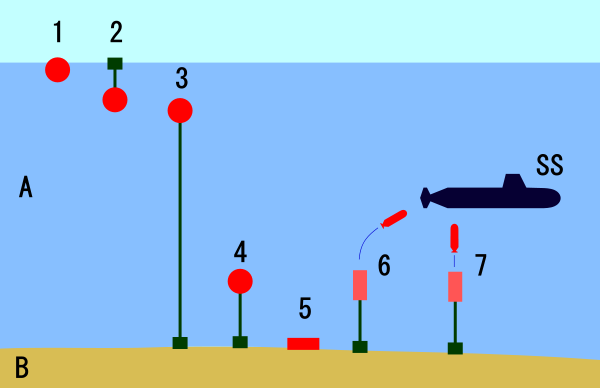
Types of Naval mine. A-underwater, B-bottom, SS-Submarine. 1-Drifting mine, 2-Drifting mine, 3-Moored Mine, 4-Moored Mine (short wire), 5-Bottom Mines, 6-Torpedo mine/CAPTOR mine ,7-Rising mine–by Los688
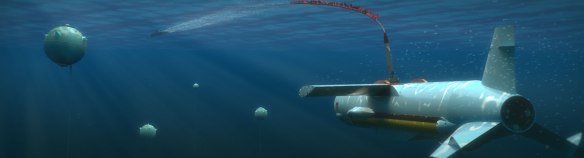
Mine warfare does seem to be changing, particularly the surface ship methods. Instead of specialized ships with low acoustic and magnetic signatures actually entering the minefield, mine hunting, sweeping, and destruction is being done by unmanned systems. Several of our ships, including buoy tenders, might be useful in supporting MCM operations.