“New Danish 64m Patrol Vessel Nordsøen optimised, built and delivered with Hull Vane®” –News Release

Below is a news release from the makers of Hull Vane. I, of course, have no direct knowledge of how well this works or what unmentioned disadvantages there may be, but it does look like this is no longer theory. There have been years of experience with these by sophisticated end users. I have been tracking this for a while (see below) and have hoped the US Coast Guard would investigate its application. The cost saving appears substantial. If it has been looked into, and found disadvantageous, please let me know.


Danish 64m Patrol Vessel Nordsøen optimised, built and delivered with Hull Vane®

May 9, 2023 
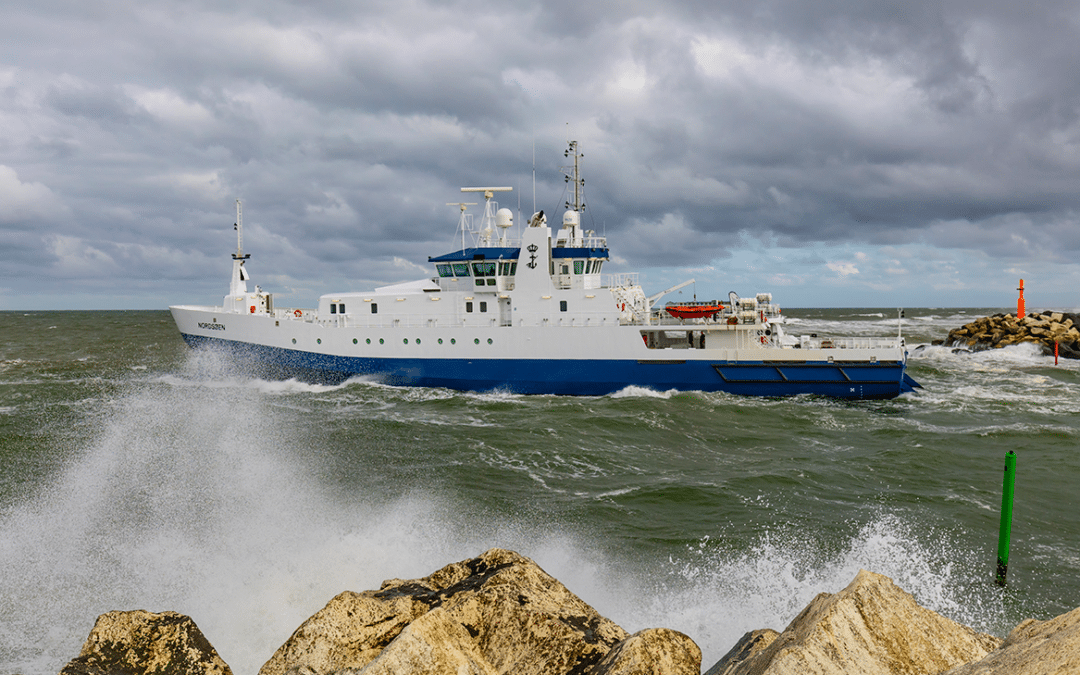

Quiet, efficient, comfortable

Last summer was a hectic time at Hvide Sande Shipyard, based on Denmark’s West Coast. July and August were filled with sea trials, finishing touches and commissioning of systems of the newbuild Nordsøen. Hvide Sande Shipyard won the public tender to build the vessel in late 2020. On August 24, 2022, the ship was named and handed over to her owner. It is the first Offshore Patrol Vessel which combines azimuthing propulsion pods with a Hull Vane® behind the transom.
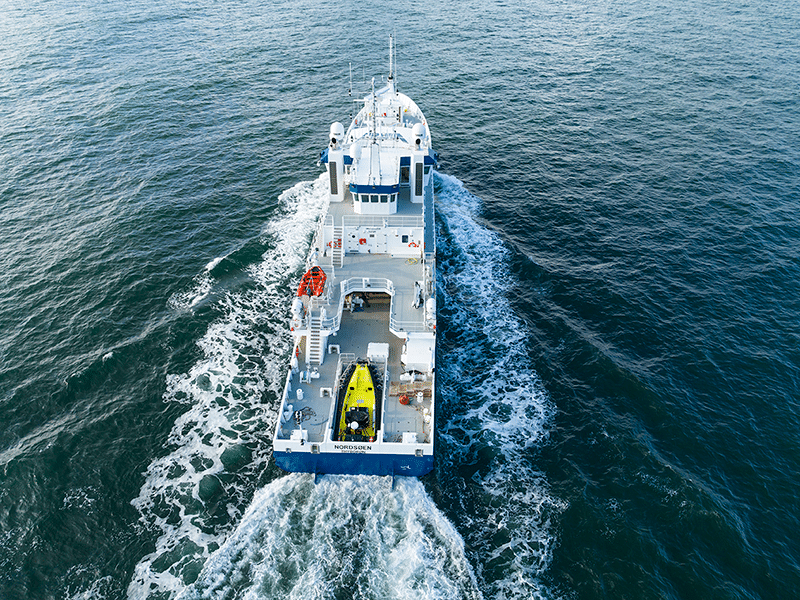
Regardless of the speed, Nordsøen sails almost wakeless, thanks to the Hull Vane®  (Photo credit: Thorbjørn Sund)

12 to 17% less CO2 emissions
Given that the public tender awarded a lot of points on low lifecycle costs and energy efficiency, Hvide Sande Shipyards contacted Hull Vane BV during the concept design stage. Due to her length, displacement and speed range (10-18 knots), it was quickly determined that Hull Vane® would provide great benefits, which was later confirmed with CFD computations with and without Hull Vane®. The resistance reduction from the Hull Vane® amounts to 12% at 10 knots, 17% at 14 knots and 14% at 18 knots.
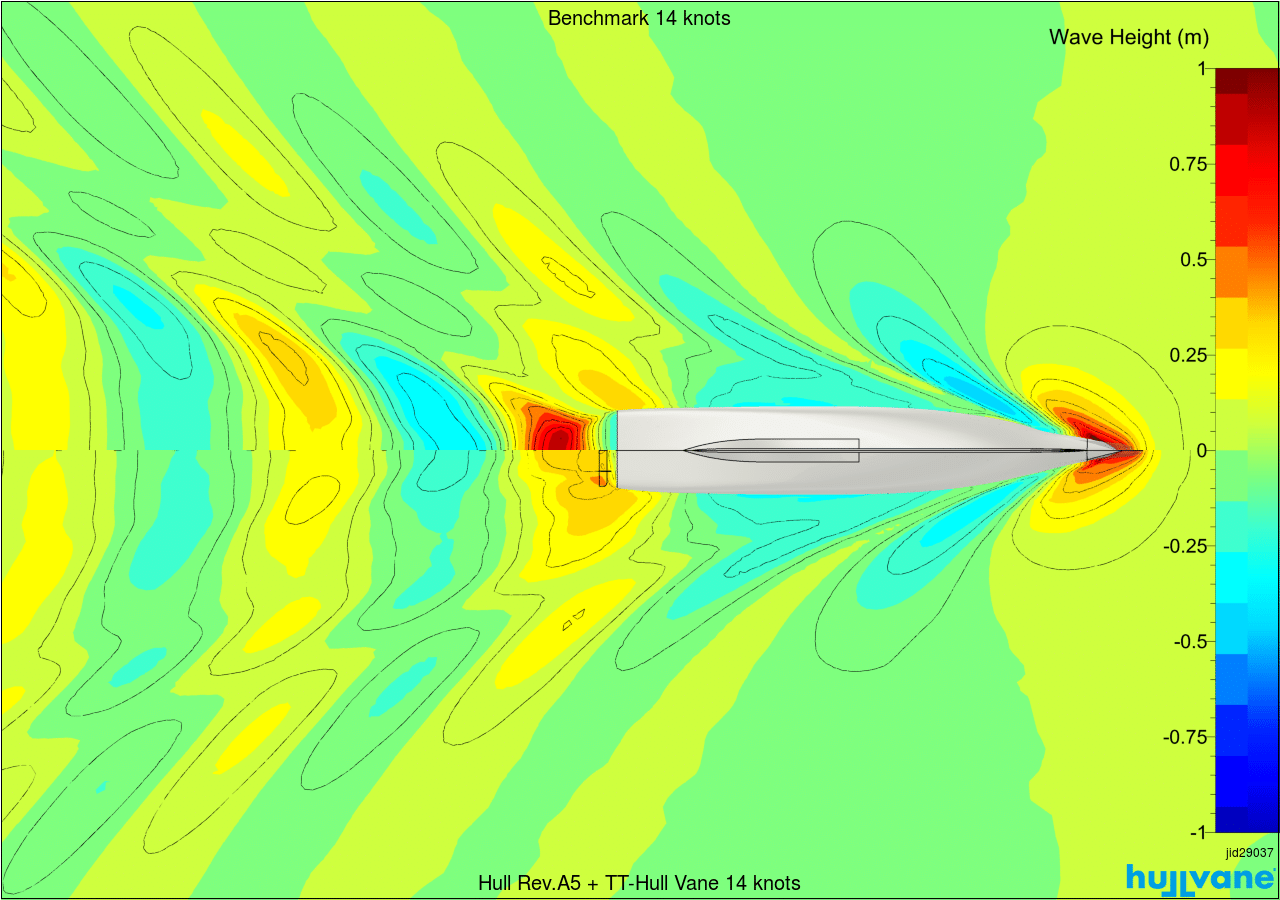
Wave profile without (top halve) and with Hull Vane® (bottom halve) at 14 knots.

Diesel Electric pod drives
Bruno Bouckaert, sales director of Hull Vane BV: “The project was atypical, in the sense that from the first conversation about Hull Vane® up to its installation, everything was done through online meetings, as we were in full Covid lockdown-times. That said, the project couldn’t have run smoother. There are some interesting firsts for Hull Vane®: Nordsøen is the first ship where Hull Vane® is installed on a ship with azimuthing propulsion drives. The combination works perfectly, and in fact, because of the Hull Vane®, the pods have to do less steering corrections in bow- or stern-quartering seas, which also improves their efficiency and reduces the noise level.
Another first is the stern ramp system. On Nordsøen, the stern ramp is equipped with a slide-out system. All we had to do is make sure that the Hull Vane® was out of the path of this system. We see a benefit of such systems as it allows patrol vessels and naval ships with a stern ramp to be designed with an optimal hull shape, without a lot of transom immersion. Offshore Patrol Vessels sail a lot of time at moderate speeds (5-15 knots), and then it’s really beneficial to have not too much transom immersed”.

Quietly efficient
So what’s the verdict after the sea trials and several months of usage? All expectations have been met, and the vessel is said to be exceptionally quiet and efficient. The ship has never sailed without Hull Vane®, but it’s obvious that Nordsøen makes very few waves, a clear sign of her efficiency.

According to the operational profile published in the tender documents, the Hull Vane® on Nordsøen saves 317.000 liter of marine diesel fuel per year. That’s enough to drive all the way around the earth every other day with a normal diesel car. The CO2 emissions are reduced by 1.090 tons per year, at an off-the-charts low CO2 abatement cost of – 212 €/ton CO2 abated. The reduced resistance from the Hull Vane® allowed the shipyard to purchase smaller azimuthing pods and diesel-generator plant, a cost saving which exceeded the Hull Vane® cost and therefore reduced the total build cost. It may sound against the laws of quantum mechanics, but the Hull Vane® on Nordsøen actually has a negative payback period. The investment in the Hull Vane® was recovered before the ship even sailed her first nautical mile.
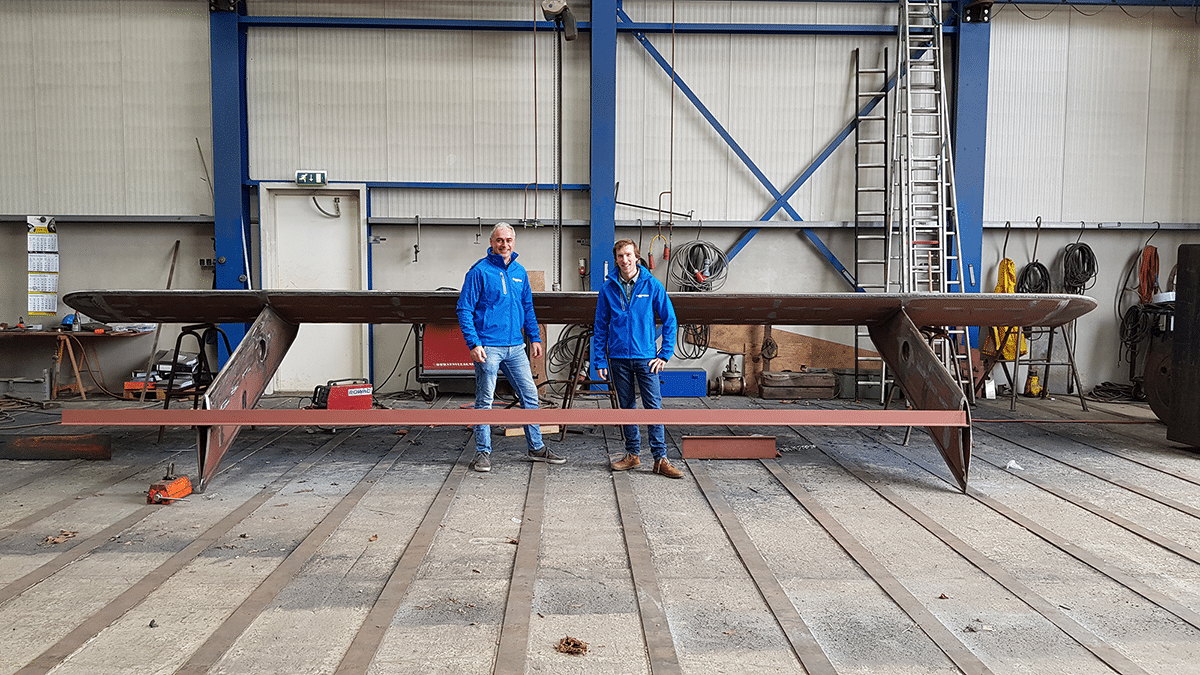
Hull Vane team on site visit during construction

Hull Vanes have now been installed on many patrol vessels operating in the Netherlands, France, Belgium, Denmark and Nigeria. On all these vessels, the reduction in fuel consumption from the Hull Vane® exceeds 10%. It’s a proven and very cost-effective solution for governments wishing to reduce the use of energy and CO2 emissions of their fleet, at a negative cost due to the energy savings. Whatever the fuel of the future will be, Hull Vane® makes the future energy transition easier and more affordable.
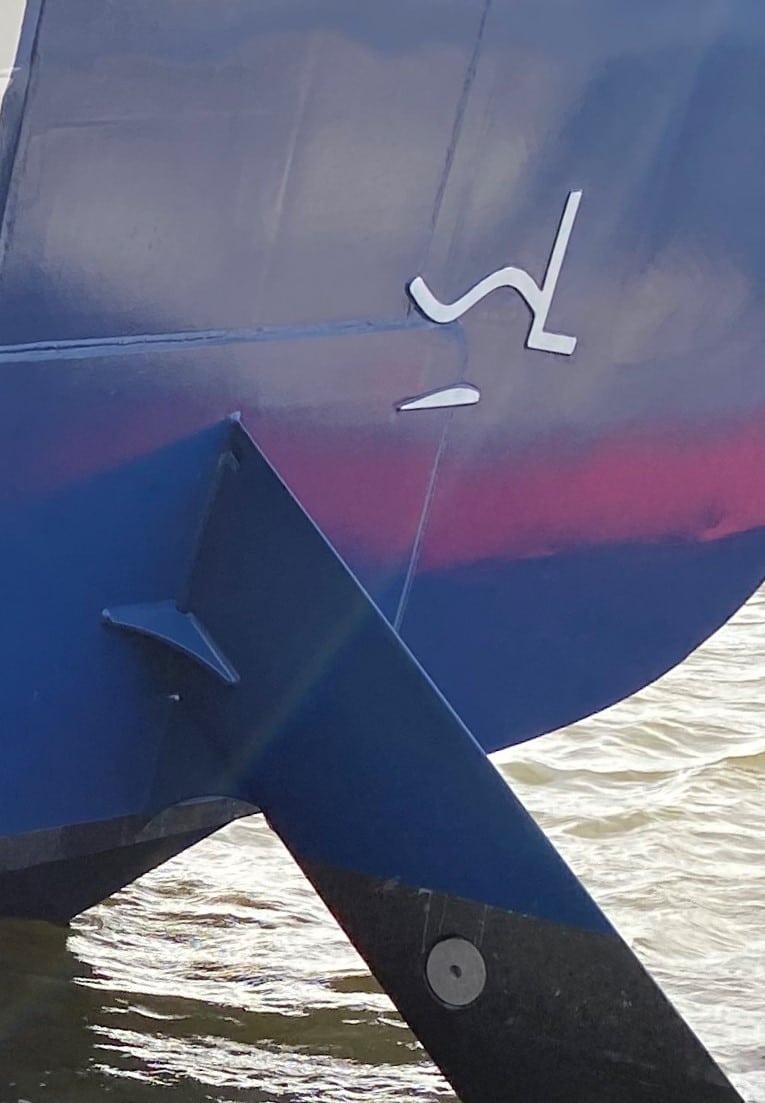
Hull Vane® marking on the transom
“The National Coast Guard Museum” –Real Clear Defense

NEW YORK, New York (Sept. 11)–A Coast Guard rescue team from Sandy Hook, NJ, races to the scene of the World Trade Center terrorist attack. USCG photo by PA2 Tom Sperduto

Real Clear Defense reminds us why we need a National Coast Guard Museum and ask for additional help in building it.

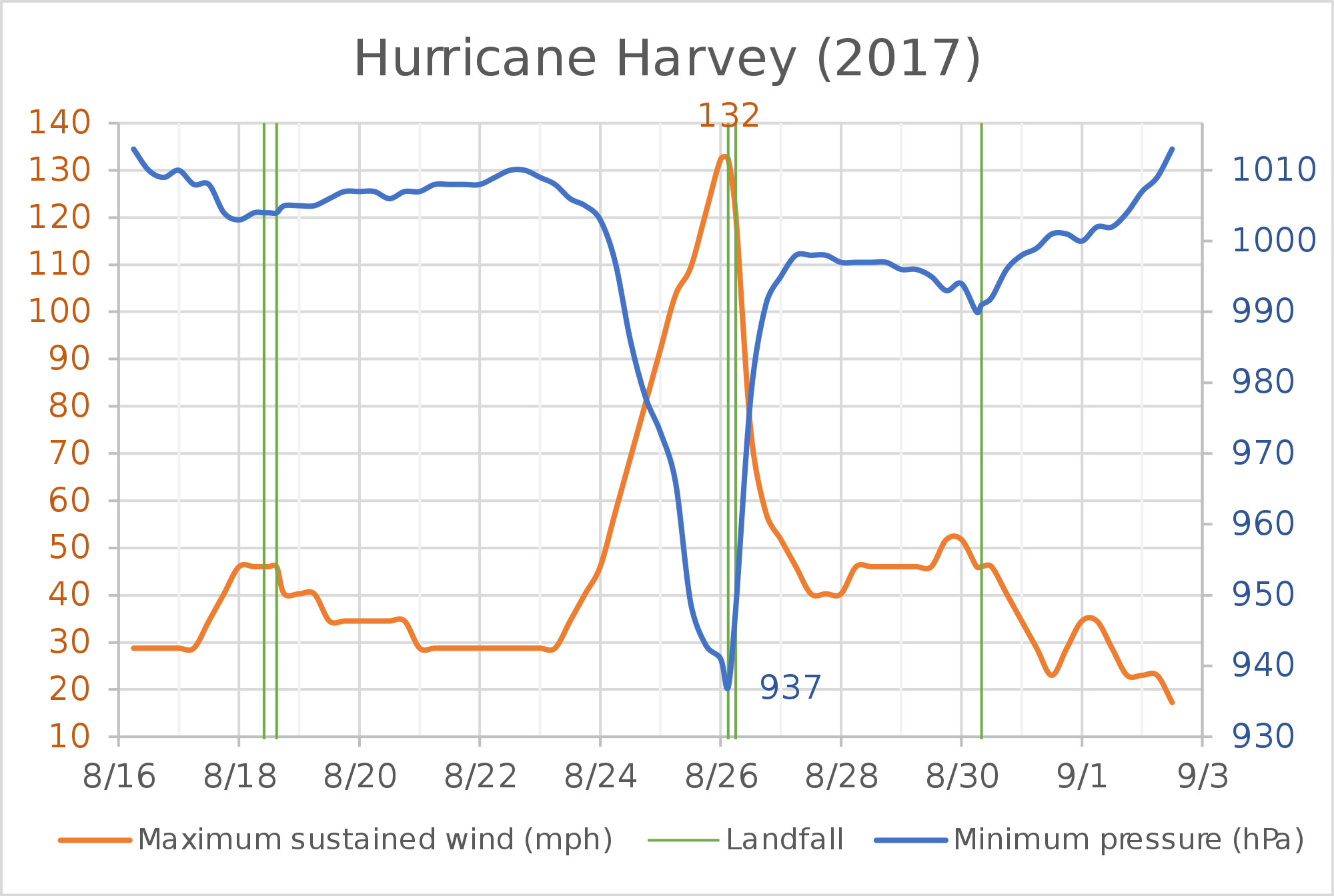
  • Maximum sustained wind speed and minimum pressure of Hurricane Harvey (2017), Data source: NATIONAL HURRICANE CENTER, TROPICAL CYCLONE REPORT, HURRICANE HARVEY, NOAA

How Much Time Should a Cutter be Expected to be at Sea?

USCGC MUNRO

How much time should we reasonably expect a cutter to be at sea? It is a reasonable question, since, generally, time spent in port is not mission time.

How do we compare with similar services?

The Coast Guard standard for large cutters has been 185 days away from homeport annually, but that includes times in port or being repaired if it is done “away from homeport.”

We get a pretty regular readout on US Navy ships from the US Naval Institute’s Fleet and Marine Tracker that indicates US Navy ships are underway about a quarter of the time, but this includes both combatants (USS) which tend to be more complex and maintenance intensive than large cutters and auxiliaries (USNS) that are much simpler than combatants. While the USNI does not provide a specific breakdown the USNS ships clearly spend much more time underway than the combatants. That is not necessarily bad since a combatant’s primary mission is to prepare for war and that can happen inport as well as underway, but the Navy constantly complains that their combatants are overworked while on average, cutters do spend much more time underway annually than Navy combatants.

The Royal Navy OPVs rotate crews and appear to spend very long periods deployed and apparently a high number of days per year underway.

SeaWaves recently reported on the “thirtieth anniversary of its armament and its first colors ceremony” of the French Frigate La Fayette. (It was commissioned in 1996) Classed as a frigate, this class, of 25 knot, diesel powered ships was built without any ASW capability, and was in many ways comparable to Hamilton class WHECs. They also performed many of the same functions.

“… La Fayette has taken part in all the operational missions of the Navy, distinguishing herself in particular in the fight against piracy in the Indian Ocean and the fight against drug trafficking.”

The SeaWaves report provides a data point on how much time this particular ship spent underway.

“In 30 years, the La Fayette has thus carried out 3,107 days at sea and the equivalent of 21 round-the-world trips, carried out 33 operational deployments on all the seas of the world, visited 55 countries in 266 stopovers or even contributed to the seizure of more than 10 tons of drugs.”

That is 103.6 days/year underway. Even if we only count the 27 years since her commission and include the underway time prior to commissioning that would be 115 days per year. Sounds like cutters probably compare favorably.

How much time do large cutters spend underway? Congress has asked this question and I don’t think it was ever answered. It is certainly a statistic we should know. The Coast Guard has nothing to be ashamed of and much to be proud of.

“USCGC Forward returns home following counterdrug patrol in the Caribbean Sea”

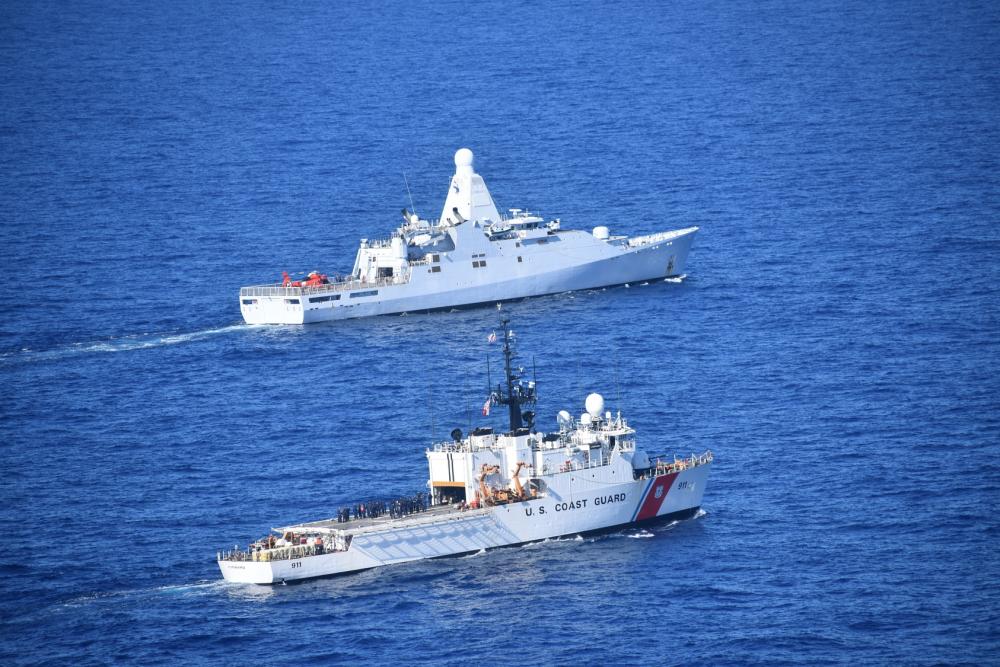
USCGC Forward (WMEC 911) and Royal Netherlands Navy ship HNLMS Holland (P840) steam in formation for a transfer of contraband cocaine in the Atlantic Ocean Nov. 4, 2022, presumably a previous patrol.  (U.S. Coast Guard photo by Petty Officer 3rd Class Amy Rodriguez)

Below is a news release found on United States Coast Guard News. Generally, it is pretty normal drug interdiction news release.

I did kind of question this.

Throughout the patrol, Forward held approximately 4,700 pounds of cocaine on deck worth an estimated $81 million. Forward intercepted three suspected narcotics smugglers earlier this month and held nine others throughout the patrol. On Tuesday, the crew conducted a further offload to partner agencies in Port Everglades, Florida.

Nowhere does it say how long the patrol was other than “multi-week,” kind of important and not something we can keep secret. Why would prisoners be transferred on board a cutter that has just arrived? The service has been criticized in the past for holding prisoners on board for long periods in conditions that are considered by many to be inhumane. I won’t get into that, but it does seem we would want to get them ashore as quickly as possible. Maintaining custody of prisoners is a strain on the ship that it is not designed or billeted for.

Also, there is an error in the news release I cannot let pass.

Part of this effort included international partnerships with the HNLMS Holland (P840) of the Royal Netherlands Navy and other U.S. military vessels, including USCGC Campbell (WMEC 909), USCGC Margaret Norvell (WPC 1105), and USS Little Rock (CL 92).

USS Little Rock (CL 92) is a museum ship moored in Buffalo, NY, a Cleveland class light cruiser first commissioned in 1945, converted to a guided missile cruiser, she was decommissioned in 1976. I am pretty sure they intended to reference USS Little Rock (LCS-9). We need to do better. If you don’t know the proper designation, just leave it off. Can’t imagine how they made this mistake, unless they just googled USS Little Rock and saw a designation without reading anything about the ship it was associated with.

 April 24, 2023

USCGC Forward returns home following counterdrug patrol in the Caribbean Sea

PORTSMOUTH, Va. — The crew of the USCGC Forward (WMEC 911) returned to their home port in Portsmouth, Saturday, following a multi-week training exercise and counterdrug deployment in the central Caribbean Sea.

While underway in the Seventh Coast Guard District’s area of responsibility and in support of Joint Interagency Task Force–South, Forward traveled more than 6,000 miles conducting counterdrug operations as part of a multi-faceted approach to combatting illicit narcotics trafficking across maritime borders.

Part of this effort included international partnerships with the HNLMS Holland (P840) of the Royal Netherlands Navy and other U.S. military vessels, including USCGC Campbell (WMEC 909), USCGC Margaret Norvell (WPC 1105), and USS Little Rock (CL 92).

Throughout the patrol, Forward held approximately 4,700 pounds of cocaine on deck worth an estimated $81 million. Forward intercepted three suspected narcotics smugglers earlier this month and held nine others throughout the patrol. On Tuesday, the crew conducted a further offload to partner agencies in Port Everglades, Florida.

“The crew lived up to our namesake ‘Ever the Sentinel’ and was ready to take on any mission,” said Cmdr. Staci Rutsch, Forward’s commanding officer. “Forward’s crew demonstrated the Coast Guard’s resiliency and adaptability by maintaining proficiency in interagency and international operations while upholding the ability to meet the nation’s maritime demands. I am truly impressed and thankful for their devotion to duty.”

Forward is a 270-foot, Famous-class medium endurance cutter. The cutter’s list of mission sets include law enforcement, search and rescue, protection of living marine resources, homeland security and defense operations, international training and humanitarian operations throughout the Western Hemisphere.

For information on how to join the U.S. Coast Guard, visit http://www.GoCoastGuard.com to learn more about active duty and reserve officer and enlisted opportunities. Information on how to apply to the U.S. Coast Guard Academy can be found at http://www.uscga.edu. For more, follow us on Facebook, Instagram and Twitter.

Sea Air Space 2023, Recap

Sea, Air Space 2023 was conducted April 3,4,5. Naval News has provided three videos which I have embedded below. Accompanying each video there is also an outline of the subject matter and a time stamp that will allow you to go directly to subjects of specific interest.

The things I thought might be of particular interest to the Coast Guard included:

  • Day 1: Thales CAPTAS-4
  • Day 2: Metal Shark LRUSV for the USMC and HERO 120 loitering munition for the LRUSV
  • Day 3: BAE Systems Mk 38 Mod 3 gun system  and Aerovironment Switchblade loitering munitions

The Mk38 Mod3 presentation discusses available upgrades to the systems which include the 30mm gun with air burst ammunition, greater ammunition capacity, greater elevation, and improved software for engaging air targets. Seems, at the very least, these should be applied to the PATFORSWA Coast Guard systems.

In addition, you may also want to take a look at the Navy Leagues own videos which provide a taste of the speakers’ presentations and an overview of the program’s objectives.

Sea Air Space 2023, Day 1: Maritime Strike, HALO, Thales, GE Marine and SPY-6

  • 01:05 – Northrop Grumman new Maritime Strike missile
  • 03:01 – Interview with RDML Tedford, PEO U&W, on HALO
  • 04:30 – Thales Sonoflash, CAPTAS-4 and SAMDIS NG
  • 07:07 – GE Marine lightweight composite gas turbine enclosure
  • 08:53 – Raytheon’s latest SPY-6 contract award (DDG 51 Flight IIA backfit)

Sea Air Space 2023, Day 2 : General Atomics, SERCO NOMARS, Metal Shark LRUSV, Alseamar

  • 00:46 – General Atomics Long Range Maneuvering Projectile (LRMP)
  • 04:38 – SERCO NOMARS (No Manning Required Ship) USV project
  • 06:37 – Metal Shark LRUSV for the USMC
  • 07:39 -HERO 120 loitering munition for the LRUSV
  • 07:48 – ALSMEAR SeaExplorer glider

Sea Air Space 2023, Day 3: Insitu, BAE Systems, NASSCO, Sparton, Aerovironment

  • 01:26 – Insitu Integrator VTOL
  • 04:21 – BAE Systems Mk 38 Mod 3 gun system
  • 07:30 – General Dynamics NASSCO ship construction and ship repair yard
  • 10:01 – Sparton Sonobuoy and UAV launching system
  • 12:37 – Aerovironment Switchblade loitering munitions and Blackwing submarine-launched UAV

2023 Coast Guard Essay Contest Cosponsored by Susan Curtin and the U.S. Naval Institute

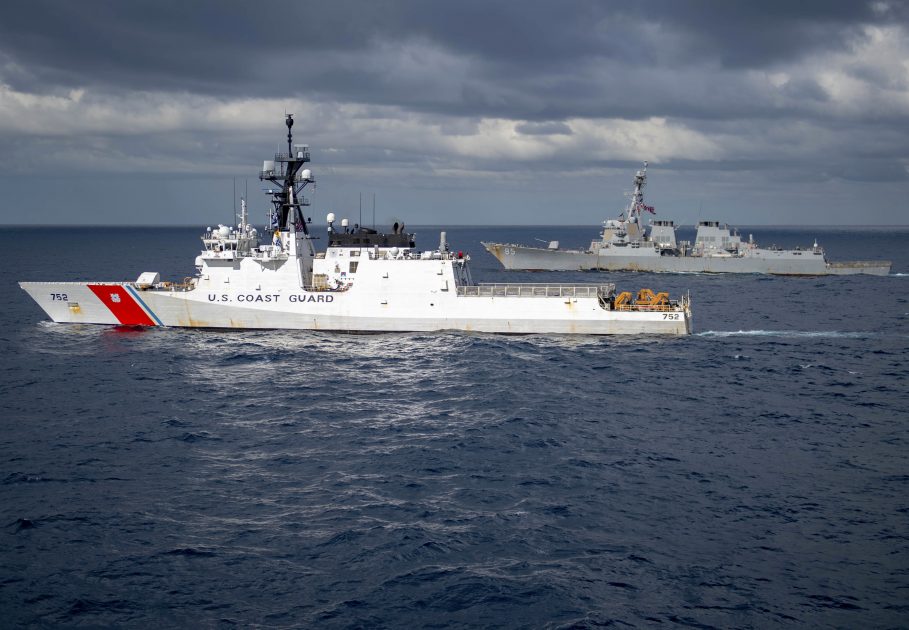
USCGC Stratton (WMSL-752), left, and the U.S. Navy Arleigh Burke-class guided-missile destroyer USS McCampbell (DDG-85) maneuver in formation during Talisman Sabre 2019 on July 11, 2019. US Navy Photo

I am just passing this along in hopes that one of my readers might be interested. The deadline is coming up fast. The original source is here

The Challenge

What can the U.S. Coast Guard do today to be more effective tomorrow? All topics are welcome, and no issue is too big or too small. Authors might consider:

  • Changes required to meet new global missions
  • Barriers to mission execution and how to remove them
  • How best to integrate the Coast Guard’s unique authorities and capabilities with the other Sea Services
  • Innovative ideas to help make the Coast Guard a more capable instrument of national power globally
  • How to better leverage partnerships at home and abroad

Consider how to make the Coast Guard stronger. This does not mean authors cannot be critical and take on “it’s always been done that way” practices. In fact, we encourage you to push the “dare factor.”

Submission Guidelines

  • Open to all contributors — active-duty, military, reservists, veterans, and civilians.
  • Essays must be no more than 2,500 words, excluding end notes and sources. Include word count on title page of the essay.
  • Essays are judged in the blind. Do not include author name(s) on the title page or within the body of the essay.
  • Submit essay as a Word document at http://www.usni.org/cgessay no later than 30 April 2023.
  • Essay must be original and not previously published (online or in print) or being considered for publication elsewhere.

First Prize: $5,000

Second Prize: $2,500

Third Prize: $1,500

Selection Process

The Proceedings staff members will evaluate every essay and screen the top essays to a special Essay Selection Committee of at least six members who will include two members of the Naval Institute’s Editorial Board and four subject experts. All essays will be judged in the blind—i.e., the Proceedings staff members and judges will not know the authors of the essays. Since we receive so many submissions (more than 100 per month!), notification of acceptance on one of our platforms can take 4-6 months. We will notify you via email if your essay is selected for a prize or for publication.

Announcement of the Winners

Winners will be published in the August 2023 Proceedings.

Deadline

Submit your Essay

Please log in or create an account in order to make a submission.

“U.S. Coast Guard in Review” –USNI

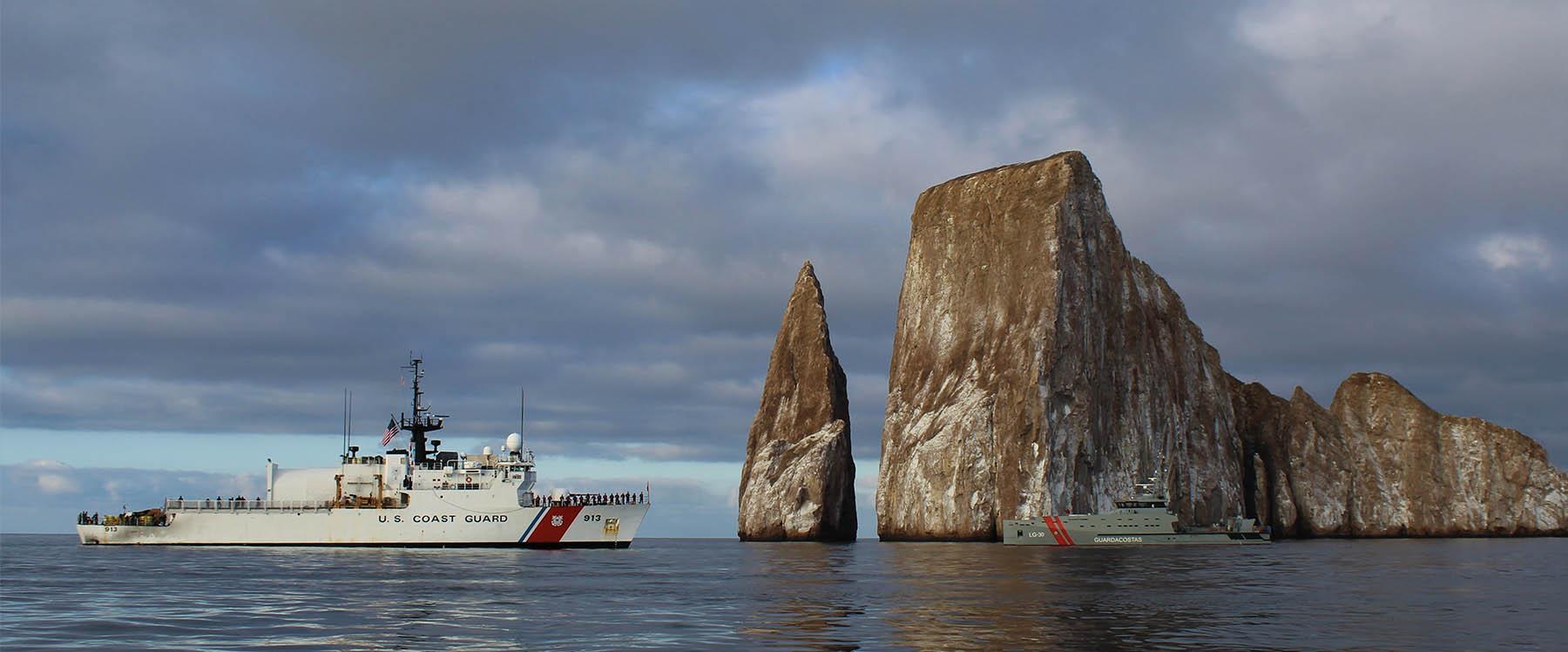
The USCGC Mohawk (WMEC-913), here with the Ecuador Navy offshore patrol vessel Isla San Cristobal, was the first cutter to anchor and visit Ecuador’s Galapagos Islands.
U.S. COAST GUARD

The March issue of US Naval Institute Proceedings is the annual Naval Review Issue, and as always they have a recounting of Coast Guard activities. It may be behind the pay wall, but you really should be a member. It is worth a look if only as a reminder of how many irons we have in the fire.

Sea Air Space 2023

Photo of a model of Halter Marine’s Polar Security Cutter seen at Navy League’s Sea-Air-Space 2021 Exhibition have surfaced. Photo credit Chris Cavas.

The Navy League’s annual maritime exposition, Sea-Air-Space 2023, is scheduled for April 3-5, 2023, at the Gaylord National Resort & Convention Center. National Harbor, Maryland.

The Coast Guard will be well represented. In addition to featured presentations by the Commandant, LANTAREA, and RAdm Jay C. Vann, Commander of CG Cyber Command, CG-9 has a list of 14 Coast Guard presentations (scroll down the linked page) scheduled for the Coast Guard booth, #107, with additional descriptions. Topics, presenters and times are:

Monday, April 3, 2023

  • USCG Risk Mitigation through Sustainable Aviation Fuel, Julie Berens, Energy Reliability technical warrant holder, Sam Alvord, chief, Office of Energy Management, 10:30-11 a.m.
  • Oil Spill Response – Tech Efforts on the Horizon, Kirsten Trego
    Deputy, Office of Marine Environmental Response Policy, 11-11:30 a.m.
  • Evaluating Search Effectiveness: Keeping Pace with Technology? Cmdr. Matthew J. Mitchell, Chief, Office of Search and Rescue 11:30 a.m.-noon
  • Interview with the USCG Deputy Commandant for Mission Support, Vice Adm. Paul F. Thomas, Deputy Commandant for Mission Support, 1:30-2 p.m.
  • Robotic Process Automation, Dr. David F. Wiesenhahn, Modeling and Simulation domain lead, Office of Research, Development, Test & Evaluation and Innovation, 2-2:30 p.m.
  • Counter Unmanned Aircraft Systems, Capt. Eric M. Casper, Chief, Office of Specialized Capabilities, 2:30-3 p.m.

Tuesday, April 4, 2023

  • Interview with the USCG Commander of the Atlantic Area, Vice Adm. Kevin E. Lunday, Commander, Atlantic Area and Defense Force East, 9:30-10 a.m.
  • Interview with the USCG Commander of the Pacific Area, Vice Adm. Andrew J. Tiongson, Commander, Pacific Area and Defense Force West, 10-10:30 a.m.
  • USCG: A Globally Deployed Cutter Fleet, Capt. John J. Driscoll, Chief, Office of Cutter Forces, 10:30-11 a.m.
  • Data & Artificial Intelligence at Scale in the USCG, Capt. Brian C. Erickson, Chief Data Officer, 11-11:30 a.m.
  • The Coast Guard and the Future of Maritime Domain Awareness, Capt. Thom C. Remmers, Unmanned Systems Cross-Functional Team Lead, Assistant, Commandant for Capabilities, 11:30 a.m.-noon
  • Recapitalization of C5I Onboard USCG Cutters, Capt. Vincent J. Skwarek, Assistant Program Executive Officer for C5I and Chief of C5I Acquisitions, 1:30-2 p.m.
  • Coast Guard Requirements, Capt. Brad E. Apitz, Chief, Office of Requirements and Analysis, 2-2:30 p.m.
  • How to Partner with the Coast Guard Research and Development Center, Dr. Joseph Direnzo III, Director of Research Partnerships/Public Affairs Officer,
    2:30-3 p.m.


“Coast Guard Commandant delivers her first State of the Coast Guard Address” –YOUTUBE

Above is a video of the Commandant’s State of the Coast Guard. It’s definitely worth a listen. I think I am becoming a fan.

Sounds like she is proceeding with procurement of a Great Lakes Icebreaker.

The Coast Guard is getting Coast Guard doctors (vs Public Health Service).

Three new teams are being stood up: a talent management task force, a data analytics team, and a West Coast cyber protection team.

Looking at the newly available option of passing going before a promotion board, when an officer has to make that decision, it would be good to know what instructions are being given to the promotion board.

In fact, why does failure to be promoted automatically mean you are out? Shouldn’t it be the service’s decision whether the officer should be retained. Perhaps an automatic continuation board for those who are not promoted with the option of permitting continued service.