“Coast Guard Polar Security Cutter (Polar Icebreaker) Program: Background and Issues for Congress” –CRS, October 19, 2021

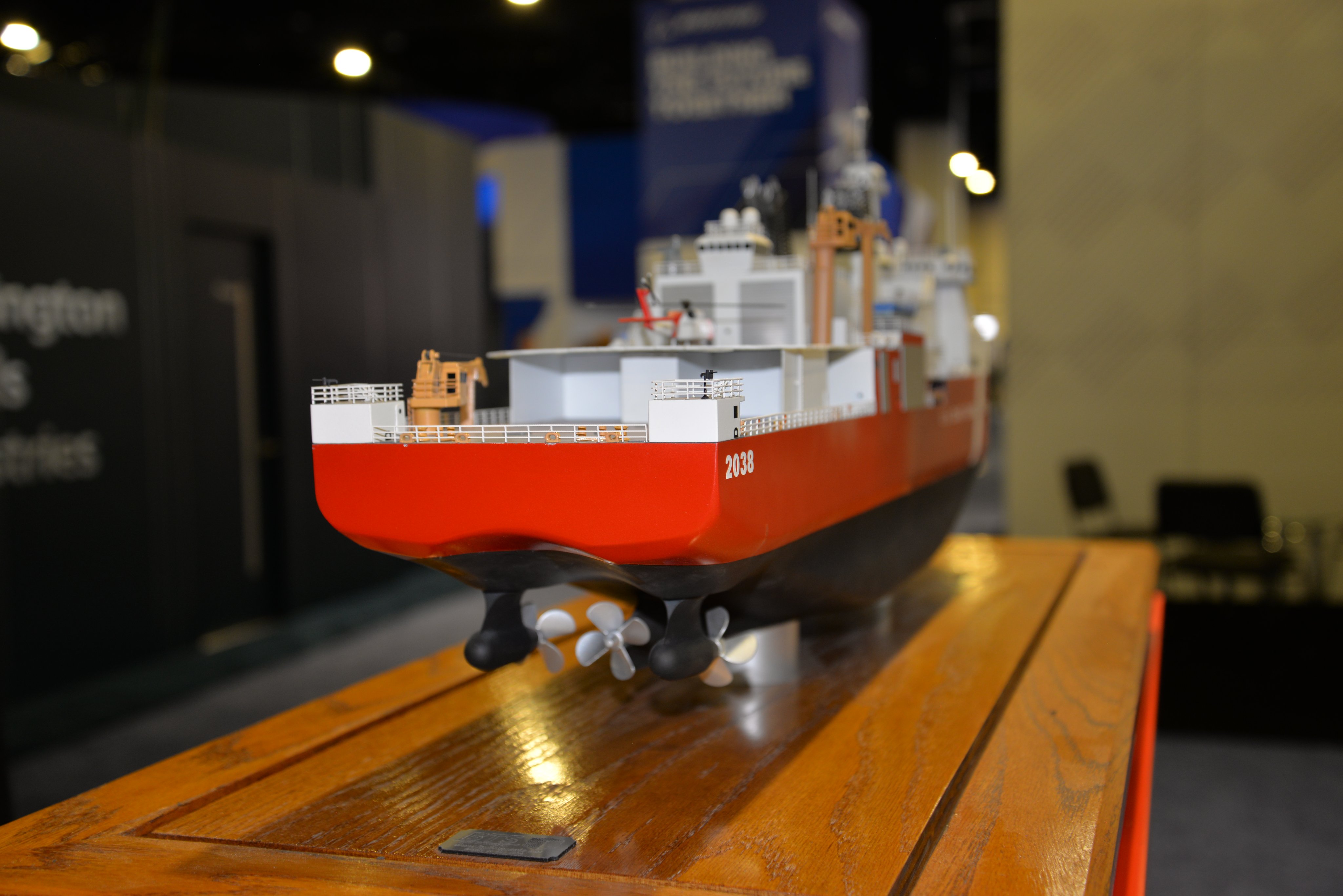
Photo of a model of Halter Marine’s Polar Security Cutter seen at Navy League’s Sea-Air-Space Exhibition have surfaced. Photo credit Chris Cavas.

The Congressional Research Service has once again updated their look at the Polar Security Cutter (heavy icebreaker) program. (See the latest version here.) My last look at this evolving document was in regard to the September 15, 2021 revision.

The one page summary, which has not changed, is reproduced below, but first I will point out what appears to have changed since the September 15 edition.

The Senate Appropriations Committee recommended funding for Long Lead Time items for the third Polar Security Cutter be deferred. (See Table 2 on page 28.) They also recommended additional support for acquisition of a Great Lakes icebreaker. (see below)

If approved, this will mean that the FY2022 ship building budget will be extremely low. The reasons are logical and valid, but generally GAO and Congress like to see consistency from one year to the next. I hope this does not set a pattern.

On the other hand, this could make room on the top line for increases in infrastructure and operations funding. If that results in an improved pattern for these accounts, it could be a good thing.

Or, we could use about $120M to exercise an existing option and buy two more Webber class FRCs to meet a recognized need for a Coast Guard presence in the South Pacific. Spending a little more could buy three Webber class FRCs that could be based in Pago Pago, American Samoa and provide an essentially continuous 24/7/365 underway Coast Guard presence in the South Pacific.

From pages 28/29:

Senate

The Senate Appropriations Committee, in the explanatory statement it released on October 18, 2021, for the FY2022 DHS Appropriations Act (S. XXXX), recommends the funding level shown in the SAC column of Table 2. The explanatory statement states:

Polar Ice Breaking Vessel.—The Committee recognizes the value of heavy polar icebreakers in promoting the national security and economic interests of the United States in the Arctic and Antarctic regions. Due to delays that are consistent with complex, first-in-class surface acquisition programs as well as management delays exacerbated by the global pandemic, the schedule projects that the amount requested for LLTM for the third heavy polar icebreaker is not necessary in fiscal year 2022. Therefore, the recommendation does not include $120,000,000 from the request. (PDF page 69 of 160; see also PDF page 145 of 160)

Regarding the Coast Guard’s Operations and Support (O&S) account, funding for which is not shown in Table 2, the explanatory statement states:

Great Lakes Icebreaking [GLIB] Program Management Office.—The recommendation includes $5,500,000, $3,500,000 above the request for pre-acquisition activities, for a new Great Lakes icebreaker that is as capable as USCGC MACKINAW. (PDF page 65 of 160)


Summary

The Coast Guard Polar Security Cutter (PSC) program is a program to acquire three new PSCs (i.e., heavy polar icebreakers), to be followed years from now by the acquisition of up to three new Arctic Security Cutters (ASCs) (i.e., medium polar icebreakers). The PSC program has received a total of $1,754.6 million (i.e., about $1.8 billion) in procurement funding through FY2021, including $300 million that was provided through the Navy’s shipbuilding account in FY2017 and FY2018. With the funding the program has received through FY2021, the first two PSCs are now fully funded.

The Coast Guard’s proposed FY2022 budget requests $170.0 million in procurement funding for the PSC program, which would be used for, among other things, procuring long leadtime materials (LLTM) for the third PSC.

The Navy and Coast Guard in 2020 estimated the total procurement costs of the PSCs in then year dollars as $1,038 million (i.e., about $1.0 billion) for the first ship, $794 million for the second ship, and $841 million for the third ship, for a combined estimated cost of $2,673 million (i.e., about $2.7 billion). Within those figures, the shipbuilder’s portion of the total procurement cost is $746 million for the first ship, $544 million for the second ship, and $535 million for the third ship, for a combined estimated shipbuilder’s cost of $1,825 million (i.e., about $1.8 billion).

On April 23, 2019, the Coast Guard-Navy Integrated Program Office for the PSC program awarded a $745.9 million fixed-price, incentive-firm contract for the detail design and construction (DD&C) of the first PSC to VT Halter Marine of Pascagoula, MS, a shipyard owned by Singapore Technologies (ST) Engineering. VT Halter was the leader of one of three industry teams that competed for the DD&C contract. The first PSC is scheduled to begin construction in 2021 and be delivered in 2024, though the DD&C contract includes financial incentives for earlier delivery.

The DD&C contract includes options for building the second and third PSCs. If these options are exercised, the total value of the contract would increase to $1,942.8 million (i.e., about $1.9 billion). The figures of $745.9 million and $1,942.8 million cover only the shipbuilder’s costs; they do not include the cost of government-furnished equipment (GFE), which is equipment for the ships that the government purchases and then provides to the shipbuilder for incorporation into the ship, post-delivery costs, costs for Navy-specific equipment, or government program-management costs.

The operational U.S. polar icebreaking fleet currently consists of one heavy polar icebreaker, Polar Star, and one medium polar icebreaker, Healy. In addition to Polar Star, the Coast Guard has a second heavy polar icebreaker, Polar Sea. Polar Sea, however, suffered an engine casualty in June 2010 and has been nonoperational since then. Polar Star and Polar Sea entered service in 1976 and 1978, respectively, and are now well beyond their originally intended 30-year service lives. The Coast Guard plans to extend the service life of Polar Star until the delivery of at least the second PSC. The Coast Guard is using Polar Sea as a source of spare parts for keeping Polar Star operational


 

SOUTHCOM Change of Command

GEN Laura J. Richardson, Commander, United States Southern Command

This from “The D Brief” by DefenseOne. Significant because of how much work the Coast Guard does with SOUTHCOM. 

SOUTHCOM gets a new leader. Defense Secretary Lloyd Austin and Joint Chiefs Chairman Army Gen. Mark Milley are in Florida today for a change of command ceremony at U.S. Southern Command, near Miami.
Outgoing: Navy Adm. Craig Faller, who will retire after more than four decades of service.
Incoming: Army Gen. Laura Richardson, who last commanded U.S. Army North. Catch the ceremony’s livestream at 1 p.m. ET on DVIDS, here.
This afternoon in D.C., climate change and the Pentagon will be the focus of a virtual event hosted by New America, and featuring Under Secretary of Defense for Policy Colin Kahl, as well as the Defense Department’s Senior Climate Advisor Joseph Bryan. That gets underway at 1:30 p.m. ET. Details, here.

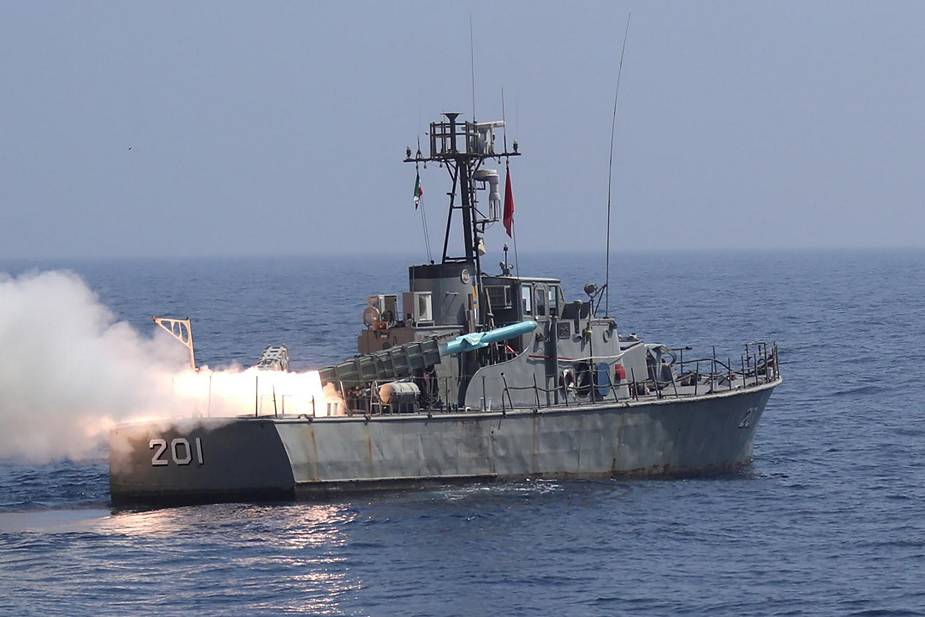
“Iranian navy will be equipped with anti-ship missiles ranging 2,000 km in the near future” –Navy Recognition

Original caption “Iran’s Revolutionary Guards fired long-range ballistic missiles into the Indian Ocean during a military exercise in January 2021.” (Picture source Egypt Independent) This is actually an anti-ship cruise missile. 

Had to post a link to this Navy Recognition post because I wanted to pass along the photo above, that accompanied it.

Lots of old timers will recognize the boat as the same class as the USCG 95 foot Cape class that were replaced by the 110 foot Island class. The US built a number of these for export. Four were given to Iran in the mid 50s. There were similar vessels derived from the design that followed. Iran got some of these as well.

For more information on the Iranian Navy and the Islamic Revolutionary Guard Corps Navy link here.

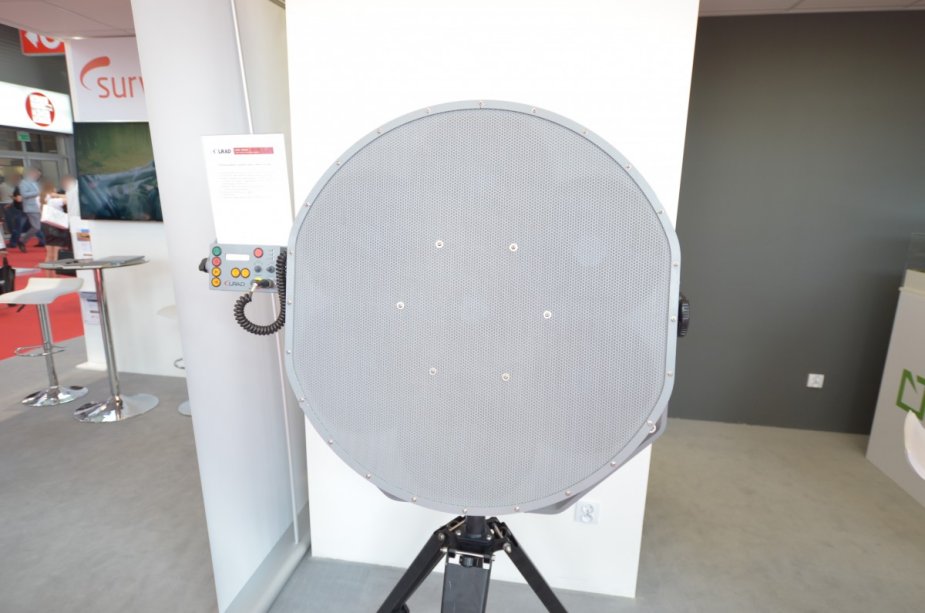
“Genasys to equip US Navy with new LRAD 1000Xi systems” –Navy Recognition

LRAD 1000Xi system (Picture source: Superexpo)

Navy Recognition reports,

According to information published by Yahoo on October 12, 2021, Genasys Inc. announced a $1.8 million LRAD (Long Range Acoustic Device-Chuck) systems order from the U.S. Navy (Navy) under a three-year indefinite-delivery/indefinite-quantity (IDIQ) contract announced in June 2020. The Navy is replacing its first-generation LRADs with next-generation LRAD 1000Xi systems.

Almost certainly a contract the Coast Guard could add on to for its own use.

There is a company data sheet here.

Happy Birthday, US Navy

Despite inter-service rivalry, kidding, and way to many jokes about how tall we have to be, to be Coasties, we are, when the chips are down, brothers in arms. Glad they are on our side.


united states coast guard

R 131205Z OCT 21
FM COMDT COGARD WASHINGTON DC
TO ALCOAST
BT
UNCLAS
ALCOAST 376/21
SSIC 1000
SUBJ: 246TH BIRTHDAY OF THE UNITED STATES NAVY
1. On behalf of all members of our United States Coast Guard team,
I salute the Navy on 246 years of honorable service to our Nation.
2. A 13 October 1775 resolution of the Continental Congress
established the United States Navy with “a swift sailing vessel,
to carry ten carriage guns, and a proportionable number of swivels,
with eighty men, be fitted, with all possible dispatch, for a
cruise of three months…” Since that time, the U.S. Navy and the
U.S. Coast Guard have been partners in ensuring America’s national
interests are advanced across the global maritime domain. With a
shared investment in the free flow of maritime commerce, U.S. naval
power remains foundational to the global economy, as well as the
projection of national sovereignty through both rapid response and
sustained global operations.
3. We are honored to operate alongside the U.S. Navy as proud
partners in the Naval Service, and remain committed to prevailing
in day-to-day competition, crisis, and conflict with integrated
all-domain naval power focused on advancing both global prosperity
and security.
4. We look forward to continued shared success and partnership in
service to our great Nation. Happy Birthday and Semper Fortis.
5. ADM Karl L. Schultz, Commandant, United States Coast
Guard, sends.
6. Internet release is authorized.

“Coast Guard releases request for information for boats to support waterways commerce cutters” –CG-9

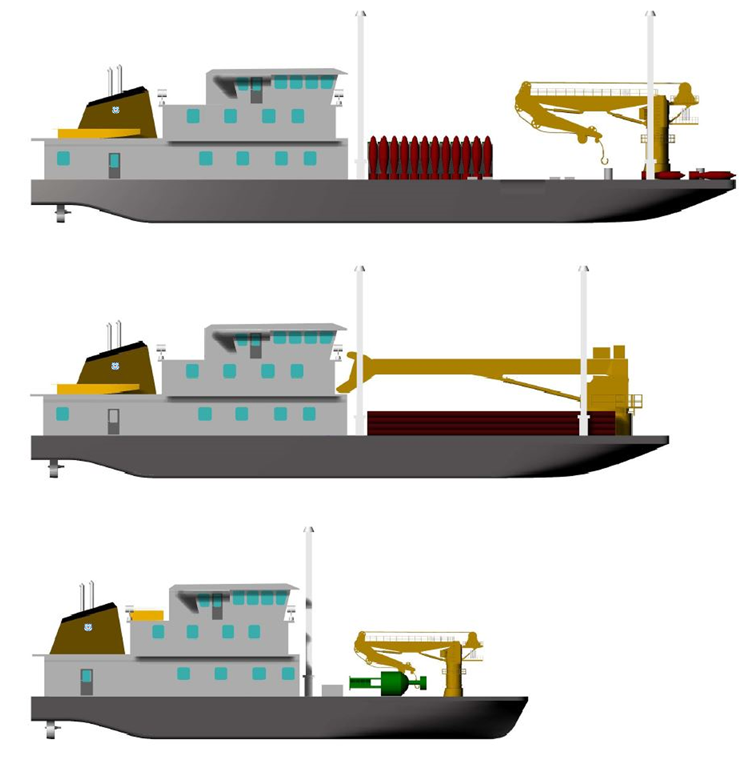
Shown above are Coast Guard indicative designs of a river buoy tender, inland construction tender and inland buoy tender.

The Coast Guard seems to be taking a real interest in new boats recently. This from the Acquisitions Directorate (CG-9).

The boats are expected to be a maximum of 21’6″ length over all and powered by two outboards

Coast Guard releases request for information for boats to support waterways commerce cutters

The Coast Guard released a request for information (RFI) on Sept. 29 to gather information about state-of-the-market and current industrial capabilities to support cutter boats for the waterways commerce cutter (WCC).

A single-design cutter boat is needed to support the 30 new WCCs. The WCC fleet will consist of river buoy, inland construction and inland buoy tenders. The Coast Guard intends to outfit each river buoy tender with two cutter boats and each inland construction tender and inland buoy tender with one cutter boat, totaling up to 56 cutter boats including spare hulls, over approximately 10 years.

The Coast Guard is seeking information about domestic firms’ capabilities and experience in designing and building boats that meet the top-level WCC cutter boat requirements provided in the RFI.

The full RFI is available here. Responses are due at 11 a.m. Eastern time Nov. 1, 2021.

For more information: Waterways Commerce Cutter Program page

“The Case for Stock Boats” –Marine Link

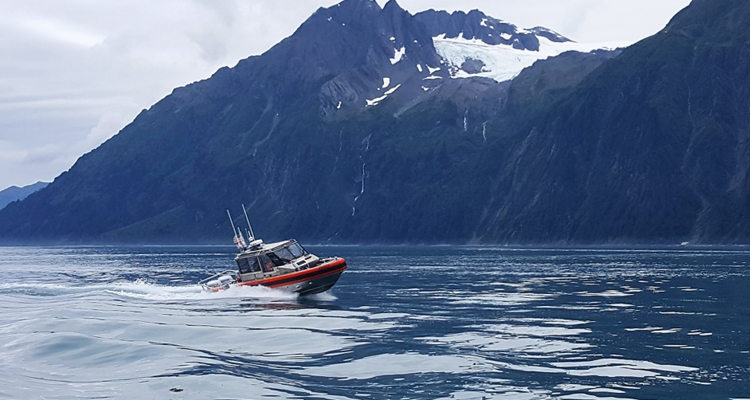
A boat crew from Station Valdez, Alaska, conducts underway training near the station Aug. 18, 2018, in a new 29-foot response boat-small II (RB-S II). The Coast Guard placed a delivery order for 20 additional RB-S IIs Feb. 4, 2019. U.S. Coast Guard photo.

If we want good quality boats built in the US, delivered on time and on budget, our partners in the boat building industry need to be successful.

MarineLink brings us an industry report of the experience of Metal Shark, builder of the Coast Guard’s 29 foot second generation Response Boat, Small (RB-S II).

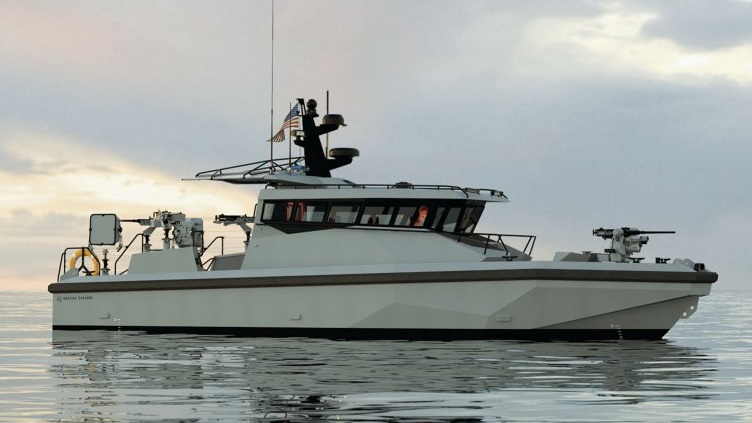
In addition to the Coast Guard boats mentioned, Metal Shark is also building the Navy’s “Defiant” 40 foot force protection patrol boat.

Metal Shark’s winning PB(X) design, dubbed 40 PBX, is a 40 ft, welded-aluminum pilothouse patrol boat that can achieve sprint speeds in excess of 35 kt. Source: Metal Shark

More Webber Class WMEC

A pile of seized drugs, estimated to be $96 million, is transfered off the Coast Guard Cutter Forest Rednour in San Diego, Sept. 24, 2021. The seizure and bullet-ridden boat engine cover were processed and transferred to federal authorities. U.S. Coast Guard photo by Petty Officer 1st Class Adam Stanton.

Another news release highlighting the surprising capability of the Webber class cutters.

Photos here.

united states coast guard

News Release

U.S. Coast Guard 11th District PA Detachment LA/LB

LA-based cutter returns home after 32-day deployment, drug offload in San Diego

SAN PEDRO, Calif. – The Coast Guard Cutter Forrest Rednour returned home on Sept. 26, following a 32-day patrol.

The crew disrupted illegal narcotics smuggling, seizing more than 5,000 pounds of cocaine that was offloaded in San Diego, Friday. The drugs, worth an estimated $96 million, were seized in international waters of the Eastern Pacific Ocean off the coast of Mexico.

“The crew excelled during this patrol; their hard work and skill was apparent and allowed the cutter to weather a hurricane, conduct international engagements, and stop a vessel carrying approximately two metric tons of cocaine, all while in a 154-foot ship, 1,800 nautical miles and two time zones from home,” said Lt. Drew Ferraro, commanding officer of the Rednour.

During the Rednour’s deployment, the crew participated in a passing exercise with the Monte Albán, an Armada de México vessel, off the coast of Mexico.

“This deployment tested crew endurance and provided the same level of logistics challenges normally faced by much larger ships, but the Rednour crew navigated each obstacle with their usual dedication, professionalism, and teamwork,” Ferraro said. “Thank you to our outstanding logistics and finance team, and the shore-side coordinators that made this patrol successful. Lastly, thank you to the families and loved ones back home who supported us during this patrol and held down the home front during our absence.”

On April 1, 2020, U.S. Southern Command increased counter-narcotics operations in the Western Hemisphere to disrupt the flow of drugs. Numerous U.S. agencies from the Departments of Defense, Justice, and Homeland Security cooperated in the effort to combat transnational organized crime. The Coast Guard, Navy, Customs and Border Protection, Federal Bureau of Investigation, Drug Enforcement Administration, and Immigration and Customs Enforcement, along with allied and international partner agencies, play a role in counter-drug operations.

The fight against drug cartels in the Eastern Pacific Ocean and the Caribbean Sea requires unity of effort in all phases from detection, monitoring, and interdictions, to criminal prosecutions for these interdictions by United States Attorney’s Offices from the Middle District of Florida, the Southern District of Florida and the Southern District of California. The law enforcement phase of counter-smuggling operations in the Eastern Pacific Ocean is conducted under the authority of the Eleventh Coast Guard District, headquartered in Alameda, CA. The interdictions, including the actual boardings, are led and conducted by members of the U.S. Coast Guard.

The Forrest Rednour is a 154-foot fast response cutter, commissioned in 2018 and homeported in San Pedro, California.