Winkel Tripel projection, WGS84 datum, central meridian : 150°E. Source Wikipedia Commons, Author: Eric Gaba
PACAREA news release.
,

Winkel Tripel projection, WGS84 datum, central meridian : 150°E. Source Wikipedia Commons, Author: Eric Gaba
PACAREA news release.
,

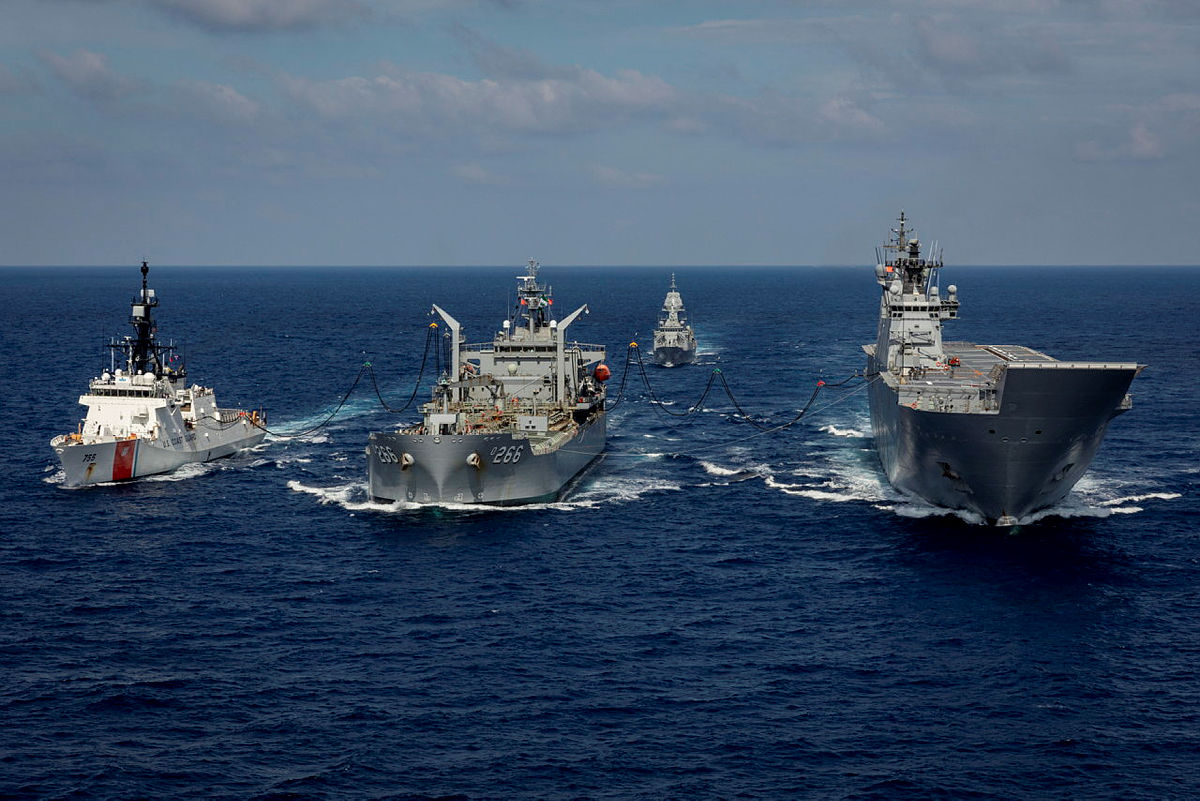
HMAS Sirius conducts a dual replenishment at sea with HMAS Canberra and USCG Cutter Munro as HMAS Anzac sails behind, during Indo-Pacific Endeavour 2021.
Sounds like Munro is having an interesting and unusual deployment, though these WestPac deployments are getting more common. Below is a Pacific Area news release.
U.S. Coast Guard cutter engages in maritime training with Royal Australian Navy
Editors’ Note: Photos courtesy of Royal Australian Navy. Click on images to download high resolution versions. ALAMEDA, Calif. — U.S. Coast Guard members aboard the Alameda-based Coast Guard Cutter Munro (WMSL 755) participated in a cooperative three-day at-sea exercise with the Royal Australian Navy in the South China Sea Saturday through Monday. The joint training engagement included joint operations, professional exchanges, and multi-unit maneuvering at sea to strengthen interoperability between the U.S. Coast Guard and Royal Australian Navy. “These at-sea engagements with our long-standing partners in the Indo-Pacific region provided an excellent joint training opportunity for the crew,” said Munro’s Commanding Officer Capt. Blake Novak. “Enhancing cooperation and building trust strengthens our relationship with the Royal Australian Navy while expanding our regional security cooperation initiatives.” The U.S. Coast Guard has a long history of cooperation with the Royal Australian Navy. The U.S. and Australia, along with New Zealand and France, make up the Pacific Quadrilateral Defense Coordinating Group or P-QUAD. P-QUAD endeavors to enhance maritime security in the Western and Central Pacific Ocean in partnership with the Pacific Island Countries through organizations such as the Fisheries Forum Agency. “The United States and Australia have deep and abiding interests throughout the Pacific,” said Vice Adm. Michael F. McAllister, commander, U.S. Coast Guard Pacific Area. “As leaders in maritime safety and security, our forces are dedicated to upholding regional sovereignty, stability and security. Through joint operations with Australia, we strengthen our interoperability with an ally deeply committed to promote international rules and norms within the Indo-Pacific.” “The Royal Australian Navy has enjoyed multiple opportunities throughout the year to work with the United States in the Indo-Pacific,” said Capt. David Teitzel, Royal Australian Navy, Commander Task Group 635.3. “Being able to operate with a United States Coast Guard cutter like USCGC Munro has strengthened how we interoperate and boosts how we work together in the interest of regional security. I thank Munro for their time in-company and we look forward to sailing with the United States Coast Guard again.” Munro, a 418-foot national security cutter, departed its homeport of Alameda in July for a months-long deployment to the Western Pacific. Operating under the tactical control of the U.S. 7th Fleet, the cutter and crew are engaging in professional exchanges and capacity-building exercises with partner nations, patrolling and conducting operations as directed. National security cutters like Munro feature advanced command and control capabilities, aviation support facilities, stern cutter boat launch and increased endurance for long-range patrols, enabling the crews to disrupt threats to national security further offshore. As both a federal law enforcement agency and an armed force, the U.S. Coast Guard is uniquely positioned to conduct defense operations in support of combatant commanders. The service routinely provides forces in joint military operations worldwide, including the deployment of cutters, boats, aircraft and deployable specialized forces. Additional photos of the exercise provided courtesy of the Royal Australian Navy are available here. |

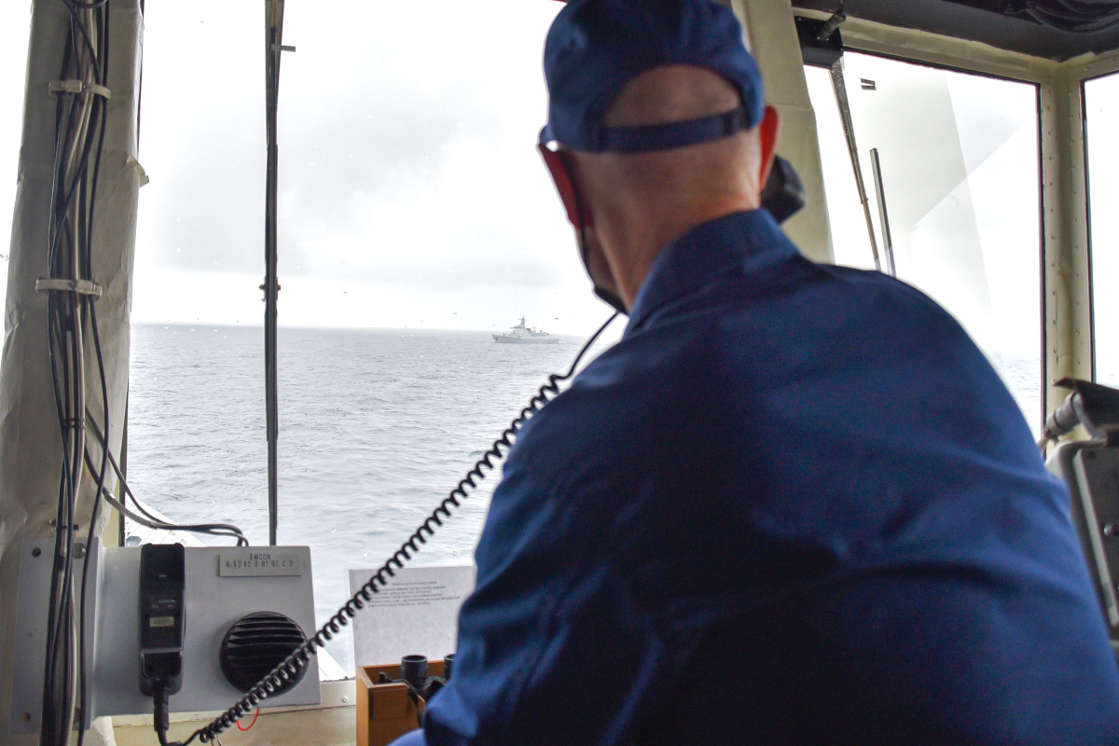
US Coast Guard Captain Tim Brown, USCGC Bertholf’s commanding officer, communicates with a Chinese warship near Alaska in August 2021.
Small Wars Journal has reported,
“The U.S. Coast Guard recently released a set of pictures of the Legend class cutter USCGC Bertholf shadowing a group of four Chinese warships sailing in America’s Exclusive Economic Zone near Alaska’s Aleutian Islands back in August. The emergence of these pictures follows the editor-in-chief of Global Times, a newspaper under the direct control of the Chinese Communist Party, taking to Twitter to criticize U.S. Navy operations in the Pacific that routinely challenge many of Beijing’s widely disputed maritime territorial claims, especially in the South China Sea and the Taiwan Strait, and warn of tit-for-tat activities on the part of the People’s Liberation Army Navy.”
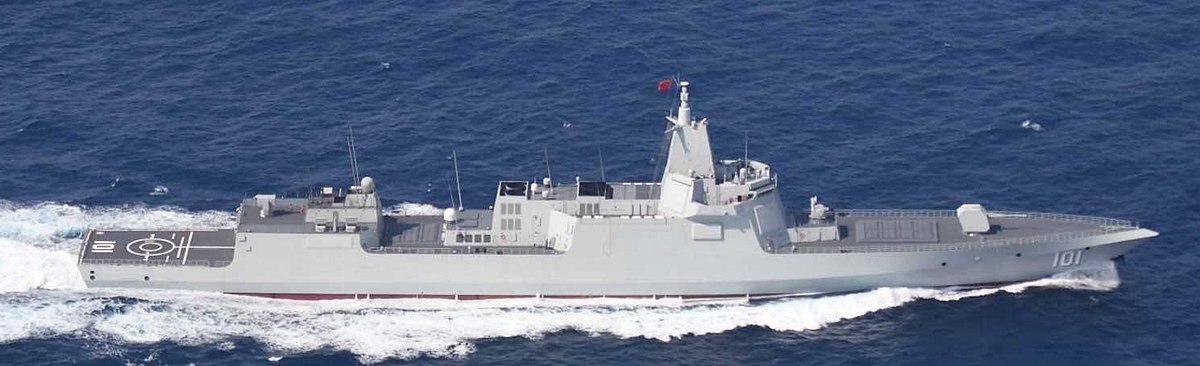
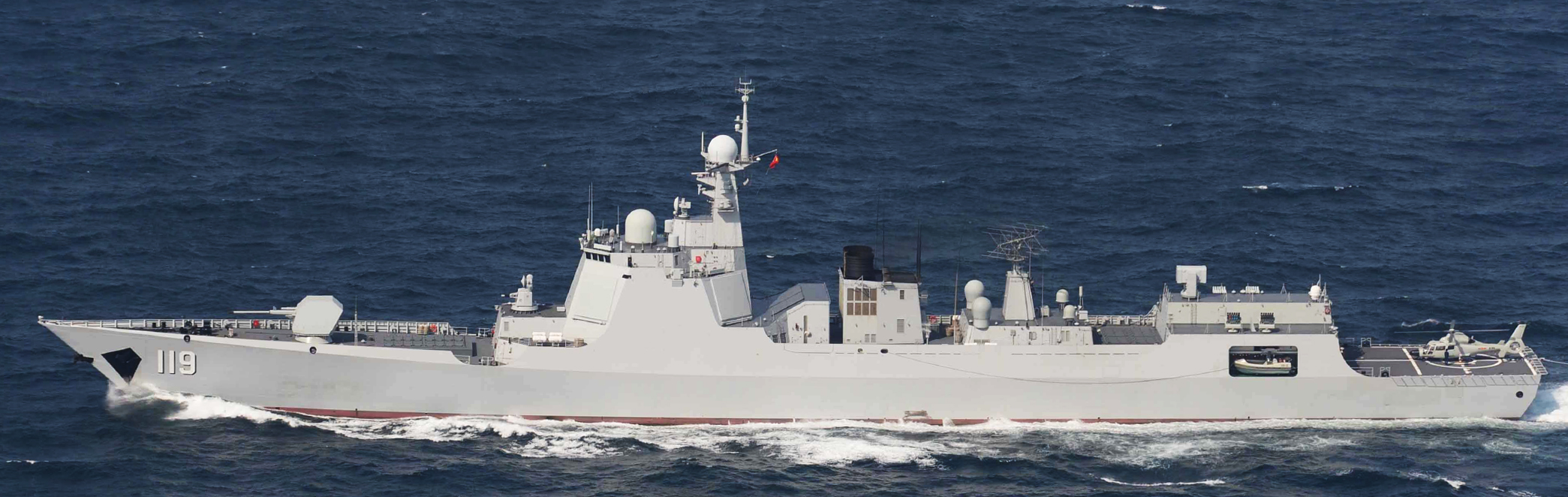
The PLAN task force apparently consist of a type 055 very large destroyer or cruiser,
a Type 903 replenishment ship,

160805-N-AI605-081 PEARL HARBOR (AUG 5, 2016) Chinese Navy replenishment ship Gaoyouhu (996) departs Joint Base Pearl Harbor-Hickam following the conclusion of Rim of the Pacific 2016. (U.S. Navy Photo By Mass Communication Specialist 1st Class Rebecca Wolfbrandt/RELEASED)
and an intelligence-gathering ship with the hull number 799.
This is of course a bit unusual, but not something to be alarmed about. Given the current size and capability of the Chinese Navy (PLAN) we could expect them to transit within 20 miles of San Francisco or Los Angeles.
We recognize their right to do that.
But (there is always that but), having 176 vertical launch cells transiting a few miles away from major US cities does require a bit of mental adjustment, and it suggests maybe we are not as well prepared as we might be.
I almost hope they do it. The American public needs a wake-up call.
Think the Navy could sortie a couple of DDGs on short notice to shadow them?
Seapower reports that the Navy has set up a task force within NAVCENT (the naval component of CENTCOM) to use and mature unmanned systems.
TF59 “is designed to integrate unmanned systems and AI. Task Force 59 is the first U.S. Navy task force of its kind … taking efforts from across the Navy, concentrating them here in a forward operating environment — a forward fleet — to gradually move toward development and integration.”
The Coast Guard’s PATFORSWA is part of NAVCENT. I can’t help but believe that they will be seen as the most convenient units to use to test some of these systems. The task force commander, Capt. Michael Brasseur, is a former Cyclone class Coastal Patrol CO, so he has certainly worked with the Coast Guard in the past.
The launch ramp in the stern of the Webber class might be useful for launching unmanned surface and subsurface vessels.
The Coast Guard might get some personnel experienced in working with unmanned systems as a result.
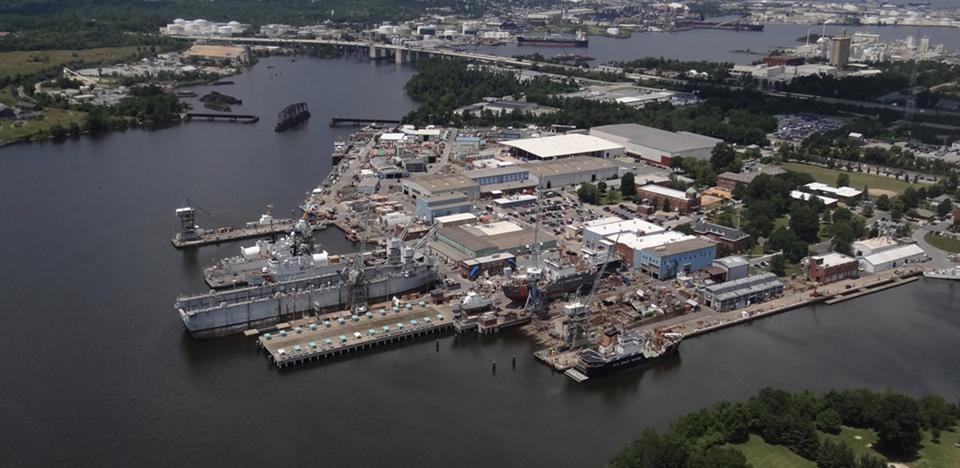
Next Navy reports the off-again/on-again business of supplemental funding for the Coast Guard Yard. This post amplifies this significant Forbes article.
It is not certain yet, but it looks like the Coast Guard Yard may be getting some love.

Coast Guard Commandant Adm. Karl Schultz speaks to Brendon Mendenhall, from the Ship-Based Technical Support in the Arctic (STARC) program, working aboard Coast Guard Cutter Healy (WAGB 20), during a visit aboard Healy while near Resolute, Nunavut, Canada on Sept. 6, 2021. Healy and its crew are circumnavigating North America to strengthen allied partnerships, in addition to conducting Coast Guard missions and supporting oceanographic research to increase understanding of the changing Arctic environment and associated impacts. U.S. Coast Guard photo by Petty Officer First Class Michael Underwood.
News about USCGC Healy’s activities that will include transit of the North West Passage and circumnavigation of North America. The Commandant pays a call and ops with Canadian Coast Guard.
U.S., Canadian crews conduct joint training exercise during CGC Healy’s Northwest Passage transit Editors’ Note: Click on images to download high resolution versions. ALAMEDA — The Coast Guard Cutter Healy’s (WAGB 20) crew conducted a search-and-rescue exercise and professional exchange with members of the Canadian Coast Guard and Canadian Rangers near Resolute Bay in Nunavut, Canada, Sept. 6, 2021, during Healy’s Northwest Passage transit. The search-and-rescue exercise enhanced interoperability and effectiveness of response capabilities amongst the services. U.S. Coast Guard Commandant Adm. Karl Schultz, Canadian Coast Guard Commissioner Mario Pelletier and Canadian Coast Guard Assistant Commissioner for the Arctic Region Neil O’Rourke were aboard Healy to meet with the crew and observe the joint training exercise. “Training alongside our Canadian partners while underway in the Arctic during a historic circumnavigation of North America is a great example of enhancing our interoperability and mission capabilities,” said Schultz. “Healy is supporting oceanographic research with the science community during this deployment to the critically important Arctic region.” The U.S. Coast Guard is the nation’s leader in Arctic surface operations and coordinates with international partners to maintain the region as safe, prosperous and cooperative by strengthening international and intergovernmental partnerships in the region through joint exercises and professional exchanges. “Seeing the members of the Canadian Coast Guard work hand in hand with their counterparts from the Healy has been inspiring,” said Pelletier. “The vastness of the Arctic makes this a very difficult environment for emergency response making every opportunity for training valuable. These exercises ensure our two countries’ Coast Guards stand ready and able to assist should we be needed.” Coast Guard icebreaker crews aboard Healy and the Coast Guard Cutter Polar Star (WAGB 10) deploy to conduct statutory Coast Guard missions in the Polar Regions such as search-and-rescue and the protection of marine resources. Additionally, the crews support oceanographic research in the Arctic and Antarctic. The Healy crew is collaborating with the international science community and institutions from the U.S., Canada, Norway and Denmark to perform oceanographic projects throughout the Northwest Passage and within Baffin Bay to inform environmental change research. The Healy, a 420-foot-long medium icebreaker, departed its Seattle homeport July 10 for a months-long Arctic deployment and circumnavigation of North America. Since departing, the crew has been executing Coast Guard missions, supporting oceanographic research and conducting training to develop the Coast Guard’s future Polar security cutter sailors. Additional photos from Healy’s deployment are available here. Subscribe here to receive notifications when new photos are added. |

Courtesy Photo | USCGC Escanaba (WMEC 907) and USCGC Richard Snyder (WPC 1127) practice maneuvering with the Royal Canadian Navy’s HMCS Goose Bay (MM 707) in the Davis Strait on Aug. 13, 2021. In Operation Nanook, the U.S. Coast Guard seeks to work collaboratively with other international partners to enhance collective abilities to respond to safety and security issues in the High North through the air and maritime presence activities, maritime domain defense, and security exercises. (Photo courtesy Royal Canadian Navy)
Below is an Atlantic Area press release. We discussed Operation Nanook earlier, and it looks like Escanaba is arriving just in time for the triple change of home port ceremony reported earlier today.
USCGC Escanaba (WMEC 907) returns home to Portsmouth after historic 50-day patrol Editors’ Note: To view more or download high-resolution photos and b-roll video, click on the photos above. PORTSMOUTH, Va. — The crew of USCGC Escanaba (WMEC 907) returned home to Portsmouth on Tuesday following a historic 50-day patrol in support of Operation Nanook in the Arctic region and the Labrador Sea. Operation Nanook supports the Coast Guard Arctic strategy to develop international relations with like-minded Arctic states, enhance maritime domain awareness, and expand service capabilities within the region. Escanaba deployed with the 154-foot Sentinel-class fast response cutter Richard Snyder and an embarked members of the Maritime Security Response Team East. The operation expanded the logistical boundaries of the FRC fleet and further refined the modular capabilities of deployable special forces to enhance a cutter’s organic law enforcement capabilities. Operation Nanook was made up of two phases, Tuugaalik and Tatigiit. The Tuugaalik phase brought the crews of Escanaba, Richard Snyder, and the Royal Canadian navy together to exercise best practices and demonstrate responsive capabilities to potential terrorist or adversarial threats. The training exercises included were a live-fire surface gunnery exercise, close-quarters formation steaming, towing, small boat approaches, and communication drills. In the following phase, Tatigiit, the Escanaba, and Richard Snyder teams participated in a mass casualty and pollution event along the shores of Baffin Island. Both cutters crews seamlessly supported the Royal Canadian navy in rescue and assistance procedures and creating search and rescue patterns. In addition to conducting law enforcement operations, Escanaba’s crew participated in Frontier Sentinel, a training event with the U.S. and Royal Canadian navies. The exercise simulated a multi-national response to a maritime threat and strengthened interoperability between all three services. USCGC Escanaba is a 270-foot Famous-class medium endurance cutter, previously known as “The Pride of Boston, now re-homeported to Portsmouth. |
We have been following the development of the ALaMO guided round for the 57mm Mk110 for some time. This round is expected to equip the National Security Cutters and Offshore Patrol Cutters in addition to the Littoral Combat Ships.
MilitaryLeak.Com reports on the progress of the program.
“The MK 332 Mod 0 High Explosive 4 Bolt Guided (HE-4G) is a low-cost 57 mm guided smart ammunition intended for use on the Navy’s Littoral Combat Ship and new Fast Frigate, as well as the U.S. Coast Guard’s National Security and Offshore Patrol Cutters. The ALaMO Program qualifies the 57 mm MK 332 Mod 0 High Explosive, 4-Bolt Guided (HE-4G) Cartridge for the United States Navy (U.S. Navy ). Completion of the (Critical Design Report) (CDR) phase allows the program to progress to qualification testing, munition certification and transition to production. L3 Mustang was competing against BAE Systems and its ORKA 57 mm guided smart ammunition.”
The video above accompanied the report. It is from 2018, but still provides good information. Notably the company representative makes no claims for the ALaMO round as an anti-aircraft round, although I have seen claims for its use against UAS. It is primarily intended as an anti-surface round, particularly for use against swarming surface craft.
Photo of a model of Halter Marine’s Polar Security Cutter seen at Navy League’s Sea-Air-Space Exhibition have surfaced. Photo credit Chris Cavas.
The Congressional Research Service has once again updated their look at the Polar Security Cutter (heavy icebreaker) program. (See the latest version here.) My last look at this evolving document was in regard to the July 1,2021 revision.
Changes are few. There is continued concern caused by the late start in construction of the first Polar Security Cutter. There is affirmation of House Appropriations Committee support for the Administrations proposal to fund $170,000,000 for a portion of the long lead time materials for a third PSC. While there was no change to the Administration proposal, there were some interesting comments.
(From p.13/14) “In a letter dated August 16, 2021, the House Transportation and Infrastructure Committee requested the Government Accountability Office (GAO) to review the management of the PSC acquisition program and the Coast Guard’s efforts to address icebreaking capability gaps until the PSCs are fully operational. The letter stated:
“The PSC’s shipbuilder, VT Halter, [has] begun designing the [Polar Security] cutters but challenges, including impacts from the COVID-19 pandemic, have delayed these efforts as well as the start of lead ship construction. To mitigate the effect of these delays, DHS and the Coast Guard may authorize the start of construction before the design is stabilized—a practice that has resulted in poor outcomes, including cost growth, for other shipbuilding programs. Further, with the delivery of the first cutter delayed, the Coast Guard must continue to rely on the aging Polar Star—the U.S.’s only operational heavy icebreaker—and explore other options to address the capability gaps, which could be costly.
“Given the schedule delays and potential for cost growth, continued oversight of the PSC program is critical. As such, the Committee requests that the Government Accountability Office (GAO) review the management of the PSC acquisition program and the Coast Guard’s efforts to address icebreaking capability gaps until the PSCs are fully operational, including but not limited to:
The status of the PSC acquisition program and Coast Guard’s efforts to manage schedule delays and cost growth;
The status of efforts to maintain and extend the life of the Polar Star; and
The status of the Coast Guard’s efforts to explore other icebreaking alternatives.
As for the comments, first there was the perennial attempt to get more icebreaking assets for the Great Lakes.
Great Lakes Icebreaker Program.—The Coast Guard is tasked by Executive Order to carry out icebreaking efforts in support of commerce. The Committee is concerned that in recent years, performance metrics for icebreaking on the Great Lakes has been redefined by the availability of assets, rather than mission requirements, often with severe economic impacts. As the Coast Guard begins to define its requirements for the recapitalization of ice breaking assets in the Great Lakes, the Committee directs the Coast Guard to incorporate historical measures of performance. Not later than 180 days after the date of enactment of this Act, the Coast Guard is directed to brief the Committee on such performance measures and other considerations for planning the recapitalization of assets in the Great Lakes. (p. 28)
Then there was a comment addressed to the Navy,
The Committee understands that the Coast Guard is expanding its fleet of polar icebreakers but is disappointed that the Navy has not also considered purchasing either new or used icebreakers. The Committee directs the Secretary of the Navy to submit a report to the congressional defense committees not later than 60 days after the enactment of this Act which details the Navy’s plan to address this capability requirement in fiscal year 2022 and the future years defense program.

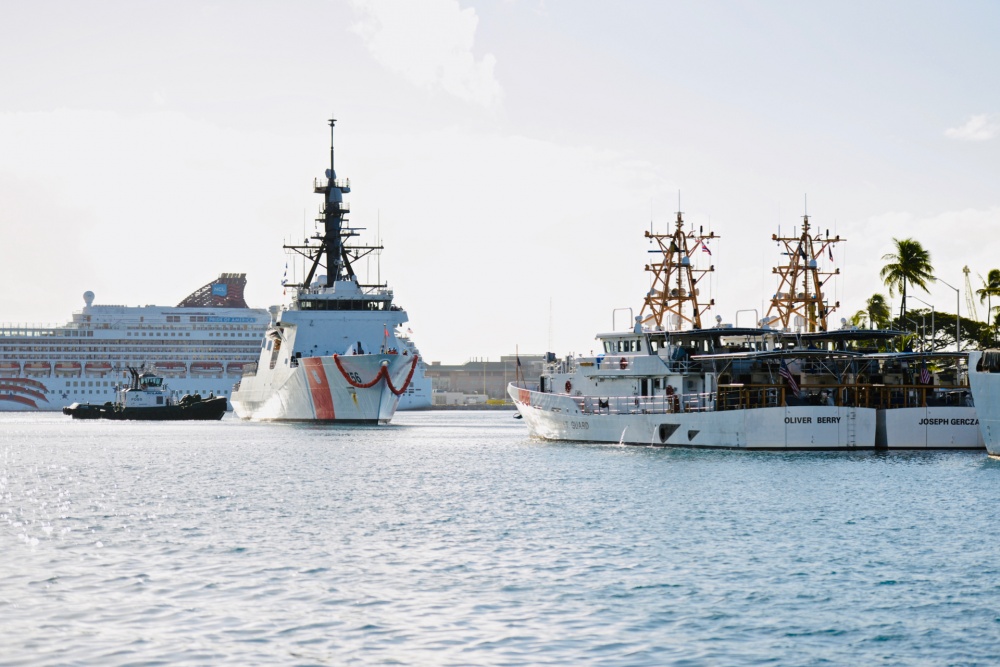
The crew of USCGC Kimball (WMSL 756) arrive in Honolulu for the first time Dec. 22, 2018. Known as the Legend-class, NSCs are designed to be the flagships of the Coast Guard’s fleet, capable of executing the most challenging national security missions, including support to U.S. combatant commanders. (U.S. Coast Guard photo by Chief Petty Officer Sara Muir/Released)
The Congressional Research Service has again updated their “Report to Congress on Coast Guard Cutter Procurement”. (This link will always take you to the most recent edition of the report.) My last post on this evolving document was in reference to an 8 June 2021 update. I have reproduced the one page summary in full below. But first,
Comments:
It appears this report is little changed from the previous edition. The significant change is a reflection of the actions of the House Appropriations Committee and this change is relatively small. The Administration’s FY2022 Procurement Funding Request was:
The House Appropriations Committee mark up increased the total to $716M adding $21M to the NSC program.
An explanation included in House Report 117-87 of July 15, 2021 states
“National Security Cutter (NSC).—The Committee provides $99,000,000, which is $21,000,000 above the request, for the NSC program. This funding will support Post Delivery Activities to missionize and operationalize NSCs 10 and 11. The shortfall for these activities is currently over $200,000,000. The $21,000,000 is funded in the bill as a rescission and re-appropriation of prior-year funds to extend their availability.” (Page 57)
So while construction of the eleven National Security Cutters have be funded, we can expect to see future funding requests totaling over $100M to make #10 and #11 fully operational.
The rescission referred to is from funds earmarked for long lead time items for a possible future NSC#12. This seems to put an end to any possibility of a NSC.
The House Appropriations Committee action leaves in place the Administration’s plan to fund OPC#4 and procure long lead time items for OPC#5, but adds no additional NSCs or FRCs.
Summary (Below is the one page summary contained in the report–Chuck)
The Coast Guard’s program of record (POR), which dates to 2004, calls for procuring 8 National Security Cutters (NSCs), 25 Offshore Patrol Cutters (OPCs), and 58 Fast Response Cutters (FRCs) as replacements for 90 aging Coast Guard high-endurance cutters, medium-endurance cutters, and patrol craft. The Coast Guard’s proposed FY2022 budget requests a total of $695.0 million in procurement funding for the NSC, OPC, and FRC programs, including $597 million for the OPC program.
NSCs are the Coast Guard’s largest and most capable general-purpose cutters; they are replacing the Coast Guard’s 12 Hamilton-class high-endurance cutters. NSCs have an estimated average procurement cost of about $670 million per ship. Although the Coast Guard’s POR calls for procuring 8 NSCs to replace the 12 Hamilton-class cutters, Congress through FY2021 has fully funded 11 NSCs, including the 10th and 11th in FY2018. In FY2020, Congress provided $100.5 million for procurement of long lead time materials (LLTM) for a 12th NSC, so as to preserve the option of procuring a 12th NSC while the Coast Guard evaluates its future needs. The Coast Guard’s proposed FY2022 budget requests $78.0million in procurement funding for activities within the NSC program; this request does not include further funding for a 12th NSC. The Coast
Guard’s proposed FY2022 budget also proposes rescinding $65.0 million of the $100.5 million in FY2020 funding for LLTM for a 12th NSC, “allowing the Coast Guard to focus investments on building, homeporting, and crewing Polar Security Cutters and Offshore Patrol Cutters.” The remaining $35.5 million appropriated in FY2020 for LLTM would be used to pay NSC program costs other than procuring LLTM for a 12th NSC. Nine NSCs have entered service; the ninth was commissioned into service on March 19, 2021.
OPCs are to be less expensive and in some respects less capable than NSCs; they are intended to replace the Coast Guard’s 29 aged medium-endurance cutters. Coast Guard officials describe the OPC and PSC programs as the service’s highest acquisition priorities. OPCs have an estimated average procurement cost of about $411 million per ship. The first OPC was funded in FY2018. The Coast Guard’s proposed FY2022 budget requests $597.0 million in procurement funding for the fourth OPC, LLTM for the fifth, and other program costs. On October 11, 2019, the Department of Homeland Security (DHS), of which the Coast Guard is a part, announced that DHS had granted extraordinary contractual relief to Eastern Shipbuilding Group (ESG) of Panama City, FL, the builder of the first four OPCs, under P.L. 85-804 as amended (50 U.S.C. 1431-1435), a law that authorizes certain federal agencies to provide certain types of extraordinary relief to contractors who are encountering difficulties in the performance of federal contracts or subcontracts relating to national defense. The Coast Guard is holding a full and open competition for a new contract to build OPCs 5 through 15. On January 29, 2021, the Coast Guard released a Request for Proposals (RFP) for this Stage 2 contract, as it is called. Responses to the RFP were due by May 28, 2021. The Coast Guard plans to award the Stage 2 contract in the second quarter of FY2022.
FRCs are considerably smaller and less expensive than OPCs; they are intended to replace the Coast Guard’s 49 aging Island-class patrol boats. FRCs have an estimated average procurement cost of about $65 million per boat. A total of 64 have been funded through FY2021, including four in FY2021. Six of the 64 are to be used by the Coast Guard in the Persian Gulf and are not counted against the 58-ship POR quantity for the program, which relates to domestic operations. Forty-four of the 64 have been commissioned into service. The Coast Guard’s proposed FY2022 budget requests $20.0 million in procurement funding for the FRC program; this request does not include funding for any additional FRCs.