“Greece Receives First Island Class Patrol Vessels From The U.S.” –Naval News

(Since today is the 4th of July) As part of 5th Fleet’s PATFORSWA, crewmembers aboard the U.S. Coast Guard cutter USCGC Adak (WPB-1333) raised the American flag.  U.S. Coast Guard photo by Seaman Frank Iannazzo-Simmons

Naval News reports that four of the six PATFORSWA 110 foot Island Class WPBs are being transferred to the Greek Navy, and it goes on to speculate they may ultimately get all six.

“The four Island-class boats that will join soon the Greek naval fleet are the former Wrangell (WPB-1332), Adak (WPB-1333), Monomoy (WPB-1326) and Aquidneck (WPB-1309).”

The boats are to be refurbished and are expected to be equipped with a 20mm remote weapon station (RWS), the LIONFISH 20 by Leonardo, new “surveillance radar, electro-optical sensor (Naval News verified that it will be a Miltech Hellas product), communications equipment and machine guns will be installed as well.”

The post notes that former US Coast Guard Island class cutters now also serve with Pakistan (Pakistan Maritime Security Agency), Georgia (Georgian Coast Guard), Costa Rica (Costa Rican Coast Guard), and Ukraine (Ukrainian Navy) in addition to the Greek Navy.

Additional transfers can be expected in the future.

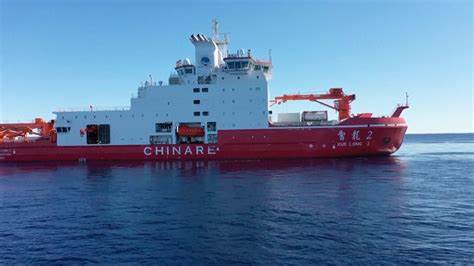
“China to build icebreaker with submersible to reach Arctic seabed” –Interesting Engineering

Chinese Icebreaker

Interesting Engineering has a story about China’s third polar icebreaker expected to be ready in 2025.

It appears to be a relatively light polar icebreaker,

“The proposed length of the vessel is 338 feet (103 meters) and is being built for a displacement of over 10,000 tons (9,200 tonnes). It can accommodate a crew of 80 people and travel at speeds of up to 16 knots…”

That is about the length of the Canadian Arctic and Offshore Patrol Ship, but about 50% heavier. I appears to be a bit smaller than M/V Aiviq that the Coast Guard apparently intends to buy.

Given the relatively small size, it is unlikely this is the nuclear icebreaker that has been talked about.

The article makes much of the ability to support a deepsea submersible, but it does not make clear what special provisions will be provided. Will it have a stern launch or moonpool or just cranes?

Why the submersible, when remotely operated vehicles are now so capable, is also not clear.

I think Russia has at least as much reason to be concerned about China’s icebreaker capabilities as the US, since Russia wants to monetize passage through the Northern Sea Route, and I doubt the Chinese will stand for that in the long run.

Thanks to Mike for bringing this to attention.

“Indo-Pacific coast guards try to head off a troubling storm” –Asia Times

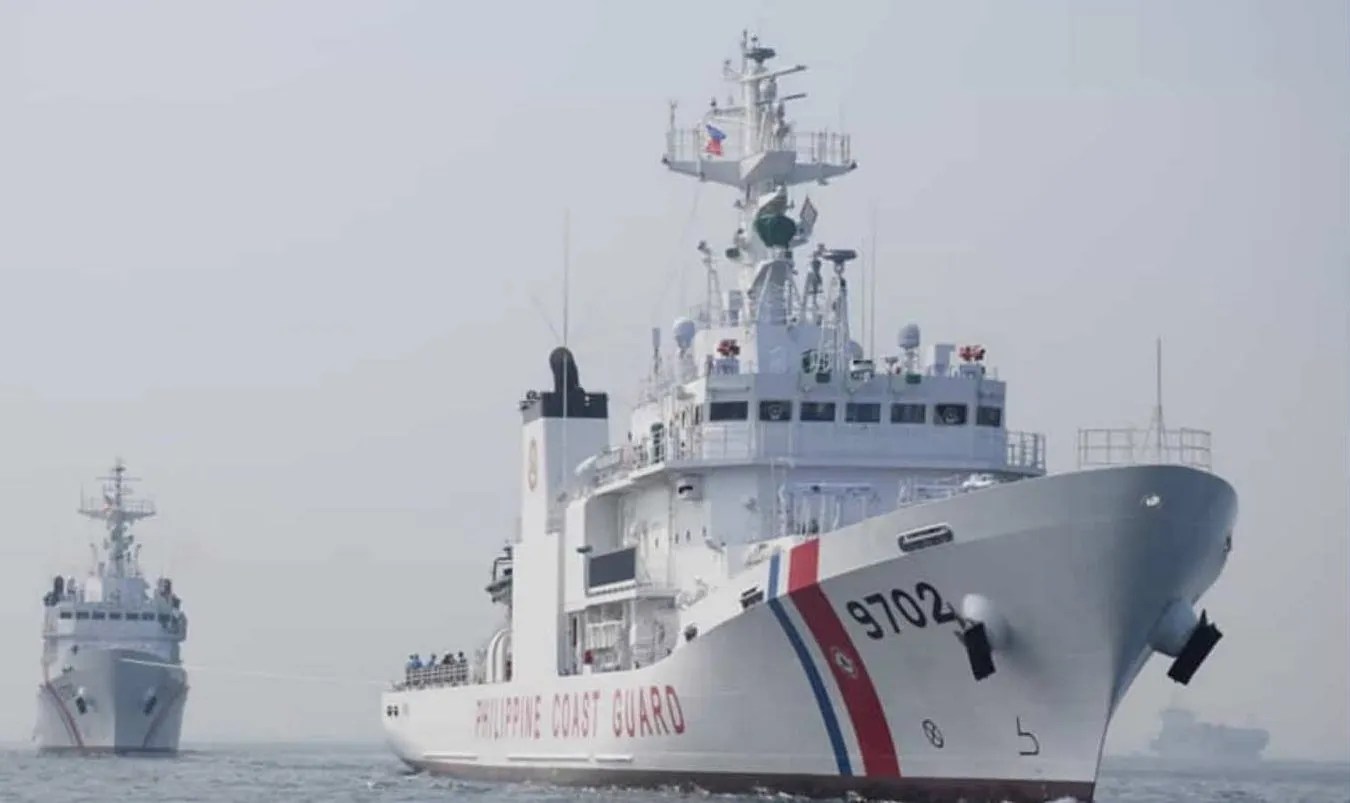
The Philippine Coast Guard conducted its first-ever trilateral maritime exercise with the United States Coast Guard (USCG) and the Japan Coast Guard (JCG) in waters off Mariveles, Bataan, from June 1-7, 2023. Photo: Philippine Coast Guard

The Asia Times reports, “Indo-Pacific coast guards and maritime law enforcement agencies are taking additional steps to improve their cooperation.”

We have frequently talked about US Coast Guard actions in the Western Pacific, but this gives us a better understanding of the leadership roles being taken by the Coast Guards of Japan, India, Indonesia, and the Philippines, working in cooperation with Vietnam, Malaysia, Singapore, Bangladesh, Cambodia, South Korea, Sri Lanka and the Maldives.

Perhaps someday we will see something like my proposed Combined Maritime Security Task Force Pacific.

The CENTCOM sponsored Combined Maritime Forces provides a good model.

“Message from CGA Superintendent and CG Commandant” –US Coast Guard Academy Alumni Association

I got the following from the CG Academy Alumni Association:

Message from the Superintendent

To the Coast Guard Academy Community/ Family,

I am forwarding on an important message sent today by our Coast Guard Commandant, ADM Linda Fagan, about recent investigations into past Coast Guard Academy sexual assault cases.

[Learn more in this Washington Post article.]

Sexual Assault is a crime and as your new Superintendent I want you to know that the Coast Guard Academy is doing everything it can to eliminate sexual assault and the behaviors that enable it. The lessons we’ve learned over the past decades have helped shape the sexual assault prevention, response, and recovery program in place at the Academy today. This program includes providing the necessary medical, legal, counseling, and administrative resources and support to all victims. It also includes pursuing appropriate accountability in accordance with revised laws and policy. Training on prevention, response, and recovery policies and techniques are part of our core curriculum for faculty, staff and cadets.

The Coast Guard Academy is committed to fostering a culture of trust, respect and dignity that does not tolerate sexual assault or its enabling behaviors. I am heartbroken that members were hurt at this institution. We are a family here. We need every member to understand this and care for each other; together we can and must eradicate this harmful behavior.

With Great Respect,

RADM Michael Johnston

Message from the Commandant

To our Fellow Coast Guard Members:Recent news accounts have reported on past sexual assaults that occurred at the Coast Guard Academy and how we did not address them correctly. The Master Chief Petty Officer of the Coast Guard and I write to assure you we have advanced as an organization since then, having taken many important steps to better ensure everyone here feels safe from sexual assault and harassment. Support for your safety, wellbeing, and inclusion, regardless of who you are, is a bedrock of our service character and a critical component of our core values of honor, respect, and dedication to duty.

In 2014, our Coast Guard Investigative Service (CGIS) was made aware of a sexual assault allegation at our Coast Guard Academy that was alleged to have occurred years earlier and was mishandled at the time. In response, CGIS began an investigation which followed up on all leads related to sexual assaults at the Coast Guard Academy that were alleged to have occurred between 1988 and 2006, a period preceding our implementation of key changes to our policies and practices regarding sexual assault and response.

At the conclusion of CGIS’s investigation, the Coast Guard took action to hold accountable those known perpetrators who remained within its jurisdiction. In addition, we reached out to all known victims and offered them individual, in-person meetings to provide each of them with information on their specific cases and access to support services.

The CGIS investigation was not widely disclosed at the time. We recognize transparency is critical to building trust not only of victims, but all cadets and personnel at the Academy and across the Coast Guard. Transparency helps drive accountability and the realization of the organization’s core values. As your Commandant, I am personally committed to a culture of transparency and accountability regarding our efforts to prevent and address the scourge of sexual assault.

Over the past several years, we have made major improvements to our policies regarding sexual assault, including prevention training, investigative procedures, prosecution, victim care, and recovery services. We have worked closely with the Department of Defense to establish new structures to support the historic reforms to the military justice system, which will remove the prosecution of sexual assault and sexual harassment from the chain of command. A number of these improvements are described here. Information on sexual assault reporting and recovery services, and other resources, can be found here. I encourage any workforce member who has or is experiencing sexual assault or harassment to seek assistance immediately. We remain committed to supporting the needs of victims, improving access to justice, holding perpetrators accountable, and delivering a coordinated response to any sexual assault or harassment.

By not taking appropriate action at the time, we may have further traumatized the victims, delayed access to care and recovery, and prevented some cases from being referred to the military justice system for appropriate accountability. We own this failure, and on behalf of the United States Coast Guard, MCPOCG and I apologize to each victim and your loved ones.

The United States Coast Guard holds every one of us to the highest personal and professional standards and does not tolerate any form of abuse. As your Commandant, I will do everything in my power to ensure those high standards are met.

Yours in service,

ADM Linda Fagan

Commandant

“First 47-foot motor lifeboats delivered following design modification to service life extension program” –CG-9

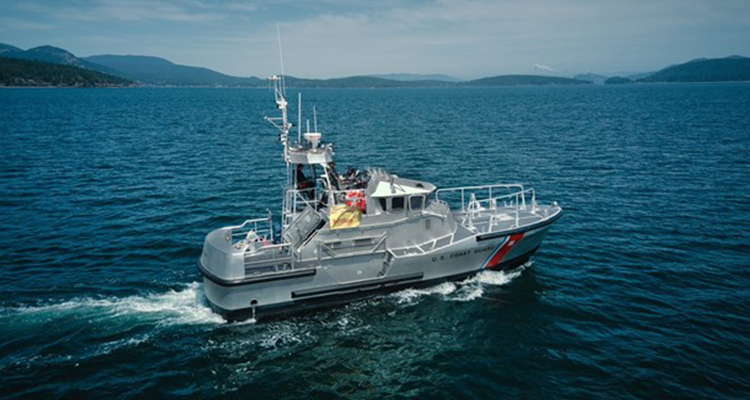
U.S. Coast Guard photo.

Below the line is the latest Acquisitions Directorate report on the 47 foot MLB life extension program. Previous reports containing additional information are:


First 47-foot motor lifeboats delivered following design modification to service life extension program

The Coast Guard’s In-Service Vessel Sustainment (ISVS) Program in partnership with the Boat Acquisition Program completed service life extension program (SLEP) work on a ninth and 10th 47-foot motor lifeboat (MLB) in June.

The SLEP work package for these two MLBs incorporated design modifications to address operational test and evaluation (OT&E) findings. The extra time and resource investment to develop and refine solutions from the OT&E findings for these two boats should reduce future MLB SLEP durations.

Based on the OT&E findings, the additional work completed on these MLBs encompassed a reconfiguration of the open and enclosed bridge areas, revised console configuration on the open bridge and revised exterior lighting. Further repairs under the SLEP included engine control system modifications to improve speed and responsiveness in hazardous surf conditions as well as extensive hull plating replacement.

For efficiency, the SLEP work is being conducted in two locations, one on each coast, and each facility worked on one of the MLBs incorporating the OT&E production modifications.

On the West Coast, the work was completed in Bellingham, Washington, on June 14, 2023. This MLB was the first post-SLEP boat delivered to Station Umpqua River along the Central Oregon coast.

On the East Coast, the work was completed in the newly opened facility in Portland, Connecticut, on June 9, 2023. This boat is the second post-SLEP MLB delivered to Station Barnegat Light, New Jersey.

SLEP work extends an asset’s service life by replacing obsolete, unsupportable or maintenance-intensive equipment with standardized configuration. The 47-foot MLB SLEP was initiated to extend the useful life of the MLB fleet by 20 years through 2047. The SLEP timeline remains on schedule to place up to 107 MLBs back to full operational capability prior to 2030.

For more information: In-Service Vessel Sustainment Program and Boat Acquisition Program pages

“Alaska’s top Coast Guard official warns of rising medevac cases as he leaves command” –Anchorage Daily News

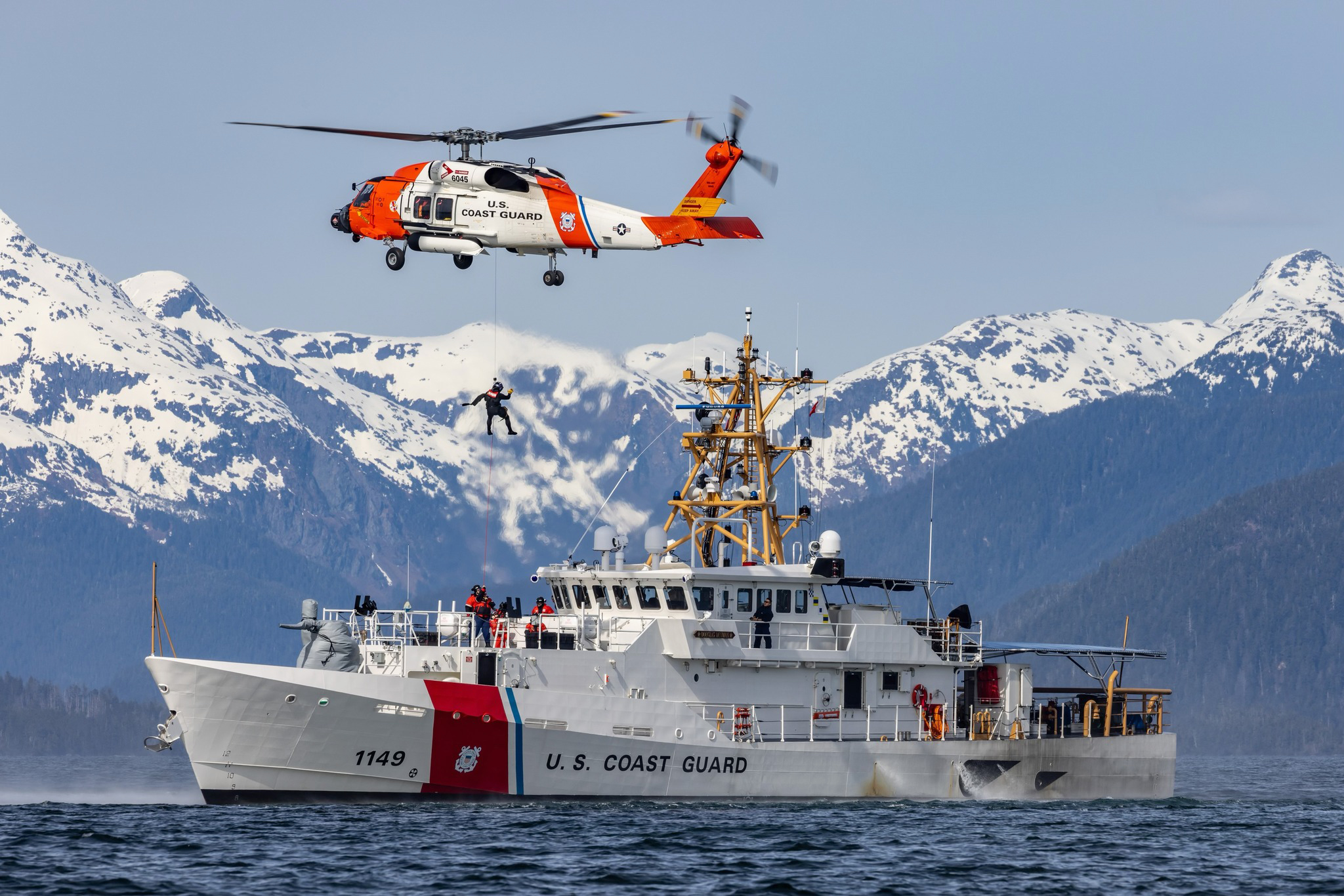
Crews assigned to Coast Guard Air Station Sitka, the Coast Guard cutter Douglas Denman, Sitka Mountain Rescue and the Sitka Fire Department participate in the first day of a weeklong search and rescue exercise in Sitka, Alaska, May 9, 2023.

The Anchorage Daily News reports,

“… as Rear Adm. Megan Dean takes command, Moore said, his service is facing new challenges in the state, and one of the biggest is a growing — and possibly unprecedented — demand for emergency medevac flights.”

It’s a surprisingly detailed report on a change in workload and the reasons behind it.

Thanks to Paul for bringing this to my attention.

CAPT Joseph L. Crowe Jr., USCG, a Tribute

Joseph “Jay” Crowe

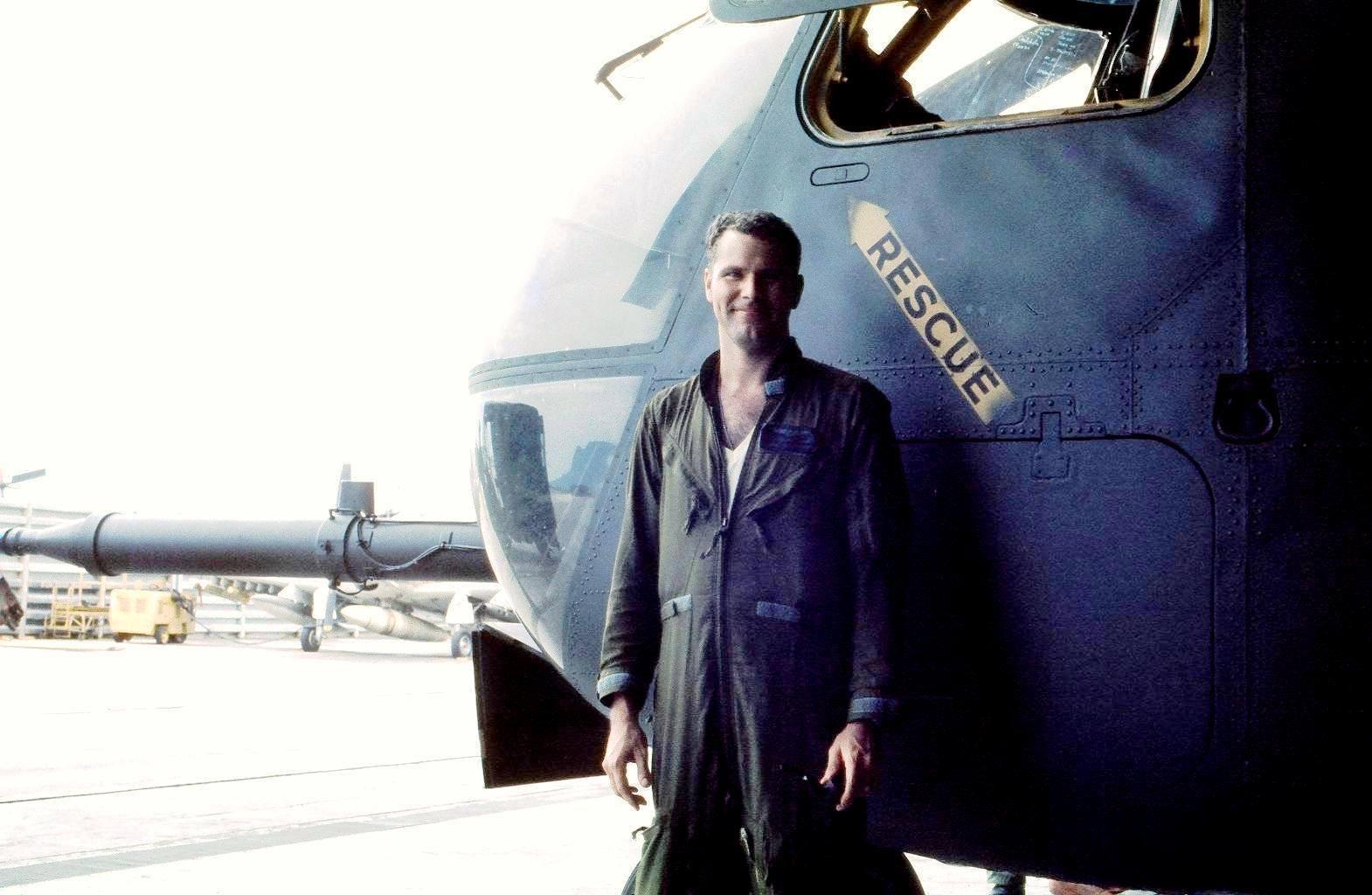
The tribute below was written by Captain Sean M. Cross, United States Coast Guard (Retired), son of a former shipmate who had a somewhat successful CG career, Vice Admiral Terry M. Cross, US Coast Guard (ret.).

Capt. Sean Cross has a regular presence on Facebook, regularly marking “Today in Coast Guard Aviation History.”

The following information about Captain Crowe is from “Special Forces Roll of Honour”:

Crowe​, Joseph Lawrence,Jr, Lieutenant Commander, 37 Aerospace Rescue and Recovery Squadron (3 A.R.R. Group) (US Coast Guard attached)​, Distinguished Flying Cross with oak leaf cluster, Cambodia 1971 and South Vietnam 1972.
Born 10.6.1940 Greensburg,Pennsylvania.
Son of Joseph Lawrence and Sara Jane (nee Griffith) Crowe.
Graduated USCG Academy,New London,Connecticut 6.6.1962.
Helicopter pilot.
CGAS, Cape Cod, Massachusetts 1975 (Lt Commander), awarded 2nd oak leaf cluster to DFC 1975 for sea rescue 145 miles south of Cape Cod.
Retired as Captain. 
Married Anne B. O’Mahony.
Died 22.2.2003 Port Angeles,Washington
Massachusetts National Cemetery, Bourne, Barnstable County, Massachusetts Section 28 Site 481

Cadet Joseph “Jay” Crowe, CGA class of 1962.

For more information on Coast Guard aviators’ role in the Vietnam War I recommend, The Coast Guard Flies in Vietnam 

For more Coast Guard history, check out my Heritage page.


 During his 30-year career with the Coast Guard, CAPT Crowe was recognized as a respected leader, a skilled aviator and a decorated hero during and after the Vietnam War.

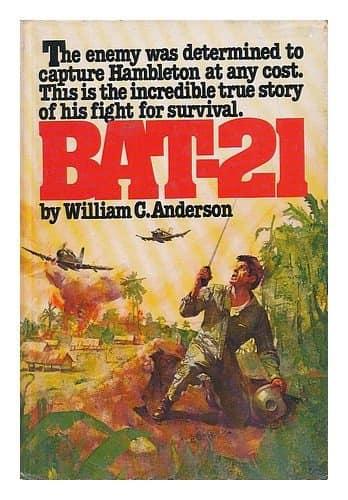
Between 1968 and 1972, ten Coast Guard helicopter pilots were assigned to the 37th Aerospace Rescue and Recovery Squadron at Da Nang, South Vietnam as part of a service exchange program.  LCDR Crowe and his fellow Coast Guard aviators flew hundreds of rescue missions over enemy-infested jungles recovering downed American airmen. Their actions kept many pilots out of North Vietnamese prison camps.  During his tour in Vietnam, LCDR Crowe earned two Distinguished Flying Crosses and nine Air Medals.  One of LCDR Crowe’s combat search and rescue missions was immortalized in William C. Anderson’s famous book BAT-21 (also a very good movie–Chuck):

“Coast Guard Lieutenant Commander Jay Crowe, with additional aircraft cover, broke through the clouds and began a rapid descent towards the area where Lieutenant Colonel Hambleton waited. He was met by an immediate curtain of enemy fire, hurled against him with an intensity that defied belief. Enemy rounds literally shredded “Jolly Green 65”, and it was only the courage and flying skill of the Coast Guard pilot that enabled the chopper to stay airborne long enough to return to base.”

Finally, toward the end of his Vietnam tour, LCDR Crowe was moved into rescue planning because he excelled at it.  Following the 1972 Easter Offensive, LCDR Crowe planned the complex “Quang Tri Citadel” evacuation that saved 132 American advisors and South Vietnamese soldiers caught in the onslaught and surrounded by four North Vietnam Army divisions that were pounding the Citadel with artillery, mortars, and rockets for several weeks. The potential for disaster was as great as the potential for success – losses greater than 25% were expected.  Using elements from the Air Force, Army, Marine Corps and the Navy, all 132 people were evacuated without one bit of battle damage to any of the five HH-53C helicopters.

During his first tour at Air Station Cape Cod, LCDR Crowe earned notoriety as the 1976 recipient of the American Helicopter Society’s (AHS) Frederick L. Feinberg Award as the helicopter pilot who accomplished the most outstanding achievement that year.  LCDR Crowe rescued seven men stranded on the bow section of the stricken tanker Spartan Lady about 145 miles south of Martha’s Vineyard.  Thirty-five men were pulled from the tanker, which had broken in half in hurricane force winds, by four Coast Guard helicopters.  LCDR Crowe arrived on-scene after several attempts by other helicopter crews had failed to rescue the seven men.  According to eyewitness reports, it appeared the men were virtually unreachable.  Weather conditions included hurricane force winds, blowing snow, high seas and limited visibility.  For 45 minutes, LCDR Crowe and his crew improvised rescue methods to a very limited hoisting area until they were finally able to pull each man aboard.  In addition to the AHS award, LCDR Crowe was decorated with his third Distinguished Flying Cross.

Tanker MV Spartan Lady about 145 miles south of Martha’s Vineyard.

CAPT Crowe served two tours at Air Station Cape Cod.  His tour as Commanding Officer (1986 to 1988) was highlighted by marked increases in the unit’s operational and personnel support capabilities – capabilities that still benefit Air Station Cape Cod today.  Under CAPT Crowe’s leadership the unit extended its normal operating area to Canada, the Caribbean and the Bahamas, supporting a record 857 aircraft deployment days.  In addition, the unit also implemented its Rescue Swimmer program well ahead of schedule and led efforts in the advancement of night LE activities and secure communications gear. CAPT Crowe oversaw several quality of life and support improvements including the construction of a new hangar (Building 3172) that brought fixed-wing maintenance operations back from a loaned hangar and the opening of the Kaehler Memorial Clinic – which significantly increased the level of patient care available to Cape Cod military personnel.

CAPT Crowe is a Coast Guard hero.  The word “hero” is often overused, but CAPT Crowe earned the title several times over.  In times of war and peace, he demonstrated uncommon valor in the face of great personal risk.  CAPT Crowe made enduring contributions to the Coast Guard and our Nation.

CAPT Crowe passed away at age 62, in his home in Port Angeles, WA on 22 February 2003 from complications relating to lung-cancer that doctors linked his cancer to service in Vietnam.

“Navy makes sure helicopters cannot land on new Offshore Patrol Vessels” –The Australian

Australia Considering Modular C-Dome For Arafura OPVs
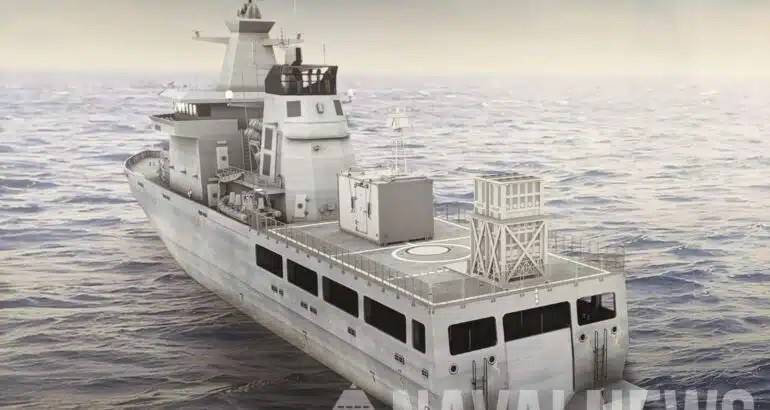
Illustration of Arafura-class OPV fitted with C-DOME

The Australian reports,

“Normally when a navy acquires a new ship, they want it to be as capable as possible. Not so the Royal Australian Navy, which has down-designed the Arafura class Offshore Patrol Vessels (OPVs) so that they can no longer support the weight of a helicopter on the large rear deck.”

The article goes on to criticize this and other decisions regarding the ship, but there may be method to this madness.

I would assume the Australian Navy is putting some thought into these decisions and it may be related to my observations in a post only two days ago, “When is a Flight Deck Not a Flight Deck?”

The intention may be to save topside weight so that an additional load or loads, heavier than an 11 ton helicopter, can be placed high on the ship.

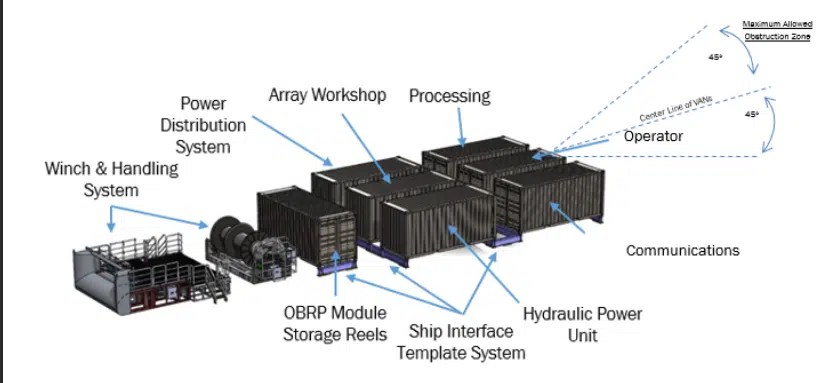
A helicopter deck must be very strong everywhere, because it may be required to take high dynamic loads concentrated on just a few square inches, that may occur unpredictably, almost anywhere on the deck. By contrast even a large load like SURTASS-E, that spreads the load over a much larger area, requires less deck strength.

SURTASS-E. (U.S Department of Defense)

It may be that the Australian Navy has decided to use the “flight deck” as a mission load area where they anticipate placing heavy loads. The weight savings from weakening the flight deck may also permit additional topside weight for other systems, like weapons, if it is not required for loads on the flight deck.

“U.S., Philippine, Japan Coast Guards conduct trilateral engagements in the Philippines” –DVIDS

(From left) Japan Coast Guard Vessel Akitsushima (PLH 32), U.S. Coast Guard Cutter Stratton (WMSL 752), Philippine Coast Guard vessels BRP Gabriela Silang (OPV 8301) and BRP Melchora Aquino (MRRV-9702) conduct a trilateral engagement in the South China Sea June 5, 2023. Stratton deployed to the Western Pacific to conduct engagements with regional allies and partner nations, reinforcing a rules-based order in the maritime domain. (U.S. Navy photo by Chief Petty Officer Brett Cote)

Passing along the Coast Guard Pacific Area release below, distributed by the Defense Video Information Distribution Service (DVIDS). An earlier post, “Philippine Coast Guard Will Hold First-Ever Trilateral Exercise with U.S., Japan” –USNI, provided information on the participating ships.


Story by Chief Petty Officer Matthew Masaschi,

06.09.2023

MANILA, Philippines — The U.S. Coast Guard Cutter Stratton (WMSL 752) and crew departed the Philippines Thursday following the first trilateral engagements between the U.S., Philippine, and Japan Coast Guards.

Stratton’s crew conducted professional exchanges and joint operations in port and at sea with the Japan Coast Guard Vessel Akitsushima (PLH 32) and the Philippine Coast Guard during Stratton’s months-long Indo-Pacific deployment.

Stratton, the Akitsushima and Philippine Coast Guard vessels Gabriela Silang, and Melchora Aquino spent three days at sea off the coast of Bataan, Philippines, executing simulated search-and-rescue scenarios, maritime law enforcement boardings, passing exercises, and formation maneuvering drills. Additionally, they conducted communications and signaling drills, crew professional exchanges and joint boat and air operations following their Manila port visit.

While in Manila, members from the three services conducted combined damage control training, executed cooperative mission planning and table-top exercises ahead of at-sea combined operations. They conducted crew exchanges and toured partner vessels, participated in a women-in-law-enforcement discussion panel, played in a basketball tournament, volunteered at a beach cleanup, visited a children’s hospital and gathered for social receptions.

“It was an honor for Stratton to come together with our Philippine and Japan Coast Guard allies to learn from each other, work together to address common challenges and enhance our interoperability for joint maritime operations,” said U.S. Coast Guard Capt. Brian Krautler, Stratton’s commanding officer. “The experiences gained from our multi-mission trilateral operations underway, our professional exchanges in port and the relationships forged over the last week have been invaluable enablers for the U.S. Coast Guard and our allies to secure a continued free and open Indo-Pacific.”

The multi-day trilateral engagement was named “Kaagapay,” a Filipino word meaning “standing side by side.”

The relationship between the United States Coast Guard and Philippine Coast Guard was built over many years of partnership between the two services. The relationship flourished through the Philippine cadet exchange program at the U.S. Coast Guard Academy, U.S. Coast Guard mobile training team deployments to the Philippines, Philippine Coast Guard Officer enrollment in the U.S. Coast Guard’s Maritime Law Enforcement Academy, engagements by U.S. Coast Guard Cutter Midgett and U.S. Coast Guard Cutter Munro in Manila in recent years and Stratton’s subsequent participation in the first trilateral USCG, PCG, and JCG training operation. The U.S. and Philippine Coast Guard’s partnership has solidified the commitment of both services to upholding a rules-based order in the maritime domain.

The engagement was another SAPPHIRE touchpoint between the U.S. and Japan Coast Guards. In 2022, Operation SAPPHIRE was established through a memorandum of cooperation between the U.S. and Japan Coast Guards as a perpetual operation to strengthen relationships, increase bilateral engagements, and focus on maintaining a free and open Indo-Pacific.

Operating under the tactical control of Commander, U.S. 7th Fleet, Stratton’s crew will engage in professional and subject matter expert exchanges with partners and allies throughout the Indo-Pacific during their months-long patrol to the region.

The U.S. Coast Guard maintains steadfast partnerships and strives for persistent presence in the Indo-Pacific region. Stratton’s current Indo-Pacific patrol is the cutter’s second patrol in the region and one of seven national security cutter deployments to the Indo-Pacific since 2019.

The Coast Guard provides expertise in all aspects of maritime governance, within the mission sets of: search and rescue; illegal, unreported, and unregulated fishing; maritime environmental response; maritime security; maritime domain awareness; maritime aviation operations; and humanitarian assistance and disaster relief.

Commissioned in 2012, Stratton is one of four Coast Guard legend-class national security cutters homeported in Alameda, California. National security cutters are 418-feet long, 54-feet wide, and have a 4,600 long-ton displacement. They have a top speed in excess of 28 knots, a range of 12,000 nautical miles, endurance of up to 90 days and can hold a crew of up to 170.

National security cutters feature advanced command and control capabilities, aviation support facilities, stern cutter boat launch and increased endurance for long-range patrols to disrupt threats to national security further offshore.

U.S. Coast Guard Pacific Area is responsible for U. S. Coast Guard operations spanning across six of the seven continents, 71 countries and more than 74 million square miles of ocean. It reaches from the shores of the West Coast of the United States to the Indo-Pacific, Eastern Pacific, Arctic and Antarctic regions. Pacific Area strives to integrate capabilities with partners to ensure collaboration and unity of effort throughout the Pacific.