“NATO, partners promote rules-based Arctic, free and open sea lines of communication” –The Indo-Pacific Defense Forum

This map shows the exclusive economic zones (EEZs) within the Arctic: Canada (purple), Greenland (orange), Iceland (green), Norway (turquoise), Russia (light blue), and USA (dark blue).
Credit: DeRepentigny et al., 2020

The Indo-Pacific Defense Forum has a post which somewhat surprisingly talks about NATO concerns about the Arctic. I presume this is as a result of the recently concluded Shangri-La Dialog at which both the UK and Germany discussed future naval deployments to the Pacific. Canada pledged to increase its naval presence in the Pacific. Japan and S. Korea said they would put aside their differences and work more closely together. China also told “others” they should mind their own business and stay out of China’s backyard, defending their harassment of Western miliary units in the South China Sea.

We live in an interconnected world, and it appears the Arctic Ocean will become an important new connection between Europe and Asia. China, Russia, and Europe are particularly concerned about shaping the connection to their advantage and what that will mean in the long run is not yet clear.

An Arctic route could provide the US with an alternative to the Panama Canal for movement between the Atlantic and Pacific, but the US probably will not benefit as much from the opening of the Arctic Ocean as the Asians and Europeans. On the other hand, any traffic using the Arctic to pass between the Atlantic and Pacific will have to pass within about 32 nautical miles of the US at the Bering Strait and within less than 300 nautical miles of a US Aleutian Island. This puts the US in a good position to regulate any traffic using the Arctic for passage between the Atlantic and Pacific should we choose to do so.

The Indo-Pacific Forum post does not say much we have not heard before, but it did mention that the Chinese have, “…plans to build the world’s biggest icebreaker vessel.” Given the size of existing Russian nuclear powered icebreakers, that is going to be a very large ship.

There is a good possibility that Russian and Chinese aims in the Arctic may be in conflict. The Chinese are likely to want to transit the Arctic free of charge. The Russians will want them to pay for the privilege. The Chinese will want access to the resources of the Arctic while the Russians consider most of the Arctic to be Russian EEZ or continental shelf.

We have gotten along with the Russians pretty well in the Arctic, but we may be seeing an end to the Arctic as a zone of peace. Still, I don’t think the conflict will be between the US and Russia.

We should not forget that we may see that very large Chinese icebreaker in Antarctica.
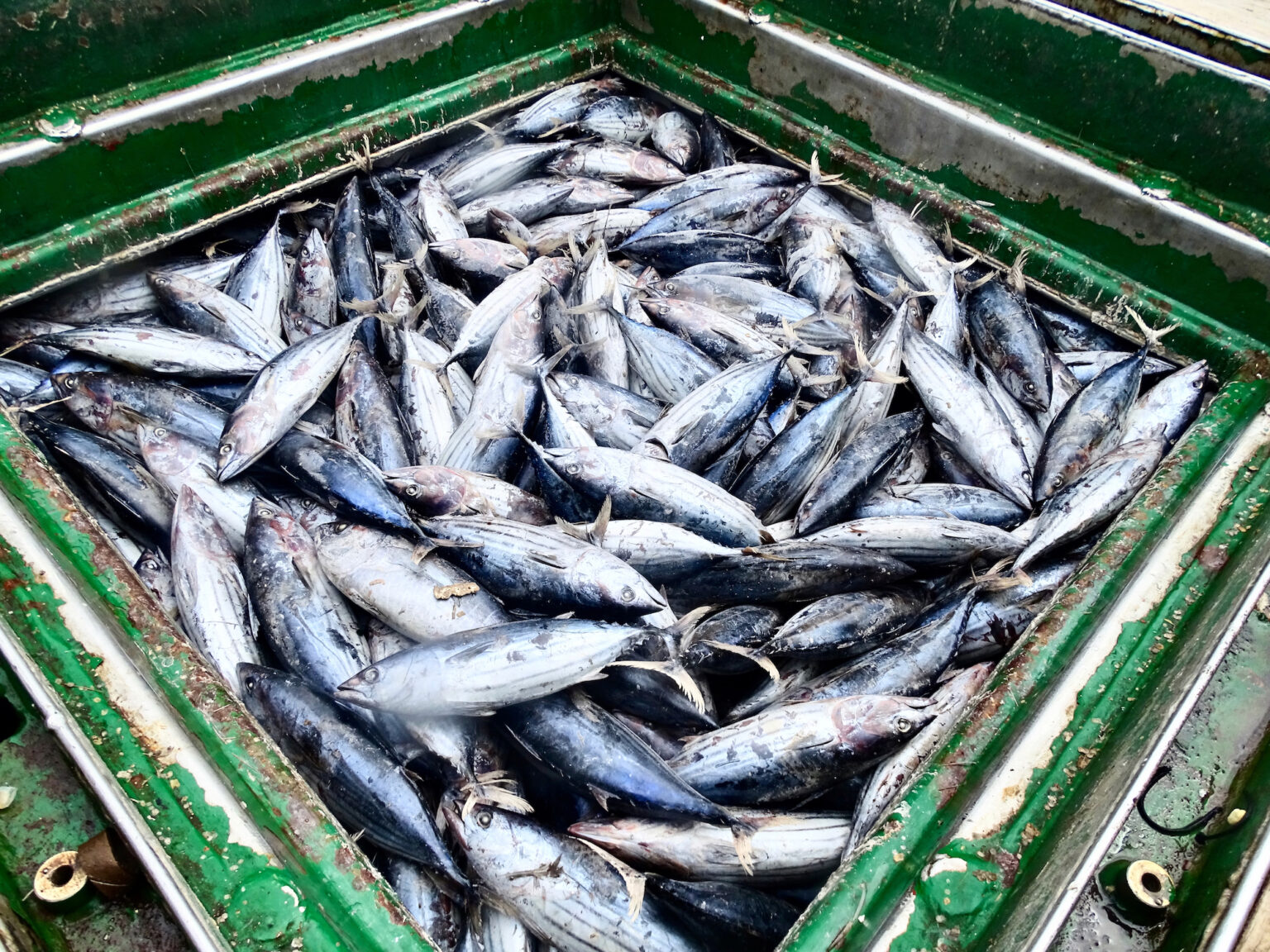
“Indo-Pacific partners lead global fight against IUU fishing” –Indo-Pacific Defense Forum

Catch is readied for inspection during a boarding by USCGC Frederick Hatch crew members and a local maritime officer in Micronesia’s EEZ. IMAGE CREDIT: PETTY OFFICER 2ND CLASS BRANDON CHAPLEA/U.S. COAST GUARD

The Indo-Pacific Defense Forum has a nice piece about cooperative efforts to curb Illegal, Unreported, Unregulated (IUU) fishing. USCG gets a lot of credit.

Netherlands Navy Talks about Replacing OPVs with Light Amphibious Warfare Ships

A Naval News report, “RNLN Looks At Low-Manned Platform To Augment Frigate Fire Power” talks about the possibility of adding weapons and sensors to lightly manned small vessels to act as extensions of a large warship’s weapons and sensors. Cooperative Engagement Capability probably makes this possible. (Incidentally the vessel shown in the leading illustration is a Damen design 50 meter in length with a beam of 9 meters. More here.)

But the post also discussed another program, a new class of smaller amphibious warships, expected to enter service from the early 2030s, that will also fill the role of Offshore Patrol Vessels.

Captain Van der Kamp also outlined the RNLN’s evolving thinking on a replacement amphibious shipping capability, dubbed LPX…these new ships are also expected to assume the patrol and surveillance tasks currently performed by the navy’s four Holland class patrol vessels…“We would combine these amphibious ships with the function of a patrol vessel to do Coastguard patrols in the Caribbean and counter-drugs operations in the Caribbean.”

The four Holland class OPVs were commissioned 2012 to 2013, so in the early 2030s they will be at the most 23 years old. These ships are similar in size, speed, capabilities, and mission to the OPCs. They have frequently conducted drug interaction missions in the Caribbean with US Coast Guard Law Enforcement Detachments embarked and at least on one occasion using a USCG helicopter.

The other two ships being replaced, HNLMS Rotterdam and HNLMS Johan de Witt. are older, commissioned in 1998 and 2007. They have a combined capability to land about 1200 Marines. I presume the cumulative capability of the new ships will be similar. Each of them can also carry up to 32 tanks, but the Netherlands Marine Corps does not have any tanks, nor do they have organic heavy artillery. Their only armored vehicles are much smaller, so perhaps the replacement ships will not need the capability to handle tanks.

Why is the Netherlands Navy choosing to do this?

Going from six ships to perhaps only four is likely to decrease the total crew requirements.

It may be that the landing ships are considered better able to meet the disaster response component that has been one of the OPVs’ missions.

The Netherlands Navy may not see any wartime role for the OPVs, or at least no role the new LPX could not also do.

Nevertheless, it seems the changes is rooted in changes in the Marine Corps concept of operation.  “…leaner and smaller units that would unload further away from land.”

It may be significant that the new ships are referred to as LPX not LPDX. That may mean that they would not have a well deck. It might be thought they are paralleling US Marine Corp thinking that resulted in the Marines shedding their tanks and heavy artillery and the formation of a Littoral Regiment and a program to build relatively small Landing Ship, Mediums. On the other hand, given the way the Netherlands Marine Corps names their units, “Raiding Section,” “Raiding Troop,” and “Raiding Squadron,” they obviously see themselves as a raiding organization more akin to the British Royal Marine Commandos of WWII than to the US Marine Corps that seized and held islands in the Pacific. They do have a long and continuing association with the Royal Marines. In any case they are and probably will remain essentially light infantry.

If the new ships are to replace the four OPVs, then I would presume they would still need at least four ships. If they were following the USMC example, they may build a larger number of smaller ships, but I don’t think that will be the case. If they are to “…unload further away from land,” they are going to be very different from the beachable LSMs envisioned by the US Marines. The British developed LCVP Mk5c used by the Netherlands Marine Corps are big boats, 15.7 m (51 ft 6 in) in length and displacing 24 tons. If they are to be swung from davits, it will not be from a small ship.

I would not be surprised if the LPX program came out as four ships that look a lot like slightly larger Danish Absalon class (which can reportedly transport a company-sized landing force of some 200 soldiers with vehicles). Four ships that could each transport 300 Marines, each equipped with four LCVPs (or its replacement), a pair of FRISC” (Fast Raiding, Interception and Special forces Craft) RHIB, with hangar space for a couple of helicopters, could replicate the transport capacity of the two LPDs in a more flexible, distributed, and perhaps more survivable force package. The resulting ships would effectively be modern high-speed transports (APD/LPR).

“US Coast Guard Ready to Move New Anti-SASH Policy” (SASH=Sexual Assault Sexual Harassment) –Marine Link

Marine Link reports,

In May, the U.S. Coast Guard will start a strengthened and pointedly direct anti-SASH campaign that will extend across the maritime industry. SASH is an acronym for sexual assault/sexual harassment, and this new effort adds muscle to Marine Safety Information Bulletin (MSIB Number: 1-23) “Reporting Sexual Misconduct on U.S. Vessels” released in February. The new bulletin supersedes a previous one from late 2021.

I don’t normally report on Marine Safety topics. Never really had any experience in that area, but this could affect every boarding officer.

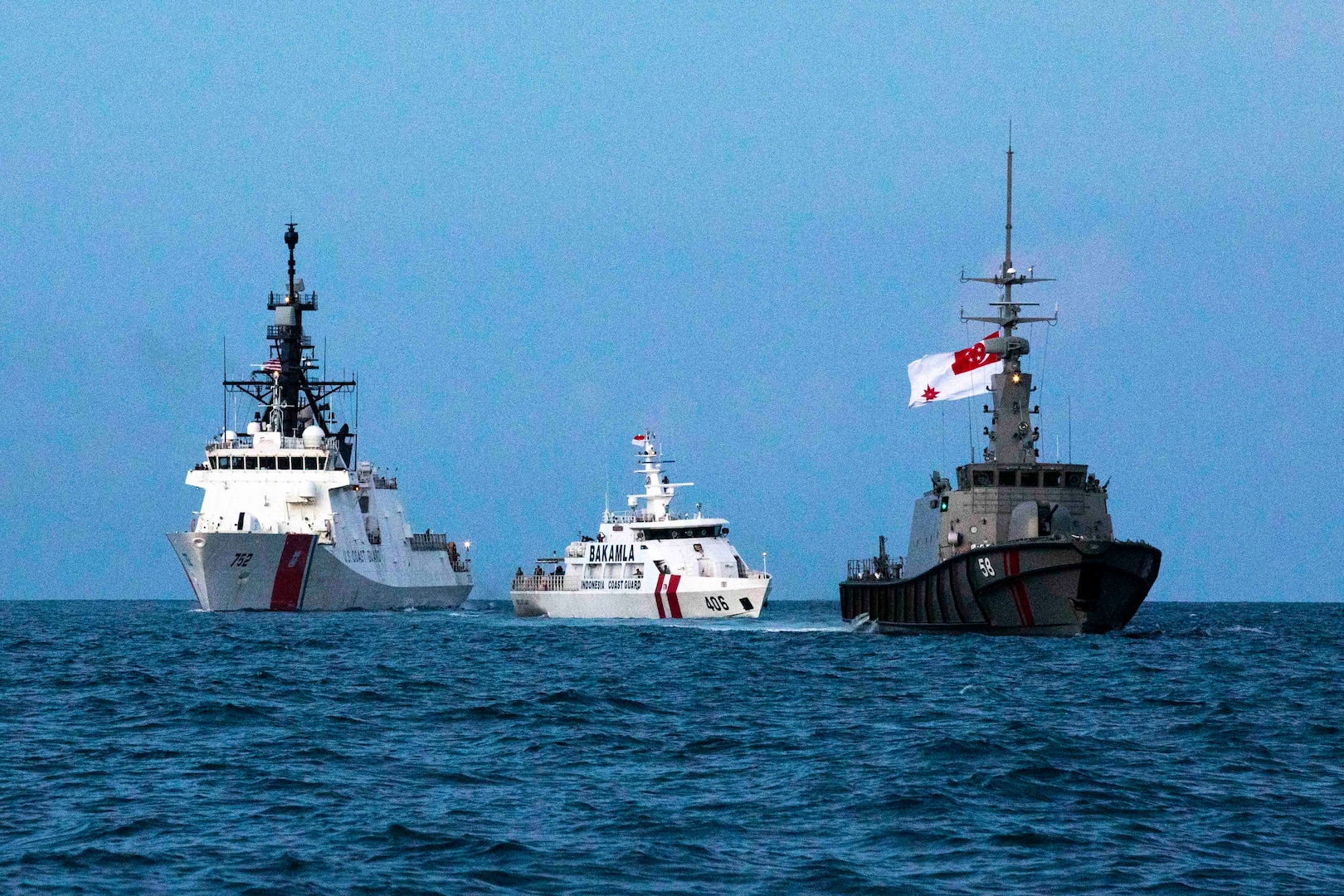
“U.S. Coast Guard Cutter Stratton visits Singapore during Indo-Pacific deployment”

Passing along this news release. (More photos available through the link.)


May 31, 2023

U.S. Coast Guard Cutter Stratton visits Singapore during Indo-Pacific deployment

SINGAPORE – U.S. Coast Guard Cutter Stratton (WMSL 752) departed Singapore, May 22, following a scheduled port visit while deployed to the Indo-Pacific.

While in Singapore, Stratton’s commanding officer and crew strengthened trusted partnerships with local leaders, maritime safety and security stakeholders, and the community.

“The United States Coast Guard is committed to upholding a rules-based order in the Indo-Pacific. Stratton is here to support our allies and partners in making sure the Indo-Pacific region remains free and open to all,” said Capt. Brian Krautler, Stratton’s commanding officer. “The crew is looking forward to operating with our partners in the region. The crew of Stratton is ‘always ready’ to operate alongside like-minded nations as a trusted partner.”

While in port, the U.S. Ambassador to Singapore, the Honorable Jonathan Kaplan, toured the Stratton discussing interoperability in the region. The cutter’s crew volunteered with the Genesis school, a school for special needs children, and served at a food bank that feeds up to 7,000 people.  Additionally, the Stratton’s crew played friendly matches of ultimate Frisbee against the Republic of Singapore Navy sailors.

Stratton is deployed in the Indo-Pacific to engage with ally and partner nations and promote a free and open Indo-Pacific. The Stratton crew is conducting operations to share best practices and expertise in search-and-rescue, law enforcement and maritime governance. U.S. Coast Guard and U.S. Navy forward-deployed forces remain ready to respond to crises as a combined maritime force. Singapore is Stratton’s fourth port visit since departing her homeport of Alameda, California.

Stratton is operating as part of Commander, Task Force (CTF) 71, U.S. 7th Fleet’s principal surface force. CTF-71 is responsible for the readiness, tactical and administrative responsibilities for forward-deployed assets andsurface units conducting operations in the region.

Stratton is a 418-foot national security cutter capable of extended, global deployment in support of humanitarian missions, and defense missions. National security cutters routinely conduct operations throughout the Pacific, where the range, speed and ability to operate in extreme weather provides the mission flexibility necessary for the U.S. Coast Guard to serve as a unique strategic contributor in the region.

The namesake of U.S. Coast Guard Cutter Stratton is Capt. Dorothy Stratton, who led the service’s all-female reserve force during World War II. Capt. Stratton was the first female commissioned officer in the Coast Guard and commanded more than 10,000 personnel. The ship’s motto is “We can’t afford not to.”

U.S. 7th Fleet is the U.S. Navy’s largest forward-deployed numbered fleet, and routinely interacts and operates with allies and partners in preserving a free and open Indo-Pacific region.

U.S. Coast Guard Pacific Area is responsible for U. S. Coast Guard operations spanning across six of the seven continents, 71 countries and more than 74 million square miles of ocean. It reaches from the shores of the West Coast of the United States to the Indo-Pacific, Eastern Pacific, Arctic and Antarctic. Pacific Area strives to integrate capabilities with partners to ensure collaboration and unity of effort throughout the Pacific.

“Vard Unveils New ‘Vigilance’ OPV Design” for Canada –Naval News

Vigilance OPV design for Canada by VARD

Naval News reports,

Tailored to the needs of the Royal Canadian Navy’s future fleet, Vigilance strikes the balance between flexibility, adaptability, and size, while maintaining the life-cycle cost advantages VARD’s naval designs are known for.  The vessel has been conceived for high-tempo sovereignty missions and engineered for global deployment and forward basing abroad.

There is not really a lot of information here.

They are to replace the Kingston Class Maritime Coastal Defence Vessels, which have been used to do drug interdiction in the Caribbean with USCG Law Enforcement teams doing the boardings. It is a class of twelve ships so there may be that many replacements, but also possibly fewer.

USCGC Escanaba (WMEC 907) and USCGC Richard Snyder (WPC 1127) practice maneuvering with the Royal Canadian Navy’s Kingston Class Maritime Coastal Defence Vessel HMCS Goose Bay (MM 707) in the Davis Strait on Aug. 13, 2021.  (Photo courtesy Royal Canadian Navy)

There is no indication of size but there is a clue in the identification of the rendering that accompanied the post, “VARD-7-075-Vigilance-Offshore-Patrol-Vessel-770×410.jpg”. Using VARD’s naming convention this is a “7 series” ship meaning “Naval and Security” that is about 75 meters (246 feet) long. Given the intention to employ them “forward basing abroad,” particularly as a Pacific nation, limiting the size to only 75 meters may be unwisely parsimonious. A larger ship would be both more capable in adverse weather conditions and more adaptable to future requirements. The Kingston class are only 55.31 m (181 ft 6 in) overall, so 75 meters would be an upgrade, but it is still a very small OPV, particularly if it is to operate helicopters. It would be similar in size to Malta’s P71 or the Danish Knud Rasmussen class.

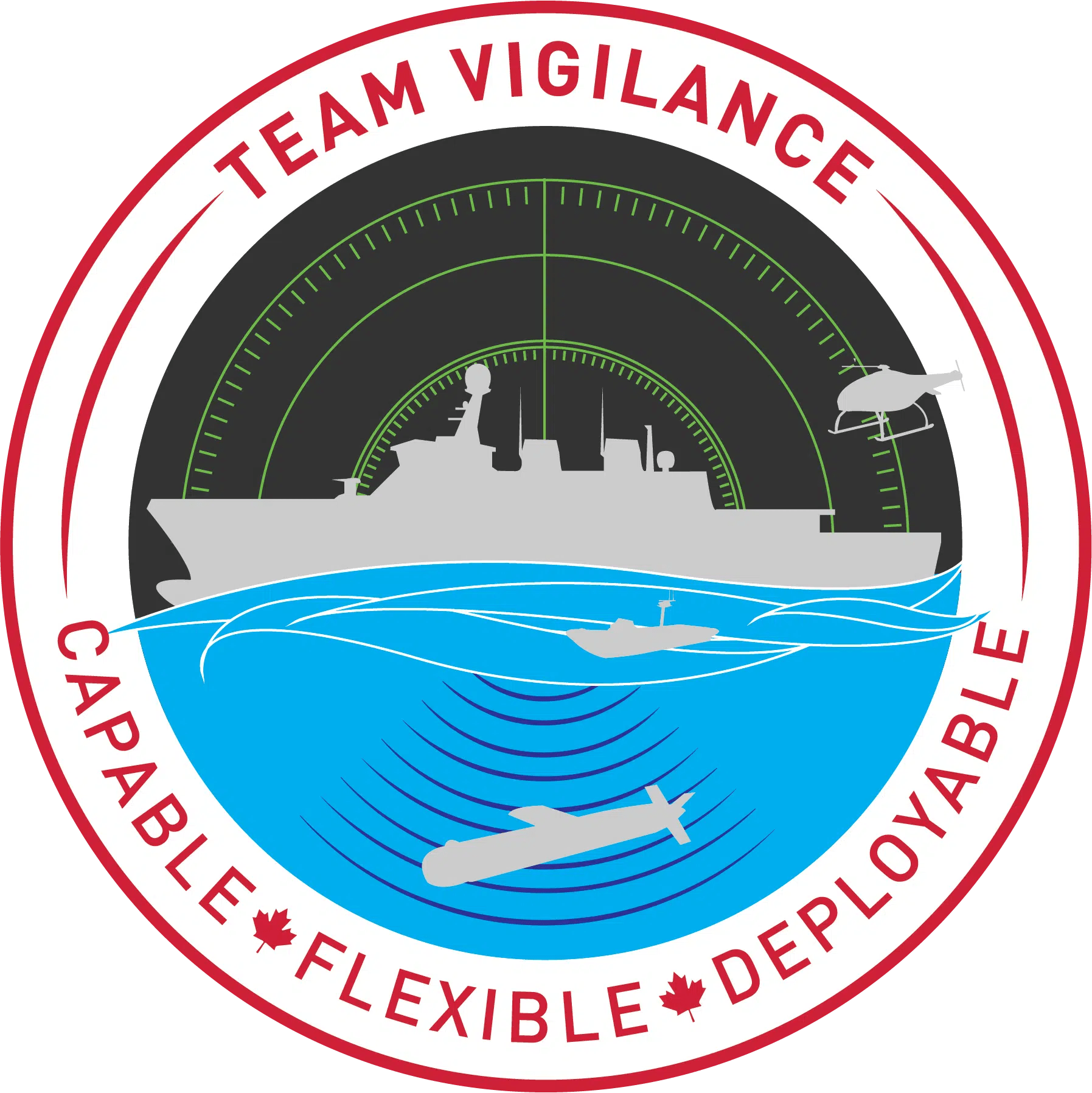
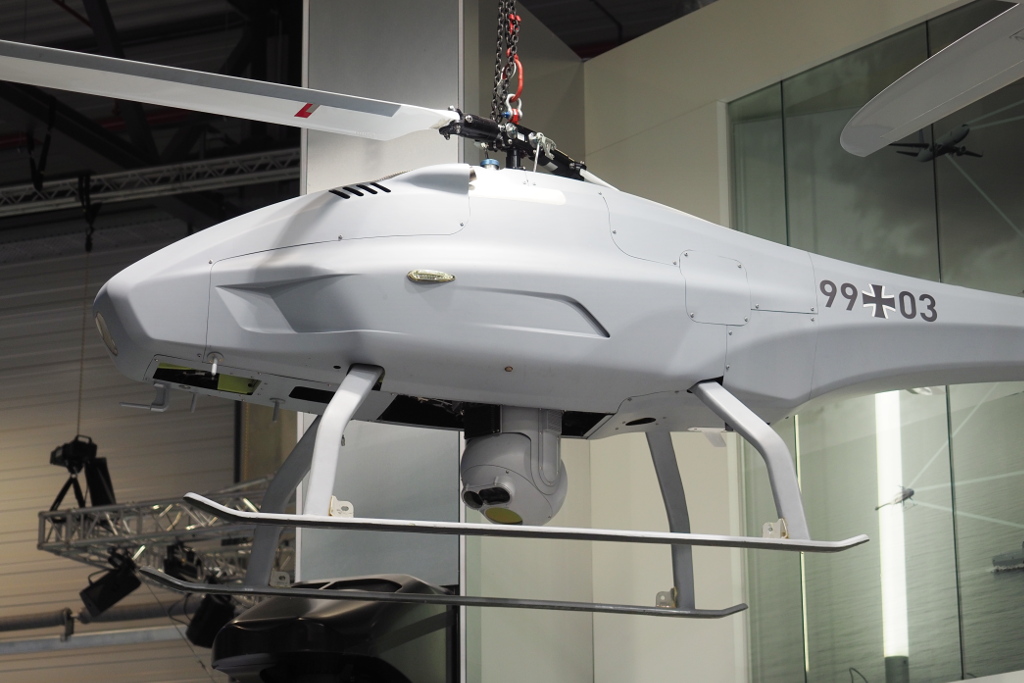
If the ship is in fact 75 meters in length, then the flight deck seen in the fendering does appear relatively short for landing a helicopter, especially since Canada’s Navy and Air Force do not operate any small helicopters that might be operated from the ships. The logo that accompanies the post may suggest that the flight deck is for unmanned air systems rather than helicopters. The UAS in the logo appears to be the Swedish built UMS Skeldar V-200known as CU-176 Gargoyle in Canadian Service. This UAS is also in service with the Belgian, German, Netherlands, and Spanish Navies.

UAV SKELDAR V-200 in German service, tail marking 99+03, at ILA Berlin Airshow 2022. Photo credit: Boevaya mashina.

The gun seen in the rendering suggest a 30mm Mk38 Mod4. In view of the fact the Arctic Offshore Patrol Ship is armed only with a 25mm Mk38 Mod2/3 that would to conform to past policies. The same gun is expected to be on the new Canadian frigate.

Looking at VARD’s design catalog, I see some resemblance to their 72 meter and 85 meter designs.


Video below added as late addition, thanks to Dave. 

“US, PH, Japan coast guards hold maritime law enforcement training” –The Manila Times

More than 30 participants from the Philippines, Malaysia, Thailand and Vietnam joined the Multinational Vessel Boarding Officer Course funded by the US Department of State’s Bureau of International Narcotics and Law Enforcement Affairs in Puerto Princesa City, Palawan on May 15-26, 2023. CONTRIBUTED PHOTO

The Manila Times reports on a US sponsored, Philippines hosted, boarding officer course that was also extended to officers from other ASEAN partners.

“Through this course, 33 participants from the PCG, Philippine National Police Maritime Group, Malaysia’s Maritime Enforcement Agency, Thailand’s Maritime Enforcement Command Center, and Vietnam’s Department of Fisheries enhanced their knowledge of the law of the sea and policy on the use of force.”

Thanks to Paul for bring this to my attention. 

“Philippine Coast Guard Will Hold First-Ever Trilateral Exercise with U.S., Japan” –USNI

BRP Teresa Magbanua, sister ship of BRP Melchora Aquino (MRRV-9702), during sea trials off Japan (Photo: Philippine Coast Guard)

https://news.usni.org/2023/05/29/philippine-coast-guard-will-hold-first-ever-trilateral-exercise-with-u-s-japanThe US Naval Institute News Service reports, beginning 1 June,

“BRP Melchora Aquino (MRRV-9702), BRP Gabriela Silang (OPV-8301), BRP Boracay (FPB-2401) and one 44-meter multi-role response vessel will conduct the exercise with National Security Cutter USGCC Stratton (WMSL-752) and Japanese patrol vessel Akitsushima (PLH-32).”

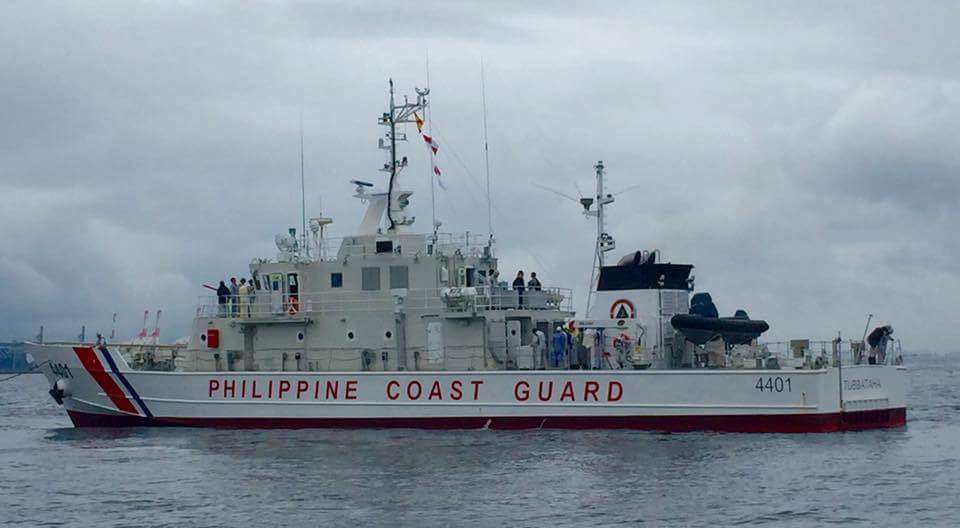
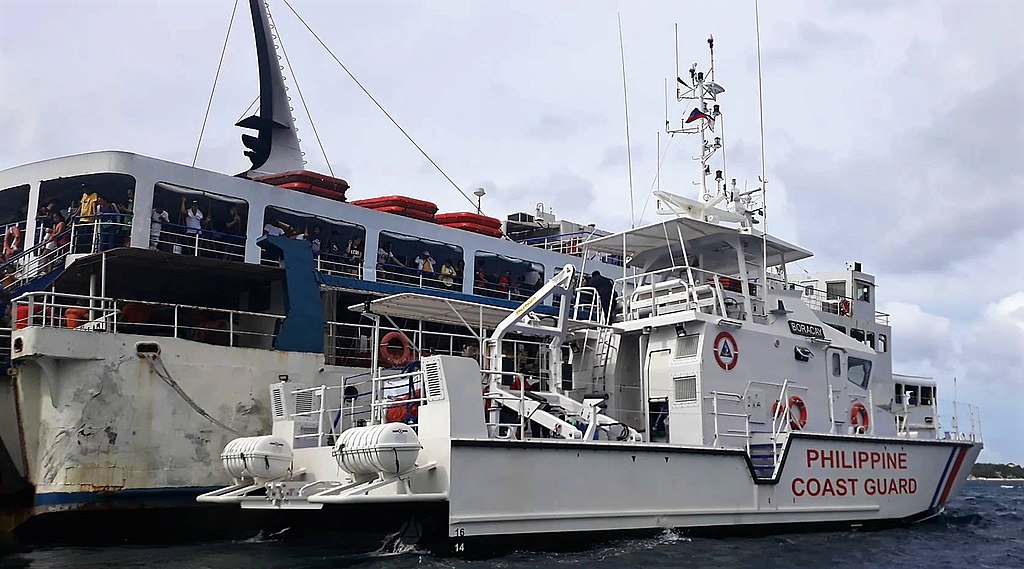
I will just provide some photos with links to the Wikipedia description of the vessels. Note none of the Philippine Coast Guard vessels have any permanently mounted weapons.

JCG_Akitsushima(PLH-32), 9,300 tons (full load), Port of Kobe, July 9, 2017. Photo credit: Hunini, via Wikipedia.

USCGC Stratton moored in San Diego, California. Photo by BryanGoff

BRP Gabriela Silang (OPV-8301) as it sails home to the Philippines. 3 May 2021. Photo: Philippine CG.

44-meter multi-role response vessel BRP Tubbataha during its delivery to the Philippine Coast Guard, Philippine CG PAO photo

BRP Boracay (FPB-2401), 23 October 2018, Philippine CG photo.

“Coast Guard awards contract for long range interceptor III cutter boats” –CG-9

Preliminary general arrangement drawing of the third generation of long range interceptor cutter boats to be made for the Coast Guard. Courtesy of MetalCraft Marine U.S. Inc.

Below is a May 30, 2023 Acquisitions Directorate (CG-9) news release. 


The Coast Guard awarded an indefinite-delivery, indefinite-quantity contract to MetalCraft Marine U.S. Inc. of Watertown, New York, May 23 for construction, testing, delivery and logistical support for the third generation of long range interceptor (LRI III) cutter boats. The contract has a total potential value of $31.3 million. The Coast Guard plans to acquire up to 17 LRI IIIs.

At just under 35 feet in length, the LRI is the larger of two types of cutter boats that are deployed from national security cutters (NSCs). The LRI III is a twin-engine, twin-waterjet driven boat, capable of speeds of 40 knots. The boats will be equipped with a robust navigation and communication system that allows each LRI III to deploy over the horizon, beyond the line of sight of the cutter. The LRI III has a semi-enclosed cabin for protection from weather with interior shock-mitigating seating for five and six additional shock-mitigating seats outside the cabin on the aft deck. The LRI III will replace the current fleet of LRI IIs as those boats approach the end of their service life.

The LRI cutter boat platform is designed to augment Coast Guard NSC mission effectiveness by projecting the parent cutter’s over-the-horizon capability in search and rescue, drug and migrant interdiction, living marine resources, defense readiness, and ports, waterway and coastal security missions.

For more information: Boat Acquisition Program page

“In focus: the 50 cal heavy machine gun in Royal Navy service” –Navy Lookout

British navy sailor fires burst using gun mounting system ASP (Agile, Small-deflection, Precision) armed with a .50 heavy machine gun. (Picture source British Royal Navy)

Navy Lookout has a post about .50 cal guns that goes into the history of the caliber in the Royal Navy, but the real news is that they have made the decision to completely replace the 7.62mm Mk44 (M134) mini gun, which as a rate of fire of 2,000 to 4,000 rounds per minute, with the .50 caliber effective March 2023.

The post makes reference to the 2021 tests of the “Agile, Small-deflection, Precision (ASP)” mounting on board HMS Argyll, but apparently there has been no decision regarding upgraded mounts for the gun.