“FACT SHEET: The Biden Administration Launches New Efforts to Counter Transnational Criminal Organizations and Illicit Drugs” –Expect Changes In Drug Interdiction

The administration has issued a new fact sheet reflecting the growing problem of street use of synthetic opioids, particularly Fentanyl. This is in conjunction with a larger effort against the supply chains for synthetic opioids and the international criminal enterprises that control and use them.

Inevitably the emergence a different “drug of choice” is going to affect the Coast Guard. It probably means a greater role for marine inspection and greater competition from other DHS agencies for drug interdiction dollars.

While the Coast Guard has been the primary agency for interception of cocaine shipments, the importation pathways for synthetic opioids are likely to be different and more diverse.

Interception of precursors will get more attention. Intelligence targets will change.

The system the Coast Guard has developed to track what cargoes are loaded and where, will take on additional importance and may require more detail.

I can only speculate on the changes we will see, but changes are coming.

“AN ALLIED COAST GUARD APPROACH TO COUNTERING CCP MARITIME GRAY ZONE COERCION” –CIMSEC

U.S. Coast Guard Cutter Munro and Japan Coast Guard Patrol Vessel Large Aso, transit together in formation during a maritime engagement in the East China Sea Aug. 25, 2021. U.S. Coast Guard members aboard the Munro deployed to the Western Pacific Ocean to strengthen alliances and partnerships and improve maritime governance and security in the region. (Photo courtesy of Japan Coast Guard)

CIMSEC has an interesting post discussing US and Japan Coast Guards response to China’s Gray Zone activities in the South and East China Seas.

The information on changes to the Japan Coast Guard is valuable, but the author does not seem to be aware of the existing close relationship between the US Navy and Coast Guard.

She advocates that the US Coast Guard follow the Japan Coast Guard model when really it is more a case of Japan Coast Guard organization becoming more like that of US Coast Guard’s organization.

The Japan Coast Guard is not a military service. I have even heard that JCG ships do not use the same fuel as the Japanese Maritime Defense Force. There was a bright line separating the two services.

Her lack of understanding of the USN/USCG relationship is clear. For instance, she states, “RIMPAC has hosted USCG participation on the rare occasion” when in fact Coast Guard participation is the norm. I believe the Coast Guard has participated in every RIMPAC. She also does not seem to be aware of the Coast Guard’s participation in the national intelligence system, that Coast Guard units are frequently trained and inspected by Navy personnel, or that much of the US Coast Guard’s equipment is US Navy standard supplied by the Navy.

There are some interesting bits in post.

“Last year, the Japan-U.S. ACSA (Acquisition and Cross-Servicing Agreement) was applied to the USCG for the first time to enable a JMSDF supply shop to replenish a USCG patrol vessel.”

Clearly the Japan Coast Guard, which has more cutters than the US Coast Guard (but far fewer aircraft), is getting a lot of attention.

Since 2012, the JCG budget and personnel have seen annual increases and the Kishida administration intends to more than double the budget by 2027.

The Indian Coast Guard when through a similar period of rapid growth after the Mumbai terrorist attack.

Finally, with the Kishida administration’s plan to raise defense spending to 2 percent of GDP by FY27, budgetary calculations will now include expenditures on Japan’s Coast Guard as a defense budget line item. Unlike NATO countries, Japan has historically not classified JCG spending as a defense expenditure. While this reform may seem entirely bureaucratic in nature, Japan is the textbook example of how seemingly esoteric organizational reforms can have remarkable impacts on foreign and security policy. By including JCG spending in the defense budget, the government is opening itself up to criticism and pressure to strengthen the coast guard’s role in Japan’s national security and national defense strategies.

Making the Japan Coast Guard’s budget part of the Defense budget may ultimately tie it more closely to the Japanese Maritime Self Defense Force (Navy) than the US Coast Guard is tied to the US Navy, though they have a very long way to go to reach even that degree of cooperation.

Japan has been a remarkable partner in maintaining the rules based order in Asia. They have helped equip the coast guards of the Philippines and Vietnam. They are also committed to helping the smaller island nations of Oceania.

Last WHEC 378, Mellon, Finds a New Home

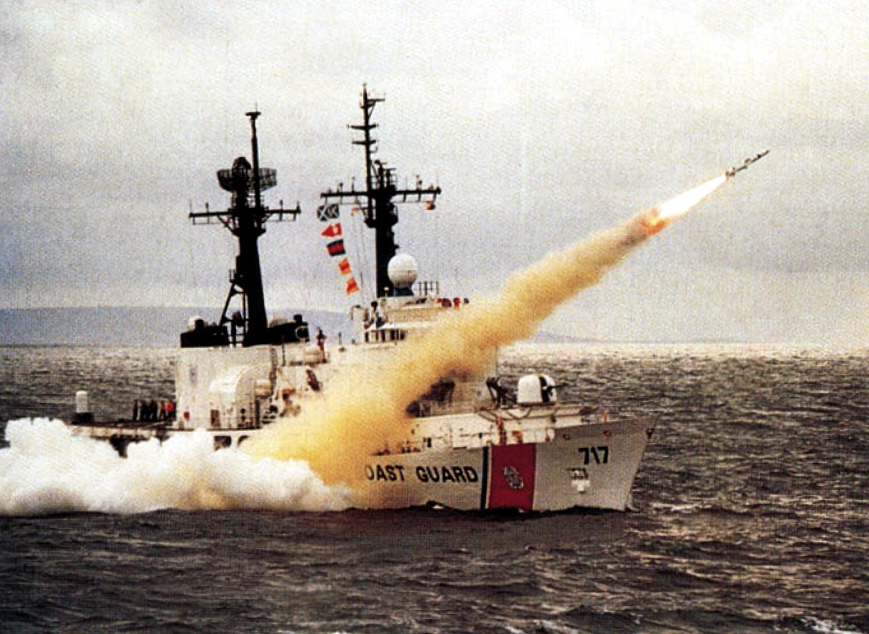
USCGC Mellon seen here launching a Harpoon anti-ship cruise missile in 1990.

After a long period in which she was expected to be transferred to Bahrain, the former USCGC Mellon is now expected to join two of her sisters in service with the Vietnam Coast Guard.

To recap, the twelve Hamilton class cutters, all over 51 years old, are now in service with five nations.

  • The Philippine Navy has three, former USCGC Hamilton (WHEC-715), Dallas (716), and Boutwell (719).
  • The Vietnamese Coast Guard has two, Morgenthau (722) and Midgett (726) and will get Mellon (717).
  • The Nigerian Navy has two, Chase (718) and Gallatin (721).
  • The Sri Lanka Navy has two, Sherman (720) and Munro (724).
  • The Bangladesh Navy has two, Rush (723) and Jarvis (725).

More info including new names here.

Thanks to Mark R. C. for bringing this to my attention.

Sea Air Space 2023, Recap

Sea, Air Space 2023 was conducted April 3,4,5. Naval News has provided three videos which I have embedded below. Accompanying each video there is also an outline of the subject matter and a time stamp that will allow you to go directly to subjects of specific interest.

The things I thought might be of particular interest to the Coast Guard included:

  • Day 1: Thales CAPTAS-4
  • Day 2: Metal Shark LRUSV for the USMC and HERO 120 loitering munition for the LRUSV
  • Day 3: BAE Systems Mk 38 Mod 3 gun system  and Aerovironment Switchblade loitering munitions

The Mk38 Mod3 presentation discusses available upgrades to the systems which include the 30mm gun with air burst ammunition, greater ammunition capacity, greater elevation, and improved software for engaging air targets. Seems, at the very least, these should be applied to the PATFORSWA Coast Guard systems.

In addition, you may also want to take a look at the Navy Leagues own videos which provide a taste of the speakers’ presentations and an overview of the program’s objectives.

Sea Air Space 2023, Day 1: Maritime Strike, HALO, Thales, GE Marine and SPY-6

  • 01:05 – Northrop Grumman new Maritime Strike missile
  • 03:01 – Interview with RDML Tedford, PEO U&W, on HALO
  • 04:30 – Thales Sonoflash, CAPTAS-4 and SAMDIS NG
  • 07:07 – GE Marine lightweight composite gas turbine enclosure
  • 08:53 – Raytheon’s latest SPY-6 contract award (DDG 51 Flight IIA backfit)

Sea Air Space 2023, Day 2 : General Atomics, SERCO NOMARS, Metal Shark LRUSV, Alseamar

  • 00:46 – General Atomics Long Range Maneuvering Projectile (LRMP)
  • 04:38 – SERCO NOMARS (No Manning Required Ship) USV project
  • 06:37 – Metal Shark LRUSV for the USMC
  • 07:39 -HERO 120 loitering munition for the LRUSV
  • 07:48 – ALSMEAR SeaExplorer glider

Sea Air Space 2023, Day 3: Insitu, BAE Systems, NASSCO, Sparton, Aerovironment

  • 01:26 – Insitu Integrator VTOL
  • 04:21 – BAE Systems Mk 38 Mod 3 gun system
  • 07:30 – General Dynamics NASSCO ship construction and ship repair yard
  • 10:01 – Sparton Sonobuoy and UAV launching system
  • 12:37 – Aerovironment Switchblade loitering munitions and Blackwing submarine-launched UAV

2023 Coast Guard Essay Contest Cosponsored by Susan Curtin and the U.S. Naval Institute

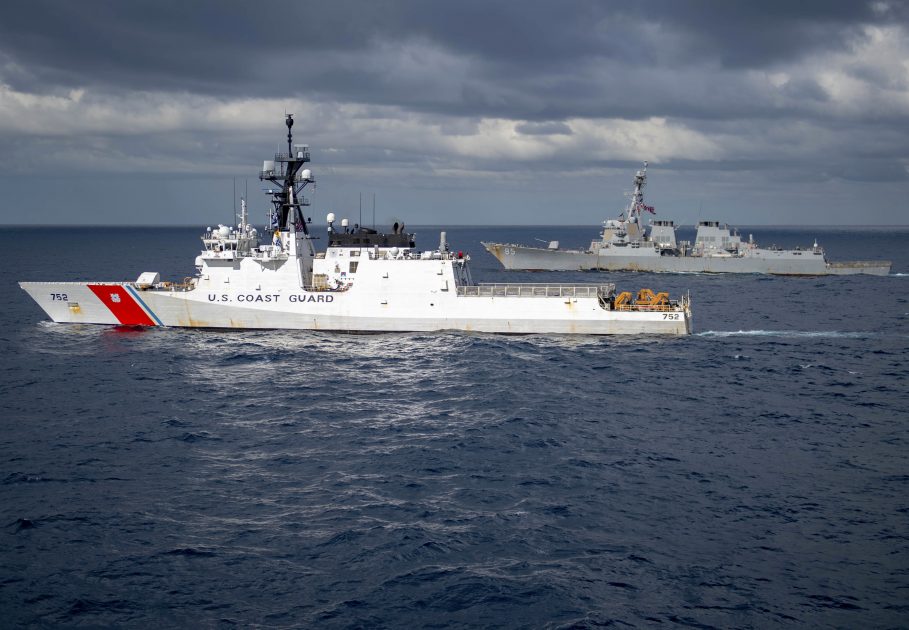
USCGC Stratton (WMSL-752), left, and the U.S. Navy Arleigh Burke-class guided-missile destroyer USS McCampbell (DDG-85) maneuver in formation during Talisman Sabre 2019 on July 11, 2019. US Navy Photo

I am just passing this along in hopes that one of my readers might be interested. The deadline is coming up fast. The original source is here

The Challenge

What can the U.S. Coast Guard do today to be more effective tomorrow? All topics are welcome, and no issue is too big or too small. Authors might consider:

  • Changes required to meet new global missions
  • Barriers to mission execution and how to remove them
  • How best to integrate the Coast Guard’s unique authorities and capabilities with the other Sea Services
  • Innovative ideas to help make the Coast Guard a more capable instrument of national power globally
  • How to better leverage partnerships at home and abroad

Consider how to make the Coast Guard stronger. This does not mean authors cannot be critical and take on “it’s always been done that way” practices. In fact, we encourage you to push the “dare factor.”

Submission Guidelines

  • Open to all contributors — active-duty, military, reservists, veterans, and civilians.
  • Essays must be no more than 2,500 words, excluding end notes and sources. Include word count on title page of the essay.
  • Essays are judged in the blind. Do not include author name(s) on the title page or within the body of the essay.
  • Submit essay as a Word document at http://www.usni.org/cgessay no later than 30 April 2023.
  • Essay must be original and not previously published (online or in print) or being considered for publication elsewhere.

First Prize: $5,000

Second Prize: $2,500

Third Prize: $1,500

Selection Process

The Proceedings staff members will evaluate every essay and screen the top essays to a special Essay Selection Committee of at least six members who will include two members of the Naval Institute’s Editorial Board and four subject experts. All essays will be judged in the blind—i.e., the Proceedings staff members and judges will not know the authors of the essays. Since we receive so many submissions (more than 100 per month!), notification of acceptance on one of our platforms can take 4-6 months. We will notify you via email if your essay is selected for a prize or for publication.

Announcement of the Winners

Winners will be published in the August 2023 Proceedings.

Deadline

Submit your Essay

Please log in or create an account in order to make a submission.

“U.S. Coast Guard, U.S. Navy, Mexican Navy and Royal Canadian Navy participate in North American Maritime Security Initiative” –D11

Illustration of a Mexican Navy Oaxaca class Offshore Patrol Vessel. ARM Hidalgo is a vessel of this class.

Below is a news release from District 11 you can also see on the Coast Guard News website. There are additional photos there. I have put together photos to illustrate the type vessels involved.

190729-N-AD499-1166 SEATTLE (July 29, 2019) The Royal Canadian Navy Kingston-class coastal defence vessel HMCS Edmonton (MM 703) participates in a parade of ships in Elliott Bay during the 70th annual Seattle Fleet Week. Seattle Fleet Week 2019 is a time-honored celebration of the sea services and provides an opportunity for the citizens of Washington to meet Sailors and Coast Guardsmen, as well as witness firsthand the latest capabilities of today’s maritime services. (U.S. Navy photo by Mass Communication Specialist 3rd Class Victoria Foley/Released)

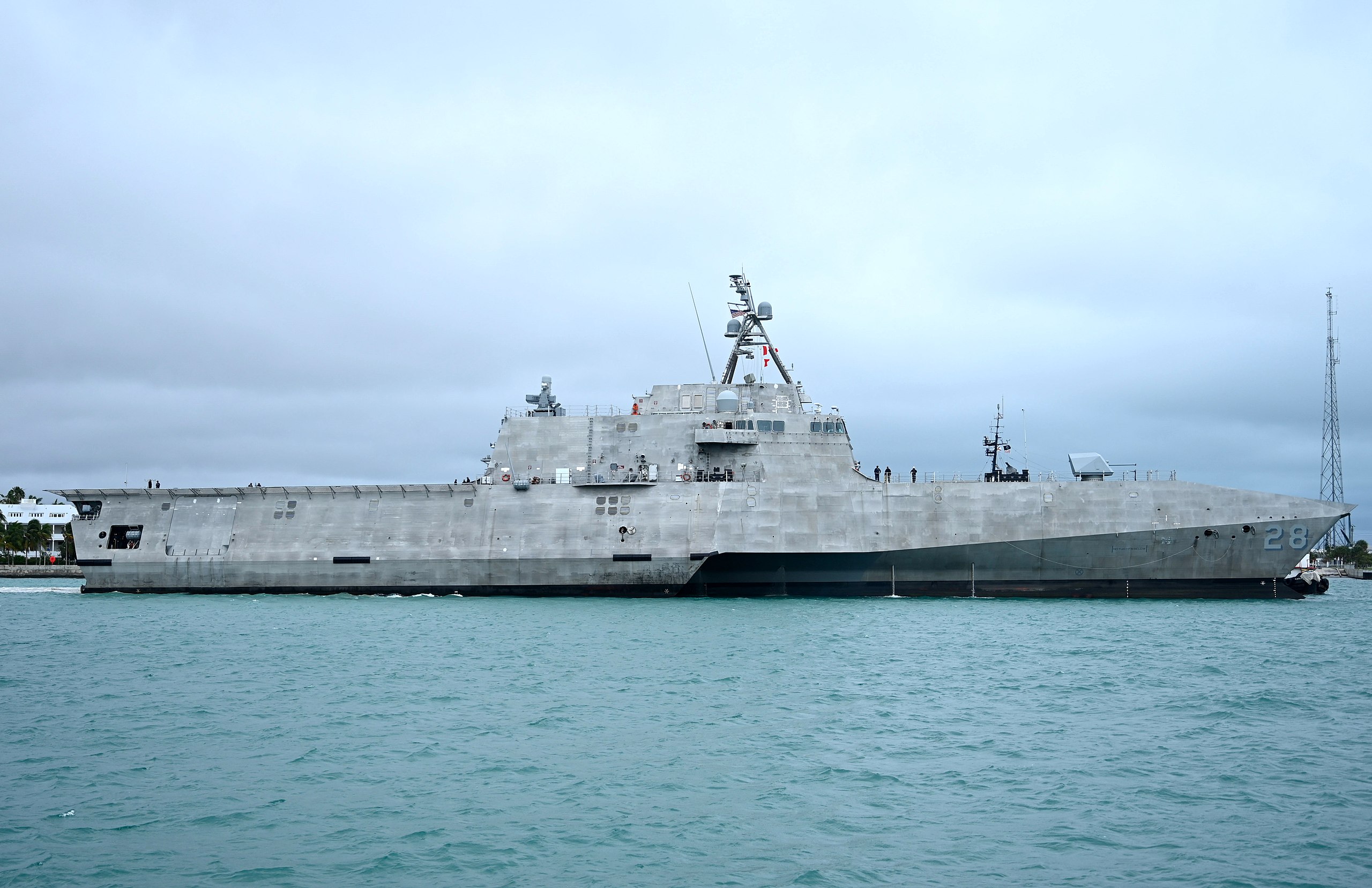
220209-N-IW125-1091 KEY WEST, Fla. (Feb. 9, 2022) The Navy’s 14th Independence-variant littoral combat ship, USS Savannah (LCS 28), pulls into Truman Harbor in Key West, Fla. Feb. 9, 2022. (U.S. Navy photo by Mass Communication Specialist 2nd Class Nicholas V. Huynh)

NEWPORT, OR, UNITED STATES
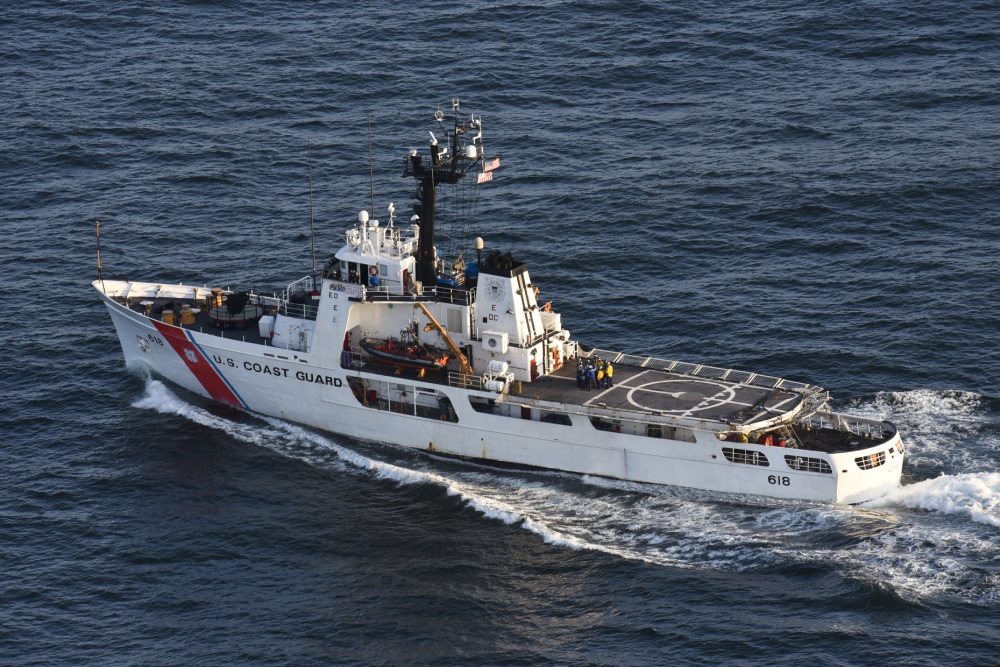
08.16.2019, Coast Guard Cutter Active (WMEC 618) transits across the Pacific Ocean near Newport, Ore., in support of Operation Pacific Fortune on Aug. 16, 2019. The Active is a 210-foot Medium Endurance based out of Port Angeles, Wash. (U.S. Coast Guard photo by Petty Officer 2nd Class Steve Strohmaier)

 April 6, 2023

U.S. Coast Guard, U.S. Navy, Mexican Navy and Royal Canadian Navy participate in North American Maritime Security Initiative

ALAMEDA, Calif. — The U.S. Coast Guard, along with the U.S. Navy, Mexican Navy (SEMAR) and the Royal Canadian Navy (RCN) participated in the North American Maritime Security Initiative (NAMSI) exercise off the coast of Manzanillo, Mexico March 27-31.

First instituted in 2008, NAMSI is an interagency and tri-lateral forum among U.S., Mexican and Canadian maritime commands intended to develop and refine maritime operations, as well as synchronize training and operational interoperability amongst forces of the three nations. The three participating nations actively seek opportunities to operate together and strengthen their cohesive approach to enhance regional maritime security in North America.

The U.S. Coast Guard District 11 and SEMAR collaborate extensively under NAMSI, conducting an average of four multinational passing exercises each year. The NAMSI Pacific Exercise (PACEX) 2023 is a full-scale Maritime Law Enforcement (MLE) based exercise that facilitates MLE operations with a SAR nexus built in. The exercise is intended to strengthen the crew’s knowledge in handling various situations and offers unique training scenarios like communication drills or maneuvering exercises.

“This exercise provides U.S., Mexico and Canada the opportunity to develop and refine our training and operations as partner nations,” said Rear Adm. Andrew Sugimoto, commander, U.S. Coast Guard District 11. “We take pride in our ability to strengthen partnerships and interoperability among the nations’ sea services.”

The U.S. Coast Guard Cutter Active and the U.S. Navy Independence-variant littoral combat ship USS Savannah (LCS 28), joined the SEMAR ship ARM Hidalgo and the RCN ship HMCS Edmonton, off the coast of Manzanillo in support of the NAMSI PACEX 2023. The operational units were supported by aviation assets from the U.S. Coast Guard and SEMAR, as well as the respective command centers in U.S. Coast Guard District 11, U.S. Navy 3rd fleet, SEMAR Tenth Naval Region and SEMAR headquarters.

The crews of Active and U.S. Coast Guard cutter Benjamin Bottoms also deployed in support of Operation GREEN FLASH (OGF). OGF is the operationalization of NAMSI procedures leveraging U.S., Canadian, and Mexican maritime forces, with the intent of disrupting transnational criminal organization activity that occurs in the shared maritime environment. U.S. Coast Guard District 11 organizes annual iterations of OGF which strengthens the relationship between the major stakeholders under NAMSI. Historically, there have been two iterations of OGF a year, averaging 30 days each.

“The cutter Active’s crew was excited to conduct this mission alongside our partners given its importance for the safety and security of the shared maritime environment,” said Cmdr. Brian Tesson, commanding officer, U.S. Coast Guard Cutter Active. “The partnerships between the U.S., Mexico and Canada strengthened our overall maritime security posture while reinforcing the mutual esprit de corps between our services.”

Hero 120 Loitering Munition

The Navy/Marine Corps has a new weapon in their inventory, and it may be just what the Coast Guard needs to deal with the potential threat of small, fast, highly maneuverable craft. It is a loitering munition, a drone with a warhead, making it a kind of slow cruise missile with an ability to abort.

Hero 120 will be going on the Marine Corps Long Range Unmanned Surface Vessel (LRUSV) as well as Marine manned ground vehicles.

Weight (with canister): 18 kg (40 pounds)
Warhead: 4.5 kg (10 pounds)
Range: 60+ km (32.4 nautical miles)
Endurance: 60 min
Engine: Electrical
Launch method: Single/Multi-Canister

Range is to some extent apparently limited by line of sight, but this could be used from land or from virtually any patrol boat.

Take a look.

“USS Farragut, Coast Guard offloads more than $69 million in illegal narcotics” –D7

190914-N-KK394-029.MAYPORT, Fla. (Sept. 14, 2019) The Arleigh Burke-class guided-missile destroyer USS Farragut (DDG 99) departs Naval Station Mayport. (U.S. Navy photo by Mass Communication Specialist 2nd Class Anderson W. Branch/Released)

Below is a District Seven News Release. Just wanted to point out a couple of things.

Unlike most of these offloads, this one involved only drugs seized by a single ship. Second it is unusual that drugs are offloaded from a Navy ship. Probably a good idea to let them get the more visible credit that comes with the offload once in a while. 

This destroyer did four intercepts, so they certainly deserve a lot of credit, along with the HSM-60 helicopter and CG LE detachments.

Would have been nice to know how many days they were doing the drug interdiction mission.


 April 5, 2023

USS Farragut, Coast Guard offloads more than $69 million in illegal narcotics

Seventh Coast Guard District

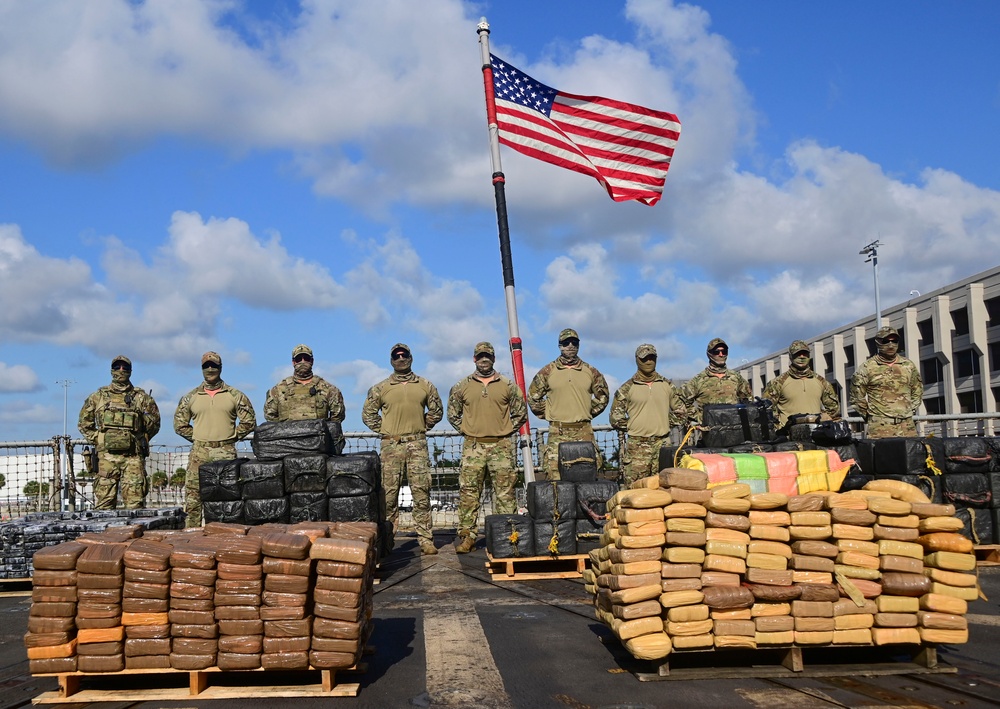
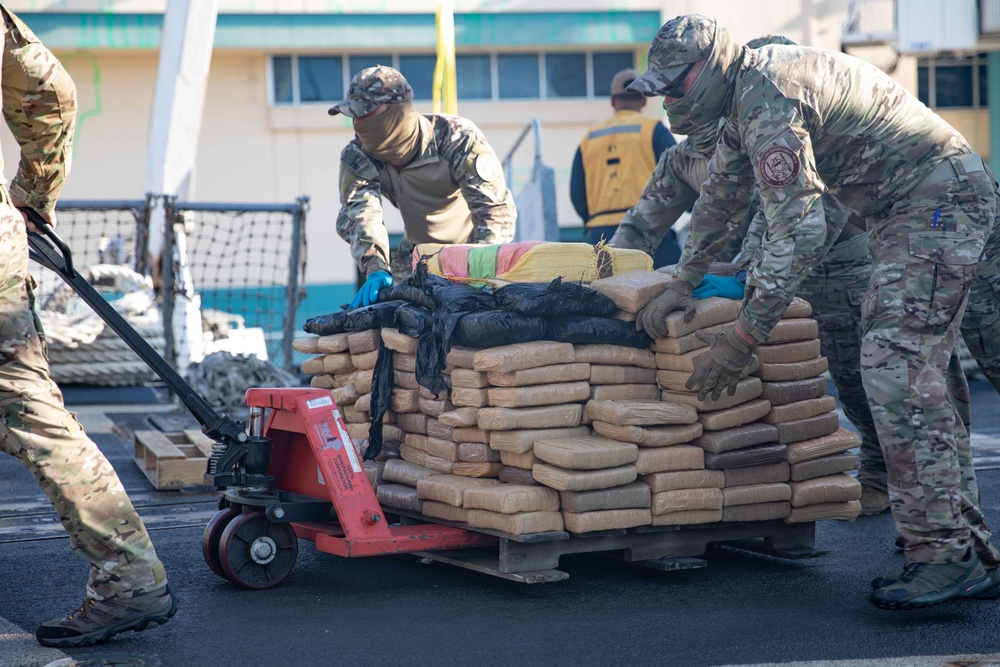
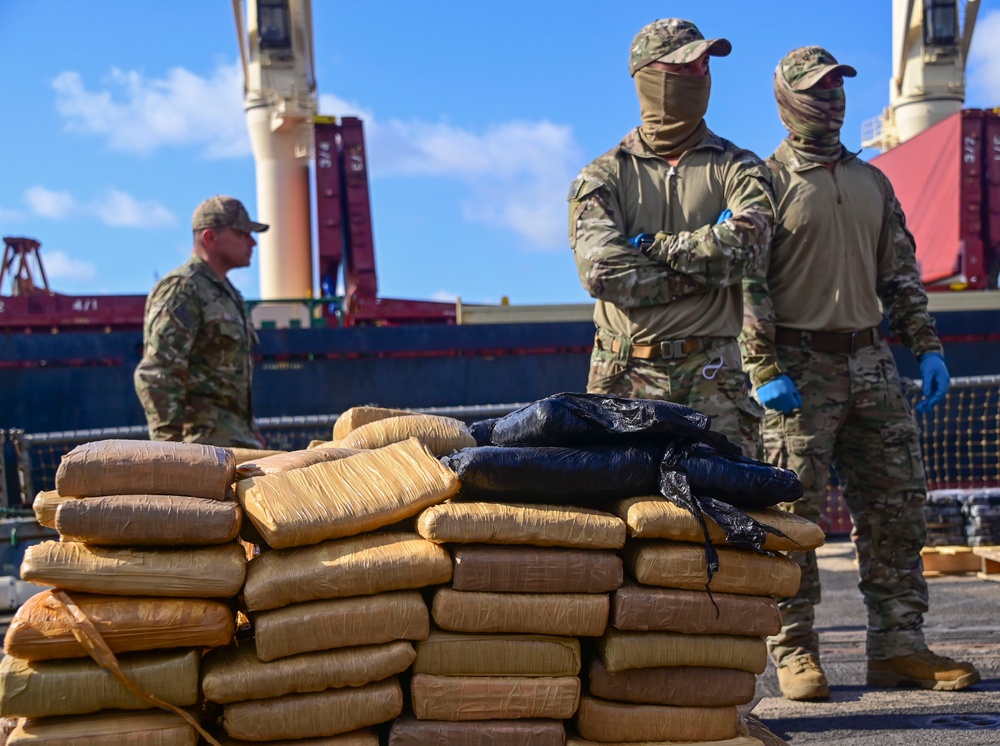
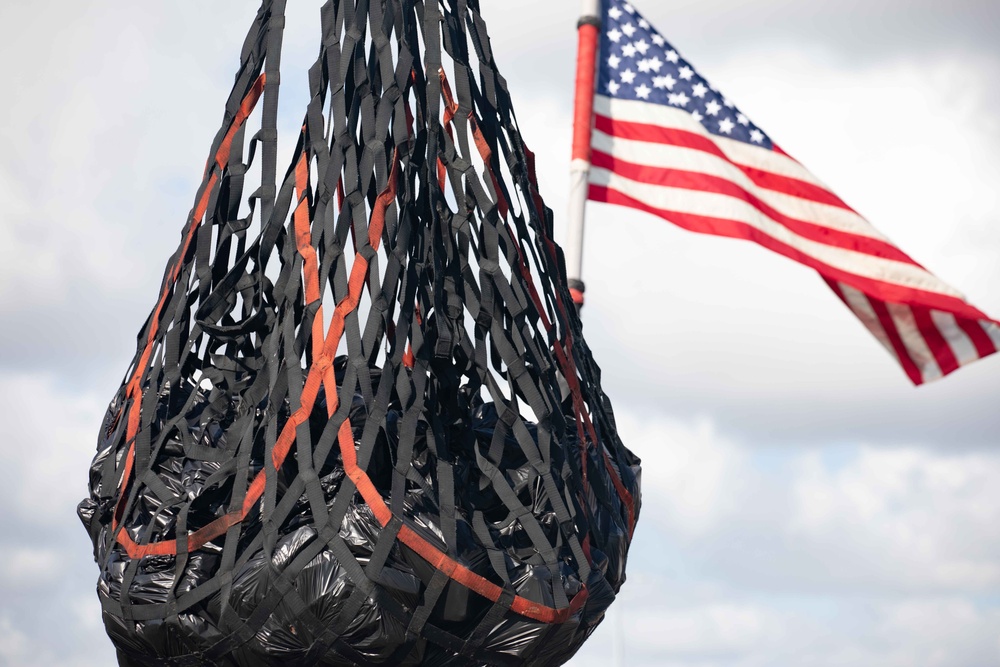
A member of U.S. Coast Guard Law Enforcement Detachment 406 offloads interdicted narcotics aboard USS Farragut (DDG 99) in Port Everglades, Florida, April 4, 2023. The offloaded drugs were seized from four go-fast smuggling interdictions by crew members of Coast Guard LEDET 406, Navy Combat Element (CEL) and Helicopter Maritime Strike Squadron Six Zero (HSM-60) in the Eastern Pacific Ocean. (U.S. Coast Guard photo by Petty Officer 2nd Class Laticia Sims)Members of U.S. Coast Guard Law Enforcement Detachment 406 pose for a photo with $69 million in illegal narcotics aboard USS Farragut (DDG 99) in Port Everglades, Florida, April 4, 2023. The offloaded drugs were seized from four go-fast smuggling interdictions by crew members of Coast Guard LEDET 406, Navy Combat Element (CEL) and Helicopter Maritime Strike Squadron Six Zero (HSM-60) in the Eastern Pacific Ocean. (U.S. Coast Guard photo by Petty Officer 3rd Class Eric Rodriguez) Members of U.S. Coast Guard Law Enforcement Detachment 406 push bales of illegal narcotics aboard USS Farragut (DDG 99) for a drug offload in Port Everglades, Florida, April 4, 2023. The offloaded drugs were seized from four go-fast smuggling interdictions by crew members of Coast Guard LEDET 406, Navy Combat Element (CEL) and Helicopter Maritime Strike Squadron Six Zero (HSM-60) in the Eastern Pacific Ocean. (U.S. Navy photo by Mass Communication Specialist 2nd Class Chelsea Palmer) https://d1ldvf68ux039x.cloudfront.net/thumbs/photos/2304/7724658/1000w_q95.jpg Bales of illegal drugs, worth an estimated $69 million, are offloaded off USS Farragut (DDG 99) in Port Everglades, Florida, April 4, 2023. The offloaded drugs were seized from four go-fast smuggling interdictions by crew members of Coast Guard LEDET 406, Navy Combat Element (CEL) and Helicopter Maritime Strike Squadron Six Zero (HSM-60) in the Eastern Pacific Ocean. (U.S. Navy photo by Mass Communication Specialist 2nd Class Chelsea Palmer)


MIAMI — The crew of USS Farragut (DDG 99) offloaded approximately 2,314 kilograms of cocaine and 1,986 pounds of marijuana worth a combined $69 million in Port Everglades, Florida Tuesday. The suspected smugglers will face prosecution in federal court by the Department of Justice.

The offloaded drugs were seized from four go-fast smuggling vessel interdictions by the Farragut crew with an embarked Coast Guard Law Enforcement Detachment (LEDET) 406 and Navy Combat Element (CEL) One from the “Jaguars” of Helicopter Maritime Strike Squadron Six Zero (HSM-60) in the Eastern Pacific Ocean.

“We were proud to work with the U.S. Coast Guard on the frontline of the threat that transnational drug trafficking presents to national security,” said Cmdr. Nicholas Gurley, commanding officer of USS Farragut. “Our experienced crew, HSM-60 CEL One and the members of our LEDET were essential to the success of this operation.”

Numerous U.S. agencies from the Departments of Defense, Justice, and Homeland Security, along with allied and international partners, cooperate in the effort to combat transnational organized crime. The fight against drug cartels in the Caribbean and Eastern Pacific Ocean is coordinated by Joint Interagency Task Force-South, based in Key West, and requires a unity of effort in all phases, from detection and monitoring to interdiction and apprehension and finally to criminal prosecution by international partners and U.S. Attorneys’ Offices. The law enforcement phase of counter-smuggling operations in the Eastern Pacific Ocean is conducted under the authority of the Eleventh Coast Guard District, headquartered in Alameda, California. The interdictions, including the actual boardings, are led and conducted by members of the U.S. Coast Guard.

The Coast Guard is both a military service and the nation’s primary maritime law enforcement agency. For information on how to join the U.S. Coast Guard, visit www.GoCoastGuard.com to learn about active duty and reserve officer and enlisted opportunities. Information on how to apply to the U.S. Coast Guard Academy can be found at http://www.uscga.edu. For breaking news, follow us on Twitter. For additional information, find us on Facebook and Instagram.

“Navy Expands Unmanned Operations to 4th Fleet” –Defense One

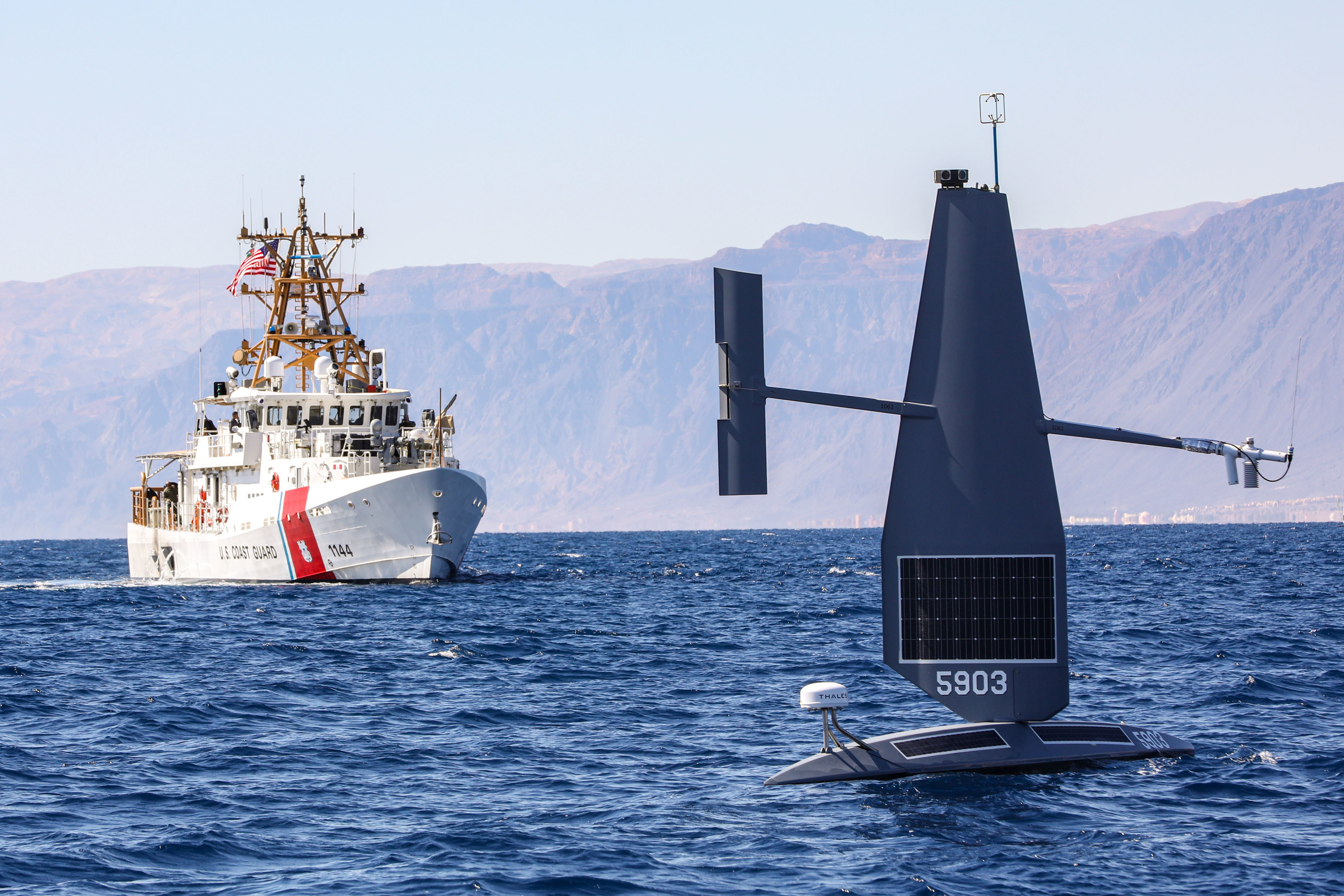
GULF OF AQABA (Feb. 13, 2022) The U.S. Coast Guard Sentinel-class cutter USCGC Glen Harris (WPC 1144) sails near a U.S sail drone explorer during the International Maritime Exercise/Cutlass Express (IMX) 2022, Feb. 13, 2022. IMX/CE 2022 is the largest multinational training event in the Middle East, involving more than 60 nations and international organizations committed to enhancing partnerships and interoperability to strengthen maritime security and stability. (U.S. Army photo by Cpl. DeAndre Dawkins)

Defense One reports,

“Drones are heading to the southern waters of 4th Fleet, which will follow 5th Fleet’s pioneering experiments with unmanned craft in the Middle East, Navy Secretary Carlos Del Toro announced Tuesday at the Navy League’s 2023 Sea-Air-Space Conference.”

This is great, and not unexpected, but I noted two things that concern me. First there was not mention of making this an international effort, as has been the case in 5th Fleet, and second, that they want to start in the Caribbean where we already have excellent maritime domain awareness, instead of the eastern Pacific drug transit zone where these are really needed.

Del Toro added, “it’s fair to say however, you want to start small and build upon it, obviously. And so you know, focus perhaps on the Caribbean Basin first, and then expand beyond that in the future.”

I can see that they would be more comfortable operating UxVs in the Caribbean, because it is closer to home, but in the Eastern Pacific we could look at Uncrewed Surface Vessels (USV) using acoustic sensors to help detect semisubmersibles. This is something that is not being done in 5th Fleet so it would provide a different sensor and target set and perhaps an opportunity to cross over some of the learning to ASW.

Of course, most of the 4th Fleet’s surface ships are Coast Guard Cutters.

“US Sending Experimental Anti-Drone Weapons to Ukraine” –DefenseOne

Shahed 136 drones. Iranian military photo

Defense One has a post about a new anti-drone system that is expected to be sent to Ukraine to counter Russia’s Iranian made Shahed-136 suicide drones.

In addition to APKWS laser guided rockets,

“The system also includes a M240 machine-gun mount and an electronic warfare system that can take control of a commercial drone, including any DJI-brand system not operating with advanced encryption…”

The Coast Guard should have an interest in a counter drone capability both for the Webber class WPCs based in Bahrain and for domestic counter terrorism. Such a system, combining APKWS with a 30mm gun, would also be useful against other potential threats as well.