“U.S. Blames Iran for Drone Attack on Tanker Near Oman” –USNI

Shahed 136 drones. Iranian military photo

US Naval Institute’s News Service reports,

U.S. Central Command and Israeli officials are blaming Iran for a Tuesday attack on an oil tanker linked to an Israeli billionaire off the coast of Oman.

Tanker Pacific Zircon was 150 miles off the coast of Oman when what U.S. officials said was an unmanned aerial vehicle hit the ship at about 3:30 p.m. local time, according to the shipping company.

Interestingly this second attack was on a ship linked to Idan Ofer, brother of the Israeli billionaire, Eyal Ofer, linked to the tanker, Mercer Street, attacked in a similar manner in July 2021.

The latest attack did not result in any injuries, unlike the earlier attack that resulted in the death of two crewmembers. Both attacks occured South of Oman in the Northern Indian Ocean.

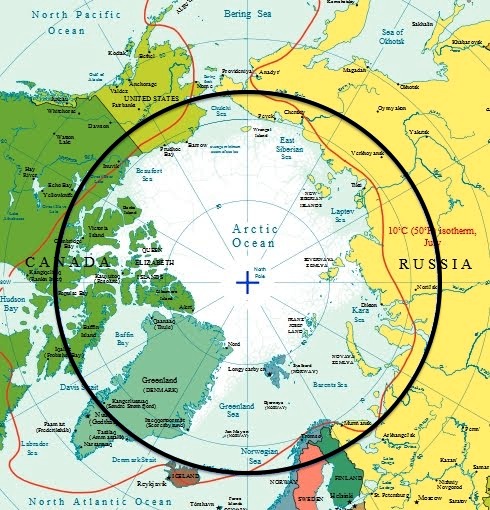
“Canada Lacks Ability to Track Increasing Arctic Ship Traffic -Auditor” –gCaptain

gCaptain reports,

The Canadian government’s ability to track foreign vessels through the Arctic is woefully inadequate and the situation may get worse, according to a new report by the Auditor General of Canada.

Domestic surveillance of the region is incomplete, data that’s collected is insufficient, and there is no effective way of sharing information on maritime traffic, the watchdog said. Meanwhile, new icebreakers, aircraft, satellites and infrastructure required to fix these problems have been delayed to the point where some equipment likely will be retired before it can be replaced.

“U.S. Naval Forces Intercept Explosive Material Bound for Yemen” –CENTCOM

USCGC John Scheuerman (WPC-1146) and USCGC Clarence Sutphin Jr. (WPC-1147) enroute PATFORSWA

Below is from the U.S. Naval Forces Central CommandCombined Maritime Forces – U.S. 5th Fleet website

U.S. Naval Forces Intercept Explosive Material Bound for Yemen

By U.S. Naval Forces Central Command Public Affairs | November 15, 2022

MANAMA, Bahrain —

On Nov. 8, U.S. 5th Fleet intercepted a fishing vessel in the Gulf of Oman smuggling lethal aid, including a large quantity of explosive material, from Iran to Yemen.

U.S. Coast Guard ship USCGC John Scheuerman (WPC 1146) (emphasis applied–Chuck) and guided-missile destroyer USS The Sullivans (DDG 68) interdicted the vessel as it transited international waters. Patrol coastal ship USS Hurricane (PC 3) and Navy explosive ordnance disposal technicians from U.S. 5th Fleet’s Task Force 56 also assisted during a weeklong effort to fully search the vessel and verify the type of material found.

U.S. forces discovered more than 70 tons of ammonium perchlorate, a powerful oxidizer commonly used to make rocket and missile fuel as well as explosives. This is U.S. 5th Fleet’s first ever interdiction of ammonium perchlorate.

“This was a massive amount of explosive material, enough to fuel more than a dozen medium-range ballistic missiles depending on the size,” said Vice Adm. Brad Cooper, commander of U.S. Naval Forces Central Command, U.S. 5th Fleet and Combined Maritime Forces. “The unlawful transfer of lethal aid from Iran does not go unnoticed. It is irresponsible, dangerous and leads to violence and instability across the Middle East.”

The search also found more than 100 tons of urea fertilizer. Urea is a chemical compound with agricultural applications that is also known for use as an explosive precursor.

The vessel and its four Yemeni crewmembers were intercepted while transiting from Iran along a route historically used to traffic weapons to the Houthis in Yemen. The direct or indirect supply, sale or transfer of weapons to the Houthis violates U.N. Security Council Resolution 2216 and international law.

U.S. forces sank the vessel Nov. 13 in the Gulf of Oman after determining it was a hazard to navigation for commercial shipping. The four crewmembers were transferred to Yemen for repatriation Nov. 15 when The Sullivans completed an at-sea exchange in the Gulf of Aden with the Yemen Coast Guard.

“Alongside our partner forces, CENTCOM is committed to security and stability of the region and to deterring the illegal and destabilizing flow of lethal material into the region over land, in the air, and the sea,” said Gen. Michael “Erik” Kurilla, U.S. Central Command (CENTCOM) commander.

U.S. 5th Fleet previously seized 40 tons of urea fertilizer Jan. 18 when guided-missile destroyer USS Cole (DDG 67) and patrol coastal ship USS Chinook (PC 9) interdicted a another fishing vessel in the Gulf of Oman that had attempted to smuggle illicit weapons off the coast of Somalia months earlier.

The U.S. 5th Fleet operating area includes 21 countries, the Arabian Gulf, Gulf of Oman, Red Sea, parts of the Indian Ocean and three critical choke points at the Strait of Hormuz, Bab al-Mandeb and Suez Canal.

“Why a small shipyard merger could signal bigger problems for the US military” –Breaking Defense

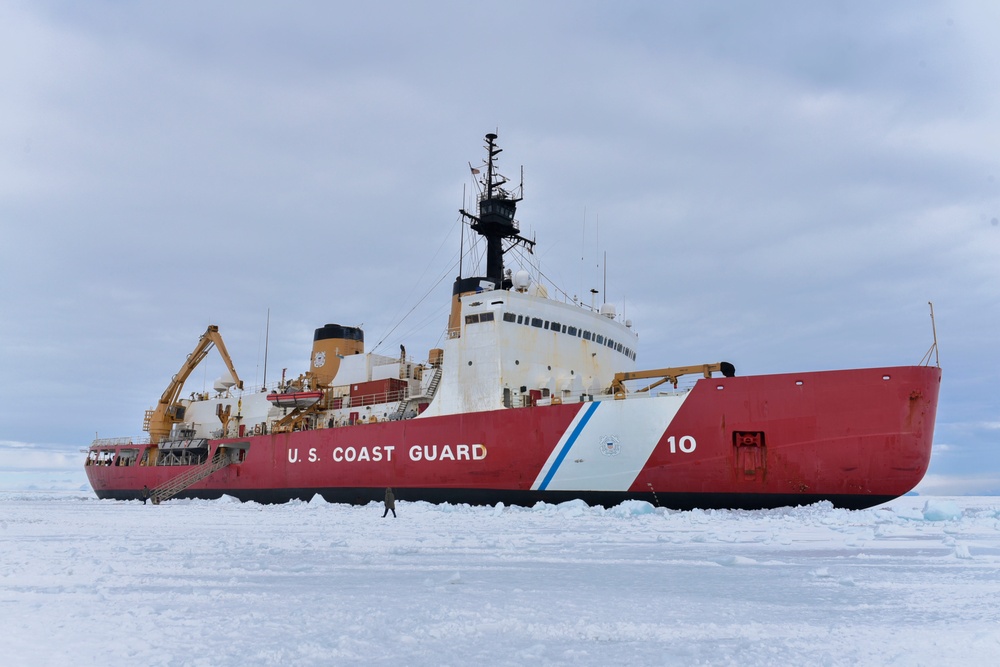
Polar Security Cutter. Image credit VT Halter Marine.

Breaking Defense reports,

“…there are factors specific to Halter Marine that may have made it ripe for takeover. But analysts told Breaking Defense that the merger may be a bellwether for further shipyard consolidation, limiting the Navy’s options at a time when the service is trying to grow its fleet. It’s an eventuality the Navy could forestall, if only it could get its own shipbuilding plans in order.

I would agree that the Navy needs to get their shipbuilding act together. Shipbuilding is an unreliable business in the US unless you are one of the five major shipyards that the Navy regularly deals with, but I believe this particular merger is what it is, a case of a badly managed capability being taken over by a better management team, one that has been delivering cutters like clockwork, on time and on budget, even after being hit by a hurricane. All to the good. There is no loss of building capacity. In fact, included in the deal are two shipyards that are corrently lying dormant.

I don’t see any reduction in capacity. In fact, it is likely to result in increased productivity.

Thanks to Walter for prompting me to respond to this. 

“MEDIA ADVISORY: America’s only heavy icebreaker departs Seattle Wednesday; bound for Antarctica” –PACAREA

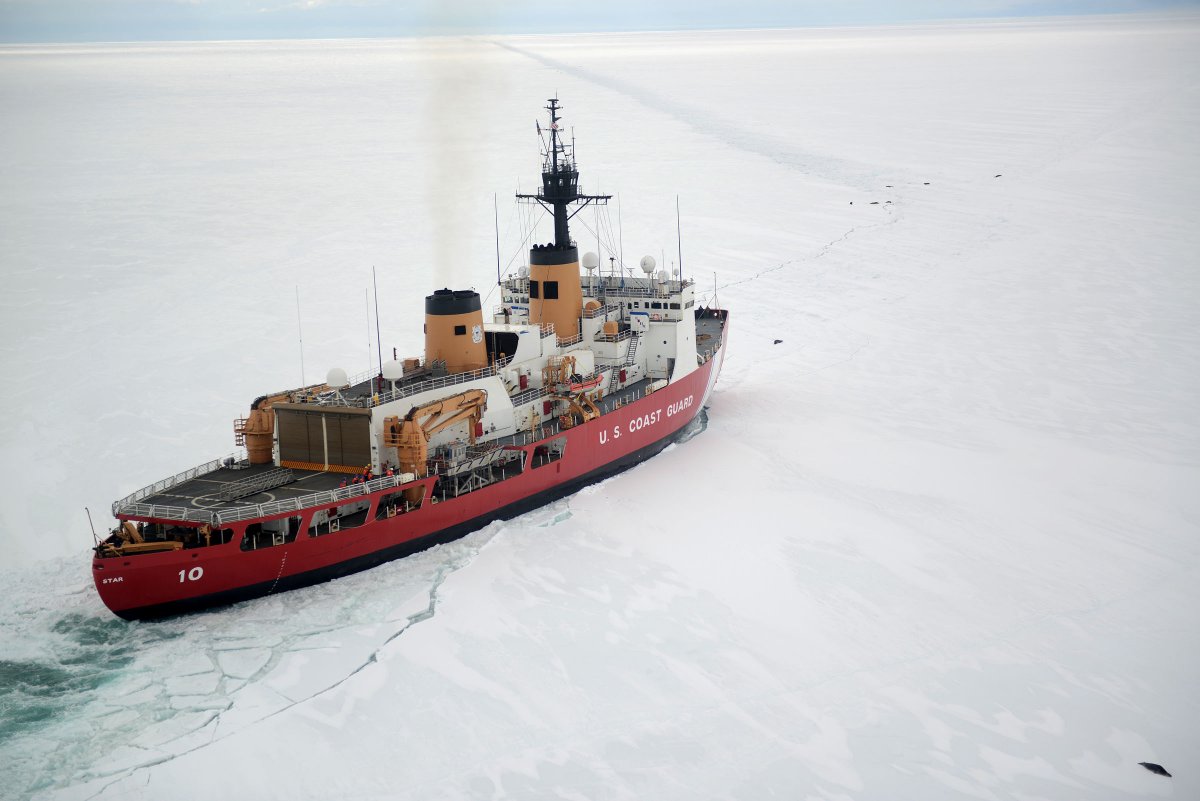
The Coast Guard Cutter Polar Star cuts through Antarctic ice in the Ross Sea near a large group of seals as the ship’s crew creates a navigation channel for supply ships, January 16, 2017. The resupply channel is an essential part of the yearly delivery of essential supplies to the National Science Foundation’s McMurdo Station.US Coast Guard photo by Chief Petty Officer David Mosley

Media Advisory

U.S. Coast Guard Pacific Area

MEDIA ADVISORY: America’s only heavy icebreaker departs Seattle Wednesday; bound for Antarctica

Polar Star and crew in Antarctica

Editors’ Note: Click on images to download high resolution version.

Who: U.S. Coast Guard Cutter Polar Star (WAGB 10) and crew 

What: Polar Star and crew are scheduled to depart Seattle, en route to Antarctica in support of Operation Deep Freeze

When: Wednesday, Nov. 16, 2022 at 2 p.m.

Where: U.S. Coast Guard Base Seattle

SEATTLE — The United States’ only heavy icebreaker, Coast Guard Cutter Polar Star, is scheduled to depart its Seattle homeport, Wednesday.

This annual journey to Antarctica is conducted in support of Operation Deep Freeze, a joint military service mission to resupply the United States Antarctic stations of the National Science Foundation, the lead agency for the United States Antarctic Program.

The Polar Star crew conducts this essential mission to create a navigable path through ice as thick as 21-feet, to allow refuel and resupply ships to reach McMurdo Station, the largest Antarctic station and the logistics hub of the U.S. Antarctic Program.

The U.S. Coast Guard is recapitalizing its polar icebreaker fleet to ensure access to the Polar Regions, project U.S. sovereignty, and to protect the country’s economic, environmental and national security interests. To support this endeavor, the U.S. Coast Guard is exploring options to expand Base Seattle infrastructure to support the growing icebreaker fleet.

Media are encouraged to contact Coast Guard District 13 Public Affairs at 206-251-3237 or uscgd13@gmail.com to arrange an escort at Base Seattle to attend the ship’s departure. The commanding officer of the Polar Star, Capt. Keith Ropella, may be available for interview prior to the ship’s departure.

Indonesia Building Two 90 meter OPVs

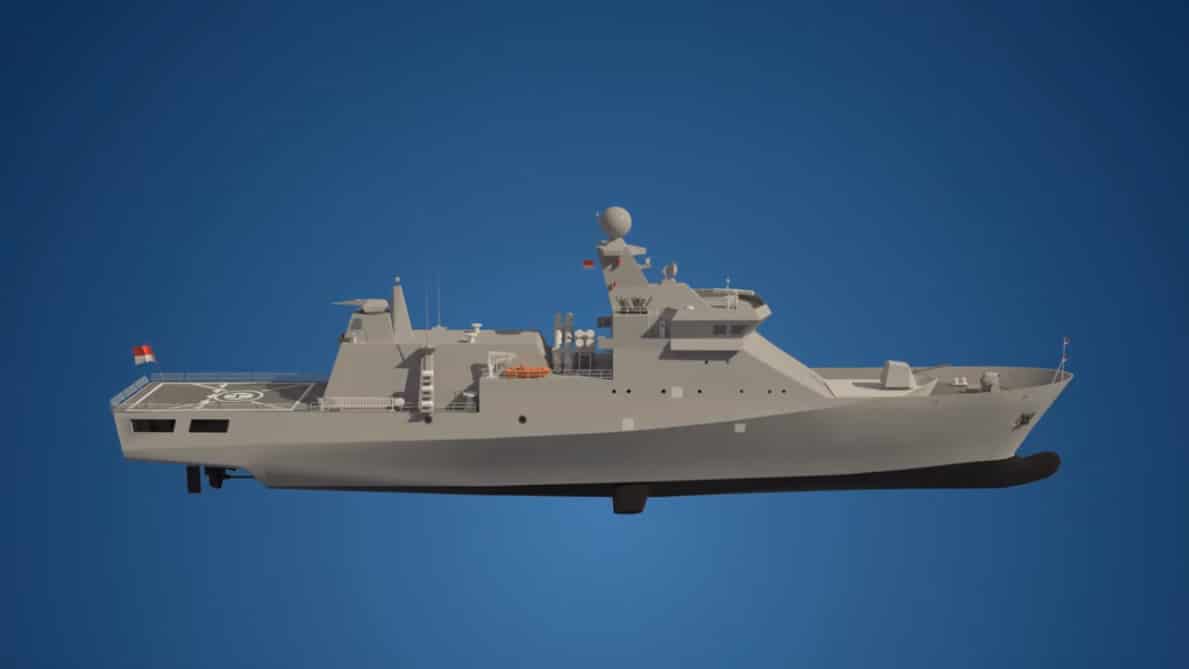
Indonesia 90 meter OPV

A recent Naval News report of the choice of an Electronic Warfare System for new Indonesian OPVs, with the illustration above, prompted me to find out more about these unusually fast and apparently well armed OPVs being built for the Indonesian Navy.

Steel was cut for the first of class on 26 August, 2021. (This report may be a bit confusing in that steel was cut for two OPVs of two different classes.) This report indicates these ships will be powered by four Diesel engines developing 7,280 kW (29,120KW total). That would equate to about 39,000 HP which sounds about right for 28 knots. It is not clear from any of the illustrations where the air intakes and engine exhausts are.

Defense Indonesia provides some specifications:

  • Length: 90 meters
  • Beam: 13.5 meters
  • Draft: 4 meters
  • Speed: 28 knots
  • Accomodations: 70 + 24 troops

A 2021 Janes report provides information on their weapons, combat management system, and ASW capability. If they emerge fully armed as illustrated, with an ASW capability, some would consider them corvettes or even light frigates.

“Spire Launches ‘Dark Shipping’ and ‘Spoofing’ Detection” –gCaptain

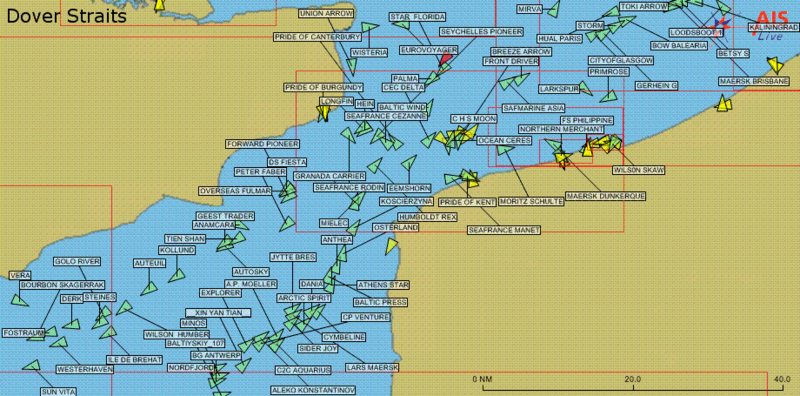
Display of maritime traffic provided by AIS. Only vessels equipped with AIS are displayed, which excludes most fishing boats, pleasure craft, inland navigation and vessels less than 300 tons. Location: Dover Straits/English Channel. Author: fr:User:Pline

gCaptain reports,

Space-based data company Spire Global (NYSE: SPIR) has launched what it describes as a dark shipping detection product to track vessels manipulating their position data in order to conceal nefarious activities such as evading sanctions, illegal fishing and human trafficking.

“The Coast Guard Must Take Action to Send Women Afloat” –USNI

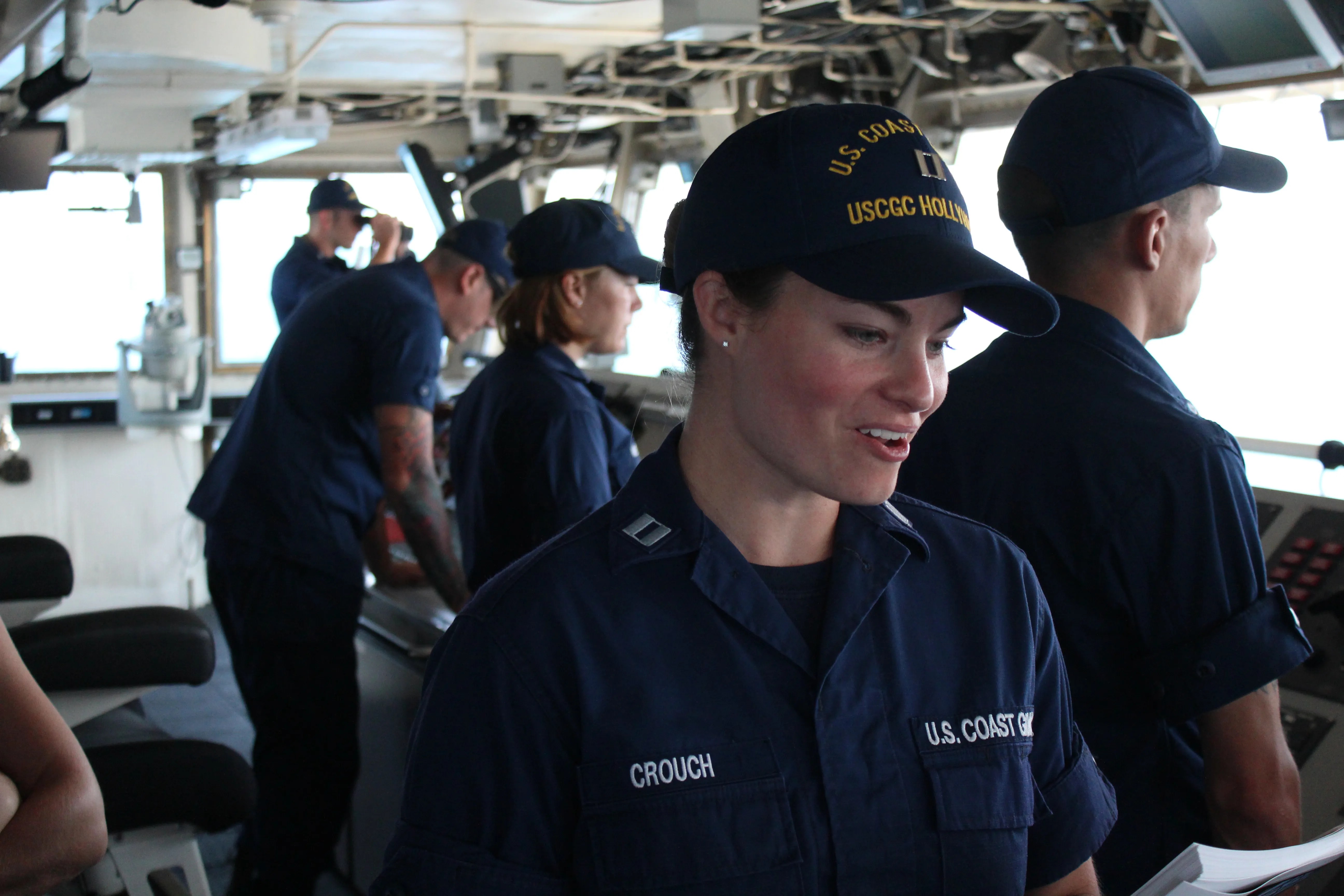
The US Naval Institute blog has a post entitled “The Coast Guard Must Take Action to Send Women Afloat, writen by Cadet Second Class Kyra Holmstrup, U.S. Coast Guard, who said that she was fortunate to spend a long summer cruise on a National Security Cutter but noted her experience was the exception.

Third-class summer is vital to future career selection in the Coast Guard. Without having gone afloat on an NSC, I would not be at CGA today. Seeing the world from the bridge helped me identify the reason why I joined and solidified the leadership lessons I learned as they guide me through my 200-week leadership journey. If this is not addressed now, our service risks losing the diversity and relevance the Coast Guard has so desperately worked to attain. To the senior leaders at CGA and in the Coast Guard: Make it a priority to send female cadets afloat for summer assignments and provide cadets with opportunities to experience different underway platforms. The focus should be on providing prospective female officers with earlier exposure to the afloat community starting at CGA with cadets like me. Not enough female cadets experience adequate time on board cutters early on in their careers; if female cadets did, the Coast Guard would see an increase in the number that go and—more importantly—stay afloat.

Earlier USNI had another post,“Fixing the Coast Guard Academy’s Priorities” that we discussed here. It appears all cadets, not just female cadets, are not getting enough experience afloat with operational units.

Our credibility in all mission areas is predicated on our experience as a seagoing organization. All Coasties, particularly officers, need at least some experience afloat.

“Extremely Ominous Warning About China From US Strategic Command Chief” –The Drive

Image: Creative Commons.

The Drive reports,

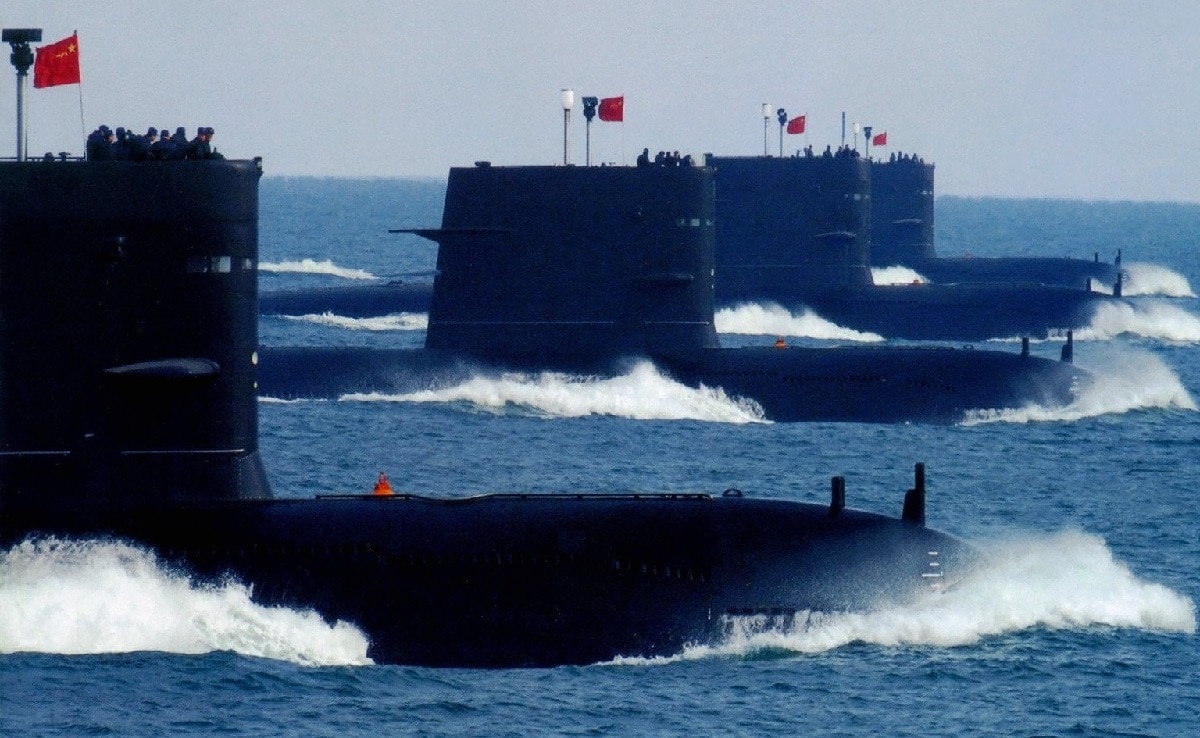
Major conflict with China “is coming,” U.S. Strategic Command’s chief warns outright…Navy Admiral Charles A. Richard, has warned that the U.S. should anticipate, and prepare for, a protracted conflict with China in the near future – which could be triggered by further hostile actions toward Taiwan by Chinese forces.

I will admit, that military commanders always tend to look at the worst case scenarios. That seems to go along with the job, but Admiral Richard may know things we do not.

It is abundantly clear that the Chinese are building ships at an amazing rate (and here) and many of them are extremely impressive. It appears increasingly likely China will attempt to retake Taiwan in the near term.

The Coast Guard has been increasingly active in attempting to shape our international environment in peacetime.

Perhaps it is time for the Coast Guard and our Navy partners to start taking the Coast Guard’s potential war fighting role more seriously.

There are significant oportunities for development of modular weapons and sensors (and here) that could be brought aboard Cutters and operated by Navy Reserve personnel. The Coast Guard could do a lot to protect the logistics train from Chinese submarines.

The Coast Guard’s fixed wing aircraft are a significant potential asset for protection of the homeland from surprise attack.

In terms of nation defense, the Coast Guard is a bargain. For small marginal cost, preexisting Coast Guard platforms can be upgraded to provide significant capablity. The problem is that the upgrades may be needed early in the conflict. We may not have months or years to make changes.

And of course, the future option of upgrades has no deterrent effect.