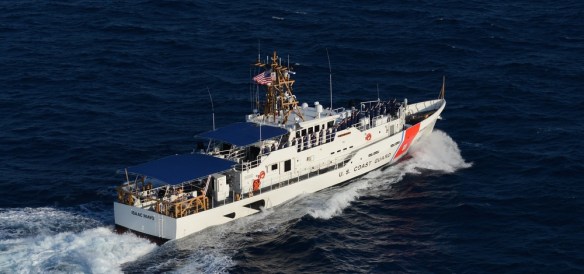
“A Sea Service Gone Ashore” –USNI

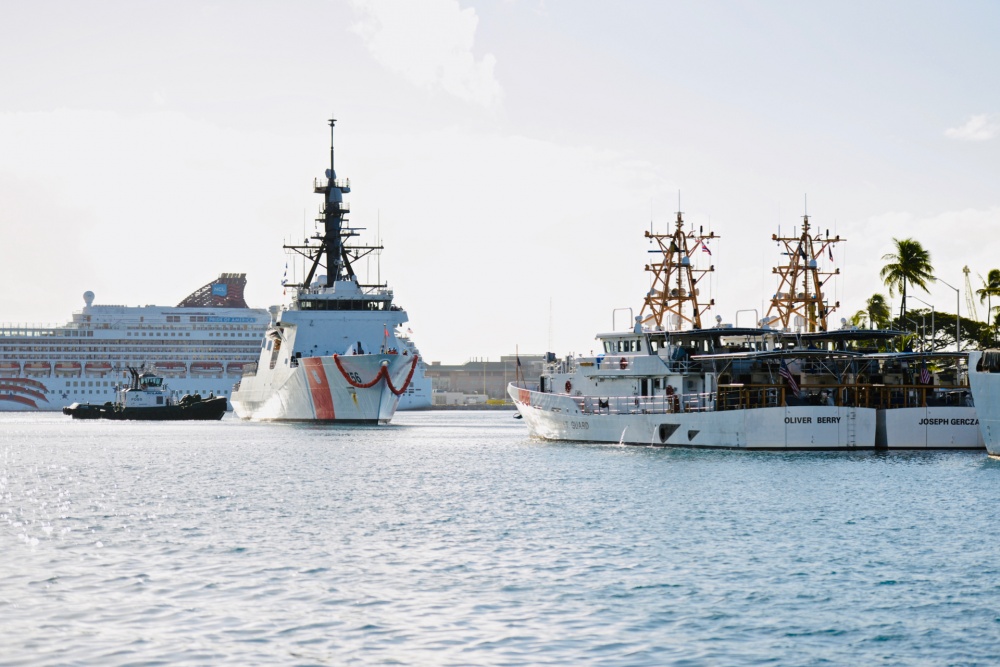
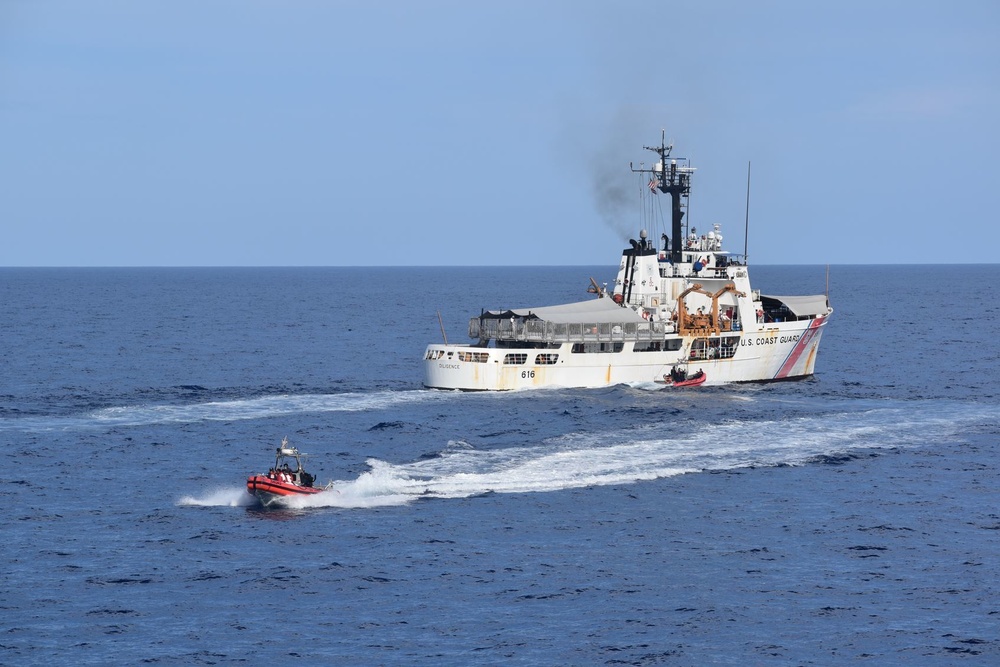
The crew of USCGC Kimball (WMSL 756) arrive in Honolulu for the first time Dec. 22, 2018. Known as the Legend-class, NSCs are designed to be the flagships of the Coast Guard’s fleet, capable of executing the most challenging national security missions, including support to U.S. combatant commanders. (U.S. Coast Guard photo by Chief Petty Officer Sara Muir/Released)

The US Naval Institute Proceedings’ December issue includes an article by LCdr. Karen Love Kutkiewicz, USCG, discussing the problems of motivating people toward sea duty, both now and in the future, when sea duty billets are expected to constitute a higher percentage of Coast Guard personnel.

The article has a couple charts that are particularly interesting. The first shows the growth in cutter billets and associated direct support.

The fleet has had some ups and downs and while we may be seeing a percentage rise currently, I suspect that there were periods in the past, when the Coast Guard was even smaller, when seagoing billets were at a higher percentage than currently projected for 2037 (really more like 2039 now). When I reported to the Academy in 1965, we had 36 WHECs and several icebreakers.

Still looking at the recent past, since we are adding both afloat billets and direct support billets, which will be in large part billets that require seagoing experience, while the rest of the service remains essentially stable, this does look like a substantial change in the overall percentage of coasties going to sea.

The second showing the assignment year 2021 command slots to be filled and number of applicants.

I would not think it surprising that there is more competition for Command Ashore positions because, while only officers with an afloat background compete for Command Afloat, those same officers, as well as essentially the rest of the officer corps, compete for command ashore billets, and at the O3/O4 level there are very few command ashore billets. Looking at the O3/O4 Afloat Command line, are 91 applicants for 53 positions adequately competitive? Could be.
The post seems to be most concerned about O3/O4 command billets, but really, I see more of a problem in motivating personnel to fill department head and XO billets in the O3-O5 level. Will they ever get a shot at command afloat when up against those who were given early command?

This is not the first article bemoaning the loss of sea going experience.

Apparently one thing we have done, is open O3 command billets to Warrant Officers. Maybe, if we are not doing so already, we should consider opening O3 department head billets to Warrants as well.

Something else we might do, is reorganize at least some support functions into squadron commands, staffed by experienced seagoing personnel, including post-command squadron commanders. These commands (Area commands for the largest ships and District commands for WPC and WPBs) could mentor the ships’ COs and crews. In addition, they would be in an excellent position, to make fair evaluations of their performance. Additionally, they could be the source to fill short term shortages in essential billets.

To keep things in perspective. I would note that, while the Coast Guard has only about an eighth of the number of active-duty military personnel as the Navy, the Coast Guard has almost as many military command afloat billets (excluding Military Sealift vessels commanded by civilians), and far more at a junior level.

“US Navy Seizes Weapons from Fishing Vessel in the Arabian Sea” –DVIDS

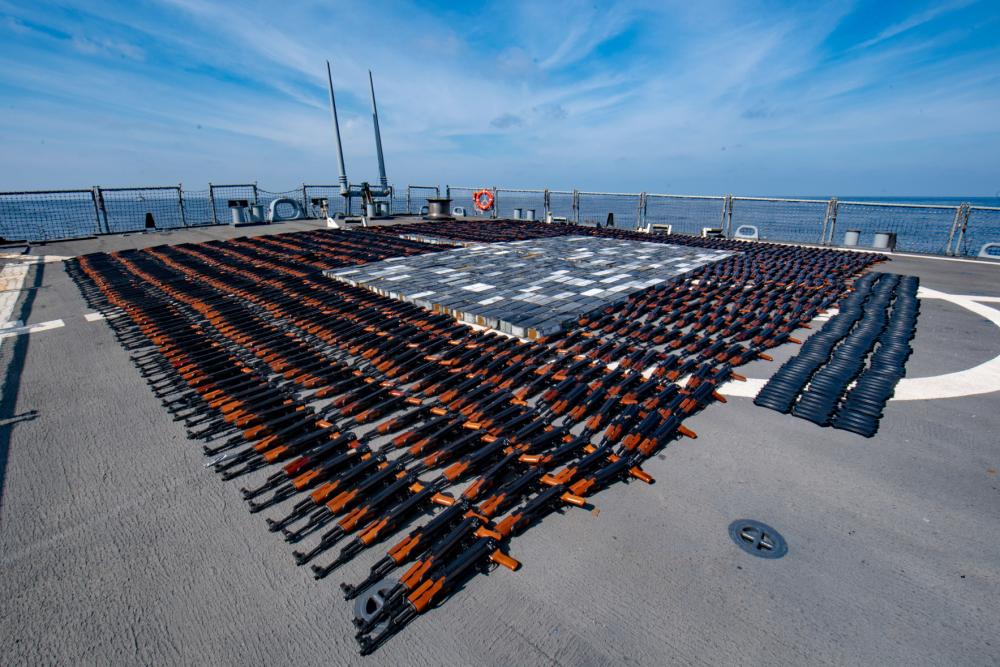
U.S. Navy Seizes 1,400 Assault Rifles During Illicit Weapons Interdiction

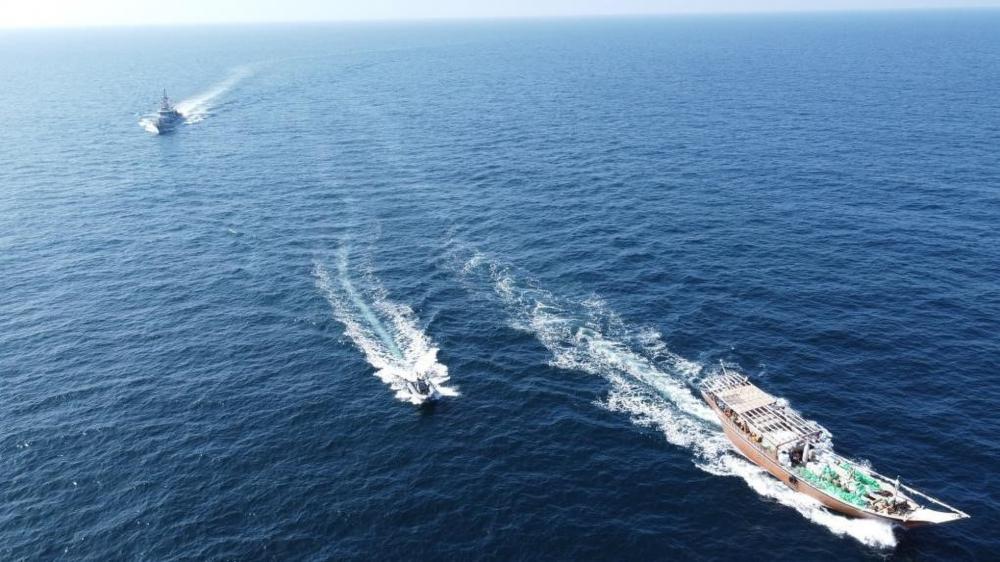
NORTH ARABIAN SEA (Dec. 20, 2021) U.S. service members from patrol coastal ship USS Typhoon (PC 5) interdict a stateless fishing vessel carrying illicit weapons while transiting international waters in the North Arabian Sea, Dec. 20. (U.S. Navy photo)

Below is a press release from Defense Visual Information Distribution Service (DVIDS). The boarding team was apparently Coast Guard. It’s likely the Webber class WPCs assigned to PATFORSWA will be doing this sort of work since the Navy PCs are being decommissioned.


U.S. 5th Fleet ships seized approximately 1,400 AK-47 assault rifles and 226,600 rounds of ammunition from a stateless fishing vessel during a flag verification boarding in accordance with customary international law in the North Arabian Sea, Dec. 20.

U.S. Navy patrol coastal ships USS Tempest (PC 2) and USS Typhoon (PC 5) found the weapons during a search conducted by embarked U.S. Coast Guard personnel. The illicit weapons and ammunition were later transported to guided-missile destroyer USS O’Kane (DDG 77) where they await final disposition.

The stateless vessel was assessed to have originated in Iran and transited international waters along a route historically used to traffic weapons unlawfully to the Houthis in Yemen. The direct or indirect supply, sale or transfer of weapons to the Houthis violates U.N. Security Council Resolutions and U.S. sanctions.

The vessel’s five crew members identified themselves as Yemeni nationals and will be returned to Yemen.

After removing the crew and illicit cargo, U.S. naval forces determined the stateless vessel was a hazard to navigation for commercial shipping and sank it.

U.S. naval forces regularly perform maritime security operations in the Middle East to ensure the free flow of legitimate trade and to disrupt the transport of illicit cargo that often funds terrorism and other unlawful activity. U.S. Navy warships operating in the U.S. 5th Fleet region have seized approximately 8,700 illicit weapons in 2021.

Guided-missile cruiser USS Monterey (CG 61) seized dozens of advanced Russian-made anti-tank guided missiles, thousands of Chinese Type 56 assault rifles, and hundreds of PKM machine guns, sniper rifles and rocket-propelled grenade launchers from a stateless vessel transiting the North Arabian Sea in May.

In February, guided-missile destroyer USS Winston S. Churchill (DDG 81) seized a cache of weapons off the coast of Somalia, including thousands of AK-47 assault rifles, light machine guns, heavy sniper rifles, rocket-propelled grenade launchers and crew served weapons. The inventory also included barrels, stocks, optical scopes and weapon systems.

The U.S. 5th Fleet area of operations encompasses approximately 2.5 million square miles of water area and includes the Arabian Gulf, Gulf of Oman, Red Sea, parts of the Indian Ocean and three critical choke points at the Strait of Hormuz, Suez Canal and Strait of Bab al Mandeb.

U.S. Navy Seizes 1,400 Assault Rifles During Illicit Weapons Interdiction

NORTH ARABIAN SEA (Dec. 21, 2021) Illicit weapons seized from a stateless fishing vessel in the North Arabian Sea are arranged for inventory aboard guided-missile destroyer USS O’Kane’s (DDG 77) flight deck, Dec. 21. (U.S. Navy photo by Mass Communication Specialist Seaman Elisha Smith)

Cutters Albacore (WPB-87309), Cochito (WPD-87329), and Gannet (WPB-87334) Transferred to Uruguay

Russian Vyborg Shipyard laid the Purga ice class coastguard ship of project 23550 925 001

Navy of Uruguay to accept three Protector Class vessels as part of a grant from the United States Coast Guard as part of the Uruguayan Navy’s Fleet Modernization plan (Picture source U.S. Embassy of Uruguay)

Navy Recognition reports,

“According to information published by the U.S. Embassy in Uruguay, On December 15, 2021, Admiral Jorge Wilson, Commander of the Uruguayan Navy, signed a Letter of Acceptance (LOA) finalizing the government-to-government agreement between the United States and Uruguay, allowing Uruguay to accept three Protector-Class patrol vessels as part of a grant from the United States Coast Guard as part of the Uruguayan Navy’s Fleet Modernization plan.”

“China Transferring Navy Type 056 Corvettes To The Coast Guard” –Naval News

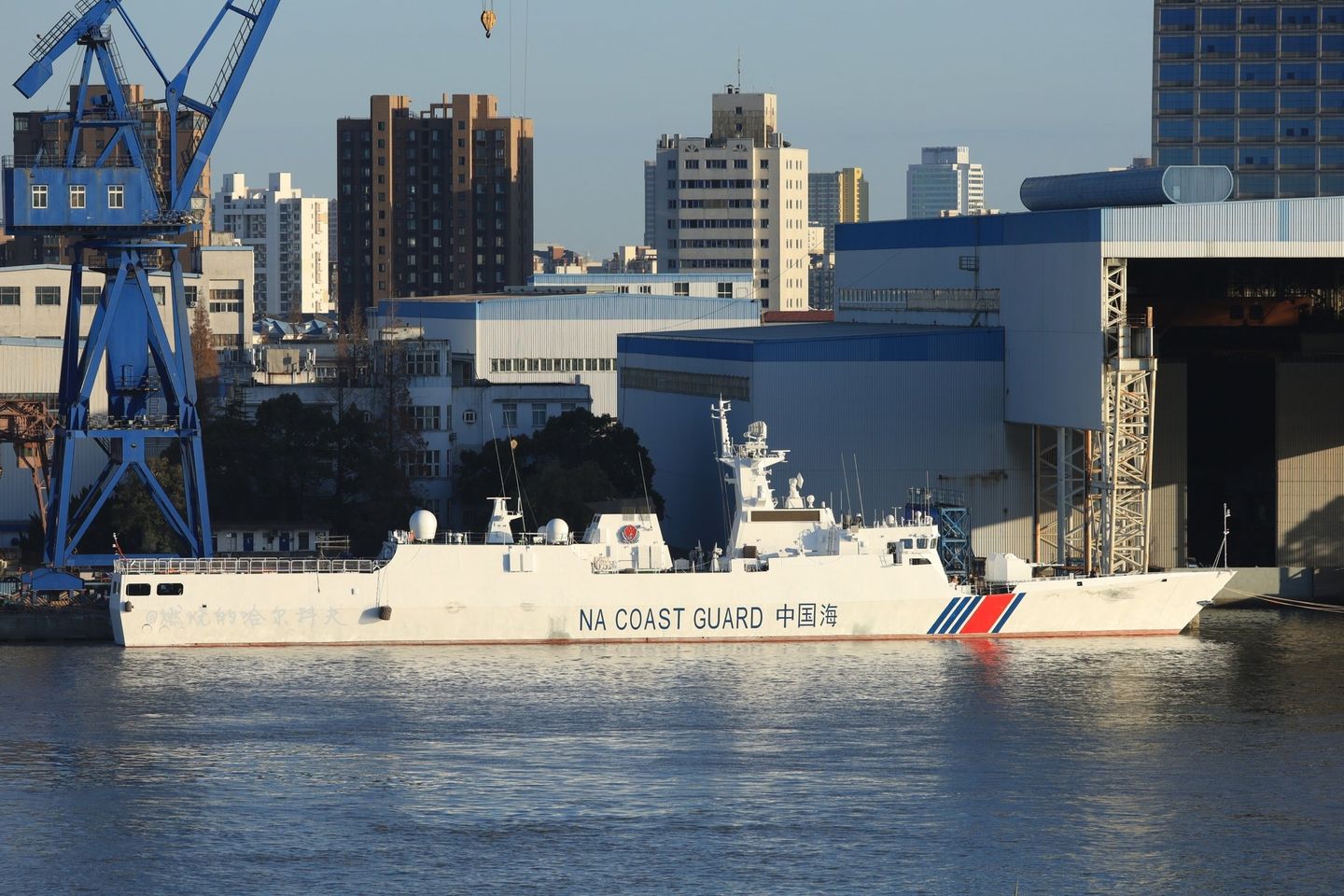
An ex-PLAN Type 056 corvette undergoing conversion for Coast Guard duties.

I reported transfer of 22 Type 056 covettes from the PLA Navy to the China Coast Guard back in November and discussed the implications, but now we have a better photograph and some commentary from Naval News.

The air-search radar, radar fire control, and 76mm gun remain. The ship is now equipped with fire-fighting monitors where the anti-ship cruise missiles were previously installed amidships, on the O-1 deck, above the letter “U” in GUARD.

For the first time, looking at the photo, I realized these ships are armed with an autocannon, I was not familiar with, the 30mm H/PJ-17, a single barrel optionally manned system, that is mounted on the O-1 deck aft of the bridge and below the fire control radar. As can be seen in the photo below, the bulwark can swing down to allow the gun to depress to a greater angle. This may have been in order to fire at targets at close range, or it may have been to allow the gun to continue to follow a target even when the ship is experiencing heavy rolls. I have not been able to find out much about these weapons.

Chinese H/PJ-17 30mm

Information on the Yinhe Incident referred to in the Naval News report is here.

BAE’s Bofors 40mm Mk4 –Navy Lookout

BAE Bofors 40mm/70 mk4. Click on this to enlarge. Hight of the mount is 1.9 meters or 6.32 feet.

Navy Lookout has what may be the best evaluation of the BAE Bofors 40mm/70 Mk4 mount I have seen thus far. It looks at the 40mm Mk4 in the context of it’s planned installation on the Type 31 frigate, which will also mount the same 57mm Mk 110 gun being mounted on large Coast Guard Cutters (also a BAE Bofors product).

The system can use the same 3P (Pre-fragmented, Programable, Proximity) fuse that can be used with the 57mm Mk110 mount.

Consideration is given to the mount’s role in lieu of a dedicated Close In Weapon System (CIWS). A notable feature is that the 40mm Mk4 is 60% lighter than a Phalanx mount, 5,500 pounds (including about 540 pounds of ammunition) vs 13,600 (2,500 vs 6,120 kg). The Mk38 Mod3 by comparison is 2,300 lbs. (1,042 kg). The DS30M which is apparently expected to be the Mk38 Mod4 is DS30: 2,645 lbs. (1,200 kg) with ammunition.

Compared to the 30mm guns the Royal Navy is currently using, “40-mm weapons offer significantly longer ranges, increased lethal effect in anti-aircraft/missile and anti-surface engagements.”

Effective range is more than doubled and the 40mm projectile is about 2.7 times larger than that of a 30mm Bushmaster II chain gun and more than five times larger than the 25mm fired by the Mk38.

As noted, the 40mm/70 Mk4 has a number of competitors,

“Offerings from other European manufacturers include the Thales/Nexter Rapid Fire CTA 40 (France), Lenardo Marlin 40 (Italy), Rheinmetall Millenium GDM-008 (Germany) and the Aselsan Gökdeniz (Turkey). “

To which I would add the 40 and 50mm chain gun although they currently have no deployed naval mount.

The vessel in the video is 150 tons full load and 36.53 meters (120′) in length, very similar in size to the 153 ton full load Island class cutters. Originally it was a missile boat armed with a 57mm gun and up to six Penguin Anti-ship missiles.

Thanks to Lee for bringing this to my attention. 

Coast Guard Mission from DOD Budget Justification

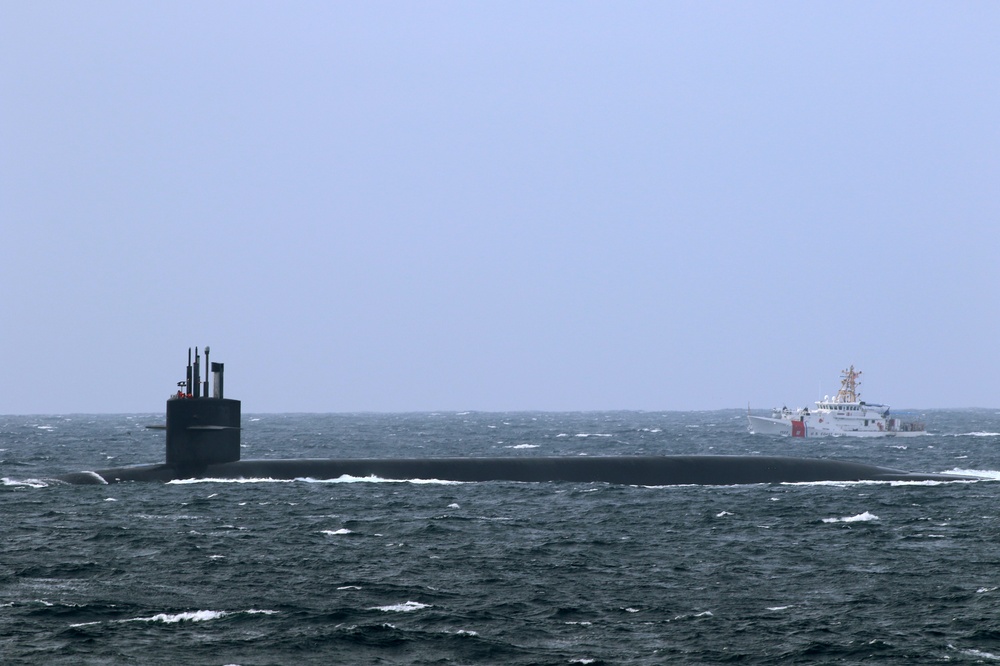
The crew of the Coast Guard Cutter Bailey Barco (WPC 1122), a fast response cutter, patrols the waters near Unalaska, Alaska, while providing a security escort for the USS Kentucky, an Ohio-class ballistic-missile submarine, August 24, 2017. The Bailey Barco, homeported in Ketchikan, Alaska, is the first Coast Guard fast response cutter to transit the Aleutian Islands of Alaska. U.S. Coast Guard photo by Ens. Brandon Newman

I took a quick look at the DOD 2022 budget justification overview. There was only a single paragraph that discussed a mission that the Coast Guard would be expected to do. From page 3-10:


Divest Coastal Riverine Squadron Craft

The Navy divests of 12 MK VI Patrol Boats from Coastal Riverine Squadrons. The Navy reallocated the associated end strength savings to higher priority Navy programs. The final deployment for the affected Coastal Riverine companies is scheduled to be complete by approximately the end of 2021. The MK VI requirement originated from a November 2007 Commander, U.S. Fifth Fleet Urgent Operational Needs Statement for a visit, board, search, and seizure overwatch platform in the littorals and the mission set was expanded to 2nd, 3rd and 7th Fleets and added maritime force protection, Theater Security Cooperation, Expeditionary MCM support, and intelligence collection tasks. Following divestment, these missions will be accomplished using other Navy platforms to include leveraging U.S. Coast Guard to escort High Value Units (HVU) (e.g., CVN, SSN, SSGN) in Fleet concentration areas. (Emphasis applied–Chuck)


“B.C. Supreme Court orders a lifetime fishing ban for repeat offender Scott Steer” –Fisheries and Oceans Canada

Canada is taking Fisheries Enforcement seriously,

December 20, 2021 – Vancouver B.C.

On November 12, 2021, in the B.C. Supreme Court in Vancouver, Scott Stanley Matthew Steer — a repeat offender under Canada’s Fisheries Act — was handed a lifetime prohibition against fishing and a prohibition against being onboard a fishing vessel. This is the first life-time ban for a Pacific Region fisherman in over a decade.

These lifetime prohibitions are the result of an incident on March 1, 2020 in Vancouver Harbour when Mr. Steer was found illegally fishing for crab and was arrested, along with 2 crew members, when his vessel was boarded after a high speed pursuit.

In addition to the life-time bans, the Honourable Justice Peter H. Edelmann ordered Mr. Steer to six months in jail, minus time served, an additional three years’ probation, including 12 months under curfew, and 75 hours of community work. The Judge additionally banned him from involvement in the purchasing or sale of fish, including  brokering, for 5 years. And, he added a ban against Mr. Steer purchasing or selling a fishing vessel, and ordered the forfeiting of the aluminum vessel used in the illegal activity, with the approximate value of $50,000.

Mr. Steer, who has previously been handed extensive fishing bans by the Courts, is currently awaiting 2 outstanding trials in Nanaimo for alleged violations of the Fisheries Act.

One of the two crew members arrested with Mr. Steer, Sammy Williams, was also convicted for violations of the Fisheries Act on November 30, 2021 in Vancouver Court and will be sentenced in the new year. The other crew member, Cristopher Schill, pleaded guilty in a separate trial and will also be sentenced in early 2022.

Fisheries and Oceans Canada has a mandate to protect and conserve marine resources and to prosecute offenders under the Fisheries Act. It ensures and promotes compliance with the Act and other laws and regulations through a combination of land, air, and sea patrols, as well as education and awareness activities.

Quick facts

  • Illegal fishing undermines the effective management of Canada’s fisheries, and threatens the sustainability of local fishing resources. It can hurt the economic prospects of coastal communities, recreational and commercial industries, as well as diminish the traditional food sources of Indigenous people.
  • The commercial crab fishery accounts for almost one third of British Columbia’s wild shellfish products. Only crab caught under a licence may be purchased or sold, and it must be processed and inspected through a licensed plant to ensure it is safe for public consumption.
  • Anyone with information about suspected violations of Canada’s Fisheries Act and regulations can call the Fisheries and Oceans Canada toll-free violation reporting line at 1-800-465-4336, or e-mail the details to DFO.ORR-ONS.MPO@dfo-mpo.gc.ca.

Associated links

Ballistic Protection for .50 Caliber Gun Crews

The video above is titled as a Mk38 Mod3 Live Fire, but I would like to point out the ballistic protection that is provided the .50 cal. gun crew. The .50 gun shoot starts at time 1:10 and you get a good view of the ballistic protection beginning at time 1:37.

Yes, this is a pet peeve of mine. I have posted about ballistic protection before, here, here, here. and here.

As yet I have seen no ballistic protection for Coast Guard gun crews other than small shields attached to the mounts that provide no protection for the lower body and only very limited coverage for the gun crew (as in the photo below). Clearly suitable protection is available.

Having a gun crew standing out on deck using deadly force without providing easily available protection is not just dangerous to the gun crew, in some cases it may endanger the mission, if the gun crew is disabled.

Air-cooled 0.50″ (12.7 mm) Browning Machine Gun. Picture taken aboard USS Fife DD-991 on 4 July 2002. US Navy Photograph No. 020704-N-0156B-002.

RE: 25mm Mk38 Mod3, I see there was a contract issued recently for more of these systems, for the USN and the Philippines, so DOD certainly has not moved on to a 30mm Mk38 Mod4 yet. (Late addition, see my comment below.)

Below is the written material that accompanied the video.

CARAT Indonesia 2018: GUNEX (B-Roll)

B-Roll of a live-fire exercise conducted with the Indonesian Navy during Cooperation And Readiness Afloat Training (CARAT) 2018. CARAT Indonesia, in its 24th iteration, is designed to enhance information sharing and coordination, build mutual warfighting capability and support long-term regional cooperation enabling both partner armed forces to operate effectively together as a unified maritime force.

INDONESIA, 08.13.2018, Video by Senior Airman Dhruv Gopinath ••♦♦

The Mk 38 MGS is a low cost, stabilized self-defense weapon system that dramatically improves ships’ self-defense capabilities in all weather conditions, day or night. Installed aboard 14 different classes of U.S. Navy ships and U.S. Coast Guard cutters, it is used extensively by the U.S. military as well as by NATO forces.

A major upgrade to the Mod 3 is the system’s advanced electro-optical/infrared (EO/IR) sensor which provides 330-degree surveillance capability and three fields of view. The superior optics allow sailors to monitor the seas and respond to threats even in extremely low light conditions with the benefits of a low contrast, low light level color day camera and an eye-safe laser range finder.

While the EO/IR sensor system is integrated with the Mod 3’s state-of-the-art fire control system, the Mk 38 Mod 3 is unique from other naval weapons because its surveillance system moves separately from the gun system, preventing adversaries from easily knowing they have been detected.

The Mk 38 Mod 3 also provides a range of 2.5 kilometers and selectable rates of fire from single to 180 rounds per minute, and fires all U.S. Navy-approved 25mm ammunition. It can be remotely operated from the combat information center or other protected ship structures, allowing operators to remain safe and out of harm’s way.

ALCOAST 464/21 SUBJ: WINNER ANNOUNCEMENT – 2021 HOPLEY YEATON CUTTER EXCELLENCE

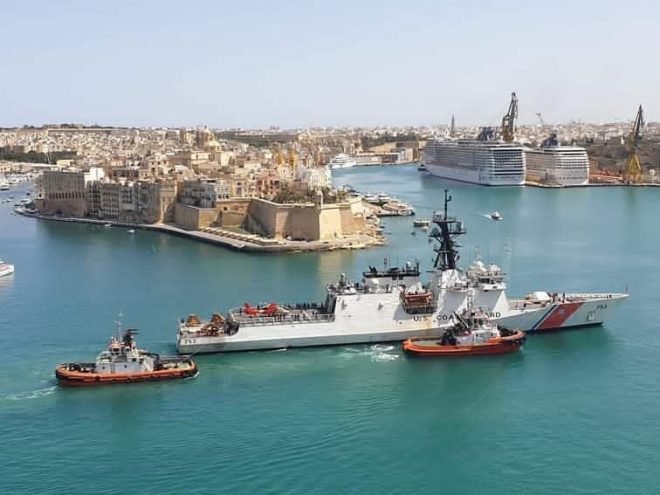
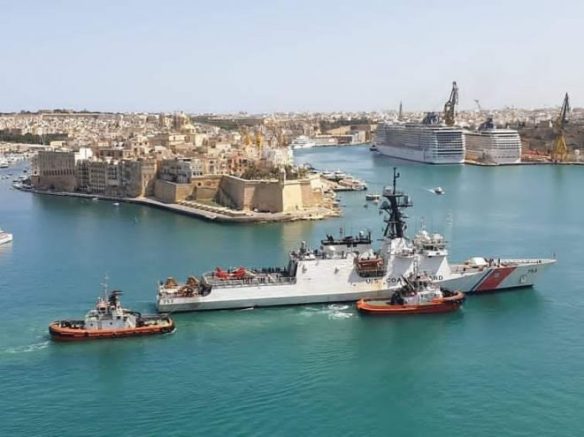
USCGC Hamilton (WMSL-753) conducting port visit in Valletta, Malta on May 17, 2021. Coast Guard Photo

Just passing this along. I have added pictures and a link to a previous post. 

R 202101Z DEC 21
FM COMDT COGARD WASHINGTON DC
TO ALCOAST
BT
UNCLAS
ALCOAST 464/21
SSIC 1650
SUBJ: WINNER ANNOUNCEMENT – 2021 HOPLEY YEATON CUTTER EXCELLENCE
AND SUPERIOR CUTTERMAN AWARDS
A. COMDT COGARD WASHINGTON DC 141626Z SEP 21/ALCOAST 336/21

1. The Douglas Munro Chapter of the Surface Navy Association (SNA) is honored to announce and congratulate the recipients of the 2021 Hopley Yeaton Cutter Excellence and Superior Cutterman Awards. The winners were selected from an incredibly competitive pool of nominees.

2. The winners of the Hopley Yeaton Awards for 2021 are:

a. Cutter Excellence Awards

  • 1. Large Cutter: CGC HAMILTON (WMSL 753)
  • 2. Medium Cutter: CGC RESOLUTE (WMEC 620)
  • 3. Small Cutter: CGC ISAAC MAYO (WPC 1112)

b. Superior Cuttermen Awards

  • 1. Officer: LTJG Lauren Kowalski – CGC POLAR STAR (WAGB 10)
  • 2. Enlisted: YN1 Joseph DeVito – CGC RELIANCE (WMEC 615)

3. Cutter Excellence Award (Large) – CGC HAMILTON (WMSL 753):

a. Following her trans-Atlantic escort of the first Fast Response Cutters bound for service at PATFORSWA, CGC HAMILTON transited the Bosporus into the Black Sea where she conducted freedom of navigation patrols and operated and trained with Turkish and Romanian Naval Forces, the Georgian Coast Guard, and Ukrainian Maritime Forces. While deployed in the U.S. European Command AOR, HAMILTON conducted at-sea exercises and port visit engagements with the navies and coast guard of seven total international allies and partners; bolstering freedom of navigation in international waters of the Black Sea and building maritime domain awareness, cooperation, and interoperability with partner nation navies and coast guards. As Caribbean maritime migration levels increased to the highest levels in more than seven years, HAMILTON assumed command of surface operations in the Windward Pass, directing the employment of three major and four fast response cutters that successfully resulted in a dramatic decline in attempts by migrants to attempt the extremely hazardous voyage at sea.

b. Honorable Mentions for the Large Cutter Award are:

  • 1. CGC MUNRO (WMSL 755)
  • 2. CGC BERTHOLF (WMSL 750)

RESOLUTE conducts an at-sea transfer with CGC DILIGENCE. The transfer included a 77 Haitian migrants, their personal belongings, and a Creole interpreter. In total, RESOLUTE cared for 260 Haitian migrants. All migrants are given food, water, and medical attention once onboard a Coast Guard cutter. During a 56-day patrol, RESOLUTE provided overt presence in Northern Haiti to deter illegal and dangerous migration voyages. Photo by ENS Alex Cordes.

4. Hopley Yeaton Cutter Excellence Award (Medium) – CGC RESOLUTE (WMEC 620):

a. In 2021, CGC RESOLUTE safely conducted the largest single-unit, at-sea migration case in more than a decade (183 migrants, including 17 children and infants). RESOLUTE led rigorous dockside and underway trials for the new Cutter Boat-Large acquisition and delivered expert analysis of safety, compatibility, and suitability for a wide range of Coast Guard missions. RESOLUTE’s superb engagement with headquarters program sponsors and naval engineers supported successful acceptance and roll-out across the entire 210′ WMEC fleet. Highlighting a year with multiple SAR cases, RESOLUTE’s lookout detected people in the water, leading to the rescue of 8 migrants who had been treading water for 24 hours following the capsizing of their makeshift vessel.

b. Honorable Mentions for the Medium Cutter Award are:

  • 1. CGC LEGARE (WMEC 912)
  • 2. CGC HICKORY (WLB 212)

USCGC Isaac Mayo, Key West, Fla., Jan. 29, 2015. (U.S. Coast Guard photo by Petty Officer 3rd Class Mark Barney

5. Hopley Yeaton Cutter Excellence Award (Small) – CGC ISAAC MAYO (WPC 1112):

a. In 2021, CGC ISAAC MAYO conducted 108 at-sea boardings resulting in the disruption of 3,000 kgs of cocaine valued at $75 million. ISAAC MAYO conducted joint operations with Customs and Border Protection and Homeland Security Investigations during an operation to deter, detect, interdict, and inspect, targets of interest in the northern portion of Sector Key West’s area of responsibility. ISAAC MAYO led the way during Operation CHOKE POINT, an intradepartmental partnership with Customs and Border Patrol and Homeland Security Investigations, to board and inspect vessels operating in the Gulf of Mexico. Additionally, ISAAC MAYO developed a first-ever Tactics, Techniques, and Procedures for operating with a Customs and Border Patrol 45-ft Coastal Intercept Vessel, laying the foundation for sustained multi-agency asset employment far beyond historical operating limitations.

b. Honorable Mentions for the Small Cutter Award are:

  • 1. CGC RICHARD ETHERIDGE (WPC 1102)
  • 2. CGC CHARLES MOULTHROPE (WPC 1141)

6. Hopley Yeaton Superior Cutterman Award (Officer) – LTJG Lauren Kowalski – CGC POLAR STAR (WAGB 10):

a. LTJG Kowalski completed the USCG’s Afloat Icebreaker Training program and demonstrated outstanding professionalism in her role as USCG liaison officer and ice pilot for three months aboard the HMS PROTECTOR. In her capacity as ice pilot, she led the ship to set a new Royal Navy latitude record for surface ships. She managed operations and tracklines for the nation’s only heavy icebreaker, planning and navigating the 10,000 nm voyage for the Arctic Winter West 2021 deployment, through treacherous ice windrows, howling gales, and 10 days of perpetual winter darkness.

b. Honorable Mentions for the Superior Cutterman Award (Officer) are:

  • 1. LTJG William Stephens – CGC MAUI (WPB 1304)
  • 2. ENS Matthew Hall – CGC ANACAPA (WPB 1335)

7. Hopley Yeaton Superior Cutterman Award (Enlisted) – YN1 Joseph Devito – CGC RELIANCE (WMEC 615):

a. YN1 DeVito went beyond the normal duties of a Yeoman afloat by qualifying as an underway officer of the deck. In addition, YN1 DeVito qualified as boat deck safety, helm and lookout, boatswain mate of the watch, quartermaster of the watch, on scene leader for flight operations, detainee watch stander, boarding team member, force protection officer, .50 cal mount captain, .50 cal gunner, repair party leader, and inport officer of the deck. As the vice chairperson of the cutter’s newly formed Leadership and Diversity Advisory Council, he helped organize multiple events that improved the unit’s investment in the professional and personal development of its junior officers and enlisted members. As a Damage Control Training Team member leading training for Repair III, he trained more than 100 crew members in damage control. His superb expertise as a Yeoman resulted in zero discrepancies across 50 line items during the cutter’s Finance and Administration inspection.

b. Honorable Mentions for the Superior Cutterman Award (Enlisted) are:

  • 1. BMC Brian Cleversey – CGC RESOLUTE (WMEC 620)
  • 2. BM2 Nancy Worley – CGC HOLLYHOCK (WLB 214)

8. The winners will be recognized at the 2022 SNA National Symposium.

9. Bravo Zulu and great work to this year’s Hopley Yeaton Award recipients and nominees. This year’s nominees were selected by panels comprised of 61 active duty and retired permanent cuttermen from the rank of E6 to O8, with a collective 604 years of sea time. The sheer volume of praiseworthy nominees and high-quality award write-ups continue to impress. Thank you to all commands that submitted and reviewed nominations.

10. POC: LT Luke Trautwein at John.L.Trautwein@uscg.mil.

11. RDML Todd C. Wiemers, Assistant Commandant for Capability
(CG-7), sends.

12. Internet release is authorized.