News Conference–San Diego, 25 Jan.

Following is a news release quoted in its entirety. 

———–

Media Advisory: U.S., Canadian officials to address emerging threat from drug traffickers (photos available)

united states coast guard

News Release

January 23, 2018

U.S. Coast Guard 11th District PA Detachment San Diego
Contact: Coast Guard PA Detachment San Diego
Office: (619) 278-7025
After Hours: (619) 252-1304
PA Detachment San Diego online newsroom

Media Advisory: U.S., Canadian officials to address emerging threat from drug traffickers (photos available) 

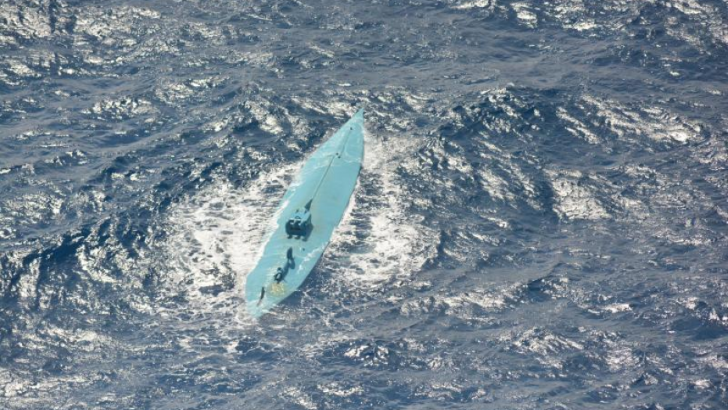
Coast Guard Cutter Steadfast boarding team members intercept a suspected Low Profile Vessel with approximately 3,203 pounds of cocaine onboard in the Eastern Pacific Ocean, Nov. 30, 2017. LPVs are designed to be low profile and colored to blend in with the ocean, making them difficult for law enforcement to detect. U.S. Coast Guard photo. Coast Guard Cutter Steadfast boarding team members intercept a suspected Low Profile Vessel with approximately 3,203 pounds of cocaine onboard in the Eastern Pacific Ocean, Nov. 30, 2017. Steadfast was patrolling the waterways supporting the Joint Interagency Task Force –South with the primary mission of detecting and interdicting illegal drug traffickers. U.S. Coast Guard photo.

To view and download photos, please click the above thumbnails

WHAT: U.S. forces and international partners continue to see new smuggling tactics by transnational organized crime networks in the eastern Pacific Ocean including vessels specifically constructed for purposes of smuggling narcotics and other illicit contraband.

WHO: Senior officials from the U.S. Coast Guard, U.S. Southern Command and the Canadian Armed Forces will be available to discuss the tactics of transnational crime networks and international efforts to combat the threat posed by these criminal organizations. These senior officials include:

  • U.S. Coast Guard Vice Adm. Fred Midgette, commander, Pacific Area
  • Royal Canadian Navy Rear Adm. Art McDonald, commander, Maritime Forces Pacific 
  • Mr. Adam Braverman, U.S. Attorney, Southern District California
  • U.S. Navy Rear Adm. Daniel B. Hendrickson, director, Network Engagement Team, U.S. Southern Command

WHEN: Jan. 25, 2018, at 9:30 a.m. Attending media is requested to arrive by 8:30 a.m. to gain access to the facility. Government-Issued ID and media credentials are required. To RSVP, please contact Public Affairs Detachment San Diego at 619-252-1304.

WHERE: B-Street Pier (Cruise Ship Terminal) in San Diego, 1140 N. Harbor Drive, San Diego, CA 92101.

WHY: On the heels of a record year of drug interdiction, the U.S. Coast Guard and its international partners are seeing historic drug flow from cocaine producing countries in South America coupled with new tactics and varying smuggling routes. Gangs vying over drug smuggling routes and influence have led to epidemic murder rates in Central America. The Centers for Disease Control reported another rise in drug overdose deaths in the U.S. with more than 64,000 people reportedly killed by drug overdose in 2017. Of those, over 10,000 were killed by cocaine overdose, an approximately 35 percent rise from 2016.

HOW: Transnational organized crime networks smuggle more than 97 percent of cocaine bound for the U.S. and Canada via some kind of illicit maritime conveyance in the first stage of movement from the source zone. The drugs are smuggled in large quantities from source countries in South America to transshipment points in Central America and southern Mexico. The cocaine is then broken down into smaller loads for secondary and tertiary transits to smuggle across the U.S. Southern Border.

U.S. and international forces have seen the emergence of a variety smuggling vessels specially designed and constructed by transnational organized crime groups like self-propelled semisubmersibles and, more recently, low profile go fast vessels, which are a variant design from traditional go fast vessels. These smuggling vessels are designed to elude authorities using a low profile radar signature, camouflage and, in the case of low profile go fast vessels, speed. These vessels also carry massive quantities of illicit cargo. For example, an SPSS can carry up to 16,000 pounds of cocaine. A network of international and interagency partners constantly patrol the approximately six million square mile drug transit zone used by smugglers using aircraft and vessels. 
Asbestos Exposure Question

For some reason this comment did not show up on the Comments list as it should have, but it really deserves more attention anyway.

This was asked in response to an earlier post, “MEDICAL DOCUMENTATION OF ASBESTOS AND LEAD EXPOSURES ON COAST GUARD CUTTERS CONSTRUCTED PRIOR TO 1991.” I hope someone can help with this.

I was able to find 2 of the ships I was stationed on which were listed in HSWLSCTD 2017-009 where can I find the ships Prior to 1988. I was on stationed on the CGC Leguare W144 a 125 ft vessel and the CGC Rockaway W377 a 311. I have asbestosis in both lungs which is terminal . I received the major exposure to asbestos on the Rockaway on the clean up crew from the fires on board. We were covered in Asbestos fiber and dust . Can you help me find the for those ships listing . Thank You, Glenn A Mushett USCG RMC RET

How much would it cost to weaponize a cutter?

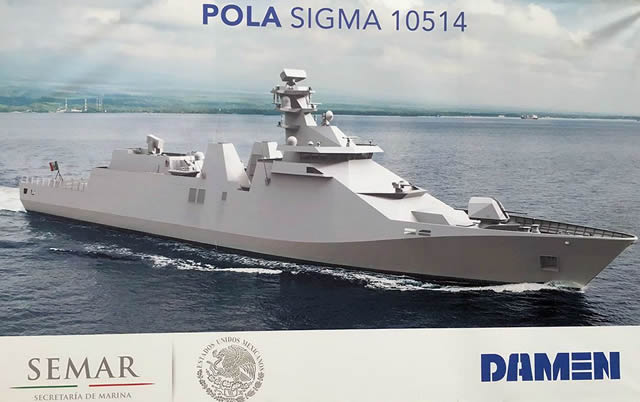
Photo: Sigma 10514 in Mexican Navy configuration, fitted with a BAE Systems Bofors 57Mk3 57mm main guna 12.7mm remote weapon system right behind it. The Mexican Navy opted for the Smart Mk2 radar by Thales. The Mexican “Long Range Patrol Vessel” will not be fitted with VLS cells but a Raytheon RAM launcher will be fitted on top of the helicopter hangar.

How much would it cost to turn one of our new construction cutters into a minimally capable frigate with at least some capability for anti-submarine, anti-surface, and self defense anti-air warfare?

I don’t have a definitive answer but we did get a good indication along with more information about Mexico’s new long range patrol vessel, a Damen 10514 design, that is close enough to our own Offshore Patrol Cutter requirements, that I thought it might have been an OPC contender.

Earlier we had an indication regarding the addition of VLS and  Evolved Sea Sparrow Missiles (ESSM) when Chile ordered $140.1M worth of equipment to arm three ships. Plus we had an earlier post based on a 2009 Congressional Budget Office study (apparently no longer available on line) that suggested costs to replace the Phalanx on NSCs with SeaRAM and to add 12 Mk56 VLS and associated equipment, which could have provided up to 24 ESSM ($68M/ship).

The Defense Security Cooperation Agency has issued a news release concerning the sale of weapons for the new Mexican patrol vessel, and the shopping list is a pretty extensive, including anti-surface, anti-air, and anti-submarine weapons.

Mexico –Harpoon Block II Missiles, RAM Missiles and MK 54 Torpedoes

Media/Public Contact: pm-cpa@state.gov
Transmittal No: 17-63

­­­WASHINGTON, Jan. 5, 2018 – The State Department has made a determination approving a possible Foreign Military Sale to Mexico of RGM-84L Harpoon Block II surface launched missiles, Block II Rolling Airframe Missile (RAM) tactical missiles and MK 54 Mod 0 lightweight torpedoes for an estimated cost of $98.4 million.  The Defense Security Cooperation Agency delivered the required certification notifying Congress of this possible sale today.

The Government of Mexico has requested to buy six (6) RGM-84L Harpoon Block II surface launched missiles, twenty-three (23) Block II Rolling Airframe Missile (RAM) tactical missiles and six (6) MK 54 Mod 0 lightweight torpedoes.  Also included are eight (8) MK 825 Mod 0 RAM Guided Missile Round Packs (GMRP) tri-pack shipping and storage containers; RAM Block 2 MK 44 Mod 4 Guided Missile Round Pack (GMRP); two (2) MK 32 Surface Vessel Torpedo Tubes (SVTT) triple tube launchers; two hundred and fifty (250) rounds of AA98 25 mm high explosive and semi-armor piercing ammunition; seven hundred and fifty (750) rounds A976 25mm target practice and tracer ammunition; four hundred and eighty (480) rounds of BA22 57mm high explosive programmable fuze ammunition; nine hundred and sixty (960) rounds of BA23 57mm practice ammunition; containers; spare and repair parts; support and test equipment; publications and technical documentation; personnel training and training equipment; U.S. Government and contractor representatives’ technical assistance; engineering and logistics support services; installation services; associated electronics and hardware to control the launch of torpedoes; and other related elements of logistics and program support.  The estimated cost is $98.4 million.

This proposed sale will support the foreign policy and national security of the United States by helping to improve the security of a strategic partner.  Mexico has been a strong partner in combating organized crime and drug trafficking organizations.  The sale of these ship-based systems to Mexico will significantly increase and strengthen its maritime capabilities.  Mexico intends to use these defense articles and services to modernize its armed forces and expand its existing naval and maritime support of national security requirements and in its efforts to combat criminal organizations.

Mexico intends to use the weapon systems on its Mexican Navy Sigma 10514 Class ship.  The systems will provide enhanced capabilities in effective defense of critical sea lanes.  The proposed sale of these systems and support will increase the Mexican Navy’s maritime partnership potential and align its capabilities with existing regional navies.  Mexico has not purchased these systems previously.  Mexico will have no difficulty absorbing this equipment into its armed forces.

The proposed sale of this equipment will not alter the basic military balance in the region.

The equipment will be provided from U.S. stocks.  There are no known offset agreements proposed in connection with this potential sale.

Implementation of this proposed sale will require annual trips to Mexico involving U.S. Government personnel and contractor representatives for technical reviews, support, and oversight for approximately two years.

There will be no adverse impact on U.S. defense readiness as a result of this proposed sale.

This notice of a potential sale is required by law and does not mean the sale has been concluded.

All questions regarding this proposed Foreign Military Sale should be directed to the State Department’s Bureau of Political Military Affairs, Office of Congressional and Public Affairs, pm-cpa@state.gov.

The big ticket items certainly made the head lines, but the ammunition for the 57mm is not cheap.

Fortunately for the Coast Guard, the Navy generally pays for our ammunition and weapon systems. The cost to the Coast Guard is installation and integration, plus primarily long term personnel and training costs.

Metal Shark to Build Navy’s New PB(X)

Navy’s new PB(X) to be built by Metal Shark

MarineLog reports the award of a contract for up to 50 new 40 foot (12 meter) patrol boats for the Navy.

Subject to annual appropriations, the Navy intends to replace approximately 100 to 160 of its existing 25-foot and 34-foot CRF (Coastal Riverine Forces –Chuck) patrol boats with the larger and more modern PB(X) platform over the next fifteen years.
The Navy has placed an initial, immediate order for eleven of the new vessels. Under the terms of the award, potentially worth over $90 million, Metal Shark will build up to 50 PB(X) vessels for the Navy, along with trailers, spares and training packages, and technical support.

20 More RB-S II for $8M

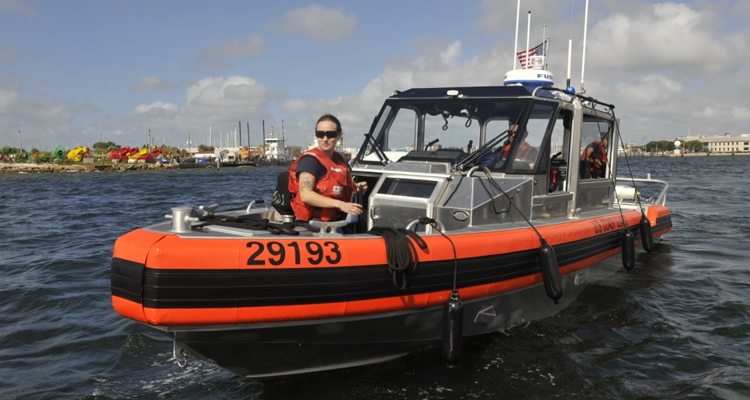
A boat crew from Coast Guard Station St. Petersburg, Florida, conducts training near the station on a new 29-foot response boat-small II Aug. 25, 2014. The Coast Guard placed a delivery order for 20 additional boats Jan. 12, 2018. U.S. Coast Guard photo by Seaman Meredith Manning.

CG-9 reports that a contract has been let for 20 more 29 foot Response Boat, Small II.

Coast Guard Orders 20 Response Boats

January 18, 2018

The Coast Guard placed a delivery order for 20 response boats-small II (RB-S IIs), worth approximately $8 million, with Metal Shark Aluminum Boats of Jeanerette, Louisiana, Jan. 12. The RB-S IIs will be delivered to Sector Buffalo, New York, this spring and summer.

The 29-foot RB-S IIs can reach a top speed of over 40 knots and are used for a range of missions, including search and rescue, vessel boarding team deployment and law enforcement missions, port security, drug and migrant interdiction, and environmental response operations.

This brings the total of RB-S IIs ordered to 322; 280 RB-S IIs have been delivered.

For more information: Response Boat-Small II program page

That equates to $400,000 per boat. The initial 2011 contract was for 38 boats at a cost of $13M or approximately $342,105 each. That is about a 17% increase over 9 years. That’s probably not out of line.

Drone Rescue

An interesting short video. Heard about this first from BBC. (Thanks to my wife.)

A drone reaches people in the water and drops an inflatable float. This might be useful as a response to a man-over-board, particularly if the drone were equipped with low light level/IR. The drone could not only drop a float but could also hold position over the person in the water until the ship can come back for a pick-up. A light on the drone might help.

CGAS Corpus Christi Relocates

Caller.com reports that the Coast Guard has begun moving aircraft from Naval Air Station Corpus Christi to a new facility at the Corpus Christi International Airport.

“It gives the Coast Guard quick access to the primary runway. Being at this airport, our control tower is 24-7, the airport is open 24-7,” Gross said. “We also have police, EMS and fire department crews here. There are things here they wouldn’t normally get at the naval base.”

The move was accelerated because of damage to the Naval Air Station facility that resulted from Hurricane Harvey.

Coast Guard Eyes Leasing Civilian Jail Ship to Hold Detainees–Military.com

Military.Com reports that the Coast Guard is considering procuring a civilian run vessel to hold and transport prisoners taken during drug interdiction operation.

“…Zukunft said the service is exploring the possibility of leasing a dedicated commercial vessel that would do nothing but hold suspects until they can be transferred to the United States.
“The ship might actually be leased through the Department of Defense or SouthCom. It might be something like a commercial offshore supply vessel — a platform abundantly available given limited offshore drilling activity.
“While it would be a civilian ship, Zukunft said it would be staffed with Coast Guard law enforcement augmentees to supervise the detained population.”

Remote Control Boat and Drone Attacks–USNI

US Naval Institute news service brings us a report of another unconventional attack by remote controlled boats, this time on a commercial tanker. We have seen this type of attack before, but apparently this was “at least the sixth time Houthis used remote-controlled boats to attack shipping and oil assets in the Red Sea, according to a tally of Saudi and Gulf region news reports.”

This report is buried in a report about a drone attack on Russian bases in Syria, but there are some interesting details.

The post reports an examination of a captured remote controlled boat,

The 30-foot long patrol boat, originally manufactured by the UAE-based company Al Fattan Ship Industry, was one of at least 60 donated by the UAE Coast Guard to the Yemeni Navy before the civil war kicked off in 2015.
The boat’s control unit was connected to a remotely operated video camera and a Garmin GPS antenna, suggesting the operator was able to stream live footage of the boat’s progress during the attack, and was fitted with a Soviet-manufactured P-15 Termit anti-ship missile and shaped explosive charge.

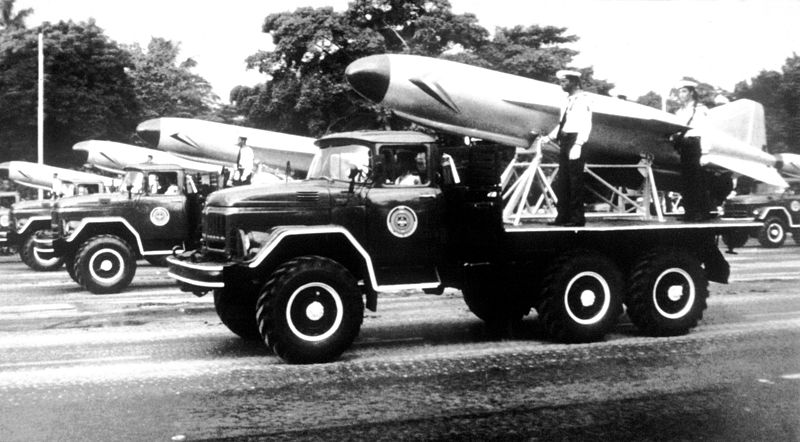
The P-15 Termit is another designation for the Styx, an early Soviet anti-ship missile. It is 5.8 m (19 ft) long and weighs 2,580 kg (5,690 lb).

SS-N-2 Styx/P-15 Termit

In countering the sUAV attack, the Russians used both hard and soft kill. The Pantsir-S reportedly use to shoot down seven of the drones is a short range, combined gun and missile, anti-air system. Six more were brought down by electronic counter-measures.

According to the report, Putin said, “These aerial vehicles were disguised – I would like to stress that – as homemade. But it is obvious that some high-tech equipment was used,” Perhaps Putin is not aware, or simply refuses to acknowledge, how sophisticated hobby drone auto-pilots have become. All you need is Google Earth for targeting and you can set in way-points and altitudes and have it fly to any point within the range of the aircraft.