India Launches First Two of Five OPVs

The Indian Navy has announced the launching of the first two of a new class of five Offshore Patrol Vessels (OPVs). Three more of the class are expected by the end of the year.

Within the Indian Navy, these are unique in that they are being built by a private, rather than a government, shipyard.

Wikipedia reports that these vessels are 110 meters in length (Same as the Offshore Patrol Cutter) with a displacement of 2000 tons (this appears to be light displacement). They are armed with  an OTO Melara 76mm super rapid gun mount (SRGM) and two 30mm AK-630M six barrel Gatling guns. It is powered by twin diesels 18,200 kW (24,400 HP) for a maximum speed of 25 knots.

India has both a Coast Guard and a Navy, and both operated Offshore Patrol Vessels. The Coast Guard was established in 1978 and operates under the Ministry of Defense. Indian CG OPVs tend to be more lightly armed than their Navy counterparts.

The Indian Navy currently operates ten Offshore Patrol Vessels.

The Indian Coast Guard currently operates 16 Offshore Patrol Vessels and three larger “Pollution Control Vessels” which also function as OPVs.

The oldest of the Indian Coast Guard OPV was commissioned in 1983. The oldest Indian Navy OPV was commissioned in 1989.

German Navy to Test Asymmetric Weapons

Former  FGS Karlsruhe

NavalToday reports that the 33 year old former FGS Karlsruhe, a now decommissioned 3,680 ton frigate, will be used in a live weapons test.

What makes this test unique is,

“According to the German news site Kieler Nachrichten, the navy also plans to asses how asymmetric threats affect the ship. For these tests, the navy plans to use smaller weapons and rockets as they are used by terrorists and pirates.”

I hope we will get access to the results and will apply lessons learned to our new construction.

Laser Icebreaker?

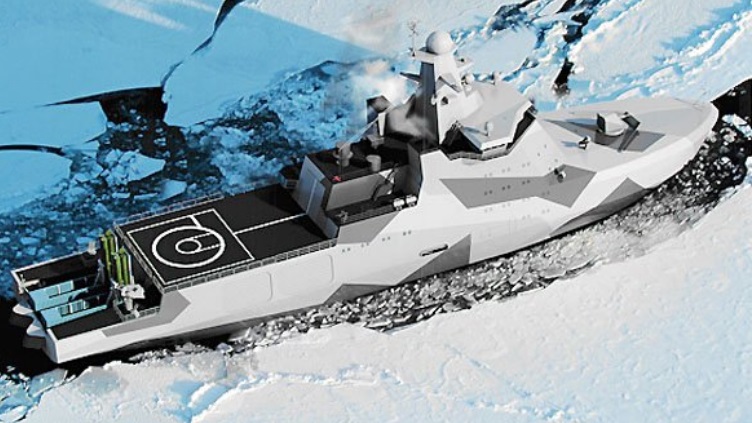
Project 23550, Ivan Papanin class icebreaking patrol vessel, with towing capability and containerized cruise missiles.

The National Interest is reporting that the Russians are planning to use lasers as a way to facilitate icebreaking.

…. “Later this year, scientists aboard the Dixon, a Russian diesel-powered icebreaker operating in the White Sea, will begin testing of a 30-kilowatt ship-based laser, designed specifically for easing the movement of ships operating in the Arctic environment,” Sputnik News said. “The project involves experts from the Moscow-based Astrofizika Design Institute, with the assistance of St. Petersburg’s Arctic and Antarctic Research Institute.”

A Russian physicist told Russian media that the new laser is designed as an ice cutter rather than a weapon. “We’re talking about easing as much as possible navigation through northern regions. In addition, it’s necessary to test empirically calculations, create the system, measure energy consumption and calculate many other parameters. For the first stage this is enough.”

The author of the post may be a bit confused. He refers to,

More details are emerging about Russia’s trump card for control of the Arctic: laser-armed, nuclear-powered “combat icebreakers.”

But he refers to the Project 23550 (Ivan Papanin) class icebreaking patrol vessels which we talked about earlier, armed but relatively small (for an icebreaker) and definitely not nuclear powered icebreaking patrol ships with provision for mounting containerized cruise missiles.

The author seems to have assumed that the laser could also be used as a weapon although the mounting and targeting requirements for a laser weapon would be much different.

Despite the author’s apparent confusion, this is the first I have heard of using lasers to facilitate icebreaking. Using one to open a crack in the ice before the bow hits might be worthwhile. Whether it is even feasible ought to be something that could be determined mathematically.

Sounds like something worth looking at.

Naval Research Lab Develops New Paint

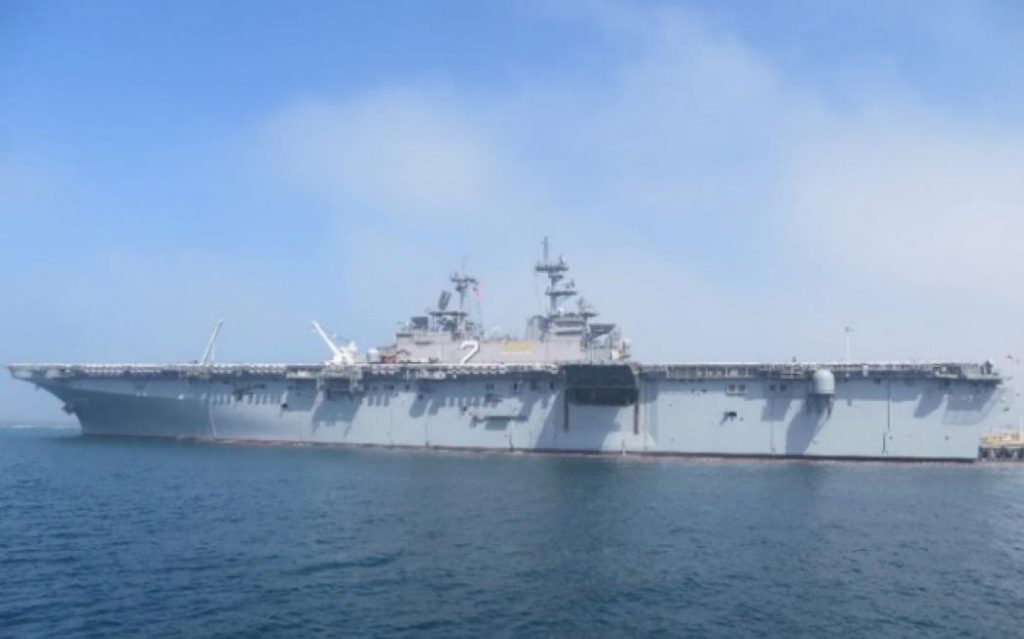
Port side view of USS Essex (LHD 2) after full application of an NRL-developed 1K polysiloxane topcoat in 2017.

NavalToday is reporting that the Naval Research Laboratory has developed a new topside paint that will last longer and is both cheaper and easy to apply. Now it has had its first large-scale application, USS Essex.

Single-component refers to an all-in-one-can system that does not require the measuring and mixing of two or more components before application, thus providing a “user-friendly” system for Sailors when applying on ships.

“The 1K polysiloxane is easy to use. There is no mixing, surface preparation is easy, and it covers well,” said Lt. j.g. Donald Ham, Essex’s Assistant Deck Department Head. “We painted our entire hull with approximately 320 gallons of the 1K, whereas it would have taken greater quantities of qualified two-component (2K) polysiloxanes. Thus, we not only saved time, but we saved money. The best part is that the 1K polysiloxane rolls-on the ship just like the legacy silicone alkyds.”

New Zealand and Chile Agree on SAR responsibility

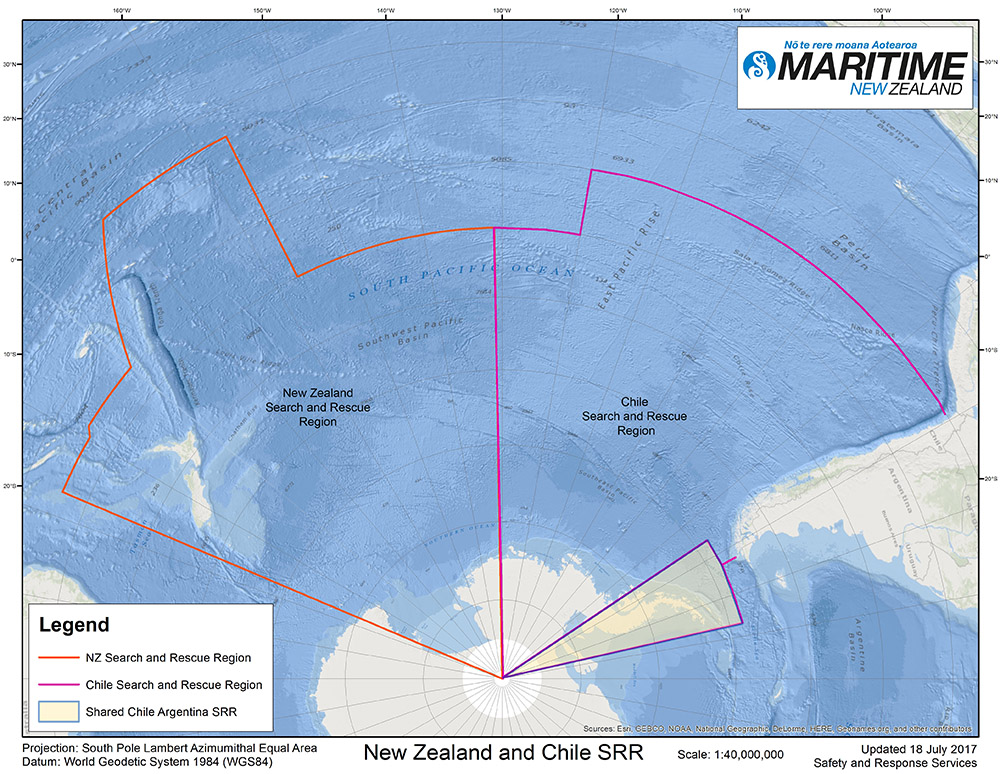
New Zealand and Chile agree on SAR responsibility

NavalToday reports New Zealand and Chile have concluded an agreement delineating SAR responsibility over an area of roughly 60 million square kilometers that extends all the way to the South Pole and includes area Coast Guard Polar Icebreakers will routinely transit on the way to Antarctica.

Ultimately this may have some impact on territorial claims to Antarctica.

International Court of Arbitration Rules for Green Peace over Russia

Green Peace Photo and Caption. “A Russian Coast guard officer is seen pointing a knife at a Greenpeace International activist as five activists attempt to climb the ‘Prirazlomnaya,’ an oil platform operated by Russian state-owned energy giant Gazprom platform in Russias Pechora Sea.” 

gCaptain reports,

Russia rejected a ruling by an international arbitration court which said Moscow must pay damages for seizing a Dutch-flagged Greenpeace vessel, saying on Thursday that the decision would only encourage illegal protests.

We tracked this incident earlier. In this case I think the Russians may have a point. It is very difficult to distinguish between a “peaceful protest” that involves what may appear to be an assault and an actual attack.

The Russians may have made a mistake in not participating in the proceedings.

Russia had originally declined to take part in arbitration, arguing that it was acting within its sovereign rights to seize the ship in international waters where Russia enjoys exclusive economic rights.

The Greenpeace ship Arctic Sunrise departs from Murmansk, Russia, August 1, 2014. The Greenpeace ship Arctic Sunrise departs from Murmansk, Russia, August 1, 2014. Photo (c) Dmitri Sharomov/Greenpeace

World Maritime Fleets–UN

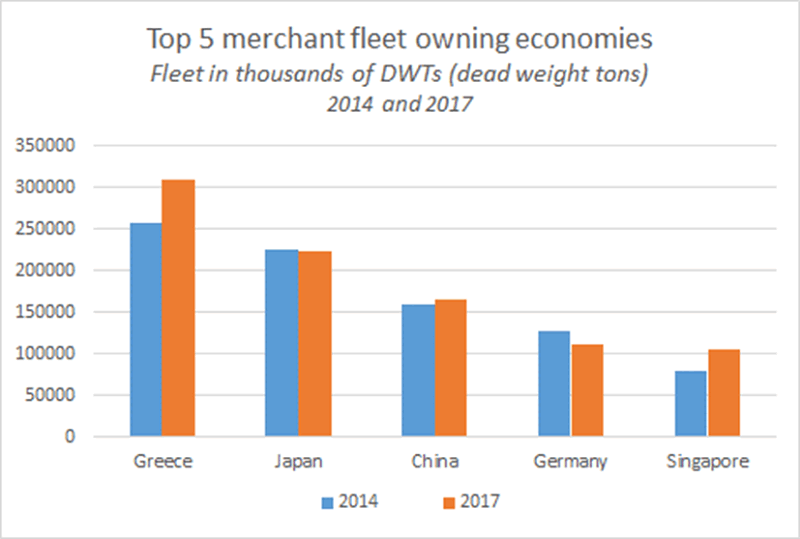
The UN has issued an interesting short report on the status of the World’s merchant fleets. I am going to quote it below.

Top 5 ship owners are Greece, Japan, China, Germany and Singapore. Together they have a market share of 49.5% of dwt. Only one country from Latin America (Brazil) is among the top 35 ship owning countries, and none from Africa.

Top 5 flag registries are Panama, Liberia, Marshall Islands, China Hong Kong SAR and Singapore. Together they have a market share of 57.8%. Developing countries flag more than 76% of the world fleet in dwt. In terms of vessel types, bulk carriers account for 42.8% of dwt, followed by oil tankers (28.7%), Container ships (13.2%), other types (11.3%) and general cargo ships (4%).

Only three countries (Republic of Korea, China and Japan) constructed 91.8% of world tonnage (GT) in 2016. Republic of Korea had the largest share with 38.1%.

Four countries (India, Bangladesh, Pakistan and China) together accounted for 94.9% of ship scrapping in 2016 (GT).

The data confirms a continued trend of industry consolidation, where different countries specialize in different maritime sub-sectors, as analyzed in UNCTAD’s Review of Maritime Transport 2016 and a special chapter of the 2011 Review. It also confirms the growing participation of developing countries in many maritime sectors.

For more information, please contact Jan Hoffmann, Trade Logistics Branch, Division on Technology and Logistics, UNCTAD. Jan.Hoffmann@UNCTAD.org

Thanks to Bryant’s Maritime Consulting blog for bringing this to my attention.

A Trend: the Nexus of Missile Boats, Corvettes, and Patrol Vessels

There seems to be a trend in anti-ship cruise missile (ASCM) armed vessels. This may not look like a topic of interest to the Coast Guard, but it seems the former bright line between vessels designed as missile boats and those designed as patrol vessels may be disappearing. In fact, missile boats, as a class, seem to be disappearing as ASCM equipped vessels seem to be evolving into much larger corvettes which look a lot like offshore patrol vessels.
How it began:
It all started in 1956, when the Soviets replaced the torpedo tubes on their project 183 class torpedo boats (NATO P-6) with a new missile, the (NATO SS-N-2 Styx), and created an entirely new type of combatant that NATO termed the  Komar. (66.5 tons, 83 foot long)

Komar Class Missile Boat, US Navy photo

Suddenly these small vessels could damage or destroy a ship of any size and outrange battleships.

They drew first blood 21 October 1967, when three  Styx missiles fired from Egyptian Komar class missile boats sank the Israeli destroyer Eilat (former HMS Zealous, 1,710 tons).

The Indian Navy again proved the effectiveness of the Styx in 1971, attacking Pakistani shipping and shore facilities, using larger Osa class missile boats.

By 1973 it was the Israeli’s who proved most capable in this new form of warfare, employing helicopters for deception and electronic countermeasures to seduce the Styx which outranged their own ASCM.

The Market: 

Did a bit of a “market survey” comparing the small missile armed combatants of ten nations, built or building, as reported in my 1987 “Combat Fleets of the World” with their current fleet, built or building, mostly from Wikipedia. Checked some of the info against my current edition of “Combat Fleets” but it is already becoming out dated.
1987 to 2017 is a 30 year spread, but 1987 was 20 years after the sinking of the Eilat, and more than thirty years after the first Komars were commissioned. We have had 60 years for the type to evolve and 1987 is roughly the mid-point of that evolution.
It should be recognized that since the collapse of the Soviet Union there has been significant reduction of naval forces for many of these navies, so smaller fleets should not be a surprise.
Notation: Initial in-service dates for the first of class are in parenthesis (In the case of a class that is used by more than one nation I will use the first in-service date. ). In some cases I have included inclusive commissioning dates for the whole class. I have tried to use full load displacement only. There was sometimes conflicting information. I chose what I thought was most credible.
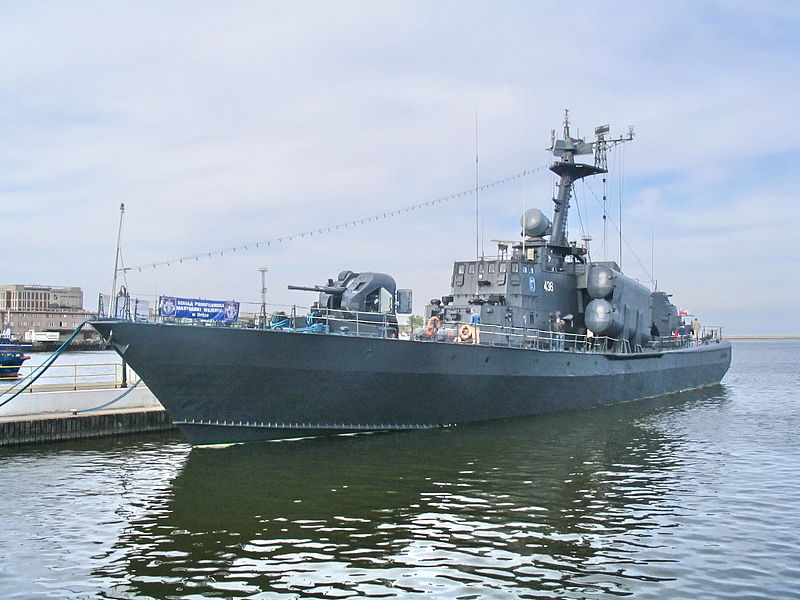
China
1987: 120 Osa 235 tons, 70 Komar 79 tons , plus over 200 torpedo boats

Osa-I class, US Navy photo

Now: 30 of an expected 40 Type 056 corvettes completed (2013) 1500 tons, 83 Type 022 fast attack craft (2004) 220 tons, 26 Type 037 class (1991) 478-520 tons.

Houbei Type 022 class fast attack craft

Type 056 corvette, credit 樱井千一

Denmark
1987: Building StanFlex 300s (1989-1996) 450 tons, 10 Willemoses class (1976) 265 tons. They also had six Soloven class torpedo boats of 114 tons

Danish navy SF300 vessel Støren (P555), photo by Kim Storm Martin

Now: No ASCM equipped combatants of less than 6,600 tons
Finland
1987: Four Helsinki class (1981) 280 tons, four Osa class 235 tons
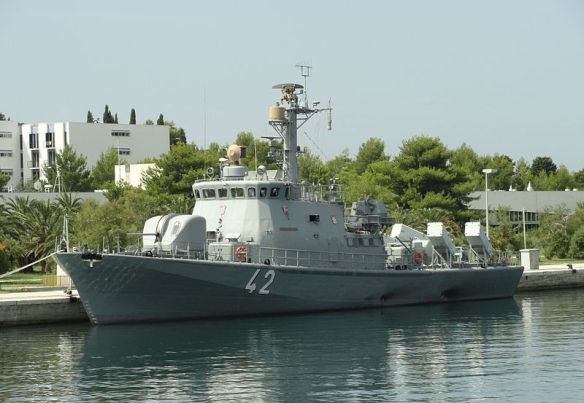
Helsinki Class now Croatian vessel RTOP-42 Dubrovnik. Photo by Saxum
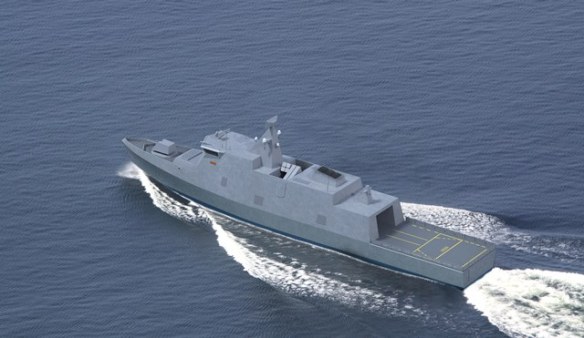
Now: Four ice strengthened corvettes planned to replace Rauma class and others, four Hamina class (1998) 268 tons, four Rauma class (1990) 248 tons. Discussion of new Finnish corvettes here: https://chuckhillscgblog.net/2015/12/23/finland-seeks-unique-warship/

Conceptual illustration, Finland’s squadron 2020 corvette

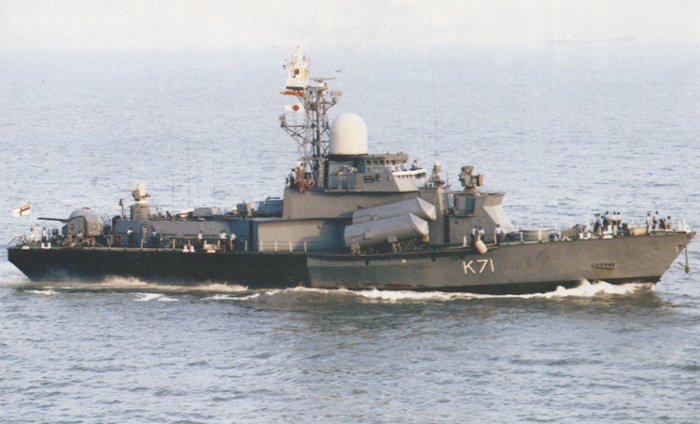
Germany
1987: 20 type 143 (1976) 390 tons, 20Type 148 (1972) 264 tons
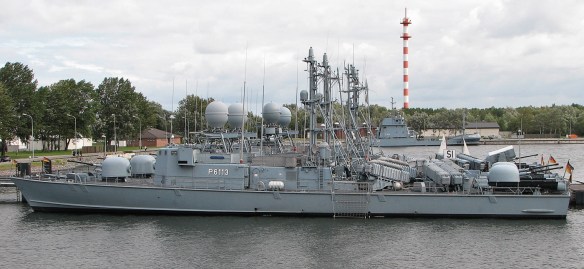
Schnellboote_Albatros-Klasse

Type 143 Albatros-class boats, S63 Geier in the foreground. The third one is a Gepard-class boat. Photo by Darkone

Now: Smallest ASCM armed combatants are 1840 ton K130 class (2008) (Five built and five more planned)
Corvette_Braunschweig_F260

The German navy corvette Braunschweig ( F 260), lead ship of the corvette class K 130. Photo by Torsten Bätge

Greece
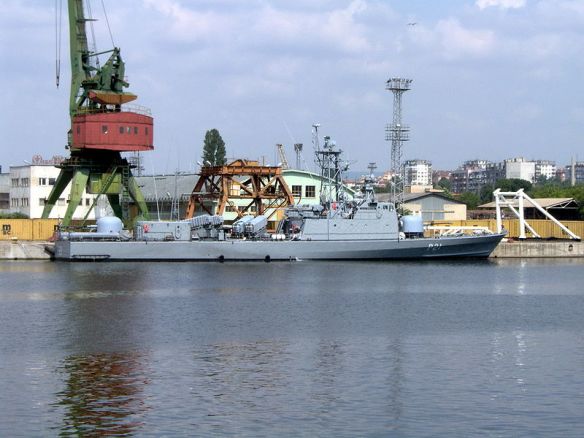
1987: 6 La Combattante IIIB class (1980) 429 tons, 4 La Combattante III class (1977) 425 tons, 4 Combattante II (1973) 265 tons,
LaCombatIII

Antipliarchos Blessas (P-21), LaCombattante III class, photo by Jorge Guerra Moreno

Now 7 Roussen class (2005) 668 tons, 5 La Combattante IIIB class (1980) 429 tons, 4 La Combattante III class (1977) 425 tons, 3 La Combattante IIA class (1973) 265 tons, plus eight 25 knot gunboats (1989) 515-550 tons that could mount four Harpoon (not currently mounted).
P67_Roussen

HS Roussen, P-67 in Piraeus 2009. Photo from K. Krallis, SV1XV

India
1987: Planning the Khukri class (1989) 1,350 tons, Building Turantul class (1984) 493 tons, 3 Nanuchka class (1978) 730 tons, 14 Osa class (1960) 240 tons

Nanuchka II class corvette.

Now: 5 Kora class (1998) 1500 tons, 4 Khukri class (1989) 1,350 tons, 10 Tarantul class (580 tons)
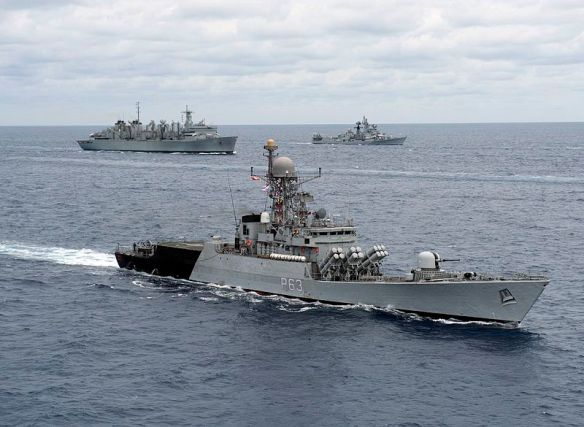
Kora class Corvette, INS Kulish (P63), US Navy Photo

Israel
1987: Planning SAAR 5 corvettes (1994) 1,275 tons, Building SAAR 4.5 (1980) 490 tons, 7 SAR IV (1978) 450 tons, 6 SAAR III (1969) 250 tons, 3 Grumman Mk II/M hydrofoils (1982) 103.5 tons
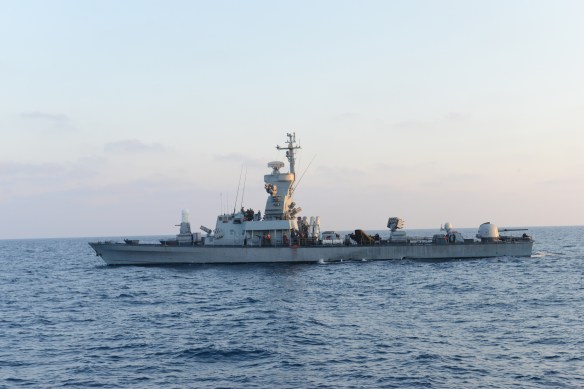
Israel_Navy_Strike_Gaza_from_the_Sea_(14738072664)

SAAR 4.5 missile boat. Israel Defense Force photo

DafHelChochit

INS Aliya in 1985. An aviation equipped unit of the SAAR 4.5 class

Now: Germany is building four ships, the SAAR 6 class, similar to the K130 class for Israel, that are being called OPVs. 3 SAAR 5 corvettes (1994) 1,275 tons, 8 SAAR 4.5 (1980) 488-498 tons
INS_Lahav

INS Lahav, most advanced SA’AR 5 corvette in the Israeli navy. Now equipped with MF-STAR radar and BARAK-8 Surface to Air Missiles. Photo by Ilan Rom

Norway
1987: 14 Hauk class (1977-1980) 155 tons, 6 Snogg class (1970) 140 tons, 19 Storm class (1963) 125 tons
Hauk_MTBer2 (1)

Hauk-class patrol boats at quay in 2001. Photo by Peulle
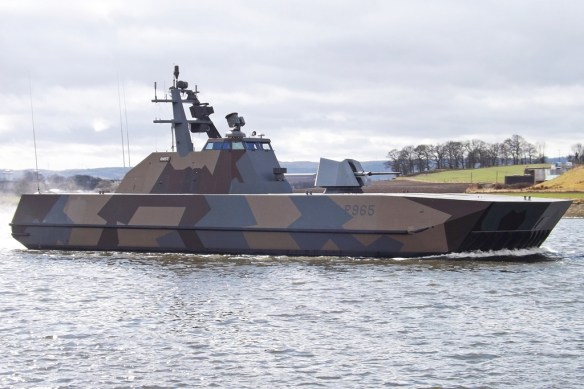
Now: Skjold Class (1999-2012) 274 tons
SkajoldClass

P965 KNM Gnist, a Skjold-class patrol boat of the Royal Norwegian Navy, Photo by Mark Harkin

Sweden
1987: Building Goteborg class (1990) 380 tons, 2 Stockholm class (1986) 320 tons, 17 Hugin class (1972-1981) 150 tons, 12 Spica II class (1972) 230 tons, plus 4 Spica class torpedo boats (1966) 235 tons
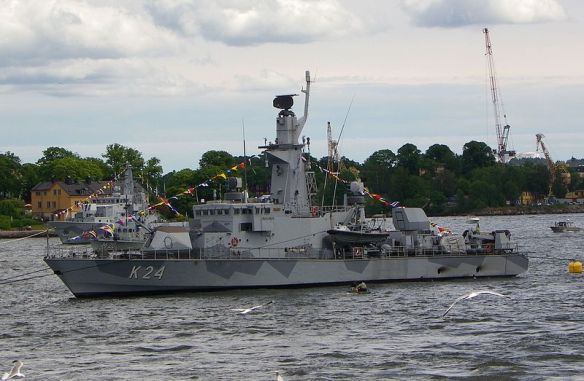
HMS_Sundsvall_2010

Goteborg class corvette HMS Sundsvall (1993), photo by Poxnar

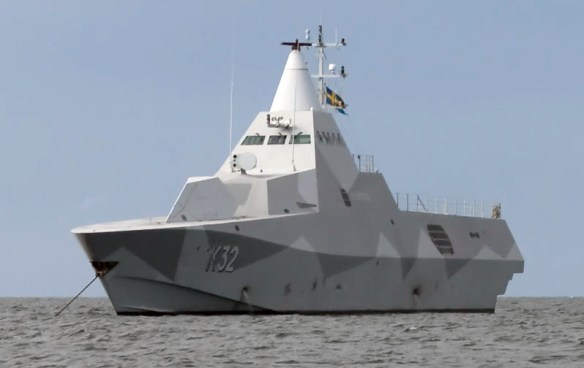
Now: 5 Visby class (2008) 600 tons, 2 Goteborg class (1990) 380 tons, 2 Stockholm class (1986) 320 tons
HMS_Helsingborg

Visby class corvette HSwMS Helsingborg (K32), photo by Xiziz

USSR/Russia
1987: Building Turantul class (1984) 549 tons and Nanuchka class (1978) 730 tons, Still retained 90 OSA (1960) 235 tons and other missile armed small combatants but none under 200 tons. (No Komar class in service.)
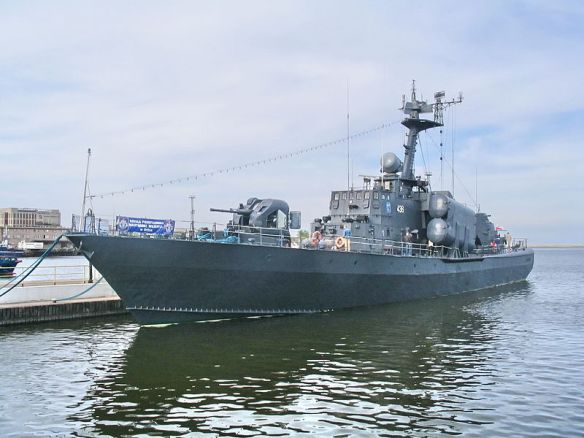
Turantul Class Corvette

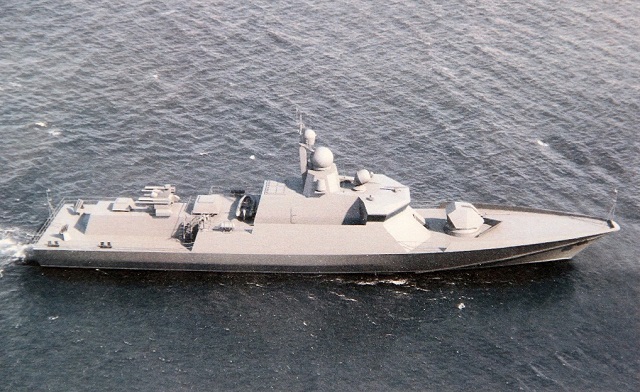
Now: Building Karakurt class (2017) 800 tons, 5 Buyan-M (2014) 949 tons. 26 Tarantul class (1984-2003) 493 tons, 12 Nanuchka class (1978-1991) 730 tons

Karakurt Class Corvette
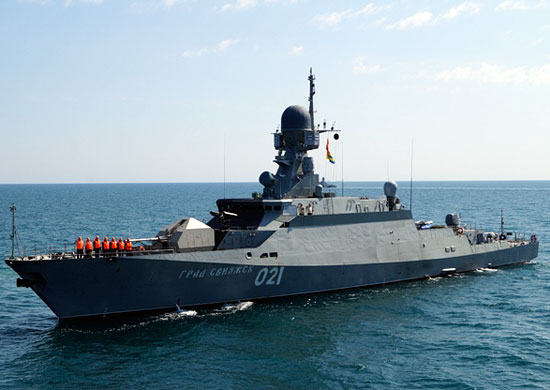
Buyan-M class corvette, Mil.RU photo

In Summary
Notably Denmark and Germany no longer have any ASCM armed combatants under 1800 tons. The latest from China, Germany, India, and Israel are between 1,500 and 2,000 tons. No indication how large Finland’s new corvette will be, but I expect it will be around 1,000 tons. Russia’s latest are 800 tons or larger. Greece and Sweden’s latest are 600 tons or larger. Many of these vessels have speeds of less than 30 knots. Only Norway is making ASCM armed combatants under 300 tons and even theirs are over 200 tons. The original concept of extremely fast, short ranged vessels of less than 100 tons and less than 100 feet in length has completely disappeared from the navies of these experienced missile boat operators. 
Why have these vessels grown in size?
I believe there are several reasons:
  • They want greater endurance and better seakeeping.
  • They want to deploy well beyond their homeports.
  • They want them to be multi-mission.
  • They want air-defense capability after the demonstrated vulnerability of missile boats to helicopters and aircraft during the first Gulf War.
  • The needs of networking, ESM, air-defense, ISR etc overwhelm a small crew.
  • They want to be able to launch a multiple missile attack that allows several missile to arrive on top simultaneously, but they also want a second salvo in reserve. This seems to be moving the norm toward 16 missiles. This is being facilitated by the smaller size of many of the newer missiles.
  • They see a need for organic aviation (either a helicopter or UAV) for over the horizon targeting.
  • Because it is peacetime, the planning horizon is now about 30 years. Operating cost considerations predominate.  In wartime it might make sense to make four cheap manpower intensive vessels rather than one individually more capable vessel, but in peacetime fuel and manning costs trump low initial costs and quick construction. This is part of the reason we have a “gold-plated” fleet now.