2018 Budget Request

The FY 2018 budget request has been published.

There is:

The overview includes “2016 Performance Highlights.” Also included is a page that says what the Coast Guard does on an average day.

On page 12 of the Overview, you can see a comparison of the FY 2018 President’s Budget request compared to the FY 2016 revised enacted and FY 2017 annualized budgets. The FY 2018 request is approximately $440M less than the FY 2017 annualized.  On the other hand this request is $339M more than the FY 2017 Presidential request. I think we can expect some changes before it becomes law.

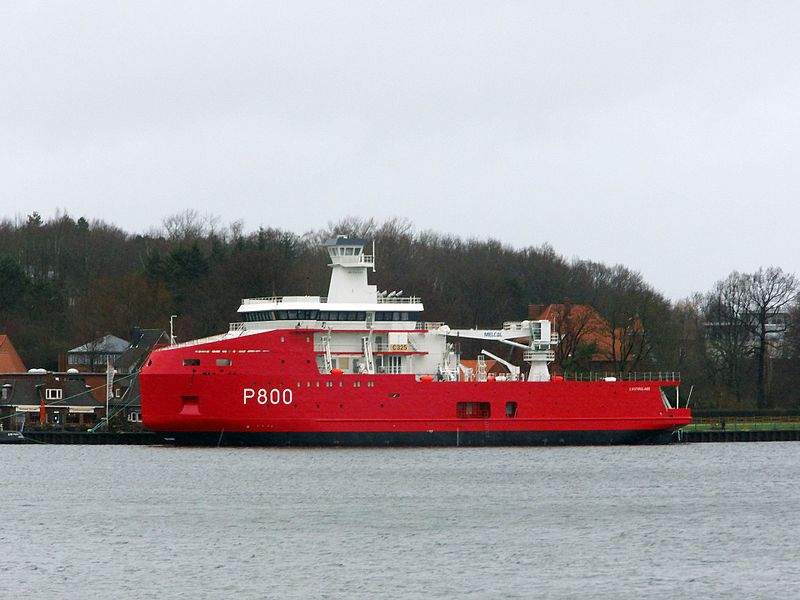
French Navy Gets New Icebreaker

L’Astrolabe (2017) in Kiel, 3 January 2017, photo by HenSti

NavalToday reports that the French Navy will soon accept a light icebreaker/ supply vessel to be named L’Astrolabe. It will replace a smaller vessel of the same name.

It is 72 metres (236 ft) long and 16 metres (52 ft) of beam, somewhat larger than her 66-metre (217 ft) predecessor.

Aker Arctic provided the basic design.

Late addition: Check out NavyRecognition’s report for a better selection of photos.

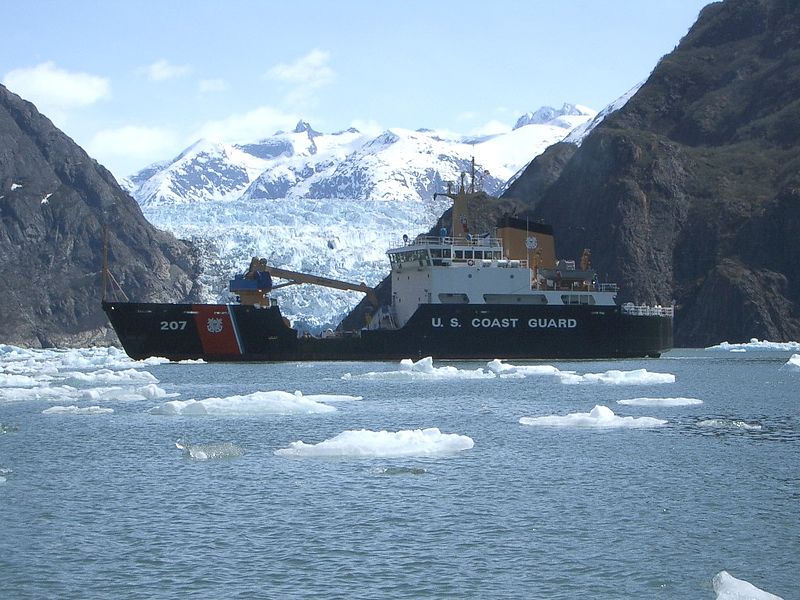
Coast Guard Cutter Maple begins historic voyage through Northwest Passage

Photo: Maple in front of the LeConte Glacier

The following is a Coast Guard news release. USCGC Maple will be using the NorthWest Passage to transit to the Coast Guard Yard for its In Service Sustainment mid-life renovation, and will be doing some scientific research along the wah

ANCHORAGE, Alaska — The crew of the Coast Guard Cutter Maple, a 225-foot seagoing buoy tender homeported in Sitka, Alaska, departed Wednesday on a historic voyage through the Northwest Passage.

This summer marks the 60th anniversary of the three Coast Guard cutters and one Canadian ship that convoyed through the Northwest Passage. The crews of the U.S. Coast Guard Cutters Storis, SPAR and Bramble, along with the crew of the Canadian ice breaker HMCS Labrador, charted, recorded water depths and installed aids to navigation for future shipping lanes from May to September of 1957. All four crews became the first deep-draft ships to sail through the Northwest Passage, which are several passageways through the complex archipelago of the Canadian Arctic.

The crew of the cutter Maple will make a brief logistics stop in Nome, Alaska, to embark an ice navigator on its way to support marine science and scientific research near the Arctic Circle. The cutter will serve as a ship of opportunity to conduct scientific research in support of the Scripps Institution of Oceanography.

The Maple crew will deploy three sonographic buoys that are used to record acoustic sounds of marine mammals. A principal investigator with the University of San Diego embarked aboard the cutter will analyze the data retrieved from the buoys.

The Canadian Coast Guard Ship Sir Wilfrid Laurier will rendezvous with the Maple later this month to provide icebreaking services as the Maple makes it way toward Victoria Strait, Canada. The Maple has a reinforced hull that provides it with limited ice breaking capabilities similar to Coast Guard 225-foot cutters operating on the Great Lakes.

“We’re very excited to make this voyage through the Northwest Passage and to assist in the Scripps Institute research,” said Lt. Cmdr. Patrick Armstrong, commanding officer of the Maple. “In planning this, we have worked very closely with our Canadian counterparts and we look forward to continuing that cooperation in the Arctic.”

All scientific research, icebreaking and marine science activities that occur during the voyage will be conducted in accordance with the 1988 Canada-US Agreement on Arctic Cooperation.

The Maple crew is expected to conclude their historic voyage in Baltimore, Maryland, during late August. The cutter will undergo scheduled maintenance in dry dock at the Coast Guard Yard in Baltimore for repairs and upgrades. The crew will return to Sitka to take command of the 225-foot Coast Guard Cutter Kukui, which was previously homeported in Honolulu.

Boat Stern Launching Techniques

Looking at this little film, it struck me that the technique that was usable in the heaviest seas was that used by the Canadians (12:45-16:20), claiming a capability to Sea State Six, and they were the only ones that chose to run the ship parallel to the seas during recovery, rather than into the waves. This may be a bit counter intuitive, but it means the ship’s pitching is reduced and consequently there is less vertical displacement of the recovering ship’s stern.

As we saw in an earlier study, “The stern ramp availability is driven by sill depth and pitch motions…” In other words pitching is what limits the ability to recover the boat, and the problem becomes progressively worse as the size of the “host” vessel increases because there is a growing difference between the movement of the ship’s stern and the small boat.

I don’t know what our current doctrine is, but steaming parallel to the seas for recovery might be worth consideration if we are not already doing so.

Thanks to Adroth for bringing this to my attention. 

Hull Speed (Maximum Cruise)

For reference purposes I wanted to publish a table of hull speed versus ship’s water line length. As a rule of thumb, “hull speed” typically establishes the maximum economical cruise speed of a displacement hull as a result of wave making. Hull speed is a speed to length ratio where

Speed in knots / square root of the waterline length in feet = 1.34

I am also including the speed where the ratio equals 2 because this is typically an effective limit on maximum speed.

Like most rules of thumb, there are exceptions, but in most cases, the hull is at least to some degree “planing.”

  • Length     Hull Speed     Speed to Length=2
  • 64                10.72                   16
  • 81                12.06                   18
  • 100              13.4                     20
  • 121              14.74                   22
  • 144              16.08                   24
  • 169              17.42                   26
  • 196              18.76                   28
  • 225              20.1                     30
  • 256              21.44                   32
  • 289              22.78                   34
  • 324              24.12                   36
  • 361              25.46                   38
  • 400              26.8                     40

Not that it matters to the Coast Guard, but when ships get really large, wave making is not much of a problem. For a ship (like an aircraft carrier) that has a waterline length of say 1,000 feet, hull speed is 42.4 knots and they would not reach a Speed to Length ratio of 2 until they are going 63.2 knots.


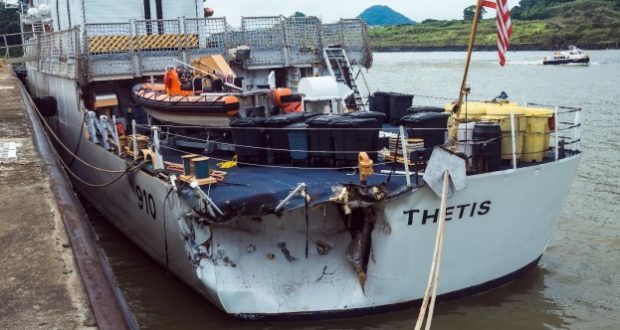
Collision–Thetis Rammed by Barge/Tug

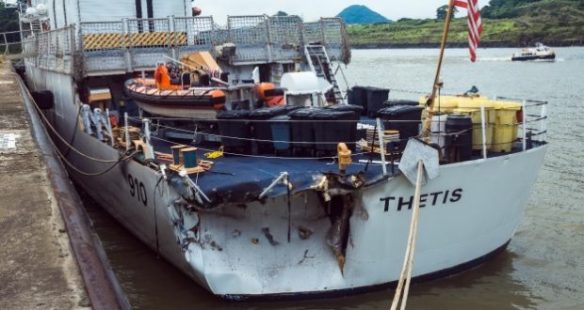
USCGC Thetis damage sustained in a collision in the Panama Canal 0111 local, 2 June 2016

The Cutter Thetis (WMEC-910) was hit in the stern by a barge being pushed by a tug, while transiting the Panama Canal, 2 June 2016. The channel was about 270 yards wide at the site of the collision. Thetis was ahead slow at about 4-4.5 knots. The tug and barge combination was full ahead doing 10.5-11 knots. Its radar was off because “he had clear forward visibility.” The captain of the tug never saw the Thetis until after the collision.

The tug was clearly at fault, but the NTSB also found that “Thetis did not maintain a sufficient and proper lookout.”

Mostly Thetis was doing everything right, but they only had one lookout and he was unable to see traffic over a wide sector astern and to port. A longer sound powered telephone cord that would have allowed the lookout to move to the port side might have made a difference.

Thetis had watches on AIS and on radar on the bridge and CIC, but attempts to mitigate or prevent the collision came to late. There was also no mention of sounding the danger signal.

Some times it is missing the basics that come back to bite you.

USCG Actions Post-accident

Since the accident, the Coast Guard cutter Thetis has implemented the following changes:

  • The shipping officer’s responsibilities, as outlined in the onboard guidance, were amended to require that an individual be qualified as deck watch officer, preferably as an underway deck watch officer, before assuming the role of shipping officer.
  • An additional dedicated lookout position was added to the aft area of the Thetis for long transits in restricted waters.
  • A radar-tuning policy was established that prohibits both the SeaWatch and the radar systems from being offset from the automatic tuning mode when transiting in restricted waters, in order to ensure the optimal traffic image.

I might add you don’t have to be in “long transits in restricted waters” for someone to come up your ass. Check your GQ watch bill as well.

Thanks to Bryant’s Maritime Blog for bringing this to my attention. 

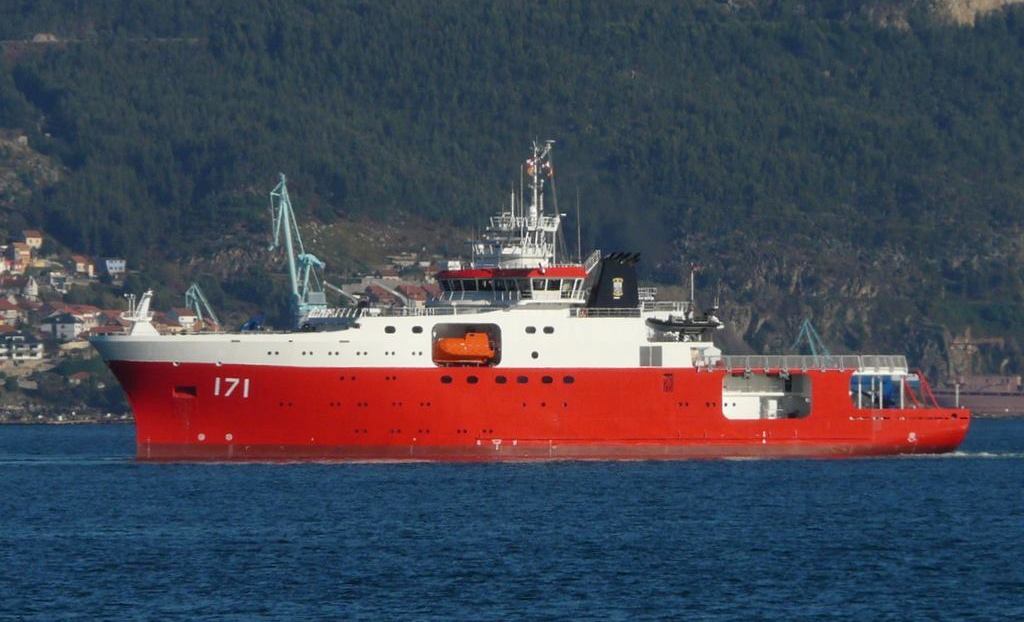
LATIN AMERICAN NAVIES AND ANTARCTICA–CIMSEC

Peru’s BAP Carrasco (BOP-171). Photo by Alejo Marchessini (amarchessini@edefa.acom)

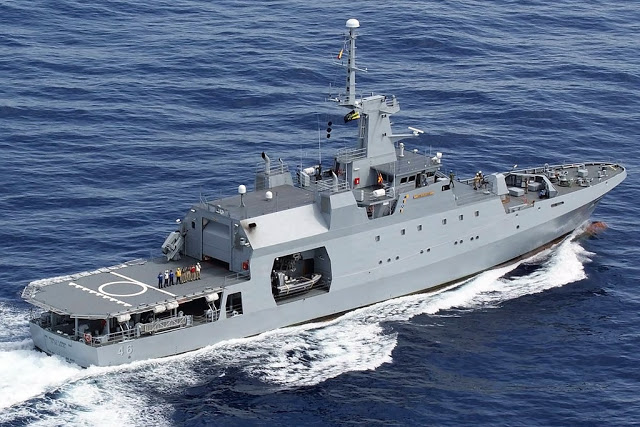
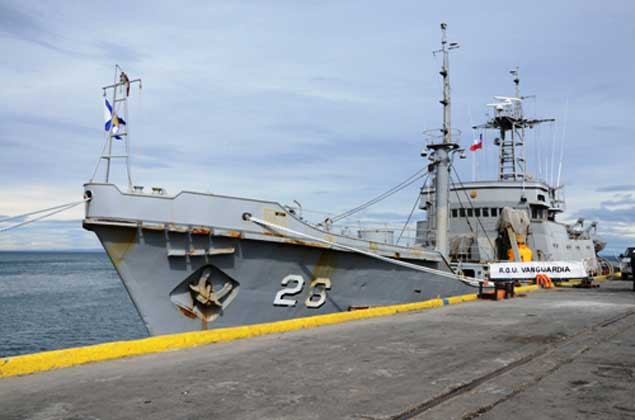
CIMSEC has a review of Latin American efforts in the Antarctic. It refers to the efforts of the Navies of Argentina, Brazil, Chile, Peru, Colombia and Uruguay. The post provides links, (mostly in Spanish) but few photos, so I am providing some photos to illustrate some of the major vessels refered to in the post. There were earlier post about the planned new Chilean icebreaker/supply vessel and Argentina’s newly refurbished icebreaker. Below is a chart of the current claims on Antarctica as reported in Wikipedia.

Chile’s current icebreaker, 6500 ton former Canadian icebreaker, Almirante Oscar Viel

Colombia’s ARC 20 de Julio (PZE-46) which has been modified for operations in the Antarctic. Photo by Juan Nation

Uruguay’s Vanguardia

Brazil’s Almirante Maximiano (H-41) a 5,450 ton icebreaking supply vessel. Brazilian Navy photo

Brazil’s Ary Rongel, Brazilian Ministry of Defense photo, 06/10/2014, Niterói – RJ
Fotos: Felipe Barra

USNI Coast Guard Essay Contest

Wanted to point to the US Naval Institute Coast Guard Essay Contest. Would love to see one of my readers win this. Other than this paragraph, this is a copy of the USNI online announcement where they also have a link for submission.

The Challenge:

Advance new thinking about the U.S. Coast Guard’s critical role in the 21st century.  No issue is too big or too narrow as long as it makes the Coast Guard stronger.  This does not mean authors cannot be critical and take on conventional wisdom and current practices.  In fact, we encourage you to push the “dare factor.”

Prior Publication: We will assume that your essay has not been previously published (online or in print) or being considered for publication elsewhere, unless otherwise notified by you.  All previously published essays are ineligible.

Submission Guidelines:

  • Email essay (preferably as a Microsoft Word attachment) by 31 August 2017 to: essay@usni.org
  • Include Coast Guard Essay Contest Submission on subject line of email
  • Include word count on title page of essay but do not include your name on title page or within the essay
  • Provide separate attachment to include biography and compete contact information — i.e., work, home, and cell phone numbers; and home mailing address

Selection Process: The Proceedings staff members will evaluate every essay and screen the top essays to a special Essay Selection Committee of at least six members who will include two member’s of the Naval Institute’s Editorial Board and four subject experts.  All essays will be judged in the blind — i.e., the Proceedings staff members and judges will not know the authors of the essays.

Announcement of the Winners: The winning essays will be announced in the October Proceedings. Some entrants will be awarded a one-year membership in the Naval Institute.

About Naval Institute Essay Contests

Essay contests have been central to the work of the Naval Institute for more than 130 years. They directly fulfill the Institute’s educational mission by encouraging writing on issues of concern to the Sea Services. They provide thought-provoking articles that spur ongoing discussion of these same issues, not only in Naval Institute media, print and digital, but also in other leading defense and national security forums.

  • Winners will be published in a future issue of Proceedings.
  • First Prize: $5,000 Second Prize: $2,500 Third Prize: $1,500
  • The winners will be recognized at the U.S. Coast Guard Academy Conference.
  • Open to all contributors–active-duty military, reservists, veterans, and civilians.
  • 2,500 words maximum (excludes footnotes/endnotes/sources).