Admiral Papp Interviewed–OPC/Inland AtonN/Budget

Former Commandant, Admiral Papp, has been at the Sea-Air-Space EXPO representing Eastern Shipbuilding. He has given a couple of interviews, the one above and a second one here.

Of the two, I think the one you can view above is by far the more interesting, and his comments were not limited to the Offshore Patrol Cutter, discussing the inland tender fleet and the CG budget in general as well. There were a couple of notable details in the interview.

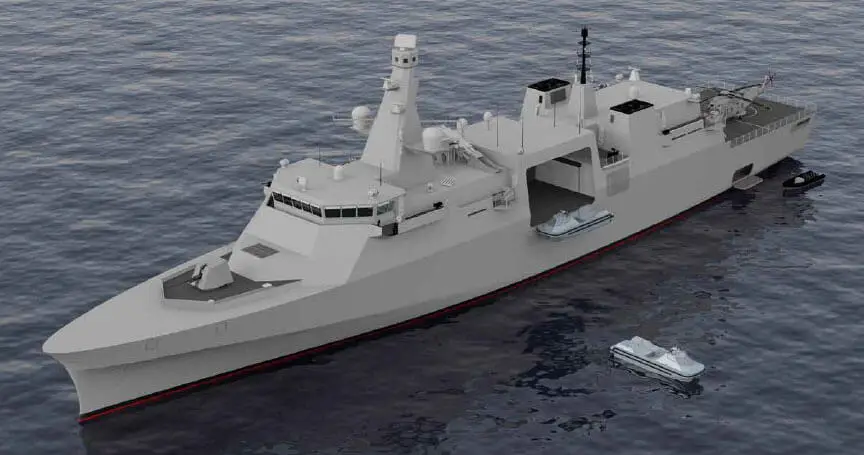
Admiral Papp stated explicitly that the expected crew size for the OPC would be 126 (I suspect this might actually refer to the planned accommodations rather than the crew). That is considerably more than the crew of the WMECs they replace. These ships are actually a third again larger than the 378s and much more capable than the ships they replace, so this should not be a great surprise. I do think this is more than the nominal crew of the National Security Cutter, although probably less than they actually sail with.

He also stated that the electric motors in the hybrid propulsion system would be good for at least nine and perhaps as much as 13 knots. All along I had assumed the hybrid system had been adopted as a means of meeting the range requirement, but since it is apparent they do not expect to be able to reach 14 knots using the electric motors, then the claimed range of 10,200 miles at 14 knots must be achievable using the Main Propulsion diesels. This suggest the range at lower speeds using only the ship’s service generators and electric motors may actually be considerably more.

Admiral Papp also suggested that there may be a possibility of exporting Eastern built ships because of its projected cost, well under $350M per ship.

Thanks to Luke for bringing this to my attention. 

Draft Polar Icebreaker Specs Issued

The Acquisitions Directorate (CG-9) is reporting that they have issued draft specifications for the Polar Icebreaker. The following is a verbatim copy of the press release.

The Coast Guard released its draft heavy polar icebreaker system specifications in a request for information (RFI) today. The request seeks questions, comments and feedback related to heavy polar icebreaker technology risks, sustainability, producibility and affordability. The RFI can be found here.

This RFI is part of ongoing market research conducted with the Navy and includes the draft specifications for icebreaker hull structure, propulsion and electrical plants, command and surveillance systems, weaponry, outfitting and auxiliary systems. Industry sources are invited to submit responses by June 16, 2017, at 11 a.m. Eastern time.

Following market research, the Coast Guard plans to release a request for proposal for detail design and construction of a heavy polar icebreaker in fiscal year 2018. The service plans to begin production activities in 2020.

For more information: Polar Icebreaker program page

We don’t have access to the specifications.

“Due to size limitations, the draft HPIB System Specification will be posted to FedBizOpps (FBO) via multiple document packages which will be deemed “limited access” and “export controlled.” All vendors must be granted “explicit access” by USCG in the FBO system in order to gain access to these limited access or export controlled packages.”

Playing Politics

Cdr Salamander has an interesting perspective on how the service leadership interacts with successive administrations and the dangers of being to closely associated with the agenda of a particular administration.

Actually I think the current leadership has been very consistant in identifying real priorities, but we haven’t always been so clear and consistant. Its worth considering.

Thanks to Lee for bringing this to my attention.

U.S. Coast Guard Selects FLIR and Raymarine–MarineLink

MarineLink reports, 

FLIR Maritime announced recently that it has been awarded a $50 million indefinite delivery, indefinite quantity contract to provide marine electronics systems under the U.S. Coast Guard’s Scalable Integrated Navigation Systems 2 (SINS-2) program over a five-year period providing the purchaser a right to extend delivery for an additional five years.

FLIR will provide electronics systems that will be standard fit on over 2,000 U.S. Coast Guard vessels, ranging from small-class boats through large cutter-class vessels. The systems include Raymarine multi-function navigation displays, radars, sonars, remote instrument displays, and autopilots.


Laser Added to Mk38 Mod2

Navy Recognition reports that BAE now offers a 60 kW Laser addition to the Mk38 mod2 gun mount currently on the Webber Class Fast Response Cutters and planned for the Offshore Patrol Cutter.

“The addition of a 60kW TLS would provide true selectable and scalable effects ranging from non-lethal to lethal. This would allow for new response options in both conventional and irregular conflicts.”

Note the laser on the USS Ponce is only 30 kW.

Late addition: 

How it might be useful: It could be used in a less than lethal mode. It could probably be used for disabling fire against outboard motors with greater precision than a gun. It could be used to destroy UAS (drones) inside ports without worrying about where misses might land.

Canada Expands Coast Guard

A rescue boat sits moored at the Kitsilano Coast Guard station before the base's closure in 2013.

Rescue boat sits moored at the Kitsilano Coast Guard station before the base’s closure in 2013.

Our Canadian counterparts are looking forward to an 11% expansion over the next two years. This is a part of the Canadian government’s $1.5B (Canadian) Ocean Protection Plan that will include new vessels and new lifeboat stations.

The Ocean Protection Plan appears to be a response to late or less than satisfactory response to pollution incidents.

I’m told among the new Canadian Coast Guard assets will be 45 foot USCG standard Response Boat, Mediums.


Northern Sea Route, Failure to Launch

Map of the Arctic region showing shipping routes Northeast Passage, Northern Sea Route, and Northwest Passage, and bathymetry, Arctic Council, by Susie Harder

gCaptain reports that despite record traffic, it appears there is little international interest in using the Northern Sea Route through the Russian Arctic to move cargo between the Atlantic and Pacific. Virtually all the traffic serves Russian local interests.

“Transit cargo contributed less than 3 percent to last year’s volumes through the Northern Sea Route,”

Low fuel prices have removed much of the incentive to use this shorter, but potentially more difficult route. Logically the same considerations apply to the North West Passage route as well. Given our unreadiness to deal with heavier traffic and the portential for an environmental disaster in the Arctic, this is probably good news for the US and Canadian coast guards. How long will these conditions continue? At the very least, we seem to have some time to get our act together.

The Era of Coast Guards in the Asia-Pacific is Upon Us–Rand Corp

The Rand Corporation has issued an interesting post regarding the increased use and aggressiveness of Asian Coast Guards. It is based on a study of the Chinese, Japanese, Vietnamese, and Philippine Coast Guards. The full text of the study is here. in pdf format.

The growth of these four Coast Guards has been remarkable. According to the report, between 2010 and 2016 the China Coast Guard vessel tonnage has increased 73%, the Japan Coast Guard increased 50%, the Vietnamese CG by 73%, and the Philippine CG by 100%.

The growth is largely driven by China’s pushiness using its newly formed Coast Guard, but it is also because of Japan’s new willingness to provide security assistance, at least in the form of Coast Guard vessels, to nations who, like them, must confront Chinese aggressiveness.

There also seems to have been a tacit acceptance of the idea that gray hulls should not mix it up with white hulls. This has played into the hands of the Chinese who have by far the largest fleet of white hulls in the world. In fact there are really only two kinds of vessels, private and government, and when fishing vessels act under government orders they are defacto government vessels

The full report has some figures I had not seen before.

Despite the fact that its missions apparently do not include Aids to Navigation, China’s CG is by far the largest:

“China’s investment has yielded a total fleet size of around 215 vessels, of which 105 are considered large (more than one-thousand-tons displacement) and 110 small (less than one thousand tons). In terms of total tonnage, China boasts the largest coast guard in the world at roughly 190,000 tons, enjoying substantial quantitative overmatch over its Asian competitors.” (The CCG reportedly has 17,000 members.)

Japan Coast Guard had a head start, it has grown less but still has more ships than the USCG.

In terms of fleet size, the U.S. Office of Naval Intelligence estimates that Japan has approximately fifty-three large and twenty-five small vessels in operation. The largest vessels in the JCG fleet include two PLH-class vessels with a displacement of 6,500 tons (9,000 tons fully loaded) and two Mizuho-class vessels of 5,200 tons. For comparison, the largest and most capable destroyers in the JMSDF, the Kongo-class vessels, displace approximately 9,500 tons. Most of the medium-to-high-endurance JCG vessels are equipped with deck-mounted autocannon that range in caliber from 20 to 40 mm, and most JCG officers carry light firearms for self-defense. Notably, the PLH-class cutters are only equipped with two Oerlikon 35–40 mm autocannon and two M61 Vulcan 20 mm six-barrel Gatling-style guns, compared with the 76 mm cannon on China’s largest cutter, Haijing 3901.

In terms of aviation assets, the JCG has by far the largest fleet in Asia, second only to the U.S. Coast Guard in the world, boasting twenty-six fixed-wing aircraft and forty-eight helicopters. Finally, the JCG has roughly 13,500 personnel, second most among coast guards in Asia.

Vietnam has also recently formed a Coast Guard.

The VCG has approximately fifty vessels: five large (the largest displaces 2,500 tons) and forty-five small. Soon after the Haiyang Shiyou 981 (HYSY 981) incident in 2014, Vietnamese prime minister Nguyen Tan Dung announced the allocation of U.S.$540 million to build thirty-two new coast guard ships and hundreds of aluminum fishing vessels that can withstand ramming better. With the delivery of two five-hundred-ton TT400TP-class patrol vessels in January 2016 and the addition of six one-thousand-ton patrol craft pledged from Japan, Vietnam will boast the largest coast guard fleet in Southeast Asia. Most VCG vessels have light-caliber deck-mounted autocannon or machine guns (ranging in size from 14.5 to 23 mm) or both, and most crewmembers carry light firearms for self-defense. The VCG has three fixed-wing CASA C-212 Aviocar patrol aircraft. The VCG has approximately 5,500 total personnel.

The Philippine Coast Guard:

The PCG maintains a small fleet of eight medium-endurance patrol craft, mounted with 50 mm autocannon; four buoy tenders; and roughly thirty-two small patrol vessels. Japan’s announcement that it plans to sell eight medium endurance cutters to the Philippines will mean an almost doubling of the PCG medium-endurance-cutter fleet. The PCG has only two operational aircraft— one fixed wing and one helicopter—but it is slated to receive two helicopters from France within the next few years. Finally, there are roughly 9,000 personnel in the PCG, with plans to expand to 13,500 by 2020.

A final note: 

It is not clear what type of displacement the study used. I try to consistently use full load, but Asian nations tend to try to minimize displacement and frequently report only light displacement.

The total displacement of the US Coast Guard’s ships is also going up, but it is not because of more ships, it is because the ships are larger. The total full load displacement for the program of record, 8 NSCs (36,000 tons), 25 OPCs (about 100,000 tons), and 58 FRCs (21,170 tons) is about 157,170 tons. The NSCs are 50% larger than the 378s. The OPCs are a third larger than the 378s and four times the size of the 210s. The FRCs are three times the size of the 110s they replace.

It might be assumed that a Country’s Coast Guard’s size should be related to the size of the country’s EEZ. It doesn’t seem to have worked that way. The size of the EEZs for the countries is

China: 877,019 km2 (plus disputed claims for 3,000,000 km)

Japan: 4,479,388 km2

Philippines:  2,263,816 km2

Vietnam: 748,875 km2

USA: 11,351,000 km2