Children’s Book

Picture

James Burd Brewster, a retired Coast Guard Academy graduate (class of ’77) author and publisher, has alerted me to his latest book, a biography of helicopter pioneer, Capt. Frank A. Erickson, which is intended to be the first of a series on Coast Guard heroes aimed at a middle school aged audience.

I have not read the book, but this is not the author’s first attempt. He has several books to his credit.

The illustrations, including those below, appear well done.

Coast Guard’s National Security Role

The Coast Guard leadership has been hitting the Coast Guard’s National Security role pretty hard since the change of administration and the “skinny budget” scare.

Here is the Commandant’s latest pitch to “a roundtable of the Defense Writers Group, a nonprofit association of defense reporters.”

Like other service chiefs he is messaging that a continuing resolution would be a disaster.

“The good news is we are modernizing the fleet, but it’s that annual operating and maintenance account that you have to get very creative,” Zukunft said. “Where we’re seeing the most pain is we defer a lot of our shore maintenance; that backlog continues to grow.”
Zukunft said his greatest concern right now is to have budget certainty and not temporary funding measures; the current continuing resolution that funds the government runs through April 28.
“Maybe we’ll see a short extension of that, but if we don’t have an appropriation in 2017, I will have to shut down operations,” he said, adding that will affect readiness. “This is not the time to sideline any military service, including the Coast Guard, but that’s what a [continuing resolution] would do.”


To say we are in good shape in terms of modernization is at least optimistic, but perhaps the Commandant has some favorable indications from Congress. They do like things that add jobs. Still even if we start getting icebreakers the OPC is long overdue and I suspect that we may see the WMECs start failing at an ever increasing rate since we don’t expect full replacement of the fleet until about 2034. Building two a year is going to take too long.

Ports, Waterways, and Coastal Security–Russian Style

NavyRecognition is reporting a Project 21980 Grachonok-class anti-commando boat of the Black Sea Fleet, the Yunarmeyets Kryma, has joined the Russian Navy’s standing naval force in the Mediterranean (Presumably in Syria).

The Yunarmeyets Kryma is a special boat built by the Zelenodolsk Shipyard in 2014. The Vympel Design Bureau in Nizhny Novgorod had developed the class to guard water areas and fight enemy naval commandos in the waters of naval bases and on close approaches to them. The boats in the class carry heavy machineguns, antidiver grenade launchers and man-portable air defense systems. Their radio electronics allow searching for underwater objects – both static and moving – while their diving system allows several divers to dive simultaneously.

It looks like a WPB so I looked up the class. They are 138 tons, 102 ft (31 m) in length, 23 knots, and a crew of eight. The Russians have built twelve and are building ten more.

Described as being anti-saboteur and anti-commando boats these are in intended for “force protection” which is included in the Coast Guard’s Ports, Waterways, and Coastal Security mission (PWCS). It is also one of the missions of the new US Navy MK VI patrol boat. We have detachments at Bangor and Kings Bay to protect Fleet Ballistic Missile subs while in transit that also perform this function.

Despite the similarities in mission, the Russian boat is armed and equipped much differently from their USN and USCG counterparts. It has a couple of sonars. In addition to a 14.5 mm (.60 cal.) machine gun, they have point defense anti-air missiles. Defense against swimmers is apparently much on their mind. They have two anti-swimmer weapon systems, the DP-64 a shoulder fired mini-depth charge thrower and the DP-65, a ten barrel, automated, sonar controlled mini-depth charge thrower.

File:DP-64.png

DP-64 anti-swimmer grenade launcher. Artist: Jason Biggs

“The 55mm DP-65 remotely controlled…grenade launching system is designed for protection of ships against attacks of underwater combat swimmers at external roadstead open anchor stops and bases, for protection against attacks of underwater combat swimmers at water-development works, sea platforms and other important sea and coastal installations.”

The US had a lot of trouble with Viet Cong combat swimmers during the Vietnam war. They even manage to sink a small WWII built aircraft carrier (CVE) being used as an aircraft transport. It is unclear how well prepared we are for this type of attack now.

Hybrid Propulsion News Release

We have a news release on the electric portion of the Offshore Patrol Cutter’s hybrid propulsion system. There is not a lot of specifics about the system, but it does provide a rationale for installation of this additional system in a ship that above all else is designed to be “affordable.” The news release is quoted in full below.

ARLINGTON, VA, April 13, 2017 ̶Leonardo DRS, Inc. announced today that it has been awarded a contract by Eastern Shipbuilding to provide hybrid electric drive systems for the U.S. Coast Guard’s new fleet of Offshore Patrol Cutters. The contract, for the first nine systems, is worth $10.7 million. Eastern Shipbuilding is the prime contractor and builder of these nextgeneration Offshore Patrol Cutters.

Under the contract, Leonardo DRS will provide its high-performance, permanent magnet motorbased Auxiliary Propulsion System. This integrated hybrid electric drive system provides capability for the ship to operate much more efficiently at slower speeds, increases mission duration capability, reduces emissions and provides emergency take-home capability in the event of a failure of the main propulsion diesel engines. When coupled to the main propulsion gearbox, the system allows the ship to operate quietly and efficiently during loitering operations while providing superior fuel economy for increased on-station operations and capability.

“DRS is a pioneer in naval hybrid electric drive technologies and we are proud to be able to deliver these advanced systems to the Coast Guard’s newest generation of ships,” said Dianne Howells, Vice President of Leonardo DRS Surface Ships business unit. “Our Auxiliary Propulsion Systems will give the crews of these new ships operational flexibility when they need it, while significantly increasing cost savings in yearly maintenance and fuel.”

The Auxiliary Propulsion System is designed and built by Leonardo DRS, a leader in naval hybrid electric drive propulsion technology. The system includes two of the most power-dense permanent magnet motors on the market today. They have significant advantages in size, weight, efficiency and performance over conventional electric induction motors and produce more torque from the same amount of supplied current. Their smaller footprint allows greater flexibility in engine room design and increased cargo space, and their simpler more rugged construction results in proven reliability and durability.

Using propulsion diesel engines at slow speeds adds significant wear and tear on the engines and increases the potential for coking/wet stacking. By adding this electric Auxiliary Propulsion System, the Coast Guard will have a built-in advantage of reducing not only fuel and maintenance requirements, but total lifecycle costs and increased safety for the fleet.

About Leonardo DRS Leonardo DRS is a prime contractor, leading technology innovator and supplier of integrated products, services and support to military forces, intelligence agencies and prime contractors worldwide. The company specializes in naval and maritime systems, ground combat mission command and network computing, global satellite communications and network infrastructure, avionics systems, and intelligence and security solutions. Additionally, DRS builds power systems and electro-optical/infrared systems for a wide range of commercial customers. Headquartered in Arlington, Virginia, DRS is a wholly owned subsidiary of Leonardo S.p.A., which employs more than 47,000 people worldwide. See the full range of capabilities at http://www.drs.com and on Twitter @drstechnologies. For additional information please contact: Michael Mount Senior Director, Public Affairs 571-447-4624 mmount@drs.com Twitter: @drstechnologies

Fincantieri’s Icebreaker Design Team Emerges

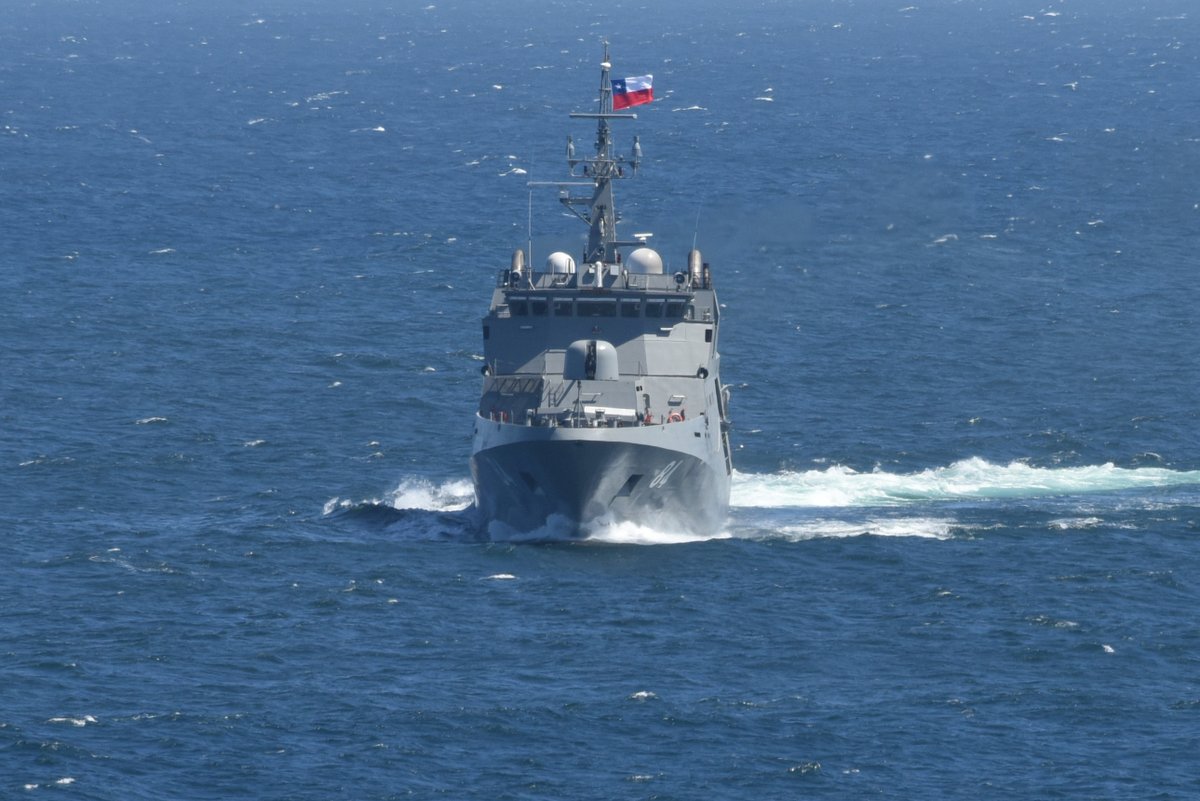
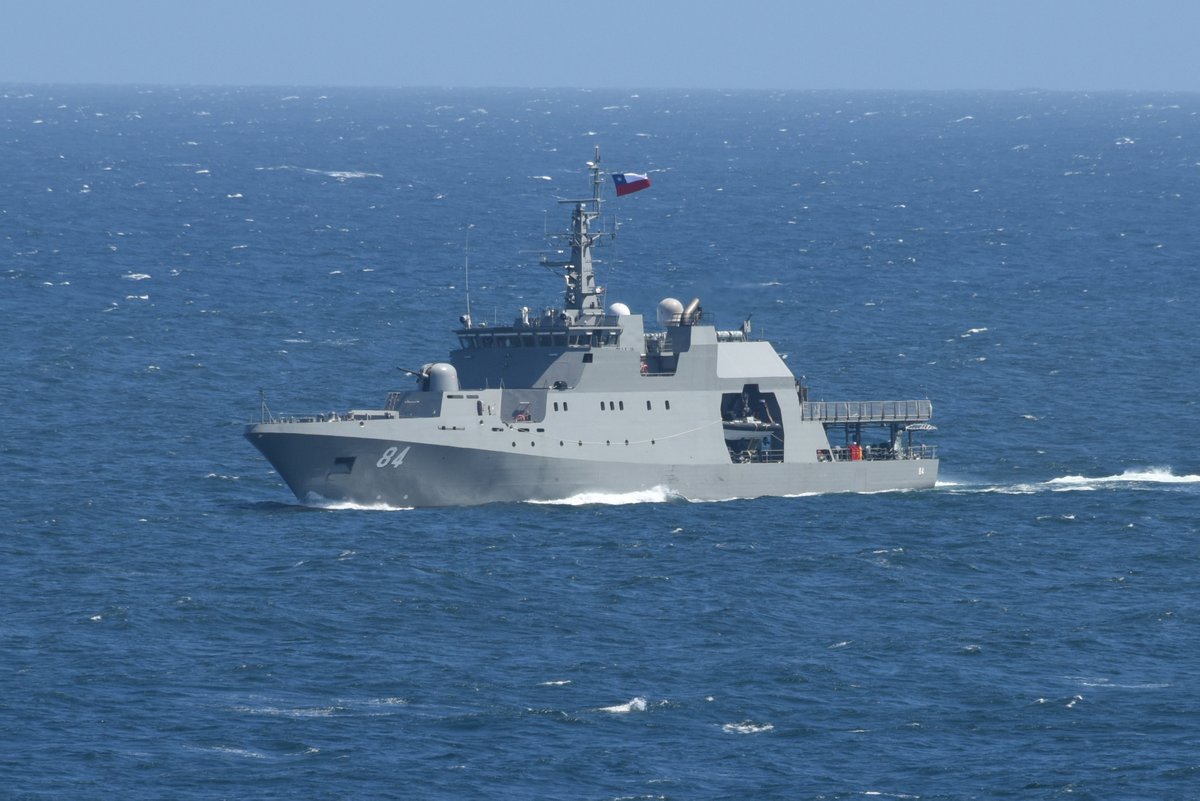
Photo: VARD designed icebreaking supply vessel for Chile. 

MarineLog is reporting, “APRIL 6, 2017—Philly Shipyard, Philadelphia, PA, is teaming with Fincantieri Marine Group (FMG) to compete for the detail design and construction of the next generation heavy polar icebreaker for the United States Coast Guard (USCG).”

“Over the next year, FMG and Philly Shipyard, along with the naval architecture and marine engineering firm, Vard, will develop a baseline icebreaker design, cost estimate and project schedule and then refine them based on the results of the technical studies and corresponding feedback from the USCG.”

This is in response to a contracted awarded to five shipbuilders on Feb. 22, 2017, for preliminary design studies and analysis. Contracts were awarded to Bollinger Shipyards, LLC, Lockport, LA; Fincantieri Marine Group, LLC, Washington, DC; General Dynamics/National Steel and Shipbuilding Company, San Diego, CA; Huntington Ingalls, Inc., Pascagoula, MS; and VT Halter Marine, Inc., Pascagoula, MS, totalling approximately $20M.

Fincantieri is building a 9000 ton research icebreaker for Norway and Vard has designed an icebreaking supply vessel for Chile.

“Best Cutters of the Best Coast Guard”–Claw of Knowledge

I’ve mentioned the “Claw of Knowledge” before, here and here. Now this Coastie blogger with a light touch is working on his second book and is asking for help in the form of a “kick starter.” The book, “The Best Cutters of the Best Coast Guard,” will tell the story of thirteen cutters. So far we know these will include Bear, Eagle, Northland, Storis, Point Welcome, and Campbell.

Here is his recent story on Point Welcome.


WWI Centenial–Coast Guard Compass


The Coast Guard Compass has begun the first of a series on the Coast Guard in World War I.

The war cemented the service’s role as a military agency. Nearly 9,000 Coast Guard men and women would participate in the war. This number included over 200 Coast Guard officers, many of whom served as warship commanders, troop ship captains, training camp commandants and naval air station commanders. In all, Coast Guard heroes received two Distinguished Service Medals, eight Gold Lifesaving Medals, almost a dozen foreign honors and nearly 50 Navy Cross Medals, dozens more than were awarded to Coast Guardsmen in World War II.

Looks like it might be interesting.