Return of the Clandestine Merchant Raider?

Atlantis, one can see clearly how the concealing shutter panes were opened.

Since before recorded history, merchant vessels have been adapted for offensive purposes by navies, pirates, and privateers to destroy enemy commerce or to launch attacks ashore. Frequently they employed disguise and deception. The UK employed Ships Taken Up From Trade (STUFT) during the 1982 Falklands War, the Malaysian Navy has converted two container ships into pirate hunters, and the US Navy has leased ships to support special operations, but I think the last time they were used to attack commerce was WWII. By the end 1943, it appeared that technology, primarily in the form of reliable radios, plus robust challenge-and-reply procedures, a comprehensive naval control of shipping organization, and a seemingly impervious blockade of the German coast, had made this type of  warfare very dangerous, but new technology may now be working in favor of using converted merchant ships as clandestine warships.

The German Experience

During World Wars I and II, the German Navy achieved considerable success using armed merchant ships as clandestine merchant raiders. At small cost they sank or captured a large number of allied merchant vessels, tied down a number of warships searching for the raiders, and even managed to sink allied warships.

In World War I, three raiders, Wolf, Moewe, and Seeadler (a full rigged sailing ship), sank or captured 78 ships totaling 323,644 tons. In addition to the merchant ships they captured or sank directly, merchant raiders proved effective mine layers. One victim of a mine laid by the raider Moewe was the pre-dreadnought battleship EdwardVII, sunk on 6 January, 1915.

In World War II nine German Merchant raiders, Atlantis, Komet, Kormoran, Michel, Orion, Pinguin, Stier, Thor, and Widder, sank or captured 129 ships, totaling 800,661 tons. While this pales in comparison to the sinkings by U-boats, they were far more effective than the regular navy surface raiders, including the vaunted pocket battleships, heavy cruisers, and battleships Scharnhorst and Gneisenau, that managed to sink or captured only 59, totaling 232,633 tons. The merchant raider Kormoran even managed to torpedo and sink the light cruiser HMAS Sydney, before the Kormoran herself was also sunk.

Typically, the raiders of WWII were equipped with six obsolescent 5.9″ guns and large numbers of torpedoes to allow ships to be sunk rapidly. Most were also equipped with aircraft and some with torpedo boats.  They were also equipped to change their appearance while underway.

Several of their voyages were extraordinarily long. Michel’s first voyage was 346 days. Orion’s was 510 days. Thor was away 329 days and managed to sink HMS Voltaire, an armed merchant cruiser. Pinguin for 357 days. Komet for 512 days. Kormoran for 350 days before her fatal encounter with HMAS Sydney. The ships were refueled and rearmed by supporting vessels that also took their prisoners. Raiders were also used to resupply submarines.

Perhaps surprisingly, none of these WWII raiders were underway when the war began, when they might have been most effective. They were sortied in two waves in 1940 and 1942.

END OF THE MERCHANT RAIDER

Despite their successes, by the time the last German raider at sea was sunk on 7 September, 1943, by a US submarine shortly after it had sortied from Japan, it had become impossible for ships to sortie from Germany and make it to open sea. Komet and a tenth raider were both sunk attempting to do so.  Three of the nine, Atlantis, Pinguin, and Kormoran, were sunk in distant seas by British cruisers. One, Stier, was sunk by the Naval Armed Guard on the Liberty ship Stephen Hopkins. One was destroyed by a nearby explosion while moored in Yokohama. Two, Orion and Widder,  survived their career as raiders long enough to return to Germany and be repurposed.

REBIRTH–Weapons and Sensors, Old and New

Technological changes in the form of containerized cruise missiles, satellites and UAVs and other Unmanned Vehicles may have made the merchant cruiser once again a viable option.

Cruise missiles mean that the raider no longer needs to come with visible range of the their victim. With sufficient range and use of way points, the shooter can be over 100 miles from its victim and the missile can come from any direction, not necessarily from the direction of the raider. Plus they can now attack land targets as well as ships. The US has begun to think seriously about the threat of a cruise missile attack on the US and innocent looking container ships are a possible source.

UAVs can provide over the horizon targeting and are likely to be undetected by the target.

Satellites may help or hurt potential raiders. If they have the support of satellites, it may help them find their pray. If the defenders are sufficiently sophisticated (and they are looking in the right place) they may be able to recognize a missile launch as the first step in finding, fixing and destroying the raider.

Similarly the Automatic Identification System may help the raider or the defender. It may help the raider find targets, but it may also help the defender react more swiftly to an attack or help him identify the raider from among all the other ships in the area. There is always the possibility the information may be bogus. Unmanned Surface Vessels might be used to create false targets. We might want to plan for a system of encrypted information for contingencies. Limiting use of the systems is an option that may require careful consideration.

Mines are still potentially effective. The large carrying capacity of cargo ships means they could potentially lay large mine fields. A raider could knowing a war will start soon might lay a large field to be activated when hostilities begin. If hostilities have already begun, the raider is unlikely approach a port closely enough to lay the mines itself, but mobile mines already exist, and Unmanned Underwater Vehicles or even simple semi-submersible unmanned vessels that can lay an minefield should be relatively easy technology.

China, Perpetrator or Target

From an American point of view, China with its huge merchant fleet and large inventory of cruise missile may appear a possible user of Merchant Raiders, but their large merchant fleet and need to import may also make them vulnerable to this this type of warfare if employed by weaker nations.

We know China has a Naval Militia. that will allow them to rapidly increase the size of their naval force. China has recently said it would require its ship builders to incorporate features that would make them usable for military purposes in wartime. These requirements are to be applied to five categories of vessels – container, roll-on/roll-off, multipurpose, bulk carrier and break bulk.  What these additional features are to be, is not clear. This could mean upgraded communications, either external or internal. It could mean improved survivability, greater speed, or foundations for weapons upgrades. They may only be thinking of using these ships to support amphibious operations, but these improvements may also make a large number of ships potential merchant raiders.

China’s large merchant fleet and need to import raw materials may make her vulnerable to Guerre d’Course. In the kind of low intensity conflict we have seen between China and her neighbors, it has seemed China has had all the advantages, but if they are pushed too far, China’s neighbors might see this form of warfare as a way to push back.

Non-State Actors

There is also the possibility of terrorist organizations attempting something similar, but they are more likely to attack highly visible targets of a symbolic nature, such as port facilities or major warships. Cruise missile could of course be used to attack major landmarks. They may also be less interested in living to fight another day.

Conclusion: I don’t think we have seen the end of offensive use of Merchant vessels.

Sources:

Addendum:

Lee has seen me some photos of vessels that are being used for military purposes, so I am adding them here:

MSC has chartered the MV Craigside to support SOCOM requirements. It is undergoing conversion in Mobile.

SD Victoria lifts boats and supports crews for UK Special Forces (SBS and SAS).

Malaysian auxiliary warship Bunga Mas Lima

India May Build OPVs with ASCMs

INS Saryu, the lead ship of her class of offshore patrol vessels of the Indian Navy. Indian Navy Photo

We have a report from Brahmand.com, there is at least a possibility India’s future Offshore Patrol Vessels (OPVs) will be built with Anti-Ship Cruise Missiles ASCMs).

India’s leading defence shipyard, Goa Shipyard Ltd (GSL) has submitted a proposal to the Indian Navy to construct offshore patrol vessels (OPVs) armed with missiles.

“We have submitted a proposal to the Indian Navy that all the future OPVs should be developed with the missile on board.

That will give more combat muscle to the vessel. If fitted with missile, the pricing of the vessel goes up only by ten per cent,”

Of course, that does not necessarily mean the proposal will be accepted, but it would make sense, if the Indian Navy is, like the US Navy, thinking in terms of “Distributed Lethality.” Or as it is sometimes expressed, “If it floats, it fights.”

I found the 10% additional cost estimate interesting, but I suspect adding an ASCM capability to  the projected CG Offshore Patrol Cutters (OPCs) would probably be closer 5%, given the much higher cost of building the platform in the US. Manning requirement would probably increase at most three enlisted and an officer.


China’s Naval Militia–A Coast Guard Auxiliary and Much More

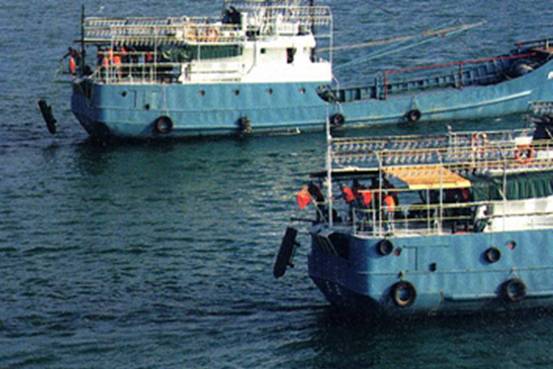
A photo published in a report on Chinese mine warfare by the U.S. Naval War College shows Chinese civilian fishing vessels practicing deploying sea mines at a naval base in Sanya in 2004. —Courtesy of U.S. government

A photo published in a report on Chinese mine warfare by the U.S. Naval War College shows Chinese civilian fishing vessels practicing deploying sea mines at a naval base in Sanya in 2004. —Courtesy of U.S. government

The Wall Street Journal has an interesting story about China’s Naval Militia. It employs not only the crews of their fishing industry, but also their vessels, to support China’s Navy and Coast Guard. It certainly blurs the line between government and non-government vessels.

Presumably this organization also extends to include their ocean going vessels and their crews as well. This is all the more interesting because of China’s recent announcement that they would require the incorporation of military characteristics in newly constructed container, roll-on/roll-off, multipurpose, bulk carrier and break bulk civilian vessels.

Coast Guard Impact of “USA FREEDOM Act of 2015”

The “USA FREEDOM Act of 2015” is intended to impose limits on the NSA’s collection of data on US citizens. But like many laws it goes beyond its apparent purpose. There is an “Easter Egg” in Title VIII, “Safety of Maritime Navigation and Nuclear Terrorism Conventions Implementation.”

Frankly, I have a hard time interpreting what this new law really means. But because it appears that it will extend enforcement authority over many ships that are not US flag, I presume this will bring the Coast Guard, as the primary Federal maritime law enforcement agency, additional authority and responsibilities.  Here is a short review. I am unfamiliar with the source, so I can’t really vouch for it, but sounds like this may be important.

If any of the readers is knowledgeable on this topic, I would appreciate your perspective.


Authorization Bill Has Some Surprises

Federal Times is reporting the contents of the Coast Guards latest authorization bill, and there are some surprises.

The item I was particularly pleased to see, was a apparent interest in something I feel should be more closely watched, cutter days available.

Part of that requirement would be to implement a standard for tracking the number of days Coast Guard cutters are in operation at sea, and include days in which cutters are undergoing maintenance or repair.

That should be revealing. In considering what should be expected, I would suggest we look back a few years, say take a five year average from 1998 to 2002 as a baseline.

There are lots of other proposed changes, not the least is that it is to cover two years. I suggest you check it out.

Coast Guard Annual Personnel Strength, 1947-2012

11427192_1174219005938571_5713343840533686700_n

Click to enlarge or see the pdf directly.

An interesting chart showing the strength of various components of the Coast Guard’s personnel strength from the bottom of the post-WWII demobilization through FY2012.

In interpreting the chart, note that there are two different vertical axis scales.

A few things seem to stand out.

1. The Coast Guard has not been shrinking. There have been ups and downs but the size of the service is at or near an all time high. It is a little more than twice as large as it was in 1947, but to put that into perspective, the US population has also a bit more than doubled, so the number of Coasties as a percentage of the population is about the same, but not as high as it has been.

2. There was a dip in the number of auxiliarists about ten years ago, but this may be recovering.

3. Recently there has been a notable rise in the number of permanent civilian staff. Could these be (CG-9) Acquisitions staff?

4. The ratio of officers (O-1 and above) to enlisted has shown a steady rise. Where previously there were about one officer for seven or eight enlisted, there are now about one for six. Frankly this is not as much of a change as I thought it might have been.

We should stop saying the Coast Guard is smaller than the New York City Police Department. It is no longer true.

What we can say is, that the Coast Guard is, in terms of personnel, larger than the French Navy or Britain’s Royal Navy or any NATO navy, other than that of the US or Turkey.

I think it would also be true to say, that we have the oldest fleet, and not by just a little bit.


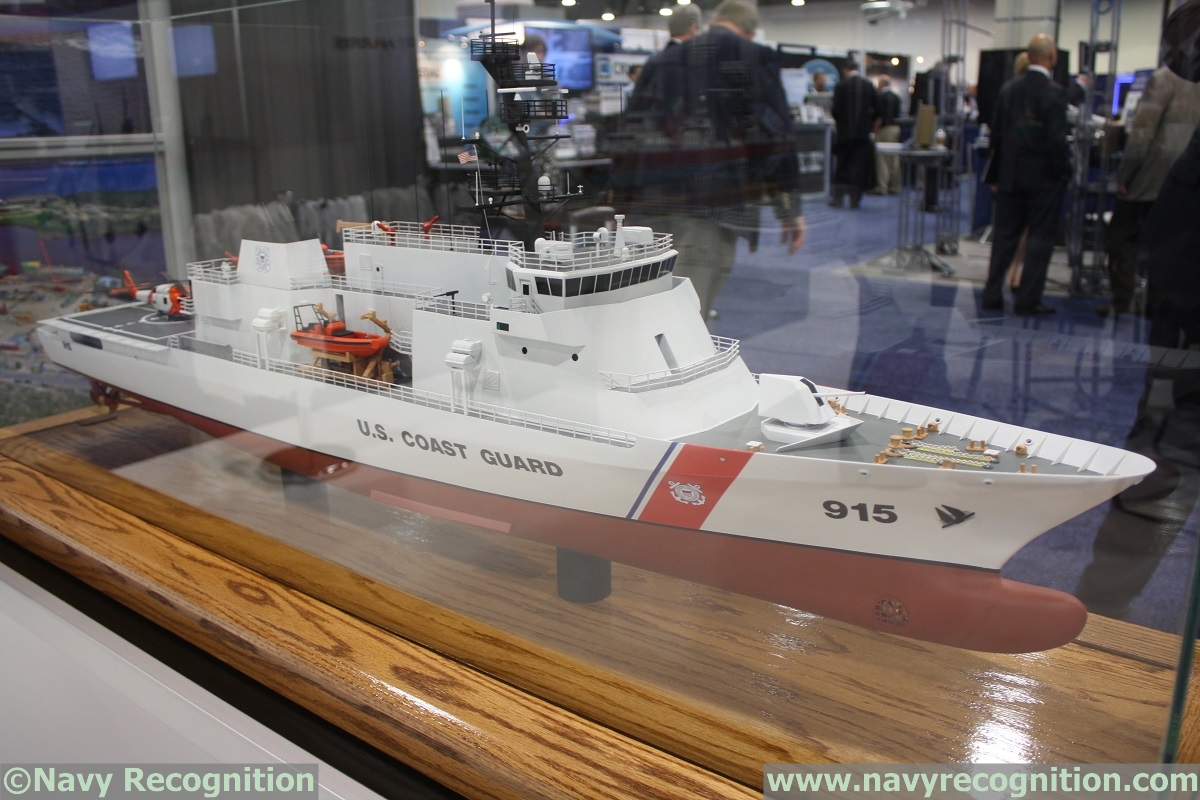
CG making progress in reducing acquisition risks for OPCs–DHS IG

IMG_4134

Photo: Eastern’s proposed Offshore Patrol Cutter (OPC) concept. One of three shipyards contending for the contract

FierceHomelandSecurity is reporting,

“An internal audit says that the Coast Guard is making progress in reducing acquisition risks of more than two dozen offshore patrol cutters, but it’s still too early to tell whether the service has fully implemented two risk mitigation recommendations that were previously made by the inspector general.

“One recommendation directs the Coast Guard to make sure it’s achieved a level of “design maturity” in its engineering plans, meaning that the designs are fully developed prior to construction.

“The other instructs the service to ensure that “low-rate initial production” – that is producing enough quantities of cutters to test, evaluate and approve before full production – are supported by an operational assessment. This assessment evaluates proposed cutter designs against operational requirements and identifies risks.

The Commandant has said they have looked so closely at the designs that they questioned the number of water fountains (scuttlebutts for the sailors). That sounds like design maturity, but then the purpose was to save money, not to ensure operational competence. I would hope we have done that as well. We are certainly taking long enough to make sure the designs are mature.

I would take issue with the statement, “Under a two-phase strategy, the service plans to acquire 25 OPCs to replace an equal number of medium endurance cutters.” These 25 ships are intended to replace 32 WMECs, four of which have already been decommissioned, 13 270s, 16 210s, the Alex Haley, Acushnet, and Storis. In 2000 we had 44 large cruising cutters; if the program of record is fully implemented we will have only 33. The misguided “Crew Rotation Concept” which, even if it works, will not give us the same number of ship days away from home port as 44 ships, even if we have to pay for 44 crews, is biting us. (Note, it appears to me this statement was made by FierceHomelandSecurity rather than as part of the IG report.)

The DHS IG report referred to, regarding the OPCs, is this document, “Verification Review of U. S. Coast Guard’s Acquisition of the Sentinel Class Fast Response Cutter (OIG-12-68),” that can be accessed through the FierceHomelandSecurity post.

The alarming aspect of this, is the insistence on “low rate production” until the design is tested. It seems we have been planning low rate production all along, with only one ship per year to be funded for the first three years, and no more than two per year after that, meaning with production of 25 ships, we will not see the last ship delivered until 2035. That sounds pretty low rate to me.

If we fund as expected (one per year for three years, then two per year), there will be a shift to funding two ships per year before the first ship has completed testing. Is two ships per year a high rate which the IG might oppose? Is there any possibility that after testing we might be able to build OPCs at a rate higher than two per year (as we really should)?

I have still heard no suggestion that the Coast Guard will take advantage of the multi-year/block buy procurement that Congress has authorized for the OPC, nor have they requested authority for Multi-Year procurement of the Webber class WPCs which certainly qualify as a mature and tested program.

There was a time when the Coast Guard took delivery of 28 ships in nine years.  It really looks like the we are going to need similar surge in the future to prevent a collapse of our capabilities.

GAO makes astounding discovery

With an amazing grasp for the obvious, the GAO has once again reported (pdf) that the Coast Guard is not getting, or expected to get, the money it needs to fund its program of record in a timely manner.

“…the Coast Guard’s acquisition needs are not affordable based on past and expected future funding levels.”

Basically they are repeating their findings for the past several years, and as always their solution to not making the goal, is to move the goal post.

“GAO found in June 2014 that budget officials have acknowledged that the Coast Guard’s current plan for developing new, more capable assets is not affordable given current and expected funding levels. For the past 5 years, GAO has found that the Coast Guard’s acquisition funding has fallen short of what it estimates it needs to fully recapitalize its assets. The Coast Guard has responded by annually delaying or reducing its capability. The Coast Guard and the Department of Homeland Security (DHS) have taken some steps to address these affordability issues, but as yet these efforts have not led to the types of significant trade-off decisions among resources and needs that would improve the long-term outlook of the Coast Guard’s acquisition portfolio.”

Frankly the Congressional Research Service, reports written by Ronald O’Rourke, are far more informative, and despite his position mandated neutrality, more supportive of the Coast Guard, but still this document does have some interesting observations.

Fixed Wing Aircraft

The Coast Guard has a Program of Record goal of 52,400 flight hours for its fixed wing assets. Currently the fleet performance is 38 percent short of this flight hour goal, but even if all currently planned assets are procured, we will still be 18 percent short of the flight hour goal. How come? First, instead of getting 36 C-144s we will be getting only 32 aircraft, 18 C-144s and 14 C-27J. The award winning C-144 acquisition program has been suspended even though the Coast Guard knew they were going to be at least four planes short. Second, instead of the 1,200 hours per year per Medium Range Search (MRS) Aircraft, the Coast Guard has decided it can expect only 1,000 hours per year.

The GAO reports the Coast Guard plans to complete a fixed-wing fleet mix analysis by 2019, which will revisit the current flight hour goal.

“The Coast Guard has begun to rewrite its mission needs statement and concept of operations and plans to complete this effort by 2016. The Coast Guard plans to complete its full fixed-wing fleet mix analysis, which includes the assets it estimates will best meet these needs, by 2019, but has not set forth specific timeframes for completing key milestones. We recommended in our March 2015 report that the Secretary of Homeland Security and the Commandant of the Coast Guard inform Congress of the time frames and key milestones for completing the fleet mix study, including the specific date when the Coast Guard will publish its revised annual flight hour needs and when it plans to inform Congress of the corresponding changes to the composition of its fixed-wing fleet to meet these needs. DHS concurred with our recommendation but did not provide specific time lines for meeting this recommendation. The bill for the Coast Guard Authorization Act of 2015, introduced in April 2015, requires a revised Coast Guard fixed-wing aircraft fleet mix analysis to be submitted to congressional transportation committees by the end of fiscal year 2015.”

OPCs/WMECs:

The report raises for the first time I have seen in official documentation, the possibility that some WMECs will have to be retired well before replacement. They report that currently there is no plan to extend the service life of these legacy assets and no money programmed in the five year capital investment plan. As a result the CG “faces a potentially significant capability gap.”

NSCs:

All though the National Security Cutters have all been funded, they may yet adversely effect future AC&I budgets.

As we also reported in June 2014,  further changes may be needed due to issues discovered through operating the NSC, which could result in the Coast Guard having to spend even more money in the future to ensure the NSC fleet meets requirements and is logistically supportable.

“For example, the cutter is experiencing problems operating in warm climates, including cooling system failures, excessive condensation forming puddles on the deck of the ship, and limited redundancy in its air conditioning system affecting use of information technology systems. According to operational reports from a 2013 deployment, the Commanding Officer of an NSC had to impose speed restrictions on the vessel because of engine overheating when the seawater temperature was greater than 68 degrees. In addition, cold climate issues on the cutter include a lack of heaters to keep oil and other fluids warm during operations in cold climates, such as the arctic. Further, Coast Guard operators state that operating near ice must be done with extreme caution since the ice can move quickly and the NSC could sustain significant damage if it comes in contact with the ice. In June 2014 we reported that while senior Coast Guard officials acknowledged that there were issues to address, they stated that the Coast Guard has not yet determined what, if any, fixes are necessary and that it depends on where the cutter ultimately operates.”

Webber Class WPCs:

In April 2015, the Coast Guard accepted delivery of the 13th of 58 FRCs and now has 32 of the cutters on contract. As we reported in April 2015, the Coast Guard is introducing additional competition into this purchase by recompeting the construction contract for the remaining 26 vessels; this contract is planned to be awarded in fiscal year 2016. According to the Coast Guard, the FRC has already been used to rescue over 400 undocumented immigrants, seize nearly $20 million in contraband, and apprehend several suspected drug smugglers. The fiscal year 2016 Capital Investment Plan includes $1.47 billion over the next 5 years to continue purchasing these assets by which time the Coast Guard plans to have fielded 42 FRCs.


The Future:

As I noted earlier, we have to look beyond these programs and the GAO addresses this concern.

“…senior Coast Guard officials have stated a need for over $2 billion per year, but the Coast Guard has received $1.5 billion or less over the past 5 years. The President’s budget requests $1 billion for fiscal year 2016. In an effort to address the funding constraints it has faced annually, the Coast Guard has been in a reactive mode, delaying and reducing its capability through the annual budget process but without a plan to realistically set forth affordable priorities. The Coast Guard, DHS, and Office of Management and Budget officials have acknowledged that the Coast Guard cannot afford to recapitalize and modernize its assets in accordance with the current plan at current funding levels. Efforts are underway to address this issue, but so far, these efforts have not led to the difficult trade-off decisions needed to improve the affordability of the Coast Guard’s portfolio. We recommended in 2014 that the Coast Guard develop a 20-year fleet modernization plan that identifies all acquisitions needed to maintain the current level of service—aviation and surface— and the fiscal resources needed to buy the identified assets. We recommended that the plan should consider trade-offs if the fiscal resources needed to execute the plan are not consistent with annual budgets. The Coast Guard concurred with our recommendation, but its response did not fully address our concerns or set forth an estimated date for completion.

“In June 2014, we also reported that the Coast Guard faces a potentially expensive recapitalization of other surface assets, such as the polar icebreakers and its fleet of river buoy tenders, as these assets continue to age beyond their expected service lives and, in some cases, have been removed from service without a replacement. These issues pose additional potential challenges to the affordability of the Coast Guard’s overall acquisition portfolio.”

Icebreakers—According to program officials, due to funding constraints, the Coast Guard chose not to invest in either of its heavy icebreakers as they approached the end of their service lives. Thus, both heavy icebreakers were out of service from 2010 to 2013 and the Coast Guard could not complete missions, such as resupplying a science laboratory in Antarctica. The Coast Guard has recently returned one of these heavy icebreakers back to service, but still has one fewer heavy icebreaker than it has historically operated and several fewer than it needs, according to the Coast Guard’s June 2013 heavy icebreaker mission need statement. The fiscal year 2016 President’s Budget asks for $4 million for continued preparatory studies to develop a cost estimate, among other things. The associated fiscal year 2016 Capital Investment Plan contains $166 million for polar icebreakers over the next five years but does not identify what this money is for, though it is far short of the estimated $831 million needed to build the vessel. The Coast Guard is currently working with several U.S. government agencies to develop requirements and establish a plan to build a heavy icebreaker that could be jointly funded by the U.S. government agencies that need the asset to accomplish its missions.

River Buoy Tenders—”The Coast Guard is facing a gap in its river buoy tender fleet and has yet to formalize an acquisition project to replace this fleet—a project estimated to cost over $1.5 billion.”

HH-60 and HH-65 Helicopter Fleets—”The HH-60 and HH-65 helicopter fleets will approach the end of their lifespans between 2022 and 2026 and will need to either be replaced or have a service life extension performed to keep them operational. Regardless of the future path, significant acquisition dollars will be required to maintain annual flight hours for the next 20 years, according to Coast Guard program officials.”

Observations:

When the GAO says, “We recommended in 2014 that the Coast Guard develop a 20-year fleet modernization plan that identifies all acquisitions needed to maintain the current level of service (emphasis applied, Chuck)—aviation and surface— and the fiscal resources needed to buy the identified assets” it gives the impression they are not looking at the benefit side of the cost/benefit equation. It also looks like they may be ignoring the changes in the world since the legacy fleet was built. After all, when the 210s and 378s were built there, was no Exclusive Economic Zone and the territorial sea was 3 miles. 9/11 was still decades in the future. Our Navy was many times larger and it had units based all along the coast in almost every major port.

On the other hand they may be giving us a criteria for defining how fast existing resources should be provided. If we say resource hours should never drop below those provided by the legacy fleet, then really it looks like we need to build faster.

The units that the Coast Guard is currently building are obviously more capable than the units they are replacing and with the possible exception of the National Security Cutter (NSC), they are also going to be more expensive to man and operate.

The Bertholf class NSCs are about 50% larger than the 378s, but at least they have a smaller crew.

The OPC appear to be likely at least 50% larger than the 270 and possibly as much as three times the size of the 210s. They will likely have crews at least as large as the 270s, and significantly larger than the 210s.

The Webber class are more than twice as large as the Island class and have a crew almost half again as large.

I do believe there are reasons for this apparent growth, but it means the Coast Guard does need more money than it has in the past. Coast Guard leadership may have felt that they had been assured that funding for these more expensive assets would be available, given approval of the original Deepwater program and the revised post 9/11 upgraded Deepwater program, but while the money may come, the most expensive part of the program, the offshore patrol cutter, is only being funded in dribs and drabs.

Too often it seems we emphasize the good things the service has done for the country and left unsaid the failures, lost opportunities, and the very real risks we take when the service is not properly funded.

It appears that for several years, perhaps more than a decade, the resource hours from Coast Guard assets, may fall below those of the legacy fleet, either because assets must be decommissioned without replacement, or because of unplanned maintenance requirements. If we could establish a consensus that at least resources hours available should not be allowed to fall below those that were provided by the legacy fleet, we would have a convincing argument for more reasonable funding levels.