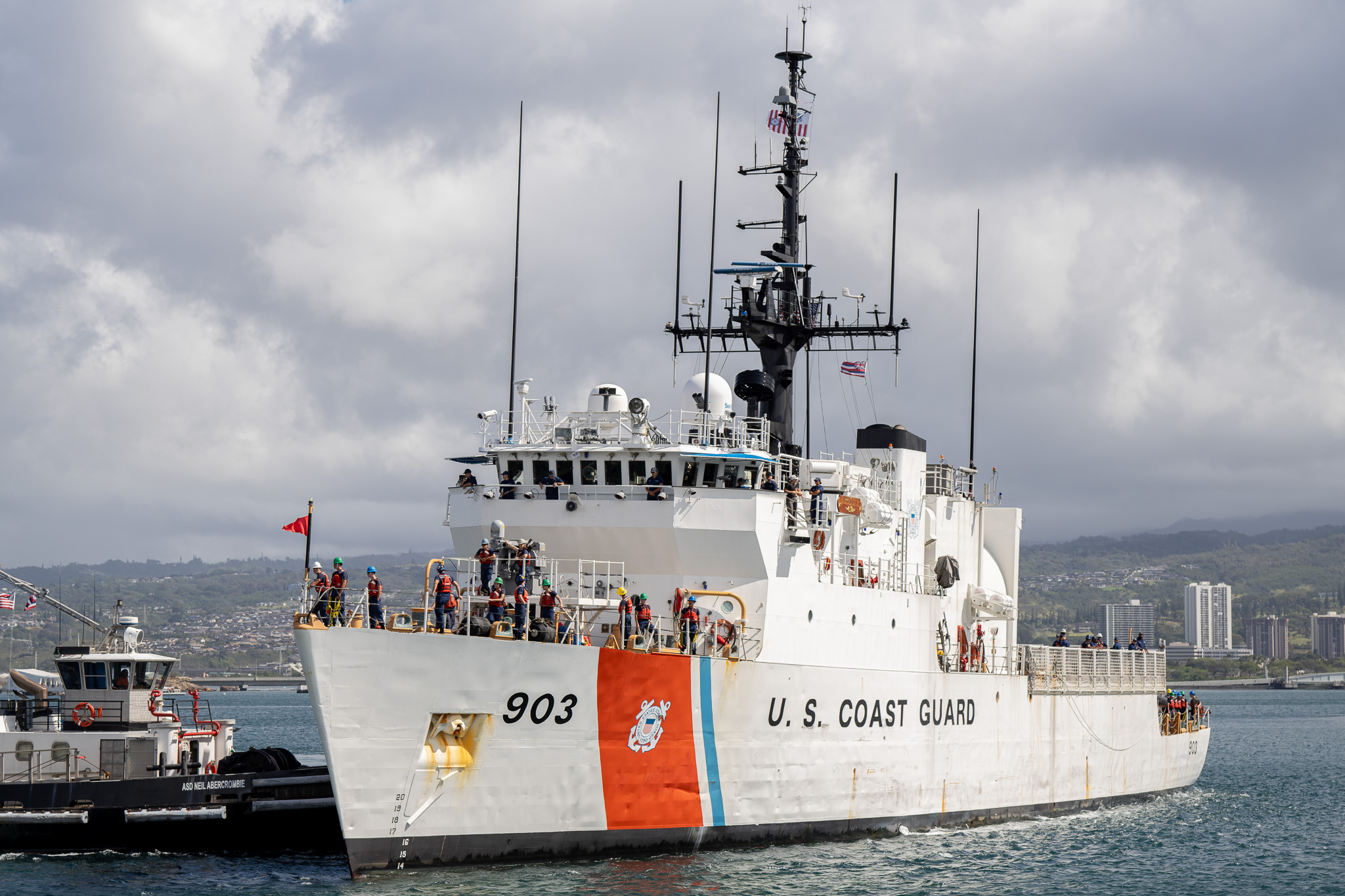
USCGC Waesche and 7th Fleet Flagship in Vietnam

CAM RANH INTERNATIONAL PORT, Vietnam (July 8, 2024) – Hospital Corpsman 2nd Class Renato Paredes from San Diego, mans the rails as U.S. 7th Fleet flagship USS Blue Ridge (LCC 19) moors Cam Ranh, Vietnam, July 8, 2024. As the 7th Fleet flagship, Blue Ridge is the oldest operational ship in the Navy and routinely operates with allies and partners in preserving a free and open Indo-Pacific. USCGC Waesche is moored in background left. (U.S. Navy photo by Mass Communication Specialist 2nd Class Adam Craft) 

The “USNI News Fleet and Marine Tracker: July 8, 2024” notes,

U.S. 7th Fleet command ship USS Blue Ridge (LCC-19) and the Coast Guard cutter USCGC Waesche (WMSL-751) pulled into the Vietnamese port of Cam Ranh Bay on Monday, according to the Navy.

“During the port visit, Blue Ridge and Waesche leadership will meet with the Vietnam People’s Navy, Vietnam Coast Guard, and Khanh Hoa leadership. Events during the visit include subject matter expert exchanges and community relations activities,” reads the statement.

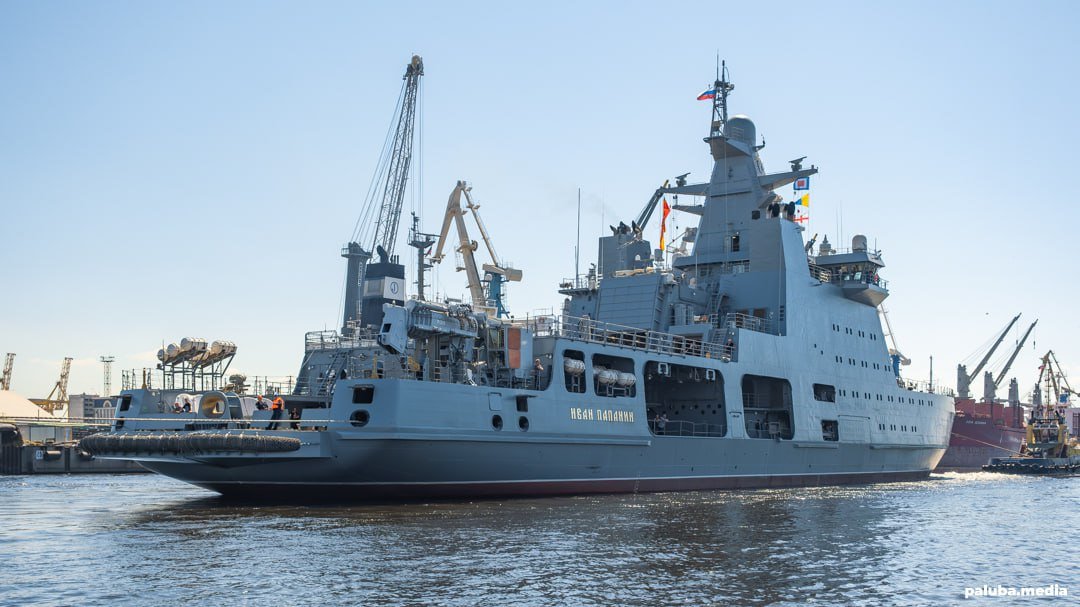
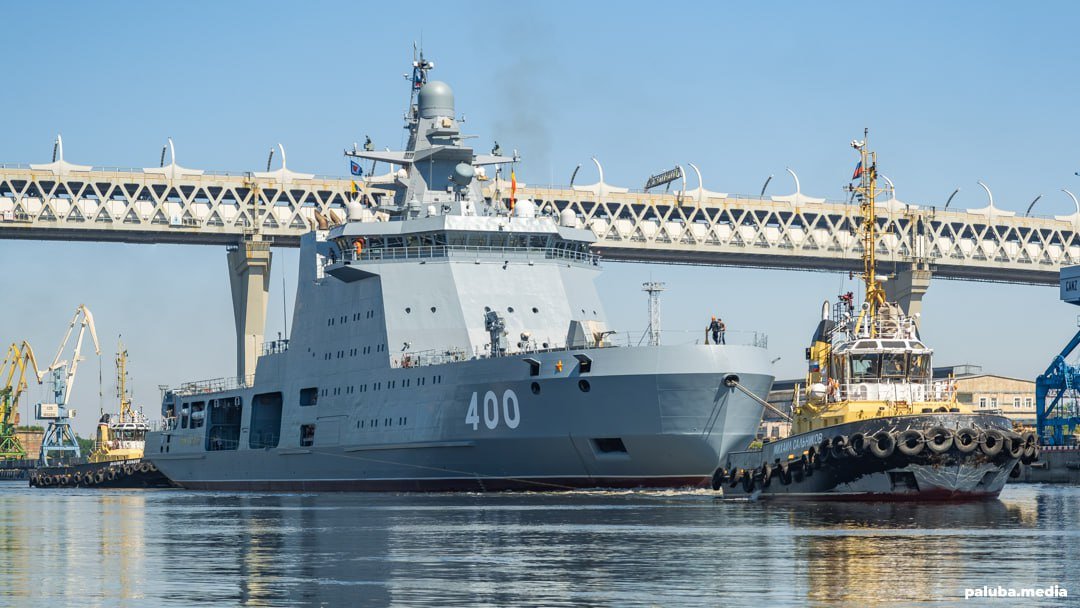
Russian Project 23550 Icebreaking Patrol Vessel in Sea Trials

“The Project 23550 Ice-class patrol ship “Ivan Papanin”, built for the Russian Navy at “Admiralty Shipyards”, went to sea for factory sea trials.
https://tass.ru/armiya-i-opk/21229221

We have a couple of reports that the first of four Russian Project 23550 ice class patrol vessels is conducting sea trials. Two are expected to go to the Russian Navy and two to the Russian Coast Guard.

We have talked about this class many times going back to 2016, most recently in a post, “Arctic Patrol Cutter, State of the Art–Revisited.”

Perhaps too much is made of the fact that these ships can carry two containers that might contain cruise missiles. The real story is that just about anything that can carry containers can also carry a variety of containerized weapon systems, offensive or defensive. The US has fired Tomahawk and Standard missiles from their Mk70 containerized launchers.  Even Iran has fired ballistic missiles from shipboard containers.

Russia already has a host of cruise missile launchers in the Arctic, aircraft, submarines, surface ships, and ground launchers. Should these ships receive containerized cruise missiles, they will only marginally improve Russian offensive capability.

Alternately, two containers on the stern might be used to house a towed array and torpedoes to give the ships an ASW capability.

These are probably excellent Arctic Patrol Vessel, but they are not impressive as warships, their defensive capabilities are lacking, having no AAW or anti-surface capability beyond a single medium caliber gun.

“The Project 23550 Ice-class patrol ship “Ivan Papanin”, built for the Russian Navy at “Admiralty Shipyards”, went to sea for factory sea trials. https://tass.ru/armiya-i-opk/21229221

Any reporting you may see to the contrary, these are not the first “combat icebreakers” in the Russian Navy or Coast Guard. They are just the latest in a long string including eight Ivan Susanin class, three American built Wind class, and the Puga laid down in 1938 but not completed until 1957. Even the icebreaker Krassin, completed in 1917, and now a museum ship, was armed with four 76mm during WWII.

The Russians may take advantage of these ships to more widely distribute their cruise missiles, but that is secondary to their primary purpose as patrol vessels.

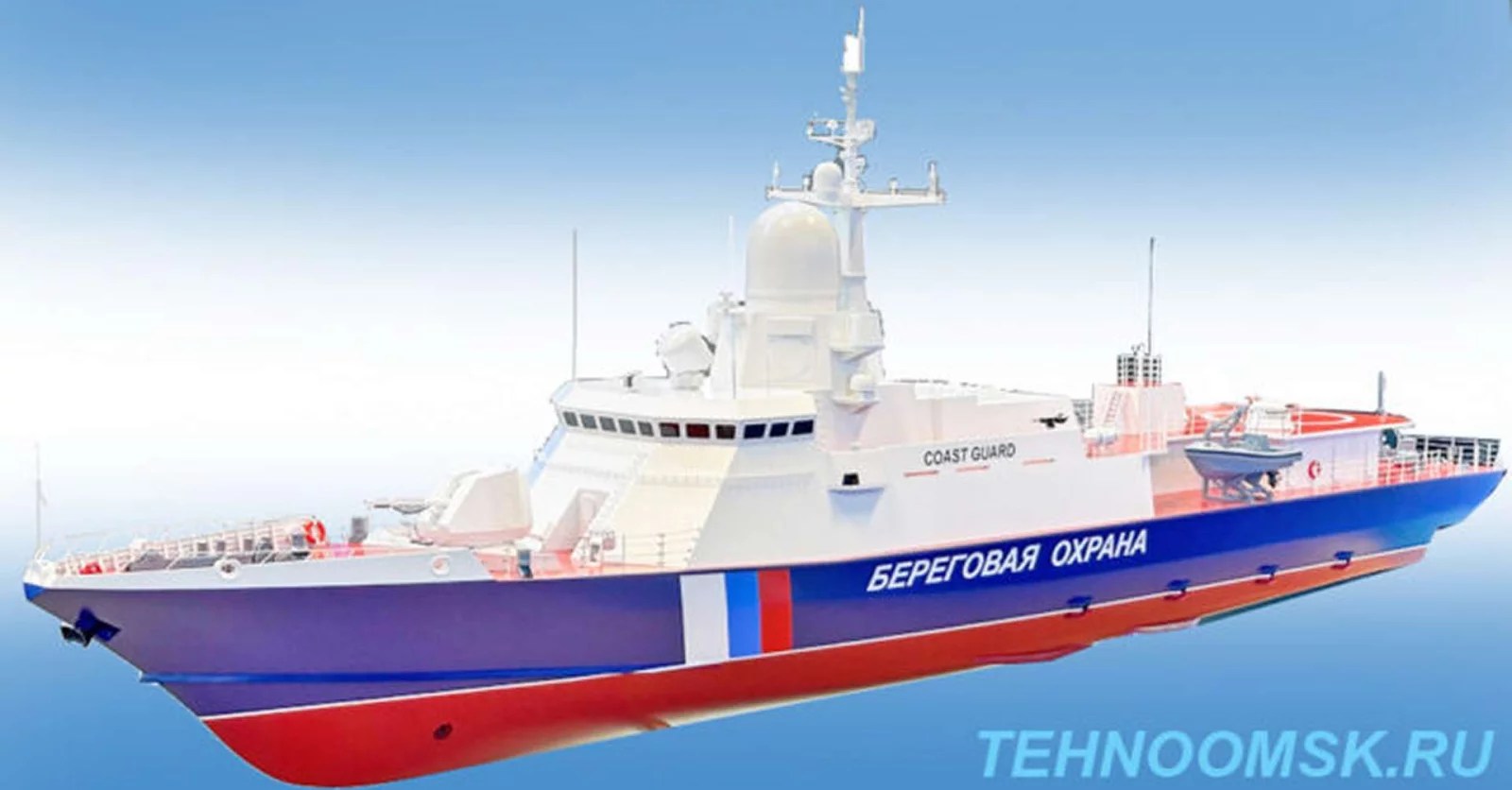
Vertical Launch AAW Missiles on a New Russian Coast Guard Cutter?

The Army Recognition Group’s Global Defense News organization reports,

According to Tehnoomsk on June 28, 2024, Russia is currently developing a new patrol ship using the Karakurt class as a platform. Shipbuilders from the Leningrad shipyard “Pella” and engineers from the Central Marine Design Bureau “Almaz” are working on this project for the Coast Guard of the Border Service of the FSB of Russia. This project leverages the established design of the Project 22800 Karakurt class missile corvette. The new vessel will be equipped with the Resurs 3K96-3E multi-channel anti-aircraft missile system and various other weapon systems.

We should note that this does not report there has been a contract awarded for construction, but if these are built and armed as described, it would mark a return to Cold War practice we have not seen for more than three decades and despite their small size, these cutters could be the most powerfully armed coast guard vessels in the world.

Russian Rubin class (Project 22460) patrol vessel Rasul Gamzatov, typical of recent Russian Coast Guard construction of a similar size ship.  It is armed with a single 30mm six-barrel Gatling gun. (Picture source: Военный Осведомитель)

During the Cold War the Soviet coast guard counterpart frequently operated variants of Soviet Navy vessel classes. The Russian Coast Guard still has a pair of Krivak III frigates and a Pauk class corvette that came out of this era, but since that time Russian Coast Guard patrol cutters have had no Navy counterpart. Their armament has not been much different from that of typical Offshore Patrol Vessels. I have seen no indication of either Anti-Ship missiles or Anti-Aircraft missiles (other than man portable air defense missiles) on Russian Coast Guard vessels.

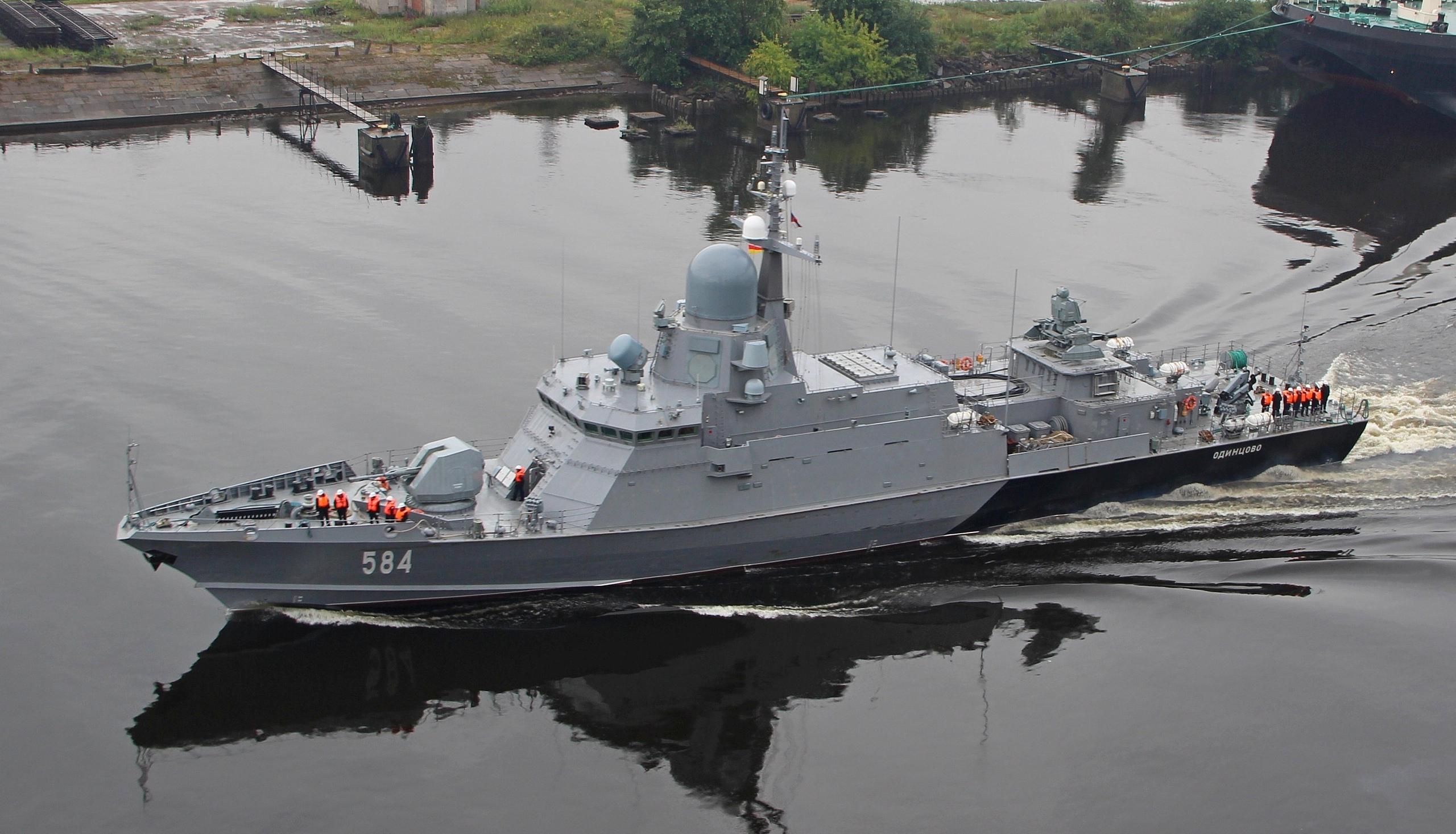
Russian Project 22800 Karakurt class corvette with 76.2 mm 59-caliber AK-176MA gun and Pantsir-M gun and missile CIWS. Vertical launch system for surface to surface missiles visible amidships. Photo Source: Reddit (Warship Porn)

The ships that this proposal is based on are the Project 22800 Karakurt class missile corvette, two of which appear to have been lost in the ongoing war between Russia and Ukraine. Members of the class have been able to reinforce the Russian Black Sea Fleet even after Turkey closed the Dardanelles by using the Russian river and canal system.

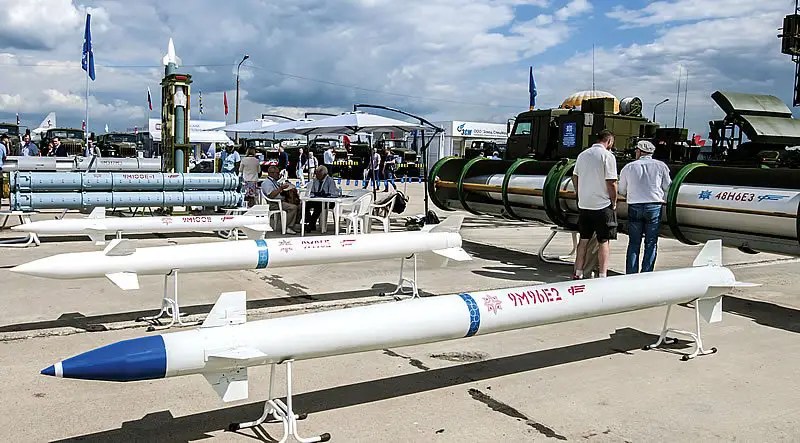
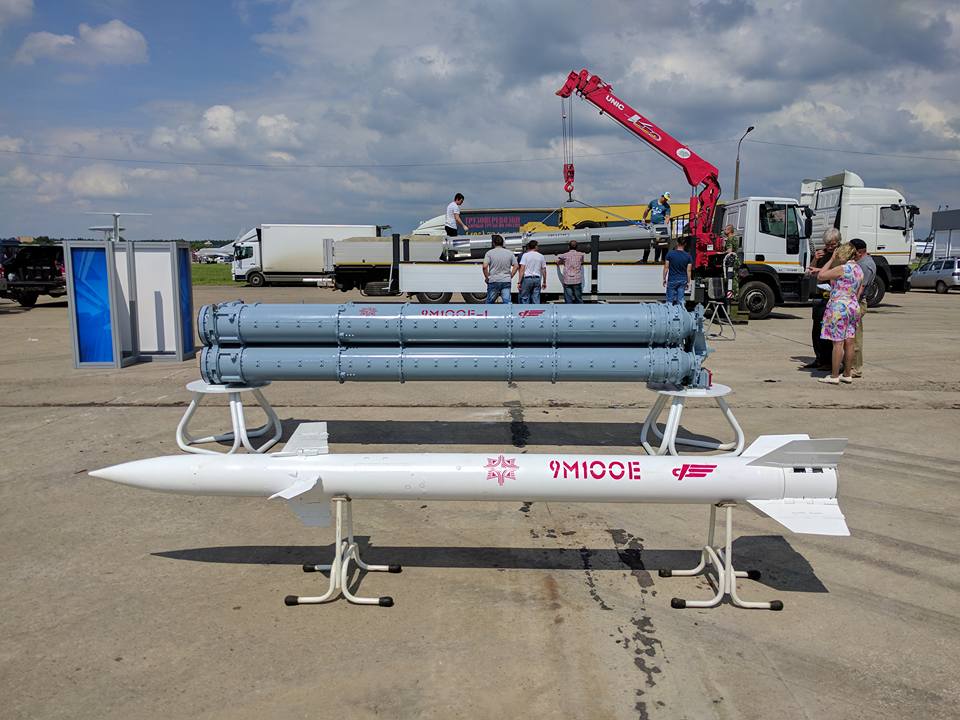
The Reported Coast Guard version of the Project 22800 class would apparently replace the cruise missile vertical launch system with vertical launch systems for the 9M96E and 9M100 AAW missile systems.

The 9M96E missile is smaller than any of the Standard Missiles. In sizes it is closer to the ESSM, longer but with a smaller diameter.

The smaller IR homing 9M100 missile, which can be quad-packed into the launcher, replacing the larger missile on a 4 to 1 basis, is about the size of an AIM-9 Sidewinder, another IR homing missile, in length and diameter, but reportedly considerably heavier.

Why the Change?

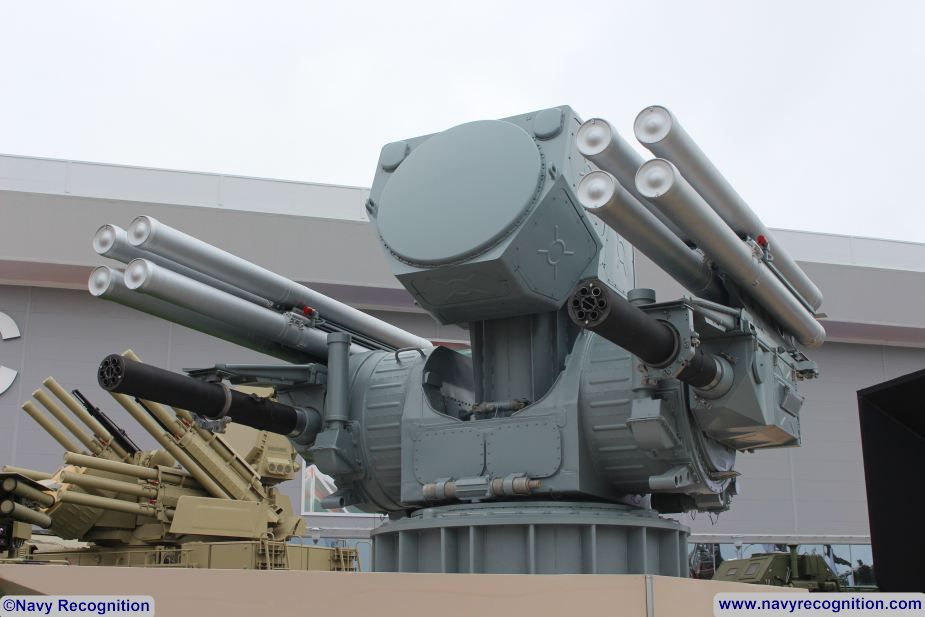
Why would the Russian Coast Guard be suddenly adding AAW missiles to their cutters? It probably has something to do with the emergence of unmanned systems as a threat. If the intent was simply self-defense, I would think they would use the Pantsir-M gun and missile CIWS as mounted on all but the first two Navy Karakurt class. Instead, they will have two 30mm gatling guns. The AAW system they are getting is the same one used on the currently in production Project 20381/20385 subclasses of Steregushchiy-class corvettes where it replaced the Kashtan CIWS. 

I am guessing these cutters might be used for force protection or as mobile AAW missile batteries. There is no indication of an ASW capability on either Navy or Coast Guard versions of the Project 22800.

The Pantsir-M was presented at Army 2017

“Iran’s ‘Zulfikar’ Submersible Torpedo Boat” –Covert Shore

Covert Shores reports on Iran’s version of an unusual asymmetric threat that originated in North Korea. Used by the Islamic Revolutionary Guard Corps, PATFORSWA may encounter these.

“I originally interpreted these to be Special Operations assets intended as a form of swimmer delivery vehicle. This would be consistent with related types in North Korean and Vietnamese service. In that role the torpedoes would be for self-defense. However, I now view them more as submersible torpedo boats intended to sink ships with torpedoes.”

The torpedoes are 12.75 inch (324mm) light weight anti-surface homing torpedoes. (243mm noted in the diagram above is apparently a typo.) We can’t take too much comfort in the fact that these are not heavy weight torpedoes. Heavy weight torpedoes frequently break ships in half, but because water is not compressible, the 100 pound warhead of a typical light weight torpedo still has about one half the impact of the 600 pound warhead of a typical heavy weight torpedo. These smaller torpedoes can seriously hurt even a large ship, possibly including immobilizing it, and making it an easier target for follow on attacks. Used against a vessel the size of PATFORSWA’s Fast Response Cutters, they would be fatal. Assuming these are wake homers, it might be wise to learn the maneuvers used to defeat wake homing torpedoes.

It is unlikely these little submersibles can go very deep or that they have much mobility while submerged. Even so, much of the Persian Gulf is shallow, so there are certainly places where they could rest on the bottom, lying in wait.

A Question of Proportionality / What to do about Philippine Outposts in the South China Sea?

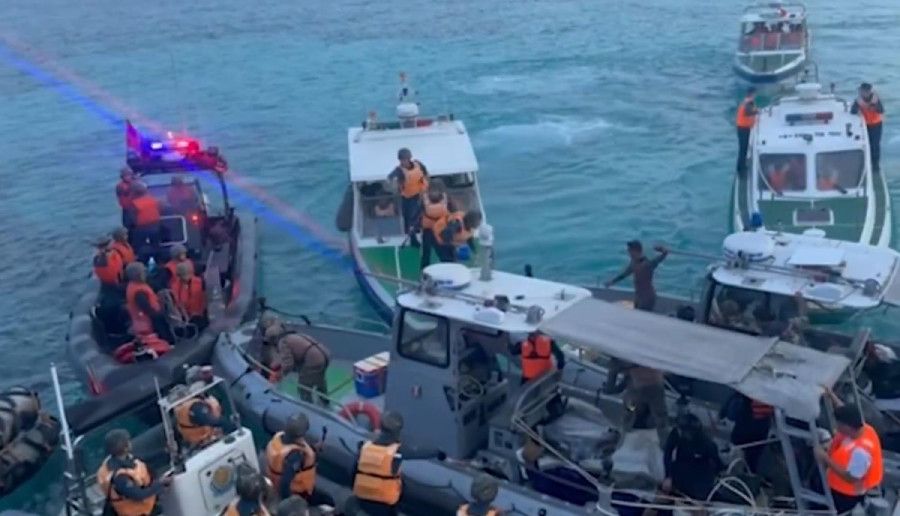
A still image taken from footage released by the Armed Forces of the Philippines showing China Coast Guard personnel confronting a resupply mission (Photo: Armed Forces of the Philippines)

Real Clear Defense reports,

Philippines Vows To Fight Back if Assaulted Again in South China Sea

At first, I was happy to see this, but I think they are making a mistake.

Philippine forces will defend themselves with “the same level of force …“If a knife is used, for example, our personnel will also use a knife, nothing more, under the concept of proportionality.”

If you are outnumbered in a knife fight you will lose. They will be outnumbered, and they will lose. That would be allowing the Chinese to write the rules of the game. Deadly force is deadly force. If someone is threatening you with a deadly weapon, you need to fire a warning shot, and if they keep coming shot the SOB.

Crews need to say, no one will take my vessel from me. As someone said, “Don’t Give Up the Ship.”

The Chinese are not going to start a war that might include the US until they are fully prepared to do so. Then and only then, they will want to open with a surprise attack.

The Philippines needs to raise the stakes for the Chinese to the point that they either back down or start a war with the US before they are really ready.

Right now, the Chinese are attempting to shape the battlefield to their advantage, building unsinkable missile cruisers surrounding Taiwan. The Philippines holds territory where they would like to place another missile launching platform. So does Japan. China should not be allowed to seize these positions.

Immediately the Philippines should make it clear to the Chinese, that they have no right to be in the Philippine EEZ, or any other country’s, behaving as they have. There is no reason to negotiate because they have no standing. That was decided in the international court of arbitration.

It might be possible to make a joint statement by the Philippines, Japan, Vietnam,  Indonesia, and maybe others.

When a move is made, it needs to be made with overwhelming strength on scene. That is possible if the Philippines employs surprise and has international support on scene. Philippine TA-50 jet aircraft should be overhead, ready to deter an attack on Philippine forces.

The result will be an incident, not a war. We have already seen lots of incidents, this will just add to the list, but this time we need the Chinese to back down.

Scarbough Shoal  and Second Thomas Shoal need to be reinforced and built up. The US and Japan could and should help the Philippines do it. Mirror what the Chinese have done. Make an artificial island, garrisoned with Marines, give it radars, effective AAW systems, and some of the Philippines’ BraMos missiles.

The Chinese are not going to like it, but unless they want to start a war with the US before they are ready, they will back down. Pulling a piece or two out of their plan to surround Taiwan with missile firing islands might actually prevent an attack on Taiwan.

Patrol Cutter Force Laydown, Atlantic vs Pacific

Republic of Korea Coast Guard vessel KCG Taepyongyang (KCG-3016), U.S. Coast Guard Cutter Waesche (WMSL-751) and Japan Coast Guard vessel JCGC Wakasa (PL-93) patrol in formation during a trilateral exercise in the East Sea, June 6, 2024. Coast Guardsmen from Japan, Republic of Korea and the United States used the trilateral exercise as an opportunity to rehearse cohesion between the nations when operating together. U.S. Coast Guard missions in the Indo-Pacific focus on issues directly supporting and advancing our regional partners’ efforts to protect fish stocks, ensure safety of life at sea, support environmental response, and provide disaster relief. (U.S. Marine Corps photo by Cpl. Elijah Murphy)

It occurred to me that having moved Harriet Lane to Hawaii and a report that a second 270 might be on as well, is the balance of distribution of cutters changing? Have we really beefed up our Pacific presence?

Looking back before the changes started in 2008 with the commissioning of Bertholf, the Coast Guard had 12 WHECs, 13 WMEC270s, 14 WMEC210s, Alex Haley, Acushnet (decommissioned 2011), and Storis (decommissioned 2007), 42 large patrol cutters (WMEC and larger). Of those, 10 WHECs, 3 WMEC210s, Alex Haley, Acushnet, an Storis were in the Pacific, 16 large patrol cutters or 38%,

Currently there are 10 Bertholf class National Security Cutters, 13 WMEC270s, 9 active  WMEC210s, and Alex Haley for a total of 33 large patrol cutters. Of those, 6 NSCs, one WMEC270, and Alex Haley, a total of eight large patrol cutters are in the Pacific or 24%.

The first OPC and another WMEC270 are expected to go to the Pacific while NSC #11 will go to Atlantic Area. This will give us 35 large cutters with ten (29%) in the Pacific, if no additional 210s are decommissioned.

The four Eastern built OPCs are all expected to go to the Pacific, two in California and two in Alaska. They were expected to be finished first, but Austal may finish their first OPC before Eastern finishes all four.

How quickly the remaining 210s will be decommissioned (or placed in “in commission, special) remains a question. The current program of record plans to provide 36 large patrol cutters, 11 NSCs and 25 OPCs, but the original program of record would have provided 33 large patrol cutters. That is what we have now, so it is probably a floor we will try not to drop below. We can probably expect more 210s to be decommissioned on a one for one basis as the last NSC and new OPSs come online, especially since the new ships require more people than the 210s. All the 210s are now in the Atlantic so as the first OPCs are moved to the Pacific, we can expect a corresponding decrease in the number of Atlantic Area WMECs.

I think we will add a third WMEC 270 in the Hawaii. This would allow at least one to be deployed into the Western Pacific at all times. The current basing philosophy seems to recognize the advantages of basing at least three ships of a type together.

Looking ahead, assuming the fleet remains at a total of 33, by the end of 2028, certainly by 2030, the fleet will probably look like this, 11 NSCs, 13 WMEC270s, Alex Haley, and 8 OPCs or WMEC210s. (hopefully at least six 6 OPCs) with 6 NSCs, 3 WMEC270s, and 4 OPCs in the Pacific for a total of 13 or 39%, essentially the same relative distribution we had in 20 years ago but 6 fewer ships in the Atlantic and 3 fewer in the Pacific.

How the FRCs play into this. 

As we have noted in the past, FRCs have been doing some of the work 210s would have done in the past, particularly drug and migrant interdiction in the Caribbean. There are already more FRCs (57) than the 49 Island class WPBs they were built to replace, and we are on track to have at least 67 and probably more, so, numerically, to total fleet is about the same size now and will be growing. It has already grown in terms of tonnage and total billets afloat.

How does the distribution of FRCs look? I did a post on this in May.

The Coast Guard currently operates 55 FRCs throughout the United States and in support of U.S. Central Command. U.S. Coast Guard graphic. You might not recognize Puerto Rico (7) and Guam (3) which have been lumped together below Texas.

The Graphic above is a little out of date. two FRCs are now in Oregon. Disregarding PATFORSWA and WPC-1123, which was damaged by fire and probably will never be repaired, current totals, are 50 WPCs with 15 in the Pacific, 30%.

My projection of future homeports suggests ultimately Atlantic Area will receive three more FRCs and the Pacific Area nine more for a total of 62, with 24 (39%) in the Pacific. This is statistically identical to the distribution of large patrol cutters 20 years ago.

Is This Rational?

Broadly speaking, where we put our cutters and how they are distributed should be based on: (1) Where the people served are? and (2) Size of the areas being patrolled? But we also have to ask, (3) What is happening in those areas?

There are more people living on the Atlantic and Gulf coasts than on Pacific coasts. This does suggest that the Atlantic Area should have more assets, which is certainly the case. They have more pleasure boats, more sport fishermen. They may have more fishermen, but I feel sure they have fewer distant water fishermen. Many of these missions are near shore. This suggests more small cutters should be in the Atlantic.

On the other hand, the Pacific Area includes 84% of US EEZ and includes valuable commercial fishing, tuna in the Western Pacific and a wide variety of fishing of the Alaskan Coast. The distances are great. This suggests that more large cutters should be in the Pacific.

We are also trying to help our allies in the Pacific. Atlantic Area is also trying to grow capacity in Africa, but this is generally on a smaller scale and has historically been done by WMEC270s.

That Atlantic coast cutters are closer to the Eastern Pacific drug transit zones than Pacific coast cutters suggest more cutters in Atlantic Area. (This is why all of South America is considered part of the Atlantic Fleet’s operating area.)

The Alien Migrant interdiction problem in the Caribbean suggest the need for cutters in the Atlantic but these operations are relatively close to shore and have the advantage of nearby shore based fixed wing air coverage so the mission can generally be accomplished by smaller cutters. It is FRCs and WMECs that commonly do this mission now.

What we see is that, in terms of larger and smaller cutters, the Atlantic needs a large number of cutters but most can be smaller, while the Pacific needs proportionately more large cutters than the Atlantic and in fact probably more in absolute numbers, this is why in the past ten WHECs were assigned to Pacific Area while only two were assigned to the Atlantic.

The program of record really includes no medium sized patrol cutters, we will have only large cutters, 4,600 ton NSCs and 4,500 ton OPCs, and small patrol cutters, 353 ton FRCs. Contrary to what is said, we have no direct replacements for the WMECs since both NSCs and OPCs are definitely high endurance cutters.

We need a detailed fleet mix study that considers various alternatives to determine the best distribution of cutters and the most appropriate types for the mix of missions.

A new Fleet Mix Study has been completed, but it has not been made public, so we don’t know its recommendations or how complete the study of alternative was. The last Fleet Mix study, only considered NSCs, OPCs, and FRCs. At the time it was expected that OPCs would be much smaller than they turned out to be. I fear they may have similarly limited alternatives in the new study.

These decisions are complex. My feeling, informed by the results of the previous fleet mix study, is that building only 36 large cutters is not enough; that we need at least medium sized cutters (a modern MEC) in Guam and American Samoa; that we will not be able to build as many large patrol cutters as be need because OPCs have become too expensive and perhaps unnecessarily large for many missions.

We have contracts in place for up to 15 OPCs. That will give us 26 large cutters (NSCs and OPCs). It is not too late to contract for more than ten, perhaps as many as 20, truly medium sized cutters that would have smaller crews and perhaps more military potential, in this increasing hostile environment, than OPCs.

“Congress Looks to Continue Coast Guard’s Pacific Expansion” –Another WMEC Going to the Pacific?

U.S. Coast Guard Cutter Harriet Lane returns to home port after 79-day patrol, April 9, 2024. (U.S. Coast Guard photo by Senior Chief Petty Officer Charly Tautfest)

Military.com passed along a Honolulu Star-Advertiser report that another Medium Endurance Cutter is expected to join Harriet Lane in the 14th District in FY 2025. (I suspect, ultimately there will be a third.)

This along with additional improvements in Coast Guard funding and infrastructure are still at the draft legislation phase, so we can’t assume too much, but it at least points to the intention.

There are other items,

The current draft of the spending legislation also includes $3 million to increase the presence of regional Coast Guard advisers as well as $1.2 million for the Coast Guard’s Indo-Pacific Workforce Support Project, which includes funds to increase housing, medical and child care access and capacity in Hawaii and Guam to support the service’s Pacific operations. It also calls for the service to acquire a new pier at its Sand Island base, expand facilities and come up with a report on infrastructure at Coast Guard Air Station Barbers Point.

It does appear from the report that politics regarding unrelated issues are getting in the way, but we have learned to expect that the budget will not be passed before the FY starts. (FY2025 will begin October 1, 2024.)

The post also notes that Harriet Lane is now on her second Pacific deployment.

The report does provide some insight into the difficulties of keeping a 40 year old cutter on patrol. The post talks about the Offshore Patrol Cutters and mentions that they are delayed, but they do not really explain how very long it is going to be before the 270s will be replaced. Right now, we don’t expect the last 270 to be replaced until 2038–14 years away, and it may end up being longer.


“Houthi’s Blowfish: Guide To Explosive USV Threat In Red Sea” –Covert Shores / Ruminating on an Attack on a US Port

Covert Shore has an update on Houthi One Way Attack Uncrewed Surface Vessels (OWA-USV).

Comparisons are made to their Ukranian counterparts, but the Houthi systems are less sophisticated.

“Unlike the fully autonomous Ukrainian craft, Houthi USVs require a human pilot to navigate to the start line of the attack. After that the pilot transfers to another vessel. Consequently, these USVs retain a cockpit…The Houthis also rely on motherships, which tow the USVs on longer missions, pick up the pilots, and also provide command and control during the attack. This is a comparative weak point.”

If there is a terrorist attack on a US port using an OWA-USV, it is most likely to use this model. It will likely be improvised and could be anything from a personal watercraft to a yacht. It will probably look innocuous. Like the recent Houthi attack, it is like to have a crew of dummy figures to make it look populated.

Unlike the Houthi attacks on ships at sea, an attack on a port could be remotely controlled from shore.

These are effectively a poor man’s torpedo. As the post notes,

“USVs generally carry a larger warhead which detonates at or close up the waterline. They are also generally able to target weak points on a ship where this can have the biggest impact…”

In a port, the target may not be a ship. Other targets like a bridge, tunnel, or pipeline, may also be accessible.

New Airfield Options In the Western Pacific

A Marine Corps KC-130J Super Hercules aircraft with 1st Marine Air Wing, lands on a newly designated airstrip on the island of Peleliu, Republic of Palau, June 22. (Lance Cpl. Hannah Hollerud/Marine Corps)

We have heard a lot about operations of the Fast Response Cutters based in Guam and the arrival of a dedicated WMEC (Harriet Lane) for operations in Oceana, but really these surface units need eyes in the sky.

Barbers Point, HI, is the only Coast Guard Air Station in the Central and Western Pacific. The new C-130Js have got much longer legs, but it’s always good to have options.

I talked about some of the options for basing or at least temporary operations here. It looks like the US Military is adding some additional options.

The Air Force is reopening the World War II air base at Tinian. and improving facilities at YAP, Federated States of Micronesia. Defense News reports that the Marines have reopened an airstrip on Peleliu, Republic of Palau.

The Air Force has embarked on a program they call Agile Combat Employment concept that seeks smaller and dispersed overseas air bases.

Ultimately it seems the Coast Guard will need to base some fixed wing and perhaps helicopters West of Barbers Point, Hawaii.

We recently had a SAR case that highlighted the problem, a man overboard incident roughly 607 nautical miles south of Guam, reported 25 June.

“The U.S. Coast Guard, in a testament to international cooperation, also dispatched an HC-130 Hercules aircraft and crew from Air Station Barbers Point, Hawaii, to Guam, where they will stage. Due to the distance, the crew will observe mandatory rest and then proceed to the search area on the morning of June 27.”

In a SAR case, particularly a man overboard, prompt response is essential, but the tyranny of distance also effects our ability to maintain surveillance over vast areas of the US Exclusive Economic Zone and that of the Compact of Free Association nations that we are obligated to protect.

Perhaps the Air Force under the Agile Combat Employment concept could build the Coast Guard an air base in Western Pacific. It would be a win-win. The Coast Guard gets a base. The Air Force base will be maintained and have a cadre in residence to help in a contingency.

Turkish Twin 35mm CIWS on South Korean Built Philippine Corvette (corrected text)

Gökdeniz twin 35mm CIWS (Aselsan image)

Naval News reports,

“On June 25, 2024, Türkiye’s leading defense company Aselsan announced that the Philippine Navy’s newly launched corvette, BRP Miguel Malvar, is equipped with the Gökdeniz close-in weapon system (CIWS).”

This is the first of a class of two 3,200 ton light frigates or corvettes. It is notably larger than the two previous 2,600 ton Jose Rizal class frigates also built by Hyundai Heavy Industries in S. Korea for the Philippine Navy which have yet to receive a CIWS they are expected to mount. I presume they will receive this system as well. Hyundai has also been contracted to build six 94.4 meter Offshore Patrol Vessels. They are well armed for OPVs including a 76mm gun, short range AAW missiles, and two 30mm guns presumably in this mount.


USCG perspective: All three ship classes are considerably smaller than either the NSCs or the OPCs. The 94.4 meter OPV is about a third larger than the Bear Class 270s.

This will be the first CIWS in the Philippine Navy, but it also notable because of its potential effectiveness in other roles. It should be more effective than Phalanx against threats other than cruise missiles, it might even be better against them. This CIWS is equipped with the same 35mm guns that equip the German made Gepard Flakpanzer that has proven so effective against kamikaze drones in Ukraine. An air burst round is available for the gun as well as Armor Piercing/High Explosive/Incendiary and High Explosive Incendiary rounds. 

At effective ranges, 4000 yards or less, these would also be devastating against above water systems on any surface vessel.

At some point, I believe the Philippine Coast Guard will choose to arm their cutters. The largest of these could easily accommodate a 76mm but this twin 35mm might be a good alternative. It or smaller mounts using single 35mms would probably fit on many of their smaller cutters, simplifying ammunition logistics. The Bushmaster III chain gun can use the same ammunition.