Sea Shepherd’s New Vessel “Ocean Warrior”

gCaptain reports the Sea Shepherd organization has taken possession of their new vessel “Ocean Warrior.” The little ship could make a credible patrol boat, and the bridge layout is also interesting.

Background here.

Characteristics: 

Reportedly this vessel is based on an existing design. Here you can find a product description of the “parent craft,” the here: Download ›

Based on the parent craft, it appears the dimensions are:

  • Length O.A. 53.25 m (175 feet)
  • Beam O.A. 10.10 m (33 feet)
  • Depth at sides: 4.70 m (15.4 feet)
  • Draught: 3.20 m (10.5 feet)
  • Speed: 30 knots
  • Four engines totalling 8 megawatts or approx 10,728.2 HP

They claim an exceptional range of “3100 nm. at max. speed” but they also list a range of maximum speed from 20-30 knots depending upon choice of engines, so I assume this is really 3,100 miles at 20 knots, but that is still exceptional and probably would translate to over 5,000 miles at most economical speed.

There is a “virtual tour’ of the parent craft here.

Comments: 

I would note that all four engines and all the generators are located in a single compartment (good for minimal manning/not so good for damage control) and the small helo deck on the “Ocean Warrior” has a number of obstructions that would be unacceptable to the Coast Guard, but it could make a good UAV operating area.

Crew for the parent craft is only eight, and consequently only birthing for eight is provided on the parent craft, but it also includes airline style seating for 80 in the main deck compartment at the foc’sle. Presumably on the Ocean Warrior this area has been converted for additional birthing.

Document Alert: “DHS Drug Interdiction Efforts Need Improvement”–DHS IG

The Department of Homeland Security (DHS) Inspector General has issued a report on the Drug Interdiction mission (pdf) covering the entire department. It is not a particularly long report, but I will quote the summary and recommendations.

“What We Found

“We determined the Department’s oversight of its drug interdiction efforts did not align with ONDCP’s (Office of National Drug Control Policy–Chuck) National Drug Control Strategy. The strategy sets goals and objectives for the drug control agencies to reduce illicit drug use, manufacturing and trafficking, drug-related crime and violence, and drug-related health consequences. Specifically, due to a lack of formal oversight roles and responsibilities, the Department did not: (1) report drug seizures and drug interdiction resource hours to ONDCP, and (2) ensure its components developed and implemented adequate performance measures to assess drug interdiction activities.

“As a result, DHS could not ensure its drug interdiction efforts met required national drug control outcomes nor accurately assess the impact of the approximately $4.2 billion it spends annually on drug control activities.”

Recommendations: “We recommend that the Under Secretary for Management:”

“1: Develop and implement a plan to ensure compliance with 21 U.S.C. 1704 that mandates DHS must annually submit to ONDCP and the appropriate congressional committees: the number and type of seizures of drugs by each component of DHS seizing drugs, as well as statistical information on the geographic areas of such seizures; and the number of air and maritime patrol hours primarily dedicated to drug supply reduction missions undertaken by each component of DHS.

“2: Develop and implement a plan to ensure components develop outcome-based performance measures that adequately assess the success of drug interdiction efforts.”

Figure 1: “FYs 2011–2015 DHS Component Drug Control Spending,” showing spending by the three major drug enforcement components of DHS, Customs and Border Protection (CBP), Coast Guard, and ICE on page 2 (pdf page 6), and Figure 3: “FY 2015 DHS Component Drug Seizures in Pounds and by Percent of Total DHS Seizures” on page 4 (pdf page 8)  were particularly interesting to me.

Its All About Reporting:

This really all about improving reporting of what is done, rather than specifically improving performance, although that is an implicit goal of improved reporting.

Generally the Coast Guard came out well in the report, without the duplication apparent in reporting by CBP and ICE. The only real recommendation for the Coast Guard was that we need to report on interdiction of other drugs in addition to Cocaine and Marijuana.

I do have a bit of a problem with the way “resource hours” are typically aggregated. Some times there seems to be no difference between an hour by a 25 foot boat and a National Security Cutter. That really is not very helpful; it becomes a statistic for its own sake; and may lead to poor resource allocation decisions. Hopefully we are reporting in much greater detail.

Coast Guard and CG Manned Vessels Lost in World War II

uss-menges-de-320torpedodamage

Coast Guard manned destroyer escort USS Menges (DE-320) showing the effects of an acoustic homing torpedo hit on the stern.

It is entirely appropriate for Veteran’s Day weekend reading, but this post was prompted by a recent update of the list of “Top Ten Posts.” I found that the 2011 post “What Does It Take to Sink a Ship?” was not only the top post since I started writing, it is also the top post of 2016. That looked at Navy major surface combatant losses in WWII, but I realized I have never surveyed the Coast Guard’s WWII losses.

This began as another shameless attempt to get the Coast Guard to recognize that they need torpedoes to stop medium to large ships, but it grew into a more comprehensive look at CG losses in WII. I did find that six (or seven, Escanaba?) Coast Guard or CG manned vessels were hit by torpedoes and in every case the ship was either sunk (four or five?) or immobilized (two).

I found a couple of good sources. “The Coast Guard at War” is a series of monographs completed shortly after WWII (between 1045 and 1950) and most of the apparently 25 volumes are available in pdf format here, along with a lot of other WWII references. In particular I used The Coast Guard At War: Lost Cutters (Official History Series, Volume VIII, 1947). It lists the loss of 16 Coast Guard vessels and the loss of 12 Coast Guard manned Navy vessels, but two of these (one Navy and one CG) were actually after the war was over. My other source was “U. S. Coast Guard Ship Losses” by Jim Gill, on the US Coast Guard Light Ship Sailors Association International web site. This source identifies 40 losses beginning with the Tahoma in 1914 up to USCGC Mesquite (WLB-305), grounded in 1989. It included three losses not listed in the official history, all by torpedoes:

  • (FS-255), a small Army freighter, 560 tons, torpedoed and sunk by a Japanese submarine while anchored, 11 May 1945, with the loss of four men.
  • USS Menges (DE-320), 1,590 tons, torpedoed while on convoy duty, 4 May, 1944, the ship survived severe damage to her stern, but there were 31 dead.
  • USS Etamin (AK-93), 7,176 tons, which was hit by a hit by an air launched torpedo and damaged badly enough that it was decommissioned and was used subsequently as an unpowered floating warehouse. One dead.

Coast Guard Vessels Lost:

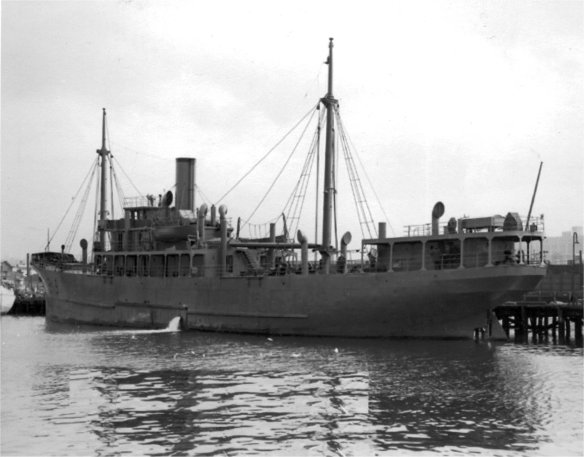
The Coast Guard lost 15 vessels during the course of WWII. Of those, three are believed to be the result of enemy action. Of the remaining 12, eight were a result of adverse weather. 214 Coast Guardsmen were killed in these 15 incidents.

The three ships presumed loss to enemy action included the three largest Coast Guard vessels lost during the war:

CG 85006, 67 tons, was destroyed by an explosion, probably gasoline vapors, 27 Mar.’43, four dead.

CG 58012, 30 tons, was destroyed by fire, 2 May ’43, no fatalities.

CG 83421, 44 tons, was sunk in a collision, 30 June ’43, no fatalities.

USCGC Bodega (WYP-342), 588 tons, went aground attempting to assist another vessel, 20 Dec. ’43, no fatalities.

The eight vessels lost to foul weather were:

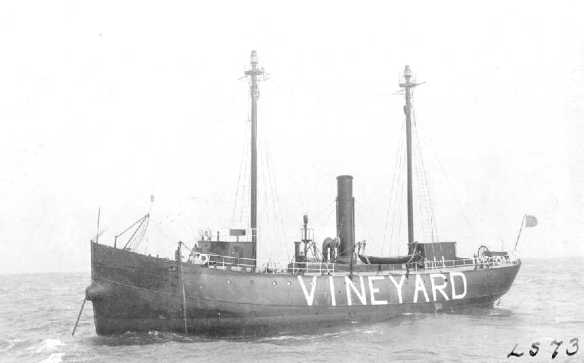
ls73

LV 73 on the Vineyard Sound station where she served from 1924 through 1944.  On 14 September 1944 she was carried off station during a hurricane and sank with the loss of all hands.

It might be assumed that the non-combat casualties were not war related, but that might not be the case. The urgency of the missions, the diversion of more capable ships to escort duty, the influx of inexperienced personnel placed in responsible positions, and the use of vessels pressed into service for which they may have been ill-suited, were all a result of the war, and it led to crews being placed in more danger than would have been the case in peacetime.

Coast Guard Manned Navy Vessels Lost:

Of the eleven Coast Guard manned US Navy ships lost during WWII, seven were lost to enemy action, the others were:

  • LST 203, 2,366 tons, was stranded after an intentional beaching, 1 Oct. ’43, no fatalities.
  • LST-69, 2,366 tons, destroyed in the West Loch disaster, 21 May ’44, no fatalities.
  • USS Serpens (AK-97), 14,250 tons, destroyed as a result of an apparent internal explosion of its cargo, 29 Jan. ’45, 196 CG fatalities. (Largest single loss of CG personnel)
  • USS Sheepscot (AOG-24), 2,270 tons, driven ashore by adverse weather, 6 June ’45, no fatalities.

serpens_ak-97

USS Serpens (AK-97)  US Navy photo #NH 89186, from the collections of the US Naval Historical Center, courtesy William H Davis, 1997

sheepscot_aog-24

USS Sheepscot (AOG-24) underway, August 1944, US Navy photo

Those lost to enemy action were:

USCGCMuskeget(WAG-48)

Photo: USCGC Muskeget, seen here before conversion to a weather ship. http://www.navsource.org/archives/09/49/49048.htm
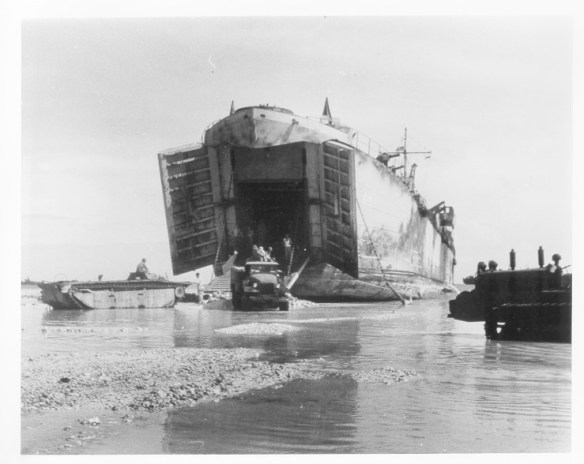
lst69_2

“LST discharges supplies. . .”; no date (November, 1943?); Photo No. 3237; photographer unknown. The Coast Guard-manned LST-69 disembarks equipment during the Tarawa invasion.

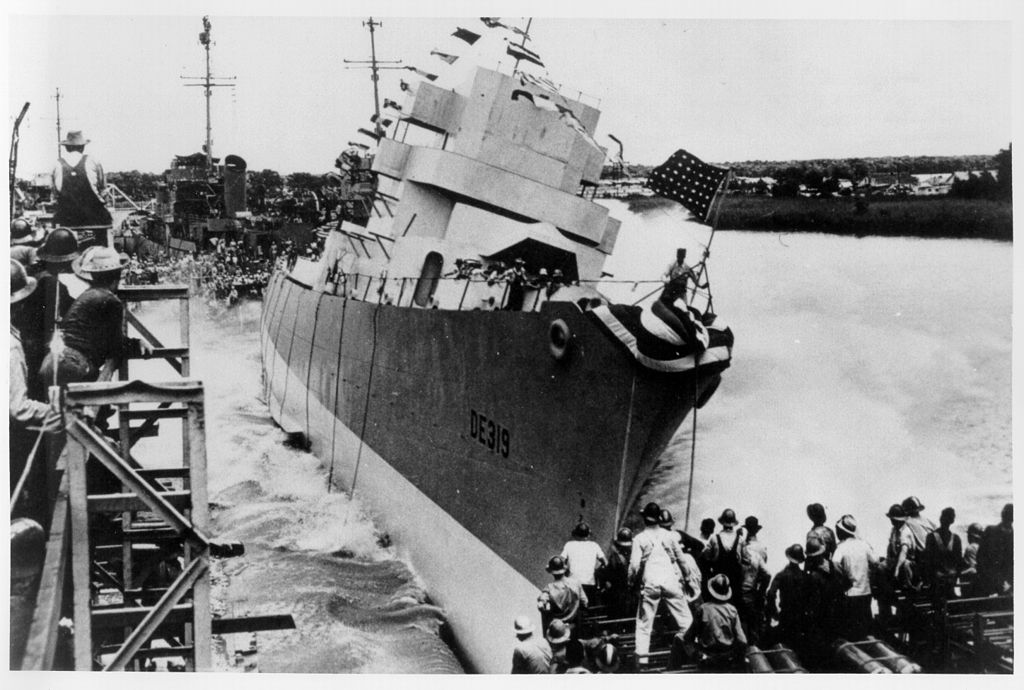
Leopold_DE-319

USS Leopold (DE-319) being launched. 

File:Lci-convoy.jpg

Normandy Invasion, June 1944 A convoy of Landing Craft Infantry (Large) sails across the English Channel toward the Normandy Invasion beaches on “D-Day”, 6 June 1944. Each of these landing craft is towing a barrage balloon for protection against low-flying German aircraft. Photograph from the U.S. Coast Guard Collection in the U.S. National Archives. Photo #: 26-G-2333

lci93_omaha_1_300

“SHE FELT THE NAZIS’ WRATH:” A U.S. Coast Guard infantry landing craft still flies its flag, though knocked out of the invasion, ripped and wounded on the beaches of France. Moving in for a landing, the LCI ran afoul of an underwater obstruction, which tore a gaping hole in her bow. Then as its cargo of troops piled ashore, Nazi shells battered her out of further action.”; no date; Photo No. 2395; photographer unknown.

Conclusion:

It may be surprising that it appears the Coast Guard lost two and half to three times as many men in Coast Guard manned Navy vessels, as in Coast Guard vessels.

According to the Coast Guard history web site,

Two hundred and fourteen thousand two hundred and thirty-nine persons served in the Coast Guard during World War II.  That number included 12,846 women.  The Coast Guard lost a total of 1,917 persons during the war with 574 losing their life in action, “died of wounds” received in action, or perishing as a “Prisoner of War.”

These incidents account over 40% of all lives lost and a majority of lives lost as a result of enemy action.

Coast Guard Overview

If you haven’t seen it already, the Coast Guard has a web site that provides a lot of information about the status of the service. The Coast Guard Overview includes sections on Missions, Workforce, Force Laydown, Assets, Authorities, Strategy, Budget, Leadership, Partnerships, and a Resource Library. (You do have to scroll down from the intro.)

I had not seen this before. It seems to be connected to the preparation for the Presidential Transition Team.

Added a link to the web site to the top of my Reference page, so it will be easy to find. I have to say I have not kept my Reference page up to date. I’ll be pay more attention to it.

Hobby Drones as Terrorist Weapons

Since ISIS’s successful weaponization of a commercially available “drone,” as a flying improvised explosive device (IED), there has been a lot of discussion about the possibility of using hobby drones, or the technology associated with them, as a sort of poor man’s guided missile.
War on the Rocks’ “The Democratization of Air Power: the Insurgent and the Drone,” by T.  X. Hammes, Oct. 18, 2016, does a great job of outlining the potential dangers. In particular I can see that his suggestion that they could be used to employ a small explosively formed projectile to attack the wing tanks of parked aircraft could be very effective.
As a beginning drone pilot (I have both an FAA licence for drones and FCC radio amateur radio license to allow use of transmissions of more than 25 milliwatts) I thought perhaps I could put some of this into context, but I found another post, also from “War on the Rocks,” that probably does a better job than I could. “Why the IED Threat Has Barely Started” by Mark Jacobsen.
Still I would like to make some small points:
Capabilities:
When they think of drones, many, perhaps most people, will think of multi-rotors, those strange new aircraft that fly on, usually four, electric motors, but they can have amost any number three or more. They can pack an amazing degree of electronic sophistication into very small and relatively cheap packages. These can include auto pilots with GPS navigation with waypoints. The Phantom 4 is an example of the state of the art. The FAA now considers all radio controlled aircraft as “drones.”
File:DJI Phantom 4 in Flight March 2016.jpg
 Photo: DJI Phantom 4, by Doobybutch
Multi-rotors are all electric powered. Their range is limited and usually they are controlled by 2.4 GHz radios of limited output. Their visual systems that allow real time control are usually 5.8 GHz. These are short range, line of sight and can be blocked by trees and terrain.  In fact all the frequencies that are used to control and provide video for hobby UAVs (910MHz, 1.2-1.3GHz (1200-1300MHz), 2.4 GHz, and 5.8 GHZ in the US) are line of sight systems.
The are not the only potential platforms. Autopilot and navigation systems can also be applied to fixed wing aircraft or surface vessels as well as multi-rotors, and if internal combustion engines are used, they can have very long ranges. At least one fixed wing drone has crossed the Atlantic. On the other hand internal combustion systems are generally noisy and sacrifice the advantage of quiet approach enjoyed by electric systems.
Implications:
Range against moving targets like ships is limited. Fixed targets with a known geographic position can, at least theoretically, be attacked at much longer ranges.
(gCaptain has a series of ship chase videos, including the one above, that illustrate what can be done in terms of piloting a drone out to intercept a ship. The videos are all about ten to twelve minutes long. That is a typical quadcopter endurance. The Phantom 4 now claims an endurance of 28 minutes. This is a round trip and an attack would only require one way. Still the range may be less than the two way range shown because of limits on the reach of the control systems)
Reliably extending real time control beyond a couple of milles may require special transmitting antenna.
Payloads for hobby systems are very small. Most are designed for, at most, a camera like a “Go-Pro” (about 6 oz. while a typical hangrenade is about 14 oz.). Carrying greater weight will generally require a trade-off in reduced range.
Countermeasures:
The DOD is taking the small UAS threat seriously, as evidenced here and here.
For attacking moving targets, the operator requires a controlling signal from the control transmitter and, if the target is beyond the operators ability to observe both the target and the relatively small drone, a video signal from the drone. Neither of these signals is encrypted, though the typical 2.4 GHz control signal is usually frequency agile. Disrupting either signal for an extended period may result in loss of control. Early command guided missiles during were defeated relatively easily using electronic countermeasures. The presence of these signals may serve to alert the possibility of an attack.
Attacking fixed targets at a known position requires only GPS, but this signal can be rendered inaccurate with GPS blocking or spoofing.
A directed electro-magnetic pulse may be able to fry internal circuits that are built with no apparent reason for hardening.
What does it mean to us?:
The threat to parked aircraft is real, but our own aircraft are unlikely to be a target, except perhaps for those working in SOUTHCOM.
The Navy might reasonably worry about one of these taking off from a dhow or near shore in the Straits of Hormuz or Bab-el-Mendab, as a carrier passes through and having a drone attack a plane on deck in hopes of causing a major conflagration. Of course, the drone is more likely just trying to get a video from an unusual angle. We don’t really have to worry about that happening in a US port, because carriers fly off their airwings before returning to homeport.
There is the possibility of a drone attacking the bridge of a ship as it approaches a turn in a narrow channel, and the ship running aground or colliding with a bridge or another ship in the resuting confusion.
The Future:
Battery technology has been advancing very rapidly and likely will continue to do so, giving electric drones greater range.
There is some concern that future development may allow target recognition allowing the drones to pursue a moving target without operator control.

“We cannot afford to be complacent and should not infer too much from the relative absence of flying IED attacks thus far. Yes, small drones have proliferated rapidly, but the technology is still in its toddler years, and today’s widely available consumer drones are not ideal weapons. It is the next generation of drone technology that has me worried, and it will be here soon.”

S. Korean CG Fires on Chinese F/Vs

This is one of numerous reports that the South Korean Coast Guard has fired into Chinese fishing vessels as a result of increasingly aggressive and non-compliant behavior.

Apparently the S. Korean CG seized two Chinese F/V but other Chinese vessels attempted to free them by ramming the S. Korean vessels. Apparently there were no deaths or injuries as a result of the machinegun fire.

The China, of course, objected to the use of force.

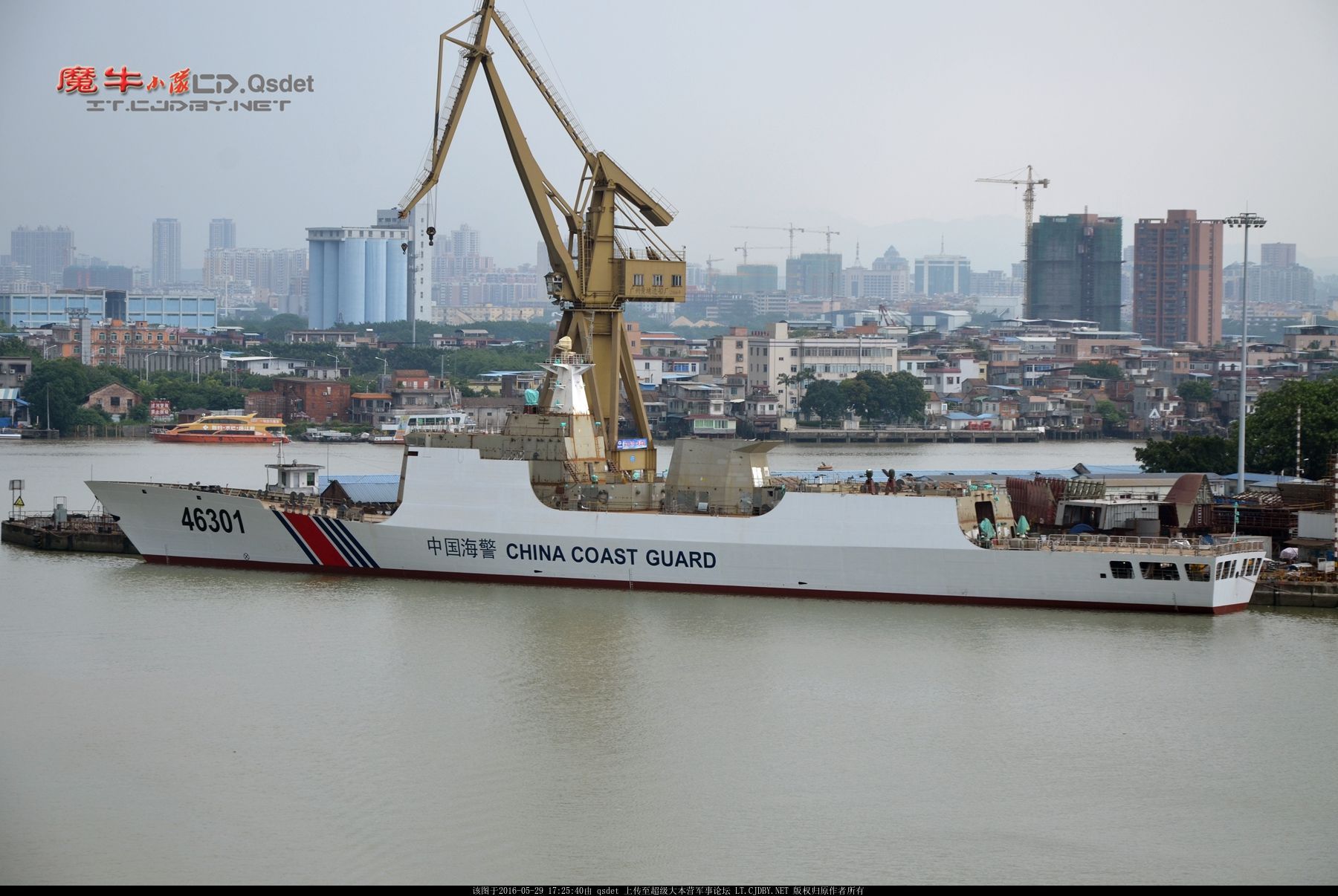
China Acknowledges Building Cutter to be Upgraded to Frigate in Crisis

type818ccgc

The National Interest reports that the Chinese have openly acknowledged that their newest Coast Guard cutter is being built with provision for upgrading to frigate status should a need arise.

Moreover they were apparently influenced by the example of the USCG during WWII.

In the same issue of this magazine, published by the major Chinese shipbuilding conglomerate China State Shipbuilding Corporation (CSSC), builder of the Type 818, there is not coincidentally a very detailed article about U.S. Coast Guard cutters in combat during the Second World War. That article explains that both USCGC Campbell and also USCGC Spencer were able to sink German U-boats (U-606 and U-175 respectively) during the pivotal Battle of the Atlantic. Most of the article examines the operations of 10 American USCG cutters that were 76.2 meters in length and built between 1928 and 1932. These ships were transferred to the hard pressed Royal Navy (RN) during 1941-42 and achieved an enviable war record in RN service, sinking both U-522 and U-954 – the latter with Germany Navy Commander Karl Donitz’s son aboard. The analysis notes that, according to UK naval records, the American cutters were viewed so favorably as to be rated as “surpassing each kind of comparable British designed frigate.” These ships are labeled as an “ideal anti-submarine escort ship” [理想的反潜护航舰] and the implications for the CCG going forward are obvious.

They actually sold the cutters a bit short. The 327s actually sank at least three and probably four U-boats and the ten 76.2 meter cutters, the 250 foot Lake Class, sank three submarines (two U-boats and an Italian). Six subs sunk by 17 ships may not sound particularly impressive, but in fact by comparison, it was spectacular.

The new Type 818 cutters are based on the Type 054 frigates. Its not too much of a stretch to expect them to be upgunned with the same weapons found on the “parent craft,” but if the time ever comes, there may be better systems available for upgrading the cutters or they might be given different capabilities to support emerging missions. That can be an advantage of having ships with unused upgadability.

The Type 054 are only slightly smaller than the Bertholf class, displacement 4,053 tons full load, length 134.1 m (440 ft), beam 16 m (52 ft), 30,400 HP, 27 knots, compared to the Bertholf’s 4,500 tons, 127.4 m (418 ft), 16.46 m (54 ft), 49,875 HP, and 28 knots. They actually appear to be the same size as the Offshore Patrol Cutters, but their design leans more toward higher speed. Their range is not as great as the OPC at about 8,000 miles compared to the OPCs’ 10,200, but it is a greater range than USN frigates enjoyed.

The Chinese have learned a lesson from USCG experience in World War II. I wonder if it is a lesson we may have forgotten.

Thanks to Luke for bringing this to my attention. 

White Hulls Must Prepare for Gray Zone Challenges–USNI

The US Naval Institute’s 2016 Coast Guard Essay Contest winner, “White Hulls Must Prepare for Gray Zone Challenges,” by LCdr.Craig Allen, Jr., USCG is worth the read.

Much of the focus is on the PATFORSWA and LCdr Allen seems to know where of he speaks.

“Lieutenant Commander Allen is a cutterman assigned to the Office of Defense Operations at Coast Guard Headquarters. He previously commanded the Sentinel-class cutter USCGC William Flores (WPC-1103) and the USCGC Baranof (WPB-1318), an Island-class cutter forward deployed to Manama, Bahrain. He also served as the executive officer of the USCGC Tornado (WPC-14), a Cyclone-class patrol craft. Commander Allen is a 2014 graduate of the U.S. Marine Corps Command and Staff College.”

But as he points out. These “Gray Zones” are not limited to SW Asia. We see them in South East Asia, East Africa, West Africa, and even in Central and South America.

While the post concentrates on crew preparation, I think its appropriate to point out an observation by Vice Adm. Joseph Mulloy, deputy chief of naval operations for integration of capabilities and resources, that attacks like those on the USS Mason, where a non-state actor employed cruise missiles are likely to become more common.

Maybe adding a CIWS (preferably the SeaRAM) to the OPC might not be a bad idea.

Greatly Expanded Marine National Monument around NW Hawaiian Islands

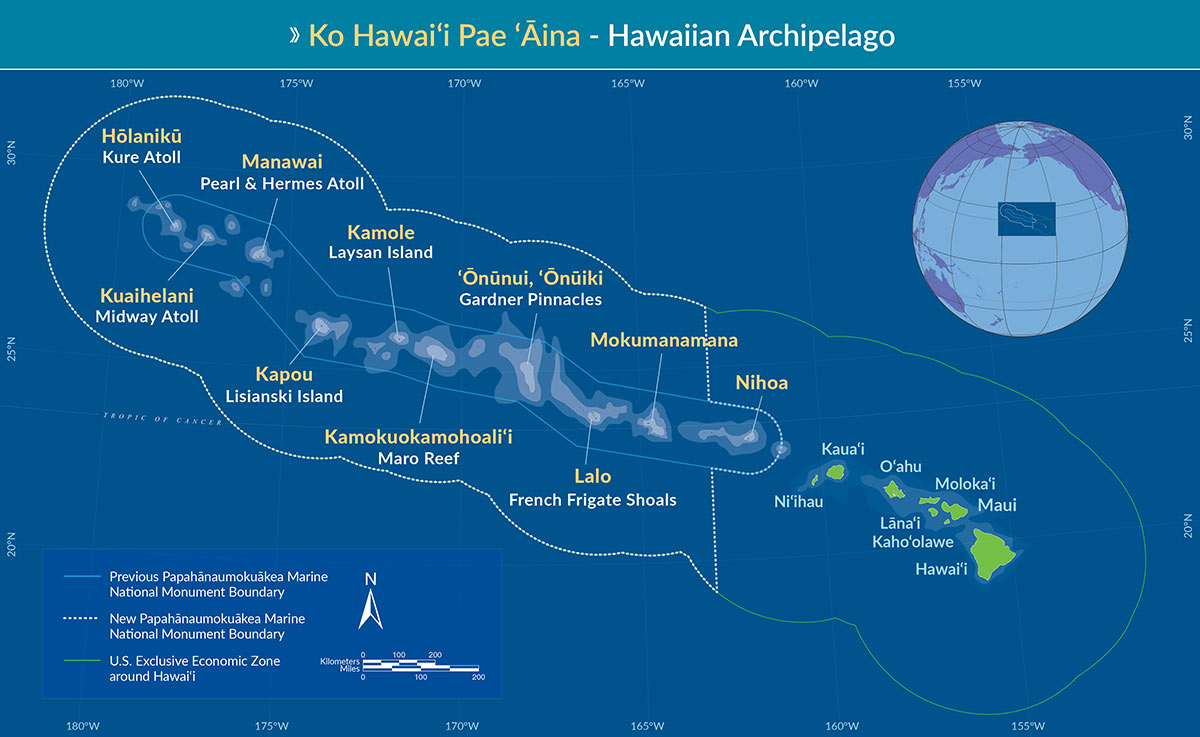
papahanaumokuakea-marine-national-monument

Click on the chart to see enlarged

I’m a bit late picking up on this but,

On Friday, August 26, 2016, President Obama signed a proclamation expanding the Papahānaumokuākea Marine National Monument. Previously the largest contiguous fully-protected conservation area in the United States at 139,797 square miles (362,073 km2), the expanded boundaries make it once again the biggest protected area on the planet at 582,578 square miles (1,508,870 km2) (439,916 sq nm–Chuck), nearly the size of the Gulf of Mexico.

“Papahānaumokuākea is globally recognized for its biological and cultural significance, being the only mixed UNESCO World Heritage site in the United States and only one of 35 mixed sites in the world. Its long list of protections includes designation as a Particularly Sensitive Sea Area by the International Maritime Organization. See full list of protections here.

This was before announcement of the slightly larger Marine Protected Areas recently announced in the Ross Sea off Antarctica (1,550,000 sq km or 451,908 sq nmiles). It is in addition to the recently expanded Pacific Remote Islands Marine National Monument (approximately 1,269,090 sq km or 370,007 sq nm).

My question regarding how these sanctuaries will be enforced remains.

World’s Largest Marine Protected Area Established in the Ross Sea (Antarctica)

512px-Antarctica_CIA_svg

A Marine Protected Area (MPA) has been established in the Ross Sea off Antarctica and South of New Zealand. The area is very large, 1.55M sq kM, the largest Marine Protected Area in the world. That is about the same size as the US East Coast EEZ, larger than the West Coast EEZ and 72% of it is no take area.

We have seen that New Zealand has been doing fisheries patrols off Antarctica, but they only have two Offshore Patrol Vessels. Who is going to enforce these new restrictions? There seem to be many areas where regulations are imposed, but enforcement is inadequate or non-existent.

I am quoting the Commission for the Conservation of Antarctic Marine Living Resources (CCAMLR) news release in full below:

The world’s experts on Antarctic marine conservation have agreed to establish a marine protected area (MPA) in Antarctica’s Ross Sea.

This week at the Meeting of the Commission for the Conservation of Antarctic Marine Living Resources (CCAMLR) in Hobart, Australia, all Member countries have agreed to a joint USA/New Zealand proposal to establish a 1.55 million km2area of the Ross Sea with special protection from human activities.

This new MPA, to come into force in December 2017, will limit, or entirely prohibit, certain activities in order to meet specific conservation, habitat protection, ecosystem monitoring and fisheries management objectives. Seventy-two percent of the MPA will be a ‘no-take’ zone, which forbids all fishing, while other sections will permit some harvesting of fish and krill for scientific research.

CCAMLR Executive Secretary, Andrew Wright, is excited by this achievement and acknowledges that the decision has been several years in the making.

“This has been an incredibly complex negotiation which has required a number of Member countries bringing their hopes and concerns to the table at six annual CCAMLR meetings as well as at intersessional workshops.

“A number of details regarding the MPA are yet to be finalised but the establishment of the protected zone is in no doubt and we are incredibly proud to have reached this point,” said Mr Wright.

CCAMLR’s Scientific Committee first endorsed the scientific basis for proposals for the Ross Sea region put forward by the USA and New Zealand in 2011. It invited the Commission to consider the proposals and provide guidance on how they could be progressed. Each year from 2012 to 2015 the proposal was refined in terms of the scientific data to support the proposal as well as the specific details such as exact location of the boundaries of the MPA. Details of implementation of the MPA will be negotiated through the development of a specific monitoring and assessment plan. The delegations of New Zealand and the USA will facilitate this process.

This year’s decision to establish a Ross Sea MPA follows CCAMLR’s establishment, in 2009, of the world’s first high-seas MPA, the South Orkney Islands southern shelf MPA, a region covering 94 000 km2 in the south Atlantic.

“This decision represents an almost unprecedented level of international cooperation regarding a large marine ecosystem comprising important benthic and pelagic habitats,” said Mr Wright.

“It has been well worth the wait because there is now agreement among all Members that this is the right thing to do and they will all work towards the MPA’s successful implementation,” he said.

MPAs aim to provide protection to marine species, biodiversity, habitat, foraging and nursery areas, as well as to preserve historical and cultural sites. MPAs can assist in rebuilding fish stocks, supporting ecosystem processes, monitoring ecosystem change and sustaining biological diversity.

Areas closed to fishing, or in which fishing activities are restricted, can be used by scientists to compare with areas that are open to fishing. This enables scientists to research the relative impacts of fishing and other changes, such as those arising from climate change. This can help our understanding of the range of variables affecting the overall status and health of marine ecosystems.