Navy, Coast Guard Divers Recover Torpedoes in Freezing Arctic

180316-N-KC128-269
BEAUFORT SEA(March 16, 2018) Chief Hospital Corpsman Kristopher Mandaro, assigned to Underwater Construction Team (UCT) 1, surfaces from a waterhole during a torpedo exercise in support of Ice Exercise (ICEX) 2018. ICEX is a five-week exercise that allows the U.S. Navy to assess its operational readiness in the Arctic, increase experience in the region, advance understanding of the Arctic environment and continue to develop relationships with other services, allies and partner organizations. (U.S. Navy photo by Mass Communication Specialist 1st Class Daniel Hinton/Released)

The following is a Navy news release, but it does show that the Coast Guard’s recently revived capability for diving in the Arctic ice is definitely making a strong come back. Includes information about the Coast Guard’s Cold Water Ice Diving course. 

Story Number: NNS180319-22Release Date: 3/19/2018 2:05:00 PM
By Lt. Courtney Callaghan, ICEX Public Affairs

ARCTIC CIRCLE (NNS) — Divers from U.S. Navy Mobile Diving and Salvage Unit (MDSU) Two, Underwater Construction Team (UCT) One and the U.S. Coast Guard braved harsh Arctic waters to play a critical role during a torpedo exercise as part of Ice Exercise (ICEX) 2018.

ICEX 2018 is a five-week biennial exercise that allows the Navy to assess its operational readiness in the Arctic, increase experience in the region, advance understanding of the Arctic environment, and continue to develop relationships with other services, allies and partner organizations.

During the exercise, the Seawolf-class fast-attack submarine USS Connecticut (SSN 22) and the Los Angeles-class fast-attack submarine USS Hartford (SSN 768) each fired several training torpedos under the ice. Training torpedoes have no warheads and carry minimal fuel.

“The primary objective of this year’s ICEX is to test new under-ice weapons systems and validate tactics for weapon employment,” said Ryan Dropek, Naval Undersea Warfare Center Division Newport, Rhode Island Weapons Test Director. “Once the divers recover these torpedoes, we can extract important data about how they perform and react in these conditions.”

After the submarines fire the torpedoes, helicopters transport gear and personnel to the location where the positively-buoyant torpedo is expected to run out of fuel. Each torpedo has a location device in order to assist in the search. Once found, a 3-4 person team will then drill a series of holes for the divers to enter and exit, as well as one hole for the torpedo to be lifted by helicopter.

“Once we know the location of the torpedo and drill holes, our divers slip into the water to begin placing weights on a line attached to the tail end of the torpedo,” Chief Warrant Officer Michael Johnson, officer-in-charge of MDSU-2 divers, explained. “The weights help shift the torpedo from a state of positive buoyancy to neutral buoyancy under the ice.”

Once the torpedo is neutral, the divers place brackets with cables to the top and bottom of the body of the torpedo. A helicopter then connects to the torpedo before lifting it vertically out of the hole.

The three dive teams completed additional training in preparation for diving in the unique environment of the Arctic Ocean.

“To prepare for ICEX, we completed training at the Coast Guard’s Cold Water Ice Diving (CWID) course and earned our ordnance handling certification from the Naval Undersea Warfare Center,” said Johnson. “Additionally, each unit completed MK48 Torpedo recovery training and Unit Level Training (ULT) classroom training on hypothermia, frostbite, ice camp operations, dry-suit, and cold-water ice diving.”

The USCG CWID course is a two-week course in Seattle, Washington hosted by the USCG instructors at Naval Diving and Salvage Training Center (NDSTC) which focuses on the use of equipment and diving operations in harsh Arctic waters. During the course, divers complete a diving practical in Loc de Roc, British Columbia at 5,000 ft. elevation to put environmental stresses on the divers and equipment to acclimate to the cold and altitude.

“Our underwater construction teams have always had the ice-diving capabilities, so it was awesome to be invited out to this exercise to make sure we’re keeping up with something that we say we can do,” said Builder 1st Class Khiaro Promise, assigned to Construction Dive Detachment Alfa.

During ICEX, the divers conducted dives using two different types of diving methods. UCT-1 and the USCG dove with SCUBA equipment, which provides divers with an air supply contained in tanks strapped to the backs of the divers. The divers equip themselves with a communication “smart rope” which is a protected communication cable to the surface that acts as a tending line so support personnel on the surface has positive control of the divers and so they can quickly return to the dive hole.

MDSU-2 divers used the diving system DP2 with configuration one, which provides voice communications and an air supply provided by the surface. This configuration allows the divers to swap the composite air bottles without the diver resurfacing and without interrupting their air supply.

“We decided to use the DP2 system because it performs in arctic conditions very well,” said Navy Diver 1st Class Davin Jameson, lead diving supervisor for MDSU-2. “The ability to change our air supply during the dive is critical and allows us to stay under the water a lot longer.”

Not only did the divers have an essential role in torpedo recovery, they were also essential to camp operations. “Prior to torpedo retrieval dives, all the divers on ice helped set up the camp and in the building of two runways (one 1,300 and one 2,500-ft),” Senior Chief Navy Diver Michael McInroy, master diver for MDSU-2. “In the camp, everyone has responsibilities to keep operations on track. The divers worked hard to do their part in and out of the water.”

MDSU-2 is an expeditionary mobile unit homeported at Joint Expeditionary Base Little Creek-Ft. Story (JEBLCFS) in Norfolk, Virginia. The unit deploys in support of diving and salvage operations and fleet exercises around the world. The primary mission is to direct highly-mobile, fully-trained and equipped mobile diving and salvage companies to perform combat harbor clearance, search and expeditionary salvage operations including diving, salvage, repair, assistance, and demolition in ports or harbors and at sea aboard Navy, Military Sealift Command, or commercial vessels of opportunity in wartime or peacetime.

UCT-1 is also homeported at JEBLCFS and is worldwide deployable to conduct underwater construction, inspection, repair and demolition operations. Seabees operated off the coast of Alaska for the first time in 1942 when they began building advanced bases on Adak, Amchitka and other principal islands in the Aleutian chain.

ICEX divers and their support elements are a proven and vital component to the success of this five-week exercise. The partnership between the Navy and Coast Guard builds on the foundation of increasing experience and operational readiness even in the one of the harshest regions of the world.

“The brotherhood in diving means we have a lot of trust in that other person when you go underwater, and you get close to your coworkers, it’s more of a family,” Promise said.

CGAS Kodiak C-130Hs to be Replaced by J Models

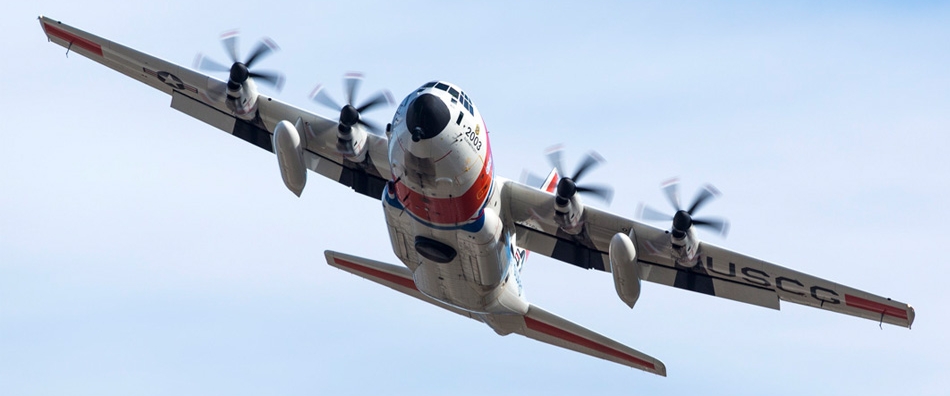
Navy Times is reporting that Coast Guard Air Station Kodiak C-130s will be replaced with more capable C-130Js by 2020.

This is a very welcome change. According to the Acquisitions directorate,

“The HC-130J has a more advanced engine and propellers, which provide a 20 percent increase in speed and altitude, and a 40 percent increase in range over the HC-130H. The new aircraft also features state-of-the-market avionics, including all-glass cockpit displays and improved navigation equipment. The HC-130J’s suite of command, control, communication, computers, intelligence, surveillance and reconnaissance (C4ISR) equipment – comparable to that of the HC-144 Ocean Sentry medium range surveillance aircraft – helps to extend the fleet’s mission capabilities.”

Higher speed, longer range, shorter take-off and landing, better climb rate, better sensors, more intuitive cockpit, better terrain avoidance. Not bad.

How the SPa was Chosen – The Trinidad and Tobago Coast Guard’s DAMEN Spa 5009 fleet

Procurement included 4x Stan Patrol 5009 Coastal Patrol Vessels (middle); 2x Fast Crew Supply 5009 Utility Vessels (top) ; 6x Interceptor DI 1102 Interceptors (bottom). Picture: DAMEN

The following is written by a guest author, a friend met on Facebook, but I think you may find it interesting, particularly to non-US readers.

How the SPa was Chosen – The Trinidad and Tobago Coast Guard’s Spa 5009 fleet by Sanjay Badri-Maharaj

The Genesis

In 2013, facing an acute shortage of operational and suitable vessels, the Government of the Republic of Trinidad and Tobago (GORTT) commissioned an operational audit of the Trinidad and Tobago Coast Guard (TTCG). This did not only involve an assessment of the existing fleet, which was in abysmal condition, but also sought to ascertain force requirements to meet the existing responsibilities as well as the projected needs of the force into the foreseeable future.

The audit team realized that despite a predilection for Offshore Patrol Vessels as priority acquisitions for both the political and military leadership, the principal weakness was in vessels designed for coastal patrol duties. The need for Coastal Patrol Vessels (CPVs) was deemed particularly acute in part because of the unsuitability of the country’s trouble-plagued fleet of Austal FPB 30 vessels for operations in the rough seas found in some parts of the country’s maritime domain.

Initial Steps

In January 2014, the Naval Assets Acquisition Implementation Team (NAAIT) was established, bringing together former and current military officers and civilian experts with a mandate to acquire vessels for the Coast Guard within a period of under two years. Using the findings of the aforementioned audit team as a guideline, the NAAIT gave priority to the acquisition of CPVs.

This, it has to be said, created a certain degree of tension with vested interests advising the GORTT who were fixated on acquiring an OPV replacement to the extent of ignoring technical advice to the contrary. The deadline for completing vessel acquisition was set at May 2015, a deadline that was to ultimately prove wholly unrealistic.

While the NAAIT formally started working in January 2014, the team had the good fortune of going to sea on a Damen SPa 4207 which visited Trinidad en route to Honduras in December 2013. In addition, shortly thereafter, the team visited the Barbados Coast Guard Headquarters to inquire as to their experiences with the type.

The naval architect assigned to NAAIT, based on the experiences at sea and the wave patterns in Trinidad’s maritime domain, suggested that the ideal length for a CPV would be between 45 and 55 metres with the SPa 4207 not being particularly suitable for the role in the TTCG. A matrix, using a proposed Concept of Operations (CONOPS) for the CPV in TTCG service was then created to assist the NAAIT in its decision-making process.

The Selection Process

There was a concerted push by lobbyists from Korean and Chinese shipbuilders for a team to visit their respective shipyards so, in January 2014, the NAAIT was dispatched to make a visit to Korea and China, followed by one to Colombia and finally to the Netherlands. While the evaluations of individual designs will of course remain confidential, the NAAIT was impressed with the manufacturing quality in Korea and the ambitions of Colombia.

In the latter case, their efforts to market a CPV to Trinidad were hamstrung by the fact that their promising CPV-46 class was as yet under construction and thus not available for evaluation. However, Colombia’s COTECMAR, impressed NAAIT with its determination, ambition and its willingness to innovate. COTECMAR’s modification of the Fassmer 80 was marketed as a possible OPV to Trinidad and attracted much positive attention. Prior to the NAAIT being formed, one such vessel visited Trinidad and while there were concerns over its top speed – only 18 knots – the lead ship of the class 20 de Julio – was seen to be of high quality and good overall capability.

Korea’s Hyundai HDP-500 was of extremely high quality but was not available for delivery in the short term. Its HDP-1000 was initially offered but soon attention shifted to the HDP-1500 which proved to be the most impressive and cost-effective OPV offered to Trinidad. However, delivery scheduling would not have met the remit of the NAAIT to acquire vessels by May 2015.

China’s designs for CPVs were deemed to be of sound design and unspectacular performance but build quality was decidedly poor and the equipment suite was decidedly sub-par. Of interest was China’s apparent belief – well-founded it later emerged – that they were guaranteed a contract for an OPV (or LRPV as the then regime in power termed the class). NAAIT was confronted, much to its surprise, with a beautiful model of an OPV in full TTCG colours with a pennant number already assigned.

Damen Gorinchem shipyards was the last to be visited. At this point, NAAIT was given presentations on the SPa 5009 design and shown two hulls with immediate availability at the Schelde naval yard. In addition, two FCS 5009s were being completed at Hai Phong in Vietnam and were also available for delivery.

This speed of delivery combined with the strong presence Damen had in the Caribbean – supplying vessels to Jamaica, Barbados, the Bahamas and the Dominican Republic – made the choice, given the deadline set for vessel acquisition almost inevitable. Despite the NAAIT advocating a limited tender being floated to all the concerned shipyards, the GORTT decided that the situation warranted a sole-select tender being issued to Damen Gorinchem to bid for the supply of four SPa 5009 patrol vessels, two FCS 5009 patrol/utility vessels and six DI 1102 interceptors. The total cost of the acquisition came to some USD 214 million, including a 5-year integrated logistics and support package inclusive of spares and training.

The FCS 5009 Patrol/Utility Vessel

The Damen SPa 5009 is an adaptation of its FCS 5009 crew-supply vessel. The latter is slightly longer and possesses a more austere equipment fit but is well suited to the task of being a utility vessel. To meet the TTCG’s requirements for a vessel capable of undertaking disaster relief operations in other parts of the Caribbean archipelago, two FCS 5009s were offered – the type having already been ordered by a petrochemical state enterprise in Trinidad. The NAAIT availed itself of the opportunity of conducting limited trials on a Cape Town built FCS 5009 “Patrol” variant in South Africa and was favourably impressed.

Two FCS 5009s were ordered, as they were available for rapid delivery – sea trials taking place in December 2014, but it was felt that the standard fit on the vessels was inadequate for the TTCG. In order to give the vessels more flexibility, the following modifications were made to the basic FCS 5009, aside from the necessary internal re-arrangements to make them suitable for quasi-military use:

1)    An adaptor for a GAM-B01 20mm gun was fitted forward. The wetness forward was not deemed an issue largely because any armed patrol duties were to be of a secondary nature to these vessels;

2)    A Voyager II FLIR system was installed to provide a modicum of additional surveillance capability;

3)    A Heila hydraulically operated knuckle-boom crane was installed which had the secondary function of being able to lower and recover a DI 1102 interceptor.

These two vessels – CG 23 TTS Point Lisas and CG 24 TTS Brighton – were delivered in the period May/ June 2015 and duly commissioned into the TTCG.

Evaluating the SPa 5009

The SPa 5009 was then in service only with the Cabo Verde Coast Guard and the NAAIT was somewhat wary of its performance characteristics. Arrangements were made for the NAAIT to visit Cabo Verde to evaluate the Guardiao SPa 5009. Operating in the Atlantic in Sea State 5, the Guardiao handled the waves remarkably well even at its maximum speed.

However, the NAAIT noted some critical deficiencies in the basic SPa 5009 design:

1)    The C32 engines, while efficient, delivered a very modest top speed

2)    The standard surveillance fit was too basic

3)    The forward area was very wet, making the operation of a manually controlled weapon difficult and thus ruling out the original intention of using TTCG GAM-B01 Oerlikons.

4)    The Guardiao carried no fixed, forward armament so there was no way to gauge whether the deck was sufficiently strengthened for a weapon;

5)    The 7.5m RHIB, deployed using a stern launch system was deemed inadequate for TTS operations.

Creating the SPa 5009 “OPVette”

The NAAIT, working closely with the TTCG, proceeded to examine the basic SPa 5009 design and turn it into a mini-OPV, dubbed an “OPVette” by one member of the NAAIT. This included a total revamp of the surveillance, armament and interdiction capabilities of the vessels and the replacement of the anaemic C32 engines with Caterpillar 3516C engines with D ratings.

This change of powerplant became a priority as it was realized that the FCS 5009s, which used Cat 3512 engines with A ratings would have been faster than a SPa 5009s with C32s. The installation of the 3516s led to a dramatic increase in speed with an average of over 30 knots being sustained by all four vessels of the class during sea trials. The downside was that on the first two vessels, some cavitation was observed on the hulls during post-trail inspection. This was rectified as a priority.

The TTCG, using its experience from the terminated BAES OPV deal (for three vessels now serving the Brazilian navy as the Amazonas class and very similar to the Batch 2 River class under delivery for the Royal Navy) insisted on the creation of a Combat Information Centre (CIC). The CIC housed displays – Transas NS4100s surveillance workstations-  showing the radar, WECDIS and FLIR input with repeaters on the bridge. It was also envisaged that the CIC would house a dedicated secure communications suite supplied by Harris. Deliveries of the Harris equipment were delayed, leading to the vessels being commissioned without this equipment being fitted.

The surveillance fit selected was a compromise using high quality civilian systems as opposed to dedicated military systems. The surveillance radar selected was the Kelvin Hughes X-Band Sharp Eye which emerged as the most cost-effective and available choice. The FLIR system chosen was the MU602CLW. A Saab R5 data link was also fitted along with a Rotheta RT-500M radio direction finder. It should be noted that the TTCG had expressed a desire for a Terma surveillance radar as fitted to the BAES OPVs. However, cost factors militated against this.

To enhance the interdiction capabilities of the SPa 5009, the standard stern-launched MST 750SR 7.5m RHIB was supplemented by a davit launched DI 1102 interceptor. While it was intended that the interceptor be launched and recovered while the mother vessel was moving, two incidents during familiarization training may have led to a rethink in this regard.

When considering choices for the weapon system, there was an attempt to look at the Israeli 25mm Typhoon system and a Reutech/Nexter combination from South Africa. Neither option proved viable. Furthermore, the TTCG desired to make use of its stock of 20mm Oerlikon ammunition. This perforce limited the choice of weapon system to one compatible with such ammunition.

The final choice fell to the Rheinmetall/ MSI Seahawk LW20A1 system. This proved to be a somewhat problematic choice as two rounds of firing trials – one in 2015 and one in 2016 – were aborted due to severe malfunctions. Even during those aborted trials, however, the accuracy of the system was excellent, but the aborted trials delayed the operationalization of the vessels’ weapons systems until late 2016.

Owing to somewhat delayed payments, the four SPa 5009s were delivered between 2015 and 2016 and were designated and named as follows: CG 25 – TTS Speyside, CG 26 – TTS Quinam, CG 27 – TTS Moruga and CG 28 – TTS Carli Bay. Each of these vessels carried a DI 1102 interceptor, with two more being deployable on CG 23 and CG 24.

Conclusion

The Damen acquisition program was the only completely successful acquisition projects undertaken during the government of Mrs. Kamla Persad-Bissessar which lasted from 2010-2015. During this time, the program faced many hurdles – some political and others fiscal – that delayed contract signing and subsequent payments.

The NAAIT would have preferred that the CPV and OPV projects be handled through a more open, albeit perhaps limited, tender process but the dual pressures of a political timeline and the urgency of the TTCG’s requirements, the sole-select tender process was approved by GORTT. Nonetheless, despite that wish, the thoroughness of the initial work by the NAAIT made the team confident that the CPV choice, at any rate, was a good one.

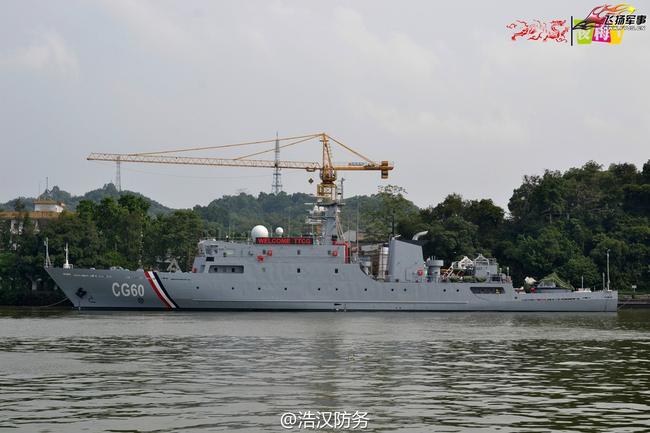
Unfortunately, the NAAIT, despite its mandate, was effectively removed from the OPV acquisition process. No tender of any kind was issued and a controversial decision to acquire a 79m vessel from China’s CSSC was undertaken. This latter vessel, now designated and named CG 60 TTS Nelson II, was delivered in late 2015. Whether the limited capability it offered was worth the price is at best debatable.

CG 60 TTS Nelson II, OPV built for Trinidad and Tobago by the Chinese

Chinese Crack Down on IUU

HMNZS Wellington intercepts suspected toothfish poachers

An interesting report that seems to indicate the Chinese are doing something to curb Illegal, Unreported, Unregulated (IUU) Fishing.

I would note that cutting subsidies does not seem to be a severe penalty, while subsidized fisheries in any form appear to be an unfair trade practice.

We also have this report on the effect of IUU fishing in the Caribbean.

Coast Guard, Navy collaborate on preparing for mines, security threats in Southeast Alaska–JuneauEmpire.com

Coast Guard Cutter John F. McCormick (WPC 1121)

JuneauEmpire.com has news of something a bit unusual happening in Juneau, a Navy/Coast Guard mine countermeasures exercise.

Doing mine countermeasures in Alaska is not easy for the US Navy because basically, the only navy in Alaska is the US Coast Guard.

There are basically three kinds of mine countermeasures done by USN,

  • airborne with a helicopter pulling a sled,
  • ship based, increasingly done by surface and subsurface unmanned systems as a way to keep sailors out the minefields,
  • and by divers.

Formerly the mine countermeasures ships were highly specialized, but they are now moving to using LCSs which are based in either Mayport, FL or San Diego, CA. In either case it would take a long time for them to get to Alaska.

The Helicopters, divers, and unmanned systems can be flown there, but they will need support including work space, communications, and ground and water transportation. The divers and unmanned systems will require supporting craft unless the mining is done very close to shore. The less they have to bring the better. That is apparently where the Coast Guard comes in.

It sounds like this is all preliminary to a more complex exercise in 2020.

“…Juneau could be a location of drills in 2020. Along with Anchorage, Kodiak and Seward, Juneau is an option for having an exercise in the water where Coast Guard and Navy personnel have to go in and figure out how to remove mines…”

One of the activities was touring the Webber class John F. McCormick (WPC-1121). Presumably the WPC was brought up from its homeport, Ketchikan, specifically for this purpose. Perhaps they are already familiar with Coast Guard’s buoy tenders, but they could also be very useful in supporting diver and unmanned systems operations.

As for where the 2020 exercise should be done–Cook Inlet–since Anchorage is the only strategic port in Alaska. Exercise results would also probably be more universally applicable if it is done away from the facilities of the District headquarters in Juneau, which are not available elsewhere in Alaska..


Homeports, 2035

 An email discussion with a reader got me to thinking about how our cutters might be homeported in the future. It started with a simple question, where would NSC #11 be homeported? Turns out it is not a simple question because first we do not yet know where nine and ten will go, but it also kicked off a lot of thought about how changes of fleet capabilities, mission, and maintenance philosophy will effect the future lay down of assets.
 This is not going to be a definitive document, but rather an exploration of considerations and possibilities.
Why 2035? If the shipbuilding plans proceed as expected, we will not see the last Offshore Patrol Cutter (OPC) delivered until 2034.
Fleet Capabilities:
To provide I baseline, I will look back on the fleet of WHECs, WMECs and Island class WPBs as it existed before the new generation started arriving and before we lost eight Island class to the 123 foot conversion disaster and six more to a continuing commitment to South West Asia. My reference is a 2000-2001 issue of “Combat Fleets of the World” which includes a notation of cutter homeports.
In 2035 we can expect to have 35 large patrol cutters, 36 if we get NSC#11. The fleet in 2000 had 44. The new ships are certainly far more capable, but quantity has a quality all its own. Fortunately we have another way to make up for numbers.
The FRCs are much more capable than the 110s and approach the capabilities of the 210 foot WMECs. Additionally they will be more numerous than the 110s they are replacing. Only 49 Island class 110 foot WPBs were built, but the program of record includes 58 Webber class WPCs. The Webber class should be able to do many of the fisheries enforcement missions currently done by 210s. They have the same ship’s boat as the larger cutters and they are as seaworthy as most of the fishing vessels. The Webber class are expected to be underway for 2500 hours per year compared to 1500 hours for the Island class. The Webber class are not just “fast response cutter,” which was what the Island class were, they are at least part time, patrol assets.
If we compare what we had in 2000, 49 Island class available 1500 hours/year for 73,500 hours, with what we are projected to have, 58 Webber class available 2500 hours/year for 145,000 hours, that is an increase of 71,500 hours. If we assume optimistically that a dedicated patrol ship is available 24 hours a day for 185 days/year, that is 4,440 hours/day so the additional 71,500 hours is the equivalent of 16.1 patrol cutters. If we give due consideration to when and where they can be used and provide land based air support, this more than makes up for the lower number of larger cutters.
The Offshore Patrol Cutters will be far more seaworthy than the WMECs. In fact they will be at least equal to, and probably superior to the 378 foot WHECs, in terms of seakeeping. Their cruising speeds will higher than that of the 378s and their effective range of operations will be similar. Unlike the 270 and 210 foot WMECs they will be usable for Alaska Patrol.
Mission Changes: 
I don’t expect any of our current missions to go away, but there will inevitably be a change of emphasis.
The Eastern Pacific drug interdiction effort will likely continue, but the drug of choice may be changing from cocaine to synthetic opioids which enter the US by other routes. The Navy will also likely join the Coast Guard in Eastern Pacific drug interdiction, which may reduce the need for cutters.
The island nations of Melanesia, Micronesia, and Polynesia will be under stress as a result of sea level rise and the effects of illegal, unregulated, and unreported fishing. The Coast Guard is likely to be called upon to assist them.
There will be a need to assist other coast guards and coast guard like organizations, particularly in Africa and South East Asia where they have problems with piracy, drug and human trafficking and illegal, unreported, and unregulated (IUU) fishing, and the Coast Guard will be increasingly asked to provide capacity building assistance.
Maintenance Philosophy:
The Coast Guard seems to have embraced the idea that there are benefits to basing ships in clusters. Clusters of at least three almost guarantees that there will be at least one vessel in port to benefit from the support facilities there. I think we may see many of  those ports that are currently expected to host two Webber class get a third when more become available. I don’t think we will see many, or perhaps any ports, with only one Bertholf, OPC, or Webber class homeported there.
In the Past:
In 2000 ships were split between the Atlantic and Pacific in ways that reflected fundamental differences in the two theaters. Looking at the WHECs, WMECs, and 110 foot WPBs as surrogates for the NSCs, OPCs’ and FRCs; LANTAREA had 63 vessels (two WHECs, 26 WMECs, and 35 WPB110s), PACAREA had 30 vessels (ten WHECs, six WMECs, and 14 WPB110s). Those 93 vessels were distributed among 38 ports, 15 in PACAREA and 23 in LANTAREA.
The Ports: 
In an earlier post, “Ruminating on Homeports While Playing the Red Cell,” I identified 30 critical ports or port complexes that are likely targets for those hostile to the US (23 in LANTAREA and seven in PACAREA), including 23 military outload ports (17 in LANTAREA and six in PACAREA). Only five of these ports have a significant Navy surface ship presence. It makes sense for us to homeport vessels, particularly the Webber class, in, near, or on the approaches to those ports where there is no Navy surface ship presence. Fortunately some of these ports are in close proximity to each other. This list of ports is repeated below. I have indicated where current planning indicates NSCs and FRCs are or will be homported in bold. This accounts for eight NSCs and 43 FRCs. 
LANTAREA

CCGD1:

  • Bath, Me–Major Naval shipbuilder
  • Groton, CT–Submarine base
  • Hudson River complex, New York, NY/Elizabeth and Bayonne, NJ–a major cultural target, #3 US Port by tonnage, #2 Container port, #4 Cruise ship port (NYC) and #13 cruise ship port (Cape Liberty, NJ), Strategic Seaport (Elizabeth)

CCGD5–four FRCs

  • Delaware Bay–Strategic Seaport (Philadelphia) –two FRCs at Cape May
  • Chesapeake Bay Complex, VA–Base for aircraft carriers and submarines, Major naval shipbuilder, #14 port by tonnage, #7 container port; plus water route to Washington, DC (major cultural target) and Baltimore, MD–#9 port by tonnage, #10 container port, #12 cruise ship port, Strategic Seaport (Norfolk and Newport News)
  • Morehead City, NC–Strategic Seaport –two FRCs at near by Atlantic Beach
  • Cape Fear River–Strategic Seaport (Sunny Point and Wilmington, NC)

CCGD7–Two NSCs, 18 FRCs (six in Key West in addition to those indicated below)

  • Charleston, SC–#9 container port, #15 cruise ship port, Strategic Seaport –two NSCs
  • Savannah, GA–#4 container port Strategic Seaport
  • Jacksonville complex, FL (including Kings Bay, GA)–SSBNs, Navy Base Mayport, #14 cruise ship port, Strategic Seaport
  • Port Canaveral, FL–#3 Cruise Ship port
  • Port Everglades/Fort Lauderdale, FL–#13 container port, #2 Cruise Ship port
  • Miami, FL–#11 container port, #1 Cruise Ship port–six FRCs
  • San Juan, PR–#5 Cruise Ship port, #15 container port–six FRCs
  • Tampa, FL–#7 Cruise Ship port

CCGD8–Five FRC

  • Mobile, AL–major naval shipbuilder, #12 port by tonnage
  • Pascagoula, MS–major naval shipbuilder –two FRCs replacing Decisive.
  • Gulfport, MS–Strategic Seaport
  • Mississippi River Complex, LA–#14 container port,#10 Cruise Ship port (NOLA), #1 port by tonnage (South Louisiana), #6 port by tonnage (NOLA), #8 port by tonnage (Baton Rouge), #10 port by tonnage (Port of Plaquemines)
  • Lake Charles, LA–#11 port by tonnage
  • Sabine Pass complex (Beaumont/Port Author/Orange, TX)–#4 port by tonnage (Beaumont), Strategic Seaport (both Beaumont and Port Author)
  • Houston/Galveston/Texas City, TX–#2 port by tonnage (Houston),  #13 port by –tonnage (Texas City), #5 container port (Houston), #6 Cruise ship port (Galveston)–Three FRC going to Galveston when Dauntless departs.
  • Corpus Christi, TX–#7 port by tonnage, Strategic Seaport

PACAREA

CCGD11–Four NSCs, two (assumption) FRCs

  • San Diego–Base for aircraft carriers and submarines, major naval shipbuilder (NASSCO), Strategic Seaport
  • Los Angeles/Long Beach/Port Hueneme, CA–A major cultural target, #5 port by tonnage (Long Beach), #9 port by tonnage (Los Angeles), #1 container port (Los Angeles), #3 container port (Long Beach), #9 cruise Ship port (Long Beach), #11 cruise ship port (Los Angeles), Strategic Seaport (Long Beach and Port Hueneme) –FRC(s)at San Pedro
  • San Francisco Bay complex–A major cultural target, #6 container port (Oakland), Strategic Seaport (Oakland and Concord) –Four NSCs

CCGD13–Two FRCs planned for Astoria, OR

  • Puget Sound Complex, Seattle/Tacoma, WA–Base for aircraft carriers (Bremerton), SSBNs (Bangor), and submarines, major naval bases, #8 container port (Seattle), #10 container port (Tacoma), #8 Cruise ship port (Seattle), Strategic Seaport (Indian Island and Tacoma, WA)

CCGD14–Two NSCs, Six FRCs, Two in Honolulu, + Four planned

  • Honolulu/Pearl Harbor–Major Naval base, including submarines–Two NSC, Two there now, Two FRCs + a third planned
  • Apra, Guam–Submarine Base, Strategic Seaport–Three FRCs planned

CCGD17–Six FRCs, Two in Ketchikan, + Four more planned

  • Anchorage, AK–Strategic Seaport

Next we will talk about where the remaining NSCs and FRCs, and where all the OPCs might be going.

Bertholf Class National Security Cutters:

In 2000 the twel

ve 378s were distributed ten to the Pacific and two to the Atlantic. Homeports in 2000 were Charleston (2), Seattle (2), Alameda (4), and Honolulu (2). The program of record was for eight National Security Cutters, but ten have been funded and it appears there may be an eleventh. Homeports for the first eight include four in Alameda, CA, two in Charleston, SC, and two in Honolulu, HI. I don’t expect that there will be any other homeports assigned. It is likely that numbers nine and ten will go to Honolulu and Charleston, bringing them to three each. This will give LANTAREA more very long range assets both to support drug interdiction and capacity building in West Africa. 

Number eleven will probably go to the Pacific. Alameda could probably accept it, but I suspect a growing recognition of responsibilities in the Western Pacific will mean, if procured, it will go to Honolulu, if not initially, at least by 2035. . 

Offshore Patrol Cutters:

I don’t think OPCs will go to the same ports as the NSCs. Based on where other WHECs or multiple WMECs were based (and an unused naval base at Corpus Christi), likely homeports for OPCs include:

  • Boston, MA
  • Portsmouth, VA
  • Key West, FL
  • St. Petersburg, FL
  • Corpus Christi (Naval Station Ingelside), TX
  • San Diego, CA
  • Kodiak, AK

If we assume at least three ships in each, that accounts for 21. What of the remaining four? They could be added to the ports above or perhaps added to other ports.

I think a case can be made for putting a higher percentage of the large cutters in PACAREA. After all, less than 16.2% of the US Exclusive Economic Zone is in LANTAREA’s area of operation. 

Currently there are only four medium endurance cutters in the Pacific and 24 in the Atlantic. There are only 25 OPCs in the program of record. Obviously this will not be a one for one replacement 

In the year 2000 PACAREA had 16 large patrol cutters (10 WHECs and six WMECs), currently they have 13 (five NSCs, four WHECs, and four WMECs). Considering the apparent growing responsibilities of PACAREA, the projected maximum of no more eight NSCs, and the ability of the Webber class to assume some of the fisheries protection duties of the WMECs in the Atlantic, it is likely PACAREA WMECs will be replaced with OPCs on a better than one to one basis that would have left PACAREA with only 12 large patrol ships. I suspect PACAREA will be assigned at least six OPCs, and that it should have at least nine (17 of the total of 36 large ships (8 NSCs and 9 OPCs), if we get 11 NSCs homeported as above).

It is extremely likely at least two OPC will go to Kodiak to replace 378 foot WHEC Douglas Munro and 283 foot WMEC Alex Haley. It seems likely that this could ultimately grow to three OPCs. Locating them close to ALPAT areas.

San Diego was homeport to two 378s. It is closer to the Eastern Pacific drug transit zones than other Pacific ports, and it has both excellent training facilities and shipyards.

Seattle seemed a likely location for OPCs but since it is the likely homeport for three new Heavy Polar Icebreakers as well as USCGC Healy (and/or other medium icebreakers) it appears they may not have the room.

Assuming three OPCs in Kodiak and three in San Diego, if additional OPCs go to the Pacific where would they go? Additional ships in San Diego or nearby Terminal Island in San Pedro (Long Beach) appear likely.

This leaves 16 to 19 OPCs to be assigned to LANTAREA. Three each in Boston, MA, Portsmouth, VA, Key West, FL, St. Petersburg, FL, Corpus Christi (Naval Station Ingelside), TX would account for 15, leaving only one to four to find a home. One more port, perhaps Miami, or just add ships to the ports above. Certainly there is space in Portsmouth and Little Creek, VA.

I will assume six in San Diego and/or San Pedro (Long Beach), four in Portsmouth, VA and three each in Boston, Key West, FL, St. Petersburg, FL, Corpus Christi, TX, and Kodiak, AK.

Webber class WPCs:
The program of record includes 58 Webber class. As noted above homeports for 39 have been identified, of the remaining 19 four will go to Alaska. Lets look at each in turn.
CGD1
In 2000 there were seven Island class in the First district, two in Portand, ME, two in Woods Hole, MA, one at Glouchester, MA, and two in Sandy Hook, NJ. I would presume there will be Six Webber class in the First District.
In order to cover all the Critical port in the First District, we will probably put two in Sandy Hook, NJ to protect the Hudson River port complex, two in S. Portland, ME that would cover Bath ME and two at the East end of Long Island Sound that would protect the Sub base at Groton. Woods Hole might work, but I would hope they would be based closer either at Newport, RI or in New London.
CGD5
In 2000 there were only thee Island class in the Fifth district, one in Portsmouth, VA and two in Atlantic Beach, NC. We already have four Webber class going to the District, two in Cape May, NJ, and two in Atlantic Beach, NC.
CCGD7
In 2000 there were 23 Island class based in the Seventh district, six in Miami, seven in Key West, six in San Juan, one in Port Canaveral, and three in St. Petersburg. We already have 18 Webber class assigned to the Seventh District, six in Miami, six in Key West, and six in San Juan. Notably there are no Webber class on the Seventh District’s Gulf coast, so I would anticipate we will see three more homeported in St. Petersburg. 
CGD8
In 2000 there were only two Island class WPBs homeported in the Eighth district, one in Mobile, AL and one in Corpus Christi, TX. We already know two will go to Pascagoula, MS, and three will go to Galveston, TX.  We probably want at least two more in Corpus Christi, TX to cover that Strategic Port and the Western Gulf of Mexico.
CGD11
In 2000 there were three Island class in the Eleventh District. All three were homeported in San Diego. We already know one or more Webber class will go to San Pedro. I anticipate there will ultimately be two in San Pedro, CA. It seems likely there will also be two based in the San Francisco Bay complex to cover this strategic port and the Northern California coast.
CGD13
 In 2000 there were two Island class in the Thirteenth district, one in Port Angeles, WA and one in Coos Bay, OR. We already know two will go to Astoria, OR. I think we also need two in Port Angeles, WA to cover the Puget Sound port complex and the Washington coast.
CGD14
IN 2000 there were four Island class WPBs in the Fourteenth district, two in Honolulu, HI, one in Hilo, HI, and one in Guam. We already know there will be three Webber class in Honolulu and three in Guam. I don’t anticipate any more.
CGD17
In 2000 there were five Island class WPBs in the Seventeenth district, one each in Seward, Ketchikan, Auke Bay, Petersburg, and Homer. We already have two Webber class in Ketchikan, and we know the district will get four more. I anticipate we will see at least two somewhere in Cook Inlet to cover the strategic port of Anchorage, either in Homer or in Anchorage itself. The last two will probably go to Auke Bay, Juneau or add one more to Ketchikan and Cook Inlet. 
The Overview:
I think this is fairly close to the way we will end up in 2035.
CGD1…three OPCs…six Webber class
  • S. Portland, ME: …two Webber class
  • Boston, MA: …Three OPCs
  • East end of Long Island Sound (Woods Hole, MA, Newport, RI , or New London)…two Webber class
  • Sandy Hook, NJ:…two Webber class

CGD5…four OPCs…four Webber class

  • Cape May, NJ…two Webber class
  • Portsmouth, VA…Four OPCs
  • Atlantic Beach, NC…two Webber class

CGD7…three NSCs…three OPCs…21 Webber class

  • Charleston, SC…three NSCs
  • Miami, FL…six Webber class
  • Key West, FL…Three OPCs…six Webber class
  • San Juan, PR…six Webber class
  • St. Petersburg, FL…Three OPCs…three Webber class

CGD8

  • Pascagoula, MS…two Webber class
  • Galveston, TX…three Webber class
  • Corpus Christi (Naval Station Ingelside), TX…Three OPCs…two Webber class

CGD11

  • San Diego and/or San Pedro (Long Beach),… six OPCs…two Webber class
  • San Francisco Bay/Alameda Complex…four NSCs…two Webber class

CGD13

  • Astoria, OR…two Webber class
  • Port Angeles, WA…two Webber class

CGD14

  • Honolulu…four NSCs…three Webber class
  • Apra, Guam…three Webber class

CGD17

  • Ketchikan…two Webber class
  • Auke Bay (Juneau)…two Webber class
  • Kodiak, AK…Three OPCs
  • Cook Inlet (Homer or Juneau)…two Webber class

How does this square with the list of critical ports? It is a good start, but there are too many ports between Pascagoula and Galveston. and between Charleston and Miami. Either we need more Webber class or we need the smaller WPBs that will replace the 87 foot Marine Protector class WPBs to also be able to also protect these ports.

Having ships in the right place is not enough. As I’ve noted several times, I don’t think any of our ships are adequately armed to perform the Maritime Security role, meaning they need to be able to counter both small, fast, highly maneuverable craft and larger vessels. I don’t really think the guns we have now are capable of reliably doing either. Hopefully sometime before 2035 our vessels will be properly equipped for the Homeland Security mission.


“Arctic nations develop coast guard co-operation”–the Independent Barents Observer

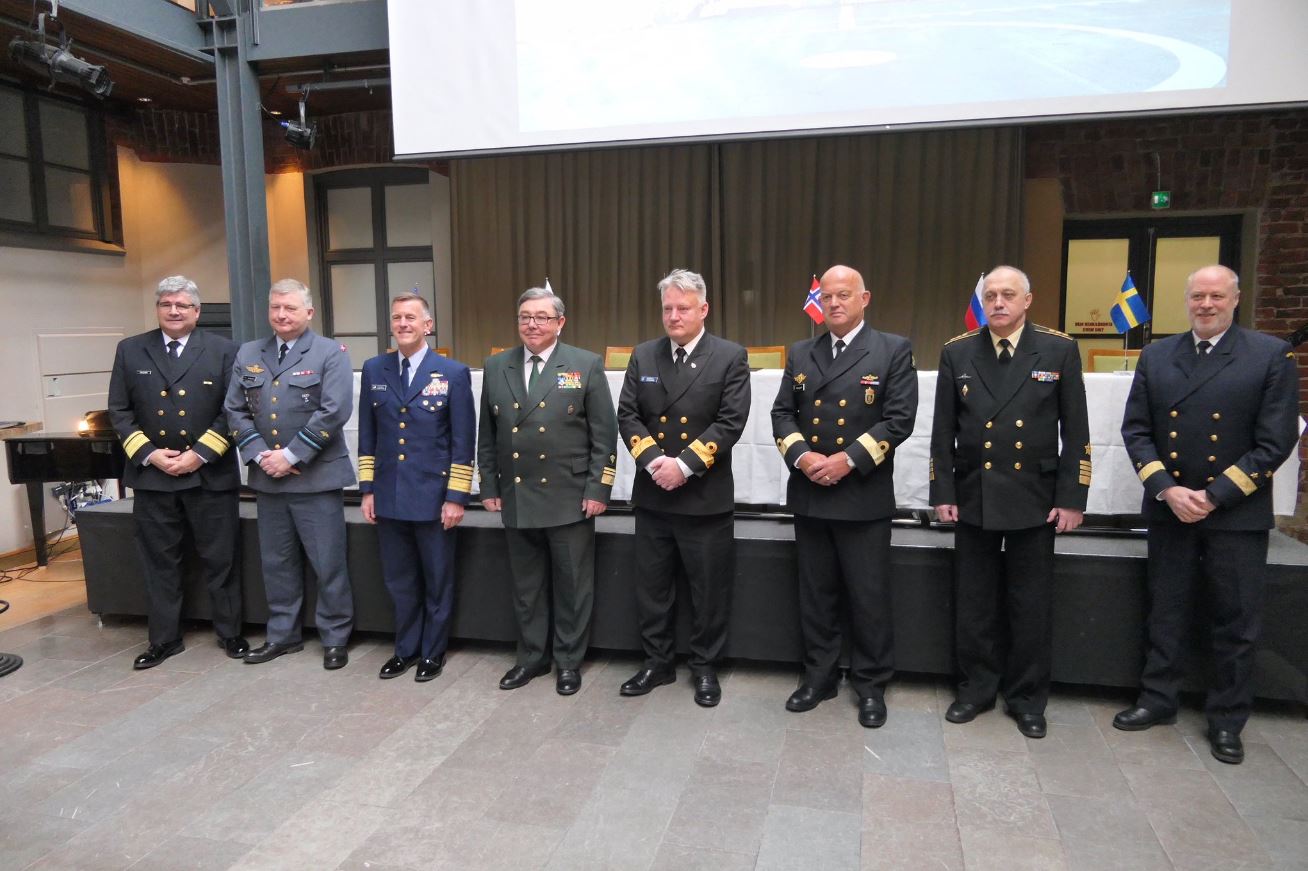
Representatives of the coast guards of Canada, Denmark, Finland, Iceland, Norway, Sweden, the Russian Federation and the United States, gathered in Oulu, Finland last week for a series of meetings of the Arctic Coast Guard Forum (ACGF) Experts and Principals. Photo: Finnish Border Guards/Twitter

A short story about the Arctic Council and Arctic Coast Guard Forum.

“It’s grown up, it’s no longer a new forum, it’s now entering fourth year and it’s got a live exercise under its belt, it’s got a couple of tabletop exercises, the delegations are now familiar with each other, there are strong relationships being built and I think that’s a sign of the forum maturing.”

Information for Coast Guard Veterans and Retirees Filing for Veterans Affairs Disability Compensation Due to Asbestos- and Lead-Related Health Effects—Office of Health Services

An instruction aimed primarily at active duty personnel who might have been exposed to asbestos and/or lead on cutters built prior to 1991 was discussed in an earlier post. Now we get some guidance for those who have left the service. Thanks to Vince Patton who posted this on his Facebook page. Retirees might want to follow him if you have Facebook.

If you were assigned to Coast Guard cutters that were constructed prior to 1991, you may have been exposed to very low levels of asbestos and lead. Recorded levels of exposure were well below the Occupational Safety and Health Administration (OSHA) levels that require medical surveillance examinations.

Routine exposure for asbestos and lead would include working on and berthing in a Coast Guard cutter where there may be small exposed areas of asbestos-containing thermal insulation, a number of torn asbestos-containing floor tiles, and lead dust from lead ballast ingots and lead-containing paint.

Exceptional exposures may have occurred during certain maintenance procedures (e.g. tearing up entire floor surfaces of asbestos-containing floor tiles and torching or sanding surfaces painted with lead-containing paint) without the use of personal protective equipment.

Asbestos- and Lead Related Health Effects
It is very difficult to link lead-related health effects to low level exposures on Coast Guard cutters. Routine exposures to asbestos on Coast Guard cutters could possibly be linked to the following medical conditions:

  • Mesothelioma
  • Asbestos-related cancers (lung, larynx, and ovary). (Note – the linkage for very low levels of exposure for these cancers is not clear.)

VA Disability Compensation Process
The VA has a mechanism for veterans to apply for compensation due to a disability that is the result of an injury, disease or an event in military service. If you experience a health effect believed to be due to exposure to asbestos or lead during military service and you desire to apply for VA disability compensation, you will need to provide evidence that supports the following:

  • There was an event in service that caused the injury or disease;
  • You have a current physical or mental disability; and
  • There is a relationship between your current disability and an event in service.

Additional assistance may be obtained through a VA employee at a VA National Facility or a Veteran Service Organization (VSO).

You should also look at https://www.benefits.va.gov/compensation/apply.asp.

Documentation of Exposure
Veterans and Retirees may document their exposure due to a permanent duty assignment on a Coast Guard cutter constructed prior to 1991 by providing the VA with the following information:

  • Orders for a permanent duty assignment on a Coast Guard cutter.

OR

A Career Summary list of all of permanent duty assignments (if you printed this out from Direct Access prior to separation).

OR

Documentation in your Coast Guard Service Treatment Records (medical records) which states that you had a permanent duty assignment on a specific Coast Guard cutter (if this was recorded).

OR

Military Service Records from the National Archives in St. Louis, Missouri (if you have separated from the Coast Guard prior to 10/1/2006). See https://www.archives.gov/veterans/military-service-records for additional information. Under Information and/or Documents Requested, you should request your entire Official Military Personnel File. The DD-214 will not include information on your permanent duty assignments.

OR

Military Service Records from the Coast Guard Military Records Section/ Personnel Service Center (if you have separated from the Coast Guard on or after 10/1/2006). See http://www.dcms.uscg.mil/PSC/BOPS/PSC-BOPS-C/PSC-BOPS-C-MR/PSC-BOPS-C-MR_PDR/ for additional information. In Section II “Information and/or Documents Requested” of the SF-180 you should request your entire Official Military Personnel File. The DD-214 will not include information on your permanent duty assignments.

Japan Coast Guard expands Liquid-Robotics’ Wave Glider Fleet–NavyRecognition

We have discussed the Liquid Robotics Wave Glider before, as a way to improve Maritime Domain Awareness, noting it is being used by the Brits for fisheries monitoring and by Boeing in support of the US Navy.

Now NavyRecognition brings us a report that the Japanese are using it to monitor the environment providing real time information

Certainly better information about surface currents could help us in search planning.