“Indian Navy’s INS Sunayna Pays Visit to Beira, Mozambique” –BNN

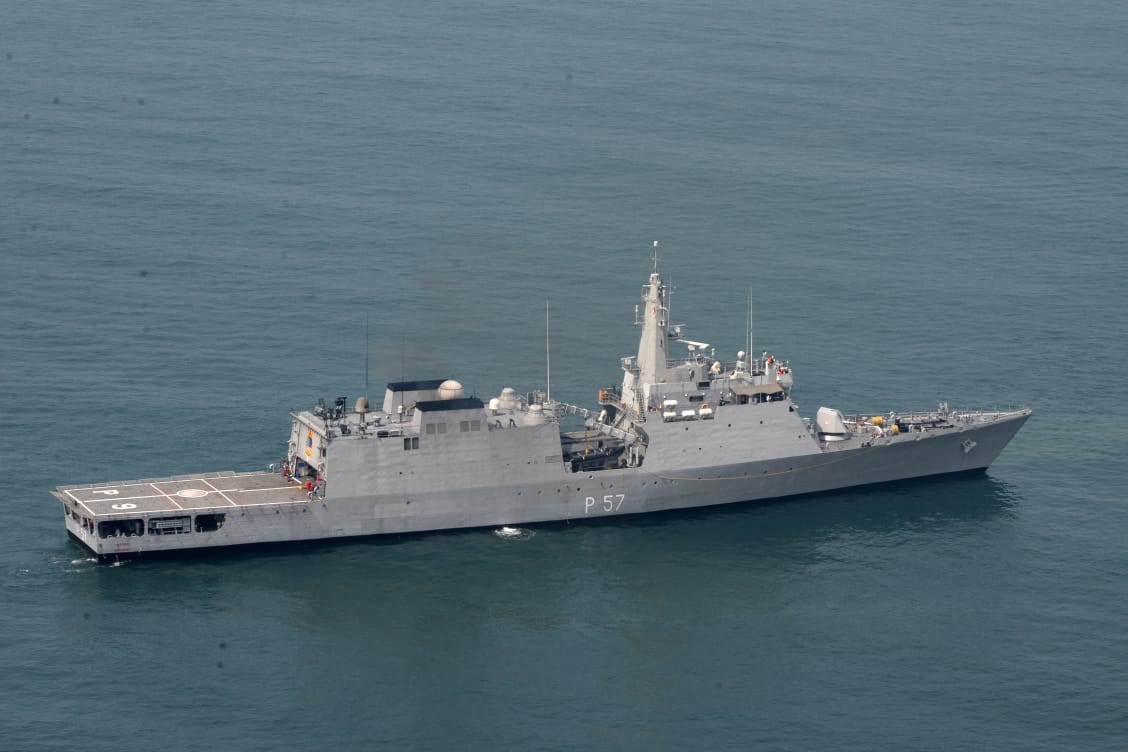
INS Sunanya (P57) at sea, 21 May 2020. Photo Credit: Indian Ministry of Defence.

BNN reports on the visit of the Indian Navy Offshore Patrol Vessel Sunayna to the Nation of Mozambique.

During the port call, personnel from the Indian Navy and the Mozambique Navy engaged in a variety of professional and training engagements, deck visits, and sporting events. Joint training sessions in navigation, fire fighting, damage control, VBSS, and asymmetric warfare were held as part of the maritime partnership exercise.

Sounds like they were engaged in the same sort of “capacity building” the US Coast Guard engages in. Fishing is an important part of the Mozambique economy so Illegal, Unregulated, and Unreported fishing is a problem for them.

There has been increasing cooperation between the US and India in response to Chinese aggressiveness. We might want to spend a little time with the Indian Navy/Coast Guard to gain their insights and benefit the efforts of both nations. Perhaps the Coast Guard should participate in the annual Malabar exercise.

INS Sunayna (P57) is a 105 meter (344 foot) Saryu class Offshore Patrol Vessel. May be worth noting that this visit was done by the Indian Navy rather than the Indian Coast Guard, though they have similar ships.

CG in July 6 USNI Fleet and Marine Tracker, No Mention of UNITAS

The US Naval Institute News “Fleet and Marine Tracker” is continuing to plot the approximate locations of a few Coast Guard units. I first noticed this change in the May 22, 2023 edition.

The July 6 post reported.

U.S. Coast Guard Cutter Stratton (WMSL-752) is underway in the Western Pacific.

and

Coast Guard Cutter Eagle departed Funchal Madeira (Portugal) and is en route to Hamilton, Bermuda.

The post again acknowledged the existence of PATFORSWA. I guess this is going to be boiler plate for all future Fleet and Marine Tracker posts.

U.S. Coast Guard Sentinel-class Fast Response Cutters (FRCs) are forward-deployed to the region under Patrol Forces Southwest Asia (PATFORSWA). (Note this is a broken link–Chuck) PATFORSWA deploys Coast Guard personnel and ships alongside U.S. and regional naval forces throughout the Middle East. Initially deployed in 2003 to support Operation Iraqi Freedom, PATFORSWA is now a permanent presence based out of the Kingdom of Bahrain

What originally caught my eye, when I first saw this post, was the plotted position of USCGC Richard Snyder (WPC-1127), which placed her in the high Arctic, about 2000 miles North of where she was actually reported to be.

The U.S. Coast Guard Cutter Richard Snyder, a Sentinel Class cutter homeported at Atlantic Beach, N.C., teamed with Bermudian authorities this past week in patrols that included a focus on deterring maritime drug smugglers, according to local reports.

The report also reflects the start of the UNITAS 2023 Exercise (have not been able to find the official dates) with six Navy ships in 4th Fleet compared to a typical number of two. One or more Coast Guard cutters are probably involved in the exercise. The only participant I was able to identify was USS New York (LPD-21). Reportedly the exercise will include significant use of unmanned systems.

Coast Guard SAR units, particularly aviation units, get frequent recognition. I appreciate that they are giving Coast Guard surface units some recognition in these posts, but the few mentions don’t reflect the bulk of the work being done by Coast Guard ships.  Perhaps a simple statement of number of large cutters and number underway would be nice.

“As it helps combat unlawful fishing internationally, NGA is ‘posturing’ for an AI-driven future” –DefenseScoop

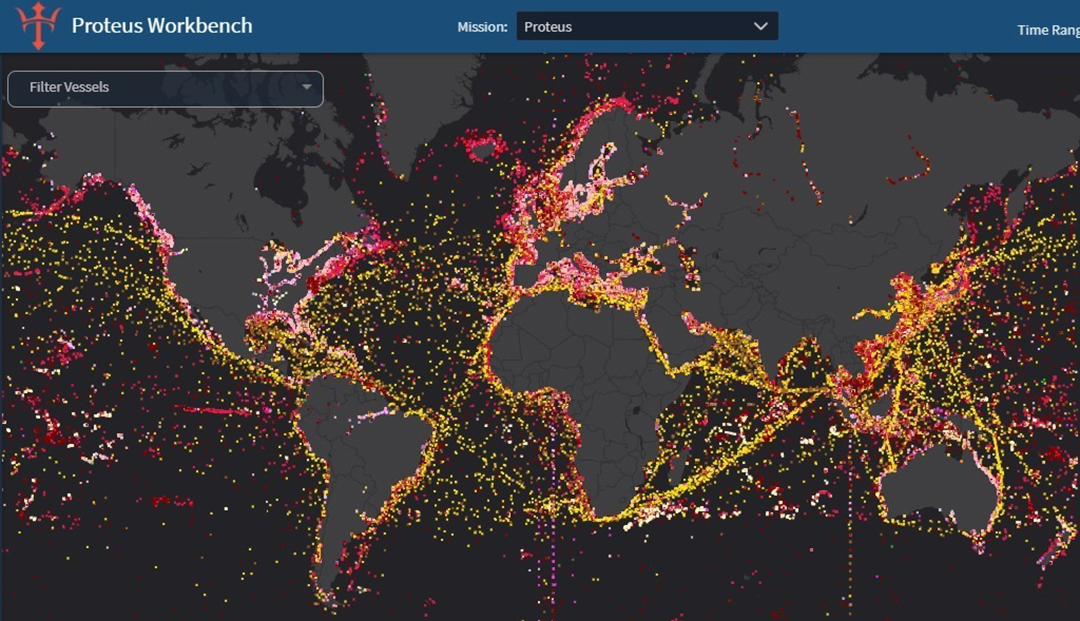
DefenseScoop reports that the National Geospatial-Intelligence Agency (NGA) is using AI to sort data for an application called Enhanced Domain Awareness (EDA) to provide maritime domain awareness information to US and partner countries to help them deal with Illegal, Unregulated, Unreported (IUU) fishing.

“Just to give you a sense of the scale and how much we’re talking about — there’s around 470 U.S. own space-based remote sensing systems that are available today. And that’s going to expand to around 1,400 by 2030, we expect. So globally, there’s about a seven-fold increase in those systems. So the limiting factor isn’t how much of the Earth we can observe or how often — it’s how quickly we can derive insights from that data. And so that’s where, of course, AI and automation comes in. It helps us increase the speed and our capability to react to military and human humanitarian response efforts,” he explained.

This grew out of a SOUTHCOM effort and isn’t limited to IUU.

“When you log into EDA, whether it is on the U.S. side or the partner-nation side, many of the projects that you’ll see in there revolve around different priority lines of effort,” Kurey explained. For Southcom, besides IUU “you’ll find other things like counter-narcotics missions, and things like that. But it’s all encompassing, and you’ll find information and data and projects that I mentioned before will support a tactical environment, operational environment, or strategic messaging,” he said.

The system is being extended to other users.

As the platform continues to mature and blossom, now other combatant commands — including U.S. Northern Command, European Command and Indo-Pacific Command — are beginning to explore how they can integrate it into their own initiatives for data organization and support.

“Coast Guard petitions for formal recognition in US Cyber Command’s force” –DefenseScoop

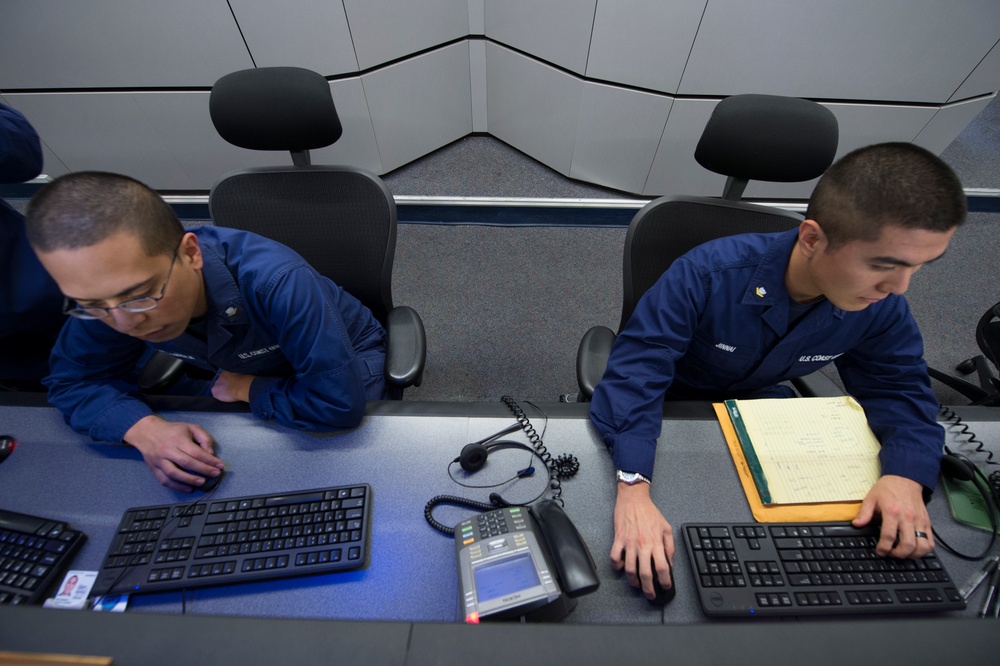
A Coast Guard Information Systems Technician adjusts cables inside a server room at the Telecommunication and Information Systems Command (TISCOM) Jan. 24, 2013. U.S. COAST GUARD / Petty Officer 2nd Class Etta Smith

DefenseScoop reports,

The Coast Guard’s cyber unit is petitioning the Department of Defense to become part of the Pentagon’s cyber army.

What does the Coast Guard get out of this?

Sources indicated it could make the Coast Guard’s Cyber Command eligible for funding designated for the cyber mission force and expand their role when acting in a Title 10 capacity, which is the portion of the law that deals with the armed forces.

What does Cybercom get?

The Coast Guard has always been an asset to the cyber force given its unique law enforcement and port authorities. It can perform roles and missions outside the bounds of the DOD.

In summary:

The Coast Guard is “already teammates with us and they already come to our meetings, all those kind of things, but they will be officially part of the cyber mission force, which is exciting because we can use the authorities that they have on, say like port security,” Brig. Gen. Reid Novotny, special assistant to the director Air National Guard for Cybercom, J5, said at a conference in early June.

“VIDEO: Iranian Navy Warship Fires on Oil Tanker in the Strait of Hormuz” –USNI

The US Naval Institute reports that the Iranian Navy attempted to stop two tankers in the Gulf of Oman. In the second case, shots were fired. In both cases, the Iranian warships departed when US destroyer USS McFaul (DDG-74) arrived on scene.

The Iranian warship that fired on the tanker was armed with a 76mm gun and apparently anti-ship cruise missiles, but additional CNN coverage indicates the weapons fired were “small arms.” There was only minor damage to the tanker and no personnel casualties.

The Iranian vessel seen in the video is one of four Bayandor class corvettes (apparently Bayandor itself) built in Orange, Texas. Two of the class are believed to have been lost to Iraqi force 1982-83. The two remaining ships were commissioned into Iranian service in 1964. They have a full load displacement of 1,135 tons and are 275 feet (83.82 meters) in length with a speed of 20 knots.

Iranian Navy Bayandor (PF-103) class corvette. 29 December 2019. Photo credit: mehrnews via Wikipedia.

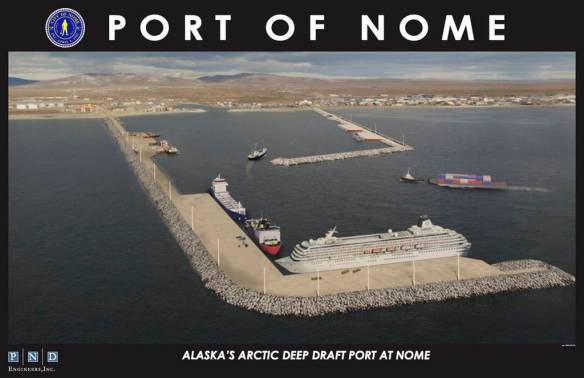
“First US deep water port for the Arctic to host military, cruise ships” –Navy Times

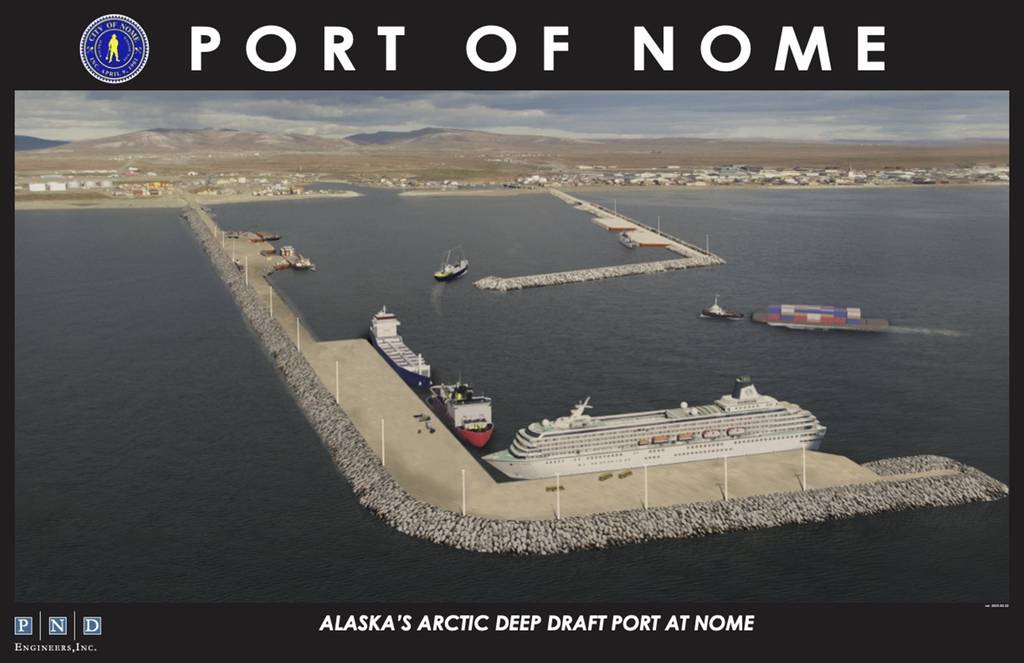
This rendering provided by the City of Nome shows how the Port of Nome, Alaska, will appear following an expansion project that will cost more than $600 million. Shipping lanes that were once clogged with ice for much of the year along Alaska’s western and northern coasts have relented thanks to global warming, and the nation’s first deep water Arctic port should be operational in Nome by the end of the decade. (PND Engineers Inc./City of Nome via AP)

Navy Times reports,

Workers will dredge a new basin 40 feet (12.2 meters) deep, allowing large cruises ships, cargo vessels, and every U.S. military ship except aircraft carriers to dock, Port Director Joy Baker said.
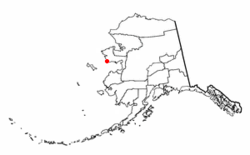
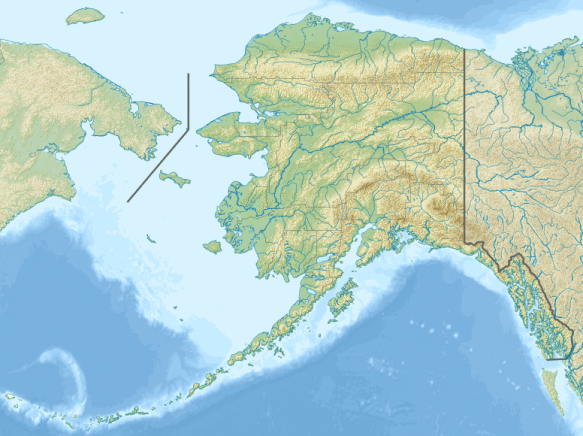
Nome in red. Adapted from Wikipedia’s AK borough maps by en:User:Seth Ilys.

We have been talking about a deepwater port in the area for some time,

Alaska and the Bering Strait

Nome isn’t actually in the Arctic, despite the fact that the US government defines the Arctic to include the Bering Sea. The Arctic Circle runs just a little North of Nome, essentially at the Bering Strait. The Bering Strait connects the Pacific with the Arctic Ocean and is about 44 nautical miles (82 kilometers) wide at its narrowest point. Whoever controls the Bering Strait can regulate traffic between the Pacific and the Arctic Oceans. Having a nearby deepwater port would certainly help, if it were desirable to regulate that traffic. Nome is within 160 nautical miles of the Russian side of the Strait.

Traffic through the Strait has increased and the possibility of a cruise ship disaster in the Arctic is probably a District 17 nightmare, but I think the probability is low that large numbers of CG units will be based at Nome. As noted earlier, I don’t think we will see either large patrol cutters (unless it is the Alex Haley) or FRCs based there but moving one of the Juniper class seagoing buoy tenders there, with its light icebreaking capability might make sense. A medium icebreaker might be a possibility, but that is a very long shot.

As I have noted before, the US Navy’s Pacific Fleet surface ships have not really shown much interest in operating in the Arctic. Their “Arctic” exercises have been in the Gulf of Alaska or little, if at all, North of the Aleutians.

We might see Air Force and Marines in the area in time of War. Airpower and/or shore based anti-ship missiles could control surface traffic through the Strait. Those forces would have to be supplied, which would mean logistics shipping to what we now know will be the deepwater port at Nome. The shipping would presumably require naval protection, air and/or surface.

 

“Greece Receives First Island Class Patrol Vessels From The U.S.” –Naval News

(Since today is the 4th of July) As part of 5th Fleet’s PATFORSWA, crewmembers aboard the U.S. Coast Guard cutter USCGC Adak (WPB-1333) raised the American flag.  U.S. Coast Guard photo by Seaman Frank Iannazzo-Simmons

Naval News reports that four of the six PATFORSWA 110 foot Island Class WPBs are being transferred to the Greek Navy, and it goes on to speculate they may ultimately get all six.

“The four Island-class boats that will join soon the Greek naval fleet are the former Wrangell (WPB-1332), Adak (WPB-1333), Monomoy (WPB-1326) and Aquidneck (WPB-1309).”

The boats are to be refurbished and are expected to be equipped with a 20mm remote weapon station (RWS), the LIONFISH 20 by Leonardo, new “surveillance radar, electro-optical sensor (Naval News verified that it will be a Miltech Hellas product), communications equipment and machine guns will be installed as well.”

The post notes that former US Coast Guard Island class cutters now also serve with Pakistan (Pakistan Maritime Security Agency), Georgia (Georgian Coast Guard), Costa Rica (Costa Rican Coast Guard), and Ukraine (Ukrainian Navy) in addition to the Greek Navy.

Additional transfers can be expected in the future.

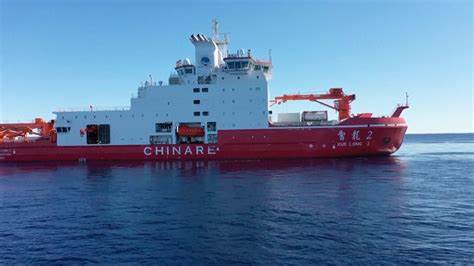
“China to build icebreaker with submersible to reach Arctic seabed” –Interesting Engineering

Chinese Icebreaker

Interesting Engineering has a story about China’s third polar icebreaker expected to be ready in 2025.

It appears to be a relatively light polar icebreaker,

“The proposed length of the vessel is 338 feet (103 meters) and is being built for a displacement of over 10,000 tons (9,200 tonnes). It can accommodate a crew of 80 people and travel at speeds of up to 16 knots…”

That is about the length of the Canadian Arctic and Offshore Patrol Ship, but about 50% heavier. I appears to be a bit smaller than M/V Aiviq that the Coast Guard apparently intends to buy.

Given the relatively small size, it is unlikely this is the nuclear icebreaker that has been talked about.

The article makes much of the ability to support a deepsea submersible, but it does not make clear what special provisions will be provided. Will it have a stern launch or moonpool or just cranes?

Why the submersible, when remotely operated vehicles are now so capable, is also not clear.

I think Russia has at least as much reason to be concerned about China’s icebreaker capabilities as the US, since Russia wants to monetize passage through the Northern Sea Route, and I doubt the Chinese will stand for that in the long run.

Thanks to Mike for bringing this to attention.

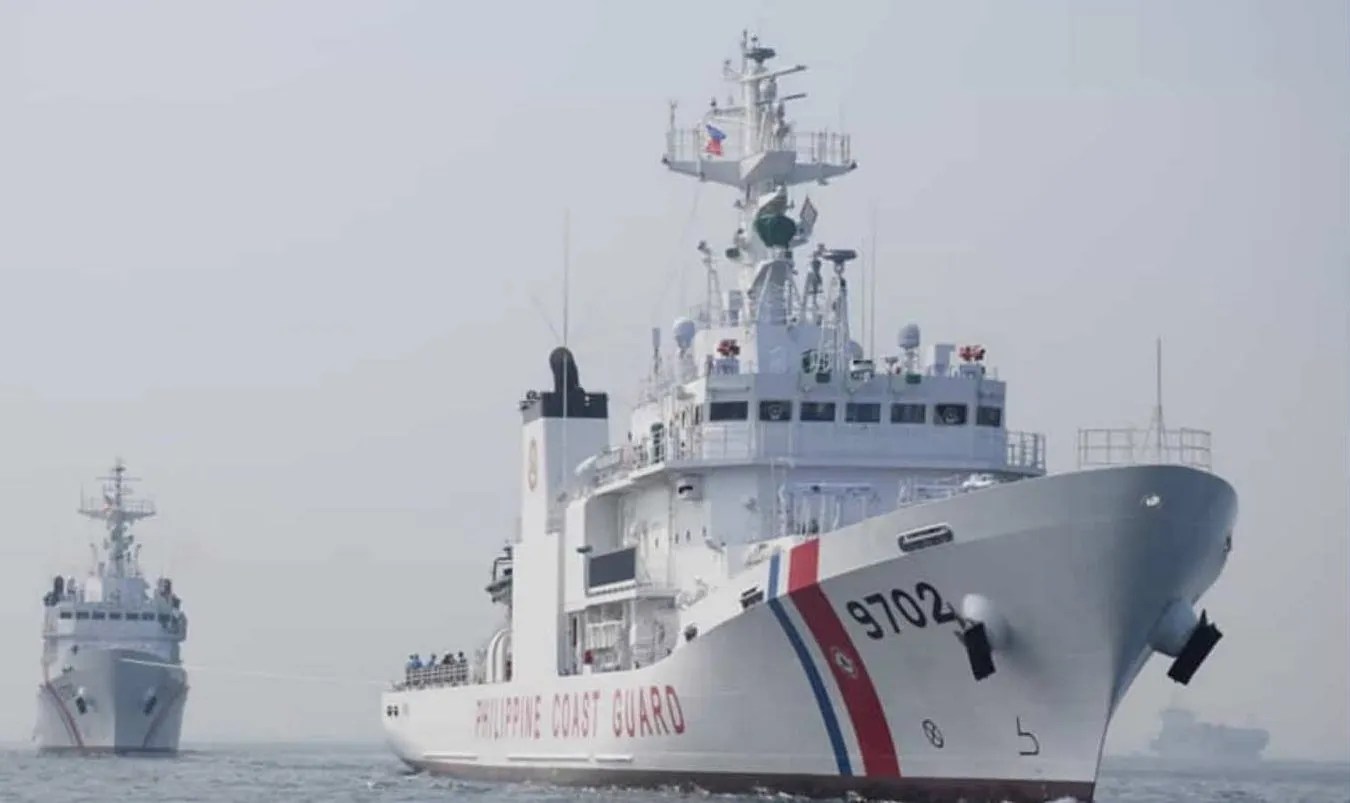
“Indo-Pacific coast guards try to head off a troubling storm” –Asia Times

The Philippine Coast Guard conducted its first-ever trilateral maritime exercise with the United States Coast Guard (USCG) and the Japan Coast Guard (JCG) in waters off Mariveles, Bataan, from June 1-7, 2023. Photo: Philippine Coast Guard

The Asia Times reports, “Indo-Pacific coast guards and maritime law enforcement agencies are taking additional steps to improve their cooperation.”

We have frequently talked about US Coast Guard actions in the Western Pacific, but this gives us a better understanding of the leadership roles being taken by the Coast Guards of Japan, India, Indonesia, and the Philippines, working in cooperation with Vietnam, Malaysia, Singapore, Bangladesh, Cambodia, South Korea, Sri Lanka and the Maldives.

Perhaps someday we will see something like my proposed Combined Maritime Security Task Force Pacific.

The CENTCOM sponsored Combined Maritime Forces provides a good model.

“Message from CGA Superintendent and CG Commandant” –US Coast Guard Academy Alumni Association

I got the following from the CG Academy Alumni Association:

Message from the Superintendent

To the Coast Guard Academy Community/ Family,

I am forwarding on an important message sent today by our Coast Guard Commandant, ADM Linda Fagan, about recent investigations into past Coast Guard Academy sexual assault cases.

[Learn more in this Washington Post article.]

Sexual Assault is a crime and as your new Superintendent I want you to know that the Coast Guard Academy is doing everything it can to eliminate sexual assault and the behaviors that enable it. The lessons we’ve learned over the past decades have helped shape the sexual assault prevention, response, and recovery program in place at the Academy today. This program includes providing the necessary medical, legal, counseling, and administrative resources and support to all victims. It also includes pursuing appropriate accountability in accordance with revised laws and policy. Training on prevention, response, and recovery policies and techniques are part of our core curriculum for faculty, staff and cadets.

The Coast Guard Academy is committed to fostering a culture of trust, respect and dignity that does not tolerate sexual assault or its enabling behaviors. I am heartbroken that members were hurt at this institution. We are a family here. We need every member to understand this and care for each other; together we can and must eradicate this harmful behavior.

With Great Respect,

RADM Michael Johnston

Message from the Commandant

To our Fellow Coast Guard Members:Recent news accounts have reported on past sexual assaults that occurred at the Coast Guard Academy and how we did not address them correctly. The Master Chief Petty Officer of the Coast Guard and I write to assure you we have advanced as an organization since then, having taken many important steps to better ensure everyone here feels safe from sexual assault and harassment. Support for your safety, wellbeing, and inclusion, regardless of who you are, is a bedrock of our service character and a critical component of our core values of honor, respect, and dedication to duty.

In 2014, our Coast Guard Investigative Service (CGIS) was made aware of a sexual assault allegation at our Coast Guard Academy that was alleged to have occurred years earlier and was mishandled at the time. In response, CGIS began an investigation which followed up on all leads related to sexual assaults at the Coast Guard Academy that were alleged to have occurred between 1988 and 2006, a period preceding our implementation of key changes to our policies and practices regarding sexual assault and response.

At the conclusion of CGIS’s investigation, the Coast Guard took action to hold accountable those known perpetrators who remained within its jurisdiction. In addition, we reached out to all known victims and offered them individual, in-person meetings to provide each of them with information on their specific cases and access to support services.

The CGIS investigation was not widely disclosed at the time. We recognize transparency is critical to building trust not only of victims, but all cadets and personnel at the Academy and across the Coast Guard. Transparency helps drive accountability and the realization of the organization’s core values. As your Commandant, I am personally committed to a culture of transparency and accountability regarding our efforts to prevent and address the scourge of sexual assault.

Over the past several years, we have made major improvements to our policies regarding sexual assault, including prevention training, investigative procedures, prosecution, victim care, and recovery services. We have worked closely with the Department of Defense to establish new structures to support the historic reforms to the military justice system, which will remove the prosecution of sexual assault and sexual harassment from the chain of command. A number of these improvements are described here. Information on sexual assault reporting and recovery services, and other resources, can be found here. I encourage any workforce member who has or is experiencing sexual assault or harassment to seek assistance immediately. We remain committed to supporting the needs of victims, improving access to justice, holding perpetrators accountable, and delivering a coordinated response to any sexual assault or harassment.

By not taking appropriate action at the time, we may have further traumatized the victims, delayed access to care and recovery, and prevented some cases from being referred to the military justice system for appropriate accountability. We own this failure, and on behalf of the United States Coast Guard, MCPOCG and I apologize to each victim and your loved ones.

The United States Coast Guard holds every one of us to the highest personal and professional standards and does not tolerate any form of abuse. As your Commandant, I will do everything in my power to ensure those high standards are met.

Yours in service,

ADM Linda Fagan

Commandant