This Day in Coast Guard History, March 1

Based on the Coast Guard Historian’s timeline, https://www.history.uscg.mil/research/chronology/
With inspiration from Mike Kelso

 March 1

1876  Nuova Ottavia, an Italian vessel, grounded near the Jones Hill North Carolina Life-Saving Station.  The rescue attempt by the crew of that station resulted in the loss of seven surfmen, the first deaths in the line of duty since the service began using paid crews in 1870.  Among the dead was African-American Surfman Jeremiah Munden, the first African-American surfman to die in the line of duty.

1902  The first regular light stations in Alaska were established at Southeast Five Finger Island and at Sentinel Island.  Both were on the main inside passage between Wrangell Strait and Skagway.

1927  The U.S. Lighthouse Service put into effect a system of broadcasting radio weather reports by four lightships stationed along the Pacific Coast.

1933  In the interest of administrative economy and efficiency, the 13th and 14th Lighthouse Districts were consolidated with the 15th Lighthouse District.  Also, the aids to navigation on the entire Mississippi River system were placed in charge of a civilian lighthouse engineer as superintendent.  This relieved the Army engineers detailed for that duty.  The offices at Rock Island, Illinois and Cincinnati, Ohio were discontinued, and all the river work was placed under a single office at St. Louis, Missouri.

1975  The Coast Guard issued regulations that became effective on March 1, 1975 that required an emergency position indicating radio beacon (EPIRB) on small passenger vessels engaged in ocean and coastwise service.
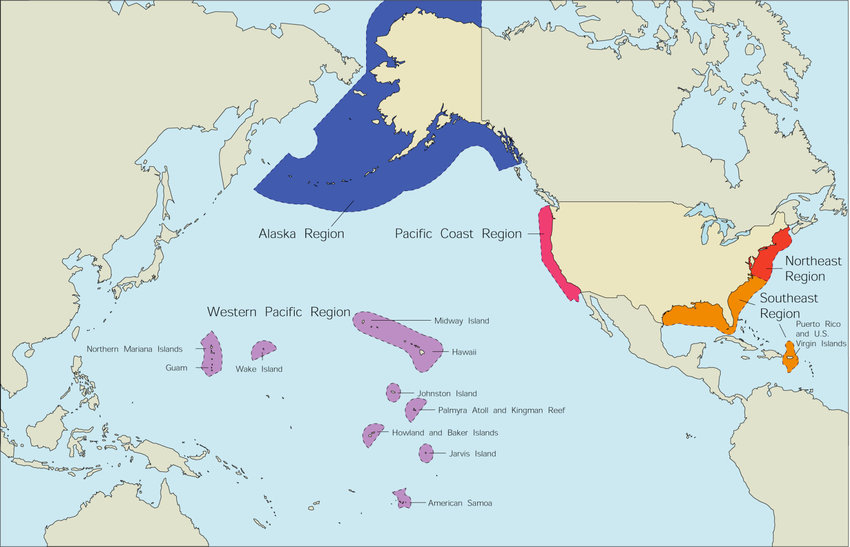
1977  The Coast Guard began enforcement of the Fishery Conservation and Management Act with 19 cutters and 17 aircraft patrolling within the 200-mile Fishery Conservation Zone.

2003  Administrative control of the Coast Guard transferred to the newly created Department of Homeland Security from the Department of Transportation, where it had served since April 1, 1967.

Courtesy Photo | USCGC Escanaba (WMEC 907) and USCGC Richard Snyder (WPC 1127) practice maneuvering with the Royal Canadian Navy’s HMCS Goose Bay (MM 707) in the Davis Strait on Aug. 13, 2021. In Operation Nanook, the U.S. Coast Guard seeks to work collaboratively with other international partners to enhance collective abilities to respond to safety and security issues in the High North through the air and maritime presence activities, maritime domain defense, and security exercises. (Photo courtesy Royal Canadian Navy)

2015  Her Majesty’s Canadian Ships Goose Bay and Shawinigan, in collaboration with the U.S. Navy and in support of the U.S. Coast Guard, assisted in seizing more than 1000 kg of cocaine while patrolling in the Caribbean Sea, as part of Operation CARIBBE.  Following the initial search of a suspect vessel by a boarding team from USS Kauffman, HMCS Goose Bay was tasked to conduct an additional inspection.  A subsequent boarding and search of the suspect vessel by the USCG LEDET embarked with HMCS Goose Bay, supported by HMCS Shawinigan, resulted in the seizure of 1017 kg of cocaine.

Coast Guard Cutter Alex Haley (WMEC 39) transits inbound Dutch Harbor while on patrol in the Gulf of Alaska. As the only major cutter homeported in Alaska, Alex Haley’s primary missions are search and rescue, international/domestic fisheries enforcement, and homeland defense. (U.S. Coast Guard Photo by Lt. j.g. John Walsh)

2015  CGC Alex Haley returned to Kodiak, Alaska, following a successful 70-day deployment patrolling more than 10,800 miles throughout the Bering Sea and Aleutian Islands.  Alex Haley,  the “Bulldog of the Bering,” departed Kodiak on December 1, 2014 and spent 70 days conducting law enforcement and community outreach operations in the Bering Sea and Aleutian Islands.  During the deployment, Alex Haley’s crew performed 41 at sea domestic fisheries enforcement boardings and covered more than 5,000 square miles in search efforts for the sunken Korean fishing vessel 501 Oryong.

SAN FRANCISCO. The Coast Guard Cutter Waesche transits through the San Francisco Bay for the first time en route to its homeport of Alameda, Calif., Feb. 28, 2010. The Waeshe is the second Legend Class Cutter and is scheduled to be commissioned in May.(U.S. Coast Guard photo by Petty Officer 3rd Class Kevin Metcalf)

2015  CGC Waesche returned to homeport at Coast Guard Island in Alameda following a 79-day, 13,000 nautical-mile patrol in the Eastern Pacific Ocean.  Since its departure on December 12, 2014, Waesche patrolled international waters off the coast of Central America, disrupting Transnational Organized Crime networks through joint inter-agency counter-drug operations, seizing nearly 1,400 lbs of cocaine with an estimated value of more than $22 million.  During the last four weeks of its deployment, crewmembers aboard Waesche spent time off the coast of San Diego completing rigorous proficiency exercises geared toward sharpening the unit’s readiness to conduct the many operations that are vital to the Coast Guard’s military, homeland defense, and law enforcement missions. Many of these exercises included helicopter operations, gunnery, shipboard firefighting and damage control, and medical training. Additionally, they practiced national defense scenarios to ensure seamless integration with partners from the Department of Defense.

This Day in Coast Guard History, February 28

Based on the Coast Guard Historian’s timeline, https://www.history.uscg.mil/research/chronology/
With inspiration from Mike Kelso

February 28

1867  As ordered by the Treasury Department, each officer of Revenue Cutter Service, while on duty, was entitled to one Navy ration per day.

1871  Congress passed 16 Stat. 458 which addressed shortcomings in previous legislation regarding the inspection and certification of steamboats and their crews.  This Act established the Steamboat Inspection Service (SIS) within the Department of Treasury headed by a Supervisory Inspector General answerable to the Treasury Secretary.  The Act also provided SIS inspectors with greater authority over more aspects of the maritime field.

1942  Certain duties of the former Bureau of Marine Inspection and Navigation were transferred to the Coast Guard temporarily by Executive Order 9083.  The transfer was made permanent on July 16, 1946.  Also, the U.S. Maritime Service was transferred to the Coast Guard from the War Shipping Administration on this date.

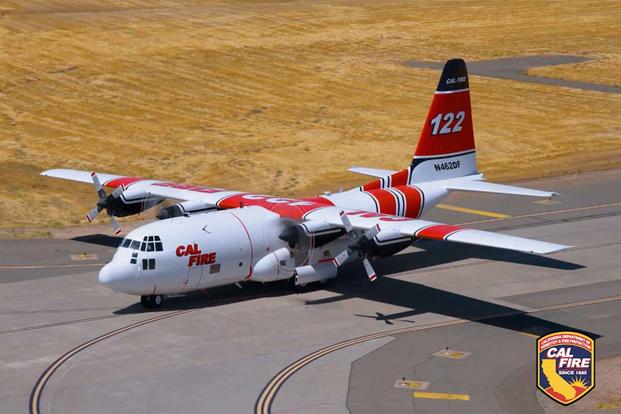
California officials have added a C-130 Hercules cargo plane to the firefighting fleet of the California Department of Forestry and Fire Protection, the state’s primary firefighting agency. (Courtesy Cal Fire/TNS)

1963  With the arrival of the ferry crew on this date to accept delivery of the HC-130B CGNR 1351 at Marietta, Georgia, the Coast Guard completed its program for the procurement of 12 long range, long endurance, four engine landplanes.  The aircraft were assigned to Air Station Elizabeth City and Air Detachments Argentia, San Francisco, and Barbers Point.

2004  Coast Guard units responded to an explosion aboard the 570-foot Singapore-flagged tanker Bow Mariner off the coast of Chincoteague, Virginia.  The Bow Mariner was carrying 6.5 million gallons of industrial ethanol when it exploded and sank.  The Coast Guard rescued six survivors.

USCGC Steadfast (WMEC 623)

2015  CGC Steadfast returned to its homeport of Astoria after a two-month Joint Interagency Task Force (JIATF) deployment.  Steadfast partook in multiple Coast Guard missions ranging from search and rescue, to counter-narcotics, to securing U.S. borders through enhancement of international relations, and coordination with other cutters and aircraft allowing the U.S. to stop drug trafficking before it reaches U.S. borders.  While returning from patrol off the coast of Central America, Steadfast offloaded approximately 725 kilograms of cocaine in San Diego.  The seized cocaine is worth an estimated wholesale value of more than $23 million.  The offload is a result of a successful drug interdiction in the Eastern Pacific Ocean on January 23, 2015.  While on a routine patrol, a maritime patrol aircraft working in conjunction with JIATF assets detected a suspicious go-fast vessel south of El Salvador.  Using information provided by the aircrew, Steadfast was able to vector the cutter’s Over-the-Horizon boat to intercept and conduct a law enforcement boarding of the suspect vessel.  Once aboard the go-fast vessel, the Coast Guard boarding team found 16 bales of contraband hidden throughout the 35-foot vessel that tested positive for cocaine.  The Coast Guard took three suspected smugglers into custody.  This seizure is one of many interdictions in the Eastern Pacific in recent months due to an increased presence of Coast Guard cutters in support of the Western Hemisphere Strategy.  The Western Hemisphere Strategy has been implemented by the Coast Guard and various other government agencies to protect U.S. borders by stopping illicit trafficking at the source.  Steadfast’s interdiction was part of Operation Martillo, which is one component in the United States government’s whole-of-government approach to countering the use of the Central American littorals as transshipment routes for illicit drugs, weapons, and cash.  Prior to the visit to San Diego, Steadfast participated in a North American Maritime Security Initiative (NAMSI) exercise off the coast of Ensenada, Mexico, February 21-22, 2015.

“USCG Polar Security Cutter Program Offers DOGE An Easy ‘Win’”–Forbes

Forbes’ always perceptive Craig Hooper takes a look at the Polar Security Cutter program and finds it ripe for cancellation, “years late, wildly over-budget, and both the budget and the schedule are at risk of slipping even further into the red…”

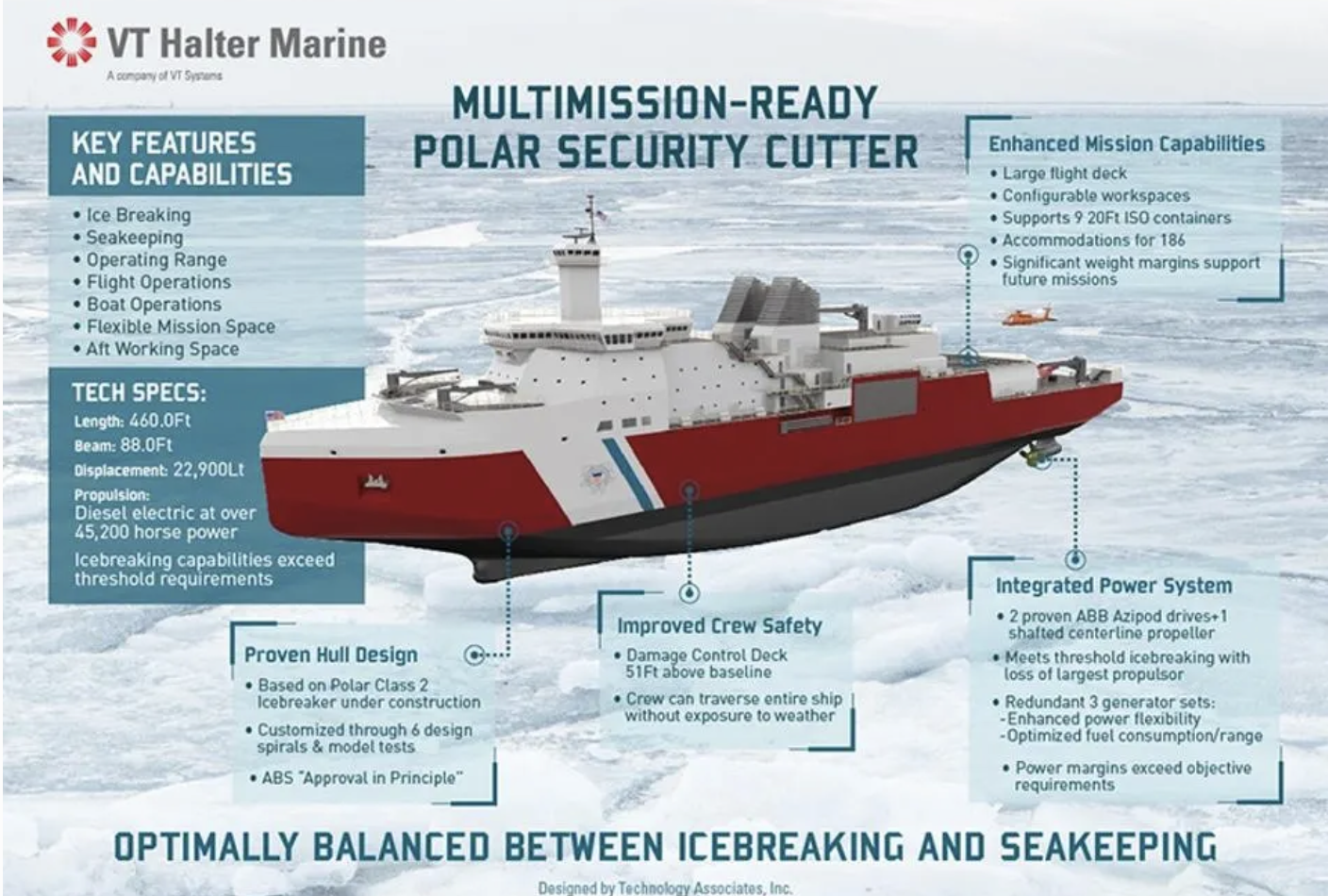
I still want to know who decided that the Coast Guard should award this critically important contract to a relatively inexperienced and less than fully successful shipyard even though they had failed to offer a proven design as had been required by the original solicitation and apparently repeatedly lied that the design was building (See the graphic from VT Halter above, “Proven Hull Design”).

I don’t know enough to agree that the Polar Security Cutter contract should be cancelled, but I do think Hooper would agree that it is time to start procurement of the Medium Icebreakers we know we need, even if the first is to be built in a foreign yard.

Given his comments on the Offshore Patrol Cutter (OPC) program in the same article, I think he might also agree that the Coast Guard should be looking at an alternate design for a medium endurance cutter replacement to be built in lieu of at least some of the planned OPCs.

The first OPC has yet to be delivered, and the costs are likely to increase. If the PSC aligns with the OPC’s ugly performance trends, starting PSC construction with this amount of design uncertainty puts the Coast Guard at real risk of an even bigger fiasco…Sadly, these Coast Guard tastemakers don’t reflect that the building rate–as it is now–appears unable to meet the positively glacial building pace set by years-late and massively over-budget Offshore Patrol Cutter.

Thanks to Paul for bringing this to my attention. 

“Strengthening Pacific Security: U.S. Shiprider Agreements” –Real Clear Defense

Following efforts with Kiribati partners, the USCGC Oliver Henry (WPC 1140) crew transit in the Republic of Marshall Islands Exclusive Economic Zone during the next leg of their expeditionary patrol on Feb. 24, 2024. Underway in support of Operation Blue Pacific, the cutter crew showcased the effectiveness of the U.S. and RMI maritime bilateral agreement, conducting a shared patrol with shipriders emphasizing collaborative efforts in maritime safety, security, and stewardship in terms of resource protection. (U.S. Coast Guard photo)

Real Clear Defense provides an overview of the nature and importance of Coast Guard ship rider agreements with Pacific Island nations.

U.S. Coast Guard Forces Micronesia Sector Guam Commander Capt. Nicholas R. Simmons and the Honorable Joses R. Gallen, Secretary of Justice, Federated States of Micronesia, signed an expanded shiprider agreement allowing remote coordination of authorities, the first of its kind aboard the USCGC Myrtle Hazard (WPC 1139) in Guam, on Oct. 13, 2022. The agreement will enable to U.S to act on behalf of the FSM to combat illicit maritime activity and to strengthen international security operations. (U.S. Coast Guard photo by Chief Warrant Officer Sara Muir)

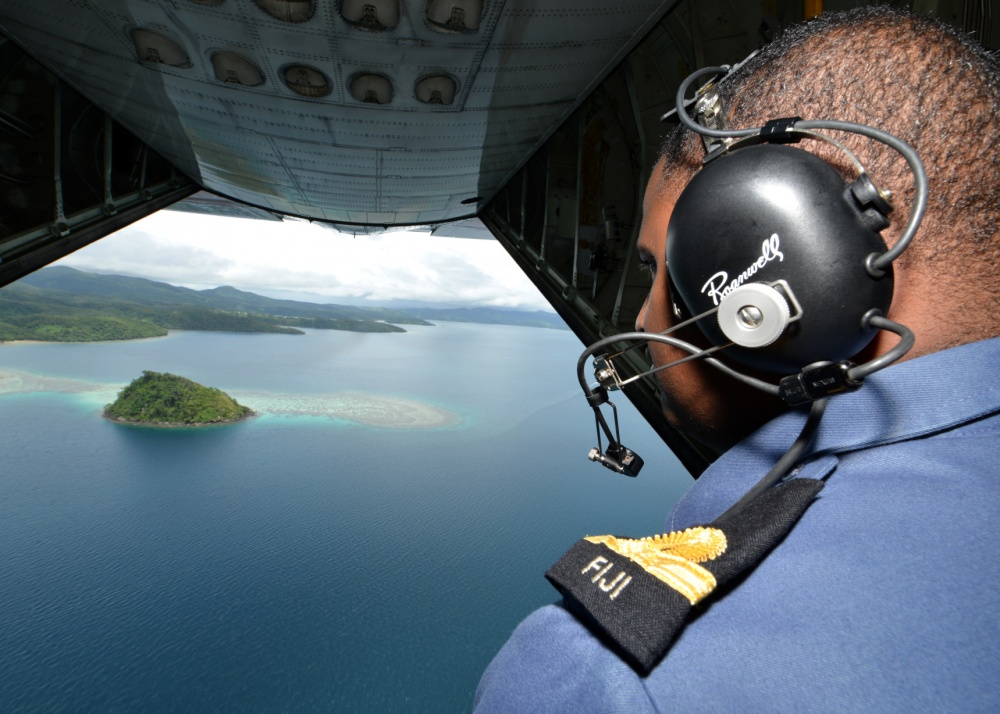
Fijian navy Sub-Lt. Opeti Enesi looks out from an Air Station Barbers Point HC-130 Hercules over the Fijian Islands, Dec. 8, 2018. The Hercules aircrew was providing support for a Fijian navy patrol boat during law enforcement operations. (U.S. Coast Guard photo by Petty Officer 3rd Class Matthew West/Released)

This Day in Coast Guard History, February 27

Based on the Coast Guard Historian’s timeline, https://www.history.uscg.mil/research/chronology/
With inspiration from Mike Kelso

February 27

1925  An Act of Congress repealed the law providing a ration allowance for keepers of lighthouses and increased their salaries correspondingly.  This change was not only advantageous to the light keepers, but also simplified office work.

iceberg patrol

PB-1G, CG-77249, on runway in Argentia, Newfoundland, running up engines, International Ice Patrol, 15 February 1954. Photo No. 021554-01. Original caption states: “U.S. Coast Guard plane, PB-1G (B-17), taking off on a 9-hour patrol.”

1949  Aerial ice observation flights by long-range aircraft operated from Argentia, Newfoundland.  An International Ice Patrol by vessels was neither required nor established during the 1949 season and it was the first time that aircraft alone conducted the ice observation service.

The U.S. Coast Guard Cutter USCGC Coos Bay (WAVP-376). Originally USS Coos Bay (AVP-25) was a Barnegat-class small seaplane tender commissioned by the U.S. Navy for use in the Second World War. From 1949 to 1966 she was loaned to the U.S. Coast Guard, first designated WAVP-376, later WHEC-376. After her return to the Navy, the Coos Bay was struck from the Naval Register and on 9 January 1968 she was expended as target by the guided missile destroyer USS Claude V. Ricketts (DDG-5), and 35 aircraft, 200 km (120 mi) off the coast of Virginia (USA).

1953  CGC Coos Bay, on Ocean Station Echo, about half-way between Bermuda and the Azores, rescued the crew of 10 from the U.S. Navy patrol plane that was forced to ditch in the Atlantic Ocean.

USCGC Dallas

2003  CGC Dallas was ordered to deploy overseas to support Operation Enduring Freedom and to prepare for future contingencies.  She was underway on patrol when she received the order from the Atlantic Area commander to sail overseas to the Mediterranean.  Dallas deployed with an HH-65B Dolphin helicopter and 7-member aircrew from Coast Guard Air Station Atlantic City, New Jersey.

2004  The Coast Guard repatriated 531 Haitian migrants to Port-au-Prince, Haiti, after they were rescued in the Windward Pass. The migrants were from 13 boats stopped since February 21, 2004.  The repatriations were completed by three cutters: CGC Valiant transported 290 migrants, CGC Vigilant delivered another 241, and CGC Nantucket escorted the cutters for safety and security. The migrants were turned over to the Haitian coast guard.

“USS ST. LOUIS (LCS 19) COMPLETES MAIDEN DEPLOYMENT TO FOURTH FLEET” –SURFLANT / Freedom Class LCS Missions

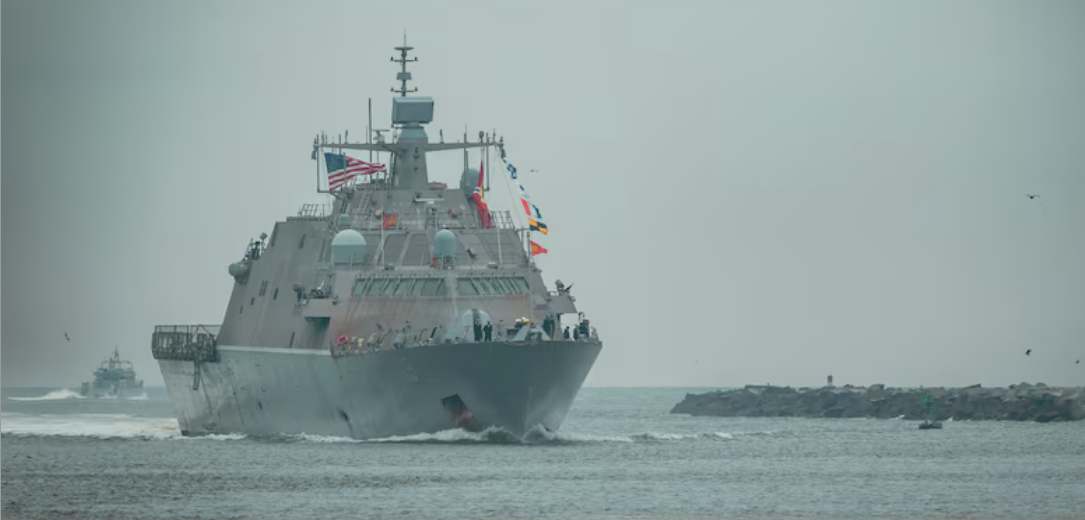
NAVAL STATION MAYPORT, Fla. (Feb. 24, 2025) – The Freedom-variant Littoral Combat Ship USS St. Louis (LCS 19) makes her way back into the basin at Naval Station Mayport, Feb. 24, 2025. LCS 19 deployed in June of 2024 operating primarily in the Caribbean Sea and Eastern Pacific Ocean. (U.S. Navy photo by Mass Communication Specialist 1st Class Brandon J. Vinson)

Below is a US Navy Surface Forces Atlantic (SURFLANT) news release. The length of her eight month deployment is remarkable particular considering it is with the 4th Fleet (Latin America and the Caribbean). That she apparently made 8 months without a catastrophic breakdown seems to bode well for the health of this class after a history of mechanical problems.

Apparently she was employed in drug interdiction. She “embarked…U.S. Coast Guard Law Enforcement Detachments (LEDET) 105 and 407, disrupted and confiscated over $100 million worth of illicit contraband in five different operations…”

Undoubtably at least one of the LEDETs was embarked during exercise UNITAS 2024. We knew this included “U.S. Coast Guard (USCG) Tactical Law Enforcement Team (TACLET) Pacific Law Enforcement Detachment (LEDET); and USCG Maritime Security Response Team East (MSRTE) Direct Action Section.”

Ever since the Navy decommissioned the last of their Oliver Hazard Perry (FFG-7) class frigates in 2015, there has been speculation and anticipation that Littoral Combat Ships would be regularly employed to do the Drug Interdiction mission that the FFG had been doing. It seemed to make a lot of sense, particularly with regard to the Freedom Class ships, all of which are based in Mayport, Florida, near drug transit zones, but right now it still seems to be treated as an irregular filler mission rather than a primary.

By the end of 2025, the last two LCS, one Freedom class and one Independence class,  should be commissioned. The projected fleet is ten Freedom class, all based in Mayport, FL, and 15 Independence class, all based in San Diego. The Independence class (all of which have even hull numbers) have essentially taken on the Navy’s mine countermeasures mission. The Freedom class, with odd hull numbers, are now nominally devoted to anti-surface missions. What they are doing does not get a lot of visibility.

In 2018, ten years after the first LCS was commissioned, the question was, Will We Start Seeing LCS in SOUTHCOM?

In 2022 it seemed that four to six LCS might be assigned to 4th Fleet, “Could the LCS fleet be getting a new mission?” –Navy Times.

It’s not that the Navy is not doing anything, but commitments seem half hearted. Is this changing? With the new administration’s changed priorities, will they and Fourth Fleet start doing alien migrant interdiction?


24 February 2025–USS St. Louis (LCS 19), a Freedom-variant Littoral Combat Ship (LCS), returned to Naval Station Mayport this week, concluding its maiden deployment to the U.S. Fourth Fleet Area of Responsibility (AOR). The eight-month deployment, which lasted from June 15, 2024 to February 24, 2025, marked a series of groundbreaking achievements that underscore the capabilities of the LCS platform and its growing contributions to naval operations.

While assigned to TASK FORCE 45/Destroyer Squadron 40, operating primarily in the Caribbean Sea and Eastern Pacific Ocean, St. Louis, embarked Helicopter Maritime Strike Squadron (HSM) 50 Detachment 4, and U.S. Coast Guard Law Enforcement Detachments (LEDET) 105 and 407, disrupted and confiscated over $100 million worth of illicit contraband in five different operations, significantly hampering the activities of transnational criminal organizations.

“From our first week in theater, the crew demonstrated its tactical acumen in locating and intercepting illicit traffickers. Most of these interdictions were conducted at night, requiring long days and late hours but the crew stayed immensely resilient. I am very proud of what the team accomplished,” said Cmdr. T.J. Orth, USS St. Louis’ Commanding Officer.

In August, St. Louis transited the Panama Canal and operated in the Pacific Ocean for the first time, making history as the first FRE-variant LCS to travel as far south as Valparaíso, Chile when she participated in the 65th iteration of UNITAS, the world’s longest-running multinational maritime exercise. Alongside naval forces from 44 countries, the ship showcased its capabilities in maritime interoperability, enhancing ties with partner nations and furthering regional stability.

After returning through the Panama Canal, St. Louis received new tasking to support U.S. Southern Command’s Joint Task Force-Bravo as that command responded to the deteriorating security situation in Haiti. St. Louis served as a fueling station and Search and Rescue force for 1st Battalion, 228th Aviation Regiment (AVN REGT) UH-60 Blackhawks conducting evacuations out of Haiti. To prepare, St. Louis and 1-228th AVN REGT conducted more than 50 deck landings. This successful integration expanded the ship’s operational versatility, paved the way for future joint missions, and underscored the potential for cross-branch collaboration in dynamic environments.

To wrap up USS St. Louis’ maiden deployment, St. Louis Sailors showed their flexibility and capacity to rapidly deploy in support of Joint Task Force Operation Southern Guard onboard U.S. Naval Station Guantanamo Bay, Cuba. Sailors supported the expansion of the Maritime Operations Center (MOC) in preparing the MOC to receive up to 2,000 illegal aliens, erecting 50 tents and setting up several hundred cots in several days. Operation Southern Guard is highlighting effective interagency collaboration, as the Department of Homeland Security (DHS) oversees the operation.

“We saw a lot of ‘firsts’ on this ship’s first deployment and it was amazing to see what this ship and crew was capable of. Looking back, this deployment demonstrated the growing potential for Freedom class LCS and the support they can provide not just in the Caribbean, but in the entire Fourth Fleet AOR,” said Cmdr. Lee Shewmake, USS St. Louis’ executive officer. “There were many lessons learned that the crew took to heart and put in practice as deployment went on, and I believe that is what enabled our success over the past seven months.”

“St. Louis demonstrated the great potential of the LCS Freedom class, not only in executing its assigned missions but also in breaking new ground for the community. The professionalism and dedication of this crew have laid a strong foundation for the future of LCS operations,” said Master Chief Roderick Bolton, St. Louis’ Command Master Chief. “USS St. Louis returns home with its crew proud of their achievements and eager to share lessons learned from this historic deployment. As the U.S. Navy continues to evolve, St. Louis has proven itself a capable and innovative platform, ready to meet the challenges of tomorrow.”

USS St. Louis’ maiden deployment to Fourth Fleet was a resounding success, marked by numerous milestones and contributions to naval strategy. The ship’s accomplishments highlight the flexibility and utility of the Littoral Combat Ship platform in tackling modern challenges.

This Day in Coast Guard History, February 26

Based on the Coast Guard Historian’s timeline, https://www.history.uscg.mil/research/chronology/
With inspiration from Mike Kelso

February 26

Portrait of Hamilton authoring the first draft of the U.S. Constitution in 1787

1793  Alexander Hamilton, first Secretary of the Treasury, submitted to the Senate the first official list of cutters with stations, officers’ names, rank, and dates of commission.

1984  Five people died, three were injured, and 22 rescued when the tanker American Eagle exploded 180 miles southeast of New Orleans.  An AIRSTA New Orleans HH-3 took the three injured crewmen ashore while a British tanker watched over the crippled ship until a commercial tug could arrive.  The next day the American Eagle started to break up and sink.  The 24 remaining crewmen abandoned ship.  Oil rig supply boats and a Coast Guard helicopter recovered 22.  The other two became the subject of an HU-25 search, but the SAR case was suspended after three days.

This Day in Coast Guard History, February 25

Based on the Coast Guard Historian’s timeline, https://www.history.uscg.mil/research/chronology/
With inspiration from Mike Kelso

February 25

1799  Congress passed “An act respecting quarantines and health laws”, superseding the Act passed on May 27, 1796 (1 Stat. L., 619). The revenue cutters were again authorized to enforce quarantine laws.

USRC Eagle under full sail, in a painting by Patrick O’Brien. She was a topsail schooner, standard in revenue cutters of her period;

1799  Congress passed “An Act for the augmentation of the Navy” that authorized President John Adams to place the revenue cutters in the naval establishment.  This was done in response to the Quasi-War with France and it had the effect of “redefining the maritime character of the Revenue Cutter Service and making it a service with the dual character of a military establishment and of a maritime service” (Irving King, George Washington’s Coast Guard, p. 152).

1825  Congress empowered the Revenue Marine to enforce state quarantine laws.

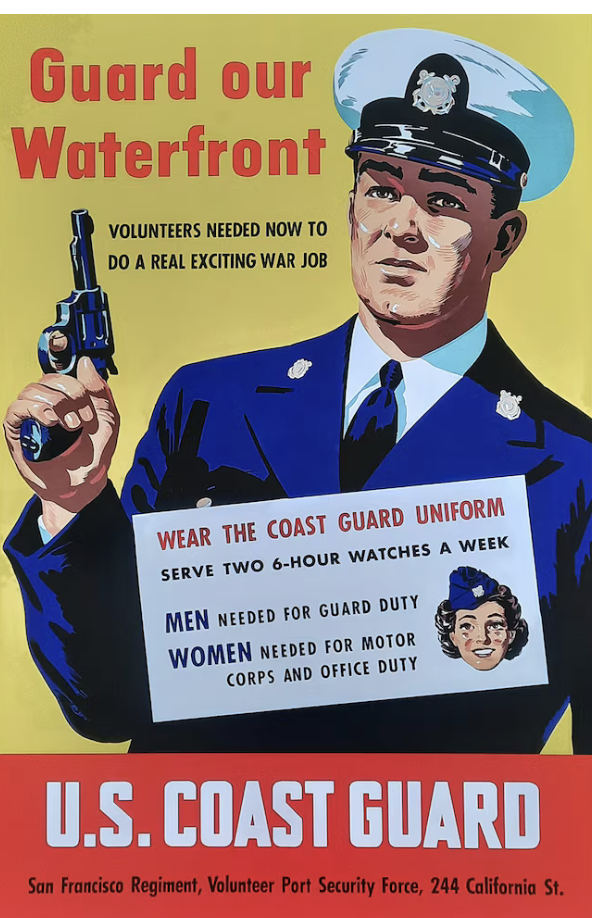
World War II-era Temporary Reserve Recruiting Poster. Photo by Capt. Bob Desh, U.S. Coast Guard retired.

1942  Wartime port security was delegated to the Coast Guard by Executive Order 9074.

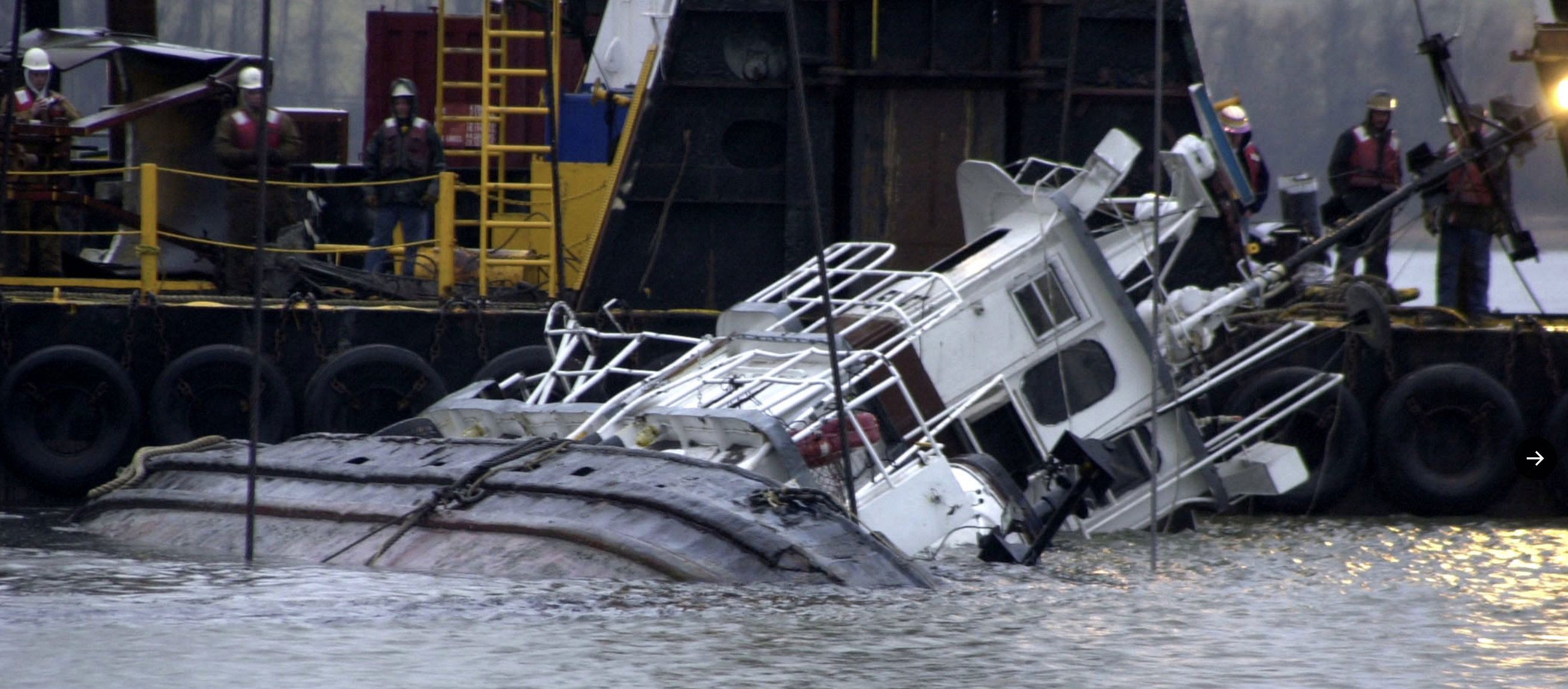
2001 The tugboat Swift sank after colliding with the freighter A.V. Kastner on the Elk River in the upper Chesapeake Bay. USCG units from New Jersey and Philadelphia worked with state police and local rescue agencies to rescue three survivors.

2001  The tugboat Swift sank after colliding with the freighter A.V. Kastner on the Elk River in the upper Chesapeake Bay.  Coast Guard units from New Jersey and Philadelphia worked with state police and local rescue agencies to rescue three survivors.  Four crewmen perished.  The Coast Guard also conducted the marine casualty investigation.

“AKER ARCTIC SELECTED TO PROVIDE ADVANCED ICE LOAD MONITORING SYSTEM FOR FINNISH NAVY MULTI-ROLE CORVETTES” –Aker Arctic

Below is an Aker Arctic news release. Frankly I didn’t know there was such a thing as an ice load monitoring system, but it sounds like something we would want on ships going into the Arctic or Antarctic. I presume it is monitoring the role rate (Tups do you have more info?)

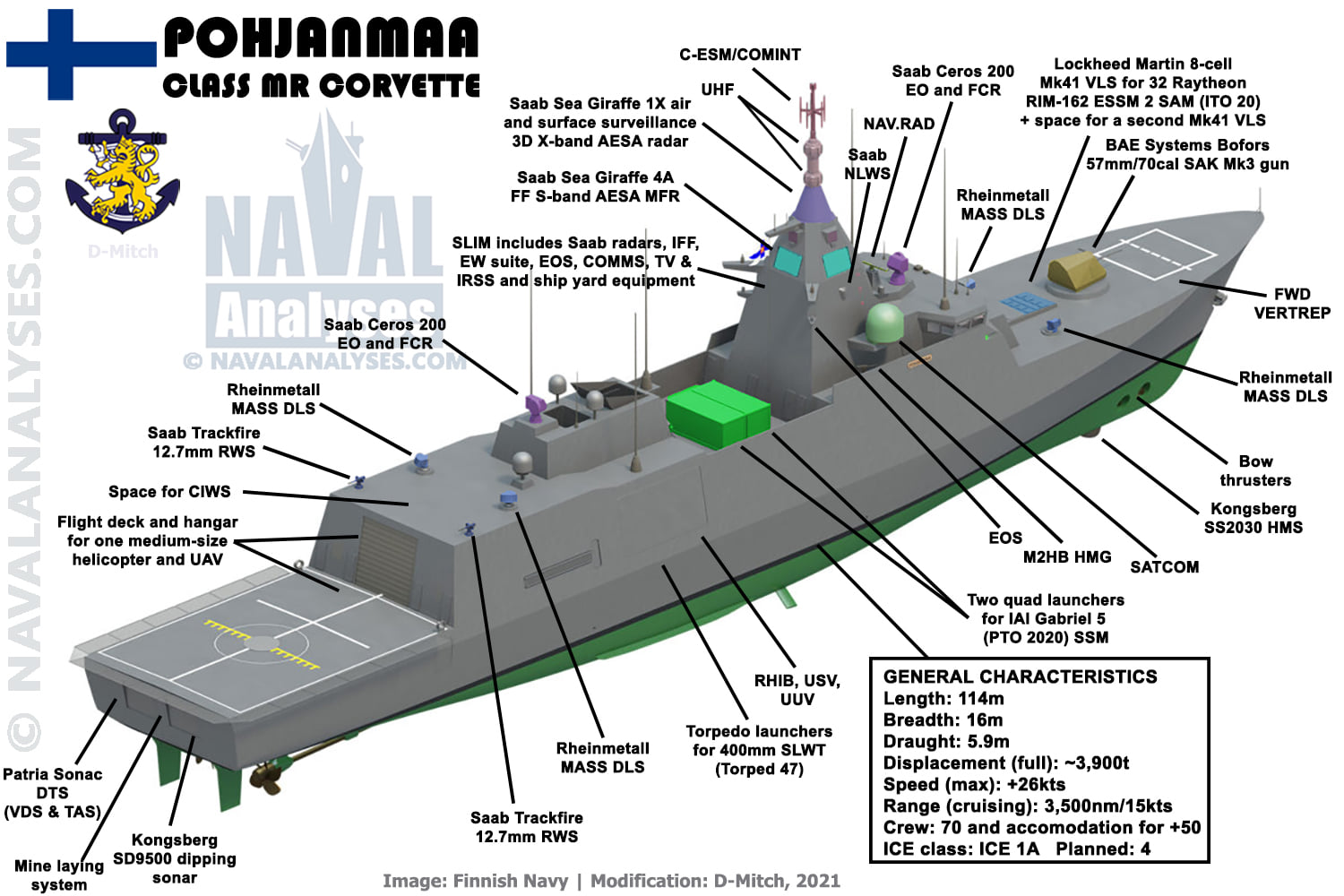
Specs for the class have been updated since the graphic above:

  • Displacement: 4300 tons
  • Length: 117 m (384′)
  • Width: 16 m (52.5′)
  • Draught: 5 m (16.4′)
  • Speed: 26 knots (48 km/h)
  • Crew: 73

More on this new class of warships here and here.


Aker Arctic has been chosen to supply its state-of-the-art ice load monitoring system to the Finnish Defence Forces Logistics Command. The contract includes the delivery of Aker Arctic’s ARC ILMS ice load monitoring, measurement and analysis system for the series of four Pohjanmaa-class multi-role corvettes currently under construction at Rauma Marine Constructions for the Finnish Navy.

The ARC ILMS is Aker Arctic’s platform for measuring loads that the ship’s structure experiences when operating in ice-cover waters, providing feedback to the operator on the safety level of the ship in ice.

“Following our recent successes being chosen to supply the ARC ILMS for the Canadian Coast Guard’s Multi-Purpose Vessels (MPV) (here–Chuck) and our collaboration with French cruise company Ponant measuring ice loads on the Le Commandant Charcot as she made her historic trans-Arctic voyage last summer, we are excited with the vote of confidence the Finnish Navy has put in us to supply our ARC ILMS to their important program” said Kari Laukia, Head of Equipment Business and Special Projects at Aker Arctic.

The contract builds on Aker Arctic’s long-term involvement with the Pohjanmaa-class. In addition to the ARC ILMS, Aker Arctic is supplying the ice-strengthened controllable pitch propellers and their pitch control mechanisms, propeller shafts, bearings and shaft seals. In addition to complete design, calculations and material supplies, Aker Arctic is also responsible for installation supervision and commissioning of the propulsion lines.