Guns for Ukrainian Island Class Patrol Boats.

Ukrainian Navy Island-class patrol boats, formerly of the U.S. Coast Guard, conduct maritime security operations in the Black Sea off the coast of Odesa, Ukraine.
UKRAINIAN NAVY

This was on the U.S. Department of Defense Daily Digest Bulletin for Aug. 7, 2023.

Safe Boats International LLC,* Bremerton, Washington, is awarded a $22,271,829 firm-fixed-price modification to previously-awarded contract N00024-21-C-2201 for the exercise of options for procurement and installation of six Gun Weapon Systems onto the Island Class patrol boats with spares. Work will be performed in Tacoma, Washington, and is expected to be completed by October 2024. Foreign Military Financing (Ukraine) funds in the amount of $22,271,829 will be obligated at time of award and will not expire at the end of the current fiscal year. The Naval Sea Systems Command, Washington, D.C., is the contracting activity. (Awarded Aug. 3, 2023)

Five Island class 110 foot patrol boats were transferred to Ukraine.  One of them has been sunk.

Previously vessels of this class were armed with crew served Soviet era 25 mm guns.

This is reported as modification of an existing contract, so I presume at least one vessel has already been rearmed. Thinking two guns per vessel, then six gun systems will go on three additional vessels. So, at least four ships with two guns each. Presumably, they would be 25 or 30 mm guns, hopefully the new 30mm Mk38 Mod4.

The announcement does say, “Work will be performed in Tacoma, Washington, and is expected to be completed by October 2024.” If this is true, these are additional boats. The Coast Guard still has many available for transfer. It is also possible there might be only one gun per vessel. All we know for sure is in the quote above.

In Dec. 2019 there was a suggestion that these vessels might be fitted with anti-ship cruise missiles, but there has been nothing further to indicate it has or will happened.
“Ukraine Situation Report: Photos Show Damage To Russian Tanker After Drone Boat Strike” –The Drive

The Drive has an excellent report on the sea drone attack on Russian Tanker Sig, including photos of the damage.

Looking at the video above, it is apparent that it starts with the unmanned surface vessel alongside ship or structure which might have been a point of reference. It makes a sharp high-speed turn until about time 0:19, when the target came clearly into view at a relatively short distance. This is a 37 second video, assuming 40 knots the UAS could go 4,000 yards in three minutes or only about 822 yards in the 37 seconds. The last 18 seconds when the UAS is pointed at the target would be a distance of about 400 yards.

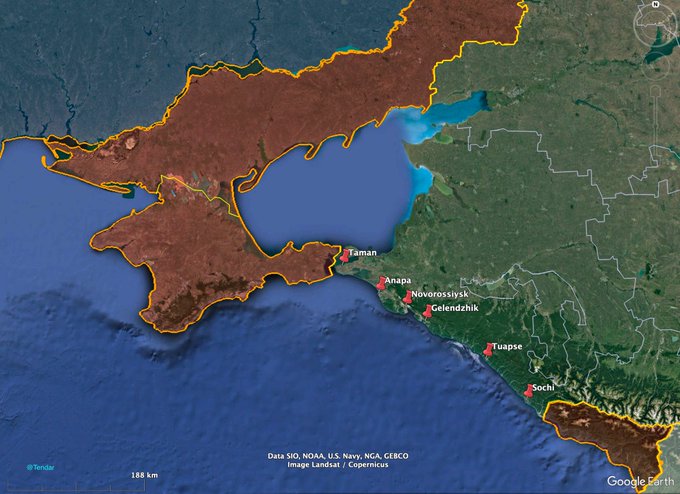
The post also notes that Ukraine has declared six Russian Black Sea ports subject to “War-Risk.”

“Northern Fleet ship seriously damaged in drone attack” –The Barents Observer

The Barents Observer provides the most complete report I have seen on a recent attack on a Russian Landing ship (LST). It identifies the ship as the Olenegorsky Gornyak, a Ropucha-class landing ship. It was in serious danger of sinking because a vehicle deck stretches the length of the hull.

I think this type of threat may be something the Coast Guard may want to seriously consider since the Coast Guard is the likely agency to defend against it.

A few comments on the conduct of the attack. It was a night attack. It would be interesting to know if the moon was down when the attack was made. It appears there was a lot of light coming from the bridge of the target ship that may have adversely effected night vision. The UAS appears to have used a slow approach, which would have been less likely to attract attention than a high-speed approach, which would have left a phosphorous wake. The target vessel appears to have been unaware of the approach. I see no defensive fire from the target vessel. The target vessel appears to be stopped or moving very slowly because, when the USV steadies up, there is little or no bearing drift.

“Orizzonte Sistemi Navali Signs Contract For New Italian Navy OPVs” –Naval News

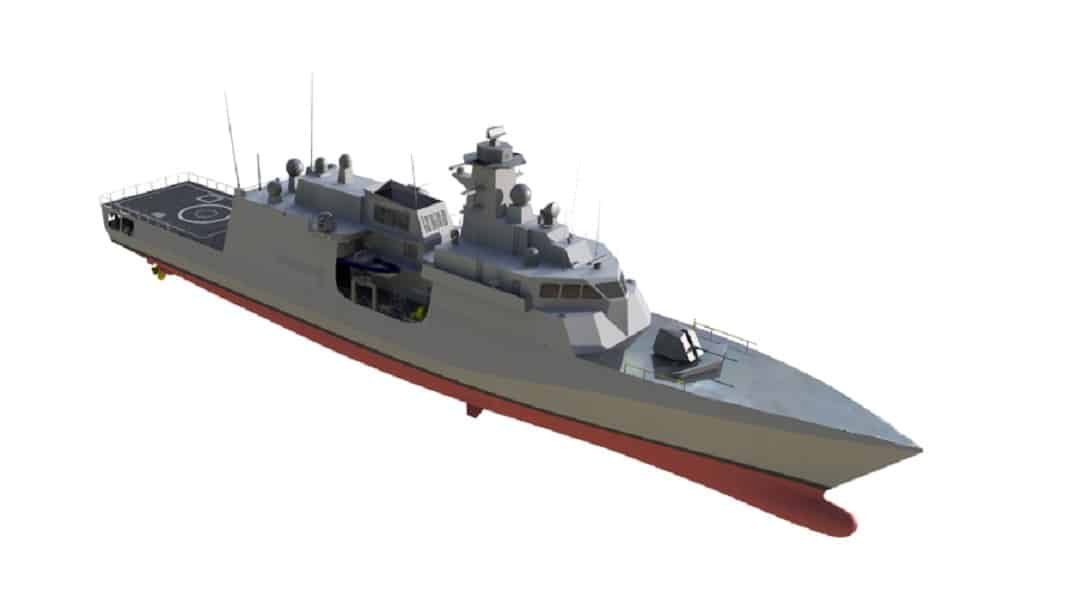
Drawing of the OPV by Fincantieri

Naval News reports,

As part of the Italian Navy OPV (Offshore Patrol Vessel) acquisition programme Orizzonte Sistemi Navali (OSN), the joint venture between Fincantieri and Leonardo… has signed a contract with the Italian Secretariat General of Defence and National Armaments Directorate for the construction of three next generation patrol vessels, with the options for a further three units and infrastructural upgrades required for the naval bases in Augusta, Cagliari and Messina, where the vessels will be based.

Fincantieri is the parent company of the Marinette based shipyard that has been building Freedom class LCS and will be building the US Navy’s new frigates. That shipyard also built USCGC Mackinaw, the 16 Juniper class WLBs, and the 14 Keeper class WLMs.

I am a little surprised by this. It had been reported that the six ships of the Sirio class and Cassiopea class would be replaced by 3,000 ton units of the European Patrol Corvette (EPC) program. This “PPX” program would be the third Italian Navy “patrol” vessel class being built concurrently along with the EPC and the Thaon di Revel class (also known as PPA for ‘Pattugliatore Polivalente d’Altura – Multipurpose Offshore Patrol Vessel’).

The description looks like a pretty typical modern, medium size OPV with an approximate length of 312′ (95 meters), a displacement of 2,300 tons and accommodations for 97. It appears the probable armament is a 76mm gun and a pair of 20 to 30mm mounts (probably the new Lionfish 30mm). That is a size the US Coast Guard might consider for operating in Atlantic Area, if we wanted to increase the total number of larger patrol cutters above the 36 currently planned.

No information was provided about the speed or range. Italian Navy ships tend to have relatively short range because they are designed to operate in the Mediterranean. I would guess range will be about 4,000 miles at about 14 knots. Speed will probably be about 24 knots.

“As Arctic ice melts, NATO plots northern defense tactics” –Video

Wanted to pass along the video above, if for no other reason, for the scenes of the Danish Patrol Frigate HDMS Triton operating in the ice. Notice her ground tackle (equipment used to anchor the ship) is not exposed on the foc’sle, where it would be quickly encrusted with ice. It is well below the main deck.

Triton’s routine peacetime missions and those of her Thetis class sister ships are much the same as US Coast Guard cutters. They do SAR, fisheries, marine environmental protection, and support scientific research. They are ice strengthened and can reportedly operate in 31 inches (80 cm) of ice. They use the STANFLEX modular weapon system, with one slot forward and two slots aft, allowing rapid addition or change out of weapon systems. They have a hull mounted sonar, torpedo tubes, and can support a MH-60R ASW helicopter. They are 3,500 tons full load and 112.3 m (368 ft 5 in) in length with a speed of 22 knots and a range of 8,700 nautical miles at 15 knots and a 60 day endurance. My Combat Fleets of the world reported that they had seven crews to operate the four ships. Perhaps surprisingly, they have only a single shaft, but it is probably well out of the way of ice. The ships of the class are all over 30 years old and the Danes have probably started thinking about replacement.

The Royal Danish Navy (RDN) Thetis-class patrol ship HDMS Triton is pictured operating a Seahawk helicopter during Canada’s Operation ‘Nanook’ exercise in the Arctic in 2022. One element of RDN Arctic capability development is to improve tactical datalinks between the Seahawks and their host frigates and patrol ships. (Canadian Armed Forces)

“Israeli Navy reveals Reshef corvette plans” –Naval News

An illustration and infographic of the Reshef class corvette (Credit: Israeli Navy)

Naval News reports,

The Israeli Navy is looking to have the first of its new Reshef class corvettes in service at the start of 2027…Speaking at the CNE 2023 conference in Farnborough on 24 May, Commander Yonatan Kudish also revealed that the Reshef vessel will be assembled from hull modules built overseas by a US shipbuilder.

Eight ships are planned to replace eight Sa’ar 4.5 missile boats currently in service with the Israeli Navy. In addition to a 76mm gun, a pair of 30mm remote weapon stations, and anti-ship missiles (presumably Gabriel V), they are expected to have C-Dome missiles, the naval version of Iron Dome as well.

It appears the Israelis are rebranding their helicopter deck as a “multi-purpose mooring deck.” There does not seem to be a hangar.

Compared to the Sa’ar 4.5s they are replacing, they are more than twice the displacement, and 3 or 4 knots slower.

These will be marketed internationally as Offshore Patrol Vessels (OPV) as well as Missile Corvettes depending on how they are equipped, though they seem to be a little small for an OPV on most of the world’s oceans. A 1,000 ton displacement as shown in the graphic would suggest they are smaller than the Coast Guard’s 210 foot WMECs despite a greater length (about 250 feet), but that might not be their full load displacement.

The fact that they are slower than the vessels they replace seems to reflect the diminished value of a high maximum speed since long range missiles and aircraft have replaced other surface vessels as the primary threat. On the other hand, seakeeping, endurance, range, and high cruise speed are probably more important now. Even so the Sa’ar 4.5s had very good cruising range for such small ships (4,800 nautical miles (8,900 km) at 19 knots). Their replacements may not offer any improvement.

“Indian Navy’s INS Sunayna Pays Visit to Beira, Mozambique” –BNN

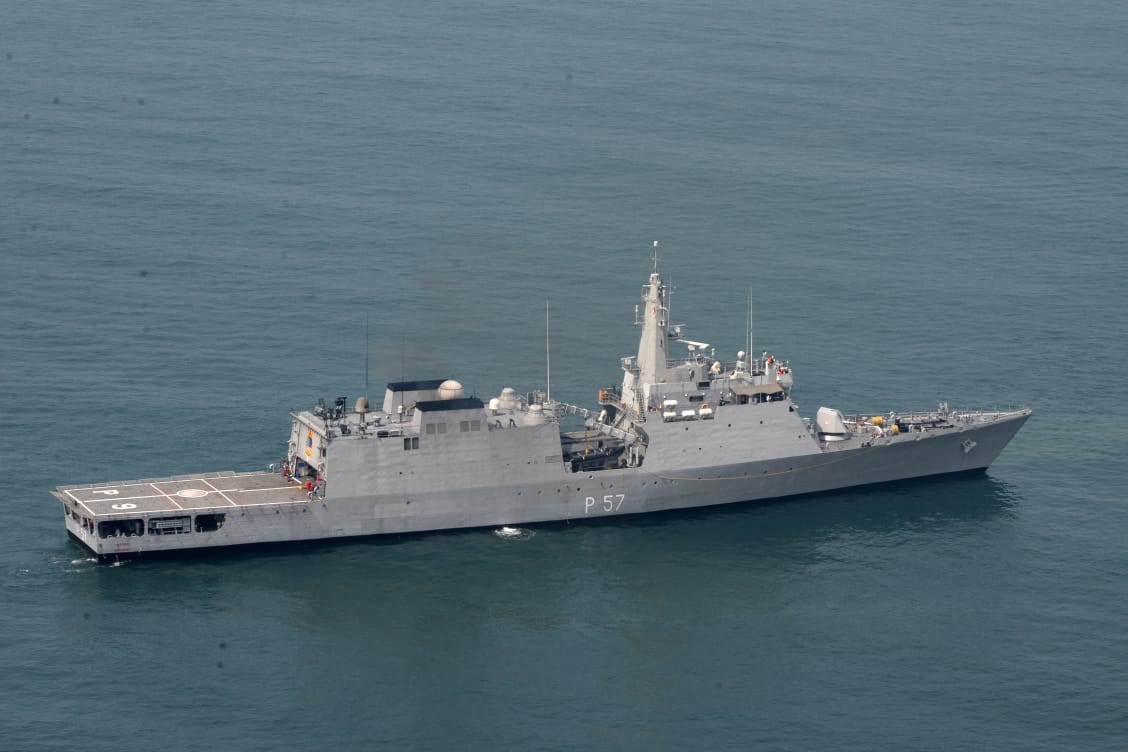
INS Sunanya (P57) at sea, 21 May 2020. Photo Credit: Indian Ministry of Defence.

BNN reports on the visit of the Indian Navy Offshore Patrol Vessel Sunayna to the Nation of Mozambique.

During the port call, personnel from the Indian Navy and the Mozambique Navy engaged in a variety of professional and training engagements, deck visits, and sporting events. Joint training sessions in navigation, fire fighting, damage control, VBSS, and asymmetric warfare were held as part of the maritime partnership exercise.

Sounds like they were engaged in the same sort of “capacity building” the US Coast Guard engages in. Fishing is an important part of the Mozambique economy so Illegal, Unregulated, and Unreported fishing is a problem for them.

There has been increasing cooperation between the US and India in response to Chinese aggressiveness. We might want to spend a little time with the Indian Navy/Coast Guard to gain their insights and benefit the efforts of both nations. Perhaps the Coast Guard should participate in the annual Malabar exercise.

INS Sunayna (P57) is a 105 meter (344 foot) Saryu class Offshore Patrol Vessel. May be worth noting that this visit was done by the Indian Navy rather than the Indian Coast Guard, though they have similar ships.

“VIDEO: Iranian Navy Warship Fires on Oil Tanker in the Strait of Hormuz” –USNI

The US Naval Institute reports that the Iranian Navy attempted to stop two tankers in the Gulf of Oman. In the second case, shots were fired. In both cases, the Iranian warships departed when US destroyer USS McFaul (DDG-74) arrived on scene.

The Iranian warship that fired on the tanker was armed with a 76mm gun and apparently anti-ship cruise missiles, but additional CNN coverage indicates the weapons fired were “small arms.” There was only minor damage to the tanker and no personnel casualties.

The Iranian vessel seen in the video is one of four Bayandor class corvettes (apparently Bayandor itself) built in Orange, Texas. Two of the class are believed to have been lost to Iraqi force 1982-83. The two remaining ships were commissioned into Iranian service in 1964. They have a full load displacement of 1,135 tons and are 275 feet (83.82 meters) in length with a speed of 20 knots.

Iranian Navy Bayandor (PF-103) class corvette. 29 December 2019. Photo credit: mehrnews via Wikipedia.

“Greece Receives First Island Class Patrol Vessels From The U.S.” –Naval News

(Since today is the 4th of July) As part of 5th Fleet’s PATFORSWA, crewmembers aboard the U.S. Coast Guard cutter USCGC Adak (WPB-1333) raised the American flag.  U.S. Coast Guard photo by Seaman Frank Iannazzo-Simmons

Naval News reports that four of the six PATFORSWA 110 foot Island Class WPBs are being transferred to the Greek Navy, and it goes on to speculate they may ultimately get all six.

“The four Island-class boats that will join soon the Greek naval fleet are the former Wrangell (WPB-1332), Adak (WPB-1333), Monomoy (WPB-1326) and Aquidneck (WPB-1309).”

The boats are to be refurbished and are expected to be equipped with a 20mm remote weapon station (RWS), the LIONFISH 20 by Leonardo, new “surveillance radar, electro-optical sensor (Naval News verified that it will be a Miltech Hellas product), communications equipment and machine guns will be installed as well.”

The post notes that former US Coast Guard Island class cutters now also serve with Pakistan (Pakistan Maritime Security Agency), Georgia (Georgian Coast Guard), Costa Rica (Costa Rican Coast Guard), and Ukraine (Ukrainian Navy) in addition to the Greek Navy.

Additional transfers can be expected in the future.

Exercises–RIMARCTIC? and Unmanned in UNITAS in July

National Defense has a short post, “JUST IN: Gilday Calls for Massive International Exercise in Arctic.” It talks about doing an exercise comparable to RIMPAC in the Arctic. Chief of Naval Operations, Adm. Michael Gilday is almost certainly talking about an exercise on the Atlantic side of the Arctic, in the Norwegian Sea, above the Greenland-Iceland-UK gap. If the Exercise were held as far North as the Barents Sea, the Russians would probably get very excited.

The Arctic Circle runs just North of Iceland and North of the upper end of the Baltic Sea. Credit: CIA

The Coast Guard would almost certainly participate. The Canadians already host an Arctic Exercise, Nanook, but it is very small scale. It takes place west of Greenland and the US Navy has not generally participated.

(I have serious doubts that this RIMARCTIC is ever going to happen, at least not as something on the scale of RIMPAC. Everyone wants to go to Hawaii.)

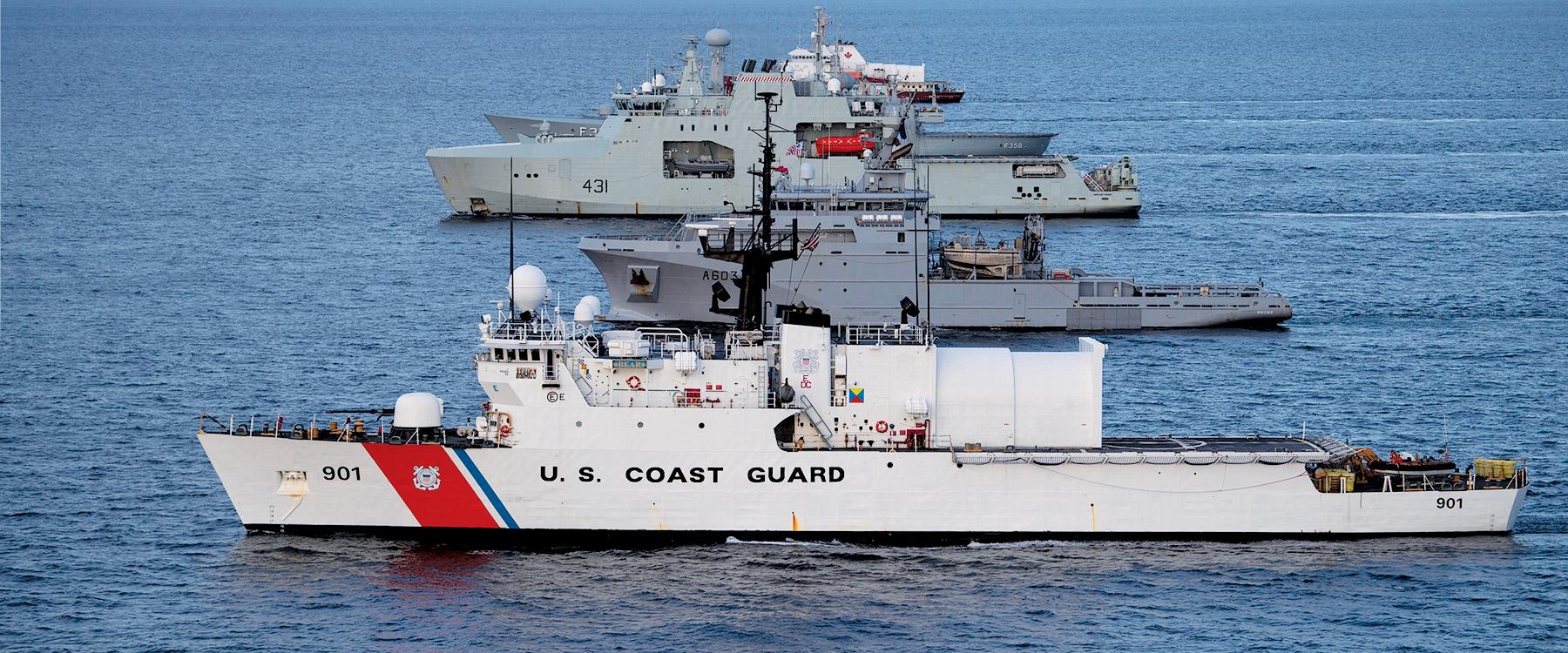
The USCGC Bear (WMEC-901) and allied ships from Canada, Norway, France, and Denmark steam in formation in the North Atlantic Ocean during Operation Nanook in August 2022. 

The post also talks about China’s massive investment in Oceanography and there is an interesting footnote. We have heard 4th Fleet would be start experimenting with Unmanned systems soon, paralleling what has been done in 5th Fleet with Task Force 59. Apparently, it will begin with UNITAS.

The Navy plans to introduce unmanned vessels to their South American partners as a part of the UNITAS naval exercise in July. Uncrewed surface and subsurface boats can monitor sea lanes and search for nefarious activities such as drug smuggling and illegal fishing, he said.

These “potentially unmanned [capabilities] give us, along with allies and partners —which is really key here — the ability to keep an unblinking eye on that kind of activity and collect data,” he said.

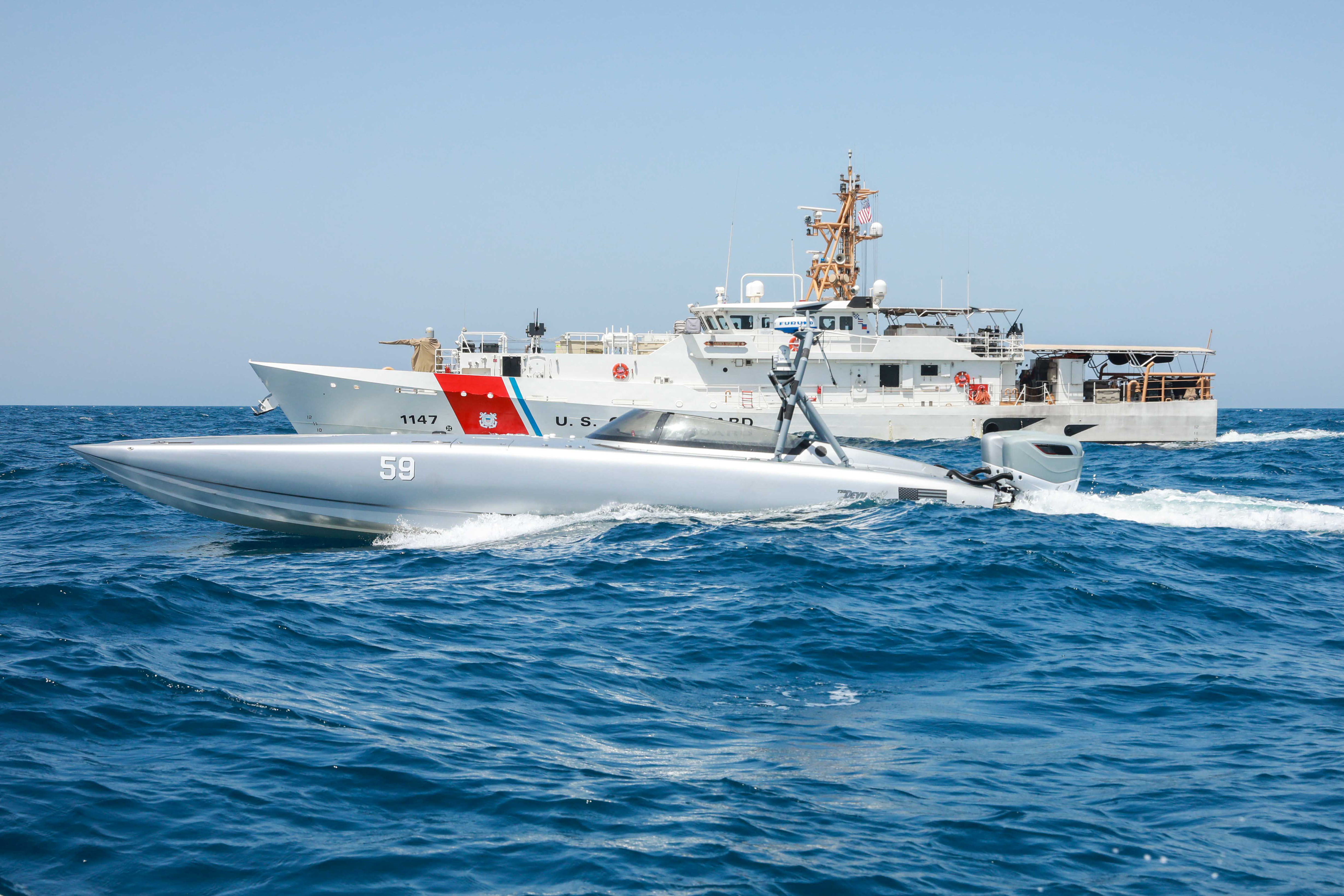
The Coast Guard fast response cutter Clarence Sutphin Jr. sails alongside an unmanned surface vessel in the Persian Gulf during exercise Eagle Resolve 23, June 1, 2023. Eagle Resolve is a combined joint all-domain exercise that improves interoperability with the U.S. military and partner nations, including Saudi Arabia.