“Coast Guard awards contract for next generation trailerable aids to navigation boats” –CG-9

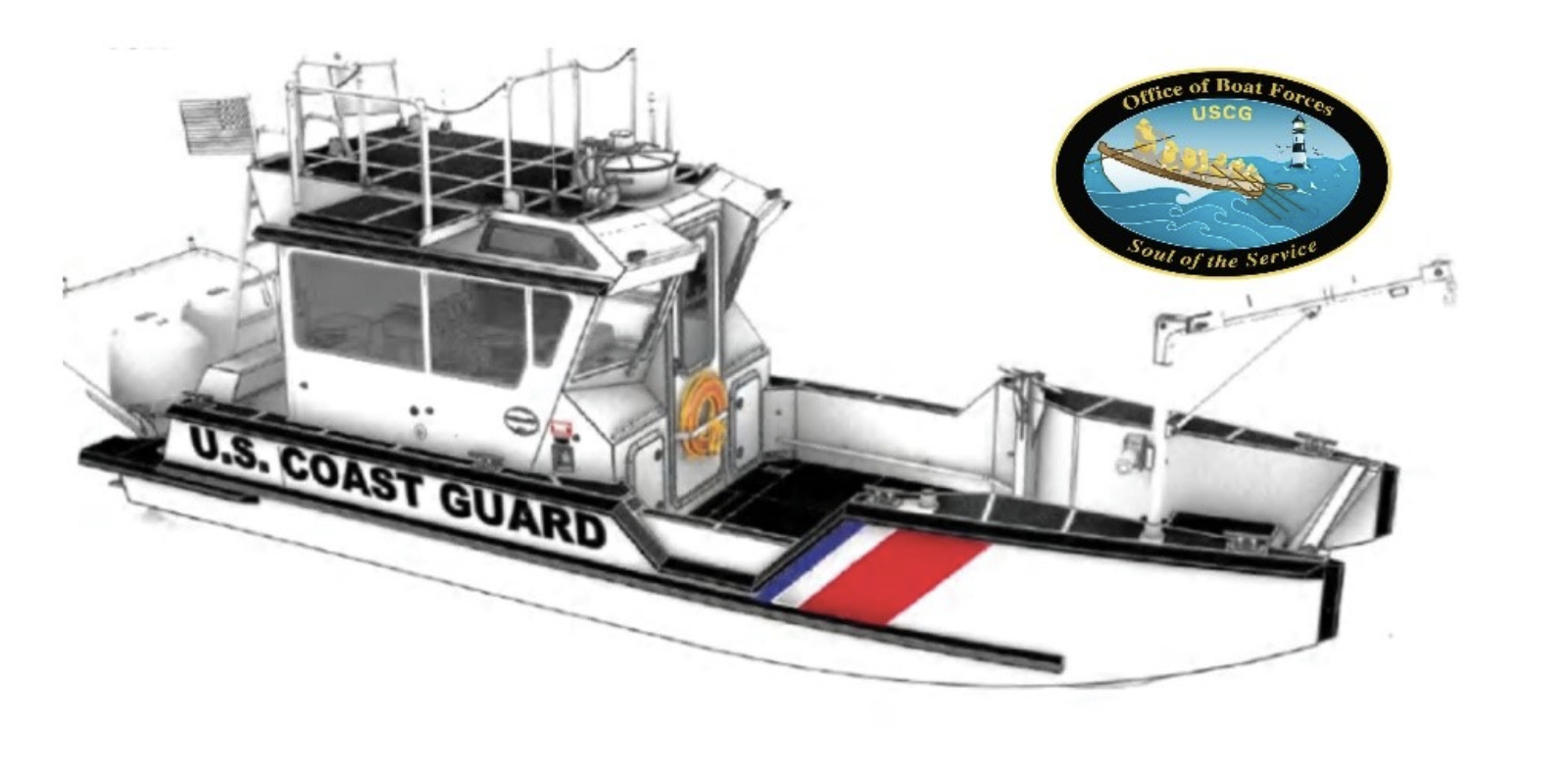
Preliminary design of the second-generation trailerable aids to navigation boat. Rendering courtesy of Inventech Marine Solutions.

The Acquisition Direction reports,

“The Coast Guard Office of Boat Forces awarded a contract Aug. 27 to Inventech Marine Solutions to build up to 89 second-generation trailerable aids to navigation boats (TANB II) to replace the existing trailerable aids to navigation boats (TANB), which were introduced in 2006 and are at the end of their planned service lives. Coast Guard aids to navigation teams use the TANB to place, retrieve and maintain smaller buoys; provide support for fixed navigation aids; and for transferring crews and equipment to remote shore-based equipment. TANBs can be trailered to boat ramps, which can reduce transit times and allow for faster responses to aid discrepancies.”

“The firm fixed-price, indefinite delivery, indefinite quantity contract, valued at approximately $36 million, has a period of performance that extends through August 2032. The TANB II is based on a proven 27-foot parent craft design. The boats include an aluminum hull, a forward working deck, and a partially enclosed cabin that seats four crewmembers. The TANB II will be powered by twin outboards and outfitted with standard Coast Guard navigation and communication electronics. The TANB II will have the ability to tend buoys from the bow and alongside, and for the crew to access fixed aids from the top of the cabin. The capability provided by the TANB II will enhance the Coast Guard’s ability to safeguard the vital waterways of the Nation’s Maritime Transportation System, which supports more than $5.4 trillion in economic activity every year.”

“Boats of the United States Coast Guard” –CG-9

Response Boat, Medium (RB-M). Photo from Vigor

A friend (thanks Lee) brought this little book to my attention.

“Boats of the United States Coast Guard”

Don’t know how I missed this, but seems very comprehensive, 30 pages and 44 different types of craft.

“Coast Guard Cutter Juniper completes patrol in Oceania” –D14

The crew of the Coast Guard Cutter Juniper (WLB 201) return to Honolulu after completing a 45-day patrol in Oceania in support of Operation ‘Aiga, Oct. 1, 2021. The Juniper is a 225-foot Juniper-Class seagoing buoy tender home-ported in Honolulu, the crew is responsible for maintaining aids to navigation, performing maritime law enforcement, port, and coastal security, search and rescue and environmental protection. (U.S. Coast Guard photo courtesy of Coast Guard Cutter Juniper)

Another out of the ordinary patrol and an indication of interest in both illegal, unreported, and unregulated fishing (IUU) and our Oceania partners.

Note also used to refuel Webber class WPC USCGC Oliver Berry, also involved in the operation.

united states coast guard

News Release

U.S. Coast Guard 14th District Hawaii and the Pacific

Coast Guard Cutter Juniper completes patrol in Oceania

Editors’ Note: Click on images to download a high-resolution version.

HONOLULU — The crew of the Coast Guard Cutter Juniper (WLB 201) returned to Honolulu after completing a 45-day patrol in Oceania in support of Operation ‘Aiga on Friday.

During the 10,000 nautical-mile patrol, the cutter’s crew conducted operations to counter illegal, unreported, and unregulated fishing (IUU) and strengthened relations with foreign allies while promoting the collective maritime sovereignty and resource security of partner nations in the Indo-Pacific.

Operation “Aiga,” the Samoan word for family, is designed to integrate Coast Guard capabilities and operations with our Pacific Island Country partners in order to effectively and efficiently protect shared national interests, combat IUU fishing, and strengthen maritime governance on the high seas.

“During our deployment in Oceania, Juniper conducted fisheries enforcement in an effort to counter and deter illegal fishing activities in the Central Pacific,” said Cmdr. Chris Jasnoch, the Juniper’s commanding officer. “We were able to establish a presence on the high seas and in the U.S. Exclusive Economic Zone (EEZ) in American Samoa while also patrolling our partner nation’s EEZs.”

The Juniper’s crew worked under the Western and Central Pacific Fisheries Commission (WCPFC), which strives to protect the region’s fish stocks on the high seas. The WCPFC has 26 member nations and 7 participating territories, 18 of which have enforcing authority. The United States is both a WCPFC member and an enforcing nation.

“We get to take part in a unique, rewarding mission in the Pacific,” said Lt. j.g. Ryan Burk, the operations officer on the Juniper. “We have the privilege of building and strengthening relationships with our Pacific Island partners, while protecting and preserving global resources.”

During the patrol the Juniper embarked a Mandarin linguist from the U.S. Marine Corps to query 11 foreign fishing vessels and board 4 fishing vessels, generating vital information reports for IUU in the region.

The crew also conducted joint operations with a French Navy Falcon-200 aircraft to identify and intercept vessels on the high seas. They also conducted a fueling evolution with the Coast Guard Cutter Oliver Berry’s crew, another participant in Operation ‘Aiga.

“We strengthened our joint capabilities with the French Navy in the fight against IUU fishing activities on the high seas in support of the WCPFC,” said Jasnoch.

To promote American Samoa’s maritime transportation system, the Juniper crew serviced vital aids to navigation in Pago Pago Harbor and in neighboring islands, demonstrating the cutter’s multi-mission capabilities.

In addition to normal buoy maintenance, Juniper accomplished the first Waterways Analysis and Management System Report for Pago Pago since 2003. This report integrates the opinions of Pago Pago Harbor’s regular users to review the relevance of existing aids and reevaluate where new aids would be useful, ensuring the sustainability and safety of the waterway.

Juniper’s crew also put together a donation box for the children in Pago Pago, including: sporting equipment, books and toys for the Boys and Girls Club of American Samoa.

“Despite COVID restrictions preventing an in-person event, it felt good to know that we made a difference,” said Ensign Elaine Weaver, the Juniper’s community relations officer.

The Juniper is a 225-foot seagoing buoy tender home-ported in Honolulu and is responsible for maintaining aids to navigation, performing maritime law enforcement, port and coastal security, search and rescue and environmental protection.

For breaking news follow us on twitter @USCGHawaiiPac

“Coast Guard to Recapitalize Aids-to-Navigation Boats” –Seapower

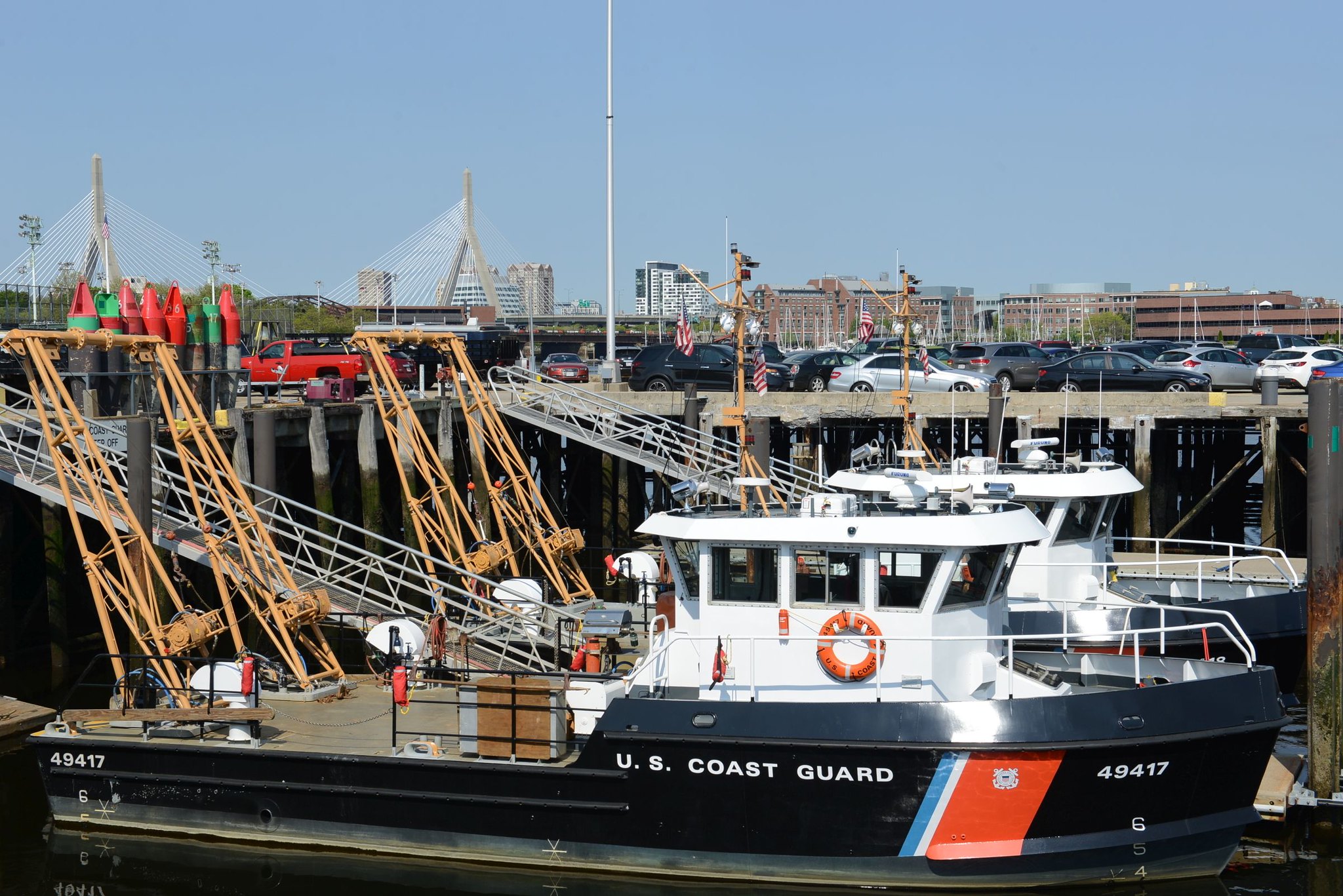
49 foot ANB, Boston

The Navy League’s magazine “Seapower” reports,

“We’re going to do a detailed design and construction award in the spring of 2022 to replace our half-centurion working aids-to-navigation boats,” said Adm. Karl Schultz, the Coast Guard commandant, speaking 28 Sept. at a webinar of the Heritage Foundation.

Shultz said the service plans to procure about 35 new ANBs, “but I believe we will be able to shrink down to about 30 really capable boats,” although he did not specify the type or types of ANBs to be replaced.

We currently have seven types of aid to navigation boats, as described in the link:

  • The 18-foot aids to navigation-medium cutter boat is used by the Keeper Class Coastal Buoy Tenders to transport equipment to a construction site and also used at small boat stations for emergency response to floods or areas where a shallow water response is necessary.
  • The 20-foot aids to navigation boat-small and 16-foot aids to navigation boat-skiff primarily aid to navigation servicing, construction, repair and discrepancy response.
  • The 26-foot trailerable aids to navigation boat serves as the workhorse for aids to navigation teams.
  • The 49-foot stern loading buoy boat supports the short-range aids to navigation missions.
  • The 55-foot aluminum hull can operate in moderately rough weather in coastal and inland waters.
  • The 64-foot self-propelled barge primarily operates on the protected rivers and protected waters

My Combat Fleets of the World, still the latest edition, copyright 2013, lists three 64 foot WYGL, 17 55ft, 26 49ft BUSL (Boat, Utility, Stern Load), 90 26ft tailerable WYGL, 48 (+47 additional planned) 20ft ANB,S (aids to navigation, small), and 30 (+30 additional planned)16ft aids to navigation skiffs (WYTL). The numbers quoted in the article are only different with regard to the 55ft boats.

As of last year, the Coast Guard operated a fleet of ANBs that included three 64-foot and four 55-foot ANB, 26 49-foot stern-loading buoy-servicing boats, 90 26-foot and five 17-to-23-foot transportable ANBs, as well as numerous smaller skiffs.

Apparently we have already ditched 13 of the 55ft boats. Presumably the older ones.

Sounds like the intention is to replace all the 49, 55, and 64 foot boats.

  • The 64ft self propelled barges entered service 1996-97.
  • The 55ft boats, built by the Coast Guard Yard, entered service 1977-1988.
  • The 49ft boats, built by the Coast Guard Yard, entered service 1997-2000.

Not quite as old as the Commandant seems to indicate, but definitely time to start replacement. It appears all the smaller AtoN boats entered service in the last 15 years.

Thanks to Lee for bringing this to my attention. 

“Case Study: Floating top marks for piles in flooding rivers” –Marine Link

Image: Grupo Lindley / Administração dos Portos do Douro, Leixões e Viana do Castelo

Definitely not in my wheelhouse since I never did inland aids to navigation, but Marine Link reports an innovation in marking shallows and narrow channels in flood prone rivers. Apparently it is a hybrid between marking with a pylon mounted aid and a buoy.

Thanks to Lee for bringing this to my attention.

USCG Navigation Center: Steering a steady course for safe, secure, efficient waterways–MarineLink

The above screenshot shows the display of the virtual aid to navigation established in partnership between the U.S. Coast Guard and the U.S. Army Corps of Engineers on the Mississippi River. The virtual aid is significant in that it allows mariners to see a hazard when it is not possible to place a floating aid to mark it. U.S. Coast Guard image.

Marine Link has a very interesting post on the Coast Guard’s Navigation Center. It discusses its role in management of aids-to-navigation, issuance of Notice to Mariners, interface with NOAA and the Army Corps of Engineers, maintenance of GPS including ground based differential GPS equipment, Automatic Information System (AIS) monitoring and quality control, long range tracking of US flag merchant ships, and maintenance of a Maritime Domain Awareness within 1000 miles of the US.

Lighthouse Act – 7 August 1789

Passing this along from Bryant’s Maritime Blog

clip_image008 The Lighthouse Act was the ninth statute adopted by the First Congress of the United States. It provided for the voluntary cession by the various states of all lighthouses, beacons, buoys, and public piers to the federal government and tasked the Secretary of the Treasury with building and maintaining the aids to maritime navigation. The Lighthouse Establishment (later named the United States Light House Service) is the oldest of the various components of the present-day United States Coast Guard, joining in 1939.

“Coast Guard Readiness: How Far Can We Stretch Our Nation’s Only Multi-Mission, Military Force?”–Senate Testimony

Coast Guard Commandant Adm. Paul Zukunft at the Senate Committee on Commerce, Science, and Transportation. U.S. Coast Guard photo by Petty Officer 1st Class Patrick Kelley.

Below is the Commandant’s written testimony for the Senate Committee on Commerce, Science and Transportation, subcommittee on Oceans, Atmosphere, Fisheries, and Coast Guard hearing titled, “Coast Guard Readiness: How Far Can We Stretch Our Nation’s Only Multi-Mission, Military Force?”

Release Date:
November 16, 2017

253 Russell Senate Office Building

Good morning Mr. Chairman and distinguished members of the Committee. I appreciate the opportunity to testify today and thank you for your enduring support of the United States Coast Guard.

As the world’s premier, multi-mission, maritime service, the Coast Guard offers a unique and enduring value to the nation. The only branch of the U.S. Armed Forces within the Department of Homeland Security (DHS), a federal law enforcement agency, a regulatory body, a first responder, and a member of the U.S. Intelligence Community – the Coast Guard is uniquely positioned to help secure the maritime border, combat transnational criminal organizations (TCO), and safeguard commerce on America’s waterways.

The Coast Guard’s combination of broad authorities and complementary capabilities squarely align with the President’s national security and economic prosperity priorities and offer an agile toolset to address the Nation’s most pressing challenges. Appropriately positioned in DHS, the Coast Guard is a military service and a branch of the Armed Forces of the United States at all times.[1] We are also an important part of the modern Joint Force[2] and currently have forces assigned to each of the five Geographic Combatant Commanders as well as Cyber Command.

As demonstrated in the 2017 record hurricane activity, the Coast Guard is the nation’s “maritime first responder” and plays a leading role in executing the National Response Framework (NRF) for disaster situations. Our bias for action and ability to rapidly surge resources in response to emerging threats or contingencies distinguishes the Coast Guard and are critical to success across the spectrum of missions we prosecute.


1 14 U.S.C. § 1; 10 U.S.C. § 101
2 In addition to the Coast Guard’s status as an Armed Force (10 U.S.C. § 101), see also Memorandum of Agreement Between the Department of Defense and the Department of Homeland Security on the Use of Coast Guard Capabilities and Resources in Support of the National Military Strategy, 02 May 2008, as amended 18 May 2010.

Agile Force

The Coast Guard’s 88,000 active duty, reserve, civil service and auxiliary members offer a unique mix of authorities and extensive experience operating with both military and interagency response organizations. Beyond our statutory search and rescue requirements, which traditionally result in an average of 3,600 lives saved each year, the Coast Guard supports the Federal Emergency Management Agency (FEMA) and states during nationally declared disasters by:

  1. Saving lives in distress, and ensuring the survivability of our own forces and assets for immediate post-disaster response operations;
  2. Securing and reconstituting ports, waterways, and critical maritime infrastructure;
  3. Conducting environmental response operations (oil, chemical and hazardous material); and
  4. Supporting other agencies and the whole-of-government response effort.

Coast Guard personnel are well trained and experienced in response operations, which make them a sound choice to serve in visible positions in the NRF structure. This ability to operate concurrently in both military Joint Task Force and civilian NRF frameworks enhances unity of effort and dramatically improves effectiveness.

As an armed force, the Coast Guard can be a supported or supporting commander, and our forces are frequently integrated with Department of Defense (DoD) services in Joint Task Force organizations. We regularly provide forces in support of DoD exercises, Combatant Commander contingency plans, and theater security cooperation activities, all of which enable Coast Guard and DoD forces to integrate seamlessly during response operations.

Saving lives in distress is our first priority, and Coast Guard crews are typically the first federal responders on-scene. As a storm approaches, Coast Guard personnel make risk-based decisions to reposition assets and people to safe locations just outside of the storm’s path, ultimately facilitating rapid response as soon as it is safe to do so. Brave men and women on the front lines make it happen, invoking a deeply ingrained bias for action to repeatedly go into harm’s way and serve others.

In addition to conducting SAR operations, the Coast Guard surges forces and assets into the impacted regions to restore the $4.6 trillion maritime transportation system, respond to pollution, provide security and additional law enforcement capability, and protect offshore petrochemical platforms.

Critical Success Factors

The Coast Guard employs a decentralized command and control structure and distributed decision-making to provide operational commanders with the authority to move forces quickly to respond to large contingencies.

Our two Area Commanders, and their nine subordinate District Commanders, shift and reallocate forces from one region to another based on risk and the anticipated demand for operational capabilities. Well-reasoned and regularly exercised Continuity of Operations Plans preserve operational effectiveness while offering safe refuge for displaced operational commanders.

Coast Guard cutters, aircraft, and boats are built to respond to a variety of missions without the need for any reconfiguration or the addition of special equipment. During the recent hurricanes, cutters conducting counter-drug patrols in the Transit Zone quickly diverted to disaster areas to provide command and control, deliver rotary wing air capability from the sea, provide forward staging facilities, and deliver critical relief commodities – particularly in the U.S. Virgin Islands and Commonwealth of Puerto Rico.

Coast Guard aircraft that normally perform law enforcement surveillance to thwart transnational maritime criminal activities were dynamically repositioned and re-tasked to deliver disaster relief supplies, additional responders, and equipment to affected areas.

Additionally, Coast Guard forces were and are on station at key locations around the nation, most of them on short-notice recall, so they can respond quickly to emergent events. When a major catastrophe occurs, or is anticipated, we can reposition forces quickly to that area to optimize the response.

Over a five week period, Hurricanes HARVEY, IRMA, MARIA, and NATE impacted over 2,540 miles of shoreline[3], and Coast Guard women and men in helicopters, boats, cutters, vehicles and on foot rescued over 11,300 people and over 1,500 pets. Mere hours before Hurricane HARVEY made landfall, Coast Guard helicopter crews rescued mariners in peril[4] off the coast of Corpus Christi, Texas before repositioning to Alice, Texas.

The Coast Guard resolved over 1,269 aids to navigation discrepancies, handled 290 pollution cases, located and assessed more than 3,623 grounded vessels, with more than 1,585 removed to date. Within hours after each storm’s passage, Coast Guard Damage and Recovery Assessment Teams were on-scene determining the status of ports and waterways, leveraging electronic aids to navigation when feasible to facilitate the rapid reopening of the maritime transportation system and energy sectors vital to recovery, and assessing impacts to Coast Guard facilities and capabilities.


3 Using CRS method of Shoreline Measurement: Texas: 367 mi, Louisiana: 397 mi, Florida: 1,350 mi, Puerto Rico: 311 mi, USVI: 117 mi
4 Two MH-65’s from Sector/Air Station Corpus Christi saved 12 lives off a vessel taking on water in 45 knot sustained/60 knot gusting winds.

Enduring Challenges

Operational successes introduced real costs. Damage to Coast Guard facilities, IT, aids to navigation, and the cost of deferred maintenance are significant. Similar to any prolonged natural disaster or security event, responding to consecutive major hurricanes severely strained capacity and required us to assume additional risk in other geographic regions and mission areas. Across the recent disaster response operations, more than 3,000 Coast Guard women and men, and 200 assets or platforms deployed from places as far away as Alaska, Hawaii and Maine.

As a result, the rest of the Coast Guard assumed additional risk, and units were significantly challenged to sustain maintenance and training standards while diminishing future readiness. The Medium Endurance Cutter MOHAWK, already aged and well beyond its designed service life, deferred major maintenance in order to get underway and avoid Irma. Cutter FORWARD diverted from a counter-drug patrol to provide supplies and critical command and control services after all three major hurricanes.

Given the heavy demand for aviation services following each storm, training at Aviation Training Center Mobile was suspended, creating a backlog in the pilot training pipeline at a time when we are facing a critical aviator shortage. Maintaining a full-time SAR response posture at our air stations requires at least three aircraft, yet many of our units that contributed assets to hurricane operations were forced to get by with just one. Forces available for counter-drug, fisheries enforcement, and migrant interdiction operations in the Eastern Pacific Ocean, Caribbean Sea, and Florida Straits were significantly reduced as well. In total, risk-based choices to maximize hurricane response operations stretched our existing resources to their limits.

The size of the Service also limits our capacity to respond to prolonged and sequential events. While the Coast Guard is well-positioned for immediate and effective first response, our “bench strength” makes it impossible to sustain these operations for an extended period of time. In addition, many of our heroic first responders suffered life-changing personal loss as well. Approximately 700 Coast Guard families’ homes were damaged to the point where they will need to be relocated.

Conclusion

The Coast Guard’s unique blend of authorities, capabilities, capacities, and partnerships position us well for success during maritime SAR events and natural disasters. Flexible, multi-mission forces and agile command and control systems provide the solid foundation from which we base these critical response operations.

When the Coast Guard has the opportunity to recapitalize our facilities, we need to make them more storm-resilient and survivable. In fact, several of our shore facilities that were rebuilt following Hurricane IKE suffered minimal damage along the paths of HARVEY and IRMA, a testament to modern building codes and standards.

Modern assets bring exceptional capability, but our greatest strength will always be our people. Coast Guard operations require a capable, proficient, and resilient workforce that draws upon the broad range of skills, talents, and experiences found in the American population. Together, modern platforms and a strong, resilient workforce will maximize the Coast Guard’s capacity to meet future challenges.

History has proven that a responsive, capable, and agile Coast Guard is an indispensable instrument of national security. With the continued support of the Administration and Congress, the Coast Guard will continue to live up to our motto. We will be Semper Paratus – Always Ready. Thank you for the opportunity to testify before you today and for all you do for the men and women of the Coast Guard. I look forward to your questions.

JPALS landing aid for Coast Guard?

US Navy Photo. JPALS tactical prototype

The Navy has already chose Joint Precision Approach & Landing Systems (JPALS) and BreakingDefense reports Raytheon is offering it to the Air Force and Army. Perhaps the Coast Guard should take a look. Like the Navy, the Coast Guard operates aircraft from moving ships, with perhaps even more  “pitch, roll, surge, sway, heave, yaw, and translation”

JPALS fills the role of a TACAN, giving bearing and range to the landing area, but does it with much greater accuracy, directing the aircraft to a 20 cm (7.8″) square area, using differential GPS. It does it all in any weather and zero visibility with very low probability of intercept and in an encrypted format by data link, minimizing the need for radio communications.

Every time we turn on TACAN we broadcast the position of ship. 

Potentially it can provide a autonomous recovery for aircraft and UAVs.

“What’s more, Raytheon is finishing development of a capability for JPALS to take over the flight controls and bring the aircraft in for an automated landing with no input from the pilot – or potentially with no pilot on board at all. That is why the Navy has contracted with Raytheon to put JPALS on its future MQ-25 carrier-based drone.”

Maybe our over-the-horizon boats could use it too.