Precision Guided 70mm Rockets–APKWS and LOGIR, Poniard Low-Cost Guided Imaging Rocket

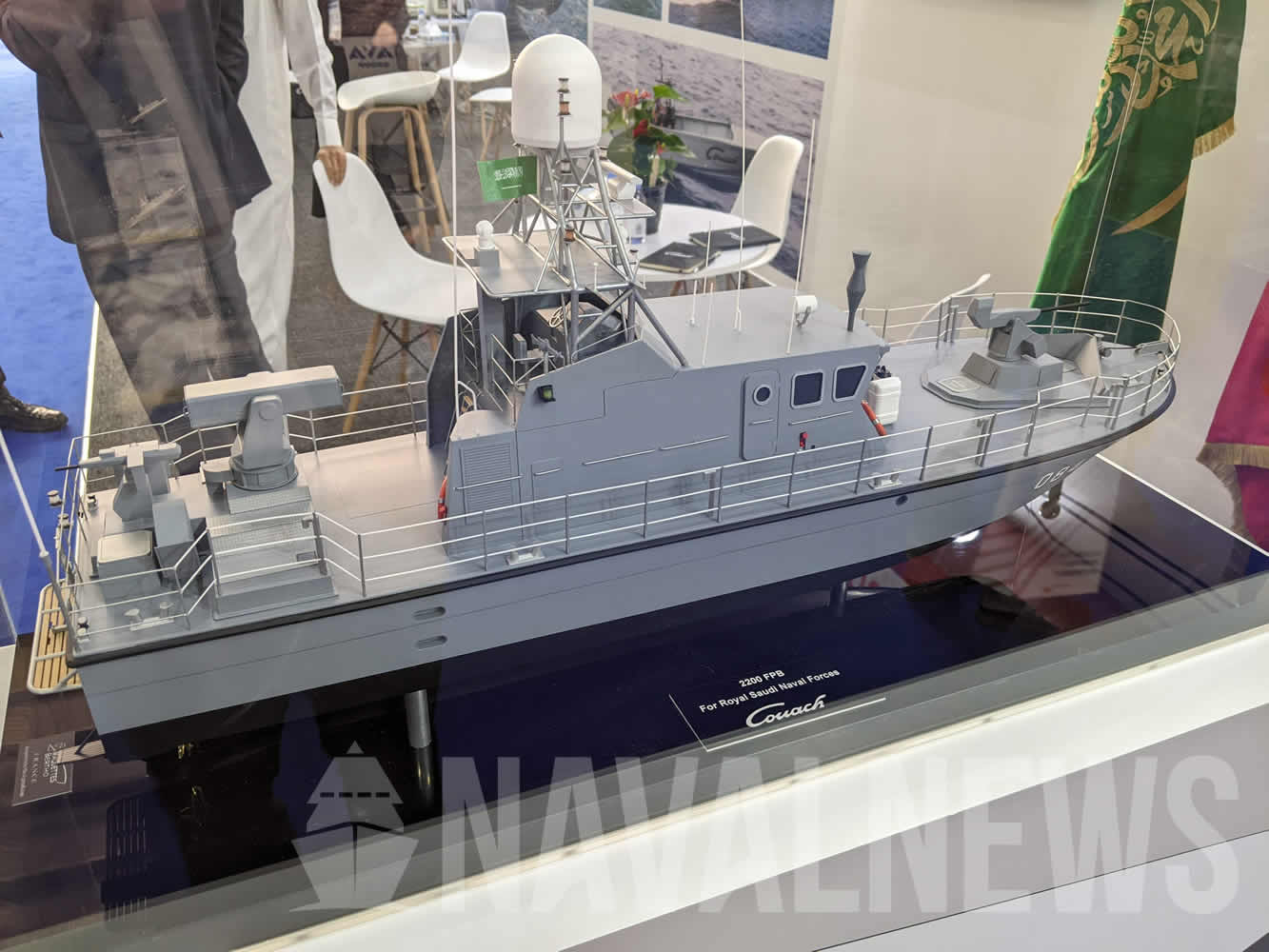
Couach 2200FPB Fast Patrol Boat. 12 being built for Royal Saudi Navy, armed with multiple rocket launchers by LIG Nex1 fitted at the stern.

Lately I have been seeing a lot of news about various developments related to guided 70mm (2.75 inch) rockets, particularly since an APKWS took down a cruise missile less than two weeks ago.

I probably don’t need to say this again, but I think these are extremely appropriate weapons for the Coast Guard because of their light weight, minimum training and maintenance requirements, low cost, and their range, accuracy, and effectiveness against the range of threats the Coast Guard is most likely to encounter from small drones to merchant ships.

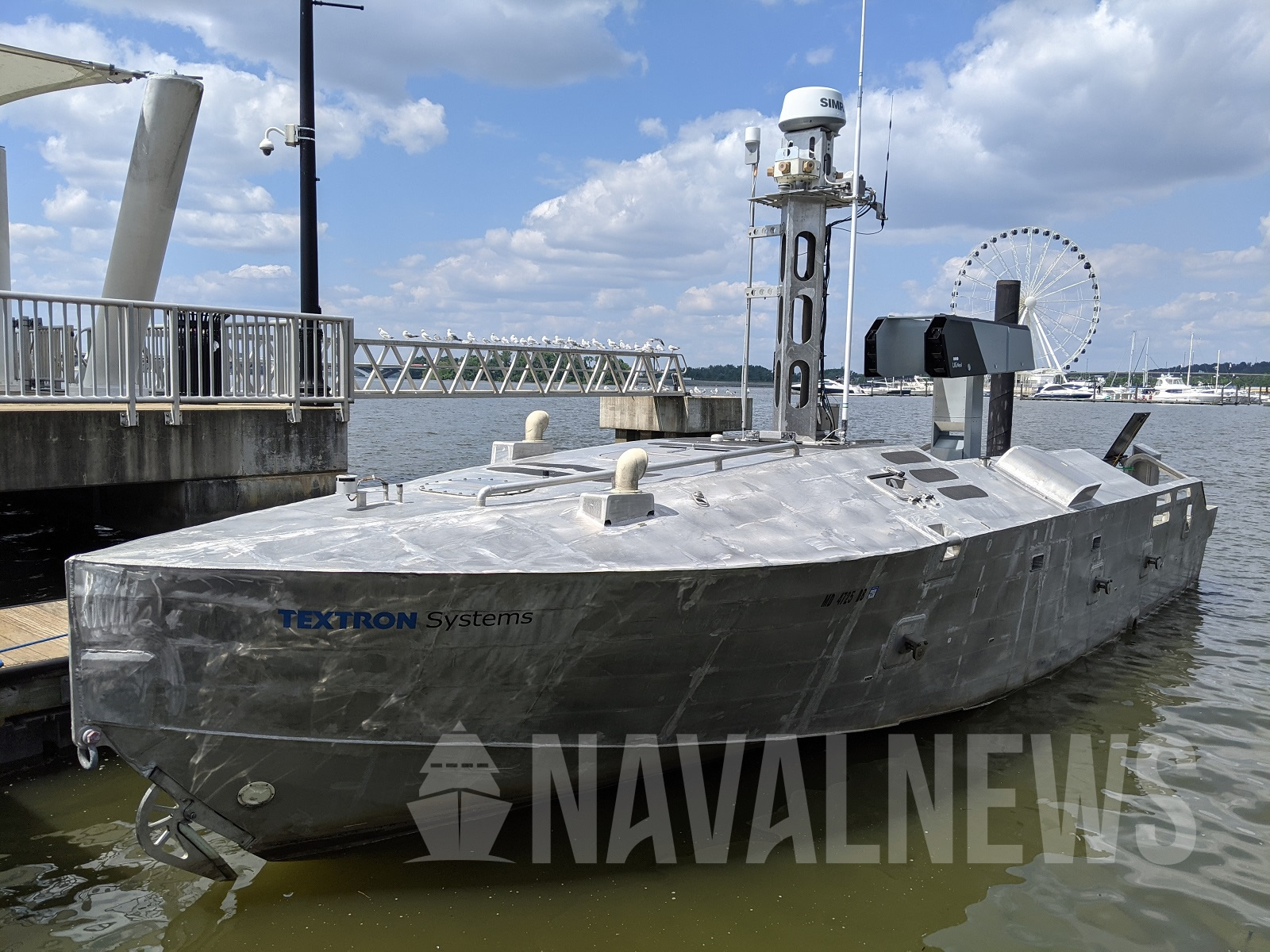
The CUSV seen in the video and below is only 12 meters, 39′ in length.

Textron USV fitted with LIG Next1’s Poniard guided rocket. Textron photo.

South Korean Guided Rocket Test-Fired from USV at RIMPAC 2024

LIG Nex1’s K-LOGIR / Poniard guided rocket successfully finished a Foreign Comparative Testing (FCT) during RIMPAC 2024.

“A launch system for the 2.75-inch guided rocket was developed to be mounted on ships. Currently, it is installed on the Royal Saudi Navy’s 2200 Fast Patrol Boat (FPB) and HSI-32 interceptors, The UAE Navy new Gowind corvettes and is planned to be installed on the UAE Navy’s Falaj 3-class OPV.

Installing LIG Nex1’s Poniard launcher on Textron’s CUSV for the live fire test during RIMPAC. (ROK Navy Photo)

Infrared Seeker For APKWS Guided Rockets Is In The Works

“Advanced Precision Kill Weapon System II, better known simply as APKWS, is slated to be demonstrated with a passive infrared seeker. The news came in the 2025 Marine Aviation Plan, which states that “Additional demonstrations are also in [the] work[s] with the Army and Air Force to determine [the] feasibility of adding additional guidance methods to the APKWS family, including passive infrared seekers.”

“While little is known about this initiative, such a capability could potentially offer a far cheaper solution with independent targeting capabilities compared to existing missiles, while also increasing magazine depth on certain platforms dramatically.”

OKSI Awarded USSOCOM and AFRL Contracts for Precision Guidance Seeker for Munitions

“July 23, 2024 /PRNewswire/ — OKSI has been awarded multiple contracts totaling nearly $6 million from USSOCOM and the Air Force Research Laboratory (AFRL) for their ARMGDN seeker. ARMGDN is a capability enhancement to BAE Systems’ APKWS® laser-guidance kit, providing passive target acquisition and tracking for precision engagements. APKWS is a guidance kit for the 2.75 inch Hydra-70 rocket. Together, the APKWS with OKSI’s ARMDGN seeker will facilitate rapid engagements of multiple air or ground targets via ripple fire of multiple precision- guided rockets in rapid succession.”

U.S. F-16 Fighters Shot Down Drones with Laser-Guided Rockets in Combat

“The U.S. Navy also announced in late 2023 that it was about to deliver a new proximity-fused warhead for APKWS II rockets, optimized for use against drones, albeit developed ostensibly for the surface-to-air role. However, further developing an air-to-air capability out of these older rockets is another impressive feat for the U.S. Air Force, that has now the possibility to engage targets at a very small fraction of the cost of other existing missiles.”

Marines to give air-to-ground missile new counter-drone capabilities

“APKWS II continues to provide a reliable, high-capacity precision guided munition for both the rotary wing and fixed wing communities. The program has now completely transitioned to the Single Variant Block Upgrade (SVBU) that will enable the same guidance unit to be used for any platform, as well as increasing the overall employment envelope. To improve performance against UAS, certification of a suitable proximity fuse is in work for fielding to the fleet with current guidance and warhead combinations. Additional demonstrations are also in work with the Army and Air Force to determine feasibility of adding additional guidance methods to the APKWS family, including passive infrared seekers,” officials wrote.
Another APKWS Based System, “EAGLS: US Army gets new anti-drone systems featuring laser-guided 70mm rockets” –Interesting Engineering

Mooresville, NC, July 22, 2024 – MSI Defense Solutions has delivered the first 70mm centric Counter-UAS system acquired by the Department of Defense for use by the United States Army. Through the Rapid Acquisition Authority (RAA), MSI was awarded a contract for six EAGLS™ (Electronic Advanced Ground Launcher System) counter-UAS systems, including associated engineering and maintenance support. The contract was awarded by Naval Air Systems Command (NAVAIR) to support forward deployed forces facing emerging and persistent Uncrewed Aerial Systems (UAS) threats.

Interesting Engineering reports,

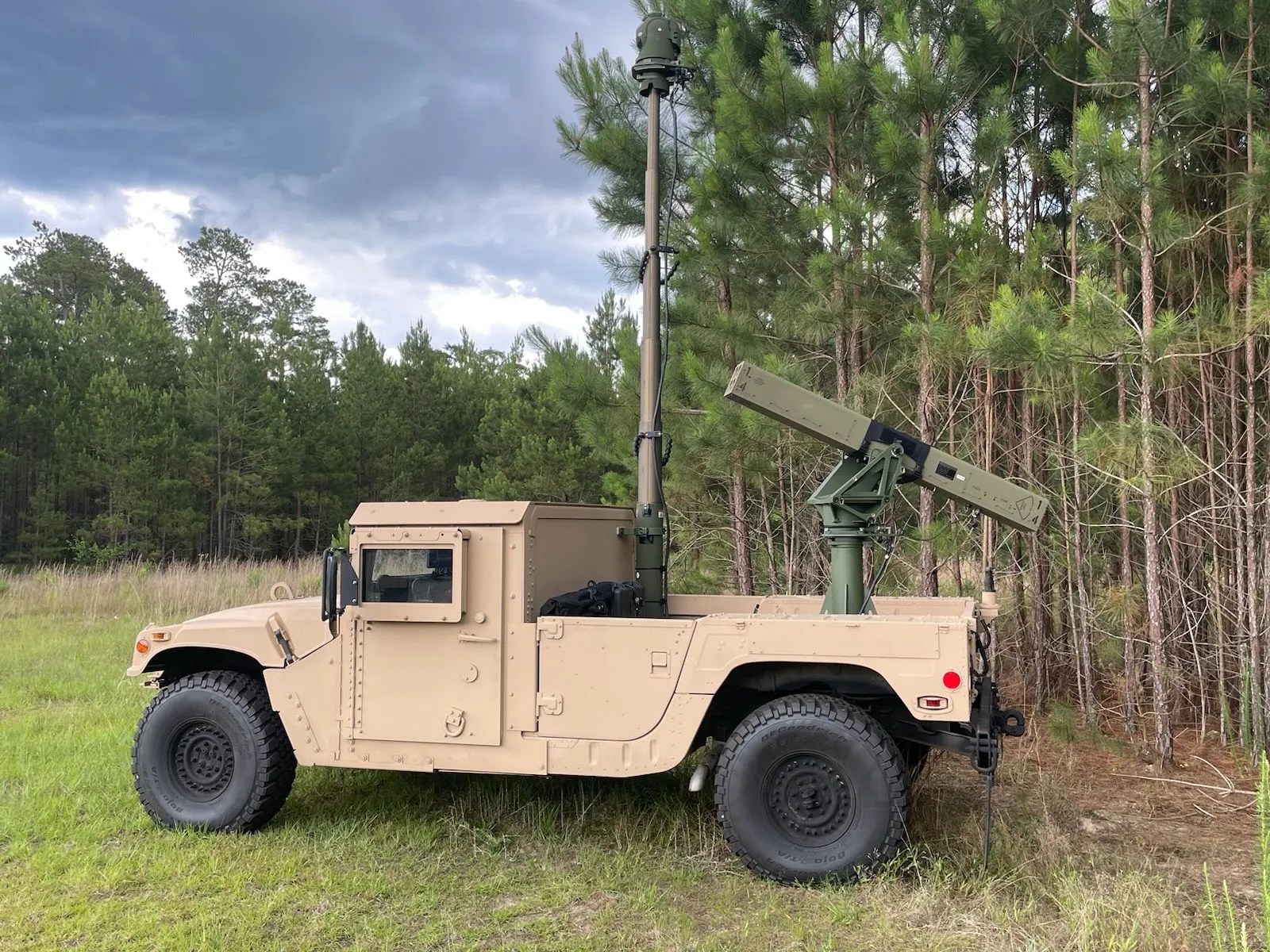
The US Army has received the six MSI Defense Solutions’ (MSI) Electronic Advanced Ground Launcher Systems (EAGLS) to improve its counter-drone capabilities.

In April, the US Army’s Naval Air Systems Command (NAVAIR) announced the order for a firm-fixed-price contract with MSI with a not-to-exceed value of $24,186,464.

Aside from the fact that the Naval Air Systems Command (NAVAIR) does not belong to the US Army, there is good information here, about systems that might find their way onto US Coast Guard assets. (Anything that can be mounted on a road going 4×4 vehicle can be mounted on a ship, and I think we have, or should have, a counter UAS capability requirement.)

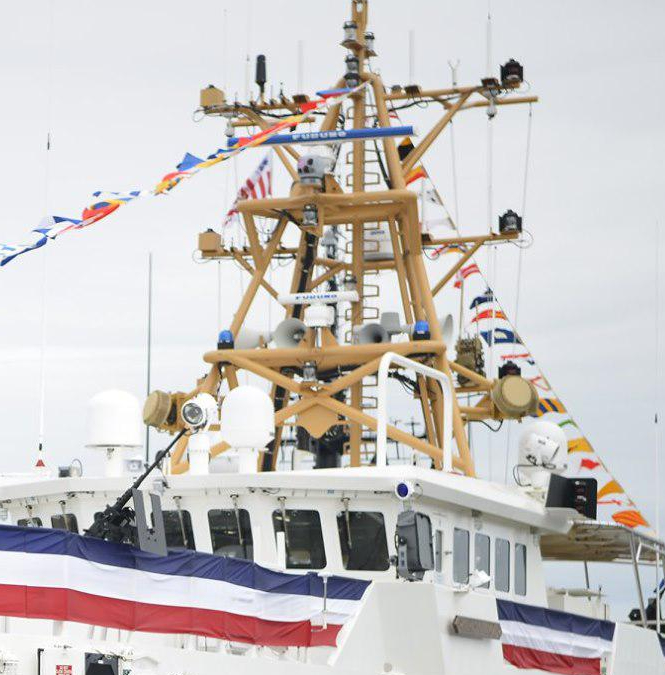
USCGC Charles Moulthrope (WPC-1141) prior to departure for PATFORSWA.

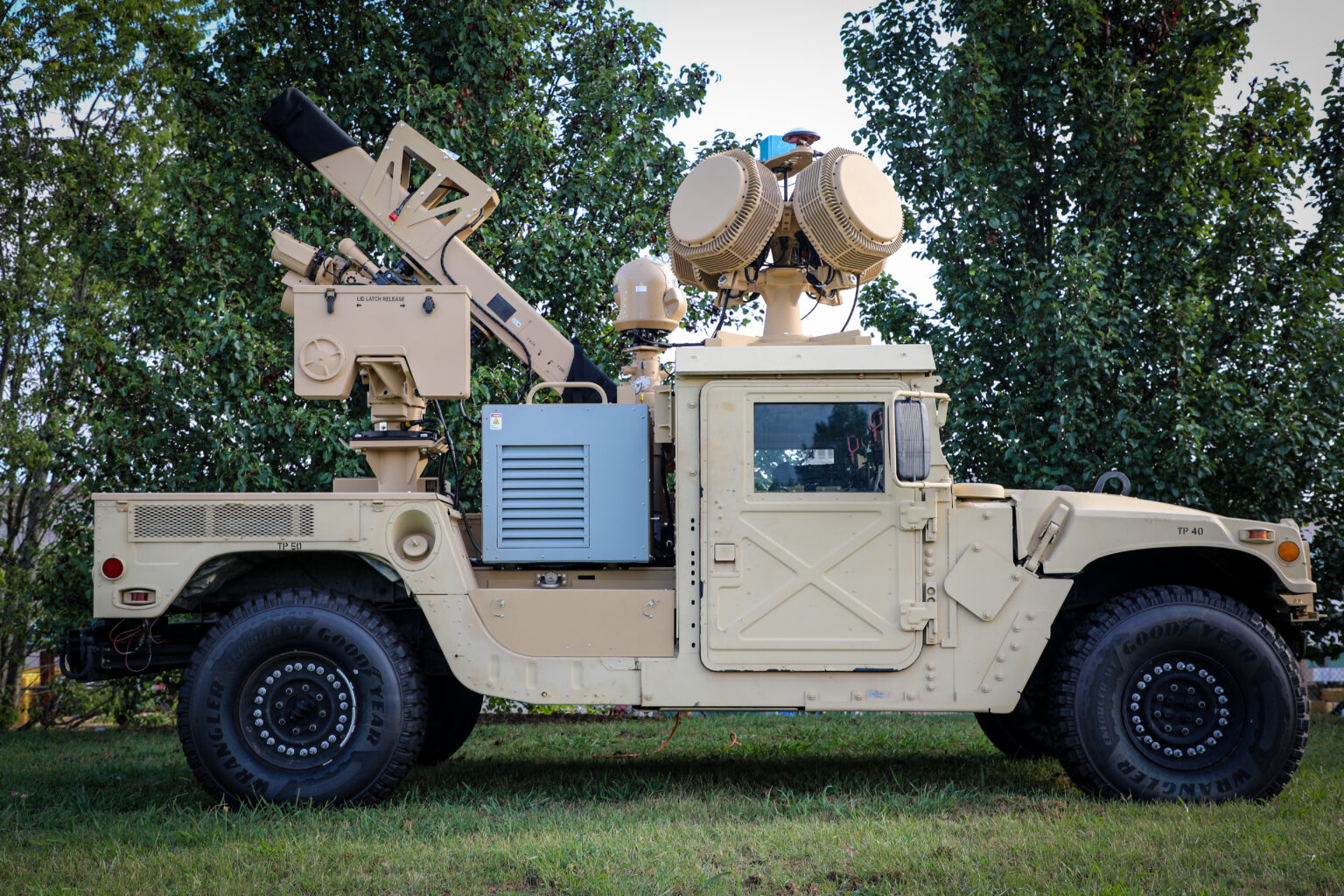
Those radars on top of the truck cab may look familiar.

The purchase seems to show confidence that APKWS can be used effectively against Unmanned Air Systems. The more modest Vampire system is already being used in Ukraine.

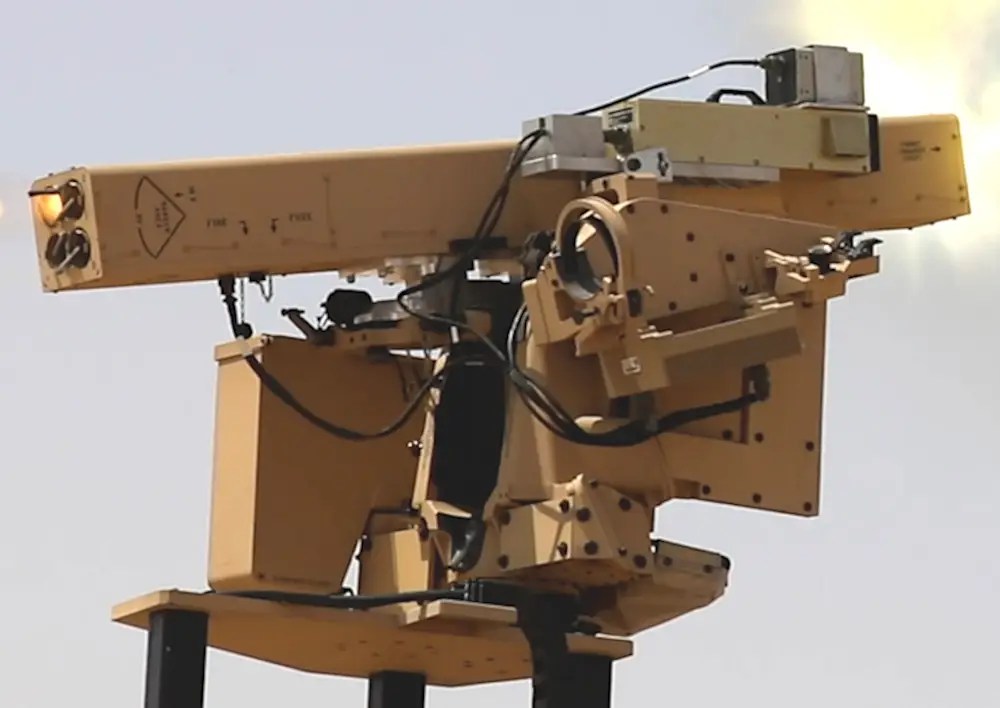
A close-up of the modified CROWS II fitted with the LAND-LGR4 launcher and the added sensor or other system (silver/gray rather than tan). US Army

APKWS, like most 70mm guided rocket systems, is a modification of the Hydra 70mm (2.75″) unguided rocket, which is available with a variety of warheads and fuses, including a proximity fuse.

The system can do more than just counter UAS. This is a system we could put any cutter, WPB size and up, and have most of the effective range and hitting power of a 76mm and at three times the effective range of a 25mm Mk38 Mod2/3 with minimal footprint and support requirements.

“ADAPTING LAND-BASED SYSTEMS FOR EFFECTIVE LOW-COST ENGAGEMENT SOLUTIONS AT SEA” –L3 Harris

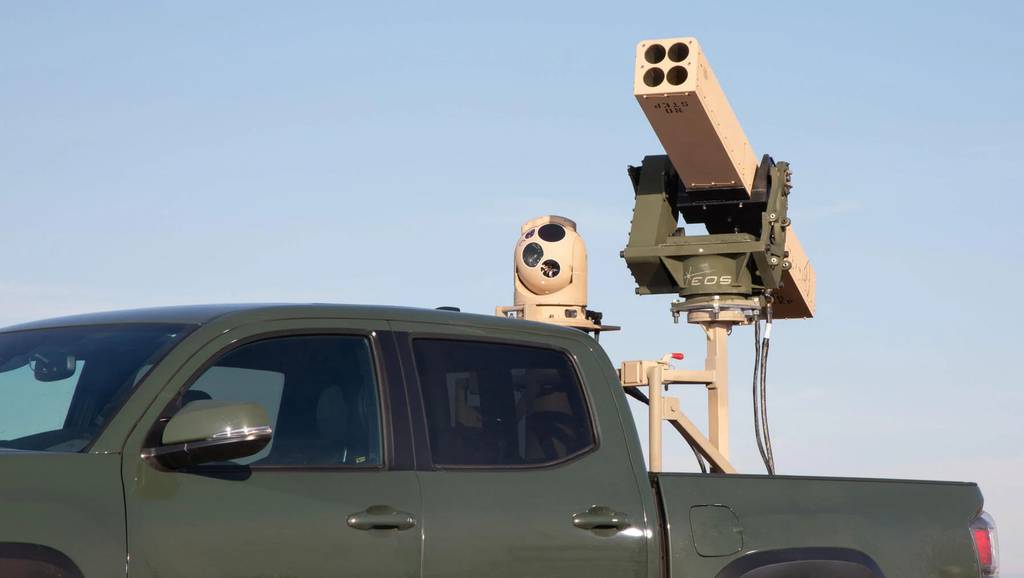
The VAMPIRE system can fit in almost any pickup or vehicle with a cargo bed. (Courtesy of L3Harris)

Below is an L3 Harris news release labeled as an editorial. If you are a regular reader of this blog, you know I have been a fan of APKWS since 2017. Tens of thousands of APKWS conversion kits are made annually. They are cheap at about $30,000. There is now a proximity fuse available. L3 Harris has integrated electro-optic sensors and fire control to create a complete system. It is combat proven against Unmanned Air Systems. It seems an almost ideal system for executing the Ports, Waterways, and Coastal Security mission against both surface and air asymmetric threats. Perhaps significantly, VAMPIRE is a Navy system.


While our Vehicle-Agnostic Modular Palletized ISR Rocket Equipment (VAMPIRE™) system has already proven its effectiveness with ground based missions, its adaptation for maritime use will revolutionize maritime surveillance and defense.

The VAMPIRE system, originally designed to address the emerging unmanned aerial systems (UAS) threat, has garnered acclaim for its precision and reliability in combat. Already proven on the ground in Ukraine, these effective, low-cost engagement capabilities can be extended to the seas, offering a transformative solution for maritime operations against UAS, fast inshore attack crafts and low-slow flyers.

The significance of the maritime system extends beyond its immediate capabilities. Its integration into naval operations redefines maritime security protocols, enhancing surveillance, reconnaissance, and deterrence capabilities. With the ability to swiftly detect and counter aerial and surface threats, naval forces can better safeguard maritime assets, ensure personnel safety, lower the weapons cost curve and maintain strategic superiority in contested environments.

The mission management system enables the integration onto manned and unmanned surface vessels featuring an advanced WESCAM MX™-10 MS targeting sensor with its weapons station, allowing a remote operator to engage targets quickly and accurately. Like its ground-based counterpart, maritime VAMPIRE employs the Advanced Precision Kill Weapon System (APKWS) paired with L3Harris’ proximity fuze to defend against surface and air threats, providing naval forces with an accurate, low-cost engagement capability.

The VAMPIRE system highlights L3Harris’ dedication to supporting the defense needs of nations across the globe. By extending this versatile solution to the maritime domain, L3Harris is providing naval forces with cost-appropriate options to adapt to evolving threats and safeguard waters effectively.

As the landscape of maritime security challenges undergoes constant evolution, forward-looking, full-scale production and low-cost solutions are needed to counter the wide range of dynamic challenges.  L3Harris is committed to innovation and adaptability in addressing evolving security threats by leveraging and adapting existing technology like VAMPIRE for maritime use.

RELATED CAPABILITIES

“Vampire weapon system makes Ukraine combat debut” –Defense Blog

Defense Blog reports,

The Ukrainian Navy’s press service recently released footage showcasing the combat effectiveness of their air defense units, marking the confirmed debut of a new Counter-Unmanned Air System (UAS) weapon system developed by L3Harris for Ukraine.

The video captured the moment when a Russian kamikaze drone, identified as the Shahed-136, was successfully shot down by an Advanced Precision Kill Weapon System (APKWS) laser-guided rocket launched from the Vampire weapon system.

If you have been following my blog, you know I like this system and have been advocating for Coast Guard use of the APKWS since at least 2017.

  • It is probably less maintenance intensive than a .50 caliber machine gun.
  • It has a very small footprint and light weight.
  • Because it is a precision weapon, it minimizes the probability of collateral damage.
  • It is a proven counter Unmanned Air System.
  • It can employ a variety of warheads for different purposes including air burst with the M429 proximity fuse. It has even been tested successfully against cruise missiles.
  • It is effective against small, fast, highly maneuverable surface threats.
  • It has an effective range greater than that of our M38 gun mounts and a similar effective range to that of the 57mm and 76m guns.
  • While I would not count on its ability to stop medium to large ships, it can inflict damage at effective ranges beyond that of most weapons a terrorist organization might equip a vessel with.  It is likely to be a lot more effective against small ships than the Mk38.
  • And it is cheap. 

Without much additional effort, it could make Coast Guard assets much more capable in the Ports, Waterways & Coastal Security and Defense Readiness missions.

K-LOGIR, Korean Low cOst Guided Imaging Rocket and Launcher

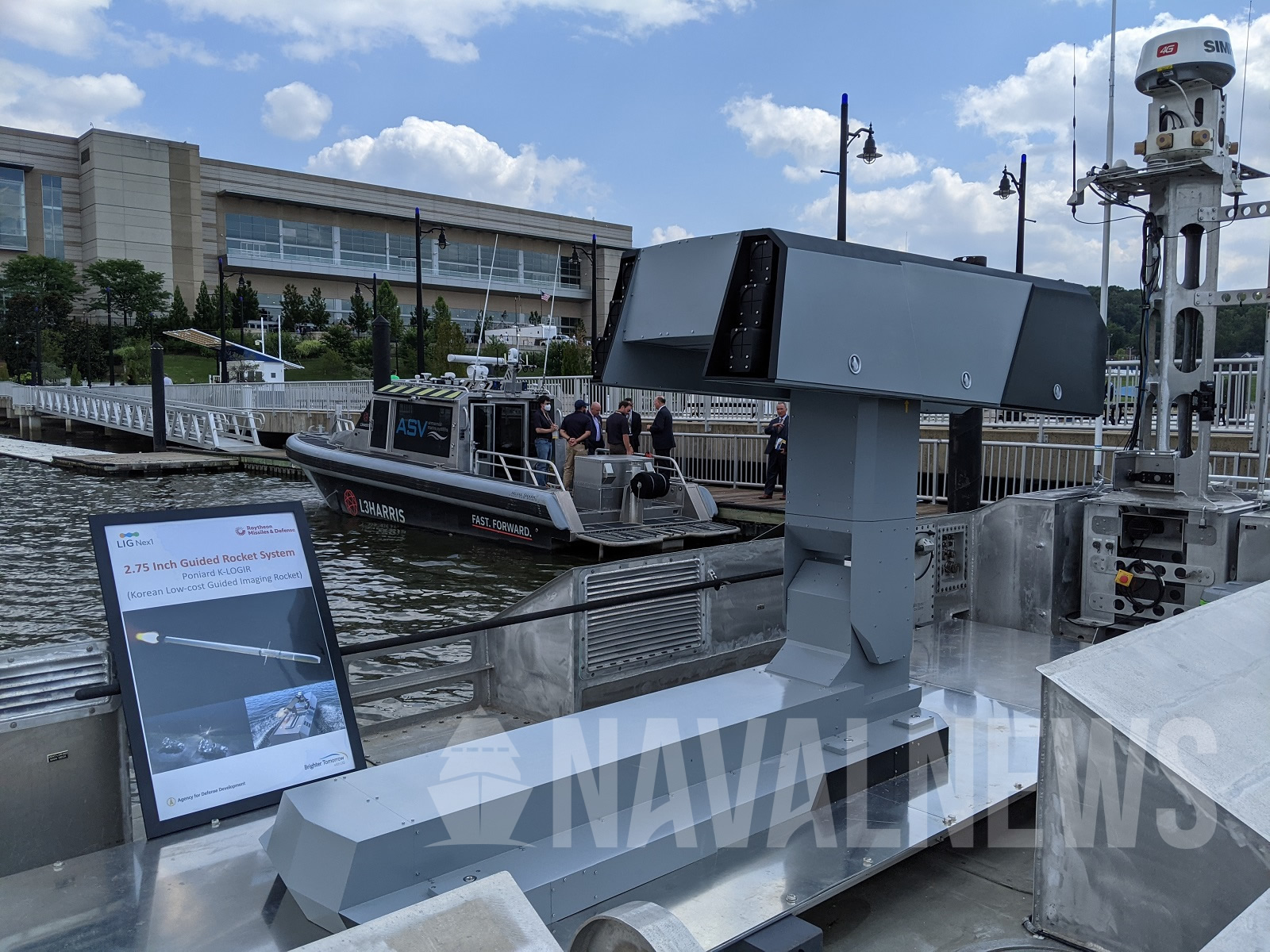
K-LOGIR launcher fitted on a Textron CUSV USV at Sea Air Space 2021. The system was showcased by Raytheon and LIG Nex1.

Naval News recently did a post highlighting a 4th Fleet live fire test combining a Korean developed fire and forget guided rocket system with the Common Uncrewed Surface Vessel (CUSV) cued to a target by a Radiosonde UAS for a fully uncrewed kill chain.

The “Poniard” Korean-Low cOst Guided Imaging Rocket (K-LOGIR) is closely related to the APKWS, both being based on the 70mm Hydra unguided rocket. Unlike the semi-active laser homing APKWS, the K-LOGIR is a fire-and-forget system allowing multiple simultaneous engagements.

Most of the reports I have read on this exercise are unclear if six missiles hit a single target or if six missiles hit six different targets, but this Defense Mirror report, “Textron’s Unmanned Boat Uses South Korean Weapon to Engage Multiple Targets.” makes it clear that multiple targets were engaged in a single salvo.

I don’t fully understand how they designate different targets for the missiles in the salvo, but it may be that they are sending them to different waypoints before they initiate their search.

The ability to engage several targets simultaneously makes this system attractive for countering surface swarm tactics like those that might be encountered by PATFORSWA, but for the Ports, Waterways, and Coastal Security mission, the APKWS’ semi-active laser homing might be a better solution, in that we are unlikely to have to engage numerous targets in a single salvo and we may want to target particular parts of an adversary’s vessel or perhaps engage low-level air targets such as UAS, helicopters, or general aviation aircraft. Presumably, APKS could be fired from the same launcher.

Textron USV fitted with LIG Next1’s Poniard guided rocket. Textron photo.

Take a look at the launcher above and below. Here it is mounted on an unmanned 39-foot boat. In the photo above you can see that it traverses and elevates. It appears to hold up to six rockets. It might be an appropriate way to arm Coast Guard patrol boats and larger cutters with APKWS, but “Vampire” might be even simpler.

K-LOGIR launcher fitted on a Textron CUSV USV at Sea Air Space 2021. The system was showcased by Raytheon and LIG Nex1.

I would really like to see 4th Fleet make more effort to publicize their experimentation efforts. I’m surprised I was not able to find a YouTube video that documented this test and I have seen no mention of it on the 4th Fleet website.

I am also curious to know if the Navy’s 39′ CUSV could be operated from the stern ramp of a National Security Cutter. Interoperability?

NAVAIR Providing VAMPIRE APKWS Counter UAS System to Ukraine

The Drive has a new post, “Our Best Look At A VAMPIRE Counter Drone System For Ukraine.”

We have known for a while that APKWS was being used by Ukraine and that it was being mounted on vehicles along with Electro-Optic fire control systems to counter unmanned air systems (drones). (More here.)

What surprised me most in the new “The Drive” article was that the systems were developed my NAVAIR. That means this is a Navy developed system. Since the Coast Guard gets all of its weapons, other than small arms, from the Navy, that may mean the Coast Guard may be more likely to be able to get the system.

The Vampire combination of APKWS, Electro-Optic Sensors, and Firecontrol seems to be the easiest way for the Coast Guard to protect high value targets from potential air and surface suicide drone attacks without spraying bullets that may cause collateral damage. It is also flexible enough to be used against small, fast, highly maneuverable surface threats. It might even be useful against larger targets. It certainly seems to be exceptionally effective for its cost, weight, support requirements, and minimal footprint.

I would like to see them on all cutters, but getting this sort of capability for the cutters in PATFORSWA is most urgent.

APKWS in Use

As you probably know, I am a fan of the APKWS (Advanced Precision Kill Weapon System) because I think it could provide a substantial upgrade for our cutters, particularly the smaller ones. The system is quick, accurate, effective, light weight, uncomplicated, inexpensive, requires little training, has minimum impact on the platform, and limits collateral damage.

The VAMPIRE system can fit in almost any pickup or vehicle with a cargo bed. (Courtesy of L3Harris)

Thanks to Walter for alerting me to this short video of the system in use.

Looks to me, like they are targeting observation posts along the river.

“Laser-Guided Rockets Are Getting New Highly-Versatile Anti-Armor Warhead” –The Drive

The Drive reports on a test of a new warhead for the “Advanced Precision Kill Weapon System” (APKWS)

The Advanced Precision Kill Weapon System, or APKWS, laser guidance kit designed by BAE Systems has been tested in a surface-to-surface role with a new highly versatile, multi-purpose warhead that is capable of taking on armor and other targets. The new warhead is provided by General Dynamics Ordnance and Tactical Systems. The test demonstrated added flexibility for not only the APKWS itself, which is most often employed in air-to-ground applications against more lightly armored targets, but also for all platforms that are capable of firing APKWS rockets.

A screenshot from the General Dynamics video showing the launcher configuration used during the test. Credit: General Dynamics

The test also demonstrated a new launcher.

The report was quite complete, providing background and an update on the entire program.

If you have been reading this blog regularly, you know I think APKWS would be a good fit for the Coast Guard as a precision weapon that would be highly effective against small, fast, highly manueverable threats while minimizing the possibility of collateral damage. Its relatively new proximity fuse also makes it effective against Unmanned Air Vehicles which appear to be an emerging threat. APKWS might even be effective against small ships if used in quantity.

For larger threats Hellfire or its replacement, JAGM, would be a better choice, but because this is so much cheaper and available in larger quatities, it appears much more likely. APKWS would probably be a better choice for PATFORSWA where the threat includes large numbers of small craft and UAVs.

We may have seen the video below, but it does suggest that the system is suitable for the 85 foot Navy MkVI patrol boat, so its certainly suitable for cutters of similar size and larger.

“‘Vampire’ to transform Ukraine pickups into deadly missile launchers” –Defense News

The VAMPIRE system can fit in almost any pickup or vehicle with a cargo bed. (Courtesy of L3Harris)

Defense News reports,

The U.S. is sending Ukraine “Vampire” kits that transform pickup trucks and other non-tactical vehicles into highly portable missile launchers...The L3Harris-made weapon ― a small, four-barreled rocket launcher and sensor ball ― can be mounted in two hours and operated by a single person, the company said. It can be equipped with missiles to hit ground or air targets including unmanned aircraft systems.

Gee, that sounds like something the Coast Guard could use, first and foremost on the Webber class FRCs of PATFORSWA, but really on virtually all cutters. It could be almost a ubiquous as the .50 caliber machine gun. Good for use against drones and swarming small craft, even small ships, and a bigger single round punch than any weapon in the current Coast Guard inventory.

The weapons expected to be used by the VAMPIRE (Vehicle-Agnostic Modular Palletized ISR Rocket Equipment) system are the AGR-20 APKWS II (Advanced Precision Kill Weapon System), 70mm (2.75″) rockets with a semi-active laser homing guidance kit added.

This is not an expensive, exotic, limited production weapon. It is used in the thousands by the Army, Air Force, Navy, and Marines. It is combat proven. As we noted earlier, in “More on Surface Launch Application of APKWS,

“… the U.S. military has a lot of 70mm rockets and buys thousands more every year. The Army alone plans to buy 60,000 unguided rockets in fiscal 2023 alone. BAE Systems, which builds the APKWS II seeker kit, is tooled to build 25,000 of them per year and is expanding production, according to its website. It has already delivered 37,000 units in six years of production.”

As I have contended,

This is a weapon the Coast Guard could add, relatively painlessly, that could deal with a range of threats including:

  • Drones/Unmanned Air Systems
  • Small, fast, highly maneuverable surface threats
  • Small ships

With the right choice of ammunition type, it might provide a degree of effectiveness against larger ships, all while doing so with great precision and minimal chance of collateral  damage.

It is an easy fix, at least for the lower end of target set. If we can’t mount APKWS launchers on the 25mm Mk38, on the Webber class, we could mount it on the deck immediately above and behind the gun.

That the VAMPIRE system includes a laser designator also means that it can be used to identify targets for supporting units, particularly attack aircraft, something else I think we need.

“BAE Systems Successfully Tests APKWS Laser-Guided Rockets Against UAS” –Seapower

An artist’s conception of an APKWS strike against an unmanned aircraft. BAE SYSTEMS

The Navy League’s on line magazine, Seapower, report the successful test of a new alternative for countering Unmanned Air Systems.

BAE Systems Inc. has successfully tested APKWS laser-guided rockets in precision strike tests against Class 2 unmanned aircraft systems at Yuma Proving Grounds, Arizona, the company said Oct. 11.

The 2.75-inch test rockets combined standard M151 warheads and Mk66 motors with APKWS precision guidance kits and a newly developed proximity fuze, enabling them to engage and destroy airborne drones at a fraction of the cost of traditional counter-UAS strike capabilities.

(A Class 2 UAS is 21 to 55 pounds, operates at 3500 ft or lower, and has a maximum speed of 250 knots, so its pretty small. ScanEagle is an example.)

As important as this cUAS capability may be, adding this capability to Coast Guard Units would also have the bonus of providing both a capability against a range of surface targets from small, fast, highly maneuverable craft to small ships, and at least a basic anti-aircraft capability.

Adding a launcher and the required laser designator to vessels with Mk 38 mod2/3 gun mounts should not be too difficult. The PATFORSWASIA Webber class FRCs would a good place to prototype an installation.

More on APKWS here: