“Royal Navy makes first ‘narco-sub’ drugs seizure” –BBC

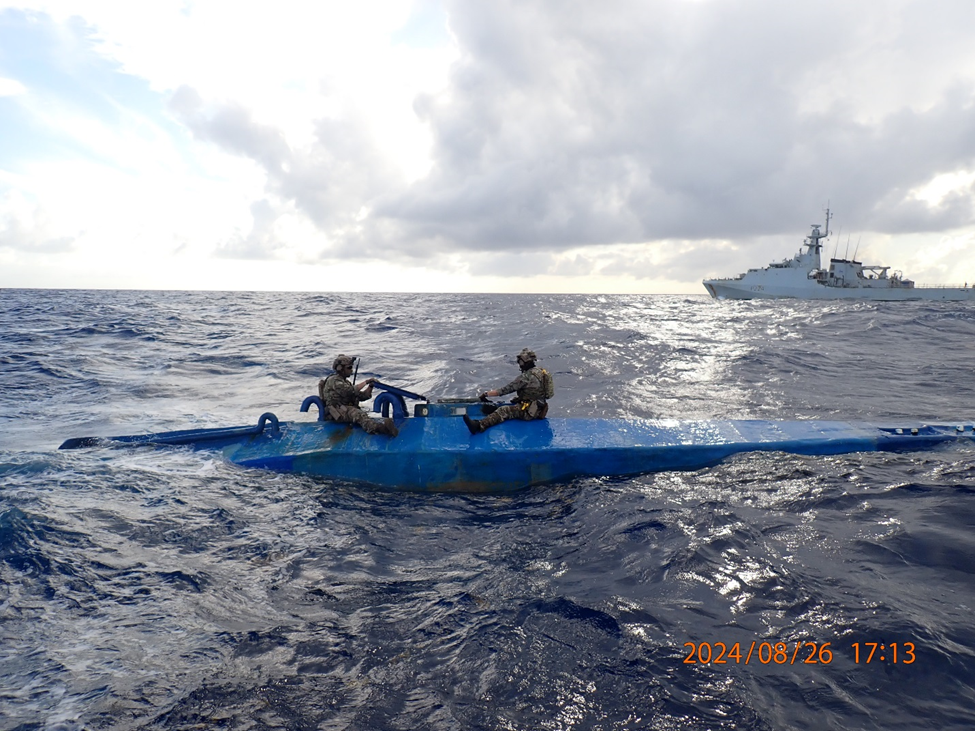
Crew members form U.S. Coast Guard Tactical Law Enforcement Detachment (LEDET) 111 and British Royal Navy team embarked aboard HMS Trent (P244) interdicts a semi-submersible drug smuggling vessel in the international waters of the Caribbean Sea, Aug. 26, 2024. Three suspected smugglers and 1,239 pounds of illegal narcotics from this interdiction were transferred to federal custody for prosecution by the U.S. Department of Justice. (Courtesy image from United Kingdom Royal Navy)

BBC reports,

“HMS Trent has made eight drug seizures since deploying to the Caribbean in December 2023, setting a new record, the Royal Navy added.

“It said the patrol ship had seized more than 9,400kg (20,000lb) of drugs, making it the best hunter of smugglers in the Royal Navy this century.”

Below is the Coast Guard news release regarding the offload.


Sept. 10, 2024

Coast Guard offloads more than $54 million in illegal narcotics interdicted in Caribbean Sea

Coast Guard Seventh District – (305) 415-6683

MIAMI – The crew of Coast Guard Cutter Diligence offloaded more than 4,125 pounds of cocaine with an assessed street value of approximately $54 million in Port Everglades, Monday.

Coast Guard crews, working alongside interagency and international partners, seized the illegal drugs in the international waters of the Caribbean Sea during three separate interdictions.

The following assets and crews were involved in the interdictions:

  • Royal Navy ship HMS Trent (P 244)
  • U.S. Coast Guard Tactical Law Enforcement Team Pacific (PAC-TACLET)
  • U.S. Coast Guard Cutter Joseph Napier (WPC 1115)
  • U.S. Customs and Border Protection Air and Marine Operations (CBP-AMO)
  • Joint Interagency Task Force South (JIATF-South)

Along with the illicit narcotics, 11 suspected smugglers were apprehended and will face prosecution in federal courts by the U.S. Department of Justice.

“I am extremely proud of our crew’s tenacity and professionalism, coupled with outstanding coordination with Coast Guard aircrews, during this complex counter-drug mission,” said Lt. Matthew Carmine, Coast Guard Cutter Joseph Napier commanding officer. “Their steadfast efforts, along with those of foreign allies and partner agencies, continue to prove vital to countering drug trafficking organizations and safeguarding the people of Puerto Rico and the U.S. Virgin Islands.”

Detecting and interdicting illicit drug traffickers on the high seas involves significant interagency and international coordination. The Joint Interagency Task Force South in Key West, Florida conducts the detection and monitoring of aerial and maritime transit of illegal drugs. Once interdiction becomes imminent, the law enforcement phase of the operation begins, and control of the operation shifts to the U.S. Coast Guard throughout the interdiction and apprehension. Interdictions in the Caribbean Sea are performed by members of the U.S. Coast Guard under the authority and control of the Coast Guard’s Seventh District, headquartered in Miami.

These interdictions relate to Organized Crime Drug Enforcement Task Forces’ (OCDETF) Strike Force Initiatives and designated investigations. OCDETF identifies, disrupts, and dismantles the highest-level criminal organizations that threaten the United States using a prosecutor-led, intelligence-driven, multi-agency approach. Additional information about the OCDETF program can be found at https://www.justice.gov/OCDETF.

For breaking news, follow us on “X” (formerly Twitter). For additional information, find us on Facebook and Instagram.

Visit GoCoastGuard.com to learn about active duty and reserve, officer and enlisted opportunities in the U.S. Coast Guard. Information on how to apply to the U.S. Coast Guard Academy can be found here.

Russian Navy Coming to the Straits of Florida Next Week

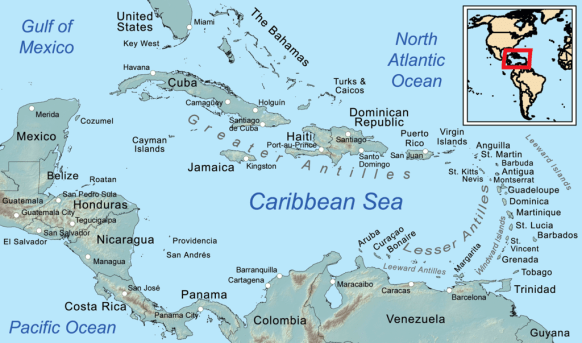
Map of the Caribbean Sea and its islands. Photo credit: Wikipedia Commons, author–Kmusser, all data from Vector Map.

MSN reports three Russian Navy surface ships and a nuclear-powered submarine are expected call on Havana next week.

“Russian ships are expected to make port calls in Cuba and perhaps Venezuela. The regional exercises are expected to last through the summer and culminate in a global naval exercise in the fall.”

Of course, the US is not objecting to the presence of a few Russian Ships operating in waters close to the US. Nevertheless, the Coast Guard may encounter these ships.

It would be interesting to know what kind of ships they are sending.

Meanwhile close to Russia, “NATO to Kick Off Largest Baltic Operations Exercise to Date.”

Three Apparent Fatalities in Drug Interdiction Incident

HNLMS Groningen’s crew interdicts a suspected drug boat in the Caribbean Sea, Sept. 27, 2020. HNLMS Groningen is a Holland-class offshore patrol vessel operated by the Royal Netherlands Navy. (Royal Netherlands Navy photo)

Below is a news release from District 7. It is unusual in that smugglers apparently turned toward the boarding party and prompted a response using deadly force. It appears likely this resulted in three fatalities among the smugglers. “There were no reported injuries to the combined law enforcement team members.”


June 6, 2024

Coast Guard, Dutch suspend search for missing persons following counter drug mission in Caribbean Sea

MIAMI – The U.S. Coast Guard, Royal Netherlands Navy and Dutch Caribbean Coast Guard suspended a search for three suspected smugglers who went overboard during pursuit of a non-compliant vessel suspected of smuggling illicit narcotics in the Caribbean Sea, June 4, 2024.

Active search efforts were suspended, Tuesday evening, pending new information.

In the early morning hours on Tuesday, a Royal Netherlands Navy ship with an embarked U.S. Coast Guard law enforcement detachment deployed for a counter drug patrol identified a vessel suspected of smuggling narcotics in international waters. The vessel failed to stop when signaled and the smuggling vessel operator instead increased speed and changed direction toward the Dutch pursuit boat, called a fast-raiding interception and special forces craft (FRISC).

The FRISC boat crew, consisting of Dutch and U.S. Coast Guard boarding team members, discharged their weapons at the go-fast vessel in self-defense and defense of others in response to the life-threatening situation. The go-fast vessel caught fire and sank, and three suspected smugglers went overboard into the water and were not recovered.

There were no reported injuries to the combined law enforcement team members.

“The Coast Guard is America’s primary maritime law enforcement agency, and our crews work hard to safely bring suspected smugglers to face federal prosecution in the United States for alleged crimes,” said Lt. Cmdr. John W. Beal, Coast Guard District Seven public affairs officer. “The missions our Coast Guard servicemembers and allied partners do every day to deny transnational criminal organizations access to maritime smuggling routes are inherently dangerous. The decision to suspend active search efforts is not one we take lightly, and the Coast Guard is working to investigate the incident in accordance with Coast Guard policy.”

Assets and crews involved in the search efforts included:

  • Royal Netherlands Navy ship HNLMS Groningen
  • Royal Netherlands Navy ship HNLMS Pelikaan
  • U.S. Coast Guard helicopter
  • Kustwacht Caribisch Gebied helicopter
  • Kustwacht Caribisch Gebied cutter Jaguar

Detecting and interdicting illegal drug traffickers on the high seas involves significant interagency and international coordination. Once interdiction becomes imminent, the law enforcement phase of the operation begins, and control of the operation shifts to the U.S. Coast Guard throughout the interdiction and apprehension phases. Interdictions in the Caribbean Sea are performed by members of the U.S. Coast Guard under the authority and control of the Coast Guard’s Seventh District, headquartered in Miami.

” U.S., CARICOM reaffirm cooperation on guns, drugs and youth violence” –The Watch

Map of the Caribbean Sea and its islands. Photo credit: Wikipedia Commons, author–Kmusser, all data from Vector Map.

Below is a post from the NORTHCOM on-line magazine “The Watch.” This seems to suggest we will be getting better Caribbean Maritime Domain Awareness.


THE WATCH STAFF, Jan. 17, 2024

The U.S. and the Caribbean Community (CARICOM, an intergovernmental organization linking 15 member states), along with the Dominican Republic, have reaffirmed their efforts to combat illegal activities in the Caribbean that threaten their national security interests.

The signatory nations released a diplomatic note on November 22, 2023, outlining steps to achieve three goals: substantially reduce illicit trafficking, advance public safety and security, and prevent youth crime and violence in the Caribbean.

The agreement reiterates goals set out in a 2010 agreement, the note states, and promises new efforts to tackle regional issues.

CARICOM, the Dominican Republic and the U.S. also “welcome” a U.N. mission to restore safety and security in Haiti, according to the statement.

The agreement authorizes work to strengthen maritime prosecutions and encourage regional cooperation on maritime law enforcement, implementing the Caribbean Maritime Security Strategy to improve defense and law enforcement cooperation, as well as operational capacity and security.

Maritime domain awareness technology will be employed to disrupt criminal networks and deter narcotics, firearms, human trafficking, and illegal fishing. To do that, the agreement states, CARICOM countries will need to complete a memorandum of understanding to access and share information via live feeds from sensors, radars and identification systems.

The U.S., CARICOM and the Dominican Republic pledged to create two working groups on maritime issues and border and port security in 2024.

The agreement also bolsters efforts to stem youth violence, tighten efforts to bring transnational criminal organizations to justice, and promises help to improve Caribbean judicial and law enforcement capabilities.

The goals echo homeland defense objectives articulated by the commander of U.S. Northern Command and the North American Aerospace Defense Command, Gen. Glen D. VanHerck, who singled out the Bahamas, a key Caribbean ally, as crucial to the defense of the southeastern approaches to the homeland.

VanHerck praised the Bahamas for its cooperation in increasing domain awareness in the region and enhancing Caribbean security.

“Our partners in the Royal Bahamian Defence Force (RBDF) continue to punch above their weight as they continue to provide important contributions to regional security. USNORTHCOM and the RBDF operate maritime surveillance systems at Great Inagua and Coral Harbour, and plans are on track to add a third site in the coming years. That shared capability has significant benefits for domain awareness in the southern approaches to North America,” VanHerck told Congress in March 2023 testimony.

The agreement also promises to increase cooperation with France, the Netherlands and U.K. to improve regional security in their Caribbean overseas territories.

“Navy’s 4th Fleet sets sights on command center upgrades for drone ops” –Defense Scoop

Commercial operators deploy Saildrone Voyager Unmanned Surface Vessels (USVs) out to sea in the initial steps of U.S. 4th Fleet’s Operation Windward Stack during a launch from Naval Air Station Key West’s Mole Pier and Truman Harbor, Sept. 13, 2023. (U.S. Navy photo by Danette Baso Silvers/Released)

Defense Scoop reports,

“We have the robots and we’re making lots of progress there, but in terms of what we have at the headquarters and how we actually manage the command for it [and] how we manage that data — it’s overwhelming,” Rear Adm. Jim Aiken said.
I have been a bit disappointed, we have heard so little from 4th Fleet about their effort to integrate uncrewed systems into their operations.
4th Fleet is particularly important to the Coast Guard since it manages drug interdiction operations in the Caribbean and Eastern Pacific. There are also a significant number of Coast Guard personnel on the 4th Fleet staff, so there is an opportunity to learn a lot from their experience with uncrewed systems.
From what we had heard, 4th Fleet has had a good picture of drug smuggling traffic but were short of surface assets to do the actual intercepts and boardings. The uncrewed assets are obviously not helping with that. While they almost certainly provide some good data, they are also introducing a lot of noise into the system that 4th Fleet was not ready to filter out.

“Coast Guard reports fatality following counter drug mission in Caribbean Sea” –Coast Guard News

Below is a press release from Coast Guard news.

Coast Guard reports fatality following counter drug mission in Caribbean Sea

MIAMI – A Coast Guard crew’s airborne use of force to stop a non-compliant vessel suspected of smuggling illicit narcotics in the Caribbean Sea resulted in a fatality, Jan. 2, 2024.

Two other suspected smugglers were apprehended and face prosecution in U.S. federal courts by the Department of Justice. The seized contraband, approximately 385 kilograms of cocaine with an estimated wholesale value of $11.1 million, will be transferred ashore at a later date.

On Jan. 1, a U.S. Coast Guard law enforcement detachment deployed aboard a U.S. Navy ship in the Caribbean Sea for a counter drug patrol identified a vessel suspected of smuggling narcotics and attempted to stop the vessel. The vessel failed to stop and Coast Guard District Seven authorized airborne use of force in accordance with policy, including warning shots and disabling fire, for a non-compliant vessel suspected of smuggling illicit narcotics in international waters.

The law enforcement boarding team arrived on scene and identified that one of the crewmembers suffered an injury as a result of the use of force. Navy and Coast Guard members performed first aid and transferred the injured individual to the Navy ship before they were medically evacuated by a Navy helicopter to higher level care ashore in the Dominican Republic. The Coast Guard later received a report from Dominican authorities that the patient, a Dominican national, succumbed to their injuries.

“The critical homeland security missions the Coast Guard conducts every day as America’s primary maritime law enforcement agency are inherently dangerous,” said Lt. Cmdr. John W. Beal, Coast Guard District Seven public affairs officer. “The Coast Guard takes any loss of life seriously and is working to investigate the incident in accordance with Coast Guard policy.”

Detecting and interdicting illegal drug traffickers on the high seas involves significant interagency and international coordination. Once interdiction becomes imminent, the law enforcement phase of the operation begins and control of the operation shifts to the U.S. Coast Guard throughout the interdiction and apprehension phases. Interdictions in the Caribbean Sea are performed by members of the U.S. Coast Guard under the authority and control of the Coast Guard’s Seventh District, headquartered in Miami.

“Royal Bermuda Regiment hosts Caribbean overseas territories to improve SAR capability” –The Watch

British Overseas Territories in the Caribbean in blue. Credit: Bild der Karte:

Royal Bermuda Regiment hosts Caribbean overseas territories to improve SAR capabilities–Jan 5, 2024

Five British Overseas Territories recently took part in a two-week training session led by the United Kingdom Coast Guard and the Royal National Lifeboat Institute (RNLI), a nonprofit that trains coast guards globally, with the goal of improving the interoperability of Caribbean search and rescue (SAR) operations.

Anguilla, the British Virgin Islands, the Cayman Islands, Montserrat, and the Turks and Caicos Islands participated in water-based exercises and tabletop exercises at the Royal Bermuda Regiment’s Coast Guard headquarters in Sandys.

His Majesty’s Coastguard Cmdr. Callum Jarvis said one of the key elements of the training was to introduce new scenarios to the Caribbean coast guards.

A big part of this has been using the experiences of the guys — they’ve worked within their own organizations and had their own experiences, so we’ve been drawing those out of them but also exposing them to things that don’t happen so often, so not your usual type of cases but still a potential threat,” Callum said in a Royal Bermuda Regiment news release.

“We’ve looked at the general trend of what happens in Bermuda — lots of small leisure boats, that sort of thing — and we’ve also covered incidents with merchant vessels, for example, which guys here aren’t quite so used to. We focused on Bermuda as a location, but things can happen anywhere globally and hopefully now if there is something they’re less familiar with, they will be well prepared for it.”
The training scenarios included locating overdue vessels and setting up mayday relay protocols.

Dave Whiddon, a RNLI senior international programs manager, said, “The whole idea of our international work is to help organizations build their search and rescue capacity. We like to be able to share our expertise and knowledge, but also it’s a good opportunity for us to learn as well and bring back learning to our own organizations.”
Royal Bermuda Regiment Lance Cpl. Quinton Burgess said the value of the exercise is that he can now train others.

“They’ve been here training us to be trainers, to take the information and impart it to the rest of our teams. We’ve been doing lots of things: search and rescue coordination, search and rescue tasking, man overboard drills, docking drills, coming alongside, anchoring drills and a lot of class work as well,” said Burgess in the news release.

“These are skills that we will use and they’re also things that we will teach new recruits when they come to the Coast Guard.”

Midshipman Ericka Rockett-McBean of the Cayman Islands Coast Guard enjoyed the opportunity to learn next to crews from different jurisdictions.

“It’s nice to know and relate to people in other overseas territories.”

“FS Dumont d’Urville Makes First Visit to Florida” –SeaWaves

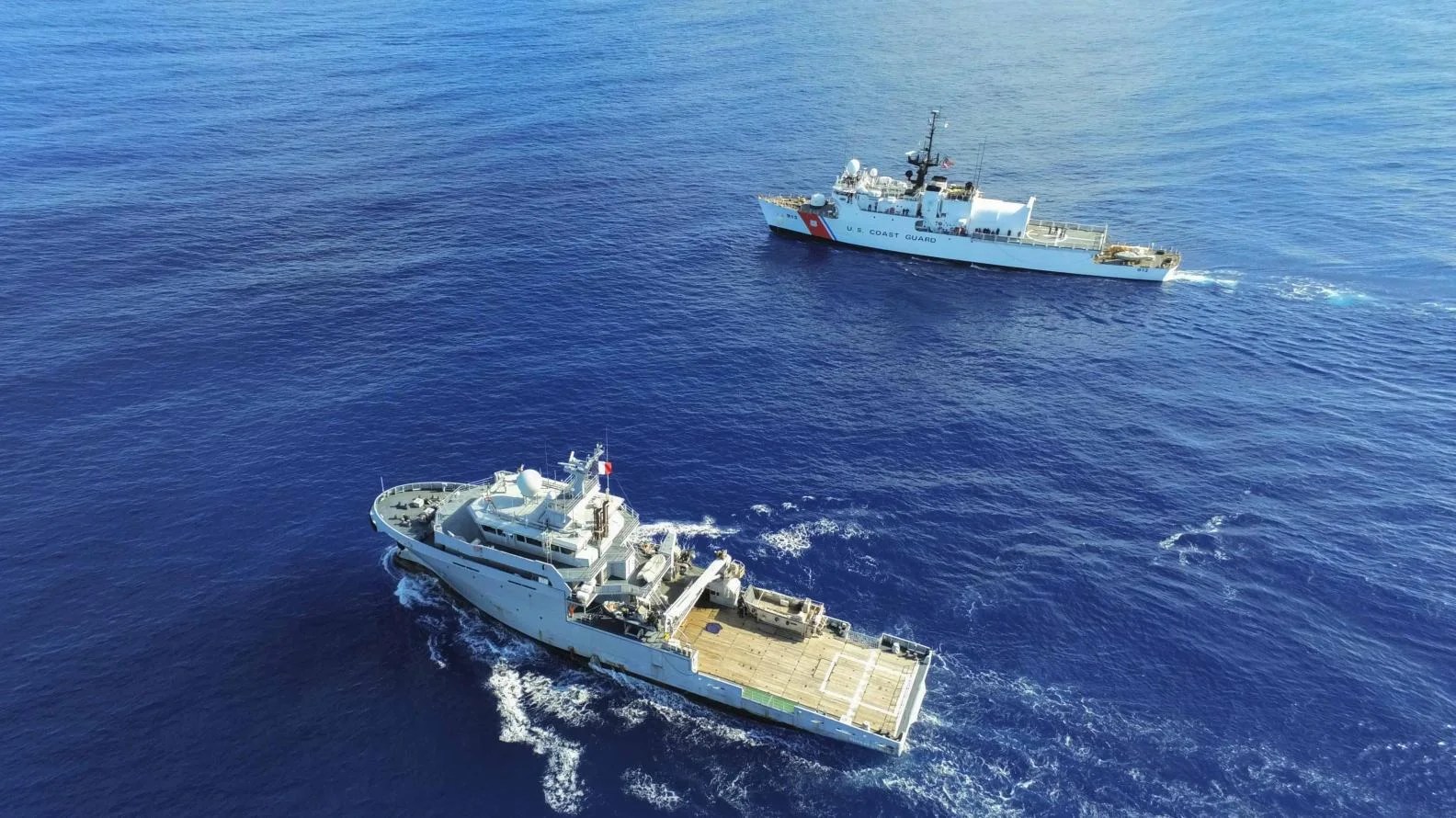
FS Dumont d’Urville and USCGC Mohawk conduct joint exercises, Dec. 6,2023

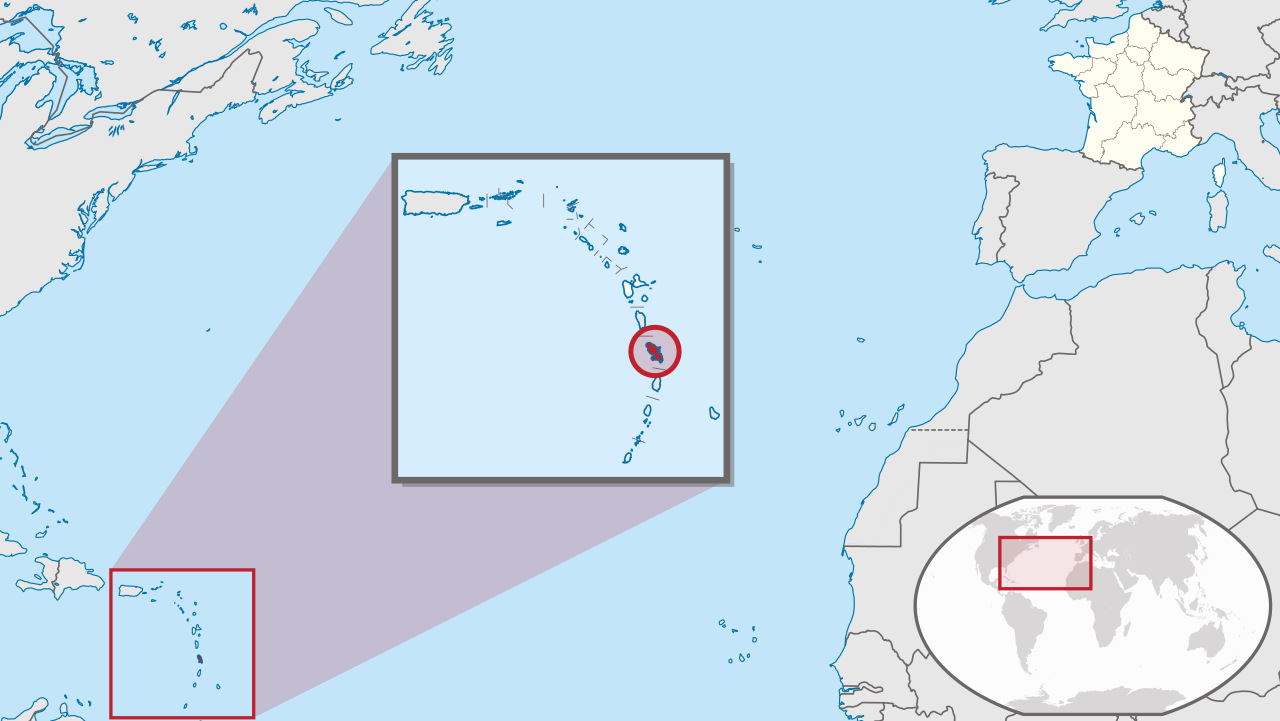
SeaWaves reports on a visit by the French “Overseas Support and Assistance Building” (BSAOM) ship Dumont d’Urville to Coast Guard Base Miami following its first operational mission. The ship is based in Fort-de-France, Martinique.

Location of Martinique, a department of France. Author: Tubs, via Wikipedia.

We talked about this class of four ships before. There is a lot of information, including additional links, in the comments.

d’Entrecasteux-class / BSAOM vessels main characteristics:

Length overall: 64.95 m (213′)
Breadth: 14 m (46′)
Draft: 4.20 m
Displacement (full load): 2,300 tons
Displacement (light): 1,500 tons
Speed (max): 13 knots (also reported as high as 15 knots)
Hull / superstructure: Steel
Amenities: 23 (crew) + 60 passengers
Cargo capacity: 200 tons (solid cargo) / 150 m3 of water / 180 m3 of fuel
Endurance: 30 days at sea

UK Deploys OPV to Guyana, gCaptain/Reuters

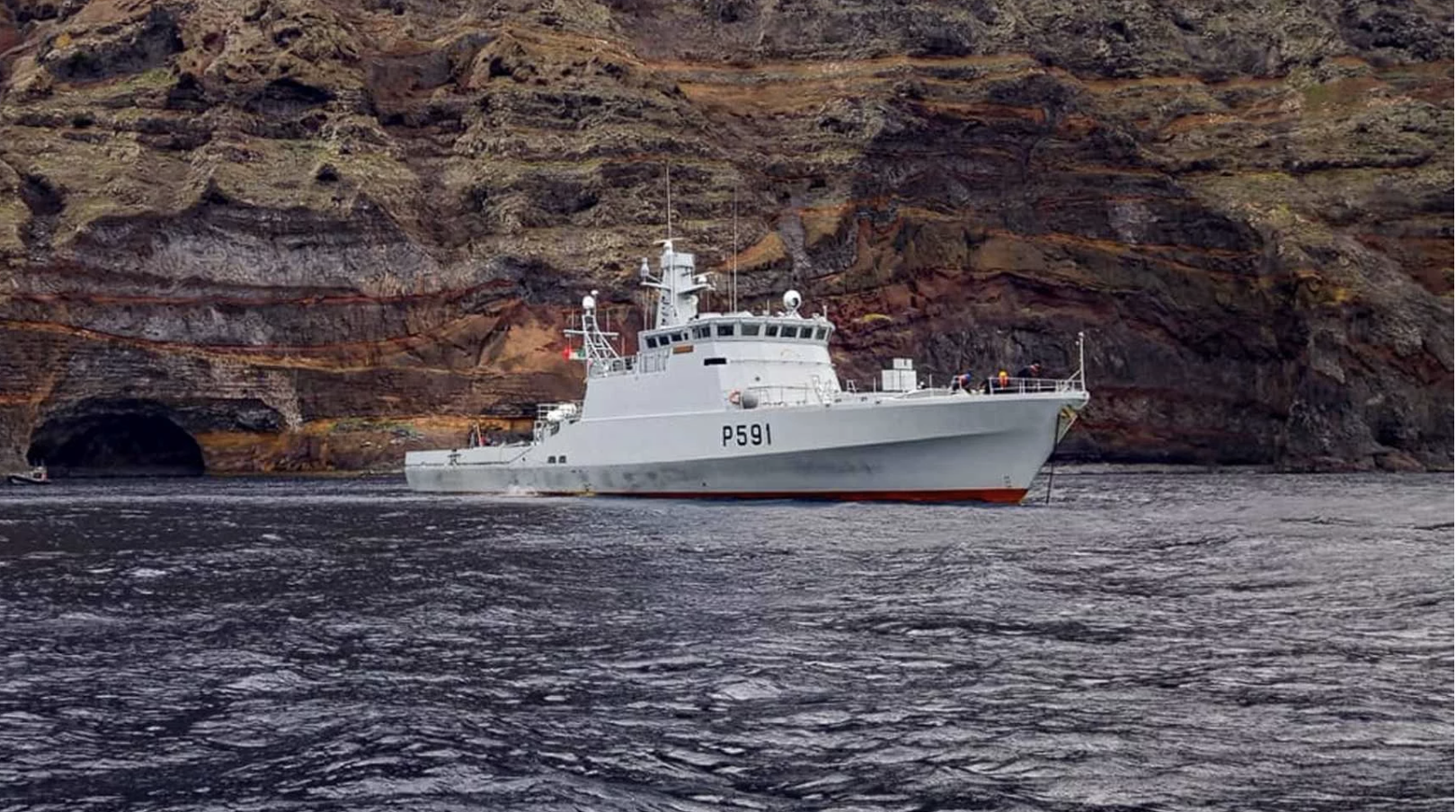
The River-class offshore patrol vessel HMS Trent (P224) passes the Vorontsov Lighthouse while arriving in Odesa, Ukraine to participate in Exercise Sea Breeze 2021, July 2, 2021. Exercise Sea Breeze is a multinational maritime exercise cohosted by the U.S. Sixth Fleet and the Ukrainian Navy since 1997. Sea Breeze 2021 is designed to enhance interoperability of participating nations and strengthens maritime security and peace in the region. (U.S. Navy photo by Damon Grosvenor/Released)

gCaptain reports,

Britain will deploy a naval ship off Guyana later this month, its ministry of defense said on Sunday, as the South American nation faces a border dispute with neighbor Venezuela over the oil-rich Essequibo region.

The deployment follows a visit by a British junior foreign minister to Guyana earlier this month, intended to offer the UK’s support for the country, an ally and former British colony.

We have talked about Venezuela’s claim on territory internationally recognized as part of Guyana. There is a recent BBC report here.

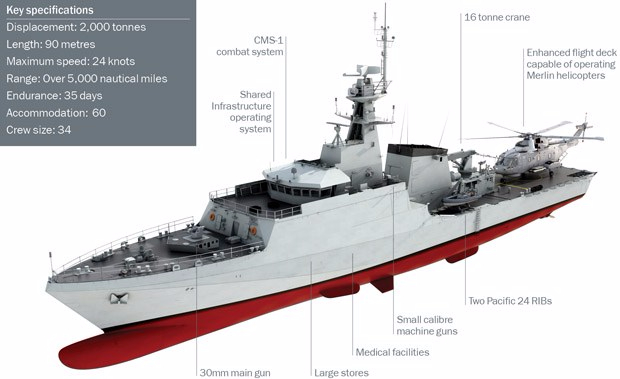
I found it interesting that the Royal Navy is sending an Offshore Patrol Vessel to this region of potential conflict. HMS Trent is about the size of a 270 and is armed with a 30mm gun in what is essentially the same mount the US Navy is calling the Mk38 Mod4.

It is likely 4th Fleet will also have some units (probably CG cutters and maybe an LCS) in the area.

None of these ships is likely to be a match for the Venezuelan Navy, but the US could quickly have overwhelming amounts of airpower over the area.

“Unusual AC-130J Gunship Caribbean Training Video Released” –The Drive

As noted recently, there is increased tension in an area where the Coast Guard routinely operates. Also noticed that in a very unusual move, the US Navy expects to have a Carrier operating with 4th Fleet.

Now we have this report of another unusual exercise/demonstration.

Included in the report was this reference to the Coast Guard.

“Yesterday, U.S. SOF [special operations forces] carried out a joint training evolution in the Southern Caribbean which included elements from the Air Force, Navy and Coast Guard,” one post on December 8 on SOCSOUTH’s official account on X, formerly Twitter, read. “The event not only honed readiness and interoperability skills but also demonstrated capability and security for the region.”

It would not be unusual for the Coast Guard to play the opposition force in an exercise, but it may have been more than that. The US Naval Institute Fleet and Marine Tracker has stopped showing how many Navy ships are operating with each fleet, but normally. most of the available naval vessels in 4th Fleet are in fact Coast Guard.

Previous Guyana / Venezuela related posts: