“China’s bullying won’t deter Philippines’ South China Sea sovereignty, Coast Guard says” –Indo-Pacific Defense Forum

I haven’t published much about China’s bullying of the Philippines lately. That doesn’t mean it has stopped. Rather it has become routine.

This report from the Indo-Pacific Defense Forum may serve as an update.

The video above does suggest why having a reinforced hull or at least an extra turn of speed might be desirable.

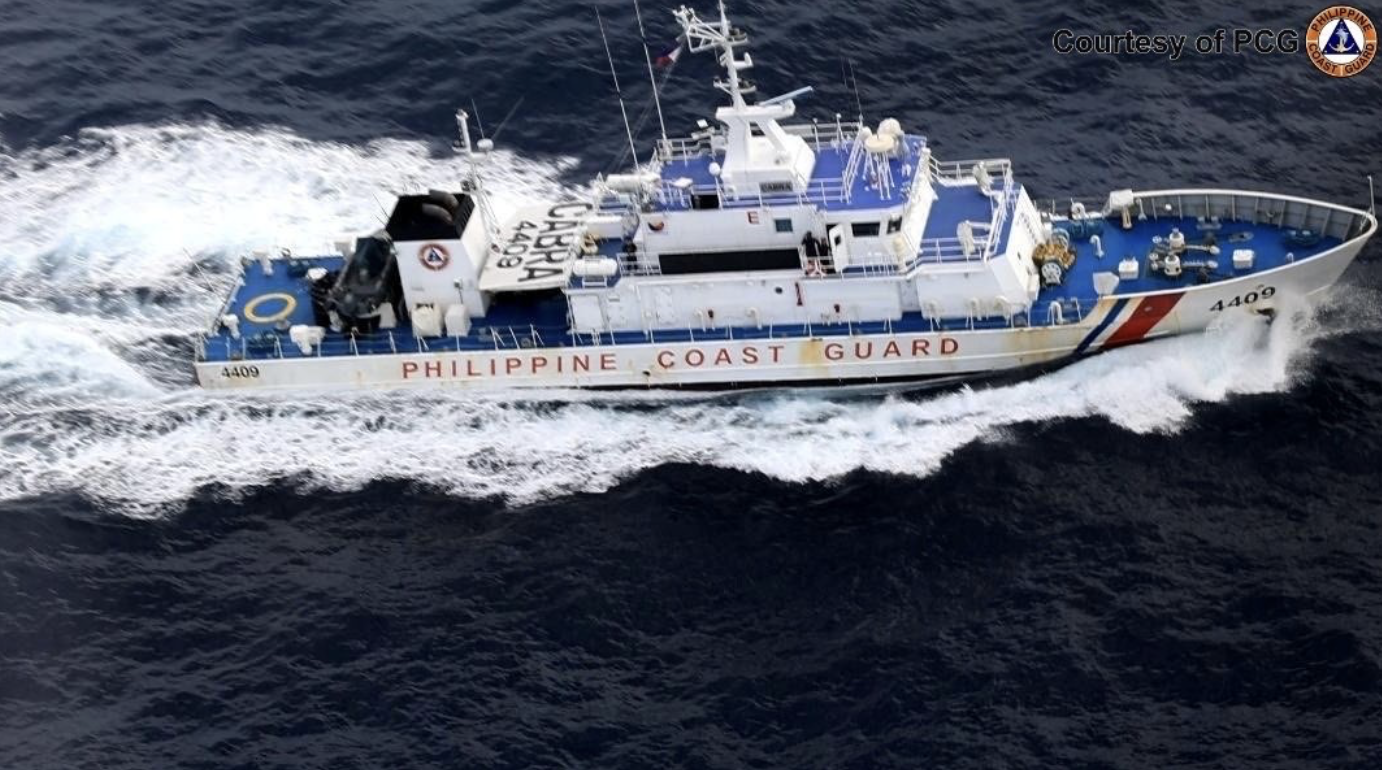
BRP Cabra (Philippine Coast Guard photo)

BRP Cabra is one ten 44.5 m (146 ft), 25 knot Japanese built Parola-class cutters commissioned 2016-2018.

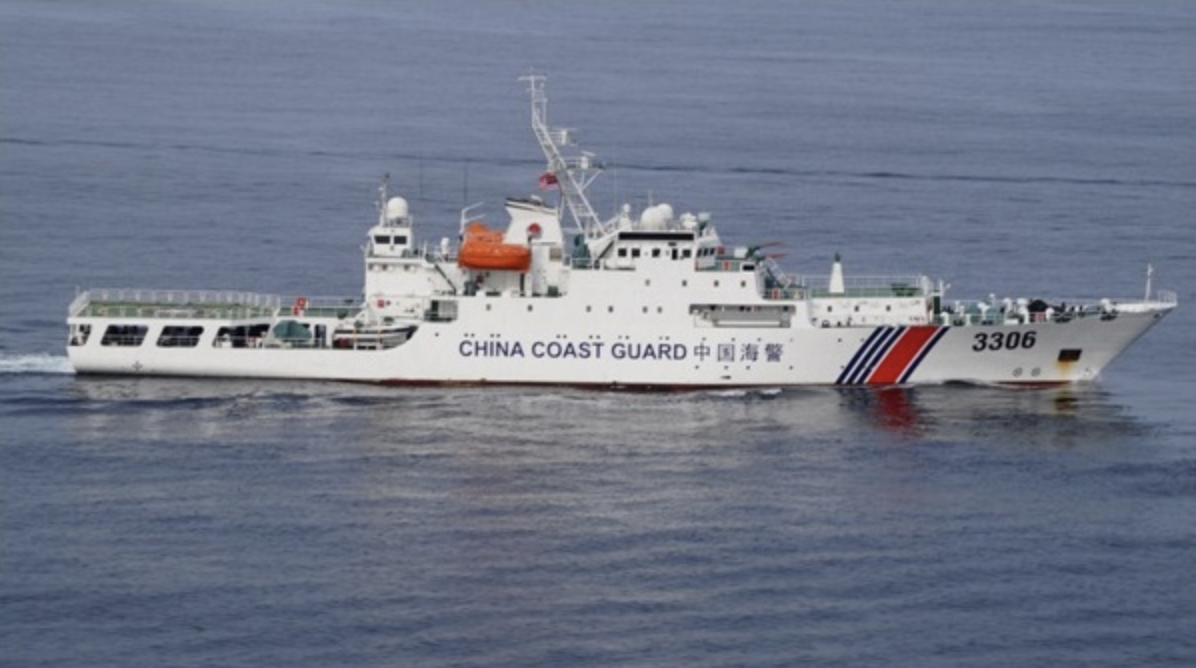
The China CG vessel in pursuit is a 98 meter Shucha II class OPV.

China Coast Guard Shucha II-class cutter Haijing 3306 (renamed to Haijing 3301). A sister ship of the China CG vessel in the video.

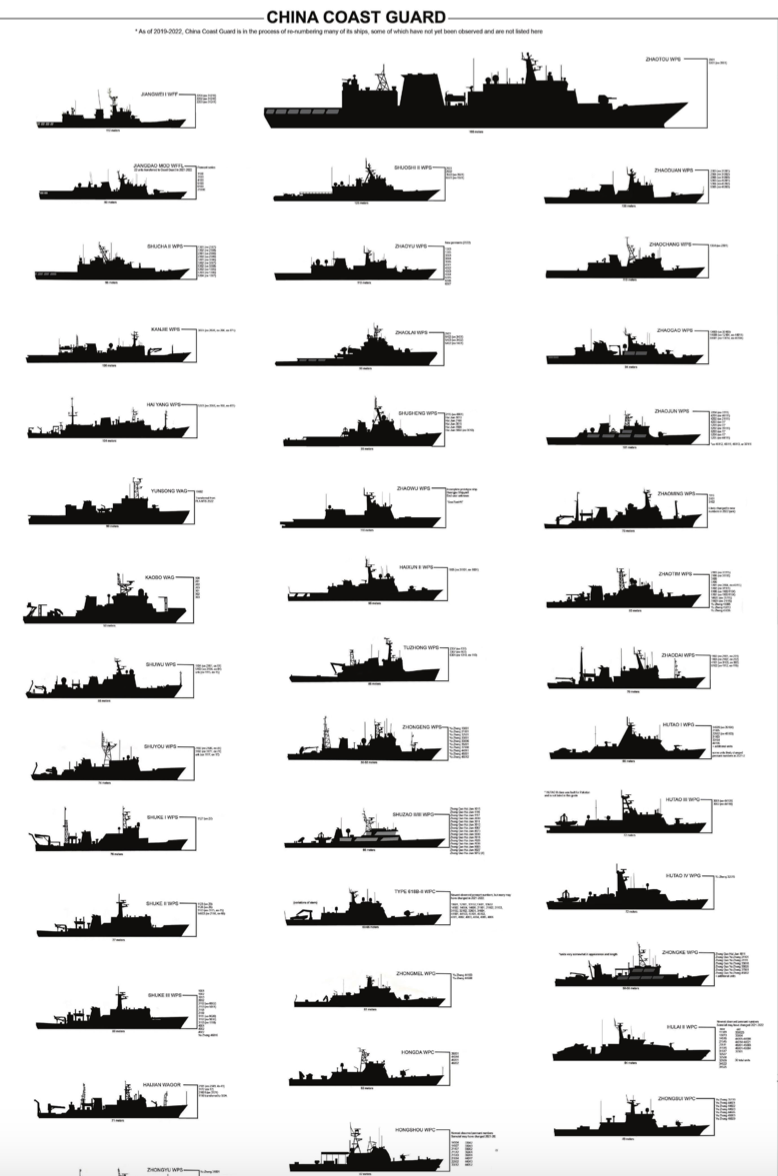
Just a partial listing of China Coast Guard from “Office of Naval Intelligence’s Chinese People’s Liberation Army Navy, Coast Guard, Ship Identification Guide


After China invades Taiwan

Real Clear Defense offers what I believe is an insightful article about the aftermath of a Chinese invasion of Taiwan, “China and Taiwan: Beware the Law of Unintended Consequences.

It also suggests that the invasion is likely in the near future.

For the Coast Guard, the one thing I want to point out is that there will be a blockade.

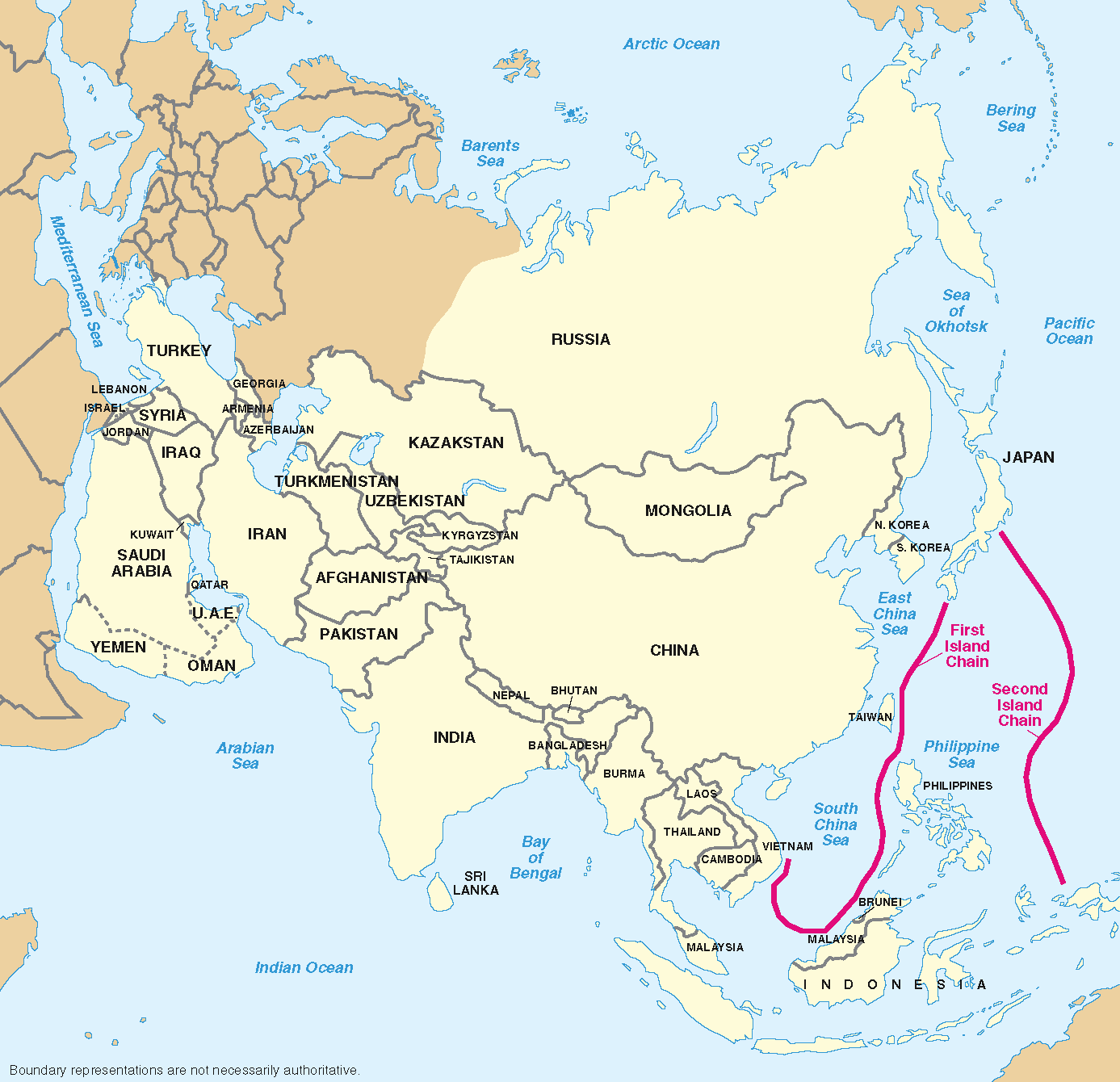
Geographic Boundaries of the First and Second Island Chains. Image:China Report 2006.pdf. DOD.

The blockade will not be a close one like Markettime, it will be executed in the Tsushima Strait between Japan and Korea and outside the “first island chain.”

It would need to be discriminating in that ships with cargos for China’s neighbors would have to be allowed through, if those cargos were not ultimately intended for China. The US could not simply use Air Power to sink anything that crosses into the East or South China Sea.

Undoubtably the Coast Guard will have a role; certainly with existing special teams and likely a need to form more and with FRCs and larger cutters to host and deploy boarding teams and custody crews. Even buoy tenders might be used in this role.

The CG forces will need to be able to forcibly stop even the largest ships, just as they need this capability to address the peacetime terrorist threat.

CG forces might be able to call in DOD assets to provide the necessary persuasion, but those resources might be in demand elsewhere. Larger cutters with their current armament of 57 and 76mm guns might be sufficient. Merchant ship crews are less likely to be willing to die to reach their objectives than a terrorist crew would be, but it would be best if cutters had organic weapons that were more convincing than the 25mm.

China CG, Japan CG, Philippine CG, Different Answers to Choice of Weapons

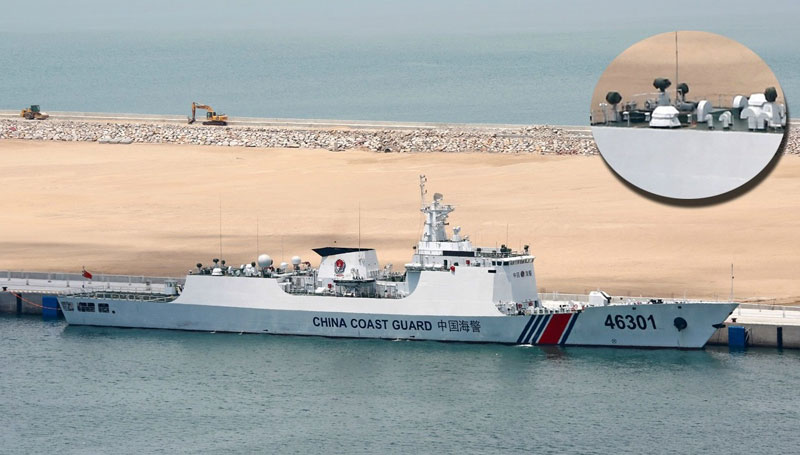
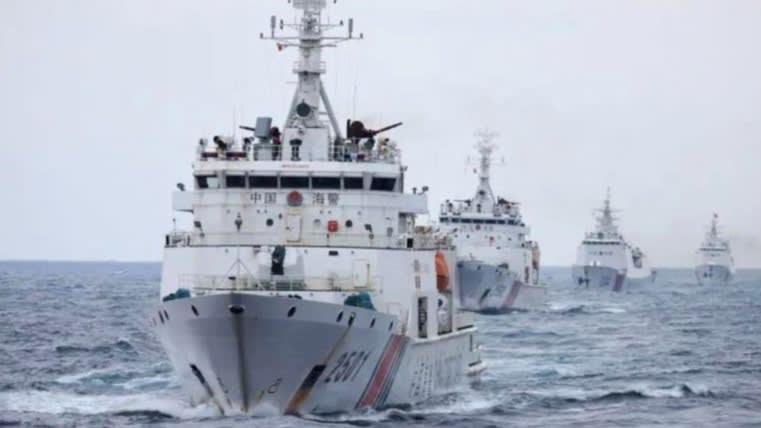
This Chinese coast guard ship 2501 is equipped with weapons believed to be 76-millimeter guns. © Kyodo

A recent large-scale transit of the Miyako Strait by three PLAN frigates and three China Coast Guard frigates has caused some alarm in Japan and raised questions about the armament on Japan Coast Guard cutters. (“China tests maritime blockade strategy in Miyako Strait“}
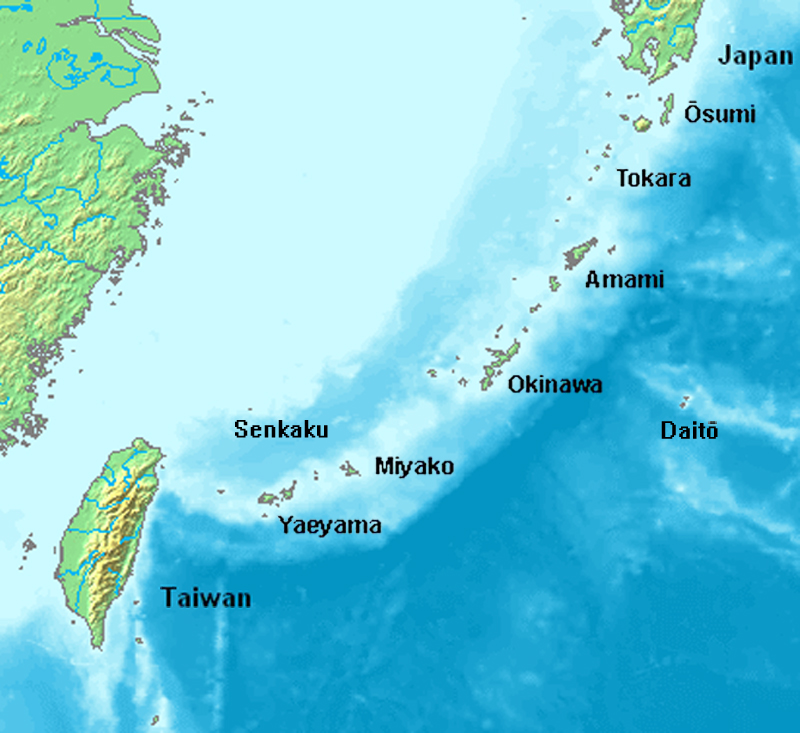
Ryukyu Islands. The Miyako Strait is located between Miyako and Okinawa

Meanwhile we see increasingly aggressive deployment of heavily armed China Coast Guard vessels in the Philippine EEZ. (“Chinese Warships, Aircraft Deploy in Strength to Scarborough Shoal“)

The Chinese, Japanese, and Philippine Coast Guard have each taken different paths in their choice of how to arm their large coast guard vessels.

Changing with the Geopolitical Situation:

China: China Coast Guard (CCG) was formed in 2013 by the consolidation of four existing agencies. At that time none of their vessels were armed with anything larger than crew served machineguns 14.5mm or smaller. July 1, 2018, the China Coast Guard was transferred from the civilian control to the People’s Armed Police. The Coast Guard Law of 1 February 2021 allows CCG ships to use lethal force on foreign ships that do not obey orders to leave Chinese waters. In parallel with this increased militarization, the China Coast Guard expanded dramatically growing into the largest fleet of cutters in the world, with several times more ships than the US Coast Guard. Four frigates or 22 corvettes that have been transferred from the PLA Navy to the CCG have retained much of their gun armament. Their newer cutters are relatively well armed. Typical armament for cutters now includes a 76mm and two 30mm guns. While this armament is typical of many Offshore Patrol Vessels world-wide, it offers significantly greater range and lethality that that of the Japan CG and particularly the Philippine Coast Guard.

Chinese H/PJ-17 30mm

Japan: Prior to the December 2001 “Battle of Amami-Ōshima” in which the Japan CG engaged and ultimately sank a North Korean spy ship disguised as a fishing vessel, most Japanese CG cutters were typically armed with 20mm Gatling guns, the same gun used in the Phalanx Close In Weapon System (CIWS), but with a much simpler fire control system. Though they significantly outnumbered the N. Korea vessel they had considerable trouble dealing with the improvised armaments on the N. Korean Vessel that included at least one recoilless rifle and heavy machine guns. This led Japan to recognize a need for more powerful, longer ranged weapons. Even so, even the largest Japanese Coast Guard cutters, and some are very large, carry no weapons larger than 40mm. The 20mm Gatling guns still seem to be the base armament for their smaller cutters and is the secondary armament for large cutters.
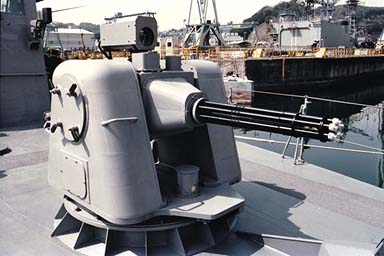
Japanese 20 mm/76 Gatling Gun. Note the camera for remote targeting. JMSDF Photograph.

Philippines: The Philippine Coast Guard is in the unique position of being, in terms of personnel, larger than the Philippine Navy even including Philippine Marine Corps, and in terms of personnel, larger than the China CG. The Philippine Coast Guard was born out of the Philippine Navy in 1967 and it was completely separated in 1998. Despite this military background the Philippine CG is a police and public service organization rather than a military service. Like the Philippine military, much of its history involved suppression of internal unrest. Until 2020 their largest ships were two buoy tenders and still none of their vessels carry weapons larger than .50 caliber machine guns. More large cutters are building, but currently they have only three. The Philippines seems to be determined to show that they are the innocent party being bullied.

Why Arm Cutters?:

No existing cutters were built with the threat of Unmanned Air Systems in mind. This is likely to have an effect on future cutters.

Weapon choices are determined on the basis of expectations of who or what the cutters will have to deal with:

  • fishermen, smugglers–small arms will serve
  • domestic terrorists that might employ small vessels–something a bit heavier, with a premium on accuracy and limited danger of collateral damage, putting guns in remote weapon stations helps, but something that has a very high probability of hit on the first round like APKWS would be better.
  • state sponsored terrorists, revolutionary groups, hostile maritime militia that can employ even large ships–how they will be armed is unpredictable, but opposing cutters need to be at least equal to the most dangerous widely available weapons that are easily tacked on.
  • coast guard of other states in disputed waters–the cutters need to be armed with weapons of equal effective range so that they cannot be intimidated.
  • armed aggression by the military of another state–cutters needed to be armed or at least rapidly upgradeable for the missions they are expected to perform.

For some states the coast guard is the only navy they have, and the coast guard needs to be prepared to assume that role. In other countries, notably the UK and France, their navy also does coast guard type missions that require larger vessels. For other states, like the US, the coast guard is a significant naval auxiliary.

Why Not to Arm Cutters?:

First of course, weapons may incur costs to various degrees–procurement, maintenance, man-days of training, ship-days of training, increased cost to build a ship that can support armaments.

Weapons change how the organization views itself. Is it a military service or a law enforcement agency or exclusively a service provider like Canada’s Coast Guard?

Weapons change how others, including other nations, see the service. International law enforcement cooperation is much easier to achieve than military cooperation. It is easier for a country to trust a Coast Guard cutter in their waters than a haze gray “battleship.” I do think this presumption of trust worthiness has more to do with reputation than the actual armament and that some types of weapons look aggressive while others do not.

Is there an optimum level of weapons for Japan and Philippine Coast Guard cutters?:

The concern in Japan seems to be that with weapons that have greater range, the China Coast Guard can strike with impunity. That seems unlikely to happen as a result of a decision by higher-ups unless they want to provoke a major conflict. That is not an advantageous way to willfully initiate a war, but wars frequently result because one side underestimates the resolve of their counterparts on the other side. An overzealous midgrade CCG officer might see an opportunity to strike a blow that his Japanese or Philippine counterpart could not answer, or China’s national command authority might see using the possibility of just a few shots to inflict some damage on a Japanese or Philippine cutter as just a small step up from ramming.

In any case, leaving the impression that the opposition can inflict significant and lethal damage on your ship, with impunity, does not seem like a good idea.

The one thing guns can do that missiles cannot, is fire warning shots. Larger guns can fire more impressive warning shots at greater ranges than smaller guns. That is a consideration, but once weapons are fired it becomes a smaller step to fire for effect. Even so, a weapon that can fire an impressive warning shot at a range outside the effective range of most improvised armament seems essential. That seems to point to at least a 40mm gun.

The most obvious answer is that Japan and the Philippines should arm their cutters the way most similar vessels are armed, with one 57 or 76mm caliber gun and one or two 20 to 40mm autocannon. This has become almost a worldwide standard for Offshore Patrol Vessels.

There is another alternative that might serve them better, that is to create ambiguity or doubt in the mind of the opposition by installing VLS that could support different types of munitions or have none at all. Are they armed with loitering munitions, Hellfire, Spike ER, Spike NLOS, Sidewinders, short range anti-drone (UAS) weapons, or anti-ship cruise missiles or is a bluff? What is their range? How lethal are their weapons? No way of knowing. 


DOD on the China Coast Guard

This Chinese coast guard ship 2501 and other are equipped with 76-millimeter guns. © Kyodo

The Department of Defense has issued its annual “Military and Security Developments Involving the People’s Republic of China, 2024.” The degree of annual expansion is extremely troubling. There is a brief look at the Naval aspects from Commander Salamander here. I think it is fair to say that the US Navy is rapidly losing its edge.

We should expect to see rising expectations for the US Coast Guard to be prepared to participate in a war with China.

I have reproduced the brief section devoted to the China Coast Guard (CCG) below. This is from the pages numbered 76 and 77. They are the 90th and 91st pages of the 182 page document.

For Perspective:

China’s undisputed EEZ, including territorial sea, is less than 8.5% that of the US and even their expansive claimed EEZ and territorial sea is less than 20% of that of the US.

The China Coast Guard has far more large patrol vessels (over 1,000 tons) than the US Coast Guard (about 150 vs 33), which they tend to operate in groups. Still the CCG probably has fewer personnel (no recent figures seem to be available) and far fewer aircraft. The CCG does not do aids to navigation or marine inspection, and it is not the country’s primary coastal search and rescue agency. In short it is much more focused, primarily on bullying China’s neighbors.


China Coast Guard

CCG Service Roles and Missions. The CCG is subordinate to the PAP (People’s Armed Police–Chuck) and responsible for a wide range of maritime security missions, including defending the PRC’s sovereignty claims; combating smuggling, terrorism, and environmental crimes; and supporting international cooperation in accordance with relevant international treaties. The Standing Committee of the PRC’s NPC (National People’s Congress, China’s Legislature–Chuck) passed the Coast Guard Law, which took effect on February 1, 2021. The legislation regulates the duties of the CCG, including the use of force, and applies those duties to seas under the jurisdiction of the PRC. The law was met with concern by other regional countries that perceive
the law as an implicit threat to use force, especially as territorial disputes in the region continue. The CCG is the PRC’s front-line force for carrying out “rights protection” (weiquan) operations in disputed areas of the PRC’s maritime periphery. The PLAN overwatches CCG operations to deter other claimants and provide the PRC an option to rapidly respond with force, if necessary.

CCG Capabilities and Modernization. The CCG’s continued expansion and modernization makes it the largest maritime law enforcement fleet in the world. Newer CCG vessels are larger and more capable, enabling them to operate farther off shore and remain on station longer. The CCG has over 150 regional and oceangoing patrol vessels (more than 1,000 tons). These larger vessels include over 20 corvettes transferred from the PLAN, which were modified for CCG operations. The newer, larger CCG vessels are equipped with helicopter facilities, high-capacity water cannons, multiple interceptor boats and guns ranging from 30 mm to 76 mm. Revised estimates indicate the CCG operates more than 50 regional patrol combatants (more than 500 tons), which can be used for limited offshore operations, and an additional 300 coastal patrol craft (100 tons to 499 tons). In 2023 and early 2024, the CCG launched seven offshore patrol ships as well as two additional patrol ships based on a large salvage ship design. Several more offshore patrol ships are likely under construction.

CCG Readiness. The CCG continues to operate in alignment with the Coast Guard Law, asserting the PRC’s claims in the East and South China Seas and Taiwan Strait, in what the law considers the “waters under the jurisdiction of China.” In these regions, the CCG uses aggressive tactics against foreign vessels, such as ramming, firing water cannons, and performing dangerous maneuvers, frequently working alongside the PLAN and CMM. The CCG annually sends two vessels on a month-long fisheries law enforcement patrol in the North Pacific. These patrols support the PRC’s membership in the Convention on the Conservation and Management of High Seas Fisheries Resources in the North Pacific Ocean.

“Chinese Warships, Cutters Harass Philippine Patrol Near Scarborough Shoal, Say Officials” –USNI

US Naval Institute’s news service reports on the latest incident between China and the Philippines.

Units involved were:

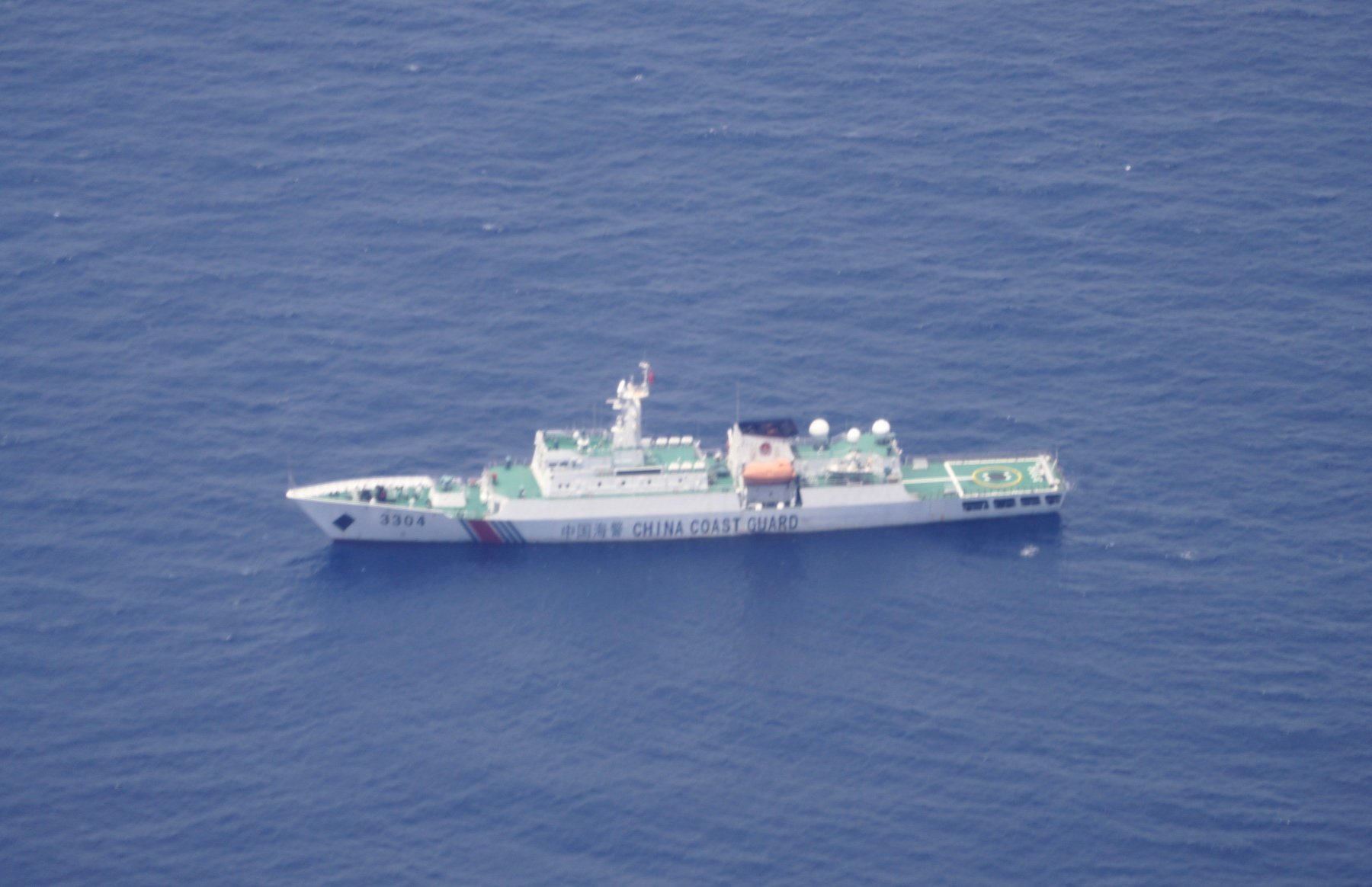
China Coast Cutter 3304 in the Philippine EEZ. Philippine Coast Guard Photo

  • Four China Coast Guard cutters hull numbers 5303, 3302, 3104, 3304
  • Two Chinese Navy Type 054A frigates Xianning (500) and Yuncheng (571)  

Type 054A FFG Hengshui (Source: Seaforces.org)

The Chinese have typically had their navy backing up their coast guard in these confrontations, but it appears a frigate was more directly involved than in previous similar confrontations. Still, it was the China Coast Guard that played bumper-boats and water cannoned the Philippine ships.

Generally, the Philippine Navy has not been present during these confrontations. The Philippines seems to want to make sure it is clear, who is the bully here. None of the Philippine ships involved even have deck guns.

The Philippine ships were there to protect Philippine fishermen who are being deprived of their livelihood by the Chinese.

With more direct involvement of PLAN frigates, the Philippine Navy may start making an appearance, perhaps over the horizon, but within ASCM range.


“Chinese Maritime Safety Officers Beat Vietnamese Fishermen During South China Sea Interdiction, Say Officials” –USNI

Personnel from the China Maritime Safety Administration board and attack the crew of the Vietnamese fishing vessel QNg 95739 TS. Screenshot of a Maritime Safety Administration video released by SCSPI on Sept. 29, 2024. 

The US Naval Institute News Service reports an incident in which personnel of the China Maritime Safety Agency boarded a Vietnamese fishing vessel. The boarding was resisted by the Vietnamese fishermen (see the video below) and when the Chinese agents came aboard, they severely beat the fishermen with metal rods.

This is just another example of the Chinese attempting to intimidate their perceived enemies by using brutal, but usually less than deadly force. There have been conflicts with India and the Philippines at similar levels of violence. Chinese fishermen have also responded with similar levels of violence when being boarded by South Korean Coast Guard.

I am surprised this was done by the China Maritime Safety Agency rather than by the China Coast Guard. This may reflect an attempt by the Maritime Safety Agency to enhance its status in the Chinese government, perhaps even an effort to prove its continued relevance.

Where this happened is not stated. Presumably it was inside China’s self-declared Nine Dash Line, but outside China’s internationally recognized Exclusive Economic Zone (EEZ) and probably within Vietnam’s EEZ.


Russian and Chinese Coast Guards Exercise Together and Form Combined Task Force / The CCG Cutters

Recently the China Coast Guard and the Russian Coast Guard held joint exercises in the Peter the Great Gulf near Vladivostok. After the exercise, they formed a joint task force. 

Also wanted to identify the China Coast Guard Cutters seen in the video.

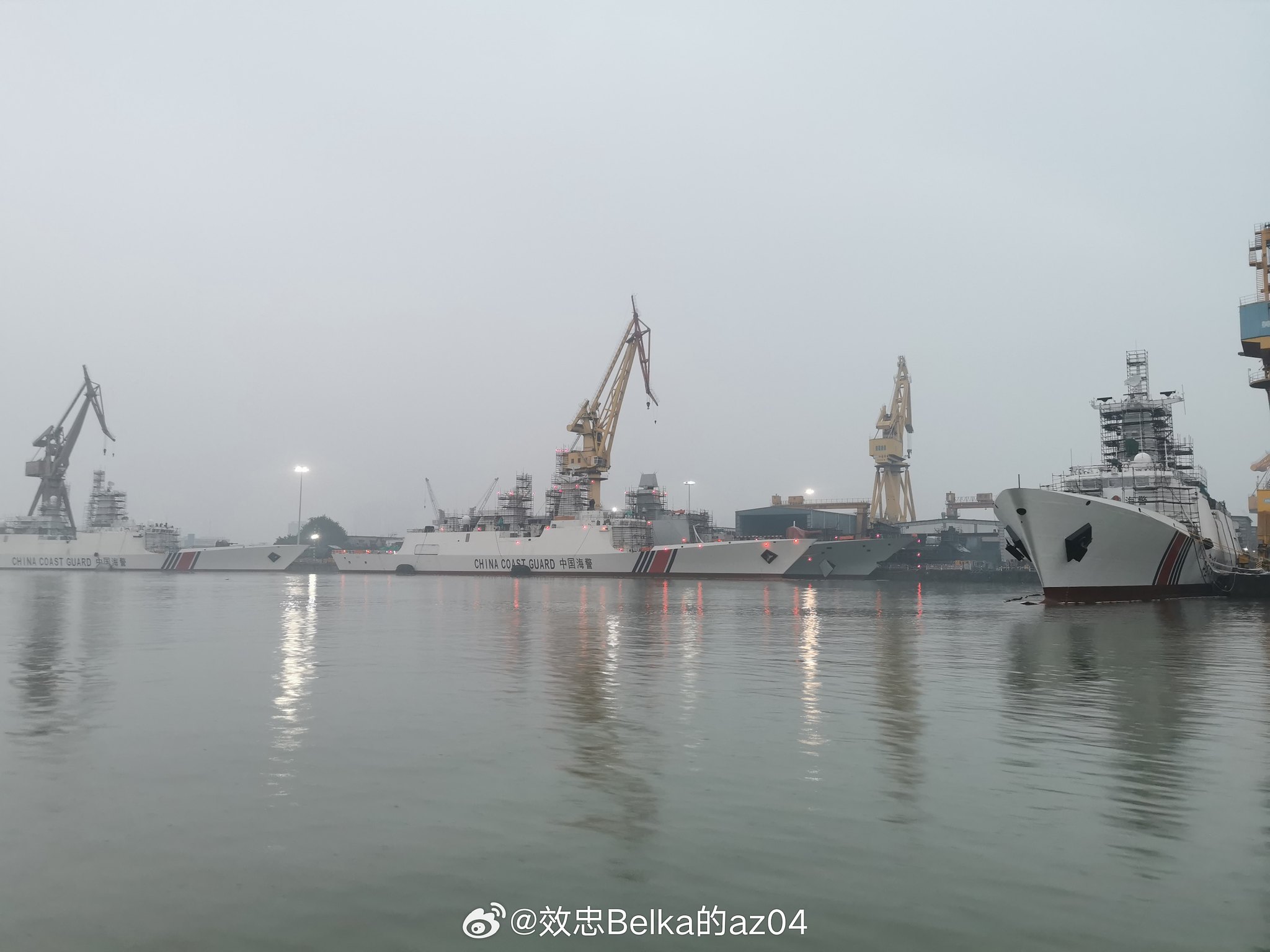
They are Zhaoduan class Type 818, derived from the PLAN Type 054A frigates. According to the Office of Naval Intelligence, (lots of information at the link. The China Coast Guard has the largest coast guard fleet in the world) there are at least six of the class. They are almost as large as National Security Cutters (NSC), reportedly 4,000 tons full load, 134 meters (440′) in length, 16 meters (52.5′) of beam, speed 27 knots, range 8,000 miles.

In addition to the 76mm gun, they have a pair of 30mm Gatling guns. It is not clear if they have a fire control system that would make the 30mm guns effective as CIWS, but they could certainly do serious damage to surface targets at close range in a very short time.

“USCG Pacific Comments Latest Chinese Ramming of Philippine Coast Guard Vessel” –Naval News

USCGC Waesche accompanies the PCG’s Melchora Aquino (sister ship of BRP Teresa Magbanua (MRRV-9701) during a search-and-rescue exercise in the South China Sea in July 2024. (USCG)

Naval News reports on the comments of Rear Admiral Andrew M. Sugimoto, Deputy Pacific Area Commander, about the US Coast Guard’s position regarding Chinese attempts to intimidate the Philippine Coast Guard. Read it. It is excellent reporting.

I will just note a couple of things.

What is this? I think it is a can opener, meaning this tactic was premeditated in the construction of this class.

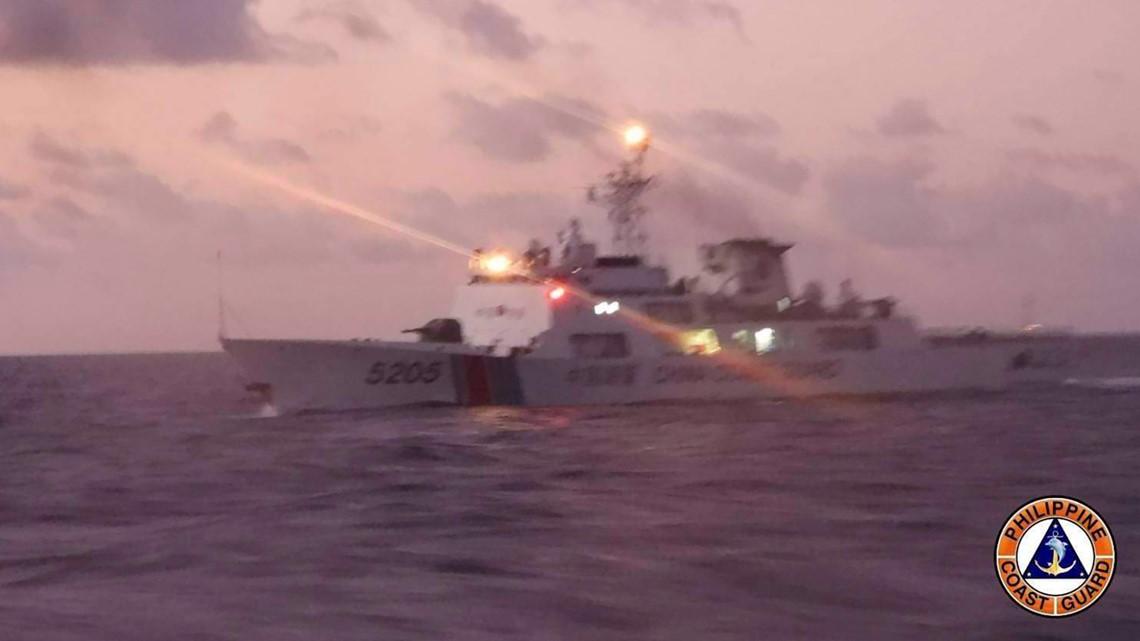
China Coast Guard cutter 5205 was the same ship that used a laser against the Philippine Coast Guard in February 2023.

I would also note that while the Chinese cutter involved has both a 76mm gun and 30mm auto cannon, the 97-meter (317′) Japanese built Philippine cutter is armed with nothing larger than .50 caliber machine guns, so the China Coast Guard cutter could be confident, the Philippine cutter would not respond to the attack with gun fire.

The Philippine Cutter may have been marginally faster than the Chinese cutter, but she may have also been boxed in by other Chinese vessels on scene.

“Russia’s war on Ukraine stalls PRC’s Arctic momentum” –The Watch

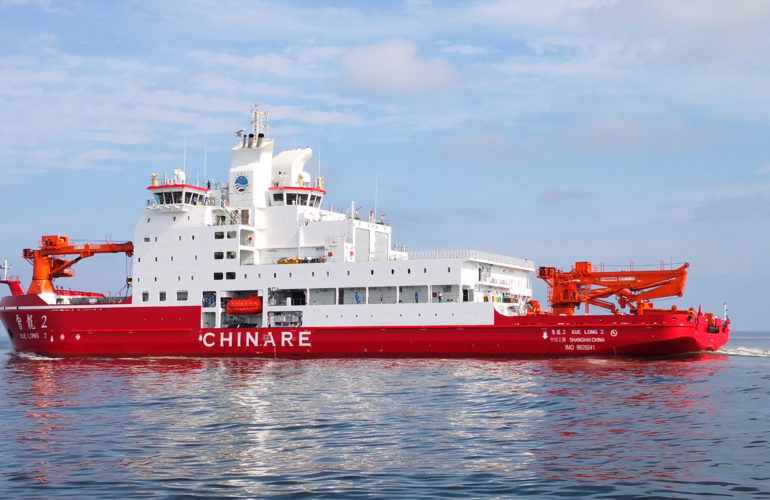
Xue Long 2 on sea trials. Photo by PRIC.

This is about a year old, but somehow, I apparently missed commenting on it when it first came out.

The Watch Reports,

As the largest non-Arctic country, and one which has often referred to itself as a near-Arctic state, the People’s Republic of China (PRC) finds itself in a more precarious position in the region as compared to five years ago when it launched its ambitious white paper, which proclaimed Chinese interests in being a key stakeholder in the far north. Beijing’s plans for the Arctic assumed that the region would be open and amenable to the development of three main pillars of Chinese Arctic policy, namely scientific diplomacy, economic partnerships and participation in regional governance initiatives. All three of these pillars are now under pressure, which has underscored the PRC’s limitations in the Arctic and will inevitably force a rethinking and likely a retrenchment of the country’s far-northern interests.

The report notes,

Despite hopes in Beijing that the PRC’s Polar Silk Road initiative would emerge as an integral part of the overall Belt and Road framework, many centerpiece projects of the infrastructure initiative have either failed or are in doubt because of financial constraints, political opposition or some combination thereof.

The “no limits” partnership between China and Russia has always been one of opportunism. There is a natural antipathy between the two countries. China has never forgotten the unequal treaties imposed on them by European powers including Russia, that stripped away Chinese territory, including important parts of what is now Russia’s Asian holdings.

Facing frustration in the Arctic. Do not be surprised to see China double down on its efforts in Antarctica.

“U.S. Coast Guard encounters People’s Republic of China military naval presence in Bering Sea” –D17

A Coast Guard Cutter Kimball crewmember observing a Russian Destroyer in the Bering Sea, September 19, 2022. Coast Guard Photo

Below is a District 17 (Alaska) news release. USCGC Kimball was doing the same thing two years ago. Last year the US Navy had four destroyers doing the shadowing. In 2021 it was Bertholf. Chinese warship operated legally off American shores back in 2015. NORTHCOM’s on-line magazine, The Watch, suggested how these visits should be viewed.

Two items of note, (1) this is a little earlier in the year than we have seen them in the past, (2) where are the Russians? Usually there are Russian ships with the Chinese.

This provides another example of how the National Security Cutters are taking on a role comparable to AGIs of the Soviet Era.

It is ironic and a bit funny that the Chinese are doing “freedom of navigation operations.”

I will note again that the nearest US Navy surface ship is probably at least 1000 miles away, probably in Japan.


July 10, 2024

JUNEAU, AK –The U.S. Coast Guard encountered multiple People’s Republic of China military ships in the Bering Sea, Saturday and Sunday.

The crew of U.S. Coast Guard Cutter Kimball (WMSL 756) detected three vessels approximately 124 miles north of the Amchitka Pass in the Aleutian Islands, and an HC-130J aircrew from U.S. Coast Guard Air Station Kodiak detected an additional vessel approximately 84 miles north of the Amukta Pass.

All four of the People’s Republic of China vessels were transiting in international waters but still inside the U.S. Exclusive Economic Zone, which extends 200 nautical miles from the U.S. shoreline.

“The Chinese naval presence operated in accordance with international rules and norms,” said Rear Adm. Megan Dean, Seventeenth Coast Guard District commander. “We met presence with presence to ensure there were no disruptions to U.S. interests in the maritime environment around Alaska.”

The Chinese vessels responded to U.S. Coast Guard radio communication and their stated purpose was “freedom of navigation operations.” Coast Guard cutter Kimball continued to monitor all ships until they transited south of the Aleutian Islands into the North Pacific Ocean. The Kimball continues to monitor activities in the U.S. Exclusive Economic Zone to ensure the safety of U.S. vessels and international commerce in the area.

The Coast Guard, in coordination with U.S. Northern Command, was fully aware of and tracked the Chinese naval presence. In September of 2021 and 2022, Coast Guard cutters deployed in the Bering Sea also encountered Chinese surface action groups.

The Kimball patrolled under Operation Frontier Sentinel, a Coast Guard operation designed to meet presence with presence when strategic competitors operate in and around U.S. waters. The U.S Coast Guard’s presence strengthens the international rules-based order and promotes the conduct of operations in a manner that follows international norms.

Coast Guard Cutter Kimball is a 418-foot legend class national security cutter homeported in Honolulu, Hawaii.