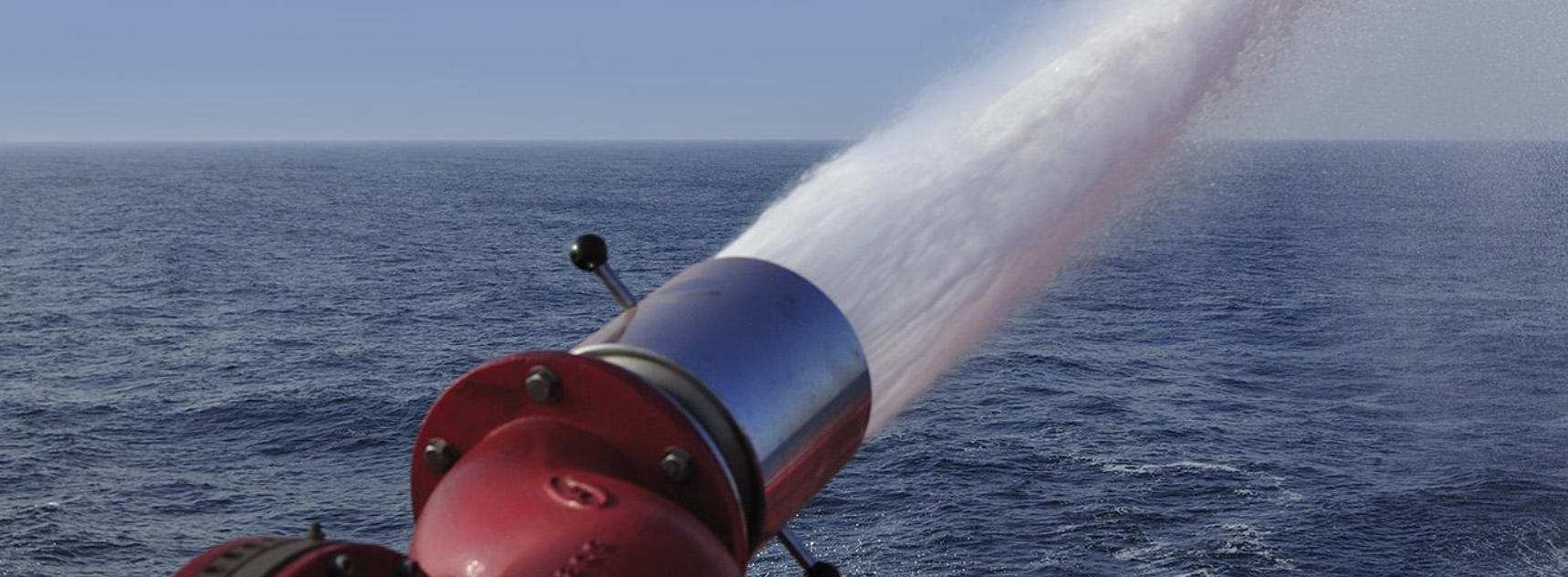
“Wash the Sky Clean of Drones” –USNI

Powerful shipboard firefighting monitors can operate with flow rates in the vicinity of 16,000 gallons per minute, generating nozzle pressures and forces capable of knocking down or destroying drones with seawater. SHUTTERSTOCK

Captain Karl Flynn, U.S. Marine Corps, offers a novel counter to small drones,

It is well established that unmanned aerial systems (UASs) and vehicles (UAVs) are cheap, ubiquitous, and deadly against ground forces. While U.S. Navy ships and aircraft have proven themselves effective at shooting them down in the Red Sea, unmanned aircraft could soon become more dangerous in multiple environments: busy ports, canals, straits, the littorals, and other choke points. The Navy should explore using high-powered water cannons—also known as firefighting monitors—as ship-based counter-UAS (cUAS) weapons.

Now, I don’t think this would work against anything, but the small First Person Video drones that are now extremely common, but that is what the Coast Guard is most likely to encounter. At close range, water under high pressure can be damaging, but it’s not likely to cause collateral damage, like firearms could.

There are, of course, other reasons we might want to have powerful fire monitors.
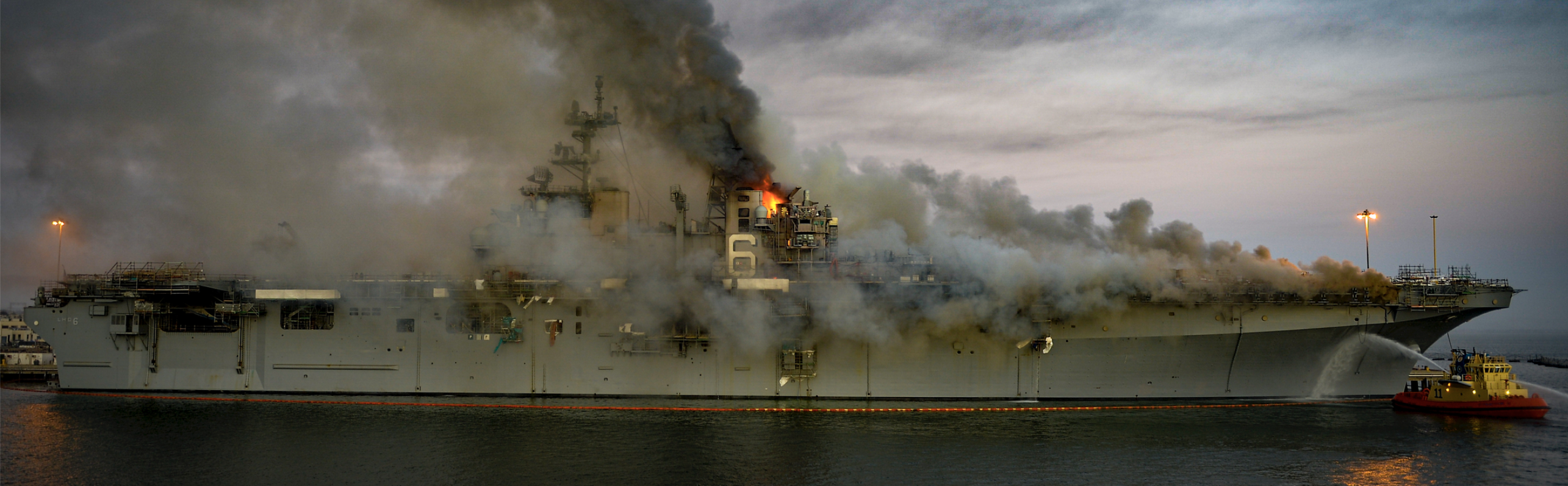
SAN DIEGO (July 12, 2020) The U.S. Navy amphibious assault ship USS Bonhomme Richard (LHD-6) on fire at Naval Base San Diego, California (USA), on 12 July 2020. On the morning of 12 July, a fire was called away aboard the ship while it was moored pier side at Naval Base San Diego. Base and shipboard firefighters responded to the fire. Bonhomme Richard was going through a maintenance availability, which began in 2018. The fire was extinguished on 16 July.

They can also be used in less than lethal confrontations.
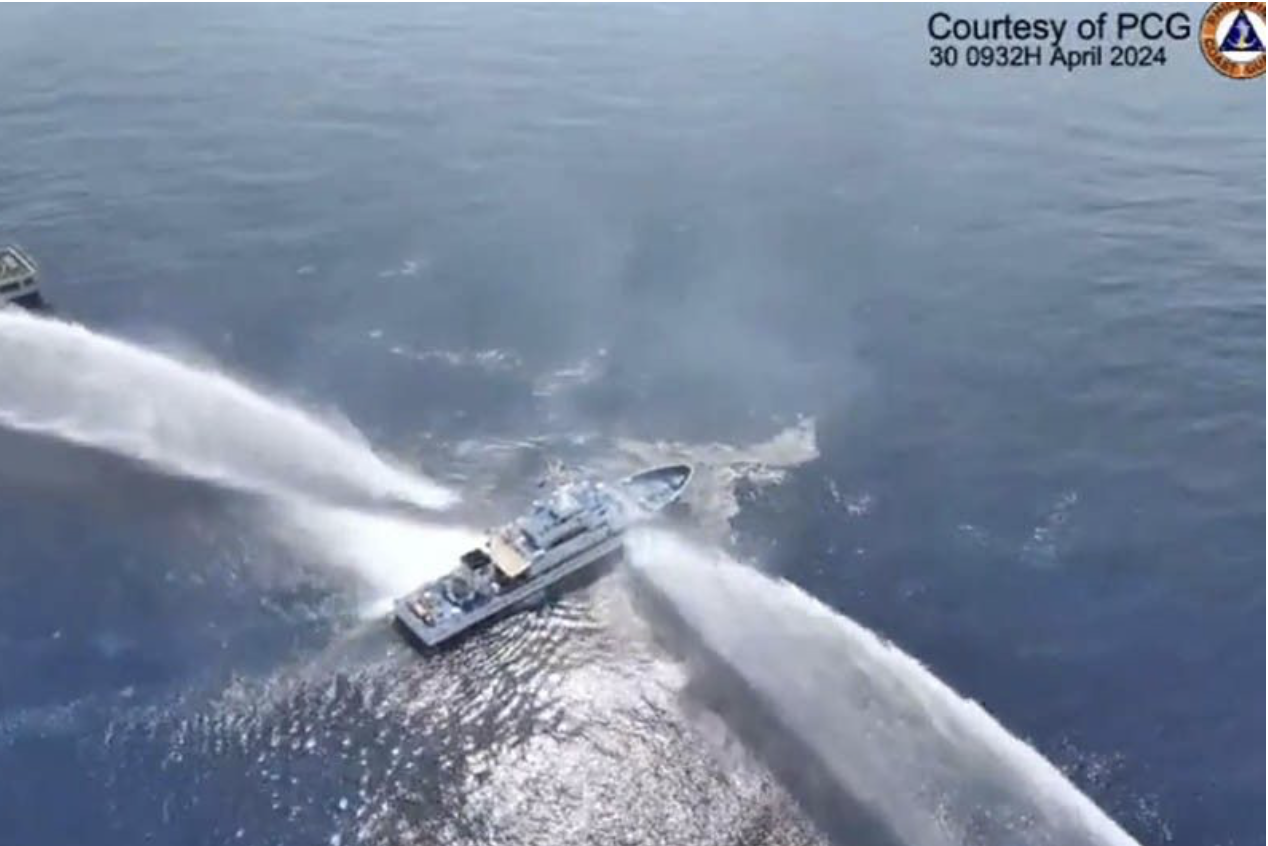
Screengrab from Philippine Coast Guard shows a Philippine vessel being water cannoned by the China Coast Guard on April 30, 2024.

They have become a regular feature of Gray Zone activities in the Western Pacific.
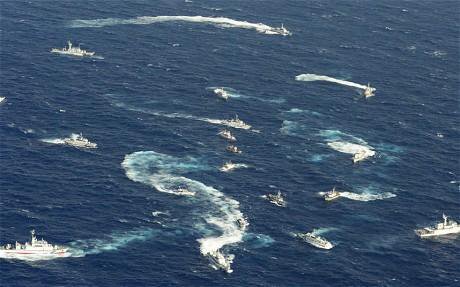
A water cannon battle between Taiwanese and Japanese Coast Guard vessels.

Frankly, what we have now looks kind of wimpy by comparison.
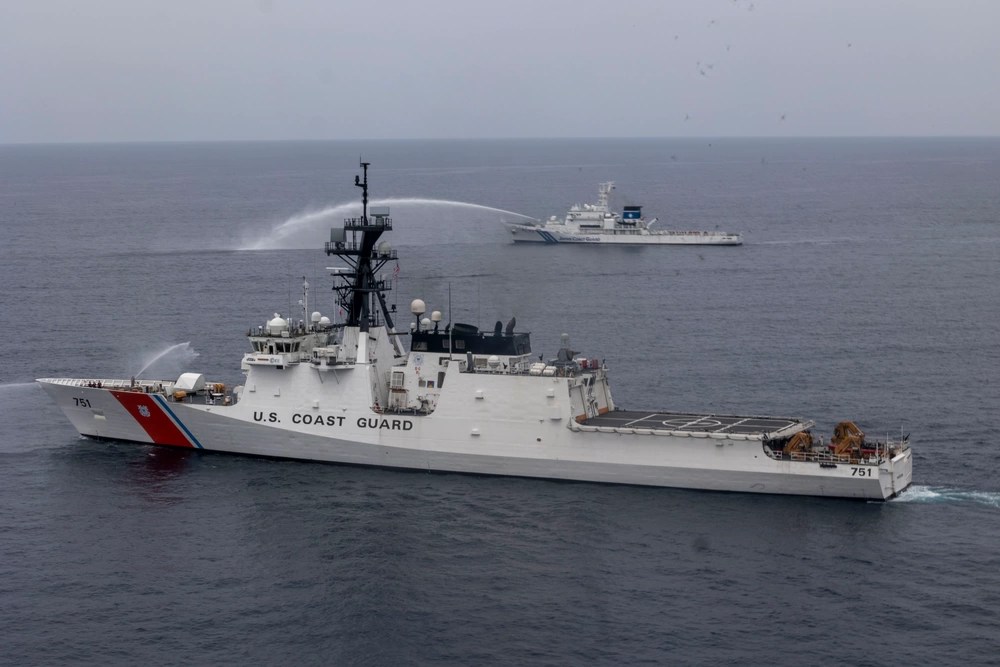
U.S. Coast Guard Cutter Waesche and Japan Coast Guard vessel JCGC Wakasa (PL-93) test their water cannons during a trilateral search and rescue exercise in the East Sea, June 6, 2024. Coast Guardsmen from Japan, Republic of Korea and the United States used the trilateral training as an opportunity to rehearse cohesion between the nations when operating together. The U.S. Coast Guard has operated in the Indo-Pacific for more than 150 years, and the service is increasing efforts through targeted patrols with our National Security Cutters, Fast Response Cutters and other activities in support of Coast Guard missions to enhance our partnership. (U.S. Marine Corps photo by Cpl. Elijah Murphy)
70mm Guided Rockets–Big Stick for Small Ships

70

Lets face it, the US Coast Guard is not always ready–not Semper Paratus.

The Coast Guard is not ready to reliably counter a terrorist attack on US ports using Kamikaze air and surface craft (manned or unmanned) or using a medium to large ship. The Coast Guard simply does not have the weapons.

The 57mm Mk110 might be useful against kamikaze drones, but the vessels they are mounted on are either not likely to be in the vicinity of the threat or they will not be capable of getting underway and on scene fast enough to deal with the threat.

Even the 57mm probably isn’t going to stop a medium to large ship under the direction of dedicated terrorists before it completes its mission and again there is doubt large cutters will be in the right place at the right time.

We need weapons that can deal with these threats on widely distributed craft at least as small as the Webber class WPCs. The WPCs do have a 25mm gun but unfortunately that gun does not support an air-burst round that would be needed to deal with Unmanned Air Systems, and it is far too small to expect success against medium to large ships.

APKWS is a proven system against UAS and while it is probably not going to succeed against a medium to large ship, at least has a limited capability. Their warhead is up to three times the size of that of a 57mm projectile.

There are alternatives that could also deal with UAS and that might do better against surface threats:

  • The 25mm could be replaced with a more capable gun. Some would fit in the existing mount.
  • Hellfire and its replacement the AGM-179 JAGM would offer greater range and a larger warhead but, while still relatively small, are heavier and much more expensive. They are still my favored solution.
  • Adaptations Army or Marine Short Range Air Defense system that use a remote weapon station combining missiles with a 30mm gun capable of firing air-burst ammunition (either the high velocity 30mmx173 Mk44  Bushmaster II or the lighter but lower velocity 30mmx113 M230).

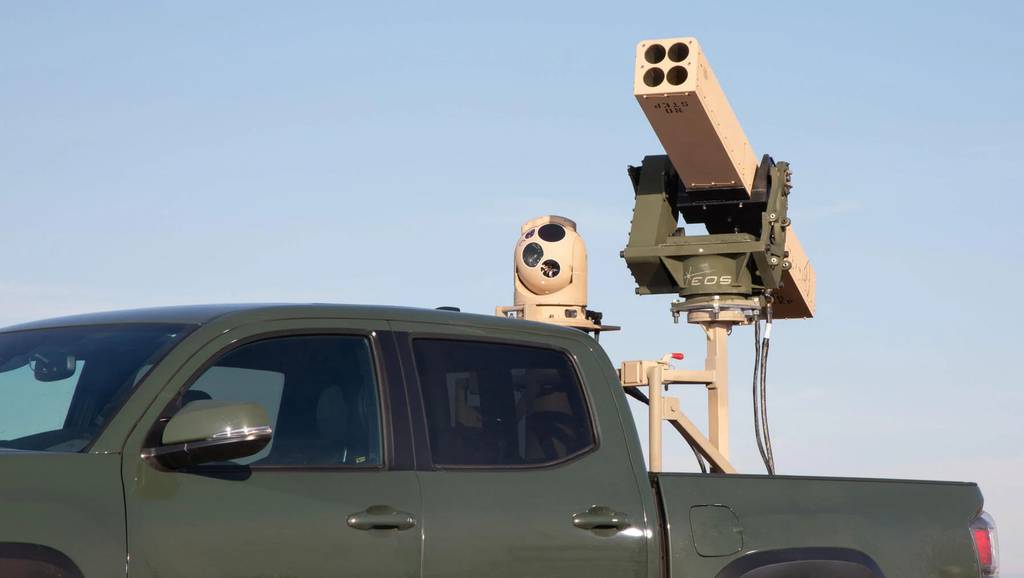
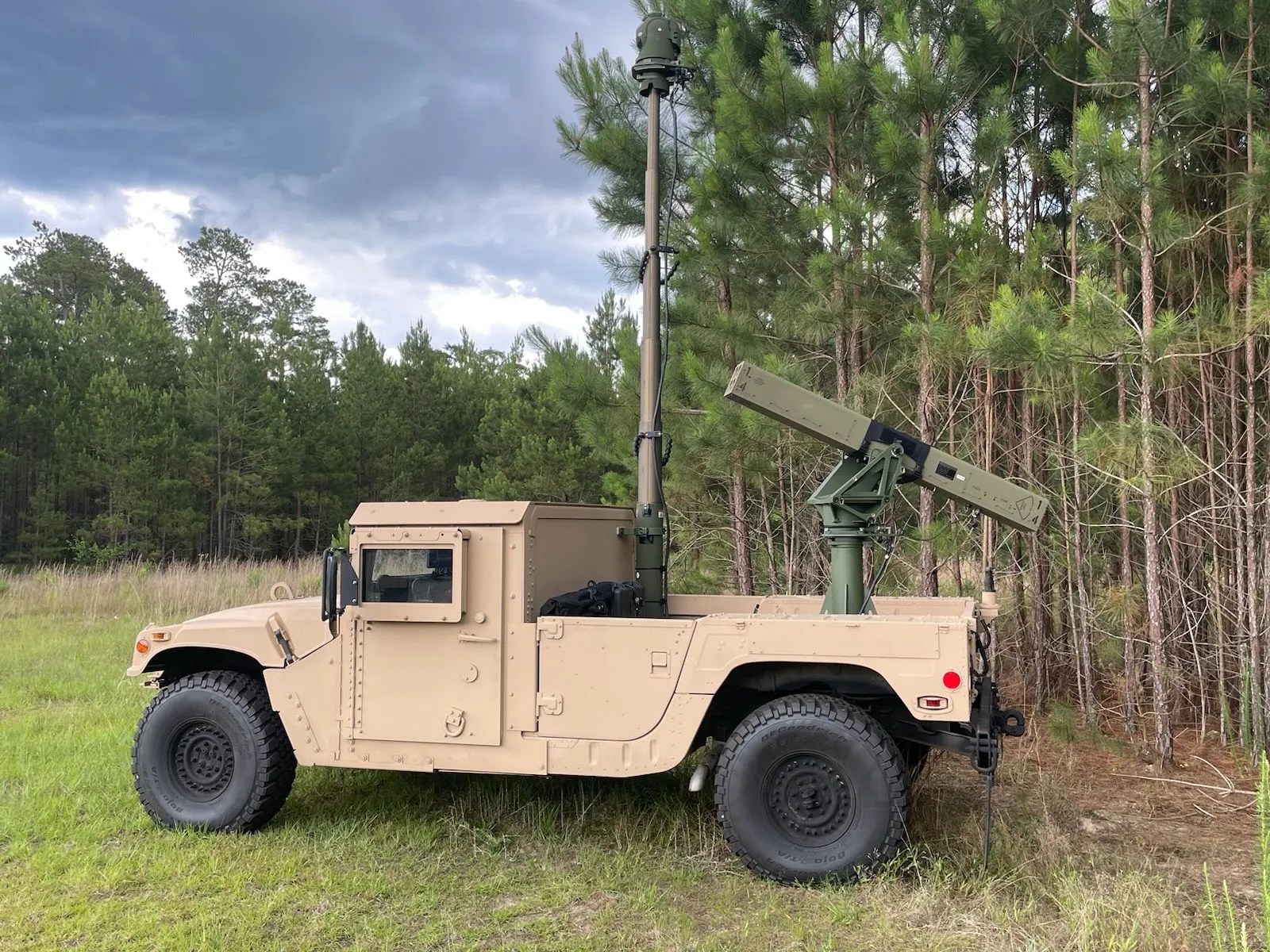
APKWS is in the US Navy inventory, but there it is used primarily as an air to ground weapon. It is a semi-active Iaser homing weapon so requires use of a laser designator. It can be as simple as the L3 Harris VAMPIRE system which provides a complete system–weapons, launcher, designator, and detection–that fits on a pickup truck.

APKWS is not the only guided 70mm rocket system. South Korea has developed the “Poniard” Korean-Low cOst Guided Imaging Rocket (K-LOGIR).

This is a fire-and-forget system allowing multiple simultaneous engagements. It is also claimed to have advantages in periods of restricted visibility.

The Weapon has already been exported. Here is a report on an earlier test was done by 4th Fleet.

Another APKWS Based System, “EAGLS: US Army gets new anti-drone systems featuring laser-guided 70mm rockets” –Interesting Engineering

Mooresville, NC, July 22, 2024 – MSI Defense Solutions has delivered the first 70mm centric Counter-UAS system acquired by the Department of Defense for use by the United States Army. Through the Rapid Acquisition Authority (RAA), MSI was awarded a contract for six EAGLS™ (Electronic Advanced Ground Launcher System) counter-UAS systems, including associated engineering and maintenance support. The contract was awarded by Naval Air Systems Command (NAVAIR) to support forward deployed forces facing emerging and persistent Uncrewed Aerial Systems (UAS) threats.

Interesting Engineering reports,

The US Army has received the six MSI Defense Solutions’ (MSI) Electronic Advanced Ground Launcher Systems (EAGLS) to improve its counter-drone capabilities.

In April, the US Army’s Naval Air Systems Command (NAVAIR) announced the order for a firm-fixed-price contract with MSI with a not-to-exceed value of $24,186,464.

Aside from the fact that the Naval Air Systems Command (NAVAIR) does not belong to the US Army, there is good information here, about systems that might find their way onto US Coast Guard assets. (Anything that can be mounted on a road going 4×4 vehicle can be mounted on a ship, and I think we have, or should have, a counter UAS capability requirement.)

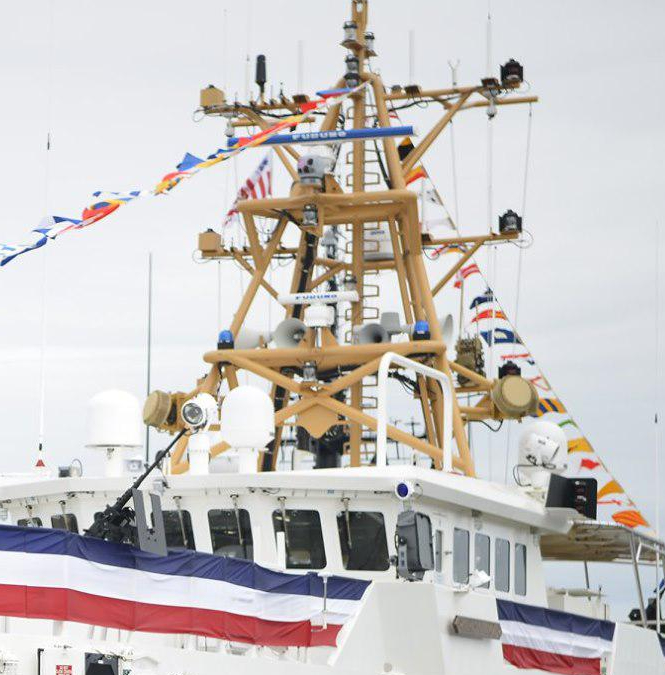
USCGC Charles Moulthrope (WPC-1141) prior to departure for PATFORSWA.

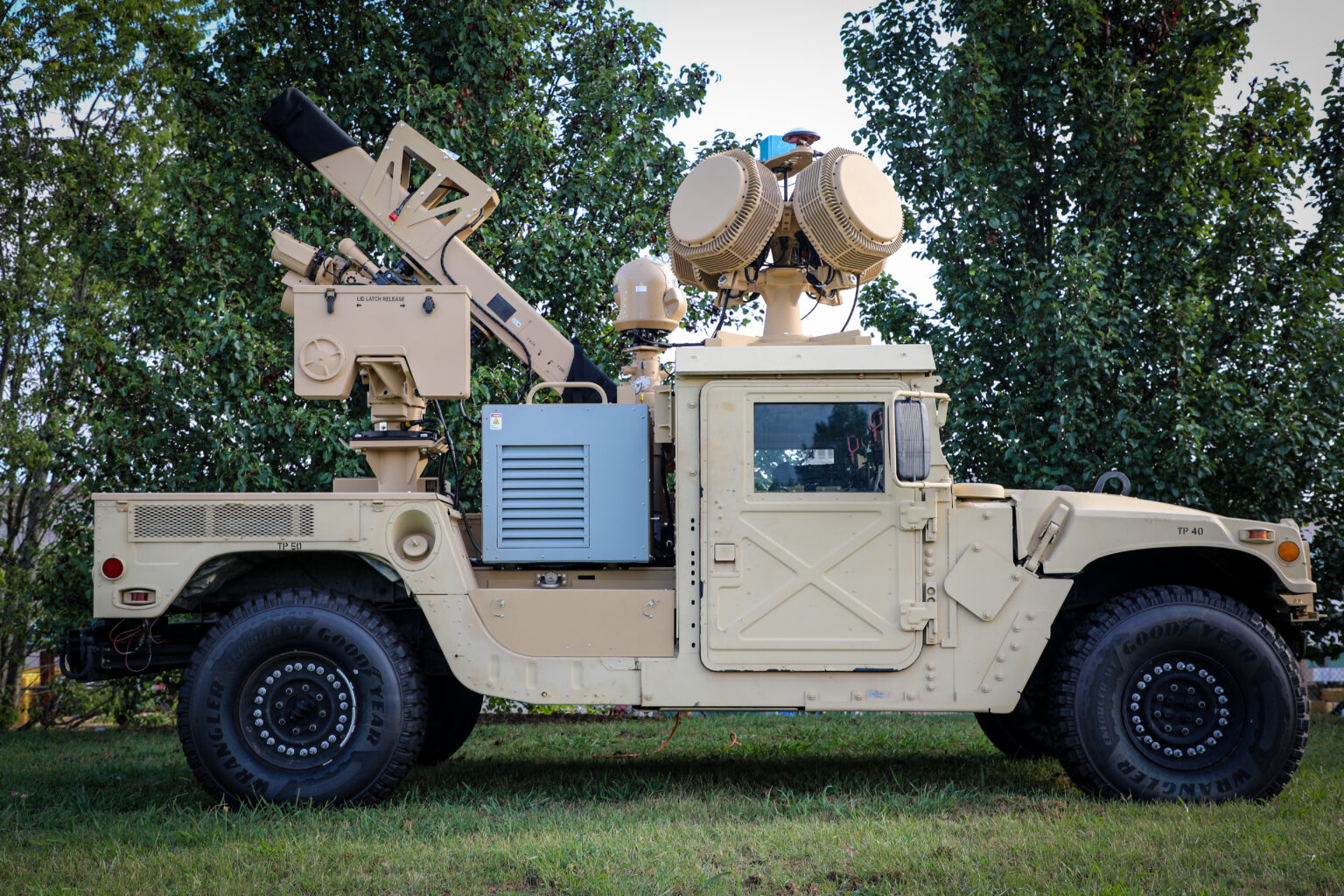
Those radars on top of the truck cab may look familiar.

The purchase seems to show confidence that APKWS can be used effectively against Unmanned Air Systems. The more modest Vampire system is already being used in Ukraine.

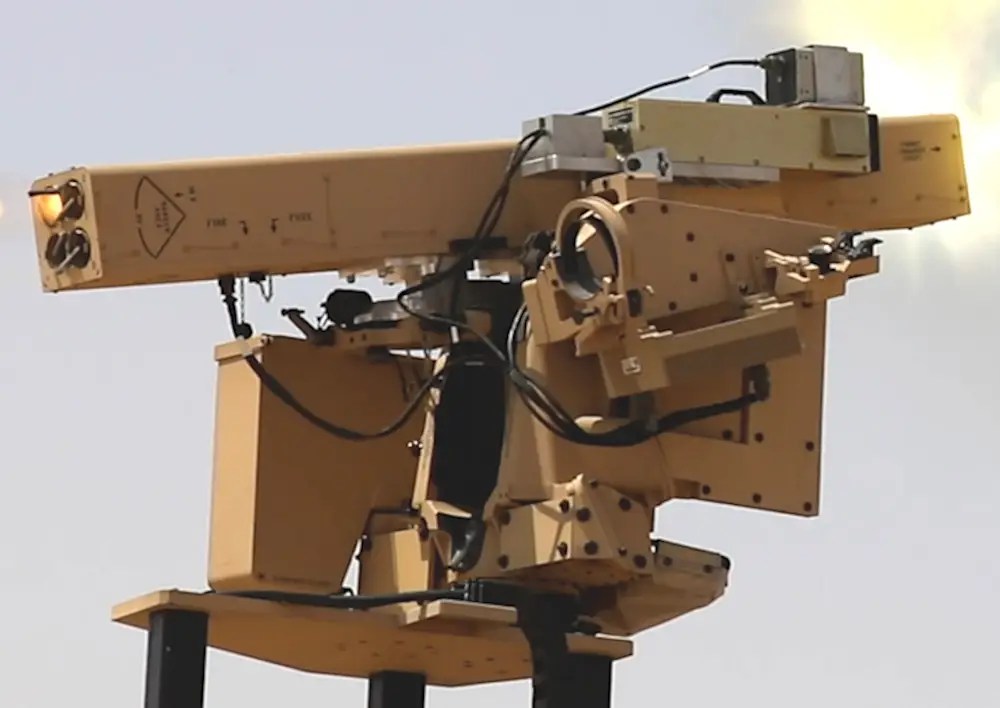
A close-up of the modified CROWS II fitted with the LAND-LGR4 launcher and the added sensor or other system (silver/gray rather than tan). US Army

APKWS, like most 70mm guided rocket systems, is a modification of the Hydra 70mm (2.75″) unguided rocket, which is available with a variety of warheads and fuses, including a proximity fuse.

The system can do more than just counter UAS. This is a system we could put any cutter, WPB size and up, and have most of the effective range and hitting power of a 76mm and at three times the effective range of a 25mm Mk38 Mod2/3 with minimal footprint and support requirements.

“ADAPTING LAND-BASED SYSTEMS FOR EFFECTIVE LOW-COST ENGAGEMENT SOLUTIONS AT SEA” –L3 Harris

The VAMPIRE system can fit in almost any pickup or vehicle with a cargo bed. (Courtesy of L3Harris)

Below is an L3 Harris news release labeled as an editorial. If you are a regular reader of this blog, you know I have been a fan of APKWS since 2017. Tens of thousands of APKWS conversion kits are made annually. They are cheap at about $30,000. There is now a proximity fuse available. L3 Harris has integrated electro-optic sensors and fire control to create a complete system. It is combat proven against Unmanned Air Systems. It seems an almost ideal system for executing the Ports, Waterways, and Coastal Security mission against both surface and air asymmetric threats. Perhaps significantly, VAMPIRE is a Navy system.


While our Vehicle-Agnostic Modular Palletized ISR Rocket Equipment (VAMPIRE™) system has already proven its effectiveness with ground based missions, its adaptation for maritime use will revolutionize maritime surveillance and defense.

The VAMPIRE system, originally designed to address the emerging unmanned aerial systems (UAS) threat, has garnered acclaim for its precision and reliability in combat. Already proven on the ground in Ukraine, these effective, low-cost engagement capabilities can be extended to the seas, offering a transformative solution for maritime operations against UAS, fast inshore attack crafts and low-slow flyers.

The significance of the maritime system extends beyond its immediate capabilities. Its integration into naval operations redefines maritime security protocols, enhancing surveillance, reconnaissance, and deterrence capabilities. With the ability to swiftly detect and counter aerial and surface threats, naval forces can better safeguard maritime assets, ensure personnel safety, lower the weapons cost curve and maintain strategic superiority in contested environments.

The mission management system enables the integration onto manned and unmanned surface vessels featuring an advanced WESCAM MX™-10 MS targeting sensor with its weapons station, allowing a remote operator to engage targets quickly and accurately. Like its ground-based counterpart, maritime VAMPIRE employs the Advanced Precision Kill Weapon System (APKWS) paired with L3Harris’ proximity fuze to defend against surface and air threats, providing naval forces with an accurate, low-cost engagement capability.

The VAMPIRE system highlights L3Harris’ dedication to supporting the defense needs of nations across the globe. By extending this versatile solution to the maritime domain, L3Harris is providing naval forces with cost-appropriate options to adapt to evolving threats and safeguard waters effectively.

As the landscape of maritime security challenges undergoes constant evolution, forward-looking, full-scale production and low-cost solutions are needed to counter the wide range of dynamic challenges.  L3Harris is committed to innovation and adaptability in addressing evolving security threats by leveraging and adapting existing technology like VAMPIRE for maritime use.

RELATED CAPABILITIES

Helicopter Door Gunner Takes Down Kamikaze Drone

French Armed Forces via X

The War Zone reports, “A French Navy helicopter used machine gun fire to shoot down a Houthi drone over the Red Sea today.”

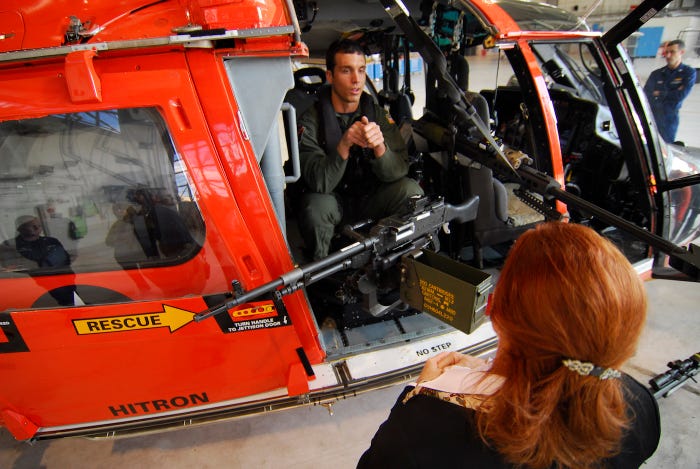
This is a potential Coast Guard capability, given its airborne use of force capability includes a door mounted rifle caliber machine gun, though I do not know if every Coast Guard Air Station has qualified gunners. The .50 caliber sniper rifle included in the package might even be more effective than the machine gun.

I am not suggesting the Coast Guard send helicopters to the Red Sea, but when the Coast Guard provides protection for vessels transiting to sea, it has generally been done with small boats with crew served rifle caliber machine guns. Ballistic Missile submarines have been an exception. They may be escorted by 82 foot patrol boats with .50 caliber machine guns in remote weapon stations. Perhaps the Coast Guard should consider providing an armed helicopter overwatch. An armed helicopter could be effective against hostile surface systems as well as air systems.

Petty Officer 2nd Class Anthony Phillips, a precision marksman at Helicopter Interdiction Tactical Squadron, displays the weaponry used by a HITRON during missions, February 23, 2010. US Coast Guard/Petty Officer 1st Class Bobby Nash

Below is a video taken by the French helicopter (an AS565 Panther, similar to the Coast Guard’s H-65s) as it shoots down the drone.

A US Navy helicopter demonstrated this capability over eight years ago. It is certainly less expensive than bringing down a drone with a missile. On the other hand, I would not want to be in a helicopter near a drone if the Navy decides to use a missile to destroy the drone.

“Vampire weapon system makes Ukraine combat debut” –Defense Blog

Defense Blog reports,

The Ukrainian Navy’s press service recently released footage showcasing the combat effectiveness of their air defense units, marking the confirmed debut of a new Counter-Unmanned Air System (UAS) weapon system developed by L3Harris for Ukraine.

The video captured the moment when a Russian kamikaze drone, identified as the Shahed-136, was successfully shot down by an Advanced Precision Kill Weapon System (APKWS) laser-guided rocket launched from the Vampire weapon system.

If you have been following my blog, you know I like this system and have been advocating for Coast Guard use of the APKWS since at least 2017.

  • It is probably less maintenance intensive than a .50 caliber machine gun.
  • It has a very small footprint and light weight.
  • Because it is a precision weapon, it minimizes the probability of collateral damage.
  • It is a proven counter Unmanned Air System.
  • It can employ a variety of warheads for different purposes including air burst with the M429 proximity fuse. It has even been tested successfully against cruise missiles.
  • It is effective against small, fast, highly maneuverable surface threats.
  • It has an effective range greater than that of our M38 gun mounts and a similar effective range to that of the 57mm and 76m guns.
  • While I would not count on its ability to stop medium to large ships, it can inflict damage at effective ranges beyond that of most weapons a terrorist organization might equip a vessel with.  It is likely to be a lot more effective against small ships than the Mk38.
  • And it is cheap. 

Without much additional effort, it could make Coast Guard assets much more capable in the Ports, Waterways & Coastal Security and Defense Readiness missions.

“Research and Development Center projects continue to enhance Coast Guard mission success” –CG-9

The Coast Guard Research and Development Center workforce is based in New London, Connecticut. U.S. Coast Guard photo.

Below is a news release from the Acquisitions Directorate (CG-9). If you follow the links there is a huge amount of information.

There is a lot of ongoing work, including cooperation with 4th Fleet in their efforts to operationalize unmanned systems. I had hoped the Coast Guard was doing that, and it’s gratifying to see they in fact are.

The projects listed are wide ranging and may potentially impact every mission area.

Perhaps the biggest surprise was that they are working on detect and avoid systems for small UAS. It appears they are looking at beyond visual line of sight UAS that could be used by the Fast Response Cutters and other vessels that do not have a flight deck. Apparently, they are also looking at using Unmanned Surface Vessels (USVs) to fire warning shots, presumably to stop drug runners. Would that mean they would also use USVs for disabling fire?

They are also looking at counter UAS alternatives, at ways to operate more effectively in polar regions, maritime domain awareness, and a lot more. It’s very impressive, especially when you consider how little the Coast Guard spends on R&D.


In fiscal year 2023, the Coast Guard Research and Development Center in New London, Connecticut, supported a research portfolio of 54 projects, covering the full scope of the Coast Guard’s missions. This video highlights a few of those projects, including beyond visual line of sight unmanned aircraft system detect and avoid technology, cutter-based unmanned systems integration with the Ship Control and Navigation Training System, International Maritime Organization polar code validation through advanced simulation modeling, and laser corrosion removal.

View video here.

Related: FY24 RDT&E Project Portfolio

For more information: Research and Development Center page and Research, Development, Test & Evaluation and Innovation Program page


The Navy is Looking for Counter Drone Systems

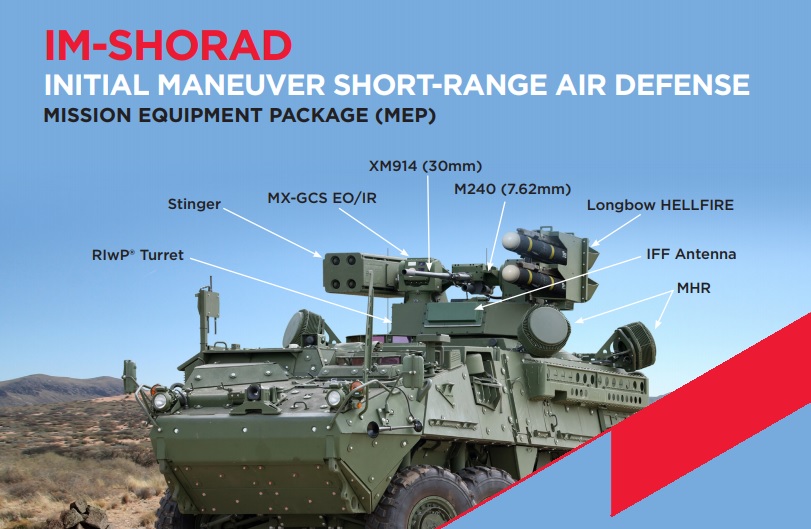
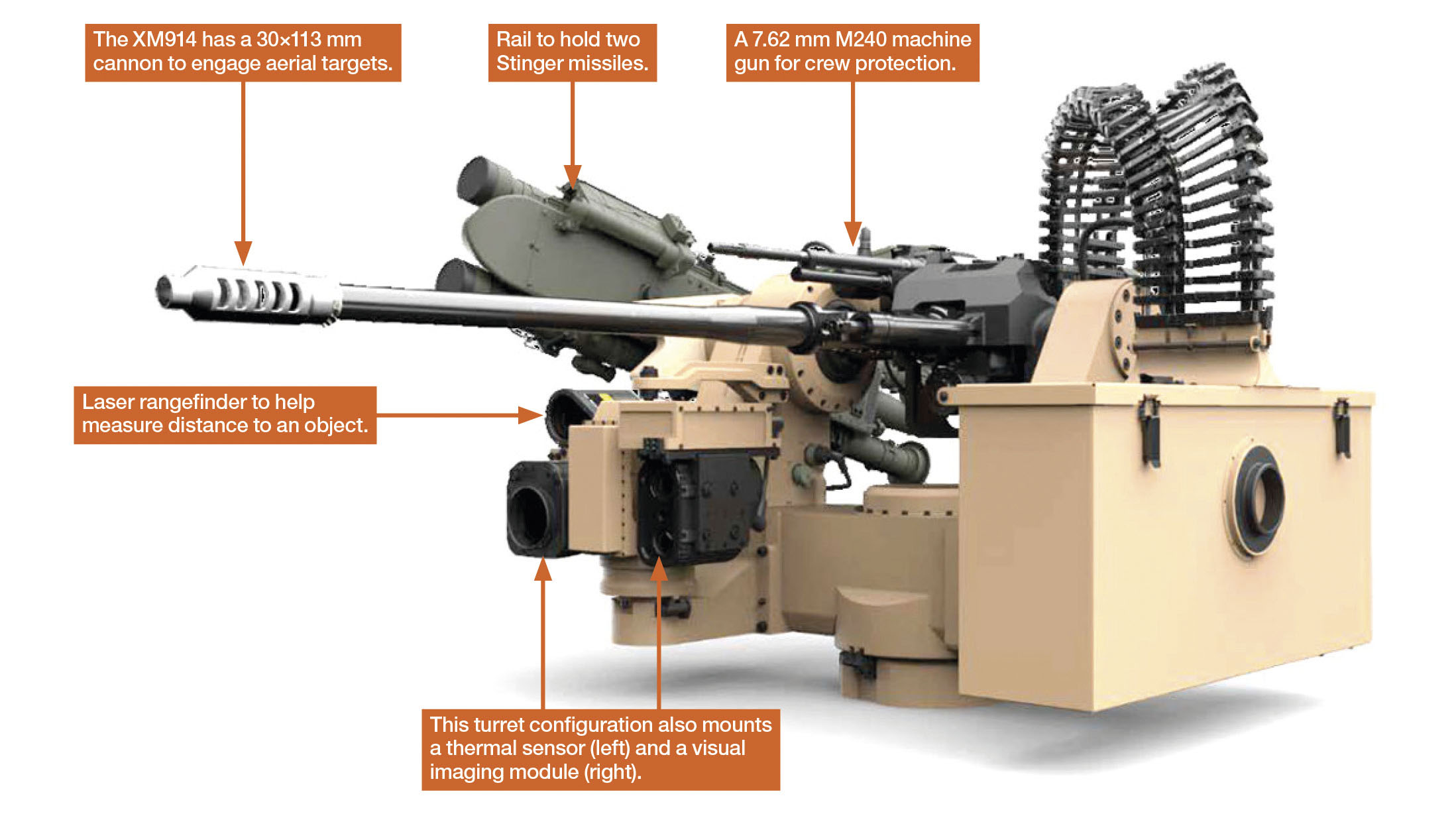
Interim Maneuver Short-Range Air Defense (IM-SHORAD). The sensors and remote weapon system used here looks like it might be a contender.

The Navy is looking for mature counter Unmanned Air Systems (c-UAS) that can be rapidly deployed. They have issued a Request For Information (FRI). Responses are due today, so we are talking near term if it happens. 

Looks like it might be something the Coast Guard could use,

Marine Air Defense Remote Weapon Station. Use of this Remote Weapons Station would require an interface with cueing sensors.

Below is SECTION 3: [Requirements Overview]


PEO IWS 11.0 is looking for respondents to submit feasibility and capability information on innovative, mature solutions to counter Group 3-5 UAS from surface ships.  System requirements include:

  1. Mature systems that are in production and can be deployed in 1-6 months (preferred), or 6-12 months at the latest.
  2. Demonstrated performance against Groups 3 to 5 UAS, with demonstrated capability against other classes of UAS’s being of interest.
  3. Minimal integration requirements with Naval combat systems; with independent, self-contained capability highly desirable.

If the system is capable against Group 5 UAS (the largest UASs, over 1320 pounds (600 kg) and with no limit on their maximum speed) it’s likely the system will also have a capability against at least subsonic cruise missiles and manned aircraft and perhaps against winged smart bombs. After all, a Naval Strike missile fits the definition of a Group 4 UAS. Surface launched Harpoon or Tomahawk would be Group 5 UAS.

The War Zone has a fairly long post about this including discussion of alternatives. They seem to think these systems are destined for DDGs, but I think the need to equip other types, that do not have robust AAW capabilities, may be more urgent. If a C-UAS has an anti-surface capability, I could see such a system replacing Mk38 mounts. Alternately a 30mm Mk38 Mod4 mount that also mounts AAW missiles (like Stinger) might meet the requirement.

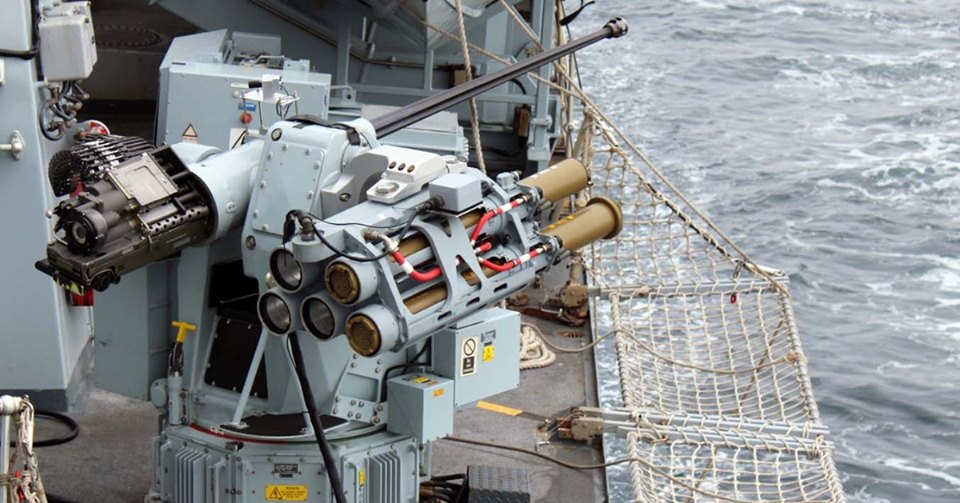
Martlet Light Multirole Missile launchers mounted on MSI 30mm gun mount that will be used in US Navy service as the 30mm Mk38 Mod4.

Mine Countermeasures Ships and MSC ships are currently essentially unarmed. They might be recipients.

Minimal integration requirements with Naval combat systems; with independent, self-contained capability highly desirable” would certainly mean it should not be too difficult to add to a cutter.

“Roadrunner Reusable Anti-Air Interceptor Breaks Cover” –The Drive

The Drive reports on a new sort of modular system that has a wide range of possible uses including as an anti-air weapon against threats from small drones to cruise missiles. It is small and relatively cheap. It can loiter. It can return and be refueled. It requires only minimal maintenance. It can be cued by a number of systems. It probably would work against surface targets too. It is jet powered, with high sub-sonic speeds.

Guns as Counter-UAS Weapons

A couple of videos from a The Drive post, “Gepard’s 35mm Cannons Blast Russian Drones Out Of The Sky In First-Person Video.”

TheFlakpanzer Gepard was not designed specifically for UAS. It was designed in the ’60s and fielded in the ’70s to protect against low flying aircraft like attack helicopters and the Soviet counterpart of the A-10 attack aircraft, the SU-25 Frogfoot.

The twin 35 mm guns are much more powerful weapons than the 25 and 30 mm weapons mounted on the Mk38 gun systems. Presumably in the counter UAS role they are using the “AHEAD” anti-missile rounds, rounds that might have been designed specifically to take out UAS, that fire 152, 3.3 gram tungsten metal sub-projectiles. The guns have a very high muzzle velocity (3,400 ft/sec for the AHEAD round) and a much higher rate of fire (550 rounds per minute per gun).

With the AHEAD round, the projectile weight is 1.65 lbs. (0.750 kg) compared with 0.406 lbs. (0.184 kg) for the 25mm HEI and HEI-T rounds, and 0.79 lbs. (0.362 kg) 30mm HEI-T round so the potential radius of destruction is substantially greater.

Still the 30mm with airburst ammunition should be effective, but it will probably require more rounds to get the job done and will have shorter effective range. Unless the 25mm has an airburst round it is unlikely to be effective.

It might be worth considering that while the Gepard’s firecontrol is radar, the Mk38 firecontrol is electrooptic. I can’t say unequivocally that that is a disadvantage, but it might be. Surely the drone builders will attempt to include countermeasures against both types of firecontrol.