Chuck Hill's CG Blog

Chuck Hill's CG Blog

“First Coast Guard aerial vehicle pilot gets his wings” –MyCG

Lt. Cmdr. Ryan Major awarded U.S. Navy Aerial Pilot (AVP) insignia at the RAS Exposition
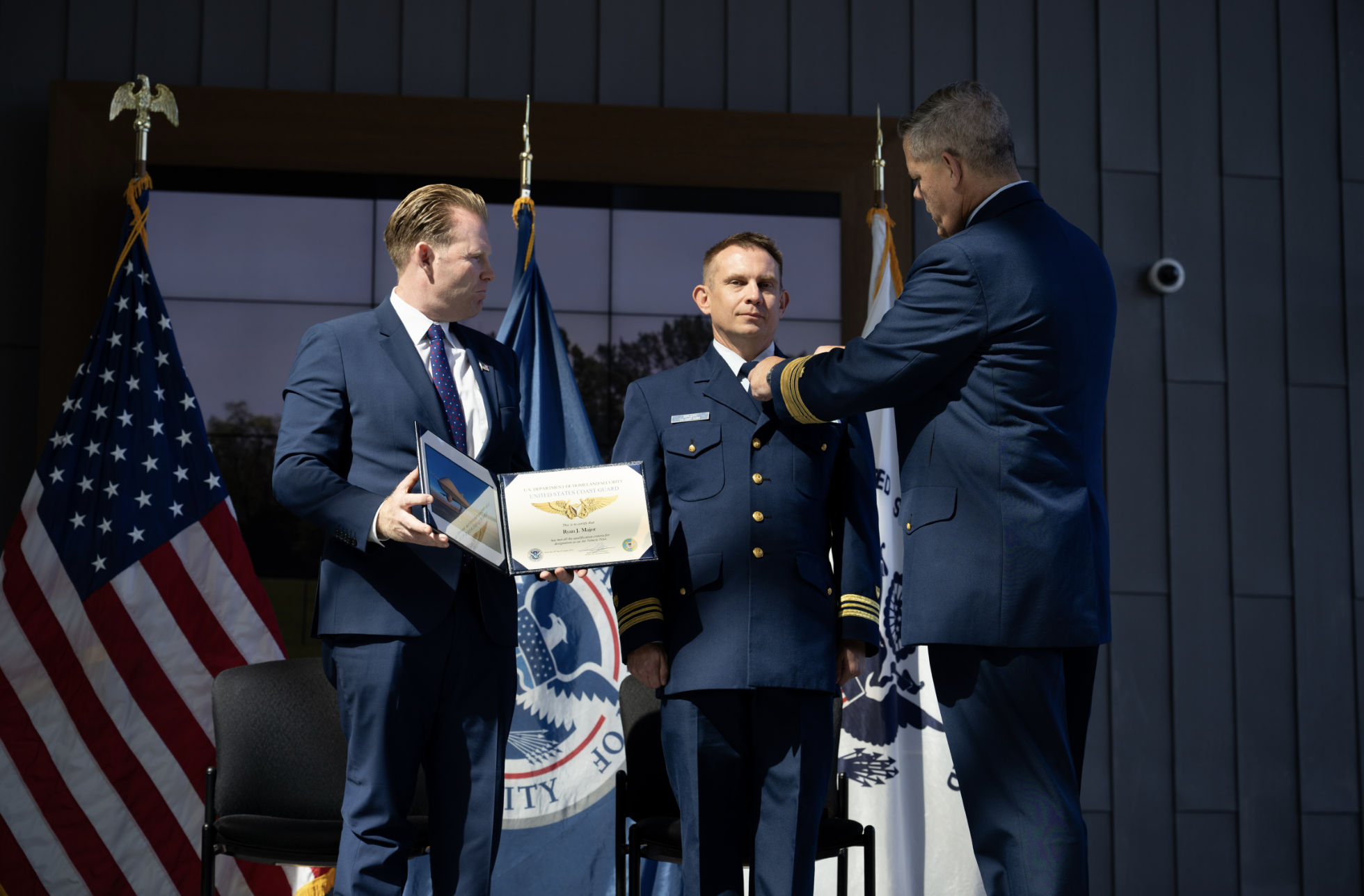
Vice Commandant Adm. Thomas Allan presents Lt. Cmdr. Ryan Major the U.S.Navy Aerial Pilot (AVP) insignia at the Robotics and Autonomous Systems (RAS) Exposition held at Coast Guard Headquarters in Washington, D.C. on August 26, 2025. Major is the first Coast Guard UAS pilot to receive this distinction who has not completed traditional military flight training.

Below is a MyCG story.

The decision to buy shore based Medium Altitude Long Endurance MQ-9 drones along with this appear to mark a major shift away from the Coast Guard’s past dependence on Customs and Border Protection and Contractor Owned/Contractor Operated UAS. (The relationship with Customs and Border Protection remains close.)

We may be seeing the birth of an entire new community. I have been hoping to see UAS be made more an integral part of the Coast Guard.


Sept. 24, 2025

First Coast Guard aerial vehicle pilot gets his wings

By Kathy Murray, Senior Writer, MyCG

Navy Aerial Vehicle Pilot (AVP) insignia

As a boy, Lt. Cmdr. Ryan Major was fascinated with flying. Not only had his great grandfather flown B-25s in WW II, two of his cousins became military pilots and his parents both worked for the airline industry. “I grew up around aviation and have always loved it,” he says.

So, Major was understandably thrilled last month when he became the first Coast Guard aerial vehicle pilot to earn his wings.

Major, an unmanned aircraft systems (UAS) aviator based in San Angelo, Texas, took the stage to receive this honor during the Robotic and Autonomous Systems (RAS) Exposition held at Coast Guard headquarters on August 26. As his parents watched from the audience, Vice Commandant, Adm. Tom Allan pinned the Navy Aerial Vehicle Pilot (AVP) insignia to his uniform.

“We are entering a new era of Coast Guard aviation where unmanned systems will play and increasingly vital role,” Allan said. “So we’ve opened up MQ-9 Flight Assignments to a broader range of qualified personnel.”

To Major, the recognition marked the culmination of an aviation career he’s been building for more than 20 years. Even prior to joining the Coast Guard in 2004, Major completed civilian flight training and became a certified flight instructor. Once in, he excelled as an aviation electronics technician and got a bachelor’s degree in aeronautical science. He served as a rotary wing sensor instructor, then later earned a commission and worked at the Coast Guard Research and Development Center (RDC) and managed projects at C5 ISC.

When the Coast Guard solicited for the new insignia, Major was working as an IT/Project Management Officer. But having accumulated more than 1,500 manned civilian flight hours over his career, he knew he had the required time in the air. “I jumped at it,” he said.

To qualify for the AVP, Major also had to complete the approved Customs and Border Protection Air and Marine Operations (CBP AMO) initial MQ-9 flight training course and local training syllabus. Historically, only Coast Guard aviators have been eligible for assignment to this JPO. But because of the unique differences between manned and unmanned aircraft, this requirement was recently adjusted to allow Coast Guard members who meet the CBP MQ-9 hiring requirements to also be eligible for assignment.

Coast Guard officials determined Major’s civilian training and certifications, together with his CBP MQ-9 training exceeded the typical requirements to wear the AVP insignia.  As a result, he is now designated as Coast Guard MQ-9 Aircraft Commander and assigned the AVI 13 officer subspecialty code.

“Being an MQ-9 pilot was my pathway to become a Coast Guard pilot,” says Major, noting he’s always enjoyed being part of a crew with a common mission. “I also like the interoperability aspect of working the CBP AMO.”

The AVP insignia is reminiscent of traditional aviator wings. It features an inverted delta displayed on the shield centered on two cross anchors and flanked by wings.

Establishing a new pilot insignia for UAS pilots who operate the MQ-9 paves the way for a new career path in the service and is part of a larger initiative to expand the use of robotics and autonomous capabilities across all Coast Guard missions. In July, a program executive office—the RAS PEO—was set up to accelerate the adoption of uncrewed systems (UxS) in the field as part of Force Design 2028 modernization efforts.

This rapidly evolving technology is expected to be the biggest enhancement to operations since the inception of aviation.  The RAS PEO will focus on testing and acquiring unmanned aircraft, surface, subsurface, and space systems and developing a future-ready workforce equipped to use them in the field.

The Coast Guard received $24.59 billion in the spending bill the President signed in July.  Some $266 million of that is earmarked to purchase as many as four MQ-9 drones to assist with migrant and drug interdictions.  These long-range drones, which can operate up to 24 hours collecting intelligence in a 60-to-80-mile radius, are significant force multipliers for the Service.

Navy Issues Large Contract for Development of Unmanned Surface Vehicles

A U.S. Navy L3 Harris Arabian Fox MAST-13 drone boat and the U.S. Coast Guard cutter USCGC John Scheuerman transit the Strait of Hormuz on April 19, 2023. (Information Systems Technician 1st Class Vincent Aguirre/U.S. Coast Guard)

Below the break is a quote from DOD “Contracts for June 14, 2024.”
This is a big step toward procurement of an “Unmanned Surface Vehicle Family of Systems.” There can be little doubt the Coast Guard will exploit some of these developments and will probably participate in some of the testing, as they have done with 4th and 5th Fleet. 
Of the 49 partners mentioned, Bollinger is the only one I recognize as a ship builder. Could this mean we will see a Fast Response Cutter emerge as an Optionally manned or Unmanned Surface Vehicle? Probably not, but…
The funding structure is interesting. This is potentially an almost one billion dollar contract, but the initial commitment is only $49,000, $1,000 to each of the contractors. Sounds like they built in a lot of flexibility.

A multiple-award contract to support current and future unmanned surface vehicle family of systems and subsystems is awarded to the following 49 industry partners: Anduril Industries Inc.,* Costa Mesa, California (N0002424D6306); Applied Research Associates Inc., Albuquerque, New Mexico (N0002424D6307); Asymmetric Technologies LLC,* Dublin, Ohio (N0002424D6308); AT&T Corp., Oakton, Virginia (N0002424D6309); Atlas Technologies Inc.,* North Charleston, South Carolina (N0002424D6313); Autonodyne LLC,* Boston, Massachusetts (N0002424D6315); Beast Code LLC,* Fort Walton Beach, Florida (N0002424D6316); Bigelow Family Holdings LLC, doing business as Mettle Ops,* Sterling Heights, Michigan (N0002424D6317); Bollinger Shipyards Lockport LLC, Lockport, Louisiana (N0002424D6318); CACI Inc. – Federal, Chantilly, Virginia (N0002424D6319); Carnegie Robotics LLC, doing business as CR Tactical,* Pittsburgh, Pennsylvania (N0002424D6320); Cydecor Inc.,* Arlington, Virginia (N0002424D6361); DELTA Resources Inc., Alexandria, Virginia (N0002424D6363); Fairbanks Morse LLC, Beloit, Wisconsin (N0002424D6364); Teledyne FLIR Surveillance Inc., North Billerica, Massachusetts (N0002424D6365); General Atomics Aeronautical Systems Inc., Poway, California (N0002424D6366); GIRD Systems Inc.,* Cincinnati, Ohio (N0002424D6367); Herren Associates Inc.,* Washington, D.C. (N0002424D6368); Honeywell International Inc., Clearwater, Florida (N0002424D6369); IERUS Technologies Inc.,* Huntsville, Alabama (N0002424D6370); Integer Technologies LLC,* Columbia, South Carolina (N0002424D6371); KIHOMAC Inc.,* Reston, Virginia (N0002424D6372); Leonardo Electronics US Inc., Huntsville, Alabama (N0002424D6373); MAK Technologies Inc., Cambridge, Massachusetts (N0002424D6374); Marine Ventures International Inc.,* Stuart, Florida (N0002424D6375); Marinette Marine Corp., Marinette, Wisconsin (N0002424D6376); Metron Inc.,* Reston, Virginia (N0002424D6378); Microsoft Corp., Redmond, Washington (N0002424D6379); Murtech Inc.,* Glen Burnie, Maryland (N0002424D6380); NewSat North America LLC,* Indian Harbour Beach, Florida (N0002424D6381); Noblis MSD LLC, Philadelphia, Pennsylvania (N0002424D6382); Novetta Inc., McLean, Virginia (N0002424D6383); Ocean Specialists Inc.,* Stuart, Florida (N0002424D6384); PACMAR Technologies LLC,* Honolulu, Hawaii (N0002424D6377); Persistent Systems LLC,* New York, New York (N0002424D6385); Physical Sciences Inc.,* Andover, Massachusetts (N0002424D6386); Prescient Edge Corp.,* McLean, Virginia (N0002424D6387); Programs Management Analytics & Technologies Inc.,* San Diego, California (N0002424D6388); Reliability & Performance Technologies LLC,* Dublin, Pennsylvania (N0002424D6389); Saab Inc., East Syracuse, New York (N0002424D6390); Scientific Systems Co. Inc.,* Woburn, Massachusetts (N0002424D6391); Secmation, LLC,* Raleigh, North Carolina (N0002424D6392); SES Government Solutions Inc., Reston, Virginia (N0002424D6393); SIMIS Inc.,* Portsmouth, Virginia (N0002424D6394); Sparton DeLeon Springs LLC, De Leon Springs, Florida (N0002424D6395); Systems and Proposal Engineering Co.,* Manassas, Virginia (N0002424D6396); Systems Technology & Research Inc.,* Huntsville, Alabama (N0002424D6397); TDI Technologies Inc.,* King of Prussia, Pennsylvania (N0002424D6398); and Triton Systems Inc.,* Chelmsford, Massachusetts (N0002424D6399), are each awarded a firm-fixed-price, fixed-price-incentive-firm-target, cost-plus-incentive-fee, cost-plus-fixed-fee, and cost only, indefinite-delivery/indefinite-quantity contract for the procurements involving one or more functional areas, i.e. payloads, non-payload sensors, mission support systems, autonomy and vehicle control systems, ashore and host platform elements, and logistics and sustainment for the Unmanned Surface Vehicle Family of Systems. The maximum dollar value for all (total number) contracts combined is $982,100,000. Each awardee will be awarded $1,000 (minimum contract guarantee per awardee) at contract award. Work will be performed in various locations in the contiguous U.S. and is expected to be completed by February 2025. These contracts include a five-year ordering period option which, if exercised, will continue work through February 2030. Fiscal 2024 research, development, test and evaluation (Navy) funding in the amount of $49,000 will be obligated at the time of award and will expire at the end of the current fiscal year. All other funding will be made available at the delivery or task order level as contracting actions occur. These contracts were competitively procured via SAM.gov and there were 55 offers received. Naval Sea Systems Command, Washington Navy Yard, D.C., is the contracting activity.

“Army Cancels High-Speed Armed Reconnaissance Helicopter Program” –The WarZone

Sikorsky’s Raider X, advanced compound helicopter design (FARA prototype)

The Warzone reports,

The U.S. Army says it is cancelling its Future Attack Recon Aircraft (FARA) program which had been centered on the acquisition of a new type of high-speed armed scout helicopter. This is part of a larger restructuring the Army plans for its future fleets of helicopters and other crewed and uncrewed aircraft.

This is essentially half of the Army’s Future Vertical Lift program. The Coast Guard has been following the program in anticipation of development of vertical takeoff and landing aircraft that would offer “twice the range and twice the speed” of existing helicopter types. We might still see that in a version of the Bell V-280 for land-based operations.

Note this video is four years old, so the prototype has been flying for a long time. I have heard concern about the downwash, but if you look at the windsock visible from time 2:20, downwash does not seem to be excessive. My back of the envelope calculations suggests the overpressure directly under the rotor discuses would be about 67% higher under the V-280’s props compared to the H-60J’s rotor. That might be mitigated at the hoist pickup point because, unlike in the H-60, the props are not rotating over the fuselage of the V-280.

It does appear that the H-60s may have a new engine option in the future.

The FARA cancellation is part of what the Army is currently calling the Aviation Investment Rebalance. The service says it will delay production of the General Electric T901 turboshaft engine developed under the Improved Turbine Engine Program (ITEP), which had been heavily tied to FARA, as part of this plan. The immediate focus will now be on integrating T901s onto existing AH-64 Apache attack helicopters and UH-60 Black Hawk utility helicopters.

GE Aerospace claims, “The T901 engine provides 50% more power 25% better specific fuel consumption, and reduced life cycle costs -with fewer parts, a simpler design, and proven, reliable technology.” 

Basically, the Army has decided that Unmanned aircraft and Satellites can do the job of scouting better and cheaper, as well as safer, than a helicopter. This means they will be putting more money into those areas.

The Coast Guard might still benefit in its maritime domain awareness and its search function. I have not put much thought into the possibility that UAS (and perhaps satellites) might supplement or replace fixed wing for the SAR search function or MEP detection, but those are real possibilities.

I am disappointed that we are not likely to see a ship-based helicopter with twice the range and twice the speed any time soon, but on the other hand, we are already using UAS for search that have many times the endurance of the H-65 or even the H-60. For that function, endurance is more important that speed.

“Ukraine Sinks Russian Navy Missile Corvette In Drone Boat Attack” –The War Zone

The War Zone reports,

“A dramatic new view released by the Ukrainian Defense Intelligence Directorate (GUR) shows several of its uncrewed surface vessels (USVs) strike and sink the Russian Tarantul-III class missile corvette Ivanovets. The attack took place Wednesday night local time on the Black Sea near Lake Donuzlav in western Crimea, the GUR said on its Telegram channel.

“A 128-second video posted on Twitter shows what appears to be a complex attack on the Ivanovets by what Lt. Gen. Kyrylo Budanov, commander of GUR, told us were Maritime Autonomous Guard Unmanned Robotic Apparatus (MAGURA V5) USVs operated by the GUR’s Group 13 drone unit.”

Tarantul-class corvette

The vessel in the video is a Tarantul class missile corvette. These vessels are powered by four engines totaling 32,000 HP making them very fast (42 knots). The hot gas turbine exhausts on either side of the transom glow brightly early in the video.

They have a pair of 30mm gatling guns on the aft superstructure with a clear field of fire aft.

This ship appears well equipped to defeat an unmanned surface vessel (USV) attack.

The Drive post analyses the attack, but I would point out that I don’t see as many splashes as I would have expected, if the 30mm guns were functioning. I don’t see muzzle flashes. What I did see appeared to be from heavy machine guns (12.7 or 14.5mm) rather than 30mm.

Many USVs were involved in this attack. The Ukrainians claimed six USVs hit the little corvette. Still other USVs filmed the ultimate explosion and sinking.

Perhaps the 30mm guns had run out of ammunition engaging other USVs by the time the drone in the first video recorded attack gets as close as seen in the video.

The report included this statement,

““The Ivanovets MRK sank while repelling a night attack by the Ukrainian Armed Forces on Sevastopol,” the Russian VoenkorKotenok Telegram channel wrote.”

The Russians have historically stationed a “guard ship” off their ports to prevent surprise attack. Ivanovets may have been stationed off Sevastopol specifically as a counter to a drone attack.

“First on CNN: US Navy warship near Yemen intercepts multiple missiles, US officials say”

USS Carney (DDG-64

CNN repoorts (one of several such reports):

Pentagon press secretary Brig. Gen. Pat Ryder confirmed that the USS Carney shot down three land attack missiles as well as several drones that were launched by Iran-backed Houthi forces in Yemen.

Presumably this refers to land based anti-ship cruise missiles.

USS Carney (DDG-64) is a Flight I Burke class guided missile destroyer. In 2016 Carney completed an upgrade with a SeaRAM rolling airframe missile launcher replacing her after Phalanx CIWS.

Reportedly Carney brought down three cruise missiles and 8 drones. Other reporting suggests Carney was in company with USS Bataan (LHD-5) which may have been the intended target.

This incident occurred in the Red Sea. PATFORSWA cutters also operate in this area.

UPDATE:

Military Times reports,

“We cannot say for certain what these missiles and drones were targeting, but they were launched from Yemen heading north along the Red Sea, potentially towards targets in Israel,” Ryder said in a Pentagon briefing. A U.S. official said they do not believe the missiles were aimed at the ship. That official spoke on condition of anonymity to discuss military operations that had not yet been announced.

“Ukraine hits Russian Buyan cruise missile carrier and Pavel Derzhavin vessel with drones” –Ukrainska Pravda

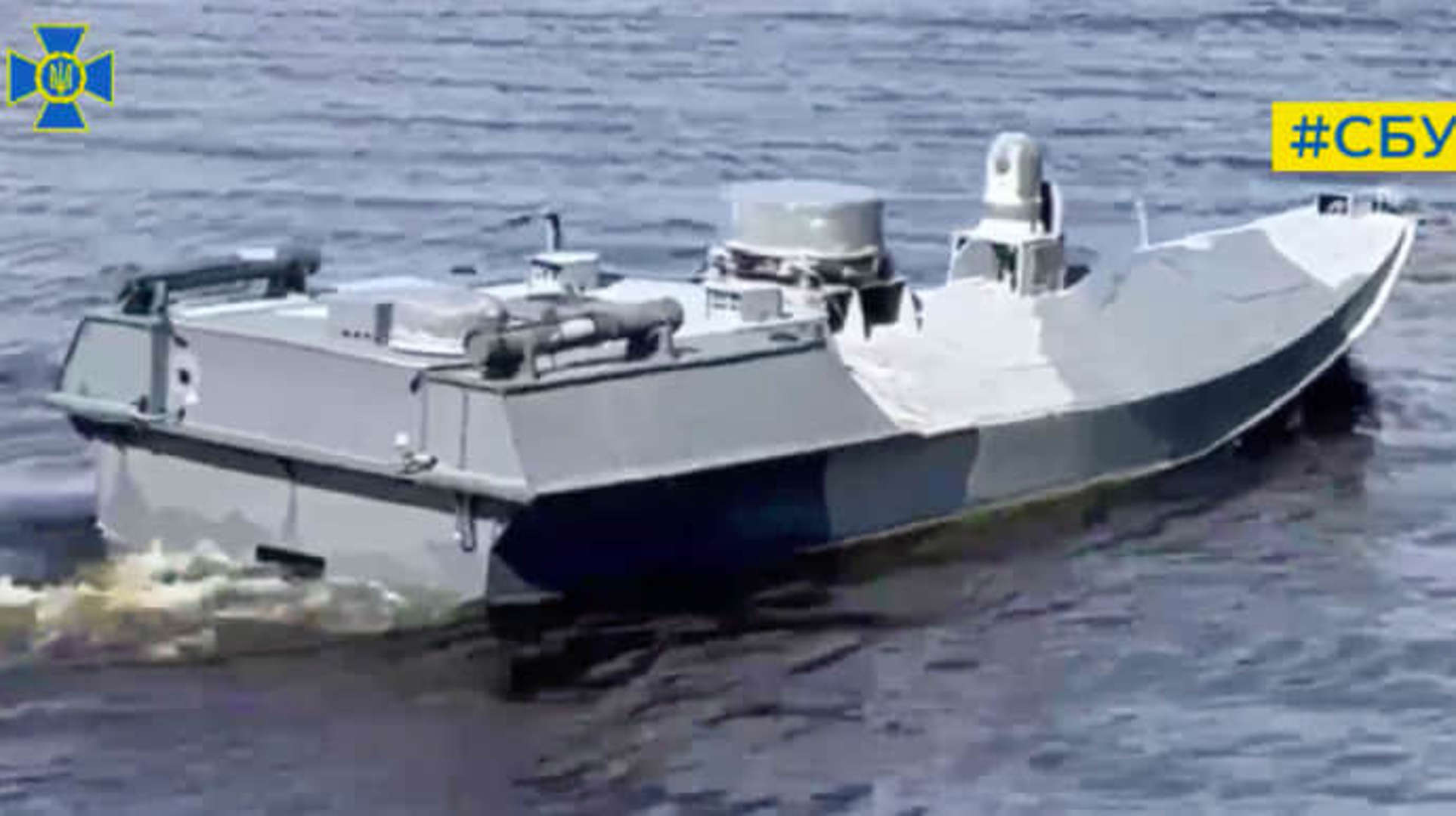
©Sea Baby dron. screenshot.
© Ukrainska Pravda

Ukrainska Pravda reports,

The Security Service of Ukraine, together with the Ukrainian Navy, has attacked the Buyan cruise missile carrier and the ship Pavel Derzhavin using experimental weapons on uncrewed surface vessels…both vessels were hit by Sea Baby drones with experimental weapons.

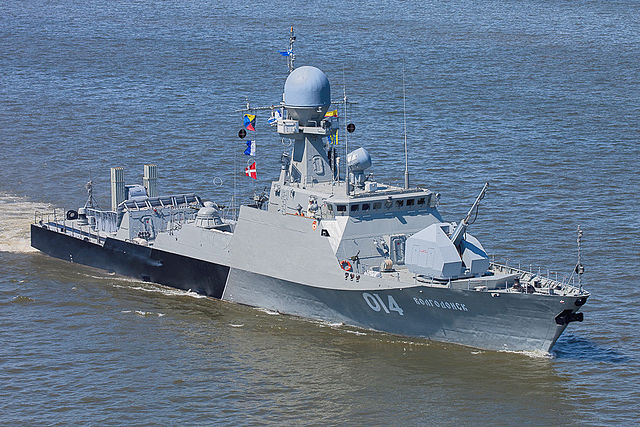
The Buyan cruise missile carrier or Buyan-M (that is the name of the class, not a specific ship) is a small, 949 ton full load, 75 meter (246′) corvette armed with up to eight cruise missiles similar in capability to the American Tomahawk.

Buyan-M class corvette, Volgodonsk in Astrakhan. Author Anton Blinov, via Wikipedia.

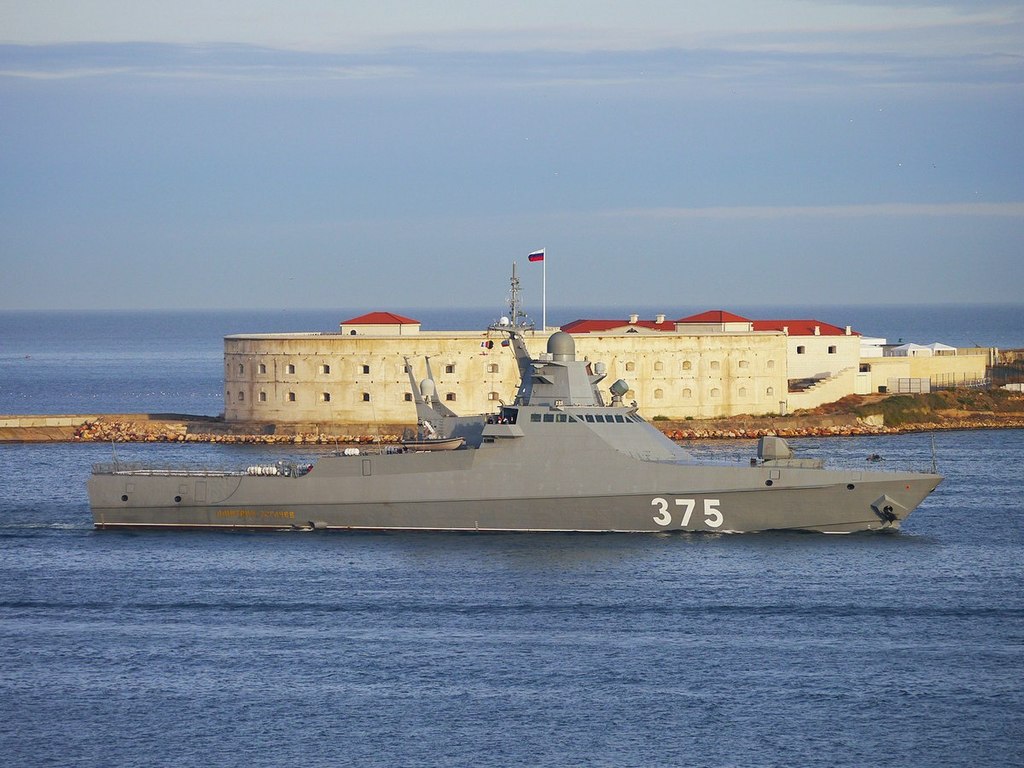
Pavel Derzhavin is a Project 22160 class patrol ship, a bit bigger than the Buyan-M at 94 meters (308 ft) in length, but not as heavily armed.

Russian Project 22160 Patrol Ship Dmitriy Rogachyov in Sevastopol, 12 April 2019. Photo from Ministry of Defence of the Russian Federation.

I found the reference to “Sea Baby drones with experimental weapons” interesting, not that the Sea Baby drone was experimental, so I presume the warhead was experimental. Various reports seem to indicate the explosion was extremely loud and created a great deal of smoke. This could have been the result of secondary explosions.

It is not clear if the two ships were sunk.

Information about the source here.

“Inside the U.S. Navy’s Cutting-Edge Drone Boat Tech”–WSJ

A reader brought the video above to my attention, recognizing the significant Coast Guard participation in the program. 

Below I have reproduced the text that accompanied the video on YouTube. 


Drone boats appear to be on the cusp of a revolution. The U.S. Navy’s Task Force 59 has been pairing cutting-edge unmanned surface vehicles with artificial intelligence to expand the military’s eyes and ears in the Middle East. Now, similar efforts will be rolled out in the Pacific and Central and South America. The military’s objective is to leverage machine learning to detect and anticipate threats before they occur. Experts say the U.S. is currently the leader in this field, but competitors like China and Russia are racing to catch up. I traveled to Manama, Bahrain to see the high-tech drones in action and speak to officials about how they’re preparing for a future with robots in the world’s waters. 0:00 A rare look at the U.S. Navy’s drone boat operation 0:30 Meet the Navy’s Task Force 59 2:14 Drone boat capabilities 4:05 How artificial intelligence is layered with the drone boats 5:11 The global race to advance unmanned marine vehicles 7:23 What’s next for the U.S. military? Check out more from my exclusive interview with Vice Admiral Brad Cooper, commander of U.S. Naval forces in the Middle East, about unmanned vessels and the Navy’s future fleet:    • Drone Boats, AI and the Future of Mar…   I’m Shelby Holliday, a reporter for WSJ. Subscribe to join me as I explain some of today’s most pressing geopolitical events, from superpower showdowns and conflicts to supply chain snarls and natural resource struggles.


The link embedded above was to this video. 

Thanks to David for bringing this to my attention.

“Southern Command: Russia disperses ships in fear of Ukrainian strikes” –Kyiv Independent

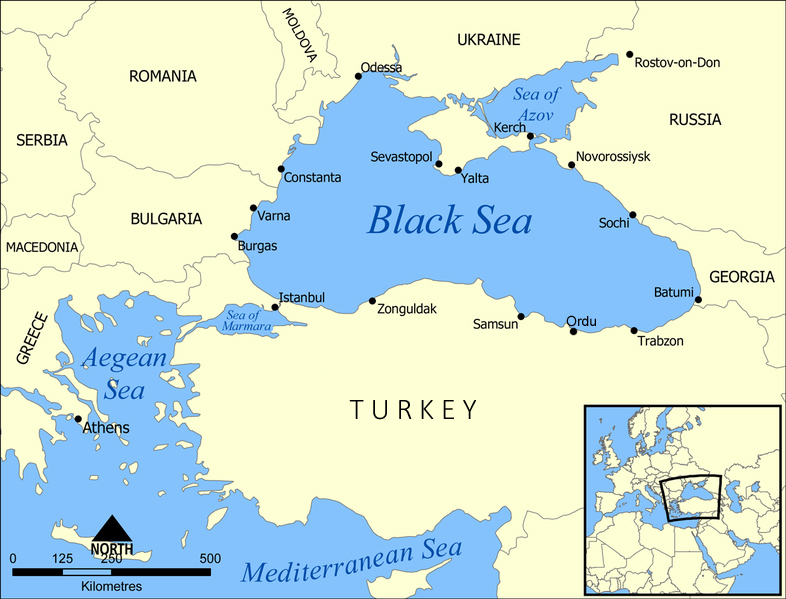
A map showing the location of the Black Sea and some of the large or prominent ports around it. The Sea of Azov and Sea of Marmara are also labelled. Created by User:NormanEinstein, Wikipedia

Kyiv Independent reports,

Russia has dispersed its naval forces in the Black Sea between the southeastern coast of Crimea and Novorossiysk in fear of Ukrainian surface drone strikes, Southern Command spokesperson Natalia Humeniuk said on Aug. 18.

Well, the US Navy is all a twitter about “Distributed Maritime Operations” (DMO) so is this a good idea for the Russian Black Sea Fleet? Like most such questions, it depends.

It depends on how good Ukrainian intelligence is. The supposed advantage for the Russian Fleet would be that their ships are harder to find, but is this case? Not only does Ukraine have access to some Western intelligence sources, but they seem to have good independent intelligence. All their successful USV attacks seem to have been against valid targets though there are many more potential targets that were not directly supporting the Russian military. When Russian ships are in port, the Ukrainians are going to know it.

Convoying has been a feature of Naval Warfare for over a thousand years because it is a defensive tactic that takes the choice of where and when to concentrate out of the hands of the offense. Spreading out the potential targets requires diluting the defense. That leaves the choice of where and when to concentrate effort in the hands of the Ukrainians.

To be successful, the defense has to detect all of the incoming USVs at a distance from their target and have sufficient numbers of countermeasures systems, in the right place, to engage all incoming USVs as they are detected.

The Ukrainian USVs don’t seem to be too hard to defeat once they are detected. Most of the successful countermeasures seem to have used machineguns, but you need one or more within effective range to engage every attacking USV.

The Ukrainians have told the world that no Russian Black Sea port is safe.

On August 4, Ukraine’s maritime authorities issued a “war risk area warning” to all international mariners headed for six Russian Black Sea ports, including Novorossiysk and the smaller oil-exporting terminals of Tuapse and Taman. The warning is scheduled to go into effect on August 23 and continue “until further notice” (Interfax-Ukraine, August 5). And on August 8, Zelenskyy’s economic adviser Oleh Ustenko told US media that “everything the Russians are moving back and forth on the Black Sea are our valid military targets,” including oil tankers or terminals.

When you multiply the number of points you have to defend, you divide your defensive force. USVs are cheap and readily produced. Ukraine will not have trouble finding targets. Ukraine will attempt to overwhelm the defenses by creating situations where even if the defense is taking out say four out of five or six out of seven attacking drones, the Russians still loose, even if it is only one ship at a time.

“UNITAS LXIV to begin in Colombia” –USNAVSOUTH/4TH FLEET PUBLIC AFFAIRS

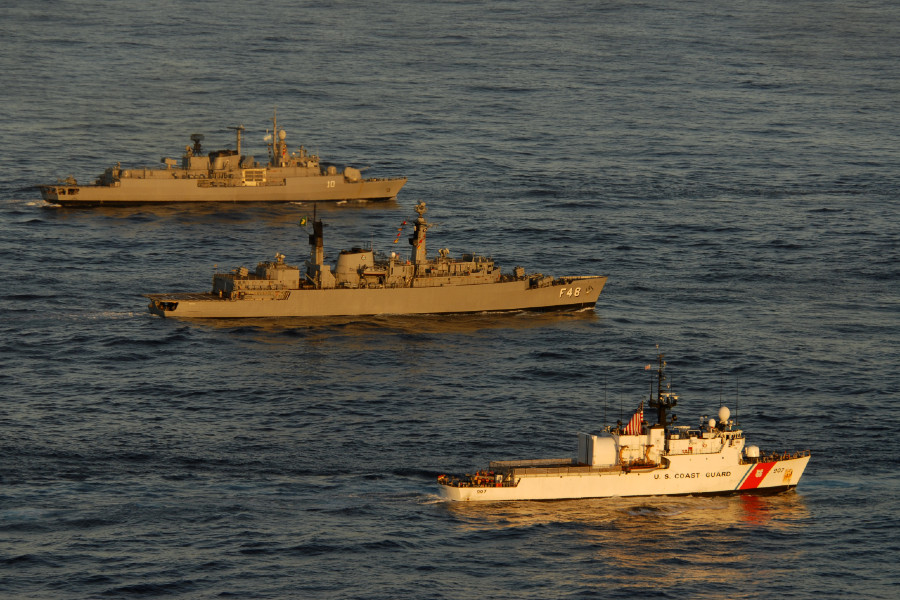
The US Coast Guard cutter USCGC Escanaba (WMEC 907), Brazlian Navy ship BNS Bosisio (F 48) and Argentinian navy ship ARA Almirante Brown (D-10) move into formation for a photo exercise during the Atlantic phase of UNITAS 52 on May 4, 2011. The formation included a total of ten ships from the US, Brazil, Mexico and Argentina. (Photo: US Navy/Mass Communication Specialist 1st Class Steve Smith)

Below is a news release announcing the start of exercise UNITAS LXIV (64 if you are not up on your Roman numerals). There is no mention of Coast Guard participation, but maybe they “simply forgot us.” Think we can bet there are some Coasties involved.

Britain’s Royal Navy also sent one of their highly regarded destroyers, HMS Dauntless.

With 26 surface vessels and three submarines participating, I think this is larger than most of the recent UNITAS exercises. In 2022 it was 19 ships, one submarine, 21 aircraft, accounting for approximately 5,500 total military personnel.

This year will see an attempt at large scale integration of unmanned systems into the exercise by 4th Fleet.


July 11, 2023

UNITAS LXIV to begin in Colombia

By USNAVSOUTH/4TH FLEET PUBLIC AFFAIRS

– U.S. Navy and Marine forces are set to arrive in Cartagena in support of UNITAS LXIV, the world’s longest-running multinational maritime exercise in the world, scheduled to start July 11, 2023.

The Colombian navy will host this year’s UNITAS, which will feature 26 warships/vessels, three submarines, 25 aircraft (fixed wing/helicopter), and approximately 7,000 people from 20 partner nations. Forces will conduct training operations off the coast of Cartagena, Colombia, and ashore in Covenas and Barranquilla, Colombia, through July 21. This year marks the 64th iteration of the exercise. Additionally, this year Colombia will celebrate the bicentennial of its navy, a historical milestone commemorating 200 years of the country’s maritime forces.

“UNITAS is so much more than a two week exercise. All participating nations have given much time, energy and effort into the months of planning leading up to what will be one of the most complex UNITAS to date,” said Rear Admiral Jim Aiken, commander U.S. Naval Forces Southern Command/U.S. 4th Fleet. “Utilizing air, surface, sub-surface, and unmanned assets, and land units, UNITAS will provide the multinational force a challenging environment in which to conduct training across the full spectrum of maritime operations. UNITAS strengthens maritime partnerships, enhances proficiency and improves interoperability of the participating forces, which is why so many partner nations are taking part this year.”

As part of the U.S. Navy’s future hybrid fleet, the Chief of Naval Operations has tasked U.S. 4th Fleet to scale unmanned platforms to the fleet level. An addition to this year’s UNITAS will include the integrated operations of unmanned air, surface, and subsurface systems into the exercise. UNITAS’ challenging training address key aspects of multinational and combined operations such as technology standardization and common operating procedures.

“This is our first opportunity to integrate unmanned systems into our operations at sea,” said Rear Adm. Aiken. “UNITAS has often served as a test bed for technology, so it is appropriate that we begin our unmanned integration campaign to operationalize the hybrid fleet here in UNITAS.”

In addition to the United States, UNITAS LXIV will bring together 19 nations from all over the world to train forces in joint maritime operations that enhance tactical proficiency and increase interoperability. Participating nations include Belize, Brazil, Canada, Chile, Colombia, Dominican Republic, Ecuador, France, Germany, Honduras, Jamaica, Mexico, Panama, Peru, Paraguay, Spain, South Korea, United Kingdom, United States, and Uruguay.

Following the UNITAS LXIV Opening Ceremony on July 12, the in port phase of the exercise will feature subject matter expert exchanges, professional symposia, ship rider exchanges, and operations meetings. During this time, Marines and Sailors will conduct expeditionary training events in Covenas to include riverine operations and diving and salvage operations.

During the UNITAS LXIV Underway Phase, forces will participate in events testing all warfare operations, to include live-fire exercises such as a SINKEX and an amphibious ship-to-shore landing and force retraction.

“Marines and Sailors from across the United States will travel to Colombia to not only train alongside our partner nations’ militaries, but to hone the skills required to operate as part of a larger maritime force focused on sea control and sea denial,” said Lt. Gen. David G. Bellon, commander, U.S. Marine Corps Forces, South, and U.S. Marine Corps Forces, Reserve. “We will be exercising command and control from a forward position as Marines set up and employ Expeditionary Advanced Base Operations to enhance naval capabilities as part of UNITAS.”

U.S. forces participating in UNITAS LXIV include USS New York (LPD 21), USS Cole (DDG 67), USS Little Rock (LCS 9), USS Pasadena (SSN 752), and USNS Burlington (T-EPF 10). Other U.S. participants include Patrol Squadron Five (VP 5), Mobile Diving and Salvage Unit (MDSU) 2, Explosive Ordnance Disposal Mobile Unit (EOD) 612, Mine Countermeasures Group 3, (MCMGRU 3), Expeditionary Mine Countermeasures EOD Company 61 (EODMU 61), East-coast based Naval Special Warfare units, Helicopter Sea Combat Squadron 22 (HSC 22), Helicopter Maritime Strike Squadron 70 Detachment 2 (HSM 70 Det 2), Joint Communications Support Element (JCSE), Fleet Surgical Team (FST) Eight, and the Meteorological Environmental Team (MET). U.S. Marine forces include 3rd Battalion, 23rd Marine Regiment (3/23), 4th Amphibious Assault Battalion (4th AABn), 8th Combat Logistic Battalion (CLB 8), 4th Combat Engineer Battalion (4th CEB), Marine Medium Tiltrotor Squadron 774 (VMM 774), Marine Light Helicopter Attack Squadron 775 (HMLA 775), Marine Aerial Refueler Transport Squadron 234 (VMGR-234), Marine Aircraft Control Group – 48 (MACG-48), and Marine Fighter Attack Squadron 112 (VMFA-112). Finally, Commander, Destroyer Squadron 40, (COMDESRON 40), Commander, Amphibious Squadron Four (COMPHIBRON FOUR), U.S Marine Corps Forces South (MARFORSOUTH), Special Operations Command South (SOCSOUTH), USNAVSOUTH/FOURTHFLT, and U.S. Southern Command (USSOUTHCOM) are participating in UNITAS LXIV.

UNITAS, which is Latin for unity, united, or oneness, was conceived in 1959 during a previous era of strategic competition when representatives at the first Inter-American Naval Conference in Panama agreed to conduct an annual maritime exercise with one another. Prior to UNITAS I in 1960, U.S. Chief of Naval Operations Adm. Arleigh Burke reviewed preparations for the multinational exercise. He commended planners for their progress, especially in building compatible communication systems among navies, and predicted that UNITAS would build strong relationships among Sailors of the Western Hemisphere.

U.S. Naval Forces Southern Command/U.S. 4th Fleet supports U.S. Southern Command’s joint and combined military operations by employing maritime forces in cooperative maritime security operations to maintain access, enhance interoperability, and build enduring partnerships in order to enhance regional security and promote peace, stability and prosperity in the Caribbean, Central and South American region.

U.S. Marine Corps Forces, South is the Marine Corps component to U.S. Southern Command, is responsible for planning exercises, operations, and overall Marine Corps support for the SOUTHCOM assigned area of responsibility.

“Navy’s Digital Horizon exercise showcases power of ‘mesh networks,’ AI” –Defense News

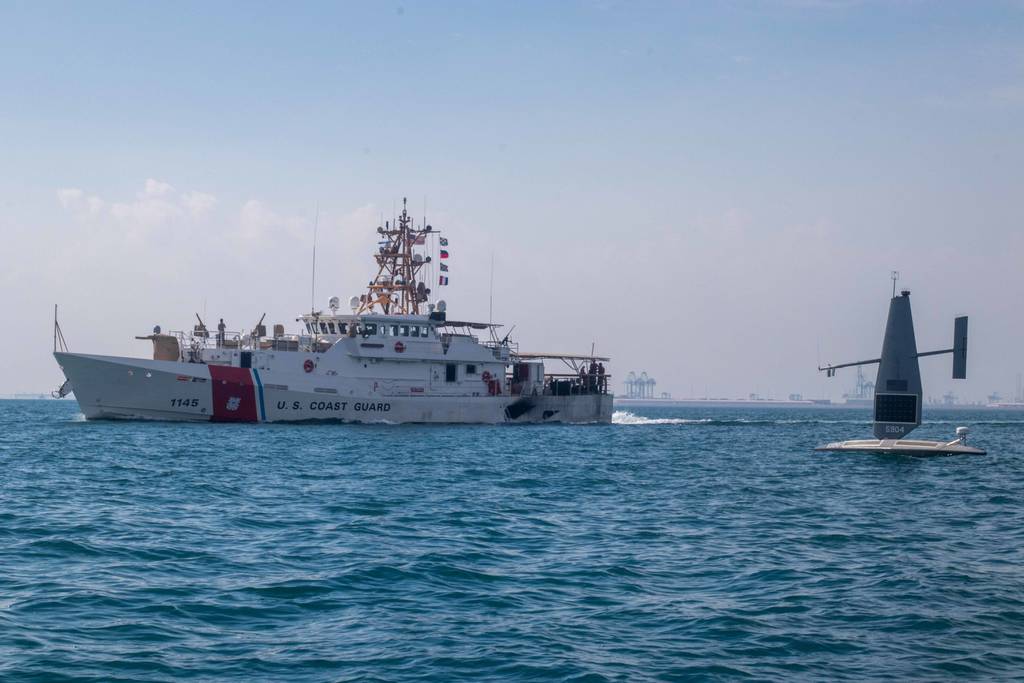
A Saildrone Explorer unmanned surface vessel operates alongside U.S. Coast Guard fast response cutter USCGC Emlen Tunnell (WPC 1145) in the Arabian Gulf, Nov. 29, during Digital Horizon 2022. (Sgt. Brandon Murphy/US Army)

Defense News reports on 5th Fleet’s “Digital Horizon” exercise.

“We have done a lot of work with AI previously, and we’ve done computer vision, we’ve done anomalous behavior detection, we’ve done AI-enabled [command and control], but we’ve done all of those separately,” the commodore explained. “At Digital Horizon, for the first time ever, we did that together on a single stack, and that’s all integrated on a single pane of glass.”

They have been trying a number of new systems, “10 of which are being operated in 5th Fleet for the first time.” We got a look at a portion of this exercise earlier, “Task Force 59 Launches Aerial Drone from Coast Guard Ship in Middle East” –NAVCENT. Also, among the systems they tested was V-Bat UAS.

There is also confirmation here that a similar effort will be going into 4th Fleet (Latin American/Caribbean Waters); that it will involve partner nations; and that it will look at IUU fishing as well as drug interdiction.

Fortunately, it looks like Coast Guard personnel and assets have been intimately involved in this effort and it looks like it will benefit our Maritime Domain Awareness (MDA) efforts.

(Will the Coast Guard’s next class of ships be USV tenders?)