“Coast Guard Polar Security Cutter (Polar Icebreaker) Program: Background and Issues for Congress” Updated March 25, 2024 –CRS

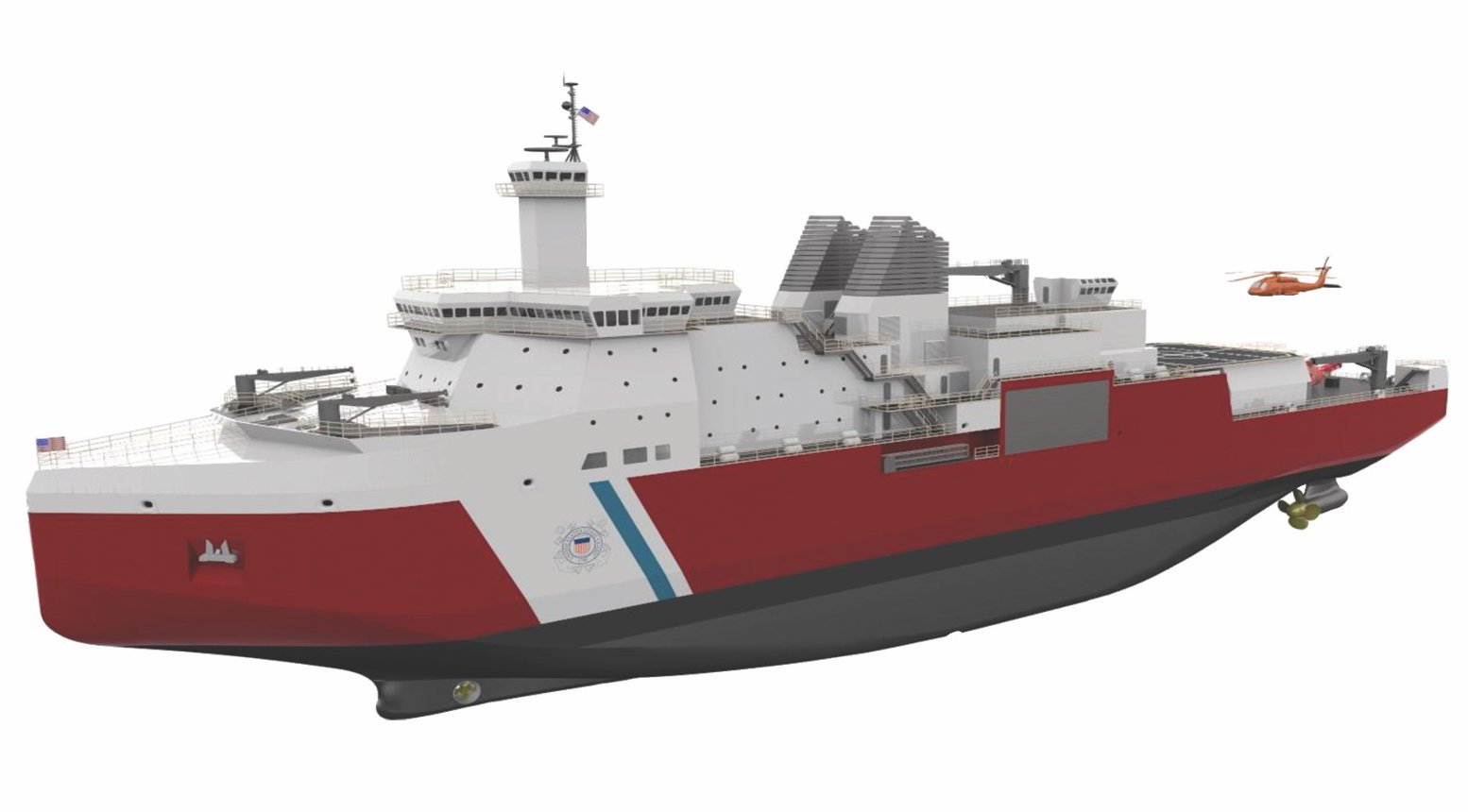
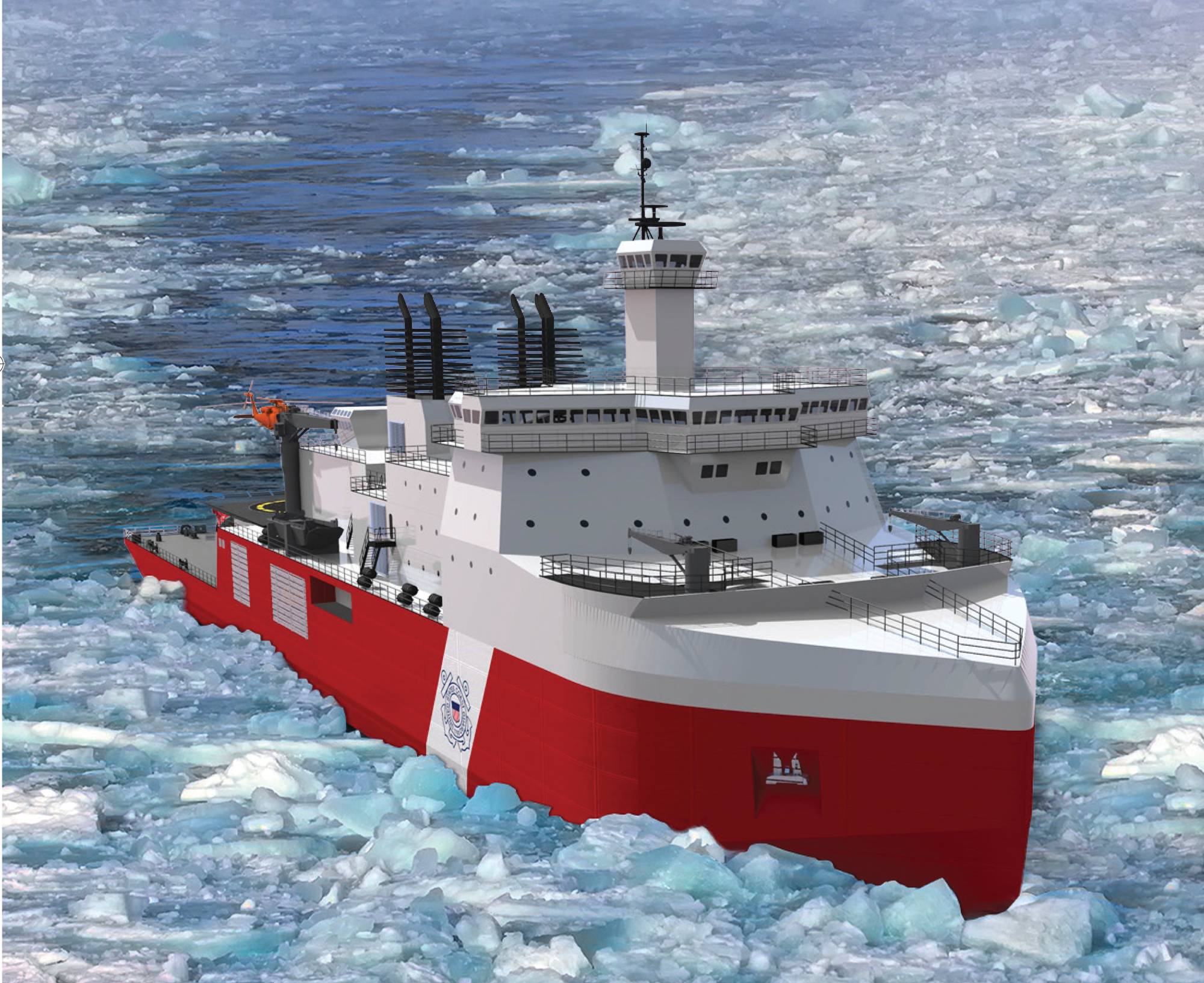
Polar Security Cutter. Image credit VT Halter Marine.

The Congressional Research Service has once again updated their look at the Polar Security Cutter (heavy icebreaker) program. (See the latest version here.)

I have reproduced the one page summary below.

As expected, the FY2024 budget includes $125M to purchase a US built commercially available icebreaker, presumably the Aiviq since it is the only one that meets the criteria.

The budget as enacted includes $20M for procurement of a Great Lakes Icebreaker (GLIB). The request for this item was $55M.

There was nothing in the enacted budget for the Polar Security Cutter program because the first two ship have already been funded but construction has yet to begin on the first ship, so there is no need to fund the third in FY2024.

There is a requirement to report on the possibility of reviving the Polar Sea,

In addition, within 120 days of the date of enactment of this Act, the Coast Guard is directed to provide a report that assesses the viability of reactivating Coast Guard Cutter Polar Sea. The report shall include an analysis of the material condition of the hull and cost and timeline estimates for a full overhaul of the vessel, including the renewal of the cutter’s propulsion, mechanical, electrical, communication, and support systems.


Summary

Required number of polar icebreakers. A 2023 Coast Guard fleet mix analysis concluded that the service will require a total of eight to nine polar icebreakers, including four to five heavy polar icebreakers and four to five medium polar icebreakers, to perform its polar (i.e., Arctic and Antarctic) missions in coming years.

Current operational polar icebreaker fleet. The operational U.S. polar icebreaking fleet currently consists of one heavy polar icebreaker, Polar Star, and one medium polar icebreaker, Healy. A second Coast Guard heavy polar icebreaker, Polar Sea. Polar Sea, suffered an engine casualty in June 2010 and has been nonoperational since then. Polar Star and Polar Sea entered service in 1976 and 1978, respectively, and are now well beyond their originally intended 30-year service lives. The Coast Guard plans to extend Polar Star’s service life until the delivery of at least the second Polar Security Cutter (PSC; see next paragraph).

Polar Security Cutter (PSC). The Coast Guard PSC program aims to acquire four or five new PSCs (i.e., heavy polar icebreakers), to be followed at some later point by the acquisition of new Arctic Security Cutters (ASCs) (i.e., medium polar icebreakers). The Navy and Coast Guard in 2020 estimated the combined total procurement cost of the first three PSCs in then-year dollars as $2,673 million (i.e., about $2.7 billion). The procurement of the first two PSCs is fully funded. The Coast Guard’s proposed FY2024 budget requested $170.0 million in continued procurement funding for the PSC program. The Coast Guard’s proposed FY2025 budget requests no procurement funding for the PSC program. The Coast Guard originally aimed to have the first PSC delivered in 2024, but the ship’s estimated delivery date has been delayed repeatedly and may now occur no earlier than 2028. Another potential issue concerns the accuracy of the PSC’s estimated procurement cost, given the PSC’s size and internal complexity as well as cost growth in other Navy and Coast Guard shipbuilding programs. The PSC’s estimated procurement cost per weight is roughly half that of the Navy’s LPD-17 Flight II and LHA amphibious ships. These amphibious ships are equipped with expensive combat system equipment that is not included in the PSC design, but whether this would account for all of the difference in cost per weight between the PSC design and the two amphibious ship designs is not clear. If substantial cost growth occurs in the PSC program, it could raise a question regarding whether to grant some form of contract relief to the PSC shipbuilder.

Commercially available polar icebreaker (CAPI). The Coast Guard’s proposed FY2024 budget requested $125.0 million in procurement funding for the purchase of an existing commercially available polar icebreaker (CAPI) that would be modified to become a Coast Guard polar icebreaker. The Coast Guard’s proposed FY2025 budget requests no procurement funding for CAPI, but the Coast Guard’s FY2025 Unfunded Priorities List (UPL) includes an item for $25.0 million in procurement funding for the ship.

Great Lakes icebreaker (GLIB). The Coast Guard’s proposed FY2024 budget proposed to initiate a new procurement program for procuring a new Great Lakes icebreaker (GLIB) that would have capabilities similar to those of Mackinaw, the Coast Guard’s existing heavy Great Lakes icebreaker. The Coast Guard’s proposed FY2024 budget requested $55.0 million in initial procurement funding for the ship, and the Coast Guard’s FY2024 UPL included an item for an additional $20.0 million in procurement funding for the ship. The Coast Guard’s proposed FY2025 budget requests no procurement funding for GLIB, but the Coast Guard’s FY2025 UPL includes an item for $25.0 million in procurement funding for the ship.
“Coast Guard Polar Security Cutter (Polar Icebreaker) Program: Background and Issues for Congress” –CRS, Updated Dec. 12, 2023

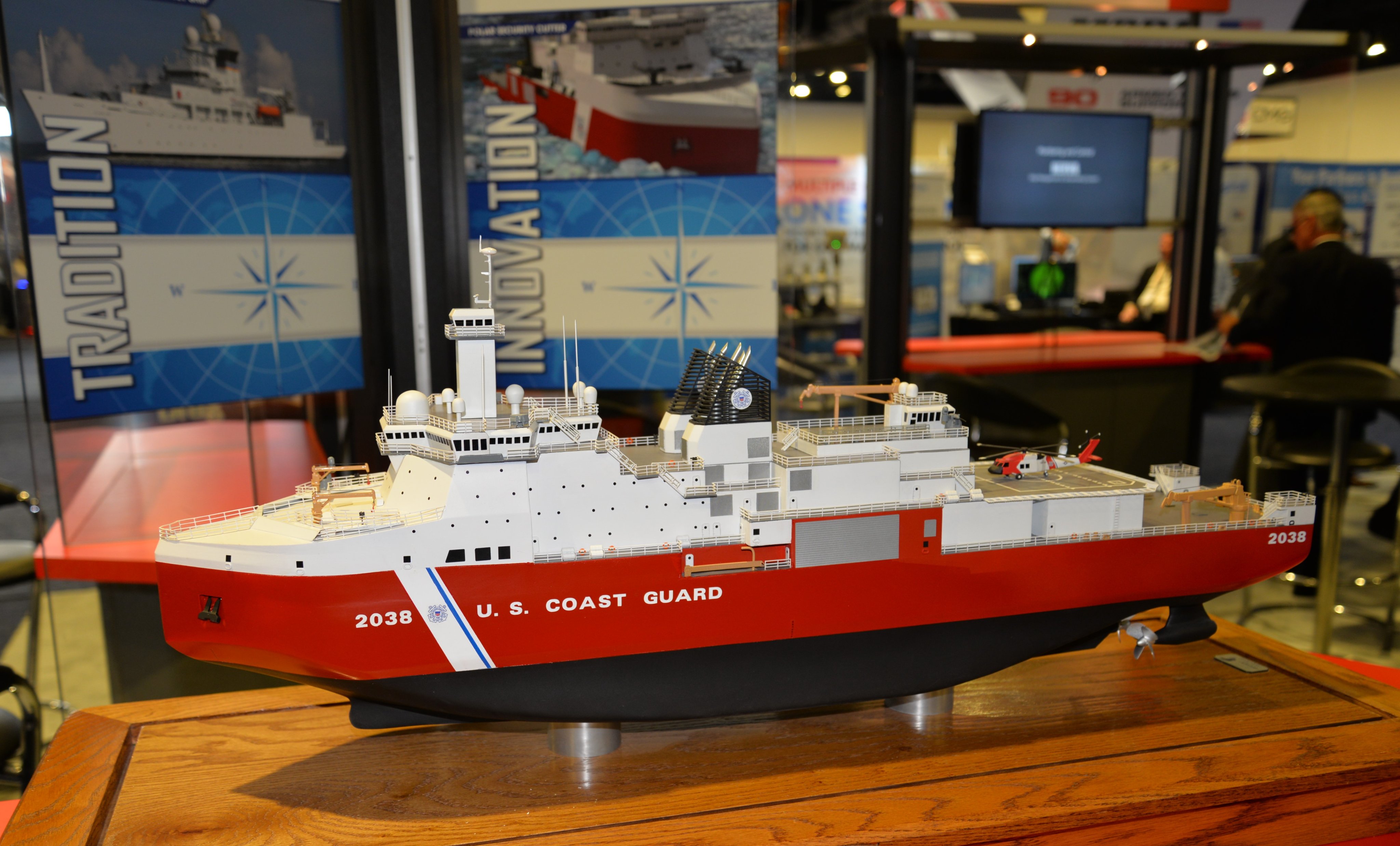
Photo of a model of Halter Marine’s Polar Security Cutter seen at Navy League’s Sea-Air-Space Exhibition have surfaced. Photo credit Chris Cavas.

The Congressional Research Service has once again updated their look at the Polar Security Cutter (heavy icebreaker) program. (See the latest version here.)

I have reproduced the one page summary below.

For me the most important new information is that somewhere there is a new Coast Guard Fleet Mix Study. It has not been made public, but I would sure like to see the results. The last one goes back to 2009. Ever since it was published. it has been an important part of every Congressional Research Service report on the cutter procurement plan and apparently, it has been expanded to include Icebreakers as well as patrol cutters and aircraft. It is an important planning tool. Let’s hope they don’t take three years to make it public like they did the last time.


Summary

Required number of polar icebreakers. The Coast Guard testified in April, June, and November 2023 that a new Coast Guard fleet mix analysis concluded that the service will require a total of eight to nine polar icebreakers, including four to five heavy polar icebreakers and four to five medium polar icebreakers, to perform its polar (i.e., Arctic and Antarctic) missions in coming years. Prior to this new fleet mix analysis, the Coast Guard had stated that it would need at least six polar icebreakers, including three heavy polar icebreakers.

Current operational polar icebreaker fleet. The operational U.S. polar icebreaking fleet currently consists of one heavy polar icebreaker, Polar Star, and one medium polar icebreaker, Healy. In addition to Polar Star, the Coast Guard has a second heavy polar icebreaker, Polar Sea. Polar Sea, however, suffered an engine casualty in June 2010 and has been nonoperational since then. Polar Star and Polar Sea entered service in 1976 and 1978, respectively, and are now well beyond their originally intended 30-year service lives. The Coast Guard plans to extend the service life of Polar Star until the delivery of at least the second Polar Security Cutter (PSC).

Polar Security Cutter (PSC). The Coast Guard Polar Security Cutter (PSC) program is a program to acquire at least three new PSCs (i.e., heavy polar icebreakers), to be followed at some later point by the acquisition of additional new Arctic Security Cutters (ASCs) (i.e., medium polar icebreakers). The Navy and Coast Guard in 2020 estimated the combined total procurement cost of the first three PSCs in then-year dollars as $2,673 million (i.e., about $2.7 billion). The procurement of the first two PSCs is fully funded. The Coast Guard’s proposed FY2024 budget requests $170.0 million in continued procurement funding for the PSC program, which would be used for procurement of long leadtime materials (LLTM) and government-furnished equipment
(GFE) for the PSCs, and for other program expenses. (GFE is equipment that the government purchases and then provides to the shipbuilder for incorporation into the ships.)

On April 23, 2019, the Coast Guard-Navy Integrated Program Office for the PSC program awarded a fixed-price, incentive-firm contract for the detail design and construction (DD&C) of the first PSC to Halter Marine Inc. of Pascagoula, MS, a shipyard that was owned by Singapore Technologies (ST) Engineering. On December 29, 2021, the Coast Guard exercised a fixed price incentive option to its contract with Halter Marine for the second PSC. In November 2022, ST Engineering sold Halter Marine to Louisiana-based Bollinger Shipyards. The former Halter Marine is now called Bollinger Mississippi Shipbuilding.

Commercially available polar icebreaker (CAPI). The Coast Guard’s proposed FY2024 budget also requests $125.0 million in procurement funding for the purchase of an existing commercially available polar icebreaker (CAPI) that would (be) modified to become a Coast Guard polar icebreaker, so as to help augment the Coast Guard’s current polar icebreaking capacity until the new PSCs enter service, and to continue augmenting the Coast Guard’s polar icebreaking capacity after the PSCs enter service.

Great Lakes icebreaker (GLIB). The Coast Guard’s proposed FY2024 budget also proposes to initiate a new procurement program for procuring a new Great Lakes icebreaker (GLIB) that would have capabilities similar to those of Mackinaw, the Coast Guard’s existing heavy Great Lakes icebreaker. The Coast Guard’s proposed FY2024 budget requests $55.0 million in initial procurement funding for the ship, whose total acquisition cost, the Coast Guard estimates, might be roughly $350 million, depending in part on the exact design that is developed for the ship. The Coast Guard’s FY2024 Unfunded Priorities List (UPL) includes an unfunded priority for an additional $20.0 million for the ship that would be used for accelerating initial procurement of LLTM for the ship.

Canada’s Multi-Purpose Vessels

Canadian CG MPV. Credit Aker Arctic.

Canada has a project to replace a large part of the Canadian Coast Guard fleet with up to 16 Multi-purpose Ships at an estimated cost of $14.2 billion (Canadian), with the first ship to be delivered in 2029.

There has not been a lot of reporting about this class, but frequent contributor Walter pointed me to two sources, Seaspan Shipyards and designer Aker Arctic. It appears they have very concrete ideas about what the class will look like.

Canadian CG MPV. Credit Aker Arctic.

MISSIONS:

According to Aker Arctic,

The MPVs will also perform cargo missions, bringing supplies to northern communities, carry out search & rescue and patrol missions, in addition to icebreaking. Most of their time will be spent on the St Lawrence River, the Great Lakes, and along the Canadian East Coast. Additionally, they will have a summer Arctic mission leaving from Victoria in British Columbia and travelling north around Alaska to the Canadian Arctic.

Due to the wide variety of tasks, the long-distance mission to the western Arctic, and the fact that some of the waterways have a limited depth, the vessel needed to be compact with a shallow draught, narrow beam, high endurance, and with a large cargo capacity.

CHARACTERISTICS:

  • Displacement: about 8,500 tons
  • Length, overall: 99.9 meters (328′)
  • Beam: 20.3 meters (66.7′)
  • Draft: 6.2 meters (20’4″)
  • Propulsion: diesel-electric; two azimuthing propulsion units

As is the case with all Canadian Coast Guard cutters, they have no fixed armament. It does look like it could host a medium sized helicopter and containerized systems, including perhaps below the hangar deck.

RANGE:

To me the most surprising characteristic of the ship is its range, 12,000 nautical miles. This was apparently driven by a summer Arctic mission from Victoria in British Columbia, north around Alaska to the Canadian Arctic.

ICE CLASS: 

These ships will be Canadian Ice Class 4, meaning they will have the capability to maintain a speed of 3 knots through ice 4 feet thick. The Canadian Coast Guard will consider these heavy icebreakers. We don’t have any figures on horsepower, but they probably will have less than 20,000 HP which, in the USCG system, would classify them as light icebreakers.

Compared to the US Coast Guard’s “heavy” Great Lakes icebreaker, Mackinaw (3,500 tons and 73m), these will be more powerful and more than twice as large. These might be a good design for the planned second USCG Great Lakes icebreaker.

IMPLICATIONS FOR THE USCG:

Aside from possible use of the design for Great Lakes icebreaker, these might be pretty close to what the USCG needs for their planned medium icebreakers. Certainly, consultation with Canadian counterparts will sharpen the focus of the US design effort. We might also have reasons to limit beam and draft.

“Frozen in Time: National Marine Sanctuary Researchers Discover Lost Shipwreck Ironton” –National Marine Sanctuaries

Members from the June 2021 expedition team pose on board the USCGC Mobile Bay; the remotely-operated vehicle sits ready for deployment on deck. Photo: Ocean Exploration Trust/NOAA

An interesting story with a bit of a Coast Guard connection, the 140 foot icebreaking tug, USCGC Mobile Bay (WTGB-103).

“In June 2021, Thunder Bay National Marine Sanctuary and Ocean Exploration Trust returned to the site to carry out a more thorough investigation of Ironton. Conducting ROV operations aboard U.S. Coast Guard Cutter Mobile Bay, the research team partnered with the University of North Carolina’s Undersea Vehicle Program to collect high-resolution video and further document the wreck. Resting upright and incredibly well preserved by Lake Huron’s cold freshwater, Ironton looks almost ready to load cargo.”

“Lack of Coast Guard Icebreakers Disrupts Shipping on Great Lakes, Says Task Force” –gCaptain

Launch of USCGC Mackinaw (WLBB-30) on April 2, 2005. Photo by Peter J. Markham.

gCaptain brings us a report on Coast Guard icebreaking on the Great Lakes, based on information provided by the Great Lakes Maritime Task Force, a Great Lakes shipping special interest group.

Should this be a Coast Guard function? There are really two elements here, one commercial and one safety.

The commercial aspect is facilitating commerce. Some might say that shippers and ports should pay for their icebreaking. On the other hand, the Federal Government facilitates commerce in a number of ways including, building roads, air traffic control, dredging ports and waterways, and maintaining navigation systems.

The safety aspect is preventing flooding. This is disaster response before the disaster and certainly something DHS should be interested in.

Great Lakes shipping interest are fixated on the idea of a second Great Lakes Icebreaker in the mold of USCGC Mackinaw.

If we accept that Great Lakes icebreaking is a Coast Guard function, but we don’t want to build a dedicated Great Lakes Icebreaker in spite of an apparent desire on the part of members of Congress to appropriate for that purpose, we have to either convince Congress that devoting additional assets would not be cost effective, that additional money is better spent elsewhere, or offer an alternate plan for Great Lakes icebreaking.

Alternatives might be to make the proposed medium icebreakers capable of operating in and out of the Great Lakes so that they could be used there when conditions warranted or perhaps a new fleet of small but more powerful icebreaking tugs to replace the 65 foot WYTLs would fill the bill.

Each of the alternatives offers a different mix of advantages and costs. This is another area where perhaps the Coast Guard needs to invest a bit more in analysis.

Thanks to Bruce for bringing this to my attention.

“‘Great News’ For Great Lakes as House Transportation and Infrastructure Committee Approves $1 Billion for U.S. Coast Guard Infrastructure, Heavy Icebreaker” –gCaptain

Launch of USCGC Mackinaw (WLBB-30) on April 2, 2005. Photo by Peter J. Markham.

gCaptain reports,

The U.S. House Transportation and Infrastructure Committee on Tuesday approved $1 billion for U.S. Coast Guard shore side infrastructure nationwide and $350 million for a heavy icebreaker for the Great Lakes.

The funds were approved as part of its budget reconciliation bill, an action that the Great Lake Maritime Task Force (GLMTF) called “great news for the Great Lakes.”

Its probably too early to assume this will actually happen, but so far, so good, particularly with regard to the infrastructure portion.

As for the Icebreaker, what it is talking about is an icebreaker at least as capable a USCGC Mackinaw. What we might get is a second Mackinaw, but we could do better. This might be an opportunity to prototype the Arctic Security Cutter.

The Great Lakes contingent in Congress don’t seem to want any connection between the “Heavy” (really light) Great Lakes Icebreaker and the Artic Security Cutter, but they would be smart to consider the benefits.

First USCGC Mackinaw was commissioned in 2006. That may look pretty new now, but by the time the new Great Lakes Icebreaker is completed, it will be 20 years old. Looking further down the timeline, it will need to be replaced long before this second Great Lakes breaker. So some time in the future they will, presumably, have to again seek funding for a one-off unique design for the Lakes.

If the Arctic Security Cutter can transit the locks into the Great Lakes, they could supplement icebreaking in the Lakes and provide a ready replacement when the Mackinaw inevitably reaches the end of it life.

Combining the programs would also reduce the average unit price and would probably mean a more capable breaker for the Lakes than might otherwise have been possible.

“Arctic Security Cutters: Regionally Named, Globally Deployed” –US Naval Institute Proceedings

HMCS Harry DeWolf in ice (6-8 second exposure)

The August, 2021 issue of US Naval Institute Proceedings has an article, that is the first I have seen to discuss the roles that should be expected of the “Arctic Security Cutters,” the Coast Guard’s planned Medium Icebreakers.

The article is available on line. I am not sure if or for how long it will be accessible to non-members.

The thrust of the article is that these ships should not be limited to deployments in the Arctic. That they have important roles in Antarctica and might also be used for domestic icebreaking, particularly in the Great Lakes during unusually severe winters, or if the Great Lakes icebreaker Mackinaw should suffer a casualty. I have suggested something similar before. It is also likely we will have reasons to operate in the Arctic entering from the Atlantic side.

This would require a homeport on the East Coast, perhaps Newport, Boston, or Kittery, ME. It would mean the ship would have to fit through the locks from the St. Lawrence to the Lakes and between the lakes.

To qualify as a “Medium Icebreaker” in the Coast Guard lexicon, the ships would have to have propulsion motors totaling 20,000 HP or more, meaning it will be more powerful than the Canadian DeWolf class Arctic Offshore Patrol Ships, like the one pictured above.

The author suggests a design evolved from the Wind class Icebreakers. These were very successful ships, but the design is about 80 years old, so we can certainly do better. Even so, the successful use of the Wind class globally shows what can be done with a design smaller than the planned Polar Security Cutters.

That the Coast Guard continues to claim a requirement for a medium icebreaker class rather than simply building more Polar Security Cutters may mean they have recognized a need for a smaller ship, perhaps one that could operate in the Lakes or in shallower water than might be accessible to the PSC.

Questions remain regarding the expectations of the class. How will it be armed, and what sensors will it be equipped with? I would anticipate an outfit similar to that of the Offshore Patrol Cutters, but that is yet to be seen. Should it be capable of operating more than a single helicopter? UASs? USVs? Space and utilities to support containerized systems? Space for a SCIF? I look forward to hearing more about this class.

“The great lakes are freezing at a glacial pace” –CNN

Beset in ice, the M/V Stewart J. Cort and three other Great Lakes vessels await the assistance of an icebreaker on Lake Superior–not from this year.

The weather reported here will certainly have an effect on this year’s Great Lakes icebreaking requirements and may ultimately effect what seems to be the perpetual push for another Great Lakes icebreaker.

“…Great Lakes are currently dealing with record low ice. According to the Great Lakes Environmental Research Laboratory (GLERL), the Great Lakes total ice coverage right now is sitting at 3.9%. This same time last year, it was sitting at 11.3%, and the year before at 18.5%…”The Great Lakes region is experiencing warmer-than-usual weather, and the max ice cover is projected to be 30%, way below the average of 53%…”

CRS: “Coast Guard Polar Security Cutter (Polar Icebreaker) Program: Background and Issues for Congress”/ Plus a Note on Great Lakes Icebreaker Procurement

The Congressional Research Service his issued a revised “Coast Guard Polar Security Cutter (Polar Icebreaker) Program: Background and Issues for Congress” updated 9 August 2019.

It includes a short appendix (Appendix E, pp 63-66) on the issue of a potential new Great Lakes icebreaker. The final paragraph of that appendix states:

“An examination of procurement costs for Mackinaw, the National Science Foundation’s ice-capable research ship Sikuliaq, new oceanographic research ships being procured for NOAA, and OPCs suggests that a new Mackinaw-sized heavy Great Lakes icebreaker built in a U.S. shipyard might have a design and construction cost between $175 million and $300 million, depending on its exact capabilities and the acquisition strategy employed. The design portion of the ship’s cost might be reduced if Mackinaw’s design or the design of some other existing icebreaker were to be used as the parent design. Depending on the capabilities and other work load of the shipyard selected to build the ship, the construction time for a new heavy Great Lakes icebreaker might be less than that of a new heavy polar icebreaker.”

If you would like a quick, only slightly out of date (May 2017), summary of world icebreaker fleets, take a look at Fig. B-1, page 40.

Case for a Second Great Lakes Icebreaker

Launch of USCGC Mackinaw (WLBB-30) on April 2, 2005. Photo by Peter J. Markham.

Recently in response to my post “Great Lakes–St. Lawrence Shipping: We Need Icebreakers” –Marine Link, in which I suggested that the Great Lakes icebreaker might serve as a prototype for the three planned medium polar icebreakers, there was a comment from an Academy classmate, Capt. Fred Wilder, USCG (ret.), that was intended to link to a press release from the Lake Carriers’ Association, but for some reason the link was lost. I requested a copy of the news release from Capt. Wilder which he provided. It is reproduced below.

A week after the post linked above, I posted on why we might need icebreaker assets that could be drawn on by the Atlantic Fleet, in the form of icebreakers that could serve in both the Lakes and in the Atlantic Arctic.

—–

Lake Carriers’ Association For Immediate Release   August 1, 2019

Iced Out: Study Reveals Loss of More Than $1 Billion Due to Inadequate Icebreaking Capabilities on the Great Lakes

CLEVELAND – The U.S. economy lost more than $1 billion in business revenue and 5,421 jobs due to inadequate icebreaking capabilities on the Great Lakes during the 2018-2019 winter season.

Due to this loss of business revenue, the federal government missed out on more than $125 million in taxes and in addition $46 million was lost by state and local governments. For perspective, that loss means the U.S. government could build a new Great Lakes icebreaker and recoup those costs in two years.

“In response to a question at a recent Congressional hearing, we polled our members about the delays they incurred due to inadequate icebreaking this winter,” said Jim Weakley, President of Lake Carriers’ Association. “Once we had the total number of tons delayed and total hours they were delayed, we were able to calculate the additional cargo we could have moved had the Coast Guard been able to meet the needs of commerce. Using the economic model updated in July of 2018 by Martin Associates, it was determined that U.S. Economy lost over $1 billion as a result of the steel not made and the power not generated by the coal and iron ore the U.S.-flag fleet could not move.”

With robust icebreaking capabilities paving the way for commercial shipping, U.S.-flag Lakers could have carried 4 million additional tons of iron ore and 879,210 additional tons of coal. In other words, Lakers could have done an additional 860 trips delivering iron ore to steel mills and 21 trips delivering coal to power generation plants.

“A dynamic fleet of icebreaking assets is absolutely critical for our regional and national economy, especially our domestic steel and power generation industries which were hit hard this past winter season,” says Mark W. Barker, president of The Interlake Steamship Company, which moves nearly 20 million tons annually crisscrossing the Lakes more than 500 times between March and January. “Robust icebreaking capabilities enable the Coast Guard to deliver on its mission to facilitate the flow of commerce across our Great Lakes.”

Mark Pietrocarlo, Lake Carriers’ Association’s board chairman, noted, “The U.S. Coast Guard was down four icebreakers for a significant period of time this past winter and for the first time in memory, no icebreaker was left on Lake Superior when the Soo Locks closed from January 15th to March 25th.  One icebreaker took seventeen months to repair, one was on the East Coast for a major overhaul and two others missed more than a month of icebreaking.”

“The economic impact on our customers and the supply chain they enable is significant and points out the need for a new icebreaker for the Great Lakes,” Pietrocarlo said. “Given the lost tax revenue the economic model calculated for the federal government, the payback period to the Treasury for the vessel is two years.  Infrastructure investment isn’t just about fixing the roads, we also need to maintain our marine highways.”

Beset in ice, the M/V Stewart J. Cort and three other Great Lakes vessels await the assistance of an icebreaker on Lake Superior

About the study:

To estimate the economic impact of inadequate icebreaking during the typical ice conditions experienced on the Great Lakes during the 2018 – 2019 winter season, Lake Carriers’ Association (LCA) asked U.S.-flag carriers to report their delays in hours and the number of tons carried during their delays.

The types of delays included being beset in the ice, at anchor awaiting an icebreaker, having to slow down due to inadequate icebreaking, waiting for Coast Guard permission to proceed, and waiting for a convoy to form.

In addition, hours lost due to repairing ice damage to vessels and the hours lost by vessels that delayed their initial sailing times due to inadequate icebreaking were factored in to the total.

LCA aggregated the fleet’s lost hours and tons delayed and determined that a total of 409,729 tons of coal were delayed for 206 hours.  It also calculated that 2,186,361 tons of iron ore were delayed for a total of 1,586.5 hours. Since the vessels reporting were a combination of “footers” and smaller vessels, we used an average of 42,000 tons per trip. It was also assumed that a typical round trip for a U.S.-flag Laker takes 96 hours.

—–

Economic Impact of Lost Tonnages due to inadequate icebreaking in the average winter of 2018/2019 (Source: Martin Associates)

4,000,000 ton loss of iron ore and 900,0000 ton loss of coal due to ice delays

JOBS 

  • Direct Jobs 1,925
  • Induced 1,666
  • Indirect 1,829
  • Total 5,421

PERSONAL INCOME (1,000)

  • Direct $106,912
  • Re-Spending/Local
  • Purchases $203,098
  • Indirect $80,454
  • Total $390,464

BUSINESS REVENUE  (1,000)

  • $1,044,044

LOCAL PURCHASES  (1,000)

  • $187,193

STATE AND LOCAL TAXES (1,000)

  • $46,429

FEDERAL TAXES (1,000)

  • $125,518

—–

The data, showing tons by commodity, lost by the U.S.-flagged Great Lakes fleet, was supplied by the Lakes Carriers’ Association to Martin Associates. The July, 2018 updated Economic Impact study of the Great Lakes and St. Lawrence Seaway – U.S. Flagged Fleet, developed jobs per ton and economic impact per ton ratios for iron ore, coal, limestone/aggregates and other dry bulk cargo.  These ratios were then applied to the estimated loss of 4,000,000 tons of iron ore and 900,000 tons of coal for the relatively average winter of 2018/2019.  The economic impacts of these delays are presented in terms of jobs and business revenue in table above.  For more information about 2018 Economic Impact study of the Great Lakes, go to http://www.greatlakesseaway.org/resources/reports.

ABOUT LAKE CARRIERS’ ASSOCIATION: Since 1880, Lake Carriers’ has represented the U.S.-flag Great Lakes fleet, which today can move more than 90 million tons of cargos annually that are the foundation of American industry, power, and construction: iron ore, limestone, coal, cement, and other dry bulk materials such as grain and sand. For more information contact Jim Weakley – 440-333-9995 / weakley@lcaships.com.