Convoy SG-19 and the Sinking of USAT Dorchester–When Things Went Terribly Wrong

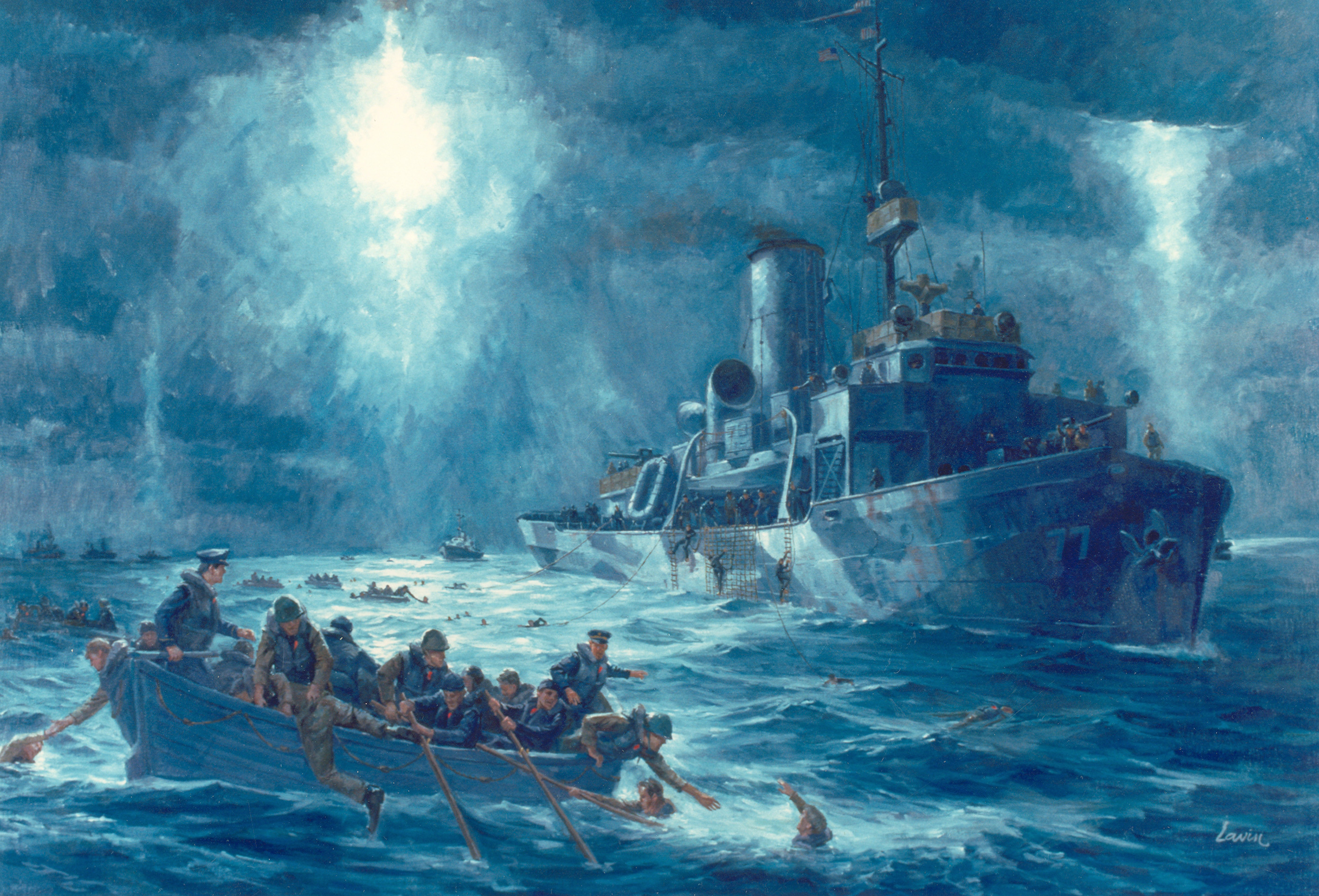
Escanaba rescuing survivors from USAT Dorchester. USCG Image.

Escanaba rescuing survivors from USAT Dorchester. USCG Image.

The following is based on Samuel Eliot Morison’s History of the United States Naval Operations in World War II, Volume I, The Battle of the Atlantic, 1939-1943, pp 330-334 and information from Uboat.net.

The current list of names selected for the Webber class WPCs includes the names of Charles Walter David Jr. and most recently Forrest O. Rednour. These two men are representative of about two dozen rescue swimmers who risk their lives to rescue survivors from the chartered US Army Transport Dorchester. torpedoed on February 3, 1943, 74 years ago.

These men did the best they could to mitigate a disaster, but it was still a disaster. This was the largest loss of personnel on a US flag merchant vessel during WWII.

SG-19 was a small convoy bound from St Johns Newfoundland to Greenland, three ships, two merchantmen and the 5,252 ton Army transport Dorchester, with about 1000 tons of cargo, a crew of 130 men, an armed guard of 23, and 751 passengers, mostly Army reinforcements, and among them some 23 Coast Guard personnel, for a total of 904, of these only 229 would survive. As might be expected, the weather was cold and nasty as they approached Greenland.

The convoy was escorted by three cutters, the 240 foot Tampa (WPG-48) and two 165 foot “A” class cutters, Escanaba (WPG-77) and Comanche (WPG-76). The convoy escort was commanded by Capt. Joseph Greenspun, USCG. Tampa, commissioned in 1921, was fairly old, her speed, officially 15.5 knots but according to Morison actually 14.5, was less than that of a surfaced U-boat (17.7), but it was similar to that of the smaller Flower Class corvettes that made up the majority of convoy escorts and she was larger and better armed than a corvette.

The two 165 foot cutters, Escanba and Comanche, were really ill-suited for the mission. They were small with a low freeboard, and while credited with a speed of 12.8 knots, according to Morison their actual speed was 11.5 knots, and this was further reduced by icing, slowing the convoy. Icing also effected the escorts’ weapons. According to Morison, “At times they had to heave-to and remove ice with live steam; guns, depth charges and mousetraps (anti-submarine rockets–Chuck) sealed tight by thick ice, and excessive water noise rendered sound gear of little value.” Unable to do more than keep up with the convoy, the two smaller cutters struggled to maintain station on the flanks of the convoy.
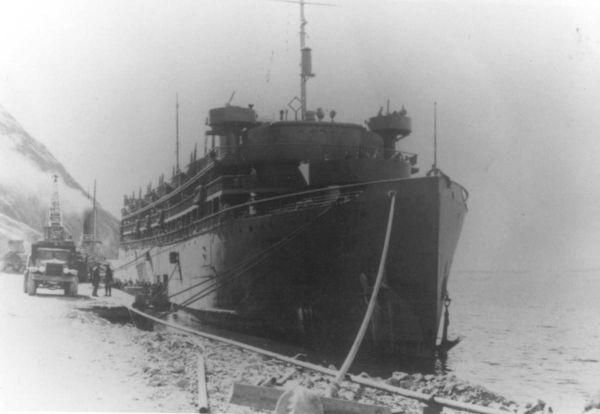
US Army Tansport Dorchester

US Army Tansport Dorchester

The convoy was sailing at a speed of ten knots. The three merchant ships were in line abreast with Dorchester in the center. Tampa led 3,000 yards ahead of Dorchester, and Comanche and Escanaba were 5,400 yards on the flanks, to port and starboard respectively.

On Feb. 2 the weather had moderated, but the convoy was informed that there was U-boat activity in the area.

59 degrees 22′ N, 48 degrees 42′ W, 150 miles West of Cape Farewell, Greenland, during the night, very early on 3 Feb., a torpedo struck the Dorchester on the starboard side in the machinery spaces. About 20 minutes later the Dorchester had sunk.

U-223, on her first war patrol, had approached the convoy from starboard, probably on the surface in the dark, probably having passed between Tampa and the Escanaba. Even at this late date the Escanaba still had no radar.

The U-boat had loosed five torpedoes, meaning she had fired all four of her bow tubes and turned and fired the single stern tube as well. One of the first hit the Dorchester. All the rest missed.

There was confusion on the transport. Many never heard the order to abandon ship. “Three of the 14 lifeboats had been damaged by the explosion, the crew managed only to launch two more overcrowded boats and 33 men left with rafts, but many men evidently did not realize the seriousness of the situation, stayed aboard and went down with the ship.” Most went into the water with nothing more than a lifebelt.

Initially Escanaba and Comanche attempted to find the U-boat, but Escanaba then moved in to rescue survivors while Comanche attempted to protect Escanaba. Comanche joined the rescue effort about two hours after the torpedoing.

From Uboatnet,

“Escanaba … picked up 81 survivors from the water and rafts and 51 from one lifeboat. Comanche picked up 41 survivors from another lifeboat and 56 from rafts and the water. Hundreds of floating bodies or frozen to wreckage were checked for signs of life. The survivors were landed at Narsarssuak (Greenland) later the same day. 675 lives were lost: the master, three officers, 98 crewmen, 15 armed guards and 558 troops and passengers (including 16 Coast Guardsmen). The following were saved: three officers, 25 crewmen, 44 civilian workers, three Danish citizens, twelve armed guards, seven US Coast Guard personnel and 135 US Army personnel.”

U-223 was a reasonably successful U-boat being responsible for the loss of three merchant ships, a frigate, and a destroyer. She was sunk 30 March 1944 in the Mediterranean Sea, 60 nautical miles northeast of Palermo, Sicily, in a battle with four British destroyers in which she sank one of her pursuers, HMS Laforey.

Four months after the loss of Dorchester, 13 June, 1943, at 0510 Escanaba blew up and sank within three minutes in the North Atlantic.  All but two of her crew of 103 were lost.

Would the result have been any different if the cutters had been more capable? We will never know, but it suggest that if we are ever again in a general war, prepared or not, our cutters will be pressed into service even if they are unsuitable, poorly trained, or inadequately equipped.

Pearl Harbor: A catalyst That Forever Changed Coast Guard Search and Rescue–CG Compass

In honor of the 75th anniversary of the attack, the Coast Guard Compass has an interesting post about how then Lt., later Captain,  Frank A. Erickson‘s experiences during the attack on Pearl Harbor may have influenced the future development of the helicopter as a Search and Rescue tool.

They also provided the clip above.

Here are some of commemorative post marking this day:

There is also the Coast Guard history Pearl Harbor index.


Coast Guard and CG Manned Vessels Lost in World War II

uss-menges-de-320torpedodamage

Coast Guard manned destroyer escort USS Menges (DE-320) showing the effects of an acoustic homing torpedo hit on the stern.

It is entirely appropriate for Veteran’s Day weekend reading, but this post was prompted by a recent update of the list of “Top Ten Posts.” I found that the 2011 post “What Does It Take to Sink a Ship?” was not only the top post since I started writing, it is also the top post of 2016. That looked at Navy major surface combatant losses in WWII, but I realized I have never surveyed the Coast Guard’s WWII losses.

This began as another shameless attempt to get the Coast Guard to recognize that they need torpedoes to stop medium to large ships, but it grew into a more comprehensive look at CG losses in WII. I did find that six (or seven, Escanaba?) Coast Guard or CG manned vessels were hit by torpedoes and in every case the ship was either sunk (four or five?) or immobilized (two).

I found a couple of good sources. “The Coast Guard at War” is a series of monographs completed shortly after WWII (between 1045 and 1950) and most of the apparently 25 volumes are available in pdf format here, along with a lot of other WWII references. In particular I used The Coast Guard At War: Lost Cutters (Official History Series, Volume VIII, 1947). It lists the loss of 16 Coast Guard vessels and the loss of 12 Coast Guard manned Navy vessels, but two of these (one Navy and one CG) were actually after the war was over. My other source was “U. S. Coast Guard Ship Losses” by Jim Gill, on the US Coast Guard Light Ship Sailors Association International web site. This source identifies 40 losses beginning with the Tahoma in 1914 up to USCGC Mesquite (WLB-305), grounded in 1989. It included three losses not listed in the official history, all by torpedoes:

  • (FS-255), a small Army freighter, 560 tons, torpedoed and sunk by a Japanese submarine while anchored, 11 May 1945, with the loss of four men.
  • USS Menges (DE-320), 1,590 tons, torpedoed while on convoy duty, 4 May, 1944, the ship survived severe damage to her stern, but there were 31 dead.
  • USS Etamin (AK-93), 7,176 tons, which was hit by a hit by an air launched torpedo and damaged badly enough that it was decommissioned and was used subsequently as an unpowered floating warehouse. One dead.

Coast Guard Vessels Lost:

The Coast Guard lost 15 vessels during the course of WWII. Of those, three are believed to be the result of enemy action. Of the remaining 12, eight were a result of adverse weather. 214 Coast Guardsmen were killed in these 15 incidents.

The three ships presumed loss to enemy action included the three largest Coast Guard vessels lost during the war:

CG 85006, 67 tons, was destroyed by an explosion, probably gasoline vapors, 27 Mar.’43, four dead.

CG 58012, 30 tons, was destroyed by fire, 2 May ’43, no fatalities.

CG 83421, 44 tons, was sunk in a collision, 30 June ’43, no fatalities.

USCGC Bodega (WYP-342), 588 tons, went aground attempting to assist another vessel, 20 Dec. ’43, no fatalities.

The eight vessels lost to foul weather were:

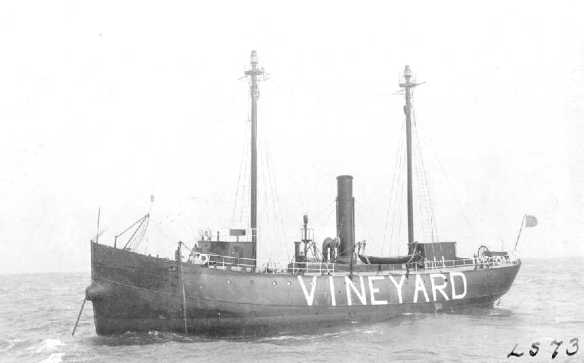
ls73

LV 73 on the Vineyard Sound station where she served from 1924 through 1944.  On 14 September 1944 she was carried off station during a hurricane and sank with the loss of all hands.

It might be assumed that the non-combat casualties were not war related, but that might not be the case. The urgency of the missions, the diversion of more capable ships to escort duty, the influx of inexperienced personnel placed in responsible positions, and the use of vessels pressed into service for which they may have been ill-suited, were all a result of the war, and it led to crews being placed in more danger than would have been the case in peacetime.

Coast Guard Manned Navy Vessels Lost:

Of the eleven Coast Guard manned US Navy ships lost during WWII, seven were lost to enemy action, the others were:

  • LST 203, 2,366 tons, was stranded after an intentional beaching, 1 Oct. ’43, no fatalities.
  • LST-69, 2,366 tons, destroyed in the West Loch disaster, 21 May ’44, no fatalities.
  • USS Serpens (AK-97), 14,250 tons, destroyed as a result of an apparent internal explosion of its cargo, 29 Jan. ’45, 196 CG fatalities. (Largest single loss of CG personnel)
  • USS Sheepscot (AOG-24), 2,270 tons, driven ashore by adverse weather, 6 June ’45, no fatalities.

serpens_ak-97

USS Serpens (AK-97)  US Navy photo #NH 89186, from the collections of the US Naval Historical Center, courtesy William H Davis, 1997

sheepscot_aog-24

USS Sheepscot (AOG-24) underway, August 1944, US Navy photo

Those lost to enemy action were:

USCGCMuskeget(WAG-48)

Photo: USCGC Muskeget, seen here before conversion to a weather ship. http://www.navsource.org/archives/09/49/49048.htm

lst69_2

“LST discharges supplies. . .”; no date (November, 1943?); Photo No. 3237; photographer unknown. The Coast Guard-manned LST-69 disembarks equipment during the Tarawa invasion.

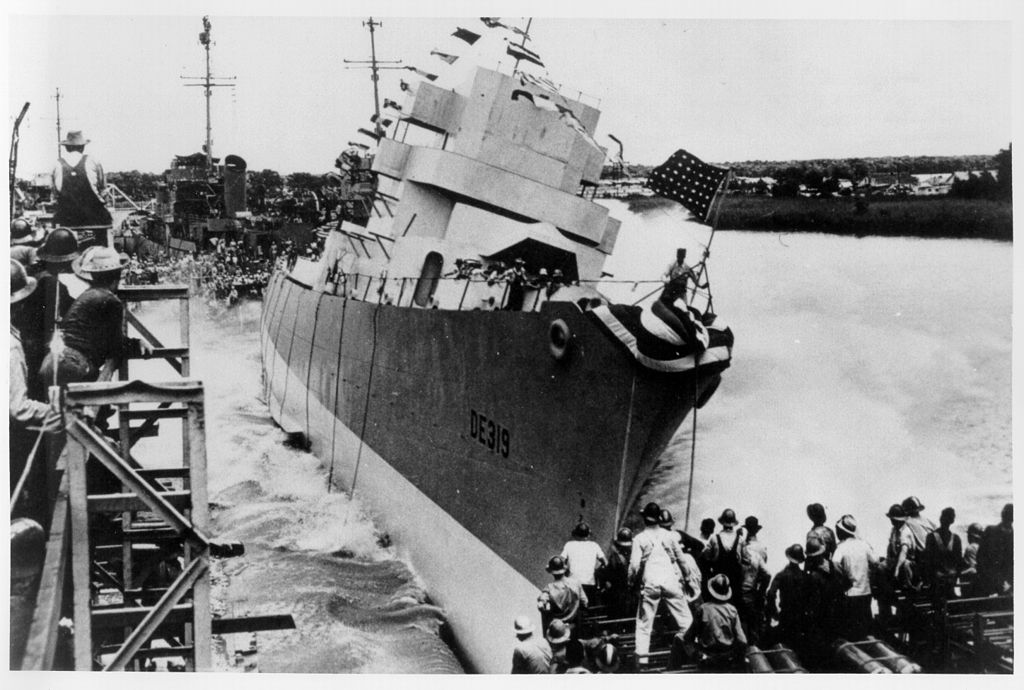
Leopold_DE-319

USS Leopold (DE-319) being launched. 

File:Lci-convoy.jpg

Normandy Invasion, June 1944 A convoy of Landing Craft Infantry (Large) sails across the English Channel toward the Normandy Invasion beaches on “D-Day”, 6 June 1944. Each of these landing craft is towing a barrage balloon for protection against low-flying German aircraft. Photograph from the U.S. Coast Guard Collection in the U.S. National Archives. Photo #: 26-G-2333

lci93_omaha_1_300

“SHE FELT THE NAZIS’ WRATH:” A U.S. Coast Guard infantry landing craft still flies its flag, though knocked out of the invasion, ripped and wounded on the beaches of France. Moving in for a landing, the LCI ran afoul of an underwater obstruction, which tore a gaping hole in her bow. Then as its cargo of troops piled ashore, Nazi shells battered her out of further action.”; no date; Photo No. 2395; photographer unknown.

Conclusion:

It may be surprising that it appears the Coast Guard lost two and half to three times as many men in Coast Guard manned Navy vessels, as in Coast Guard vessels.

According to the Coast Guard history web site,

Two hundred and fourteen thousand two hundred and thirty-nine persons served in the Coast Guard during World War II.  That number included 12,846 women.  The Coast Guard lost a total of 1,917 persons during the war with 574 losing their life in action, “died of wounds” received in action, or perishing as a “Prisoner of War.”

These incidents account over 40% of all lives lost and a majority of lives lost as a result of enemy action.

Coast Guard Museum

ncgmaconcept

The team putting together the National Coast Guard Museum in New London is asking for help and they have a new “Plank Owner” program that they hope will provide some extra incentive. If you need more information, they have it available in a couple of forms, a 20 page annual report for 2015 that includes a financial statement or you can take a look at their newsletter.

Perhaps most convincing, they point out that the Coast Guard is the only military service without a National Museum. The Army has 56, the Air Force 13, the Navy 11, and the Marine Corp 5. They also have a web site: www.CoastGuardMuseum.org.


Centennial of Coast Guard Aviation–DefenseMediaNetwork

jayhawk-helo-Centinnial

Photo: A Coast Guard MH-60 Jayhawk helicopter with a special yellow paint scheme lands at Coast Guard Air Station Astoria, Ore., Jan. 15, 2016. (Coast Guard/Jonathan Klingenberg)

DefenseMediaNetwork has published an excellent article commemorating the Coast Guard Aviation history in honor of its Centennial. I’ve looked around a bit, and I have not found a better one.

WAR IN THE SHALLOWS, VIETNAM, 1965–1968

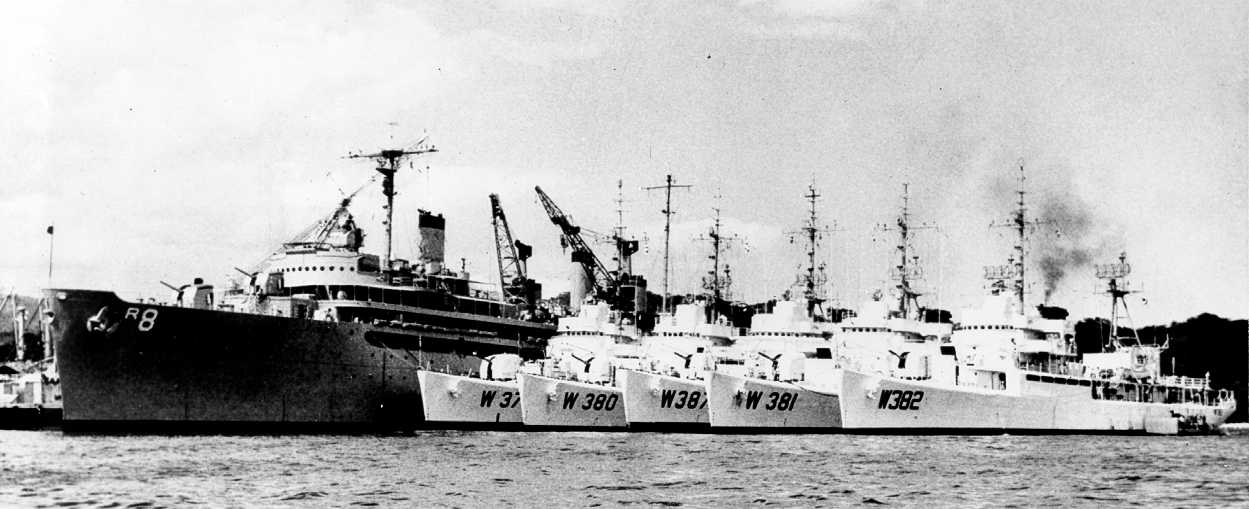
WAVPmarkettime

Photo: “COAST GUARD IN VIETNAM: Five white 311-foot cutters of the recently established Coast Guard Squadron Three assigned to “Market Time” coastal surveillance in South Vietnam are tied up alongside Navy repair ship USS JASON (AR-8) after arriving at Subic Bay, P.I.  From the left are the USCGC HALF MOON, USCGC YAKUTAT, USCGC GRESHAM, USCGC BARATARIA, and USCGC BERING STRAIT.” Coast Guard Photo Rel. No. 6201; 4 August 1967; photo by CDR Richard Morse, USCG, commanding officer of Barataria.”

There is a new book available that includes extensive coverage of the Coast Guard role in the Vietnam war. Best of all it is free and is available for download in pdf format. Just click on the link.

WAR IN THE SHALLOWS, U.S. NAVY COASTAL AND RIVERINE WARFARE IN
VIETNAM, 1965–1968

Yes, I know it says US Navy, but it does seem to give the Coast Guard its due, despite the title.

Thanks to Lee for bringing this to my attention.

Thanks for a Successful 2015

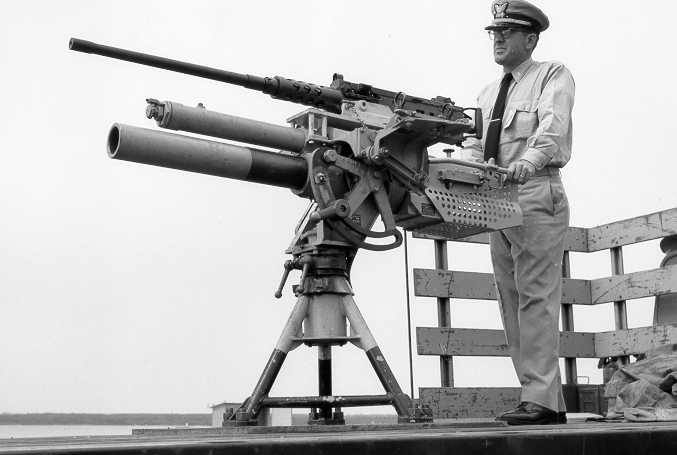
81mm50caloverunderCWOElmerLHicksUSCG

Now that it is over, looking back on 2015, I would like to thank the readers and contributors for making the effort very rewarding for me. This is a remarkably civil and knowledgeable group. Nice to see that all experience and knowledge levels are respected. Top five contributors by number of comments were x, Leesea, Tups, James WF, and Nicky. I got a number of suggestions by e-mail too.

The previous year, 2014, was a remarkably good year for the blog. The award of the preliminary Offshore Patrol Cutter contracts prompted a lot of interest, but still the blog enjoyed some growth. The blog had 213,556 views,  5.4% more last year.

In 2015, there were 277 new posts, growing the total archive of this blog to 1,452 posts. Top posts, by number of views were:

  1. What Does It Take to Sink a Ship (March 2011)
  2. The Navy’s New Patrol Boat (May 2012)
  3. OPV to OPC (July 2012)
  4. Case for the Five Inch Gun (November 2012)
  5. Three Nations Share German OPV Design (April 2014)
  6. What Might Coast Guard Cutters Do in Wartime, Part 2, Coast Guard Roles (February 2012)
  7. Ireland’s New OPV, Samuel Beckett (May 2014)
  8. Two More New Medium Icebreaker–Not for the Coast Guard (March 2015)
  9. Alternate Weapons for New Large Cutters? (May 2012)
  10. Offshore Patrol Cutter Concepts (June 2013)

As you can see, nine out of ten of these were published in previous years. I hope this is not a reflection of declining quality, but it is gratifying to know that these posts are still of continuing interest.

I am told by WordPress that readers came from 169 different countries. I suspect some of these were just spammers. Still, 38 countries were reported to have at least 200 views. The top five, after the US, were the UK, Canada, the Philippines, Netherlands, and Australia.

I would also like to particularly thank Thinkdefence, the Center for International Maritime Security (CIMSEC) “Next War Blog”Eaglespeakfor linking to this website and bringing more readers here.

Thanks for the interest.


USCGC Muskeget Torpedoed, Lost with all Hands–Sept. 9,1942

USCGCMuskeget(WAG-48)

Photo: USCGC Muskeget, seen here before conversion to a weather ship. http://www.navsource.org/archives/09/49/49048.htm

Tomorrow is Veteran’s Day and a friend and classmate sent me another reminder of the sacrifices Coasties have made in the past. It was a story about a ship lost with all hands, but it was not the Cutter Tampa, that most of us have heard about. It was a small, slow freighter built in 1923 and converted to a weather ship and transferred to the Coast Guard in 1942, USCGC Muskeget (WAG-48). Although mostly forgotten, sailing alone in U-boat infested waters, she took with her more Coasties than the Tampa, nine officers, 107 enlisted, plus a Public Health Service Officer and four US Weather Service employees.

The four Weather Service employees are to honored with presentation of purple hearts on 19 November. This will mark the first time Weather Service employees have received the purple heart. It also marks the long association between the Coast Guard and NOAA. Appropriately VAdm. Stosz, Deputy Commandant for Mission Support will be one of the speakers.