Canada’s New Icebreaker, John G. Diefenbaker

Canadian Polar Icebreaker John G. Diefenbaker

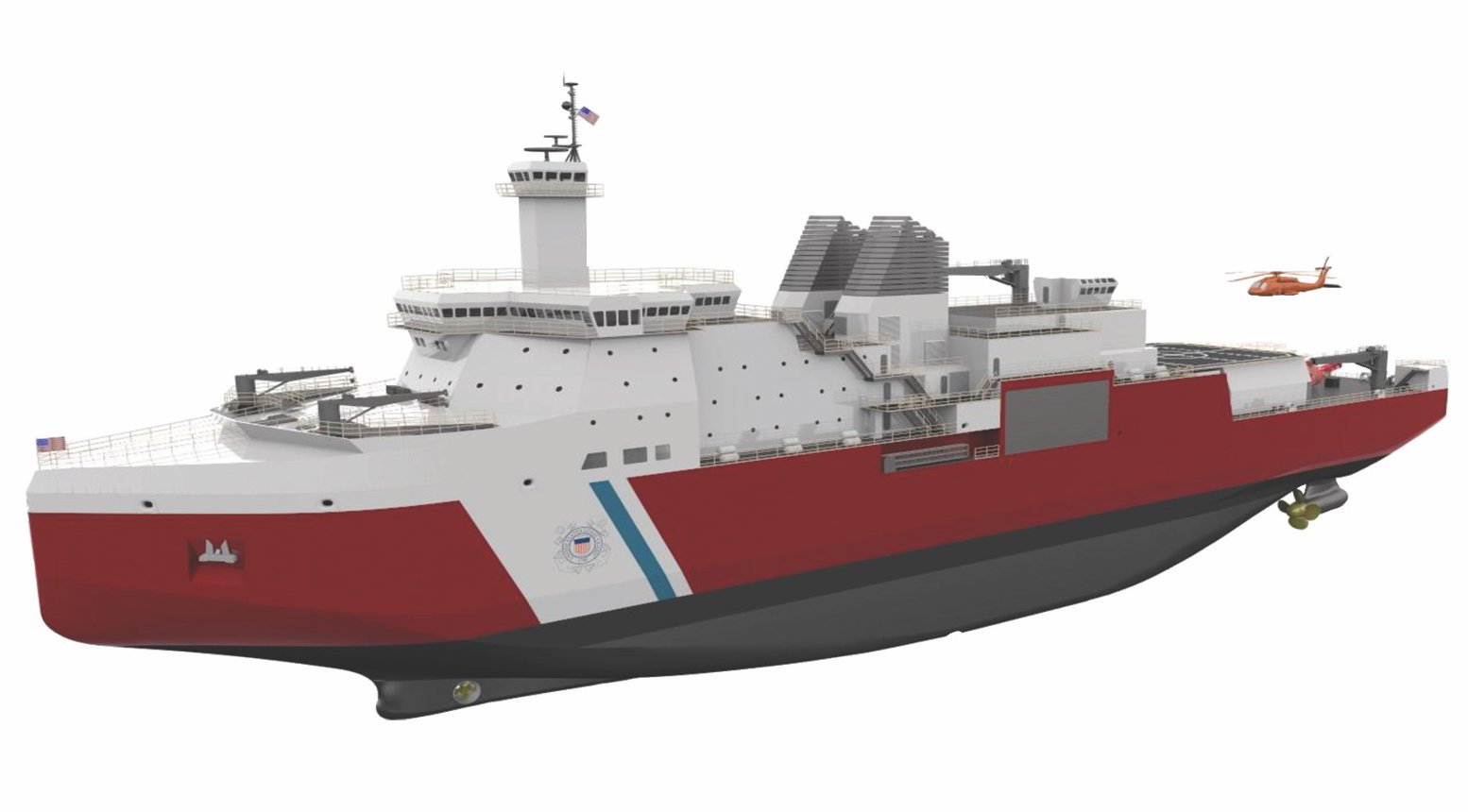
Some information from Canadian ship design agency VARD, on the planned Canadian polar icebreaker John G. Diefenbaker. The project is long delayed and construction has not yet begun.

There is much more detail in the VARD brochure and Wikipedia entry linked above, but a few significant data points.

  • Displacement, full load: 23,500 tons
  • Length overall: 150.1 m 492’-6”
  • Length waterline: 137.6 m 451’-5”
  • Breadth moulded 28.0 m 91’-10”
  • Design draft: 10.5 m 34’-6”
  • Generators: 39,600 kW 53,100 hp
  • Propulsion: two 11 MW (14,751 hp) wing shafts and a 12 MW (16,092 hp) azimuth thruster. total 34 MW (45,595 hp),
  • Speed: 18 knots ice free, 3.0 kn, 2.5m ice 
  • Range:  26,000 NM @ 12 kn ice free 
  • 1,800 NM @ 3.0 kn 2.2 m of ice
  • 60 core crew + 40 program personnel
  • Endurance  270 days

For comparison these are figures for the planned Polar Security Cutter. Projected delivery dates, 2024, 2025, 2027.

  • Displacement, Full Load: 22,900 tons
  • Length: 460 ft (140 meters)
  • Beam: 88 ft (26.8 meters)
  • HP: 45,200
  • Accommodations: 186
  • Endurance: 90 days

In many ways the designs are remarkably close. Looks like the Canadian breaker will be slightly larger than the PSC, but will have a much smaller crew.

Presumably there will be no provision for armament since the Canadian Coast Guard does not arm its vessels.

The Diefenbaker’s very long endurance is a bit of a surprise, in view of Canada’s lack of a requirement to go to Antarctica, a feature that has driven the design of the PSC.

Propulsion power is almost identical, a bit over 45,000 HP, and both designs include three propellers, but the way it is done is different. While the PSC has a conventional shaft on the centerline and rotatable drive units to port and starboard, the Canadian design has a single rotating drive unit on the centerline and conventional shaft driven props port and starboard. This may provide the PSC with a redundancy advantage in that it might allow steerage even if one unit is damaged. On the other hand the single Canadian unit may be less likely to be damaged because of its position.

“Coast Guard Polar Security Cutter (Polar Icebreaker) Program: Background and Issues for Congress” CRS, an even newer version

I am a bit embarrassed to admit, I have been behind on this subject. My post from Saturday, linked the 19 September version of the report, but there was already a more recent version, dated 4 October. You can see it here

The significant change in this edition is the addition of the new section at the top of page 15. (This new section reflects the questions Tups has raised here earlier.) 

“Parent Design and PSC Design

“One potential aspect of the issue of technical, schedule, and cost risk in the PSC program relates to the parent design for the PSC design. As mentioned earlier, a key aim in using the parent design approach is to reduce cost, schedule, and technical risk in the PSC program. As also mentioned earlier, VT Halter states that its winning design for the PSC “is an evolution from the mature ‘Polar Stern II’ [German icebreaker] currently in design and construction; the team has worked rigorously to demonstrate its maturity and reliability.” As also mentioned earlier, VT Halter and ship designer Technology Associates, Inc. reportedly made “a lot of modifications” and went through six design spirals to refine the PSC’s design. Potential oversight questions for Congress include the following:

  • “To what degree was Polarstern II’s design a completed and proven design at the time it was used as the parent design for developing the PSC design? How much of Polarstern II’s detail design and construction plan was completed at that time? When did Polarstern II begin construction, and when is the ship scheduled to complete construction and undergo sea trials to confirm the ship’s design and operational characteristics?
  • “How closely related is the PSC’s design to Polarstern II’s design? How many changes were made to Polarstern II’s design to develop the PSC design? What were these changes, and what technical, schedule, and cost risks, if any, might arise from them?”

“Coast Guard Polar Security Cutter (Polar Icebreaker) Program: Background and Issues for Congress” –CRS

19 September, the Congressional Research Service has issued an update to its “Coast Guard Polar Security Cutter (Icebreaker) Program: Background and Issues for Congress” replacing an edition published on eight days earlier. You can see the latest version here. The only significant changes I see in the latest edition is reflected in table C-1 to include future year PSC funding though FY2024 and table C-2 that provides projected Procurement, Construction and Improvements (PC&I) funding through FY2024. Notably these PC&I projections are well below the $2B annually that the Coast Guard has been saying they need.

Projected PC&I totals by FY are:

  • 2020: $1,234.7M
  • 2021: $1,679.8M
  • 2022: $1,555.5M
  • 2023: $1,698.5M
  • 2024: $1,737.0M

You can track the changes made between consecutive editions here.

A Modest Proposal for a Containerized Weapon System

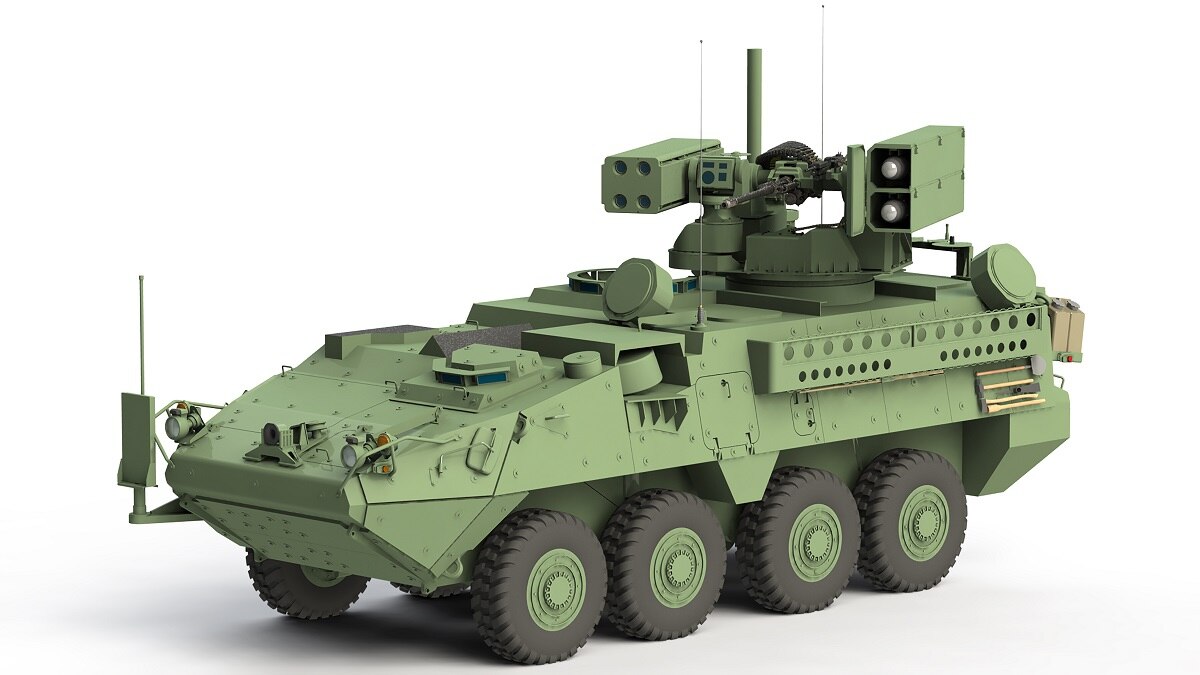
Leonardo DRS has been chosen to provide the mission equipment package (rendering pictured) atop a Stryker combat vehicle to serve as the Interim Maneuver-Short-Range Air Defense system for the U.S. Army. (Courtesy of Leonardo DRS)

     After the recent report of Russia containerizing anti-air missile systems I got to thinking about containerized systems the Coast Guard might use. There are many systems that might be containerized–sonars, torpedo countermeasures, cruise missiles, drones, 120mm mortars, medical facilities, but there is one combination I found particularly appealing.
     We could tie into the Army’s attempt to develop a new short range air defense system (SHORAD) by mounting a marinized version of the SHORAD turret on a container.  The systems are meant to fire on the move, so they should be able to deal with ship’s movement. The container might be armored to some extent to protect it from splinters and small arms. The container could be equipped to provide power (external connection, generator, and battery), air conditioning, air filtration, etc as the supporting vehicle would have in the Army system.  It looks like the planned interim SHORAD system will include Stinger, Hellfire, an M230 30mm gun and a 7.62mm coaxial machine gun. If we could mount some additional vertical launch Hellfire in the container, so much the better.
     For the Coast Guard these might be used on icebreakers and buoy tenders when they go into contested areas. They might be mounted on the stern of FRCs in lieu of the over the horizon boat using an adapter over the stern ramp, when additional firepower is required. 
     The Army and Marines might also use these containerized systems as prefab base defense systems. As fixed ground defenses, the containers might be buried leaving only the turret above ground level.
     They could also be used on Military Sealift Command and Merchant ships to provide a degree of self defense.

CRS: “Coast Guard Polar Security Cutter (Polar Icebreaker) Program: Background and Issues for Congress”/ Plus a Note on Great Lakes Icebreaker Procurement

The Congressional Research Service his issued a revised “Coast Guard Polar Security Cutter (Polar Icebreaker) Program: Background and Issues for Congress” updated 9 August 2019.

It includes a short appendix (Appendix E, pp 63-66) on the issue of a potential new Great Lakes icebreaker. The final paragraph of that appendix states:

“An examination of procurement costs for Mackinaw, the National Science Foundation’s ice-capable research ship Sikuliaq, new oceanographic research ships being procured for NOAA, and OPCs suggests that a new Mackinaw-sized heavy Great Lakes icebreaker built in a U.S. shipyard might have a design and construction cost between $175 million and $300 million, depending on its exact capabilities and the acquisition strategy employed. The design portion of the ship’s cost might be reduced if Mackinaw’s design or the design of some other existing icebreaker were to be used as the parent design. Depending on the capabilities and other work load of the shipyard selected to build the ship, the construction time for a new heavy Great Lakes icebreaker might be less than that of a new heavy polar icebreaker.”

If you would like a quick, only slightly out of date (May 2017), summary of world icebreaker fleets, take a look at Fig. B-1, page 40.

“Meet the neglected 43-year-old stepchild of the U.S. military-industrial complex” –Los Angeles Times

Great article from the Los Angeles Times about the trials, tribulations, (and joys) of being on the Polar Star, recounting her three and a half month 2018/2019 Deep Freeze.

And once again she goes into the dry dock in Vallejo, California, rather than a yard in her homeport (for 5 months). If you add it up, she spends more time in Vallejo than her homeport (3.5 months). Since she is being drydocked every year, maybe it is time to move the families closer to the shipyard. According to the article she is expected to continue in service another seven years.

Case for a Second Great Lakes Icebreaker

Launch of USCGC Mackinaw (WLBB-30) on April 2, 2005. Photo by Peter J. Markham.

Recently in response to my post “Great Lakes–St. Lawrence Shipping: We Need Icebreakers” –Marine Link, in which I suggested that the Great Lakes icebreaker might serve as a prototype for the three planned medium polar icebreakers, there was a comment from an Academy classmate, Capt. Fred Wilder, USCG (ret.), that was intended to link to a press release from the Lake Carriers’ Association, but for some reason the link was lost. I requested a copy of the news release from Capt. Wilder which he provided. It is reproduced below.

A week after the post linked above, I posted on why we might need icebreaker assets that could be drawn on by the Atlantic Fleet, in the form of icebreakers that could serve in both the Lakes and in the Atlantic Arctic.

—–

Lake Carriers’ Association For Immediate Release   August 1, 2019

Iced Out: Study Reveals Loss of More Than $1 Billion Due to Inadequate Icebreaking Capabilities on the Great Lakes

CLEVELAND – The U.S. economy lost more than $1 billion in business revenue and 5,421 jobs due to inadequate icebreaking capabilities on the Great Lakes during the 2018-2019 winter season.

Due to this loss of business revenue, the federal government missed out on more than $125 million in taxes and in addition $46 million was lost by state and local governments. For perspective, that loss means the U.S. government could build a new Great Lakes icebreaker and recoup those costs in two years.

“In response to a question at a recent Congressional hearing, we polled our members about the delays they incurred due to inadequate icebreaking this winter,” said Jim Weakley, President of Lake Carriers’ Association. “Once we had the total number of tons delayed and total hours they were delayed, we were able to calculate the additional cargo we could have moved had the Coast Guard been able to meet the needs of commerce. Using the economic model updated in July of 2018 by Martin Associates, it was determined that U.S. Economy lost over $1 billion as a result of the steel not made and the power not generated by the coal and iron ore the U.S.-flag fleet could not move.”

With robust icebreaking capabilities paving the way for commercial shipping, U.S.-flag Lakers could have carried 4 million additional tons of iron ore and 879,210 additional tons of coal. In other words, Lakers could have done an additional 860 trips delivering iron ore to steel mills and 21 trips delivering coal to power generation plants.

“A dynamic fleet of icebreaking assets is absolutely critical for our regional and national economy, especially our domestic steel and power generation industries which were hit hard this past winter season,” says Mark W. Barker, president of The Interlake Steamship Company, which moves nearly 20 million tons annually crisscrossing the Lakes more than 500 times between March and January. “Robust icebreaking capabilities enable the Coast Guard to deliver on its mission to facilitate the flow of commerce across our Great Lakes.”

Mark Pietrocarlo, Lake Carriers’ Association’s board chairman, noted, “The U.S. Coast Guard was down four icebreakers for a significant period of time this past winter and for the first time in memory, no icebreaker was left on Lake Superior when the Soo Locks closed from January 15th to March 25th.  One icebreaker took seventeen months to repair, one was on the East Coast for a major overhaul and two others missed more than a month of icebreaking.”

“The economic impact on our customers and the supply chain they enable is significant and points out the need for a new icebreaker for the Great Lakes,” Pietrocarlo said. “Given the lost tax revenue the economic model calculated for the federal government, the payback period to the Treasury for the vessel is two years.  Infrastructure investment isn’t just about fixing the roads, we also need to maintain our marine highways.”

Beset in ice, the M/V Stewart J. Cort and three other Great Lakes vessels await the assistance of an icebreaker on Lake Superior

About the study:

To estimate the economic impact of inadequate icebreaking during the typical ice conditions experienced on the Great Lakes during the 2018 – 2019 winter season, Lake Carriers’ Association (LCA) asked U.S.-flag carriers to report their delays in hours and the number of tons carried during their delays.

The types of delays included being beset in the ice, at anchor awaiting an icebreaker, having to slow down due to inadequate icebreaking, waiting for Coast Guard permission to proceed, and waiting for a convoy to form.

In addition, hours lost due to repairing ice damage to vessels and the hours lost by vessels that delayed their initial sailing times due to inadequate icebreaking were factored in to the total.

LCA aggregated the fleet’s lost hours and tons delayed and determined that a total of 409,729 tons of coal were delayed for 206 hours.  It also calculated that 2,186,361 tons of iron ore were delayed for a total of 1,586.5 hours. Since the vessels reporting were a combination of “footers” and smaller vessels, we used an average of 42,000 tons per trip. It was also assumed that a typical round trip for a U.S.-flag Laker takes 96 hours.

—–

Economic Impact of Lost Tonnages due to inadequate icebreaking in the average winter of 2018/2019 (Source: Martin Associates)

4,000,000 ton loss of iron ore and 900,0000 ton loss of coal due to ice delays

JOBS 

  • Direct Jobs 1,925
  • Induced 1,666
  • Indirect 1,829
  • Total 5,421

PERSONAL INCOME (1,000)

  • Direct $106,912
  • Re-Spending/Local
  • Purchases $203,098
  • Indirect $80,454
  • Total $390,464

BUSINESS REVENUE  (1,000)

  • $1,044,044

LOCAL PURCHASES  (1,000)

  • $187,193

STATE AND LOCAL TAXES (1,000)

  • $46,429

FEDERAL TAXES (1,000)

  • $125,518

—–

The data, showing tons by commodity, lost by the U.S.-flagged Great Lakes fleet, was supplied by the Lakes Carriers’ Association to Martin Associates. The July, 2018 updated Economic Impact study of the Great Lakes and St. Lawrence Seaway – U.S. Flagged Fleet, developed jobs per ton and economic impact per ton ratios for iron ore, coal, limestone/aggregates and other dry bulk cargo.  These ratios were then applied to the estimated loss of 4,000,000 tons of iron ore and 900,000 tons of coal for the relatively average winter of 2018/2019.  The economic impacts of these delays are presented in terms of jobs and business revenue in table above.  For more information about 2018 Economic Impact study of the Great Lakes, go to http://www.greatlakesseaway.org/resources/reports.

ABOUT LAKE CARRIERS’ ASSOCIATION: Since 1880, Lake Carriers’ has represented the U.S.-flag Great Lakes fleet, which today can move more than 90 million tons of cargos annually that are the foundation of American industry, power, and construction: iron ore, limestone, coal, cement, and other dry bulk materials such as grain and sand. For more information contact Jim Weakley – 440-333-9995 / weakley@lcaships.com.

“Icebreaker Xuelong 2 joins service on China national maritime day” –Global Times

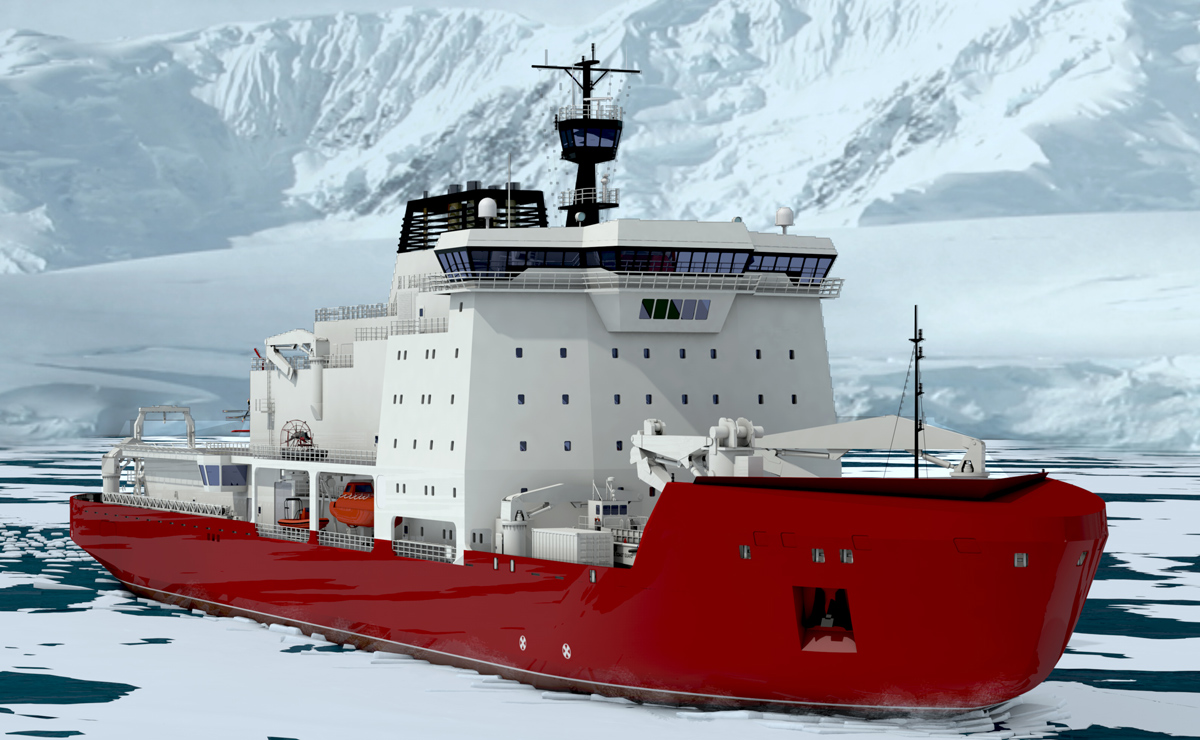
China’s first domestically built polar research vessel and icebreaker, Xuelong 2 docks at the Jiangnan Shipyard in Shanghai on Thursday morning. Photo: Polar Research Institute of China

Global Times is reporting completion of China’s first domestically produced Polar Icebreaker. (Their existing polar icebreaker was built in the Ukraine.)

According to Wikipedia, she was designed by Finnish firm Aker Arctic Technology. Specs are as follows.

  • Polar Class 3
  • Double Acting, can break ice going ahead or astern
  • Displacement of 14,300 tons
  • Length: 122.5 metres (402 ft)
  • Beam: 22.3 metres (73 ft)
  • Draft: 8.3 metres (27 ft)
  • Max Speed: 15 knots
  • Accommodations: 90 Passengers and crew
  • Diesel-electric propulsion system, two 16-cylinder, two 12-cylinder engines, both Wärtsilä 32-series, drive through two 7.5 MW Azipods. Just under 20,000 HP

It is a lot smaller than the planned Polar Security Cutter, but it is also larger and about as powerful and almost certainly more effective than the Glacier that served the US effectively for many years.

The hull and power plant looks like something we might want for our medium icebreakers, and I note, it looks like this size could negotiate the Saint Lawrence Seaway. That would mean a similar ship could potentially operate both on the Great Lakes and support Atlantic Fleet operations if required.

Thanks to Tups for bringing this to my attention.

Seattle to be Homeport for Polar Security Cutter

Not surprisingly the Coast Guard has announced that Seattle is the planned homeport for the new Polar Security Cutter (heavy polar icebreaker). Below is the press release. 

U.S. Coast Guard announces homeport of newest Polar Security Cutter

WASHINGTON – The U.S. Coast Guard today announced that Seattle, Wash. will be the home of the service’s new Polar Security Cutters.

“I am pleased to announce that Seattle, Washington will be the home of the Coast Guard’s new Polar Security Cutters,” said Admiral Karl L. Schultz, Commandant of the U.S. Coast Guard.  “The Pacific Northwest has been the home of our icebreaking fleet since 1976, and I am confident that the Seattle area will continue to provide the support we need to carry out our critical operations in the polar regions.”

The U.S. Coast Guard is the nation’s lead agency responsible for providing assured surface access in the polar regions.  The addition of the Polar Security Cutters in Seattle will support the United States’ ability to conduct national missions, respond to critical events, and project American presence in the high latitudes.

The Coast Guard conducted a detailed analysis to identify locations that could accommodate the Polar Security Cutter. Based on operational and logistical needs, Seattle was determined to be the appropriate homeport for the first three Polar Security Cutters.

In April 2019, VT Halter Marine, Inc. of Pascagoula, Mississippi, was awarded a contract for the detail design and construction of the Coast Guard’s Polar Security Cutter class.