How Bofors 57 mm Mk3/Mk110 Naval Gun Reload Works –Video

Thought this video was interesting enough to pass along.

This makes it clear why the nominal “220 round per minute” rate of fire for the 57mm Mk110 is only good for short periods. There can be up to 120 rounds on the mount but there may be interruptions to reload after 20 or fewer rounds. Frequently different types of ammunition are loaded in the left and right sides of the mount ammunition feed system, so there may be only 60 or fewer rounds of a particular ammunition type on the mount.

The linked information above includes a note for the 57mm Bofors 57 Mk2 which appears to share the same reload mechanism as the Bofors 57mm Mk3 (Mk 110 in US service) “Time to reload 120 rounds: 2 minutes”. It appears reloading the two 20 round ready service cassettes that move with the gun requires the gun to at or near maximum elevation. It is not clear if partially filled ready service cassettes can be topped off, I would hope that would be the case. The time to elevate, reload and return to firing position could be critical. Hopefully you will not wait until all 120 rounds on the mount are expended before reloading.

Thanks to Lee for bringing this to my attention.

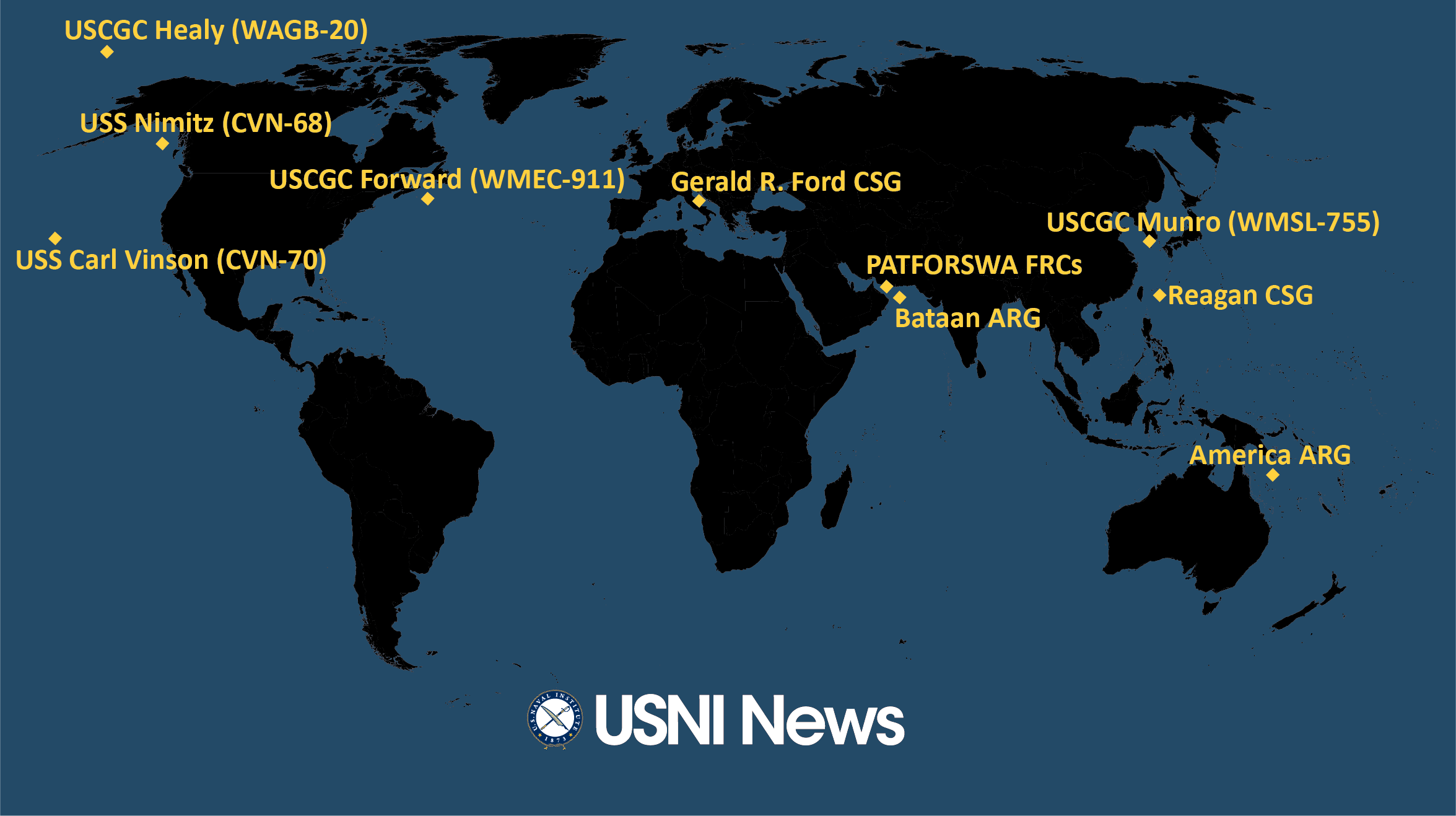
“USNI News Fleet and Marine Tracker: Aug. 14, 2023” –USNI

The US Naval Institute News Service “Fleet Marine Tracker” continues to report atypical Coast Guard activities. It continued to report on USCGC Healy’s Arctic deployment and mentioned PATFORSWA as they have since they have since they began including Coast Guard units in May.

This week, they included some activity I have not seen reported elsewhere.

“Legend-class National Security Cutter USCGC Munro (WMSL-755) departed Fleet Activities Yokosuka (CFAY) and is now in South Korea.”

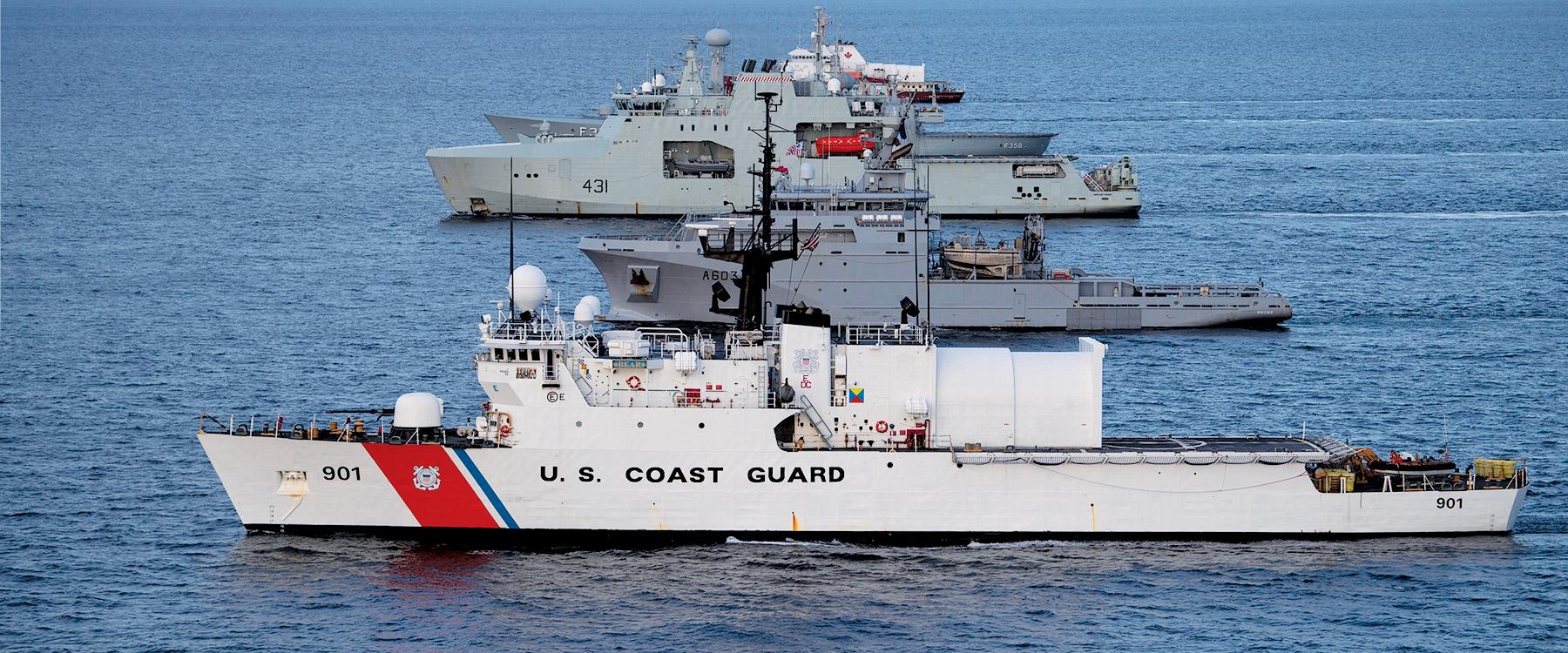
“Coast Guard Cutter Forward (WMEC-911) is currently supporting Operation Nanook. Operation Nanook is an annual Canadian-led exercise that fosters international cooperation and shared responsibility in the Arctic and the northern Atlantic Regions.”

The USCGC Bear (WMEC-901) and allied ships from Canada, Norway, France, and Denmark steam in formation in the North Atlantic Ocean during last year’s Operation Nanook in August 2022. 

“U.S. Coast Guard Cutter Stratton visits Singapore during Indo-Pacific deployment”

Passing along this news release. (More photos available through the link.)


May 31, 2023

U.S. Coast Guard Cutter Stratton visits Singapore during Indo-Pacific deployment

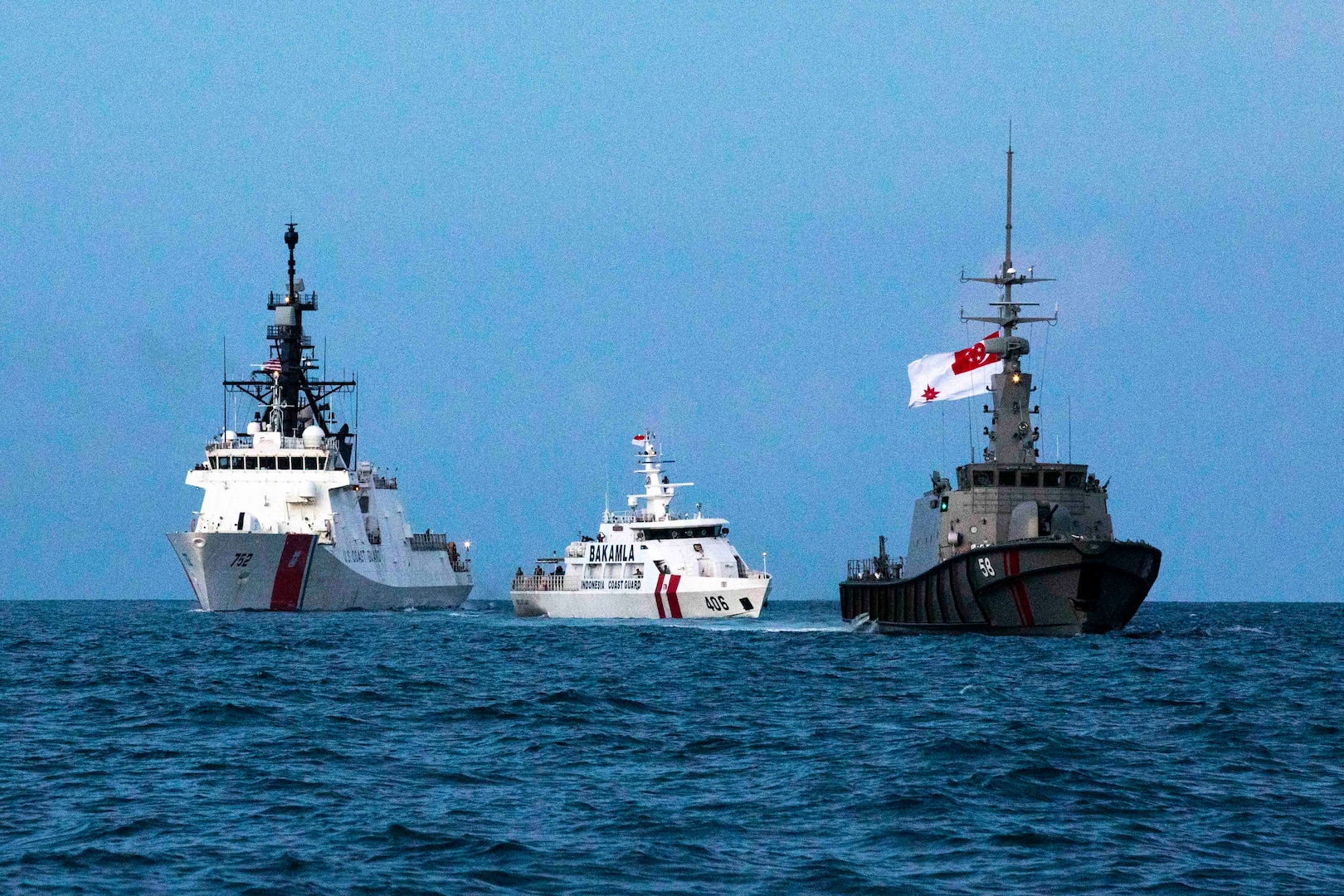
SINGAPORE – U.S. Coast Guard Cutter Stratton (WMSL 752) departed Singapore, May 22, following a scheduled port visit while deployed to the Indo-Pacific.

While in Singapore, Stratton’s commanding officer and crew strengthened trusted partnerships with local leaders, maritime safety and security stakeholders, and the community.

“The United States Coast Guard is committed to upholding a rules-based order in the Indo-Pacific. Stratton is here to support our allies and partners in making sure the Indo-Pacific region remains free and open to all,” said Capt. Brian Krautler, Stratton’s commanding officer. “The crew is looking forward to operating with our partners in the region. The crew of Stratton is ‘always ready’ to operate alongside like-minded nations as a trusted partner.”

While in port, the U.S. Ambassador to Singapore, the Honorable Jonathan Kaplan, toured the Stratton discussing interoperability in the region. The cutter’s crew volunteered with the Genesis school, a school for special needs children, and served at a food bank that feeds up to 7,000 people.  Additionally, the Stratton’s crew played friendly matches of ultimate Frisbee against the Republic of Singapore Navy sailors.

Stratton is deployed in the Indo-Pacific to engage with ally and partner nations and promote a free and open Indo-Pacific. The Stratton crew is conducting operations to share best practices and expertise in search-and-rescue, law enforcement and maritime governance. U.S. Coast Guard and U.S. Navy forward-deployed forces remain ready to respond to crises as a combined maritime force. Singapore is Stratton’s fourth port visit since departing her homeport of Alameda, California.

Stratton is operating as part of Commander, Task Force (CTF) 71, U.S. 7th Fleet’s principal surface force. CTF-71 is responsible for the readiness, tactical and administrative responsibilities for forward-deployed assets andsurface units conducting operations in the region.

Stratton is a 418-foot national security cutter capable of extended, global deployment in support of humanitarian missions, and defense missions. National security cutters routinely conduct operations throughout the Pacific, where the range, speed and ability to operate in extreme weather provides the mission flexibility necessary for the U.S. Coast Guard to serve as a unique strategic contributor in the region.

The namesake of U.S. Coast Guard Cutter Stratton is Capt. Dorothy Stratton, who led the service’s all-female reserve force during World War II. Capt. Stratton was the first female commissioned officer in the Coast Guard and commanded more than 10,000 personnel. The ship’s motto is “We can’t afford not to.”

U.S. 7th Fleet is the U.S. Navy’s largest forward-deployed numbered fleet, and routinely interacts and operates with allies and partners in preserving a free and open Indo-Pacific region.

U.S. Coast Guard Pacific Area is responsible for U. S. Coast Guard operations spanning across six of the seven continents, 71 countries and more than 74 million square miles of ocean. It reaches from the shores of the West Coast of the United States to the Indo-Pacific, Eastern Pacific, Arctic and Antarctic. Pacific Area strives to integrate capabilities with partners to ensure collaboration and unity of effort throughout the Pacific.

“Coast Guard awards contract for long range interceptor III cutter boats” –CG-9

Preliminary general arrangement drawing of the third generation of long range interceptor cutter boats to be made for the Coast Guard. Courtesy of MetalCraft Marine U.S. Inc.

Below is a May 30, 2023 Acquisitions Directorate (CG-9) news release. 


The Coast Guard awarded an indefinite-delivery, indefinite-quantity contract to MetalCraft Marine U.S. Inc. of Watertown, New York, May 23 for construction, testing, delivery and logistical support for the third generation of long range interceptor (LRI III) cutter boats. The contract has a total potential value of $31.3 million. The Coast Guard plans to acquire up to 17 LRI IIIs.

At just under 35 feet in length, the LRI is the larger of two types of cutter boats that are deployed from national security cutters (NSCs). The LRI III is a twin-engine, twin-waterjet driven boat, capable of speeds of 40 knots. The boats will be equipped with a robust navigation and communication system that allows each LRI III to deploy over the horizon, beyond the line of sight of the cutter. The LRI III has a semi-enclosed cabin for protection from weather with interior shock-mitigating seating for five and six additional shock-mitigating seats outside the cabin on the aft deck. The LRI III will replace the current fleet of LRI IIs as those boats approach the end of their service life.

The LRI cutter boat platform is designed to augment Coast Guard NSC mission effectiveness by projecting the parent cutter’s over-the-horizon capability in search and rescue, drug and migrant interdiction, living marine resources, defense readiness, and ports, waterway and coastal security missions.

For more information: Boat Acquisition Program page

USCGC Stratton Headed for the Western Pacific

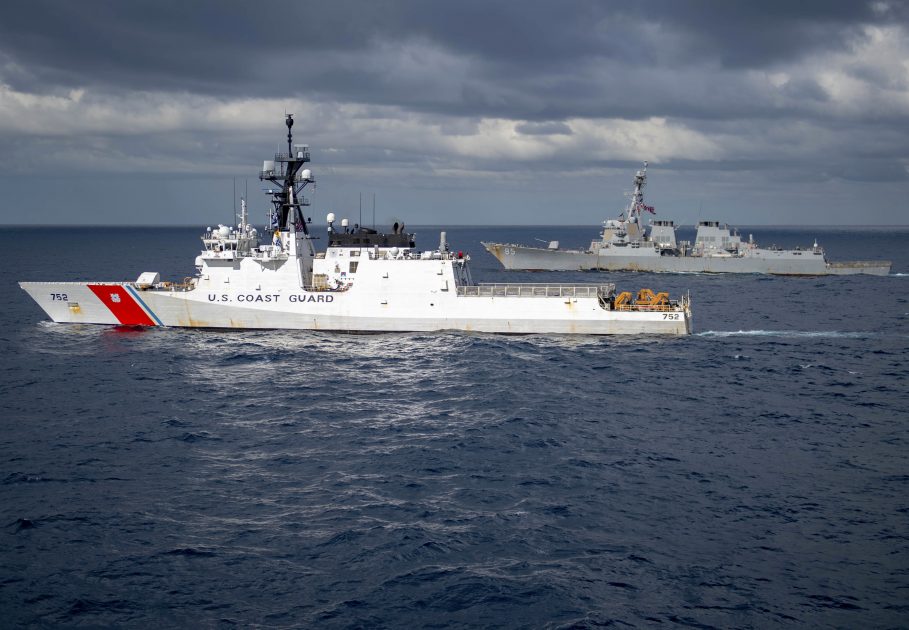
USCGC Stratton (WMSL-752), left, and the U.S. Navy Arleigh Burke-class guided-missile destroyer USS McCampbell (DDG-85) maneuver in formation during Talisman Sabre 2019 on July 11, 2019. US Navy Photo

American Military News reports, “Coast Guard cutter changes command in Honolulu en route to South China Sea.”

I don’t think there is anything unexpected or surprising here, but it does provide a good overview and perspective on what the five Pacific Area cutters of this class have been doing.

It also notes another ship of this class, USCGC “Kimball is currently dry-docked at Pacific Shipyards International in Honolulu Harbor for its first maintenance period since it first arrived in Hawaii in 2018.”

“Coast Guard Cutter Kimball returns home following Western Pacific patrol” –CG News

Following is from the Coast Guard News Page. Not only does this show the increasing cooperation between the US and Japan coast guards, it also explains how a Barbers Point H-65 made it to Guam. (“U.S. Coast Guard, Guam Fire Department conduct rescue hoist training in Guam” –Forces Micronesia / Sector Guam)

March 14, 2023

Coast Guard Cutter Kimball returns home following Western Pacific patrol

HONOLULU — The Coast Guard Cutter Kimball (WMSL 756) and crew returned to their Honolulu homeport, Friday, following a 42-day, 10,000 nautical mile Western Pacific patrol.

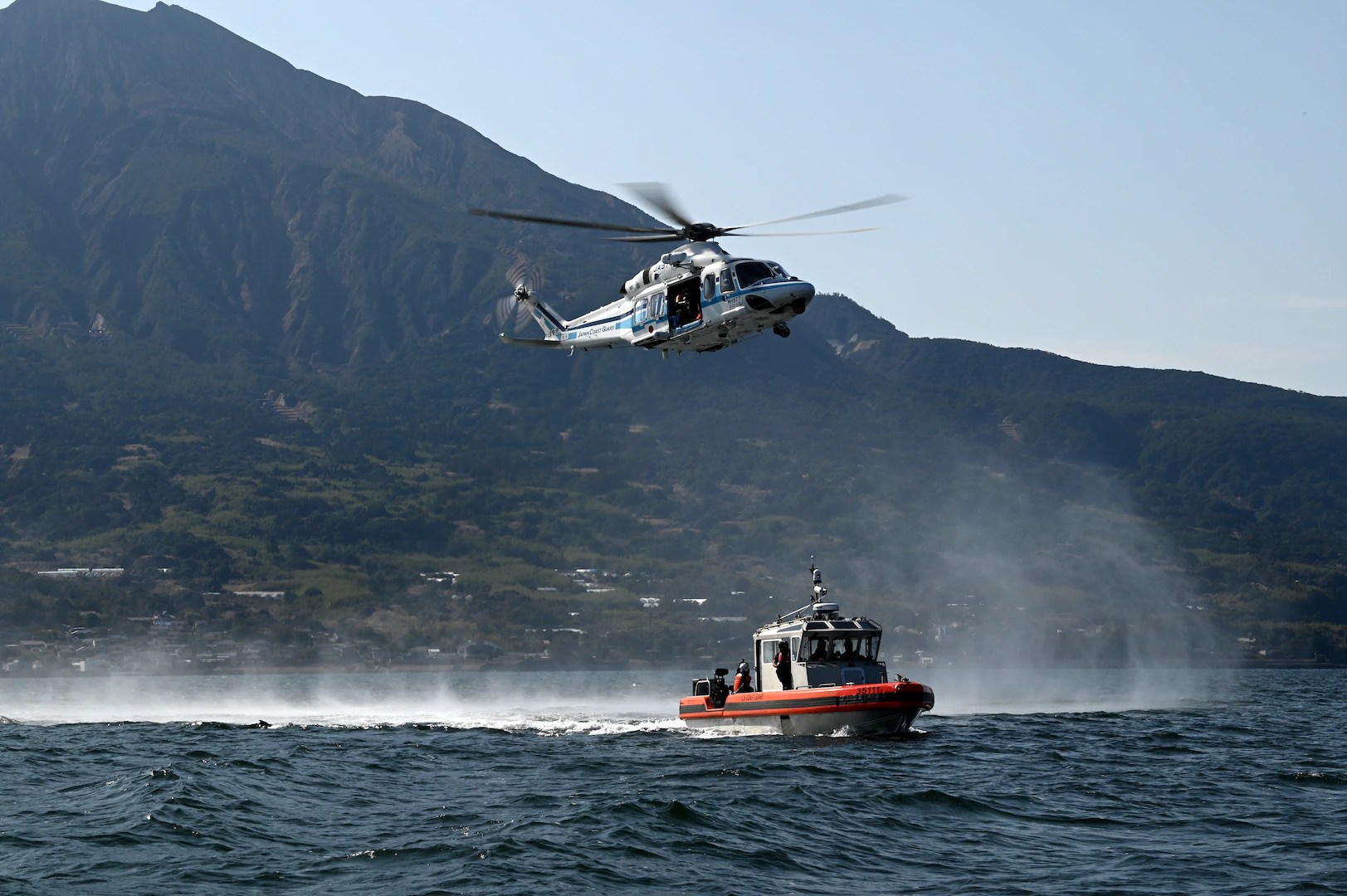
Kimball was the first U.S. military ship in recent history to visit the port city of Kagoshima, Japan, where the crew partnered with servicemembers from Japan Coast Guard’s 10th District to plan and conduct combined operations and search-and-rescue exercises.

Kimball’s crew met with Japan Coast Guard senior leadership and hosted Japan Coast Guard servicemembers, U.S. Consulate Fukuoka staff, community leaders and local media aboard the cutter during the port visit in support of Operation SAPPHIRE.

Operation SAPPHIRE is a joint agreement between the U.S. and Japan Coast Guards signed in 2022 for enhancing cooperation between the two sea services. SAPPHIRE is an acronym for the ‘Solid Alliance for Peace and Prosperity with Humanity and Integrity on the Rule of law-based Engagement.’

“By collaborating with Japan Coast Guard members and conducting evolutions that enhanced communication and inter-operability during the patrol, the crew continued to strengthen a solid foundation for the positive and productive relationship with the maritime service of a like-minded nation,” said Captain Tom D’Arcy, Kimball’s commanding officer.

Kimball’s crew demonstrated proficiency in the ship’s aviation program by working with an air operations inspection team to conduct a biennial Shipboard-Aviation Standardization Inspection (AVSTAN). By achieving their AVSTAN certification, Kimball can continue deploying with aviation detachments during future patrols.

Kimball also supported U.S. Coast Guard efforts to increase its presence in the Indo-Pacific. Kimball’s crew delivered a MH-65 Dolphin helicopter from Air Station Barber’s Point to Santa Rita, Guam, to enable forward operations that extend the service’s air coverage in the region.

During the patrol, the cutter’s engineering department was presented with the Rear Admiral R. S. Lucas Plaque Award for their outstanding contributions to the Coast Guard’s naval engineering program. Members from Kimball’s engineering department were cited for excellence and ingenuity during recent patrols and for completing three extensive industrial periods encompassing significant maintenance, contractual repair projects, and casualty repairs valued at over $4.4 million.

“I am extremely proud of our crew’s accomplishments,” said D’Arcy. “Kimball continues to remain on the front lines of the Coast Guard’s strategic plan. Our engagements in Japan strengthened our existing relationships with international partners who uphold good maritime governance. Kimball’s patrol re-affirmed the U.S. Coast Guard’s commitment to facilitating a free and open Indo-Pacific.”

Commissioned in 2019, Kimball is the Coast Guard’s seventh national security cutter and one of two homeported in Honolulu. National security cutters are 418-feet-long, 54-feet-wide and have a displacement of 4,500 long-tons. With a range of 12,000 nautical miles, the advanced technologies of Legend-class national security cutters are designed to support the national objective to maintain the security of America’s maritime boundaries and provide long range search-and-rescue capabilities.

“New Sonar For Navy Frigates Could Turn Any Ship into Submarine Hunter, Maker Says” –Defense One

Combined Active Passive Towed Array Sonar, CAPTAS-4 in operation from a French Frigate. There are also smaller/lighter versions of the sonar. 

Defense One reports on a presentation at Surface Navy Association,

 “At the Surface Navy Association conference in Arlington, Virginia, this week, the company showed off a video of the technology being installed on a commercial ship within 48 hours, turning the vessel into an anti-submarine “asset,” Bock said.”

While mounting the sonar on merchant ships might be useful, wouldn’t it make sense to mount it first on Coast Guard National Security or Offshore Patrol Cutters that could also host an anti-submarine helicopter and are already equipped with Navy compatible secure communications?

On a cutter or a merchant ship there is the question of who would man it? Every year trained personnel, including sonar technicians and ASW helicopter flight crews, leave the active-duty Navy and become part of the Reserve. Upon mobilization, they can be recalled to active duty to man these systems.

“USCGC Hamilton to return home following historic transatlantic deployment to Baltic Sea” –LANTAREA

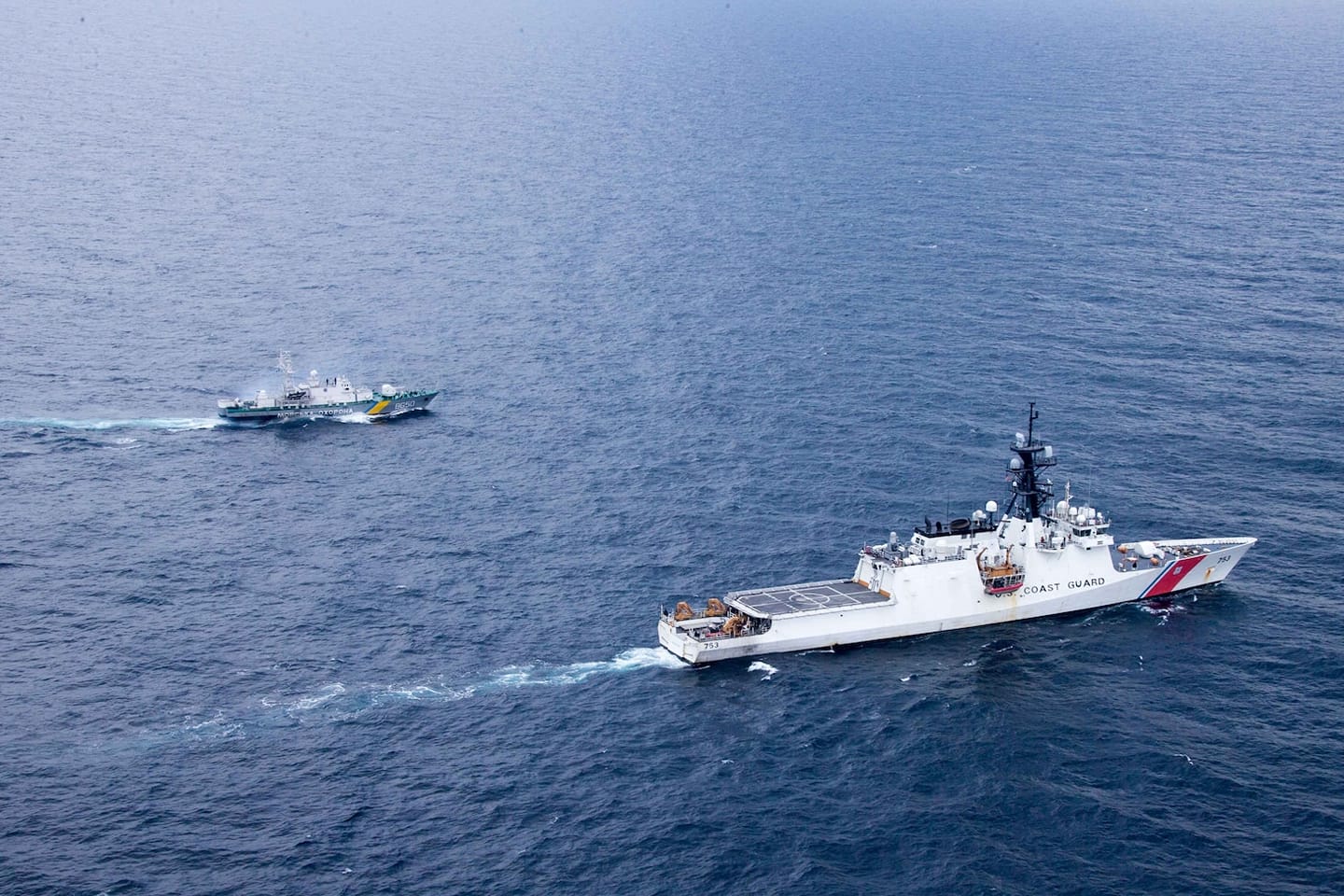
USCGC Hamilton and Ukraine CG during a previous European deployment, May, 2021

Below is an Atlantic Area news release reporting a very non-traditional deployment, but it is not the first time Hamilton has been deployed in support of 6th Fleet.

If you click on each of the photos below, each will allow you to see other photos from the deployment. Altogether, there are 26 photos.

Media Advisory

U.S. Coast Guard Atlantic Area

USCGC Hamilton to return home following historic transatlantic deployment to Baltic Sea

USCGC Hamilton Over the Horizon Cutter Boat Swedish Coast Guard vessel Amfitrite

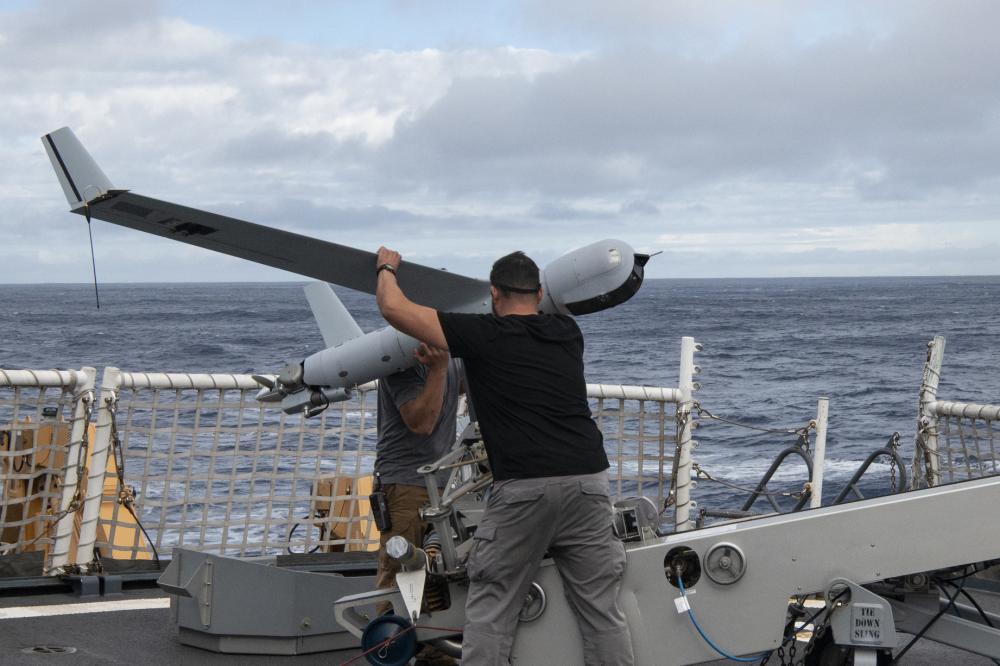
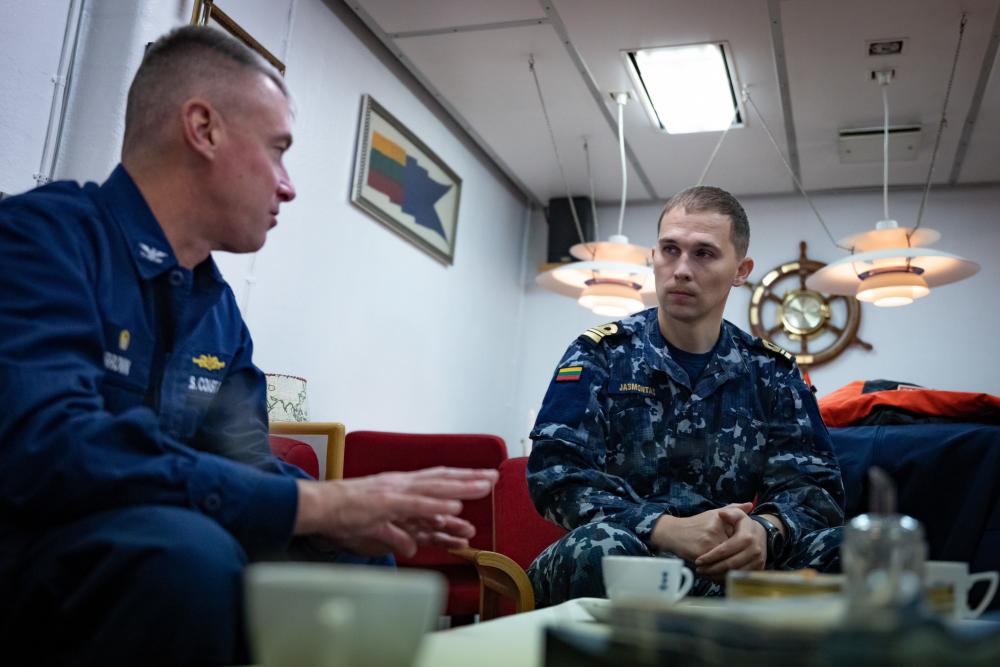
ScanEagle UAS Lithuanian Naval Officer Finnish Border Guard’s Special Intervention Unit

Editors’ Note: To view more or download high-resolution imagery, click on the photos above.

NORTH CHARLESTON, S.C. — The crew of the USCGC Hamilton (WMSL 753) is scheduled to return to their homeport in North Charleston Wednesday following a 94-day deployment in the U.S. Naval Forces Europe – Africa area of operations in support of U.S. Sixth Fleet.

WHO: Capt. Matthew Brown, commanding officer of Hamilton, and members of the crew

WHAT: Hamilton’s commanding officer and crew members will be available for interviews with interested media after they return home following 94-day Baltic Sea deployment in support of U.S. Sixth Fleet

WHEN: 2 p.m. Wednesday

WHERE: Federal Law Enforcement Center, 2000 Bainbridge Ave., North Charleston, South Carolina, 29405

Editors’ Note: Interested media are requested to RSVP by emailing a list of members’ names to ensure base access at D05-SMB-LANT-092P@uscg.mil or call PA2 Brandon Hillard at (757)-614-9755 no later than 2 p.m. Tuesday. Credentialed media are asked to arrive no later than 1 p.m. Wednesday with a driver’s license and proof of insurance in order to be processed through security. 

While deployed, Hamilton conducted at-sea exchanges with naval, coast guard and border guard forces of multiple Baltic Sea Allies and partners, including Sweden, Finland, Estonia, Latvia and Lithuania. Each engagement was oriented to support either traditional Coast Guard missions, or in combination with defense readiness exercises, used to enhance interoperability between the U.S. and NATO partners.

Hamilton’s deployment demonstrated the strategic value of conducing meaningful at-sea engagements, subject matter exchanges and port visits with Allies and partners in the high northern latitudes and Baltic Sea region. The U.S. maritime services regularly operate with partner nations to cultivate a cohesive force to maintain freedom of the seas, ensure free economic exchange and maintain maritime security.

Hamilton is a 418-foot, Legend-class national security cutter. With its robust command, control, communication, computers, intelligence, surveillance and reconnaissance equipment, the NSC is the most technologically advanced ship in the Coast Guard’s fleet. NSCs are a worldwide deployable asset that supports the Department of Homeland Security, Department of Defense and national objectives to include drug interdiction, migrant interdiction, national defense, search and rescue, fisheries enforcement and national intelligence collection.

“Media Advisory: Coast Guard cutter to return home following 97-day multi-mission Arctic deployment” –PACAREA

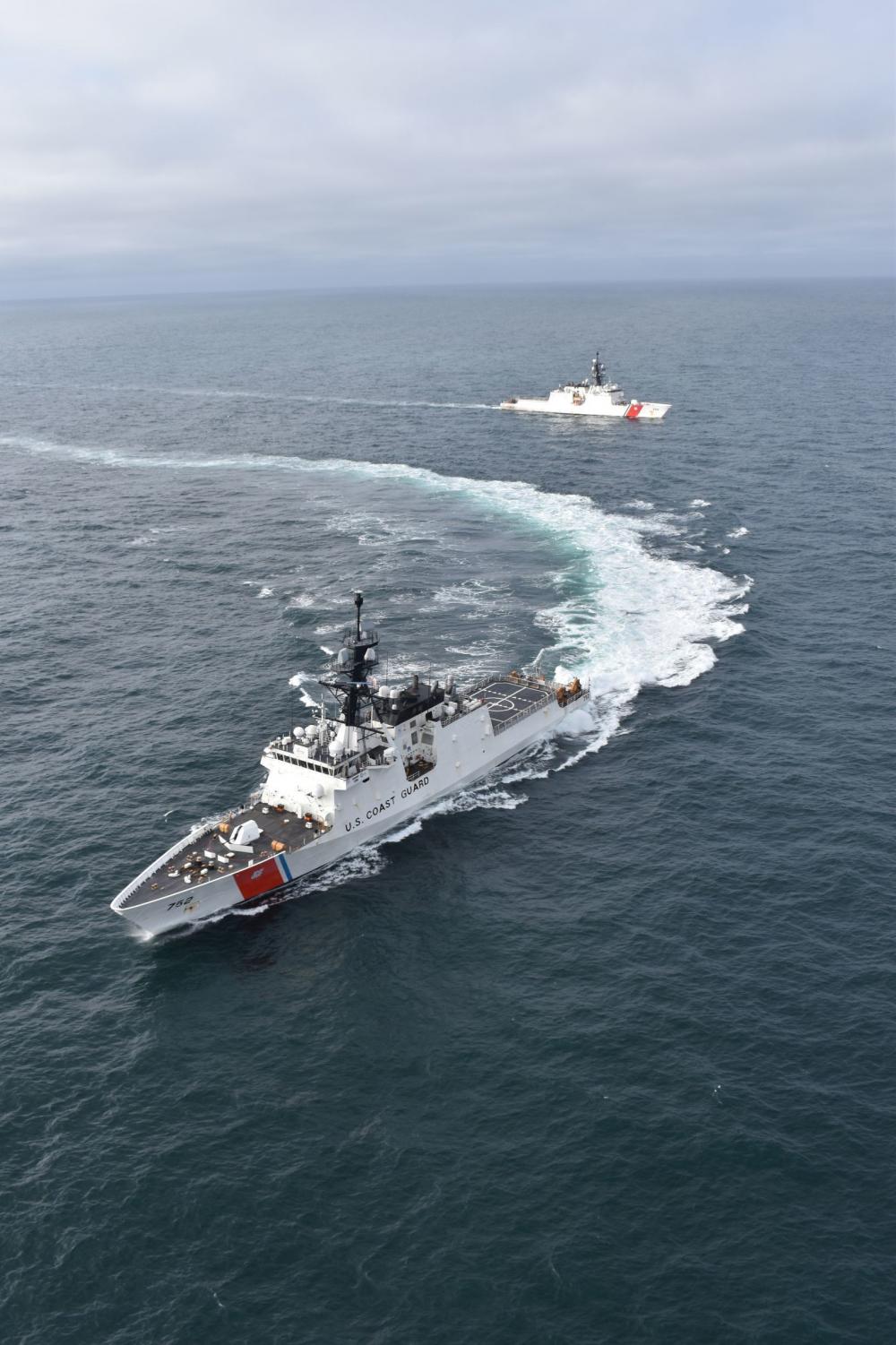
U.S. Coast Guard Cutters Stratton (WMSL 752) and Kimball (WMSL 756) steam in formation while patrolling the U.S.-Russian Maritime Boundary Line (MBL), in the Bering Sea, Sept. 26, 2022. This marked the first time two national security cutters jointly patrolled the MBL above the Arctic Circle. (U.S. Coast Guard courtesy photo).

This isn’t like the Alaska Patrols I went on, which concentrated on the Aleutians/Bering Sea and never went much North of the Arctic Circle. This patrol went across the top of Alaska and apparently, this is getting to be more common.

Media Advisory

Nov. 22, 2022
U.S. Coast Guard Pacific Area

Media Advisory: Coast Guard cutter to return home following 97-day multi-mission Arctic deployment

Coast Guard cutter returns home following 97-day multi-mission Arctic deployment

USCGC Stratton conducts operations offshore Little Diomede, Alaska Coast Guard cutter returns home following 97-day multi-mission Arctic deployment USCGC Stratton conducts flight operations while underway in Arctic Ocean

Editors’ Note: Click on images to download high resolution version.

Who: U.S. Coast Guard Cutter Stratton (WMSL 752) and crew

What: Return home from multi-mission Arctic deployment

When: Wednesday, Nov. 23, 2022 at 9 a.m.

Where: Coast Guard Base Alameda, 1 Eagle Rd., Alameda, CA, 94501

ALAMEDA, Calif. — The Coast Guard Cutter Stratton (WMSL 752) and crew are scheduled to return to Alameda, Wednesday, following a 97-day multi-mission deployment to the Arctic Ocean and Bering Sea.

The cutter and crew departed Alameda in August to project U.S. sovereignty throughout U.S. Arctic waters, provide search-and-rescue capabilities in the region, meet with Alaskan communities and conduct an Arctic search-and-rescue exercise with international partners.

Stratton operated along the length of the U.S.-Russian maritime boundary line (MBL) from the Diomede Islands to well above the Arctic Circle, while they patrolled within the U.S. Arctic zone. Stratton also patrolled the U.S.- Canadian MBL in the Beaufort Sea, providing Coast Guard presence in the distant regions of the Arctic.

“I’m extremely proud of this crew and all they have accomplished,” said Capt. Stephen Adler, Stratton’s commanding officer. “The U.S. Coast Guard provides the Nation’s most active and visible maritime presence in the high latitudes, and coordinates with our international partners through joint exercises and professional exchanges to maintain a safe and prosperous Arctic region. The Coast Guard remains ‘Always Ready’ to preserve and protect our northern shores and waters. As more ships and people move into the Arctic, the Coast Guard will be there to ensure safety of navigation and preserve our national sovereignty, as it always has. The crew has truly lived up to our ship’s motto of, ‘We Can’t Afford Not To’ throughout our patrol.”

Stratton is one of four 418-foot national security cutters (NSC) homeported in Alameda. National security cutters are capable of extended, worldwide deployment in support of homeland security and defense missions. These cutters and crews routinely conduct operations from South America to the Arctic, where the combination of range, speed, and ability to operate in extreme weather provides the mission flexibility necessary to conduct vital strategic missions.

Media are encouraged to contact Coast Guard Pacific Area Public Affairs at pacificareapublicaffairs@uscg.mil to arrange an escort on Base Alameda to attend the ship’s arrival. Adler and crew will be available for interviews following the ship’s arrival.