Extend Counter Piracy Efforts in the Indian Ocean to Include Other Maritime Governance Missions

With Piracy effectively suppressed in the Indian Ocean and the Gulf of Aden, the Australian Strategic Policy Institute is recommending that steps be taken to allow these forces to counter other international crimes beginning with drug smuggling.

There are a number of impediments to effective enforcement, but the study authors suggest there are also mechanisms in place that may make this effort mort effective.

Good maritime governance has been lacking in this region. If they could create, what would amount to an international Coast Guard with a supporting judicial system, it might also serve as a model for other areas such as West Africa, the Straits of Malacca, and the Caribbean.

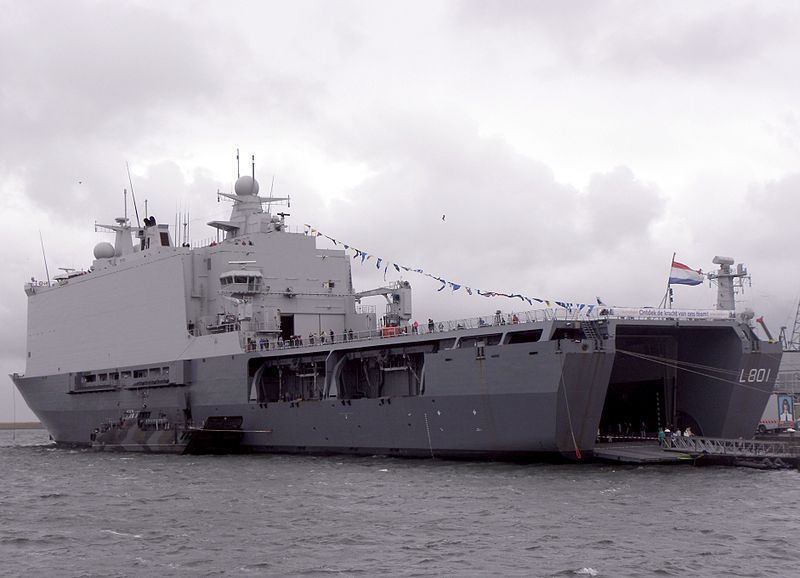
Dutch Mothership?

L 801 Johan de Witt Uploaded by Oxyman

L 801 Johan de Witt Uploaded by Oxyman

The following was reported by the German Navy blog Marine forum, “8 January, PIRACY–Anti-Piracy Forces: Sweden is preparing for another mission (M-04) in support of EU operation “Atalanta”, this time working jointly with the Netherlands navy … COMBAT BOAT 90 fast interceptor craft, helicopters and 70 personnel to embark on Netherlands Navy dock landing ship JOHAN DE WITT.”

As you may recall, I have advocated using WPCs supported by a mother ship to supplement the larger cutters for distant drug interdiction operations.

We have done cooperative counter drug operations with the Netherlands Navy in the past. Early last year, the Netherlands OPV Zeeland embarked both a CG LEDET and a CG helo det.

Perhaps we could run a test using the Johan de Witt or her sistership Rotterdam to try out the mothership concept. Their crew size is similar to that of the National Security Cutters (less than that of the Hamilton class), but they have berthing for hundreds more. They have aviation facilities for up to six helicopters. They can handle boats from both davits and a well deck. They have excellent Command and Control facilities.

“The ships have a complete Class II hospital, including an operating theater and intensive care facilities. A surgical team can be stationed on board.” That could make them welcome in a lot of ports.

Would the Dutch be interested? The Dutch Navy has already demonstrated its commitment to counter drug trafficing. They have used these ships several times for counter-piracy. Counter drug operations are not that much different, and piracy seems to be in decline. When it was being finished, there were reports that the Dutch wanted to sell the Johan de Witt. Operating off Latin America might be seen as an opportunity to demonstrate both this class and the Netherlands’ ship building expertise in an international market.

What might the experimental effort include. In addition to the mothership, perhaps three MH-65s, add a mix of Webber class WPCs, WPBs, Response Boat Mediums (RB-M), and Navy Riverine Command Boats (the US Navy version of the Combatboat 90).

In addition to its counter drug objectives, the deployment might be seen as a partnership station effort, training as well as working with the locals, and if there should be a natural disaster while they are in the area, it will be a ready made Coast Guard response.

CBP Drones not Meeting Expectations–DHS IG

FierceHomelandSecurity is reporting that the Department Inspector General (IG) has found that the U.S. Customs and Border Protection Agency’s eight year effort to use Unmanned Air Systems (UAS) commonly called drones, has failed to live up to expectations and should not be expanded finding that money proposed for expansion of the program “could be put to better use by investing in alternatives such as manned aircraft and ground surveillance.”

“Although CBP anticipated increased apprehensions of illegal border crossers, a reduction in border surveillance costs, and improvement in the U.S. Border Patrol’s efficiency, we found little or no evidence that CBP met those program expectations,” the report said.

The Coast Guard has been cooperating with CBP in evaluating use of land based UAS. According to the IG, CBP has failed to establish evaluation criteria, the drones are flying only 22% of anticipated flight hours, the cost per flight hour has been significantly underestimated, and the program has not demonstrated any improvement in capability.

Random Thoughts on CG Aircraft Missions

Hall PH-2
Photo: Coast Guard Hall PH-3 loads depth charges

This started as a response to a comment by JohnnieZ!, but it got to be too long, and perhaps too important a discussion to not to address more fully. The discussion revolved around:

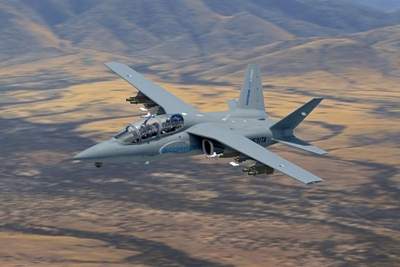
  • The Textron Scorpion, a light two seat jet marketed to the Coast Guard among others as an ISR (Intelligence, Surveillance, Reconnaissance) asset (really sort of a manned drone) but with the capability to carry light weapons.
  • Manned alternatives to the Coast Guards land-based UAV requirements.
  • The Coast Guard’s air intercept mission over Washington DC, now being done by H-65s.
  • The use of fixed wing aircraft with an Airborne Use of Force capability in support of Webber class as a substitute for larger cutters with embarked AUF helicopters.
  • The possibility of arming CG fixed wing aircraft in general.
Textron Scorpion

Textron Scorpion

As in many important discussions, there is no simple, obvious answer. I am sure Bill Wells will tell us the roots of this discussion go back to the formation of the Coast Guard’s first aviation unit. The Coast Guard has had a cultural divide between the surface ship side and the aviation side. While surface ships are commonly armed, the aviation side has been traditionally averse to weapons. This has changed somewhat since the advent of the airborne use of force mission, but for some Coast Guard aviators, weapons are still anathema. To some extent this is understandable. Weapons bring additional costs, security concerns, training and maintenance requirements, and a change of self-image.

We will talk about using fixed-wing aircraft, including the three types currently in service or planned (C-130s, C-144s, and C-27Js) as well as the Scorpion and the MC-12/KingAir 350 (an aircraft already in the Customs and Border Protection fleet) in four missions areas,

  • ISR (intelligence, surveillance, reconnaissance),
  • the DC intercept of general aviation aircraft,
  • airborne use of force for law enforcement, and
  • stopping a terrorist attack.

File:LR-2.JPG

Photo: JGSDF LR-2, A Beechcraft 350, Super KingAir,  Military designation C-12 Huron

ISR: Incorporating land based UAVs into the Coast Guard’s Maritime Domain Awareness system has proven a bit problematic, due to the requirement to sense and avoid regular air traffic, and the fact that they seem to crash more frequently than expected, making them perhaps more expensive than anticipated. We can of course do this mission with C130s, C-144s, or C-27s, but operating cost is relatively high. There may be a place for manned aircraft with relatively low operating costs, like the Scorpion or MC-12 to replace the unmanned systems. The problem with the Scorpion is, there is no head. It is faster than other Coast Guard aircraft, and if equipped with the right sensors, it could cover a lot of ocean relatively quickly, so  perhaps bladder endurance may not be a problem, but I can’t help but think that the King Air’s crew endurance, probably cruising at a lower altitude, is better. I don’t see the Coast Guard even considering the Scorpion unless it wins the competition for the Air Force’s new trainer, which would guarantee its supportability. None of these manned fixed wing aircraft have the potential of an MQ-4C. But then, if the US Navy is actually going to maintain surveillance of US waters, the Coast Guard many not need to do Maritime Domain Awareness ISR, just tap into Navy data.

The DC intercept: The problems with the current use of H-65s for intercepting general aviation aircraft that violate the standing airspace restrictions over the capital is that: (1) Many general aviation aircraft have a higher maximum air speed than the helicopter. (2) Even if the target is slower, the relatively slow speed of the helicopter may make achieving an intercept problematic. (3) If the aircraft is in fact hostile, the helicopter has to hand over the task of destroying it to an interceptor aircraft or missile battery introducing the possibilities of delays and misdirection.

The first questions that come to mind is, why is the Coast Guard doing this rather than the Marines, Army, or Air National Guard? And why only over DC? The Marines, Army, and, I believe, the National Guard have attack helicopters that appear more appropriate than an H-65. The Textron Scorpion might be even better, but there are other alternatives that are already in the US inventory. Other candidates include
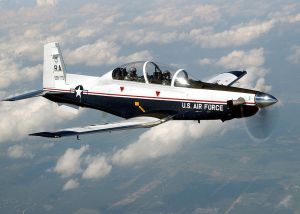
800px-T-6A_Texan_II

  • The  Beechcraft T-6A Texan II which is already in service with both the Air Force and the Navy as a trainer aircraft and has been modified as a light attack aircraft. It has a 100 knot speed advantage on the H-65.
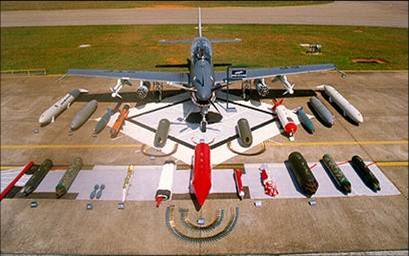
  • The similar, perhaps even more capable, Embraer A-29 Super Tucano now being  built in Jacksonville, Florida.
  • Even the MC-12 Super King Air looks like it would work better than the H-65 if equipped with an air to air weapon.
  • The H-144, if appropriately armed, would be capable, but probably is more expensive to operate.

Super_Tucano_Certified_w_over_130_weapon_configurations

Photo credit: Brazilian Air Force. Super Tucano, the type can handles more than 130 weapon configurations, including 70mm rocket launchers, air-to-air missiles and laser-guided bombs, totally integrated into the aircraft’s mission system, with a laser designator

As far as I know, Coast Guard helicopters are not prepared for air to air combat. Even if we used the existing airborne use of force package, while the .50 caliber sniper rifle might be useful, we certainly don’t want a Coast Guard aircraft shooting a manually aimed machine gun at another aircraft over heavily populated areas.

Airborne use of force for law enforcement: In the Webber class cutters, the Coast Guard has an asset that can perform many of the missions normally expected of a medium endurance cutter, including drug and migrant interdiction, but they do not enjoy the advantage of organic aviation assets. There is no helicopter to augment their search, to chase down high speed contacts, or to use force to compel them to stop. When boardings are performed, they have neither a second boat nor an armed helicopter to provide over-watch as their boarding team approaches a suspected trafficer.

Certainly, shore based aircraft can be used to augment their search, but when it is time to compel a high speed contact to stop what are the options? We could almost certainly mount a heavy machine gun system controlled by an electro-optic device. There are gunship versions of all the aircraft the Coast Guard expects to operate that include electro-optic targeting and roll-on/roll-off palletized gun systems (Harvest Hawk (C-130), MC-27J Praetorian, and AC-235 (CN-235/HC-144)). But would it be accurate enough to do disabling fire as is done by helicopter airborne use of force units? Even if not, the armed over-watch function might be worth doing. Would we have lost BMC Terrell Horne III if the smuggler had known an armed aircraft was supporting Chief Horne’s RHIB? We could probably use a lighter .50 cal. rather than a 25 to 40mm gun, but we might want to have the option of the larger weapon for other reasons.

Stopping a terrorist attack: It is a fair question to ask why the Coast Guard should do this rather than the Army, Navy, Marines, or Air Force? After all, the Army maintained coastal defense fortifications from the founding of the republic until the end of WWII. Until recently the Navy had bases all along the coast with forces organized into Naval Districts (1903-1980) and during WWII they organized the Naval Districts into operational commands called “Sea Frontiers” (1941-1970s) that provided maritime security. The Air Force and Marines certainly also have assets that are capable of performing the mission.

In 1984 the Maritime Defense Zones were established with Coast Guard Area Commanders as third echelon Navy commands. They were primarily intended to counter Soviet forces, but realistically, their concern was always unconventional attacks. When the Soviet Union broke up, the commands appeared to have lost their rational and they were inactivated. But as we found out 9/11, the threat of unconventional attacks remained, and in fact may be increasing. My personal feeling is that the MARDEZ commands should be active at all times.

While the Coast Guard may not have the “Coast Defense” mission in law, the way the Army does, Ports, Waterways and Coastal Security (PWCS), is one of the eleven statutory missions called out in the Homeland Security Act of 2002. If for no other reason than the fact the service is called the Coast Guard, there is some expectation that the Coast Guard will actually guard the coast, at least against unconventional attack.

In some ways the Coast Guard is well positioned to do this. DOD forces concentrate on being forward deployed. When they come back to the US, they stand down, train, and reorganize. Generally they do not have ready crews and ships, boats, or aircraft on standby 24/7. Additionally repeated base closures have resulted in concentration of forces in only a few locations, leaving many ports far from military installations. The Coast Guard on the other hand, has assets and crews that are widely distributed geographically and are either on patrol of on standby ready to react.

As far as I can tell the Coast Guard has relied on its boats, equipped with machine guns to deter or respond to terrorists attacks by small craft, and relies on intelligence and its large cutters and perhaps assistance from other services to deal with threats employing larger vessels.

Should we have the option of arming our fixed wing aircraft? The Coast Guard never used to arm its helicopters or boarding parties, but a need was seen, and it is now routine. Flying armed all the time cuts into the aircraft’s performance reducing speed and range and increasing fuel consumption. Arming aircraft takes time. Weapons require additional training, maintenance, and personnel, and as the weapons become more sophisticated their security raises increasing concern. Still there may be times when it would be desirable to have an armed response, to support units that are inadequately armed, or to respond in cases where surface units are unable to reach the scene in a timely fashion. Guns fired from aircraft also have the advantage of firing down on their target, which is less likely to result in collateral damage than shots fired horizontally from surface units.

Capabilities: We might say, there are five levels of capability we could consider.

  1. Fire warning shots.
  2. Disable small vessels (e.g., the ability to destroy an outboard motor).
  3. Deadly force against exposed individuals.
  4. Stop or sink small vessels
  5. Stop or sink medium to large vessels

The first three levels of force are resident in our airborne use of force helicopters now, and if we wanted to replicate the capability in fixed wing aircraft supporting Webber class cutters, it may be possible to do so with a single gun system, perhaps no larger than .50 cal. This modification might also satisfy the need for a system to intercept general aviation aircraft that might prove hostile after violating airspace over DC.

While the fifth capability, the ability to forcibly stop or sink a medium or large vessel, is probably beyond any reasonable adaptation of the Coast Guard’s existing aircraft, there is at least one adaptation that might allow it to deal with small vessel (up to perhaps 100 tons) with a high degree of confidence, and larger vessels with at least some possibility of success (think “Hail Mary”) with minimum impact on the aircrafts’ structure or other capabilities.

The Marines’ Harvest Hawk modification to their C-130 tankers now includes a modification called the Derringer Door, that allows the aircraft to launch precision guided weapons like the unpowered, gravity-dropped, 33 pound, 43 inch long, Griffin A, from inside the aircraft without depressurizing.  Use of this system against a moving target would require laser designation provided either by the aircraft or perhaps a unit on the surface.

Harvest_HAWK_Derringer_Door

Photo: Interior of Marine Corps KC-130J , with the Derringer Door modification. In the foreground is a rack for up to ten precision guided munitions. On the left is the modified Paratroop door with two tubes that allow these munitions to be dropped from the aircraft without depressurizing.

“Infrastructure protection, resource competition among Arctic warming concerns, says State’s Papp”

FierceHomelandSecurity is reporting testimony by former Commandant, Admiral Papp in his new role as U.S. Special Representative for the Arctic at the State Department.

The melting of the permafrost that Adm. Papp mentions, is one reason the Coast Guard will not be establishing much in the way of permanent, shore-based infrastructure in the Arctic.

Protecting the Exclusive Economic Zone–CIMSEC

CIMSEC is taking a week to look at Ship Design and one of their first posts deals with Offshore Patrol Vessels. It is a two parter. You can read it here and here.

The posts include an extensive bibliography and notes that some might find interesting. This is the information on the author, “Dr. Alexander Clarke is our friend from the Phoenix Think Tank in the United Kingdom and host of the East-Atlantic edition of Sea Control.”

“The Fleet we Have, Want, and Need – with Jerry Hendrix,” Midrats

Sunday there will be a streaming live interview that some of you might find interesting. It is on a podcast called Midrats. There is an opportunity to contribute to the discussion both by phone and using an online discussion tool. It would not hurt to have a little Coast Guard representation there as well to clarify how he sees the role of the Coast Guard in the National Fleet. If you miss it on Sunday, it is archived on line or you can pick it up on itunes. You can also find the connection through the USNI blog or through the Eaglespeak blog.

Below is a quote in full of the program description. I don’t think they will mind my passing it along.

Please join us at 5pm EST on 9 Nov 14 for for Midrats Episode 253: “The Fleet we Have, Want, and Need – with Jerry Hendrix”

What is the proper fleet structure for the USN as we design our Navy that will serve its nation in mid-Century?

Join us for a broad ranging discussion on this topic and more with returning guest, Henry J. Hendrix, Jr, CAPT USN (Ret.), PhD.

Fresh off his recent retirement from active duty, Jerry is a Senior Fellow and the Director of the Defense Strategies and Assessments Program at the Center for a New American Security (CNAS).

A Naval Flight Officer by training, his staff assignments include tours with the Chief of Naval Operation’s Executive Panel (N00K), the Office of the Undersecretary of Defense for Policy (Force Development) and the OSD Office of Net Assessment.

His final position in uniform was the Director of Naval History.

Hendrix also served as the Navy Fellow to the Weatherhead Center for International Affairs at Harvard University. He has a Bachelor Degree in Political Science from Purdue University, Masters Degrees from the Naval Postgraduate School (National Security Affairs) and Harvard University (History) and received his doctorate from King’s College, London (War Studies).

He has twice been named the Samuel Eliot Morison Scholar by the Navy Historical Center in Washington, DC, and was also the Center’s 2005 Rear Admiral John D. Hays Fellow. He also held the Marine Corps’ General Lemuel C. Shepherd, Jr. Fellowship. He authored the book Theodore Roosevelt’s Naval Diplomacy and received a number of awards, including the United States Naval Institute’s Author of the Year and the Navy League’s Alfred T. Mahan Award for Literary Achievement.Listen in here (or use that link to pick the show up later) or visit us on iTunes.

More Lessons Learned, “Guardians of the Gulf: A History of Coast Guard Combat Operations in Support of Operation Iraqi Freedom, 2002-2004”

1024px-USCGC_Adak

Photo: USCGC Adak, part of Patrol Forces, South West Asia, note extra machinegun mount behind the pilothouse. Click on the photo to enlarge.

Not long ago we talked about the need to preserve lessons learned from atypical (usually military) Coast Guard operations like participation in the Vietnam War or operations in South West Asia. Craig Allen Jr. brought to my attention a LANTAREA historian’s publication, “Guardians of the Gulf: A History of Coast Guard Combat Operations in Support of Operation Iraqi Freedom, 2002-2004” (pdf) by William H. Thiesen, PhD, June 2009

Regarding the deployment of WPBs the study noted, “Even though the Coast Guard served a similar mission in Vietnam, there existed no operational plan to provide guidance for OIF planning and preparations.

If the Coast Guard does not yet have a contingency plan for deployment of patrol vessels there is enough detail to make a fair start on a checklist of things to be done. The experience of the WPBs deployed to the Mediterranean can leave little doubt of the Webber Class’ ability to go almost anywhere, given time to avoid bad weather.

“On May 14, the five cutters (one 378 and four 110s–Chuck) began the return trip; however, this time the smaller cutters followed Dallas across the Atlantic rather than riding on board an MSC vessel. The 5,000-mile voyage set a record as the longest transit ever completed by a 110-foot cutter. The PATFORMED fleet had performed its escort and MIO mission admirably. Moreover, the WPBs in the Mediterranean and the Arabian Gulf had set records for hours of operation with some of them deploying for over thirty days of operation.”

For the future, there might be some advantage in organizing at least a few of the Webber class in deployable divisions (3 units) and squadrons (six units) as discussed earlier, with or without augmentation since there will be several location with three or more WPCs.

C4ISR Upgrades Unfunded, Impacting Operations–DHS IG

FierceHomelandSecurity is reporting that the DHS Inspector General has found reduced funding CG funding for C4ISR upgrades has had an adverse effect on operations.

The Homeland Security Department’s inspector general said these aircraft and ships will continue to rely on obsolete technology that will also cost more to operate and maintain. And the Coast Guard hasn’t addressed how and when it will implement these upgrades in revised plans…For example, some older cutters use surface search radar systems that contain almost two-decade old technology, which should’ve been replaced 10 years ago, the report said. In another example, the Coast Guard was planning to upgrade aircraft that use 1990s video and sensor technology to provide surveillance and other functions…”For example, Coast Guard personnel aboard one legacy cutter reported experiencing problems with a malfunctioning surface search radar system, including the need to reboot the system several times a day and system breakdowns while at sea,” the report said…The IG also said that certain aircraft system’s video and mission processor overloads and must be restarted, which could take 30 minutes, if operators try to update a common operating picture with large amounts of data.

New Mission off Somalia?

gCaptain is reporting, “The United Nations Security Council authorized naval inspections of ships off Somalia’s coast and beyond suspected of carrying illegal weapons and charcoal, a commodity that generates millions of dollars a month in revenue for militants linked to al-Qaeda.”

Possibly there will be some Coast Guard involvement in the form of detachments on US Navy ships and conceivably with the 110 foot WPBs operating out of Bahrain.

Unfortunately, it appears, that if inspections are done, it will be in a haphazard fashion. The expectation is that the ships already in the Indian Ocean doing counter piracy will also do this. But really, the places the ships need to be to do these inspections is different from where they need to be to respond to piracy attacks, because innocent ships avoid the Somali coast. The place to intercept smugglers is close to the Somali coast.

This is the kind of operation the Coast Guard specializes in. It is essentially no different from drug or migrant interdiction. It is what the Coast Guard did in Vietnam as part of Markettime.

If the Coast Guard had some built in excess capacity to respond to contingencies, they could take on this sort of operation.

The entire US Navy is excess capacity to respond to contingencies. It is not built for routine peacetime operations. It would not be a bad thing for those that decide the budgets to see building a capable Coast Guard as the same sort of insurance.