New French Friends in the Caribbean Neighborhood

French Navy Guyana-based Light Patrol Vessel PLG La Confiance is Now on Active Duty

French Navy PLG light patrol vessel La Confiance in combined anti-drug training with US Coast Guard Cutter Winslow Griesser. French Navy picture.

NavyRecognition reports,

“The “La Confiance” PLG (Patrouilleur Léger Guyanais or French Guyana-based Light Patrol Vessel) is now on “Active Duty” and able to conduct operational missions following a ceremony held April 27th…”

It is the first of two small ships of a new class designed specifically for service in the French Atlantic EEZ in the Western Hemisphere. The size is a bit unusual.

They will replace two P400 class patrol craft currently based in French Guyana. The P400s are about the same size as the Webber class “Fast Response Cutters.”

The French do not have an ocean-going coast guard like ours, so their navy does many of the functions performed by the USCG. The new ships make an interesting comparison with the Webber class; I think they even look a bit alike. In many ways the PLG corresponds to what I suggested earlier as cutter X:

…taking the crew and equipment of a Webber class Fast Response Cutter (FRC) and putting them in a larger hull with more endurance and seakeeping, while accepting lower top speed than the FRC.

Comparing the “La Confiance” PLG to the FRCs:

  • Displacement: PLG 700 tons; FRC 354 full load
  • Crew: 24, same for both, PLG can also accomodate 14 people, special forces for example.
  • Dimensions: PLG  60 m (197 ft) x 9.50 m (31.2 ft) x 3.2 m  (10.5 ft); FRC 46.8 m (154 ft) x 8.11 m (26.6 ft) x 2.9 m (9.5 ft)
  • Power: PLG 6,000 KW (8,046 HP), FRC 8,600 KW (11,600 HP)
  • Speed: PLG 21, FRC 28
  • Range: PLG 3,500 nmi at 12 knots, FRC 2,950 at 14 knots
  • Endurance: PLG 12 days; FRC 5 days
  • Boats: PLG two, FRC one

La confiance PLG patrol vessel french navy 1

French Navy La Confiance PLG light patrol vessel arriving in Fort-de-France, Martinique. Picture: E.Mocquillon © Marine nationale

More from the builder here.

If They Ditch the LCS, Perhaps the OPC as Frigate

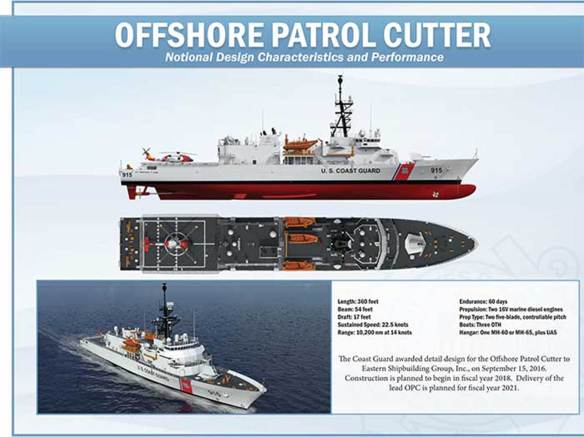
OPC “Placemat”

Criticism of the Littoral Combat Ship Program continues unabated, with additional fuel thrown on the fire by a series of machinery casualties. With the new administration indicating they will take a look at existing programs, looking for savings, at the same time they are seeking a much larger fleet, it seems likely the LCS program will get a second look. After initially choosing to base the new frigate, on one of the LCS designs, it now appears the Navy is willing to look at other hulls.

Perhaps the Offshore Patrol Cutter (OPC) might be considered.

  • It is larger than either of the two LCS designs.
  • It cost less–about half as much.
  • It is built to ABS Naval Vessel Rules.
  • It is likely that anything that can be added to the LCS can be added to the OPC.
  • It has two to three times the range and endurance.
  • It can operate in heavier seas.
  • It has 25% more generator capacity than the Freedom class LCS (unable to find info on the Independence class.)
  • It’s more spacious interior makes it easier to maintain.
  • It’s engineering plant is simpler and probably more reliable.
  • It’s efficient hybrid diesel/electric propulsion system permits much long loiter times.
  • It’s propulsion system is probably inherently quieter than the water jets used on the LCSs–an advantage for ASW.
  • It’s only real disadvantage is lower speed and that can be mitigated if necessary.

The GAO has recommended a two year hiatus.

LITTORAL COMBAT SHIP AND FRIGATE
Slowing Planned Frigate Acquisition Would Enable
Better-Informed Decisions

What GAO Found
The Navy’s vision for the Littoral Combat Ship (LCS) program has evolved significantly over the last 15 years, reflecting degradations of the underlying business case. Initial plans to experiment with two different prototype ships adapted from commercial designs were abandoned early in favor of an acquisition approach that committed to  numerous ships before proving their capabilities. Cost, schedule, and capability expectations have eroded over time, as shown in the table below. More recently, the Navy attributed a series of engineering casualties on delivered LCS to shortfalls in crew training, seaframe design, and construction quality.

Additionally there is Congressional opposition.

Sen. John McCain (R-Ariz.) plans to hold hearings on the Navy’s frigate program amidst calls to open the competition to more domestic and foreign designs.

“The frigate acquisition strategy should be revised to increase requirements to include convoy air defense, greater missile capability and longer endurance,” (emphasis applied–Chuck)

The high speed requirement has resulted in ships with water jet propulsion systems that are inappropriate for ASW escorts, ships that have relatively short range and poor seakeeping. These characteristics make the ships less capable of independent operation and helicopter launch and recovery in rough weather, particularly for the mono-hull Freedom class. The Aluminum hull, trimaran Independence class has great aviation facilities and a bit better range and cruise speed, but its aluminum hull raises survivability issues.

The Navy now sees that they need a frigate and they chose to meet this requirement using a modified LCS, but the LCS has notable weaknesses that mean it may not have been the best choice. In addition now it seems they see a need for local area airdefense that was not initially considered  According to a recent DefenseNews report, 

“A study group called the Requirement Evaluation Team (RET) has been formed to examine how to add a local air defense capability to the frigates to protect Combat Logistics Force ships – the supply and support ships that bring fuel, ammunition, spare parts and food to warships at sea. The frigate design as currently envisioned is armed with anti-missile and anti-aircraft missiles, but only to protect itself.

“The goal, according to a draft document, is – at a minimum – to double the loadout of Evolved Sea Sparrow Missiles (ESSM) Block 2 from 8 to 16 or incorporate a Mark 41 vertical launch system with at least 8 Standard SM-2 missiles. The SM-2 is one of the primary anti-air weapons carried by the fleet’s Aegis destroyers and cruises.

“…We’re looking at further increases to survivability, and we’re looking at endurance, pushing the envelope. And as always we’re going to balance that against technical risk and cost.”

Additionally it now appears they may be more expensive than previously reported.

A frigate based on the Offshore Patrol Cutter could be a cheaper and, in many respects, superior alternative.

WHY DO WE NEED FRIGATES AND WHAT SHOULD BE ITS CHARACTERISTICS?

A nation chooses to build frigates rather than destroyers because it needs numbers. They choose to build a frigate rather than smaller corvettes because they want longer range and better sea-keeping.

If you are looking for numbers, it make no sense to build a frigate that cost 75% that of a Burke Class DDG and provides only 50% of the capability. We can’t build enough of them without impacting other programs. The Europeans are making ships like this, but they are not intended to complement destroyers like the Burke class, they are intended to replace them. They are the premier warships of their respective navies.

In navies that actually have destroyers, frigates tend to be around 4,000 tons full load, The Chinese Type 054A are reportedly 4053 tons full load and the Russian Admiral Grigorovich class 4,035 tons full load. South Korea’s Incheon batch II class frigates will be 3,592 tons full load. Japan has recently announced that they will be building two 3,000 ton frigates a year instead a single 5,100 ton destroyer annually (whether this is full load displacement or something less is not clear). The very numerous Oliver Hazard Perry (FG-7) Class were about 4,200 tons full load. While no final official figure has been published, the Offshore Patrol Cutters are also expected to be about 4,000 tons. Any significant modification is likely to make them displace as much or more than the Perry class. 4,000 tons is already larger than any US Navy destroyer of World War II and would have been considered a light cruiser in WWI

Small warships are not the answer for open ocean escort either. When escorting large ships, a small escort may be unable to keep up, regardless of its nominal maximum speed. I had access to the USCGC Duane’s war diary and was a bit surprised to learn that there were instances when, because of weather, the 2,300 ton, 20 knot cutter was out running smaller 1,300 ton World War One design destroyers that were nominally capable of 35 knots. Smaller ships also tend not to have sufficient range for more than theater coastal operations.

WHY NOT BASE A FRIGATE ON AN LCS DESIGN?:

In some respects the LCS look appropriate for conversion to frigates. They are not too small, but are notably cheaper than the Burke class DDGs, and their crews are much smaller than the more than 300 member crew of Burke class destroyers. They are a little smaller than most modern frigates, 3,500 tons for the Freedom (LCS-1) and 3,100 tons for the Independence (LCS-2) class. Unfortunately, the original concept of a very high speed, shallow draft, forward based, modular vessel specializing in Littoral combat has resulted in compromises that make them a poor basis for an Open Ocean Escort Vessel.

The high speed requirement has resulted in crowded machinery spaces that make access for underway repair difficult. They have short legs, likely generate a lot of noise, and are reportedly weight critical.

PRICE COMPARISON:

The last contract for two LCS ran about $550M each. The award to Eastern for construction of up to nine Offshore Patrol Cutters (OPC) if all options are exercised is $2.38B. That is only $264.4M per ship. Additionally the Coast Guard contract includes a warranty that requires the builder to fix construction errors while the Navy contracts require the Navy to pay for correction of construction faults.

“Upgrading” the existing LCS designs to fill the frigate mission may exacerbate their existing problem with range. A post from Warisboring.com notes:

“The frigate will also be slower than the standard LCS and have shorter range. (emphasis applied–Chuck) All in all, the frigate version “was the least capable option considered” by the Navy out of several alternatives, the report stated.”

It goes on to note,

“But it was the cheapest and quickest to produce … which is the whole point. The Navy is desperate to get ships under construction as older vessels age out. The sailing branch currently fields 274 deployable warships — well under its goal of 300.”

The root of the problem is the LCS’ lightweight building materials — aluminum—and its size and unorthodox shape. In other words, it simply and physically cannot ever be as survivable as an older FFG 7, or Oliver Hazard Perry-class frigate.

The GAO notes:

A minor modified LCS could not be modified to the level of vulnerability resistance of the FFG 7 due to LCS weight and design constraints that would prevent adding more physical structure. For example, Navy task force officials told us that approximately 200 tons of additional weight in steel would need to be accommodated in the LCS seaframe designs if the Navy wanted to upgrade it from commercial build standards to more robust, Navy-like specifications like those used for FFG 7. Task force officials told us that this weight increase would have required a major modification to the LCS design or a new ship design.

PAYLOADS vs PLATFORMS:

When Admiral Greenart wrote his seminal article, “Payloads over Platforms: Charting a New Course,” published in the July 2012 US Naval institute Proceedings, he said, “We need to move from “luxury-car” platforms–with their built-in capabilities–toward dependable “trucks” that can handle a changing payload selection.”

The LCS are not really luxury cars, but they are sports cars–high strung, expensive to maintain, with outstanding capabilities over a limited range of activities but perhaps impractical for many purposes. The greater the payload you attempt to stuff into them, the less appropriate they appear to be.

Certainly not a sports car, the OPC, by contrast, is an “F-150 pickup,” simple, practical, easy to maintain, with a spacious interior, and fast enough for most purposes, and with optional horsepower upgrades possible if you really want it faster. Recently it seems the required payload is being increased to include 16 anti-ship cruise missiles (ASCM) and either 16 ESSM or an 8 cell Mk41 to provide a degree of AAW protection for ships escorted.

OTHER THAN BEING CHEAPER, DOES THE OPC HAVE ANY ADVANTAGES?: 

Actually the Offshore Patrol Cutter enjoys several advantages:

Range: The range we see quoted for the OPC, 10,200 nmi is far more than the 3,500 and 4,300 given for the Freedom and Independence classes respectively. The ranges for the LCS classes is quoted for 18 knots while the range for the OPC is for 14 knots so the range difference is not as great as it may first appear, but even at 18 knots it is likely the OPC will have a range of over 6,500 nmi. That means the OPC will not have to break off operations to refuel as frequently as its LCS counterparts.

Endurance: The OPC is designed for 60 days endurance while the LCSs are only designed for 21 days. Again the OPC will not have to break off operations to replenish as frequently as its LCS counterparts.

Operations in higher sea states: The DHS considered the possibility of replacing OPCs with LCSs but noted that while the OPC is designed to operate both its boats and helicopter in seas up to 4 meters, the LCS was expected to operate boats only to 2.1 meters and helicopters to 3.7 meters.

Quiet Operations for ASW: The water jet propulsion chosen for the LCSs work well at high speed but are relatively noisy and less efficient at low speeds. Additionally the OPCs are designed with “Promas rudders” which are claimed to increase maneuverability, speed, and fuel economy while decreasing noise compared to a conventional propeller/rudder interface

MODIFYING THE OPC TO FULFILL THE FFG ROLE:

Even before the Requirement Evaluation Team recognized the need for greater air defense capabilities and greater endurance, it was anticipated that the LCS would require major redesign.Quoting a recent Seapower Magazine article “Features Shaping Up for Lockheed Martin’s Frigate Proposal for Navy“,

Patton expects the FF to retain the 118-meter length of the Freedom class, with a steel hull and an aluminum topside. The additional berthing and cooling requirements, along with other hull, mechanical and electrical enhancements, will involve approximately a 40-percent redesign of the ship.(emphasis applied–Chuck)

While I think the OPC could be made a credible warship with relatively few modification, it is likely that the Navy would want to make some changes which I will discuss later.

The OPC has the advantage of having already been designed for a larger crew. Unlike the LCSs, it provides accommodations for 126, very near the expected complement of an FFG.

ASCM and ASW  Installation: The OPC could likely support installation of 16 anti-ship cruise missiles (ASCMs)

Below is a Harpoon installation on a Ticonderoga class cruiser, which has a beam of 55 feet–only one foot greater than that of the Offshore Patrol Cutter. As you can see, moved over to the side, it would not require the entire fantail leaving room on the fantail for ASW equipment. There may also be some room for ASW equipment in the compartment below the fantail.

Below is the Harpoon installation on a 3,600 ton ANZAC class frigate, a smaller ship, which has a beam of 49 ft–five feet less than that of the Offshore Patrol Cutters. A similar installation could be made on the OPC on the O-2 deck between the gun mount and the bridge.
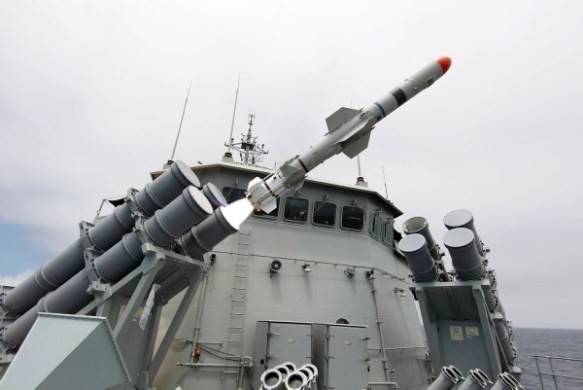
091104-N-3038W-255 GULF OF OMAN (Nov. 4, 2009) The Australian navy frigate HMAS Toowoomba (FFH-156)

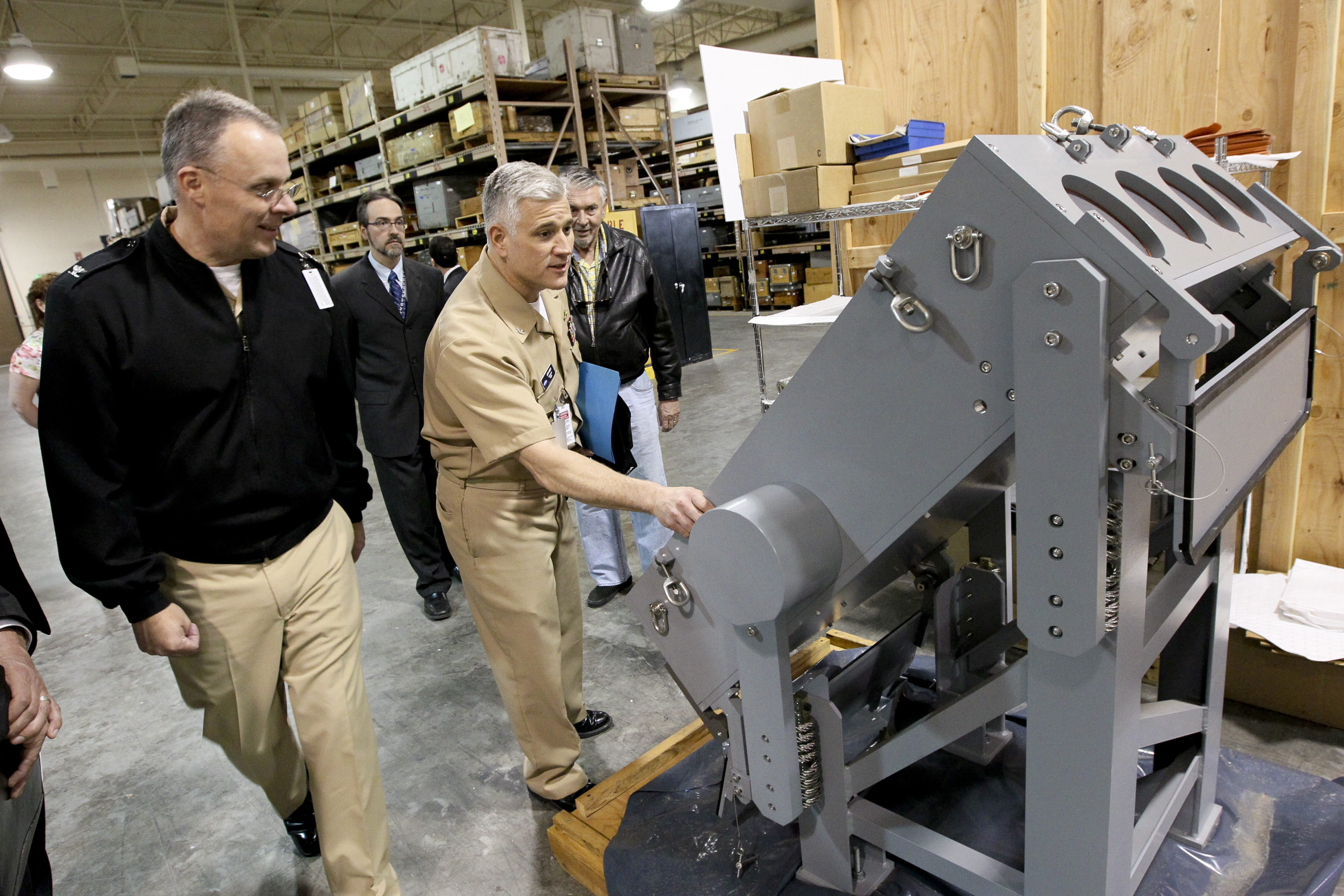
ESSM AAW missile installation: The Mk56 launch system provides a relatively light and structurally non-intrusive way to support the Evolved Sea Sparrow Missile System. The earlier and 25% heavier Mk48 system was used to provide up to 12 Sea Sparrow vertical launch missile tubes on the 450 ton full load, Danish Flyvefisken class STAN FLEX 300 vessels. The relatively small foot print of the Mk56 VLS system (pdf) can be seen below on a Danish Absalon-class command and support ship (beam 64 feet, ten feet more than the Offshore Patrol Cutter but they provide three twelve launch tube sets for ESSM). Two sets are visible in the foreground, one set of twelve with missile canisters with red tops in place to the right, on the ship’s centerline, and a second set of twelve without canisters to the left. A third set  is off camera to the right. 16 Harpoon launchers are seen in the background. It appears likely the OPC could support two twelve missile sets on the superstructure above the boat davits.
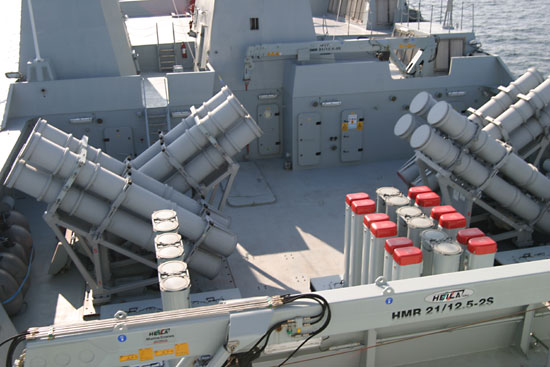
Photo below: Mk48 mod3 VLS for ESSM seen here mounted on the stern of a 450 ton 177 foot Danish StanFlex300 Flyvefisken class patrol boat.  Each tube could contain two, so this small installation could have provided 24 ESSM. The Mk56 launchers replace the Mk48s with an approximate 20% weight savings. (My wife tells me these look like port-a-potties.)

VLSLauncher_korvet

Replace the Mk38 mod2 with SeaRAM: Replacing the 25mm Mk38 mod2 atop the hangar with a SeaRAM would provide a stand alone missile system capable of defending the ship even if all power fails. Hopefully a second SeaRAM could also be provided forward as well.
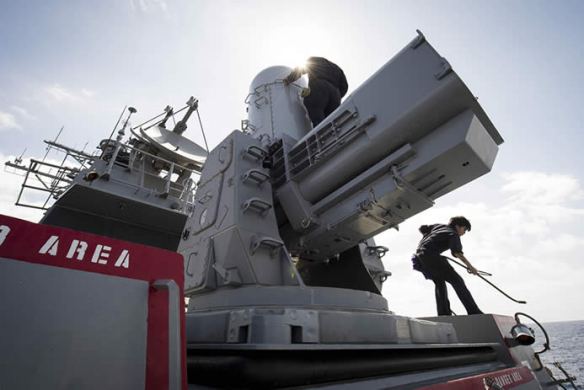
Without major structural changes I believe the OPC design could be adapted to support

  • an ASW system/multifunction towed array
  • 16 anti-ship cruise missiles (with possible land attack capability depending on the choice of missile)
  • 24 Evolved Sea Sparrow missiles
  • At least one, perhaps two, SeaRAM systems
  • Plus the planned 57mm Mk110

MAJOR DESIGN CHANGES:

The Navy may want to make additional changes including.

  • A bigger gun
  • More armor
  • Less self noise
  • Better radars
  • More Speed
  • More Missiles

These are all achievable at a cost.

Replace the gun: 

There has already been discussion about the desirability of replacing the 57mm on the LCSs. From the discussion it appears nothing larger would fit on the Independence class and nothing larger than a 76mm could fit on the Freedom class.

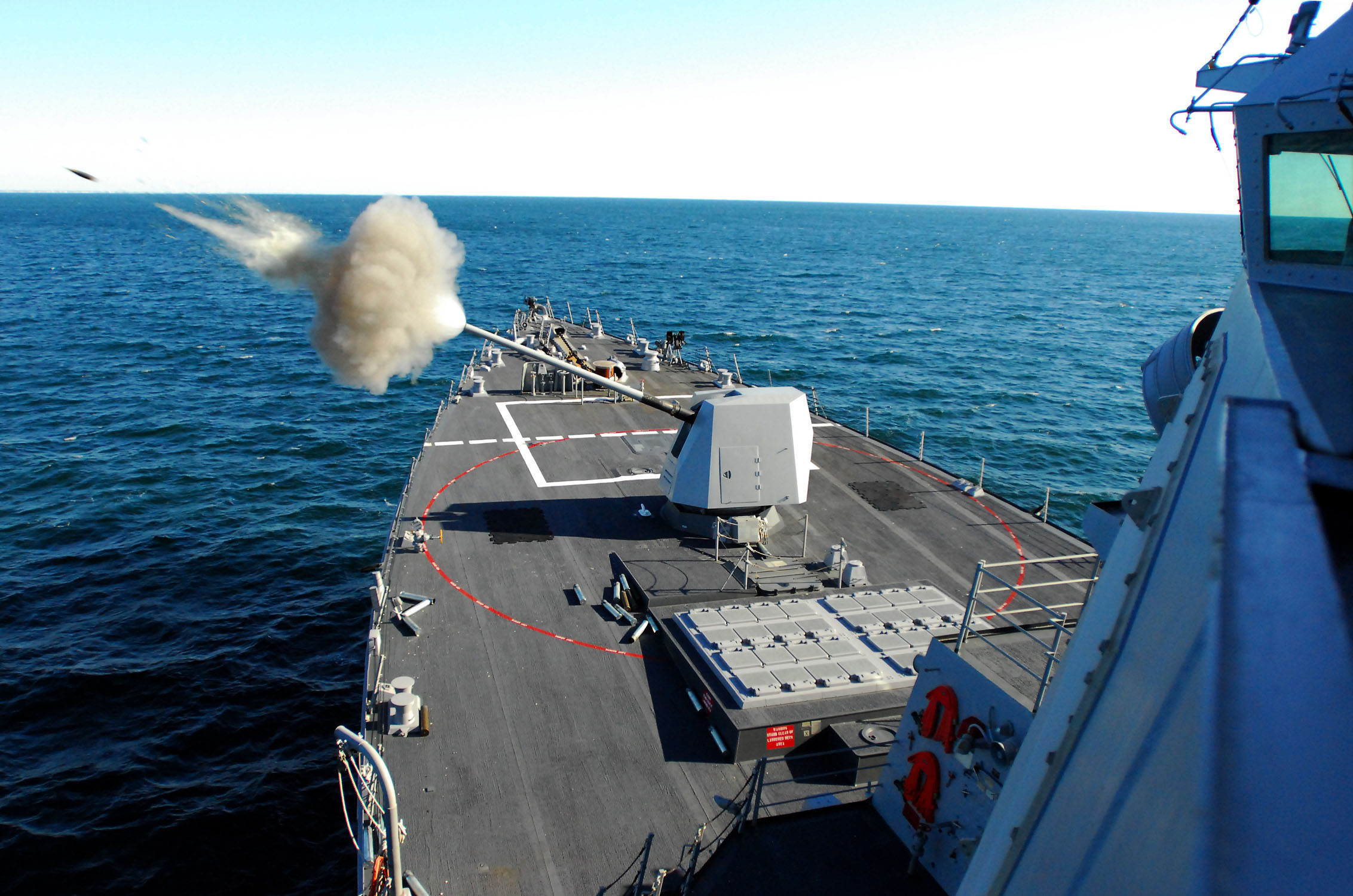
I see no reason why, given some strengthening of the structure, OPC based frigates could not be armed with the 5″/62 Mk45 mod4. This would provide much needed Naval Gunfire Support capability and potentially extended range guided projectiles. This is apparently not even an option for the LCS designs. 

The OPC’s 57mm Mk110 occupies some valuable real estate. If it is not replaced by a larger gun, it might be replaced a second SeaRAM system or a Vertical Launch missile system. If replaced by a missile system, it would likely be desirable to provide at least a pair of Mk38 mod3 mounts in place of the planned .50 caliber mounts.
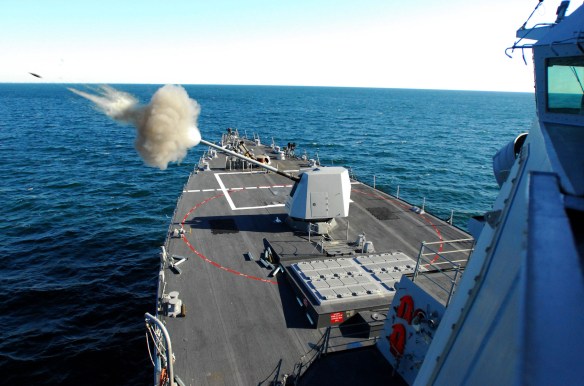
070111-N-4515N-509
Atlantic Ocean (Jan. 9 2007) – Guided missile destroyer USS Forest Sherman (DDG 98) test fires its five-inch gun on the bow of the ship during training. The Sherman is currently conducting training exercises in the Atlantic Ocean. U.S. Navy photo by Mass Communication Specialist Seaman Apprentice Joshua Adam Nuzzo (RELEASED)

Add armor: This is another area where a displacement hull like the OPC’s would not be as adversely effected by additional weight, than the more exotic hull forms of the LCSs.

Less Self Noise: Making less noise is always an advantage in ASW. The less crowded engine rooms of the OPC probably make providing additional isolation easier. In addition upgrading the hybrid propulsion motors to 1,000 HP, as was considered at one time, would allow the ship to make 13 knots on generators alone.

Replace the radar: The OPC, like the LCSs will have a multifunction radar. This could conceivably be replaced by a more capable radar, including perhaps a scaled down version of the SPY-6.

Extend the hull–for speed: The speed figure we have for the OPC is a sustained speed of 22.5 knots I presume this means that maximum speed in all but the most adverse conditions is about 24 knots. This is enough for most purposes. It will keep up with Navy Amphibs and is faster than most merchant ships, but most frigates tend to have a speed of about 28 knots. That would likely require doubling the horsepower. This could be done by extending the hull amidships about 10 meters (33 feet) to provide what I believe would be a third main machinery space. A gas turbine might be added and would probably boost speed to 29 knots or more, but instead adding two additional diesel engines of the type currently planned would most likely provide 27-28 knots without the complication of another type of engine.

Use the extended hull–for a missile farm: Additional length, added to increase speed, could provide space for additional vertical launch systems amidships. These could be Mk41 systems or the newer Mk57s like those used on the DDG-1000, which are heavier but safer and require less maintenance.

SUMMARY:

Because of its conventional hull and greater displacement it is likely anything that can be added to a LCS can also be added to an OPC. The OPC could likely accept even more additional weapons than either of the LCS designs.

The OPC already enjoys several advantages over the LCSs most notably much longer range.

Modifying existing LCS designs will still involve much work and considerable risk. The OPC may require substantial modification as well, but the OPC already has far more accommodation space and range than either LCS design.

Using the OPC as the basis for a new Navy frigate is likely to save at least $200M per ship compared with similar modifications to a LCS design.

Vigor Buys New Dry Dock

Vigor Seattle, WA Facilities

Vigor’s Seattle facility

Got a news release from Vigor which is quoted below:

SEATTLE, WASH. (April 17, 2017) Building on its ongoing investments in critical infrastructure and fulfilling a promise to customers to expand West Coast drydock capacity, Vigor has entered into an agreement to purchase a drydock from a Korean seller. At 640 feet long with a clear width of 116 feet, the new dock will be the third, and largest, at Vigor’s Harbor Island shipyard.

“The purchase of another drydock in Seattle allows Vigor to better service valued customers like Washington State Ferries, the U.S. Coast Guard and U.S. Navy,” notes Adam Beck, Vigor Executive Vice President of Ship Repair. “It also further strengthens our market position in commercial ship repair on the West Coast and supports our expansion into new markets.”

Beck and his team had been actively looking for the right drydock at home and abroad for a number of months. The one selected happened to be in Korea. The team is working to finalize the transaction and have the dock operational in Seattle by late Fall. Customer feedback to the news has been overwhelmingly positive.

“Washington State Ferries is greatly relieved and appreciative to hear of Vigor’s important investment in a new drydock for its Harbor Island/Seattle location. We have been concerned about the shortage of drydock availability for the maintenance and repair of our fleet,” said Matt Von Ruden, Director of Vessel Engineering and Maintenance, Washington State Ferries. “Regular maintenance is critical to our ability to achieve the expected service life of our vessels and keep them operating well for our customers.”

DRYDOCK PRINCIPAL CHARACTERISTICS:

Length: 640 FT, Clear Width: 116 FT, Lift Capacity: 20,000 LT

Vigor was not one of the five contractors awarded icebreaker design contracts, but this drydock could handle a very large icebreaker and Seattle is perhaps the most logical place to base them. In any case it will add to the maintenance capability in the Pacific NW.

Coast Guard’s National Security Role

The Coast Guard leadership has been hitting the Coast Guard’s National Security role pretty hard since the change of administration and the “skinny budget” scare.

Here is the Commandant’s latest pitch to “a roundtable of the Defense Writers Group, a nonprofit association of defense reporters.”

Like other service chiefs he is messaging that a continuing resolution would be a disaster.

“The good news is we are modernizing the fleet, but it’s that annual operating and maintenance account that you have to get very creative,” Zukunft said. “Where we’re seeing the most pain is we defer a lot of our shore maintenance; that backlog continues to grow.”
Zukunft said his greatest concern right now is to have budget certainty and not temporary funding measures; the current continuing resolution that funds the government runs through April 28.
“Maybe we’ll see a short extension of that, but if we don’t have an appropriation in 2017, I will have to shut down operations,” he said, adding that will affect readiness. “This is not the time to sideline any military service, including the Coast Guard, but that’s what a [continuing resolution] would do.”


To say we are in good shape in terms of modernization is at least optimistic, but perhaps the Commandant has some favorable indications from Congress. They do like things that add jobs. Still even if we start getting icebreakers the OPC is long overdue and I suspect that we may see the WMECs start failing at an ever increasing rate since we don’t expect full replacement of the fleet until about 2034. Building two a year is going to take too long.

Hybrid Propulsion News Release

We have a news release on the electric portion of the Offshore Patrol Cutter’s hybrid propulsion system. There is not a lot of specifics about the system, but it does provide a rationale for installation of this additional system in a ship that above all else is designed to be “affordable.” The news release is quoted in full below.

ARLINGTON, VA, April 13, 2017 ̶Leonardo DRS, Inc. announced today that it has been awarded a contract by Eastern Shipbuilding to provide hybrid electric drive systems for the U.S. Coast Guard’s new fleet of Offshore Patrol Cutters. The contract, for the first nine systems, is worth $10.7 million. Eastern Shipbuilding is the prime contractor and builder of these nextgeneration Offshore Patrol Cutters.

Under the contract, Leonardo DRS will provide its high-performance, permanent magnet motorbased Auxiliary Propulsion System. This integrated hybrid electric drive system provides capability for the ship to operate much more efficiently at slower speeds, increases mission duration capability, reduces emissions and provides emergency take-home capability in the event of a failure of the main propulsion diesel engines. When coupled to the main propulsion gearbox, the system allows the ship to operate quietly and efficiently during loitering operations while providing superior fuel economy for increased on-station operations and capability.

“DRS is a pioneer in naval hybrid electric drive technologies and we are proud to be able to deliver these advanced systems to the Coast Guard’s newest generation of ships,” said Dianne Howells, Vice President of Leonardo DRS Surface Ships business unit. “Our Auxiliary Propulsion Systems will give the crews of these new ships operational flexibility when they need it, while significantly increasing cost savings in yearly maintenance and fuel.”

The Auxiliary Propulsion System is designed and built by Leonardo DRS, a leader in naval hybrid electric drive propulsion technology. The system includes two of the most power-dense permanent magnet motors on the market today. They have significant advantages in size, weight, efficiency and performance over conventional electric induction motors and produce more torque from the same amount of supplied current. Their smaller footprint allows greater flexibility in engine room design and increased cargo space, and their simpler more rugged construction results in proven reliability and durability.

Using propulsion diesel engines at slow speeds adds significant wear and tear on the engines and increases the potential for coking/wet stacking. By adding this electric Auxiliary Propulsion System, the Coast Guard will have a built-in advantage of reducing not only fuel and maintenance requirements, but total lifecycle costs and increased safety for the fleet.

About Leonardo DRS Leonardo DRS is a prime contractor, leading technology innovator and supplier of integrated products, services and support to military forces, intelligence agencies and prime contractors worldwide. The company specializes in naval and maritime systems, ground combat mission command and network computing, global satellite communications and network infrastructure, avionics systems, and intelligence and security solutions. Additionally, DRS builds power systems and electro-optical/infrared systems for a wide range of commercial customers. Headquartered in Arlington, Virginia, DRS is a wholly owned subsidiary of Leonardo S.p.A., which employs more than 47,000 people worldwide. See the full range of capabilities at http://www.drs.com and on Twitter @drstechnologies. For additional information please contact: Michael Mount Senior Director, Public Affairs 571-447-4624 mmount@drs.com Twitter: @drstechnologies

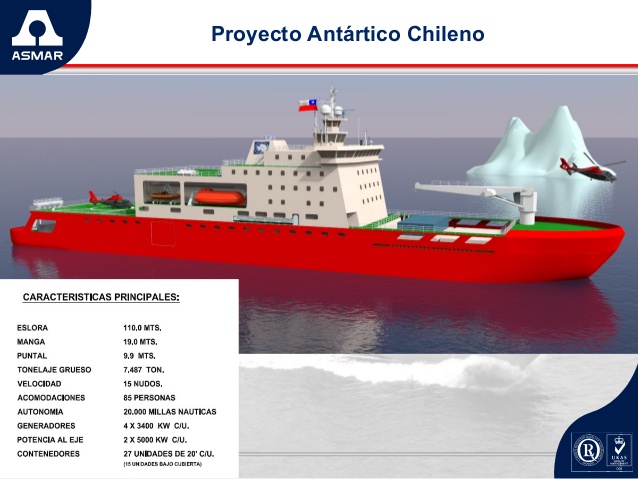
Fincantieri’s Icebreaker Design Team Emerges

Photo: VARD designed icebreaking supply vessel for Chile. 

MarineLog is reporting, “APRIL 6, 2017—Philly Shipyard, Philadelphia, PA, is teaming with Fincantieri Marine Group (FMG) to compete for the detail design and construction of the next generation heavy polar icebreaker for the United States Coast Guard (USCG).”

“Over the next year, FMG and Philly Shipyard, along with the naval architecture and marine engineering firm, Vard, will develop a baseline icebreaker design, cost estimate and project schedule and then refine them based on the results of the technical studies and corresponding feedback from the USCG.”

This is in response to a contracted awarded to five shipbuilders on Feb. 22, 2017, for preliminary design studies and analysis. Contracts were awarded to Bollinger Shipyards, LLC, Lockport, LA; Fincantieri Marine Group, LLC, Washington, DC; General Dynamics/National Steel and Shipbuilding Company, San Diego, CA; Huntington Ingalls, Inc., Pascagoula, MS; and VT Halter Marine, Inc., Pascagoula, MS, totalling approximately $20M.

Fincantieri is building a 9000 ton research icebreaker for Norway and Vard has designed an icebreaking supply vessel for Chile.

Admiral Papp Interviewed–OPC/Inland AtonN/Budget

Former Commandant, Admiral Papp, has been at the Sea-Air-Space EXPO representing Eastern Shipbuilding. He has given a couple of interviews, the one above and a second one here.

Of the two, I think the one you can view above is by far the more interesting, and his comments were not limited to the Offshore Patrol Cutter, discussing the inland tender fleet and the CG budget in general as well. There were a couple of notable details in the interview.

Admiral Papp stated explicitly that the expected crew size for the OPC would be 126 (I suspect this might actually refer to the planned accommodations rather than the crew). That is considerably more than the crew of the WMECs they replace. These ships are actually a third again larger than the 378s and much more capable than the ships they replace, so this should not be a great surprise. I do think this is more than the nominal crew of the National Security Cutter, although probably less than they actually sail with.

He also stated that the electric motors in the hybrid propulsion system would be good for at least nine and perhaps as much as 13 knots. All along I had assumed the hybrid system had been adopted as a means of meeting the range requirement, but since it is apparent they do not expect to be able to reach 14 knots using the electric motors, then the claimed range of 10,200 miles at 14 knots must be achievable using the Main Propulsion diesels. This suggest the range at lower speeds using only the ship’s service generators and electric motors may actually be considerably more.

Admiral Papp also suggested that there may be a possibility of exporting Eastern built ships because of its projected cost, well under $350M per ship.

Thanks to Luke for bringing this to my attention. 

Administration Considers Cancelling NSC#9

Stratton_111031-D-0193C-002

Stars and Stripes reports,

“President Donald Trump’s budget would eliminate a $600 million-plus state-of-the-art Coast Guard cutter that’s a priority of the powerful Republican chairman of the Senate Appropriations Committee.

“The proposal by Office of Management and Budget Director Mick Mulvaney is included in draft documents of the White House budget request. The documents, obtained by The Associated Press, ask the Department of Homeland Security to cancel its contract with Ingalls Shipbuilding, which is to construct the national security cutter at its shipyard in Pascagoula, Mississippi.”

This is of course the ninth Bertholf National Security Cutter. When funded, there was a loud outcry that the Coast Guard did not ask for it, which, because the Coast Guard leadership “supported the administration budget,” and failed to provide a list of unfunded priorities, was true, but the implication that we did not need it was not.

The unfunded priorities list has long been a sore point with me, here, here, here, and here. The Navy does one of these every year. The Congress asked for one from the Coast Guard every year. We can’t seem to get off our ass and provide one, or is it that the leadership is so cowed by the department that they are afraid to say what is needed?

The “Fleet Mix Study” showed the Coast Guard needed a ninth NSC to meet its statutory obligations and with its fleet rapidly aging and the Offshore Patrol Cutter program long-delayed, the Coast Guard is desperately in need of new ships. Terminating this ship at this stage would be very disappointing and a poor decision. But perhaps we have only ourselves to blame.

Innovation in the OPC’s Propulsion System

When I first read this report from MarineLink, what I concentrated on was the generator capacity to be included in the Offshore Patrol Cutter (OPC), four 1,000 KW generators. Second time around I noticed reference to “Promas rudders,” and was curious enough to look it up and found it very interesting.

Here is a short pdf from Rolls-Royce explaining the claimed advantages of this system in terms of increased maneuverability, speed, and fuel economy.

They also claim decreased noise. Anything that improves the hydrodynamic efficiency of a ship probably also cuts down on its self noise, so it and the hybrid propulsion probably make the ship potentially a better ASW platform.

To Recap:

The two main diesel engines will be 16V 28/33D diesel engines, each rated at 9,763 bhp

There will have a hybrid propulsion system provided by DRS Power Technology with a pair of electric motors connected to the reduction gears. I assume these will be good for at least the ships’ designated cruise speed of 14 knots.

Since we know that DRS makes a 1500kW (about 2,000 HP) that is made to be connected to the reduction gear, so that seems a likely candidate for the motors to be used on the OPC. A pair would provide about 4,000 HP which should provide at least 14 knots.

My Unfunded Priority List

An earlier post reported a plea by Representative Duncan Hunter, Chair of the Transportation Subcommittee on Coast Guard and Maritime Transportation, for the Coast Guard to provide an unfunded priority list to include six icebreakers and unmanned Air System.

Thought perhaps I would list my own “unfunded priorities.” These are not in any particular order.

PLATFORM SHORTFALLS

Icebreakers: We have a documented requirement for three heavy and three medium icebreakers, certainly they should be on the list. Additionally they should be designed with the ability to be upgraded to wartime role. Specifically they should have provision for adding defensive systems similar to those on the LPD–a pair of SeaRAM and a pair of gun systems, either Mk46 mounts or Mk38 mod 2/3s. We might want the guns permanently installed on at least on the medium icebreakers for the law enforcement mission. Additionally they should have provision for supporting containerized mission modules like those developed for the LCS and lab/storage space identified that might be converted to magazine space to support armed helicopters.

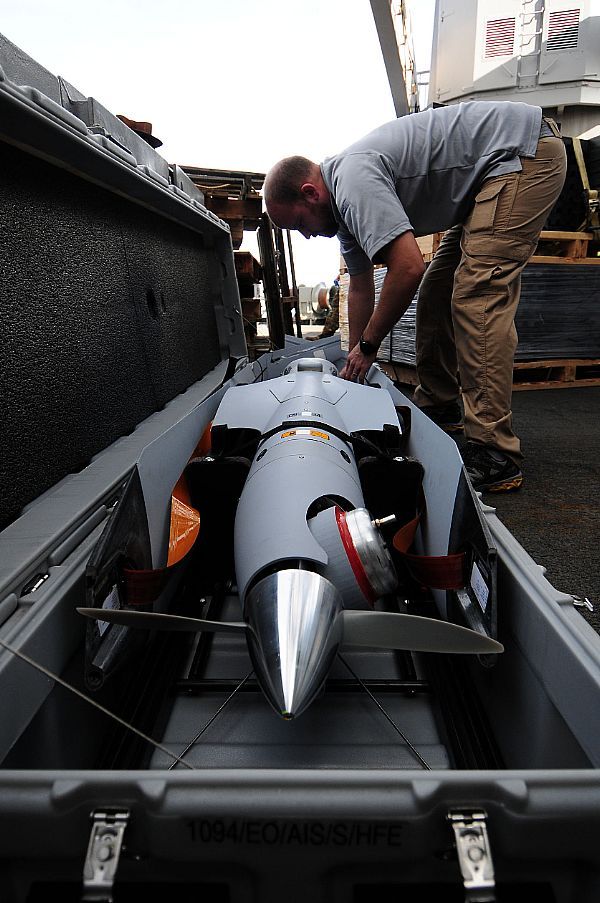
110225-N-RC734-011 PACIFIC OCEAN (Feb. 25, 2011) Guy Mcallister, from Insitu Group, performs maintenance on the Scan Eagle unmanned aerial vehicle (UAV) aboard the amphibious dock landing ship USS Comstock (LSD 45). Scan Eagle is a runway independent, long-endurance, UAV system designed to provide multiple surveillance, reconnaissance data, and battlefield damage assessment missions. Comstock is part of the Boxer Amphibious Ready Group, which is underway in the U.S. 7th Fleet area of responsibility during a western Pacific deployment. (U.S. Navy photo by Mass Communication Specialist 2nd Class Joseph M. Buliavac/Released)

110225-N-RC734-011
PACIFIC OCEAN (Feb. 25, 2011) Guy Mcallister, from Insitu Group, performs maintenance on the Scan Eagle unmanned aerial vehicle (UAV) aboard the amphibious dock landing ship USS Comstock (LSD 45). Scan Eagle is a runway independent, long-endurance, UAV system designed to provide multiple surveillance, reconnaissance data, and battlefield damage assessment missions. Comstock is part of the Boxer Amphibious Ready Group, which is underway in the U.S. 7th Fleet area of responsibility during a western Pacific deployment. (U.S. Navy photo by Mass Communication Specialist 2nd Class Joseph M. Buliavac/Released)

Unmanned Air Systems (UAS): We seem to be making progress on deploying UAS for the Bertholf class NSCs which will logically be extended to the Offshore Patrol Cutters. So far we see very little progress on land based UAS. This may be because use of the Navy’s BAMS system is anticipated. At any rate, we will need a land based UAS or access to the information from one to provide Maritime Domain Awareness. We also need to start looking at putting UAS on the Webber class. They should be capable of handling ScanEagle sized UAS.

File:USCGC Bluebell - 2015 Rose Festival Portland, OR.jpg

Photo: The Coast Guard Cutter Bluebell sits moored along the Willamette River waterfront in Portland, Ore., June 4, 2015. The Bluebell, which celebrated its 70th anniversary this year, is one of many ships participating in the 100th year of the Portland Rose Festival. (U.S. Coast Guard photo by Chief Petty Officer David Mosley.)

Recapitalize the Inland Tender Fleet: This is long overdue. The program was supposed to begin in 2009, but so far, no tangible results. It seems to have been hanging fire for way too long.

Expand the Program of Record to the FMA-1 level: The Fleet Mix Study identified additional assets required to meet the Coast Guard’s statutory obligations identifying four asset levels above those planned in the program of record. Lets move at least to first increment.

Alternative Fleet Mix Asset Quantities

————–POR       FMA-1      FMA-2      FMA-3       FMA-4
NSC                8             9                 9                 9                  9
OPC              25           32               43                50               57
FRC              58           63               75                80               91
HC-130         22            32               35                44               44
HC-144A       36            37               38                40               65
H-60              42            80               86                99             106
H-65             102         140             159              188            223
UAS-LB           4            19                21                21              22
UAS-CB        42            15                19               19               19

At the very least, looks like we need to add some medium range search aircraft (C-27J or HC-144).

Increase Endurance of Webber Class Cutters: The Webber class could be more useful if the endurance were extended beyond five days (currently the same as the 87 cutters, which have only one-third the range). We needed to look into changes that would allow an endurance of ten days to two weeks. They already have the fuel for it.

MISSION EQUIPMENT SHORTFALLS

Seagull_torpedo_trial_1

Ship Stopper (Light Weight Homing Torpedo): Develop a system to forcibly stop even the largest merchant ships by disabling their propulsion, that can be mounted on our patrol boats. A torpedo seems the most likely solution. Without such a system, there is a huge hole in our Ports, Waterways, and Coastal Security mission.

121211-N-HW977-692

Photo: SeaGriffin Launcher

Counter to Small High Speed Craft (Small Guided Weapon): Identify and fit weapons to WPB and larger vessels that are capable of reliably stopping or destroying small fast boats that may be used as fast inshore attack craft and suicide or remote-controlled unmanned explosive motor boats. These weapons must also limit the possibility of collateral damage. Small missiles like SeaGriffin or Hellfire appear likely solutions.

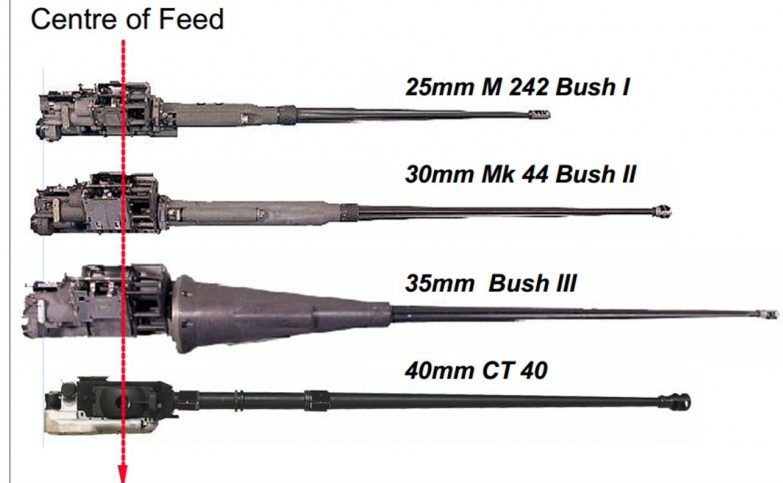
40 mm case telescoped gun (bottom) compared to conventional guns.

40 mm case telescoped gun (bottom) compared to conventional guns.

Improved Gun–Penetration, Range, and Accuracy: The .50 cal. and 25mm guns we have on our WPBs and WPCs have serious limitations in their ability to reach their targets from outside the range of weapons terrorist adversaries might improvise for use against the cutters. They have limited ability to reach the vitals of medium to large merchant vessels, and their accuracy increases the possibility of collateral damage and decreases their probability of success. 30, 35, and 40 mm replacements for the 25 mm in our Mk38 mod2 mounts are readily available.

Laser Designator: Provide each station, WPB, and WPC with a hand-held laser designator to allow them to designate targets for our DOD partners.

CONTINGENCY PLANNING SHORTFALLS

Vessel Wartime Upgrades: Develop plans for a range of options to upgrade Coast Guard assets for an extended conflict against a near peer.