“Hybrid Fleet Campaign Event Evaluates Technology For Future Operations” –4th Fleet

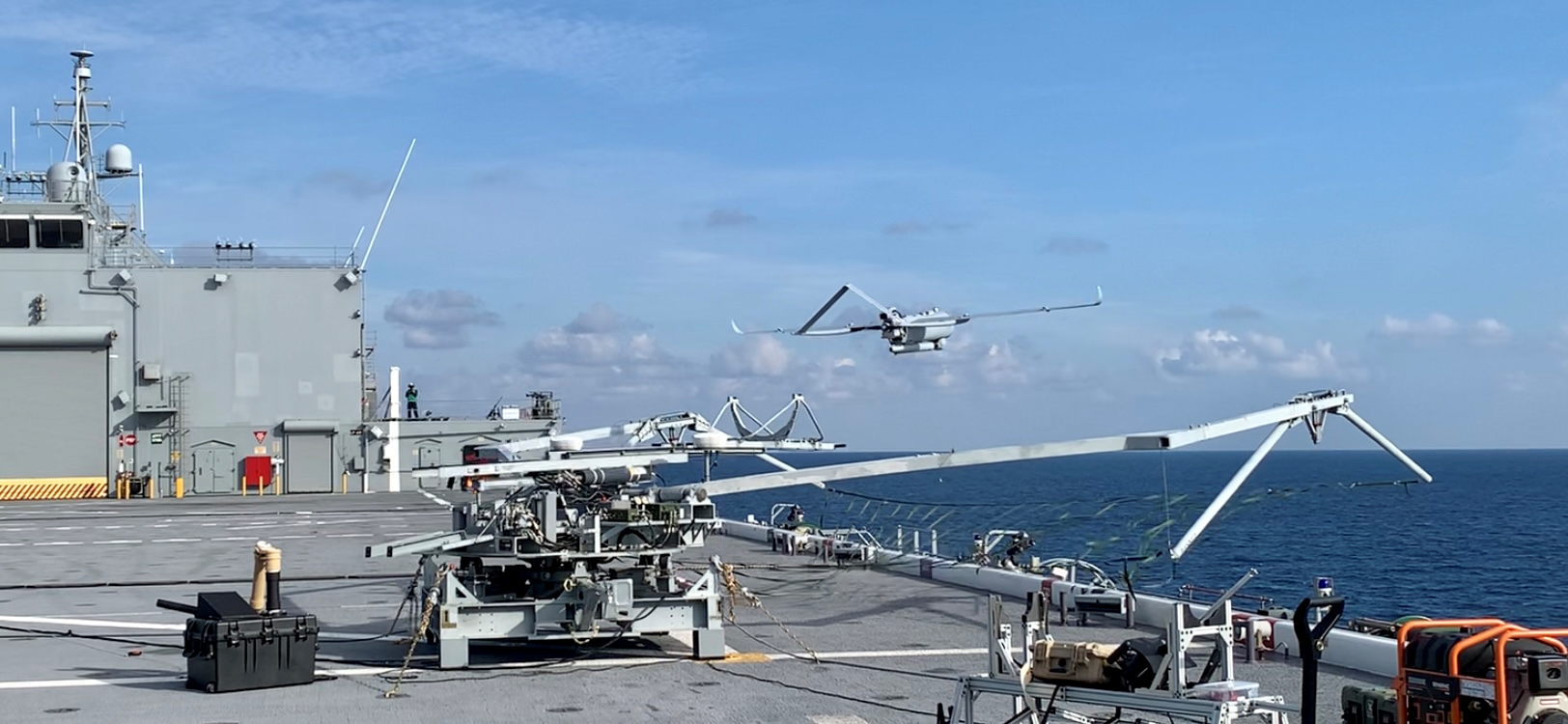
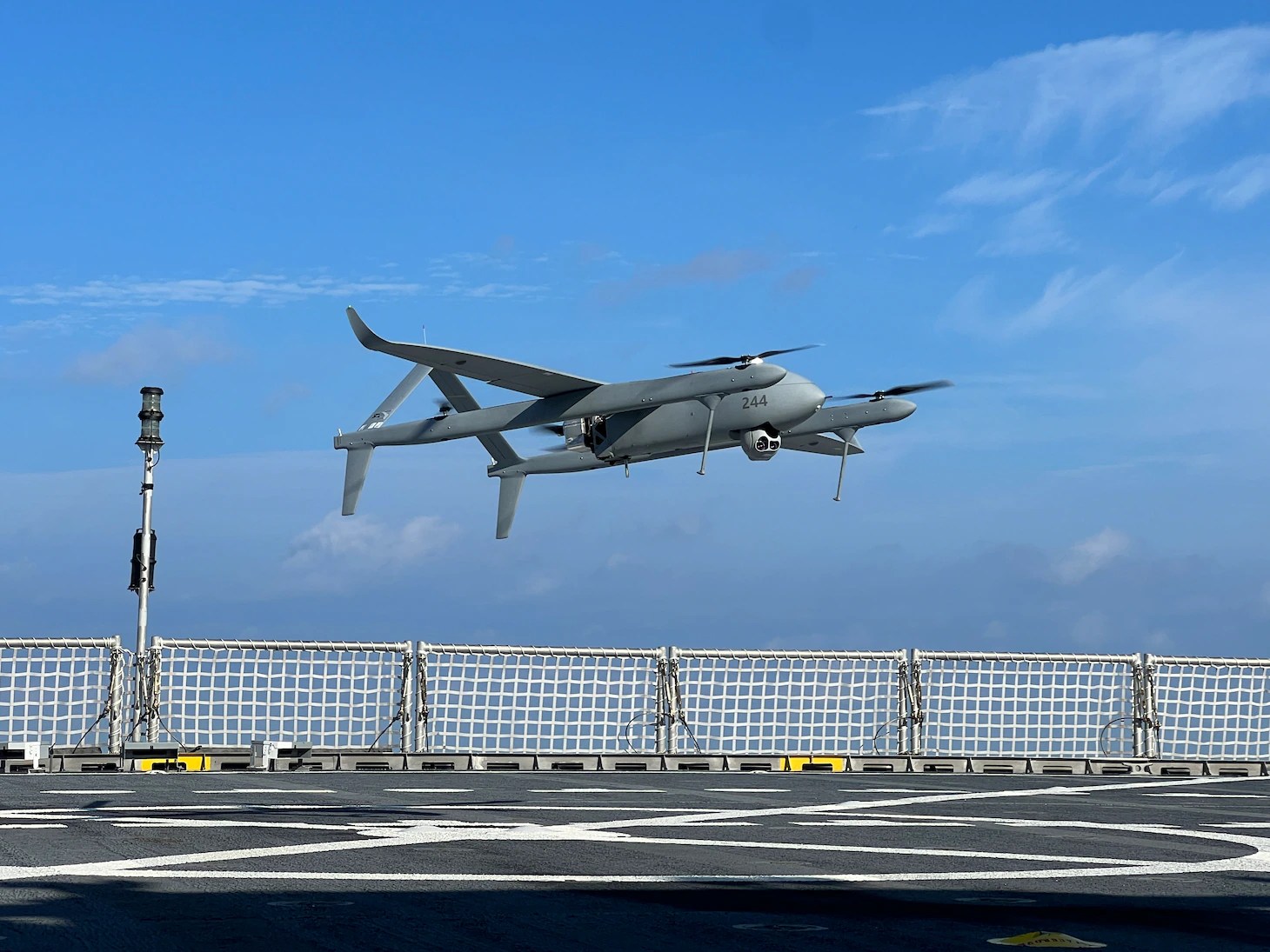
U.S. Naval Forces Southern Command/U.S. 4th Fleet demonstrated unmanned air and surface capabilities from expeditionary fast transport USNS Burlington (T-EPF 10) during the command’s Hybrid Fleet Campaign Event (HFCE) in Key West Oct. 4-13, 2023.

Below is a news release from 4th Fleet. Notably, 4th Fleet is approaching the problem of operationalizing unmanned systems in a different way from that of 5th Fleet.

“A key detail in SECNAV and CNO’s vision was that 4th Fleet would not stand up a separate task force like U.S. 5th Fleet did in Bahrain in 2021, but would develop the hybrid fleet from inside the staff already in place.”


 Oct. 20, 2023

Hybrid Fleet Campaign Event Evaluates Technology For Future Operations

By USNAVSOUTH/4TH FLEET PUBLIC AFFAIRS

U.S. Naval Forces Southern Command/U.S. 4th Fleet demonstrated unmanned air and surface capabilities from expeditionary fast transport USNS Burlington (T-EPF 10) during the command’s Hybrid Fleet Campaign Event (HFCE) in Key West Oct. 4-13, 2023.

This is the most recent event in U.S. 4th Fleet’s campaign to operationalize cutting edge technologies. After successful rollout of the Campaign at UNITAS in July 2023 and the beginning of operation WINDWARD STACK in September, the Science and Technology event in Key West this past week focused on the evaluation of unmanned systems in advanced kill chains, contested littoral operations, survivability, and sustainment at sea.  It served as both a proving ground for emerging technologies and an opportunity for senior leaders to see for themselves the capabilities of systems that could support the hybrid fleet.

“One of the best ways to change our force is to rapidly operationalize new technologies, new systems, and new tactics, techniques, and procedures,” said Adm. Lisa Franchetti, Vice Chief of Naval Operations. “Whether you’re talking about artificial intelligence, cyber, unmanned platforms, directed energy, or hypersonic missiles, we are on the cusp of technological breakthroughs that are going to define future conflict.”

“This week’s technology evaluation event will push boundaries and risk failure in order to allow us to evaluate unmanned technology and then move to operationalize that technology to inform the hybrid fleet,” Rear Adm. Jim Aiken, Commander U.S. Naval Forces Southern Command (USNAVSOUTH) & U.S. 4th Fleet, said in advance of the event. “We have many events scheduled and in some of those events we will win, and in some of them we will learn. In both cases, the Hybrid Fleet will be informed, and the Navy will continue to push forward at the speed of technology.”

The campaign to inform the hybrid fleet calls for the combination of manned and unmanned systems to allow U.S. 4th Fleet to execute its larger missions of defending the southern approaches to the United States, countering malign activity in the region with our partners, and supporting the detection and monitoring of illicit trafficking in the region.

“Broad partnership across DoD and industry partners has allowed 4th Fleet to mature operational capabilities rapidly fostering innovation and providing informed recommendations to the parties involved in creating the Disruptive Capabilities Office,” said Dr. Chris Heagney, the Naval Air Systems Command Fleet/Force Advisor to USNAVSOUTH/4th Fleet.

In April 2023 at the Navy League of the United States’ annual Sea Air Space Symposium, Secretary of the Navy (SECNAV) Honorable Carlos Del Toro and then Chief of Naval Operations Adm. Michael Gilday announced that USNAVSOUTH/4th Fleet would operationalize hybrid fleet operations. A key detail in SECNAV and CNO’s vision was that 4th Fleet would not stand up a separate task force like U.S. 5th Fleet did in Bahrain in 2021, but would develop the hybrid fleet from inside the staff already in place.

“This technology evaluation event is a continuation of the campaign we began in April,” said Cmdr. David Edwards, USNAVSOUTH/4th Fleet’s technology and innovation director. “We evaluate these technologies in focused events like this, then operationalized the technology quickly to fulfill operational requirements in the U.S. Southern Command Area of Responsibility (AOR). While we operate these systems to fulfil the 4th Fleet mission, the evaluation continues over months and years, not just hours and days. Those operational evaluations inform future acquisitions to ensure the Navy is ready to fight and win with these technologies.

HFCE was 4th Fleet’s largest technology event yet with 305 participants including VCNO and Master Chief Petty Officer of the Navy James Honea and 26 other U.S. government distinguished visitors, 10 foreign partners, 18 industry partners, and 47 Department of Defense Commands participating.

U.S. Naval Forces Southern Command/U.S. 4th Fleet supports U.S. Southern Command’s joint and combined military operations by employing maritime forces in cooperative maritime security operations to maintain access, enhance interoperability, and build enduring partnerships in order to enhance regional security and promote peace, stability, and prosperity in the Caribbean, Central and South American region.

“AEROVIRONMENT’S JUMP 20 MEDIUM UAS DEMONSTRATES MARITIME AUTONOMOUS TAKEOFF AND LANDING AT VESSEL SPEEDS OVER 20 KNOTS” –News Release

Below is a news release from AeroVironment reporting autonomous takeoff and landing from USNS Burlington (T-EPF-10), pictured below, at speeds of over 20 knots. I also found the video above that shows operation from a smaller vessel and provides more detail of how the unmanned aircraft is operated and supported.

CARIBBEAN SEA (Aug. 25, 2021) The Spearhead-class expeditionary fast transport ship USNS Burlington (T-EPF 10) operates off the coast of Haiti, Aug. 25, 2021. Burlington is deployed to U.S. Naval Forces Southern Command/U.S. 4th Fleet to support humanitarian assistance and disaster relief (HADR) efforts in Haiti following a 7.2-magnitude earthquake on Aug. 14, 2021. (U.S. Navy photo by Mass Communication Specialist 2nd Class Jack D. Aistrup)

Another good video here:

It appears 4th Fleet is trying to fulfill their self proclaimed role as the Fleet for Innovation.


AEROVIRONMENT’S JUMP 20 MEDIUM UAS DEMONSTRATES MARITIME AUTONOMOUS TAKEOFF AND LANDING AT VESSEL SPEEDS OVER 20 KNOTS

NOVEMBER 07, 2023

ARLINGTON, Va., November 07, 2023 – AeroVironment, Inc (NASDAQ: AVAV) today announced the company’s JUMP 20 VTOL Medium UAS exceeded expectations during the recent U.S. Naval Forces Southern Command/4th Fleet Hybrid Fleet Campaign Event (HFCE) that demonstrated human-machine teaming in the maritime domain. The JUMP 20 provided ship-based intelligence, surveillance, reconnaissance, and targeting (ISR-T) support to USFOURTHFLT and USSOUTHCOM during the week-long, at-sea exercise onboard USNS Burlington. The JUMP 20 has previously flown over 130,000 land-based hours in support of U.S. Special Operations Command combat deployments, and the expansion of JUMP 20 operations into the shipboard environment allows AeroVironment to provide these services globally.

During HFCE, JUMP 20 showcased its ability to launch and recover at vessel speeds over 20 knots, with fully autonomous flight from takeoff to landing.  The JUMP 20 requires neither launch or recovery equipment, nor personnel on the flight deck during launch and recovery, maximizing operational safety and flexibility for users. JUMP 20’s vertical takeoff and landing (VTOL) capability, and class-leading endurance and payload capacity expand the operational capabilities of U.S. and allies to compete and win in the era of great power competition.  The JUMP 20 demonstrated how uncrewed systems will support distributed operations across multiple domains, supporting national security objectives and our warfighters.

“The shipboard flight environment is dynamic and challenging. JUMP 20 is a proven combat-effective platform, and the system’s performance during HFCE illustrates the value to maritime operations.  JUMP 20’s ability to launch and land at speed, and without personnel intervention, enhances the ship’s operational effectiveness and enables operators to focus on important mission tasking,” said Shane Hastings, AeroVironment’s vice president and product line general manager for Medium UAS. “As we continue to demonstrate and prove the effectiveness of the JUMP 20 platform, we look forward to getting this capability in the hands of our sailors, Marines, and allies operating in the maritime environment.” AeroVironment JUMP 20 is deployed to U.S. and allied militaries around the world, and it can be provided on a contractor-owned / contractor-operated (COCO) basis to maximize operational flexibility.

“U.S. 5th Fleet Enhances Middle East Maritime Security with Unmanned Capabilities” –NAVCENT

GULF OF OMAN, An Aerovel Flexrotor unmanned aerial vehicle launches from the deck of the Arleigh Burke-class guided-missile destroyer USS McFaul (DDG 74) in the Gulf of Oman, in an image released Oct. 6. US Navy photo.

Below is a 6 October news release from U.S. Naval Forces Central Command Public Affairs. It notes Coast Guardsmen were involved, presumably PATFORSWA, but no details of how. All the photo here accompanied the release.


MANAMA, Bahrain —

Last month, naval forces in the Middle East region successfully integrated unmanned platforms with traditionally crewed ships and aircraft to conduct enhanced maritime security operations in the waters surrounding the Arabian Peninsula.

Seven task forces falling under U.S. 5th Fleet integrated 12 different unmanned platforms with manned ships for “manned-unmanned teaming” operations, tracking Iranian Navy and Islamic Revolutionary Guard Corps Navy (IRGCN) ships and small boats over several days during routine patrols in and around the Strait of Hormuz.

This operation bolstered presence in and around a critical chokepoint that in recent months has seen Iran unlawfully seize internationally flagged merchant ships.

Unmanned underwater vehicles (UUVs), unmanned surface vehicles (USVs) and unmanned aerial vehicles (UAVs) were involved in the operation.

“We have been operating UAVs and UUVs in the region for years,” said Capt. Joe Baggett, Director of Maritime Operations for U.S. Naval Forces Central Command and U.S. 5th Fleet. “Adding our new USVs, and then integrating all of these platforms into fleet operations, is how we expect to fly and sail well into the future.”

Sailors, Marines, Coast Guardsmen, ships and aircraft from Task Force 51/5 (Amphibious/Marine), Task Force 52 (Mine Countermeasures), Task Force 53 (Logistics), Task Force 55 (Surface Warfare), Task Force 56 (Expeditionary), Task Force 57 (Patrol/Reconnaissance) and Task Force 59 (Unmanned/Artificial Intelligence) conducted the operations.

“The integration of new, multidomain unmanned platforms into routine fleet operations provides more ‘eyes on the water,’ enhancing maritime domain awareness and increasing deterrence in the region,” said Vice Adm. Brad Cooper, Commander, U.S. Naval Forces Central Command and U.S. 5th Fleet.

Cooper added that collectively, these platforms support the safe navigation and free flow of commerce through vital regional chokepoints, particularly around the Strait of Hormuz.

“This enhanced maritime security serves as a deterrent against malign activity and strengthens regional stability, which is good for everybody,” he said.

U.S. Naval Forces Central Command/U.S. 5th Fleet’s area of operations encompasses about 2.5 million square miles of water area and includes the Arabian Gulf, Red Sea, Gulf of Oman, Gulf of Aden, Arabian Sea and parts of the Indian Ocean. This expanse, comprising 21 nations, includes three critical choke points at the Strait of Hormuz, the Suez Canal and the Strait of Bab al Mandeb.

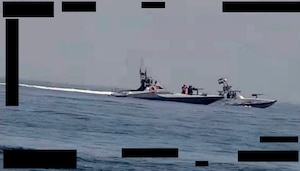
STRAIT OF HORMUZ (Oct. 6, 2023) An undated still image released on Oct. 6 from video taken by an Arabian Fox MAST-13 unmanned surface vessel of two Islamic Revolutionary Guard Corps Navy patrol speedboats in the Strait of Hormuz.

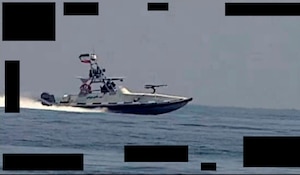
STRAIT OF HORMUZ (Oct. 6, 2023) An undated still image released on Oct. 6 from video taken by an Arabian Fox MAST-13 of an Islamic Revolutionary Guard Corps Navy patrol speedboat in the Strait of Hormuz.

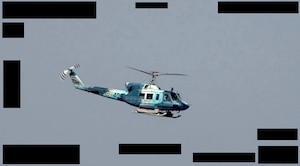
STRAIT OF HORMUZ (Oct. 6, 2023) An undated still image released on Oct. 6 from video taken by an Arabian Fox MAST-13 unmanned surface vessel of an Iranian Navy AB-212 helicopter in the Strait of Hormuz.

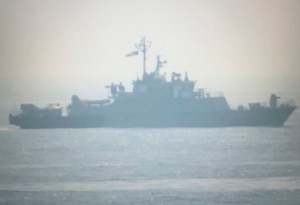
STRAIT OF HORMUZ (Oct. 6, 2023) A undated still image released on Oct. 6 from video taken by a MARTAC T-38 Devil Ray unmanned surface vessel of an Islamic Revolutionary Guard Corps Navy warship in the Strait of Hormuz.

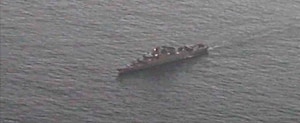
STRAIT OF HORMUZ (Oct. 6, 2023) An undated still image released on Oct. 6 from video of an Iranian Navy frigate taken by an Aerovel Flexrotor unmanned aerial vehicle (AAV) in the Strait of Hormuz.(U.S. Navy photo)

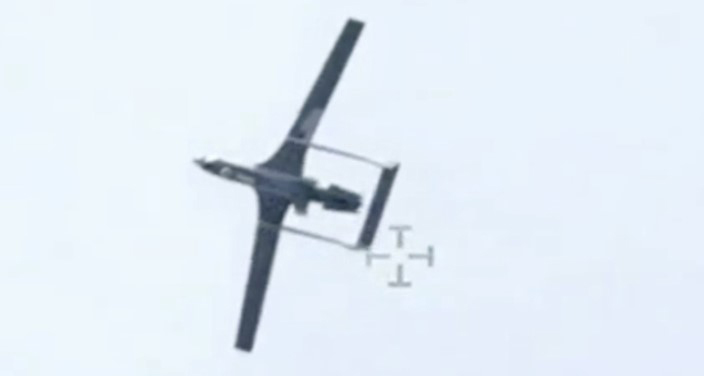
STRAIT OF HORMUZ (Oct. 6, 2023) An undated still image released on Oct. 6 from video taken by an Arabian Fox MAST-13 unmanned surface vessel of an Iranian unmanned aerial vehicle in the Strait of Hormuz.

Group 2 VTOL UAS

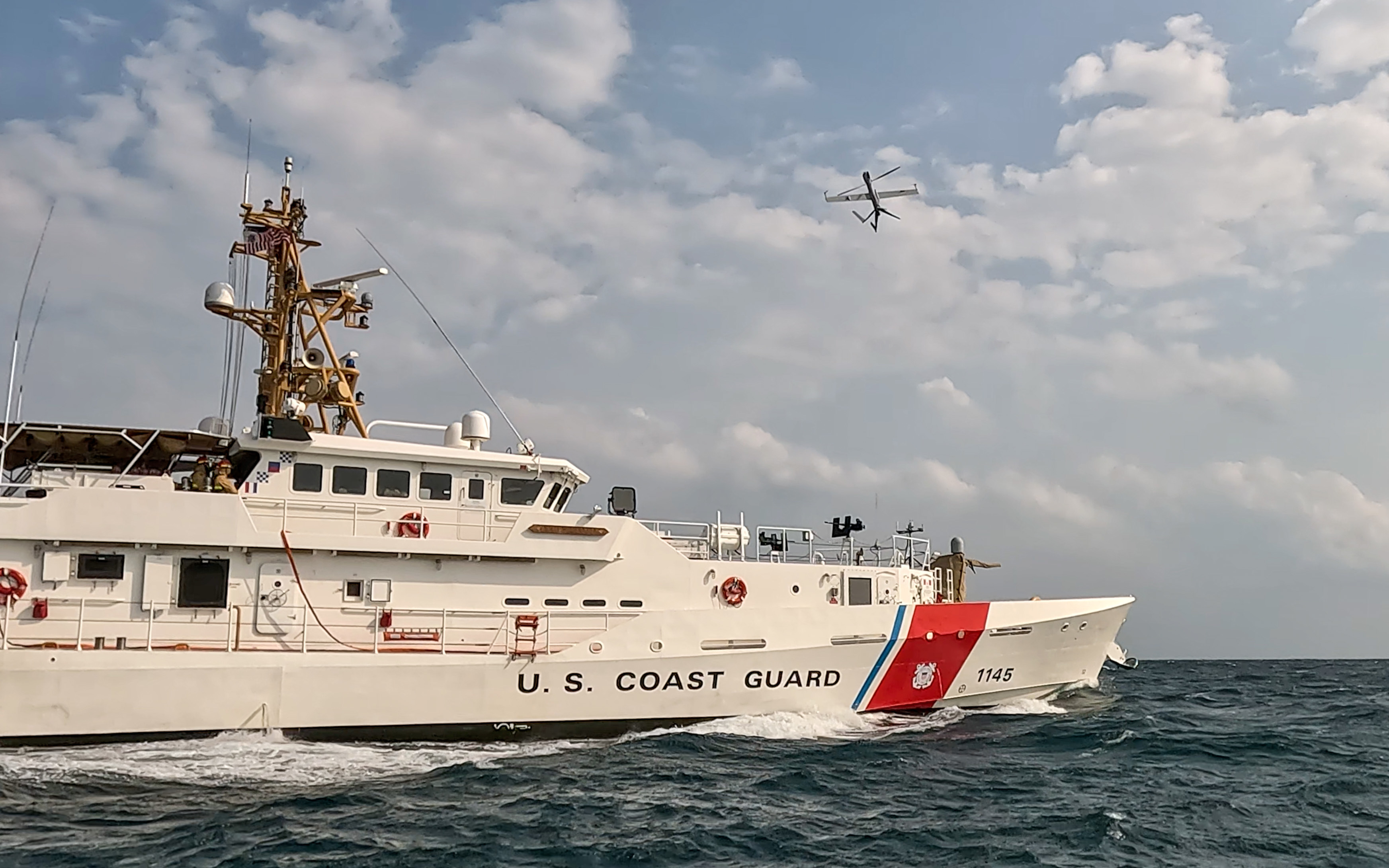
221207-N-NO146-1001 ARABIAN GULF (Dec. 7, 2022) An Aerovel Flexrotor unmanned aerial vehicle (UAV) takes off from U.S. Coast Guard fast response cutter USCGC Emlen Tunnell (WPC 1145) transiting the Arabian Gulf, Dec. 7. U.S. 5th Fleet’s Task Force 59 launched the UAV during Digital Horizon, a three-week event focused on integrating new unmanned and artificial intelligence platforms, including 10 that are in the region for the first time. (U.S. Navy photo)

We have begun to see very capable, vertical takeoff and landing (VTOL) unmanned air systems that fall into the DOD Group Two standard.

  • Weight: 21 to 55 pounds (10 to 25 kg)
  • Nominal operating altitude: <3500 feet or 1 km above ground level.
  • Speed: <250 knots

Recently Elbit Systems reported they would be providing a Group 2 VTOL to the Israeli Army, and we have the photo above of an Aerovel Flexrotor taking off from a Webber class patrol craft,

These small, unmanned air systems (UAS), which can combine sophisticated sensors and endurance of four to over 24 hours, may be better search platforms than our H-65 helicopters.

Group 2 UAS are even smaller than the Martin V-Bat. It appears, they might be able to operate from Webber class cutters. Operating UAS from the Webber class on a regular basis would provide them much of the air search advantage of larger flight deck equipped cutters.

Below is a news release on another aircraft in this class, the Edge Autonomy VXE30. The VIDAR sensor referred to in the news release, is also used on the Scan Eagle (a catapult launched Group 2 UAS) used on National Security Cutters. There is more on the unmanned VXE30 here.


Edge Autonomy’s VXE30 UAS. The VXE30 vertical take-off and landing (VTOL) solution is the latest and most advanced version of the “Stalker” series of small uncrewed aerial systems (sUAS) from Edge Autonomy.


Sentient’s AI-enabled ViDAR optical sensors soar on Edge Autonomy’s VXE30 “Stalker” UAS in successful live demonstrations

ViDAR – Sentient’s AI-enabled wide area motion imagery deployed for real-time maritime surveillance at the edge

VIRGINIA BEACH, Va. (Aug 29, 2023) – Sentient Vision Systems (Sentient) has successfully completed live demonstrations of its AI-enabled ViDAR (Visual Detection and Ranging) payload deployed on Edge Autonomy’s VXE30 UAS. The VXE30 vertical take-off and landing (VTOL) solution is the latest and most advanced version of the “Stalker” series of small uncrewed aerial systems (sUAS) from Edge Autonomy. When coupled with Sentient’s ViDAR, the VXE30 provides a passive, wide area search capability, enabling it to serve a myriad of maritime operations. The joint capability will be on display at DSEI 2023, 12-15 September in London.

ViDAR, developed by Sentient, utilizes AI; Computer Vision, and Machine Learning integrated with Electro-Optic and Infrared (EO/IR) sensors to passively detect objects that are difficult to spot by the human eye or recognize on a conventional radar. With these enhanced capabilities, Stalker will be more capable of accurately detecting and locating people, objects, and vessels (day and night) far from the operator.

ViDAR has been deployed on intelligence, surveillance, and reconnaissance missions (ISR), maritime patrol and border protection, as well as search and rescue missions since 2015. ViDAR is proven to be effective in challenging maritime conditions up to Sea State 6 (very rough with waves 13 to 20 feet high/ 4 to 6 meters).

Sentient has successfully evolved ViDAR into a compact, lightweight, low power form factor—low SWaP (size, weight, and power) — suitable for deployment on small Group 2 / NATO Class 1 UAS such as the VXE30. Its successful integration onto the VXE30 demonstrates its broad operating envelope and ability to provide unprecedented long-endurance imaging capability in contested environments all around the world.

Joshua Stinson, Edge Autonomy’s Chief Growth Officer said, “The integration of ViDAR onto the VXE30 is an essential part of our UAS deployment program. ViDAR’s passive detection system will further the VXE30’s capabilities to remain undetected in a contested environment while carrying a powerful maritime detection sensor that provides a real-time picture of the maritime domain. This capability could make all the difference in a mission’s success.”

Paul Harris, Sentient’s VP of Business Development agreed and said, “We are delighted to be working with Edge Autonomy to demonstrate how effective ViDAR is at increasing the utility of the small and agile VXE30 for the challenges of the modern battlespace. We look forward to displaying our joint capabilities at DSEI.”

With close to 4,500 systems deployed, Sentient’s AI-enabled sensor edge solutions for wide area motion imagery are proven for detection in missions worldwide.

——–ends——–

About Sentient Vision Systems www.sentientvision.com

Sentient Vision Systems specializes in passive, modular optical sensors for persistent, wide area motion imagery. Sentient’s artificial Intelligence (AI)-enabled edge solutions better detect and identify small objects in real time, on land and at sea. With more than 20 years of development in moving target indication, AI computer vision and machine learning, Sentient has deployed thousands of systems worldwide in the field of Intelligence, Surveillance, Search and Rescue, enhancing situational awareness, accelerating informed decisions, and saved numerous lives. Follow Sentient on LinkedIn , VimeoYouTube and Twitter

About Edge Autonomy www.edgeautonomy.io

Edge Autonomy is a leader in providing innovative autonomous systems, advanced optics, and resilient energy solutions to the U.S. Department of Defense, the U.S. Federal Civilian Agencies, allied governments, academic institutions, and commercial entities. Edge Autonomy draws on a 34+ year history of aerospace engineering, advanced manufacturing expertise, and technologically advanced manufacturing. With headquarters in San Luis Obispo, CA, and key production capabilities abroad, Edge Autonomy’s 400+ team members deliver results in multiple markets. Follow Edge Autonomy on LinkedInFacebook and Twitter.

“Cardboard drone vendor retools software based on Ukraine war hacks” –DefenseNews

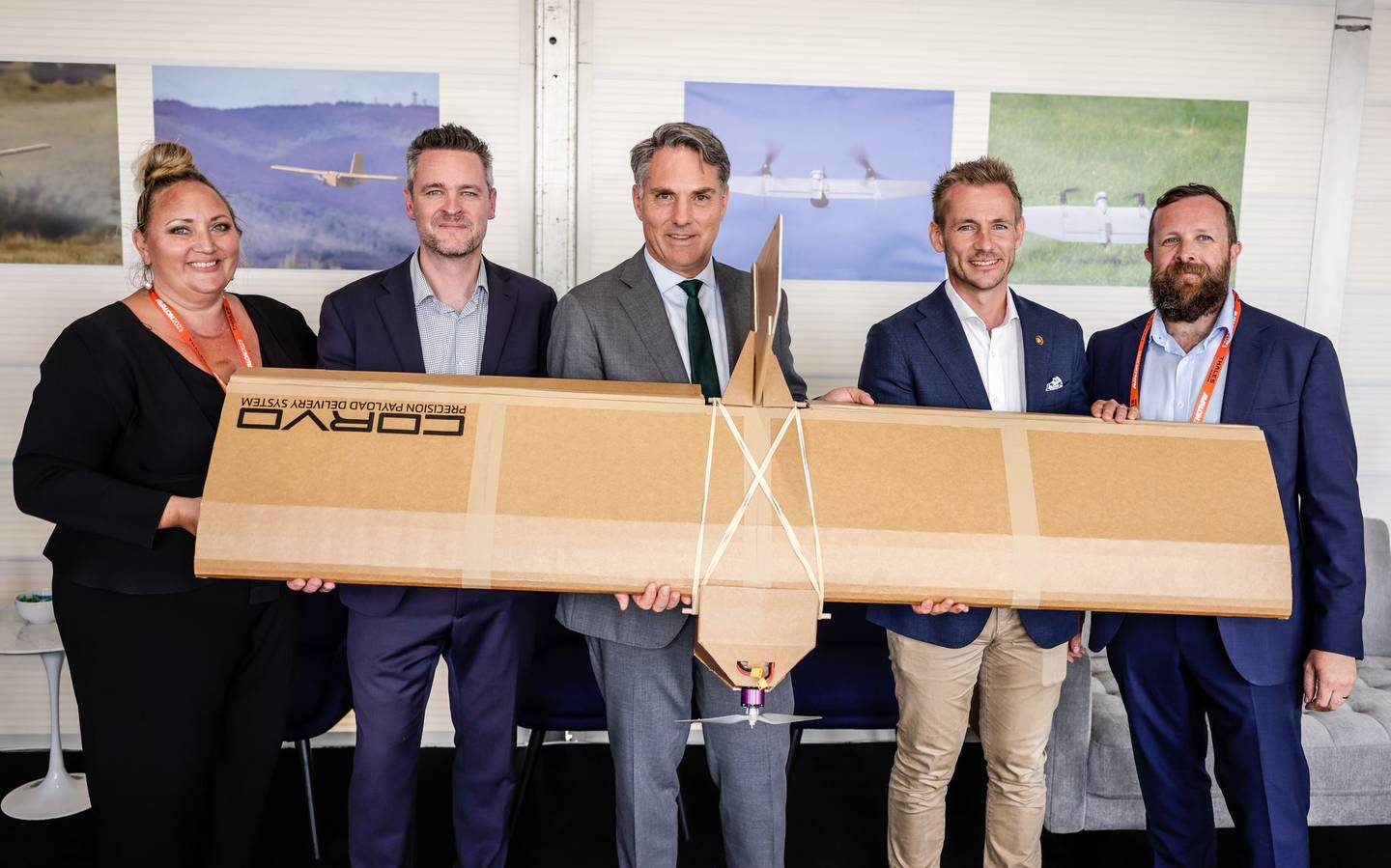
SYPAQ company officials host Australian Deputy Prime Minister Richard Marles and the Ukrainian ambassador to Australia, Vasyl Myroshnychenko, during a March 2023 event following Australia’s donation of 600 Corvo Precision Payload Delivery System drones to Ukraine. (SYPAQ photo)

Defense News reports,

Ukrainian soldiers have received hundreds of drones, gifted to them by Australia, to capture surveillance video crucial for preparing missions to retake ground from Russian forces.

The data comes from GoPro cameras strung from holes punched into disposable cardboard drones.

This shows just how simple it can be to get an Unmanned Air System ISR capability, or perhaps a weapons delivery capability.

Plus, cardboard is stealthy.

“UMS SKELDAR And Ultra Maritime Unveil UAS-Based ASW Solution At DSEI 2023” –Naval News

Two V-200 “Sea Falcon” VTOL UAV on the helideck of German Navy’s corvette Braunschweig. Note, this is a relatively small ship, about the size of a 270, with a beam of 13.28 m (43 ft 7 in), about the same as a Hamilton class 378′. Picture by Commander of the German Naval Aviation.

Naval News reports,

UMS SKELDAR and Ultra Maritime unveiled their jointly developed anti-submarine warfare (ASW) solution at DSEI 2023…The solution, a Rotary Wing UAS providing an ASW sonobuoy dispensing capability, is based on the SKELDAR V-200 Uncrewed Aircraft System (UAS) and was developed as part of a contract under the Canadian Department of National Defence’s (DND) Innovation for Defence Excellence and Security (IDEaS) program. 

This is an interesting idea. By itself, without any weapon, it may not be very useful, but it might prove a useful addition to a mix that includes ASW helicopters on standby for prosecution and ships with gear for monitoring and interpreting sonobuoy transmissions.

The Skeldar doesn’t have the endurance of the Scan Eagle, used by the Coast Guard, but it does have a much higher payload weight, 40 kg (88 pounds) compared to Scan Eagle’s 5 kg (11 pounds) and Skeldar doesn’t require separate launch and recovery equipment. (As it seems in all aircraft, there is a tradeoff between payload and fuel.)

The extra payload weight may not make much difference if you can pack everything you want into that 5 kg on the Scan Eagle, but it does open up options, larger sensors, light logistics cargo runs, and the ability to drop things.

Other than sonobuoys and weapons there are a number of things we might want to be able to drop from a UAS: buoys to measure drift for a SAR case, radios or pumps to a vessel in distress, lifejackets, or inflatable rafts.

Wikipedia reports, UMS Skeldar V-200 UAS is used by the militaries of six nations. It is used by the German Navy on their K130 Braunschweig class corvettes (pictured above), and will be used by the Belgian and Netherlands Navies on their City class mine countermeasures vessels.

This is a Canadian program. The Canadian Navy uses Skeldar, CU-176 Gargoyle in Canadian service, on their DeWolf class Arctic Offshore Patrol Ships (AOPS). If the Canadian Navy chooses to continue development of this sonobuoy drop capability, presumably they will also use the UAS on some of their frigates, or perhaps they are working toward an ASW role for their AOPS.

Guns as Counter-UAS Weapons

A couple of videos from a The Drive post, “Gepard’s 35mm Cannons Blast Russian Drones Out Of The Sky In First-Person Video.”

TheFlakpanzer Gepard was not designed specifically for UAS. It was designed in the ’60s and fielded in the ’70s to protect against low flying aircraft like attack helicopters and the Soviet counterpart of the A-10 attack aircraft, the SU-25 Frogfoot.

The twin 35 mm guns are much more powerful weapons than the 25 and 30 mm weapons mounted on the Mk38 gun systems. Presumably in the counter UAS role they are using the “AHEAD” anti-missile rounds, rounds that might have been designed specifically to take out UAS, that fire 152, 3.3 gram tungsten metal sub-projectiles. The guns have a very high muzzle velocity (3,400 ft/sec for the AHEAD round) and a much higher rate of fire (550 rounds per minute per gun).

With the AHEAD round, the projectile weight is 1.65 lbs. (0.750 kg) compared with 0.406 lbs. (0.184 kg) for the 25mm HEI and HEI-T rounds, and 0.79 lbs. (0.362 kg) 30mm HEI-T round so the potential radius of destruction is substantially greater.

Still the 30mm with airburst ammunition should be effective, but it will probably require more rounds to get the job done and will have shorter effective range. Unless the 25mm has an airburst round it is unlikely to be effective.

It might be worth considering that while the Gepard’s firecontrol is radar, the Mk38 firecontrol is electrooptic. I can’t say unequivocally that that is a disadvantage, but it might be. Surely the drone builders will attempt to include countermeasures against both types of firecontrol.

“TEXTRON SYSTEMS AWARDED UNCREWED AIRCRAFT SYSTEM (UAS) CONTRACTOR-OWNED/CONTRACTOR-OPERATED CONTRACT FOR THREE LITTORAL COMBAT SHIPS (LCS) BY U.S. NAVY” –Textron Systems

Aerosonde launch from USS Miguel Keith (ESB-5)

Below is a news release from Textron Systems.

It is not clear which version of Aerosonde is to be deployed on the LCSs. There are now hybrid quad versions that can take off and land vertically (see the video) without the supporting catapult and capture gear (top photo), but those with VTOL capability do sacrifice some endurance, speed, and payload as a result of greater weight and increased drag. It is likely the catapult launched version, which we know is on ESB-5, will also be used on the LCSs. Why did the Navy choose the Aerosonde over the Scan Eagle chosen by the Coast Guard? Let’s compare the two catapult launched UAS:

  • Type                                     Aerosonde Fixed Wing            Scan Eagle
  • Max Payload (pounds/kg):              20/9                                    11/5
  • Endurance (hours)                           14+                                     20+
  • Air Speed  (knots)                          45-65                                  60-80
  • Power (HP)                                        4                                        1.5

The Aerosonde’s only immediately apparent advantage is the greater payload. Perhaps the Navy has a sensor, or sensors that may be more capable but heavier that those included in the Coast Guard’s Scan Eagles, but if so, I can’t tell you what they are.

Incidentally, the payload capacity for the vertical takeoff and landing Hybrid Quad version of Aerosonde is 15 pounds, so it could presumably use the same sensor suite used on Coast Guard Scan Eagles.


AEROSONDE® UNCREWED AIRCRAFT SYSTEM (UAS) SUPPORTING SEVENTH U.S. NAVY SHIP WITH EXTENDED RANGE ISR SERVICES

Hunt Valley, Maryland, AUGUST 9, 2023 – Textron Systems Corporation, a Textron Inc. (NYSE:TXT) company, announced today that it has been awarded an initial contract valued at up to $19.5 million by the U.S. Navy’s Naval Air Systems Command (NAVAIR) to provide UAS operational support to two Independence Class LCS and one Freedom Class LCS variants. This award joins the Expeditionary Sea Base (ESB)-4 and ESB-5, as well as two DDG- class ships, bringing the total number of U.S. Navy ships supported by the Aerosonde® UAS system to seven.

Textron Systems will deploy its Aerosonde UAS to provide mission overwatch and extended intelligence, surveillance and reconnaissance (ISR) services with enhanced mission payloads as seen aboard the ESB-5.

“Contractor-owned/contractor-operated contracts like this support the Navy’s continued investments in uncrewed assets for their ships,” said Wayne Prender, Senior Vice President, Air Systems. “We’ve seen the benefits of our Aerosonde UAS for DDG and ESB- class ships already, and we’re honored to be expanding into this new ship class, allowing us to continue supporting maritime domain awareness and missions while delivering operational and logistical capabilities.”

The Aerosonde system continues to set the standard for mission readiness and ease of use, amassing more than 600,000 flight hours serving multiple U.S. customers and allies. It is designed for expeditionary land- and sea-based operations with both fixed-wing and vertical takeoff and landing (VTOL) options. Textron Systems has provided turnkey, UAS operations for customers around the world for more than 10 years.

NAVAIR Public Release 2023-538 Distribution Statement A – “Approved for public release; distribution is unlimited”

“Shield AI Collaborates with Sentient Vision Systems to Offer AI-Enabled Wide Area Motion Imagery Capability” –News Release

The unmanned aircraft sensor payload capability is varied based on the Coast Guard’s desired mission and search conditions: MWIR 3.5 is a mid-wave infrared for thermal imaging capability, for use at night or periods of low visibility; EO-900 is a high-definition telescopic electro-optical (EO) imager to zoom in on targets at greater distance; and ViDAR is a visual detection and ranging wide-area optical search system that is a comprehensive autonomous detection solutions for EO video. Courtesy Photo.

I am passing along this vender’s news release. It references two systems we have discussed in the past, Vidar and the V-Bat UAS. The Coast Guard has a history with these systems.

 Shield AI Collaborates with Sentient Vision Systems to Offer AI-Enabled Wide Area Motion Imagery Capability

SAN DIEGO (Aug. 10, 2023) – Shield AI, an American defense technology company building the world’s best AI pilot, and Sentient Vision Systems (Sentient), an Australia-based leader in AI-enabled passive wide area search, are pleased to announce a strategic collaboration aimed at delivering a wide area motion imagery (WAMI) solution for Department of Defense (DoD), Australian Defense Forces (ADF) and other international customers.

The companies will jointly develop and integrate a ViDAR-enabled, wide-area-search capability onto Shield AI’s V-BAT unmanned aircraft, which will enable Shield AI’s V-BAT to intelligently classify, track, and read-and-react to targets in dynamic missions. Shield AI plans to fly the capability on V-BAT next year.

“This work with our Australian partner, Sentient, is a unique opportunity to fuse the innovation prowess of two companies from allied countries on opposite sides of the world. Together, we are shaping the future of defense technology,” said Brandon Tseng, Shield AI’s President, Co-founder, and former U.S. Navy SEAL.

ViDAR is Sentient’s AI system, which uses an Electro-Optic or Infrared (EO/IR) sensor to detect and classify targets in the imagery stream that would be invisible to a human operator or to a conventional radar. With these enhanced capabilities, V-BAT will be even more proficient in executing the most challenging missions, offering a level of capability that significantly bolsters threat deterrence, thereby reinforcing international peace and security.

“Sentient is excited and proud to be working with Shield AI on this truly breakthrough solution,” said Mark Palmer, Sentient’s Chief Technology Officer. “We look forward to combining the AI expertise and operational understanding of our two great teams to deliver superior ISR capabilities for today’s rapidly changing defense and security environment.”

About Shield AI 
Founded in 2015, Shield AI is a venture-backed defense technology company whose mission is to protect service members and civilians with intelligent systems. In pursuit of this mission, Shield AI is building the world’s best AI pilot. Its AI pilot, Hivemind, has flown a fighter jet (F-16), a vertical takeoff and landing drone (V-BAT), and a quadcopter (Nova). The company has offices in San Diego, Dallas, Washington DC and abroad. Shield AI’s products and people are currently in the field actively supporting operations with the U.S. Department of Defense and U.S. allies. For more information, visit www.shield.ai. Follow Shield AI on LinkedIn, Twitter, and Instagram.

Media contact: media@shield.ai

About Sentient Vision Systems                                                                                      Sentient Vision Systems specializes in passive, modular optical sensors for persistent, wide area motion imagery. Sentient’s artificial Intelligence (AI)-enabled edge solutions better detect and identify small objects in real time, on land and at sea. With more than 20 years of development in moving target indication, AI computer vision and machine learning, Sentient has deployed thousands of systems worldwide in the field of Intelligence, Surveillance, Search and Rescue, enhancing situational awareness, accelerating informed decisions, and saved numerous lives. For more information, visit www.sentientvision.com. Follow Sentient on LinkedIn, Twitter and YouTube.

Media contact: media@sentientvision.com

Editorial enquiries :

Shield AIMedia contact: media@shield.ai

Sentient Vision Systems Media contact: media@sentientvision.com

“Coast Guard detects 16 unauthorized drones during Seafair Weekend Festival” –CG News

Coast Guard members, in collaboration with the FAA, the Seattle Police Department (SPD), and Mercer Island Police Department (MIPD), employ Counter-Unmanned Aircraft Systems (UAS) capabilities to enforce the FAA-issued Temporary Flight Restrictions on Lake Washington during the 2023 Seafair Weekend Festival in support of the Airshow August 3, 2023. This was the first year Coast Guard Counter-UAS has been employed at Seafair. (U.S. Coast Guard courtesy photo)

Below is a news release from Coast Guard News.

We have seen counter UAS equipment added to the Webber class cutters in Southwest Asia, but this is the first time I have seen public acknowledgement of domestic counter UAS operations by the Coast Guard.

As a drone operator myself, I was happy to see that the effort was primarily educational, but the Coast Guard does need a robust domestic counter UAS capability for contingencies.


Aug. 9, 2023

Coast Guard detects 16 unauthorized drones during Seafair Weekend Festival

SEATTLE — The Coast Guard employed Counter-Unmanned Aircraft Systems (UAS) capabilities in collaboration with the Federal Aviation Administration (FAA), Seattle Police Department (SPD), and Mercer Island Police Department (MIPD) to enforce the FAA-issued temporary flight restrictions on Lake Washington during the 2023 Seafair Weekend Festival in support of the airshow.

This is the first year Coast Guard counter-UAS has been employed at Seafair.

The Coast Guard detected 16 UAS operators violating airspace restrictions during the H1 Unlimited Hydroplane Races and Boeing Air Show. Officers from SPD and MIPD were able to contact eight UAS operators and provide education on airspace restrictions as well as safe UAS operations.

One operator was cited for reckless endangerment by the Seattle Police Department.

“Unauthorized UAS can be extremely dangerous to airshow pilots, as well as spectators,” said Cmdr. Scott McGrew, the Coast Guard incident commander for SeaFair. “Our robust partnership with the FAA, Seattle Police and Mercer Island Police Department is vital to ensure unauthorized UAS operators are intercepted and educated on safe operations and reminded of the FAA Temporary Flight Restrictions in place to support the airshow.”

UAS operators are reminded to check tfr.faa.gov or the b4ufly app to verify the airspace is authorized for UAS flight.