A Little More on the Offshore Patrol Cutter

OPC "Placemat"

OPC “Placemat”

MarineLink has a story on the OPC, and it includes a bit more detail, and it raises some questions. I’ve also seen a couple of stories about how they will be equipped that will be referred to below.

There is this:

“Zukunft’s budget suggests at least one cutter, or an immediate separate order, will be arctic capable, and Vard and Canadian engineering consultancy BMT Fleet are already understood to be working on project documents for a Canadian “arctic offshore patrol ship” of Vard 7 100 type.”

VARD 7-100 ICE, the Canadian AOPS

VARD 7-100 ICE, the Canadian AOPS

Vard actually has two designs designated “7-100,” an offshore patrol vessel (pdf) very similar to the OPC and the 7-100 ICE. Apparently, it is the 7-100 ICE they are referring to here. The VARD 7-100 ICE (pdf) is also known as the Canadian Navy’s Arctic Offshore Patrol Ship (AOPS). Does that mean the Coast Guard is looking at the Canadian AOPS as a possible Arctic Patrol Vessel, perhaps filling the role of one or two of the three medium icebreaker? They do have power similar to the old Wind class icebreakers.

We also have this indication the standard OPCs are still expected to patrol the Arctic. (Var refers to the OPC as the Vard 7 110.)

“…the Vard 7 110’s will also patrol the “increasingly accessible Arctic”, a theatre which might require a more closed superstructure, more akin to the Vard 7 100.”

The Vard 7 100 ICE has its ground tackle below the foc’sle deck to protect it from freezing. Perhaps that is what this means. This has also been done on some European Frigates.

Then there is this little bit of speculation about who will build follow on ships”

“Owned by the Italian state via Fintecna, Fincantieri doubled after its acquisition of Vard to become the fourth largest shipbuilder in the world and the largest in the Med. As we wrote these words, Financtieri’s Trieste-based minds were making a friendly offer for the 44 percent of Vard they don’t own. It’s worth noting that in January 2009, Fincantieri bought Manitowoc Marine Group and its two yards in Wisconsin, including the Marinette Marine that built the first Freedom Class littoral combat ship. So, Eastern, it seems, has a rival and a friend in Fincantieri, another maker of mid-sized vessels for the U.S. Navy. So, who knows what may be next from U.S. military-industrial strategists keen to share financial resources with capable NATO allies while also creating jobs at home. For now, all eyes will be on those remaining OPVs.

They are pointing out that there may be competition for the follow on contract. That is good for the Coast Guard.

I would also point out that it also means Marinette might make modified OPCs for the Navy, if the Navy ever realizes that the LCS is not going to make a very good “small surface combatant.”

Northrop Grumman Corporation reports they have been awarded a contract for the design of the C4ISR and machinery control systems (MCS).

“The systems being supplied include integrated bridge systems, command and control consoles, navigation and combat data distribution systems, ship-wide computer network systems, machinery control systems and propulsion control systems

“Included in the design phase of the OPC program is a MCS land-based test facility, as well as a C4ISR test and integration facility, both of which will be located in Charlottesville. Additional work will be conducted at company facilities in San Diego, and Ocean Springs, Mississippi. Northrop Grumman will also provide key C4ISR and MCS integration roles during production testing and shipboard trials to be held in Panama City, Florida.”

MarineLog identified the engines to be used.

Each 360 foot-long vessel will be powered by two FM-MAN 16V 28/33D diesel engines, each rated at 9,763 bhp at 1,000 rpm.

We have consistently seen the speed quoted as 22.5 knots sustained or 22 or more. I suspect they are being conservative. With almost 20,000 HP, the ship ought to make 24 or even 25 knots, in all but the most adverse conditions of load and bottom fouling.

I would have preferred the 20,000 KW (26820 HP) engines advertised for the VARD 7 1000 which would have assured 25 knots, but it’s not bad. If the 7 110 follows the pattern of the 7 100 OPV, than there will be hybrid propulsion, with electric motors on the shaft in addition to geared diesel drive from the main engines. For a cruising speed of 14 knots, that would require two electric motors of about 1,500 HP each.

 “In order to provide fuel efficiency and greater range, this vessel is powered by CODELAD (combined diesel and electric) which allows for instantaneous changeover.”

This would make a lot of sense, in that in addition to the fuel economy benefits it would improve the ships survivability. It could lose both main diesel engines and still have propulsion.

Alex Haley’s Last Sistership

ah2k5


LastStandOnZombieIsland reports USCGC Alex Haley’s last sister ship, the former
USS Beaufort (ATS-2), now the Republic of (South) Korea Navy Ship ROKS Peyongtaek (ATS-27), is to be decommissioned and scrapped.

The blog has a suggestion that might be worth pursuing.

“Maybe the South Koreans will let the USCG go over Peyongtaek for spare parts before they send her to the breakers.”

These ships were built in Britain by Broke Marine. That is very unusual for any US Navy ship. It probably also means finding spares may be more difficult that it would be for a US built ship.

Thanks to MSR for bringing this to my attention. 

“Congress Must Re-Set Department of Homeland Security Priorities: American Lives Depend on It”–Heritage Foundation

US Capital West Side, by Martin Falbisoner

US Capital West Side, by Martin Falbisoner

The influencial Conservative think tank, Heritage Foundation, has issued a report on the Department of Homeland Security that will likely strongly influence the incoming administration and Congress.

It does not call for any radical increase in the Coast Guard budget for FY2017 ($10.85B). In fact it calls of less funding than was enacted in 2016 ($11.112B), but more than the current administration has requested ($10.322B).

It does support the Offshore Patrol Cutter (OPC) and Polar Icebreaker (PIB) programs and continued procurement of six Webber class (FRC) rather than the four currently requested.

For the future, it appears they support a more stable AC&I budget of at least $1.5B. To me it appears likely the AC&I budget will go higher as both the OPC and PIB enter the construction phase, and they spoke against imposition of a defacto ceiling.

The most significant new direction, seemed to be strong support for Unmanned Air Systems.

Unmanned Aerial Systems. The Coast Guard would also benefit greatly from procuring UASs to support NSC operations. According to the GAO, “Coast Guard officials acknowledged that the lack of [cutter-based] unmanned aircraft would create a gap between the NSC’s actual and planned capabilities.” Dr. William Posage, program manager for the Coast Guard Research and Development Center, explained that the lack of cutter-based UAS technologies “left the NSC with an enormous surveillance gap in her ability to perform her mission.” Notably, the operational effectiveness of the NSC without a UAS component would “be comparable to that of the 378-foot Hamilton class high-endurance cutter,” the very program it was designed to replace with capability enhancements.

The Coast Guard has successfully tested the FireScout and ScanEagle UAS platforms, both of which would significantly amplify the NSC’s surveillance, detection, classification, and prosecution capabilities. Widely used for similar naval operations, they have successfully contributed to a handful of at-sea Coast Guard demonstrations. According to an assessment by the Coast Guard Office of Aviation Forces, the presence of two vertical take-off FireScout UASs aboard an NSC would enable the cutter to cover three times the presence radius of an NSC without them. Similarly, according to a Senate Appropriations Committee report, “[t]he Coast Guard has reported…that its long standing plan to add vertical take-off unmanned aircraft systems to the National Security Cutters would result in an estimated 95- to 225-percent increase in surveillance coverage within an 800 nautical mile radius of the cutter and an estimated 95-percent increase in the number of prosecutions achieved by the cutter.”

The Coast Guard’s FY 2017 budget justification states that funding for the NSC program will in part “establish sUAS [small UAS] capability aboard one NSC, to include engineering analysis, non-recurring engineering, procurement and installation of sUAS components, and system testing and certification.” Admiral Zukunft testified before the House Transportation Committee in March 2016 that this activity would involve a “down select” for a sUAS capability “that will go on board” the NSC. The NSC will amplify its aerial ISR capabilities dramatically with the longer-term integration of sUAS, while the sea service should continue to evaluate the vertical unmanned aerial vehicle (VUAV) platform.

This seems to indicate a two pronged approach, first a small UAS (Scan Eagle or something similar) in the near future and a continued interest in evaluating a vertical takeoff unmanned system like Firescout or potentially DARPA’s TERN.

All the UAS discussion centers on the National Security Cutters. There is no discussion of the possibility of using UAS on any other classes.

Cuttermen Call, 2017

Just passing along the following I recieved by email.

Fellow SNA Coastguardsmen, Cuttermen, and all,

I would like to invite you to an annual cuttermen’s tradition at the Surface Navy Association Symposium — the Annual National Cuttermen Call January 12th at 1415 held at the Hyatt Regency Crystal City.

This year our Commander, Atlantic Area, Vice Admiral Shultz, and our Master Chief Petty Officer of the Coast Guard, Masterchief Cantrell, will address current topics of the our cutter fleet and engage in a question and answer session with the audience.

The event is free for Active Duty in uniform (Service Dress Blues) and all SNA members.

The link for the Symposium is: http://navysna.org/2017Symp/General17.htm

Following the Cuttermen call there will be a no-host social in the Tidewater Room at the Hyatt Regency Crystal City to facilitate more SNA and Coast Guard camaraderie as well as embellished sea stories.

Please look at the other events of interest to the Coast Guard, and consider starting or renewing your membership into our SNA organization and chapters.

All are welcome.  Please make time to join us!

Vr, Scott Clendenin,

President, National Cuttermen Chapter of the Surface Navy Association

What Price Tomahawk?

tomahawkugm-109_hits_target_on_san_clemente_island_1986

A U.S. Navy submarine-launched UGM-109 Tomahawk cruise missile hits a North American RA-5C Vigilante target aircraft on San Clemente Island, California (USA), after a flight of circa 650 km. U.S. DefenseImagery photo VIRIN: DN-SC-86-06115 and DN-SC-86-06115

Naval Today reports, “The U.S. Naval Air Systems Command has awarded Raytheon a $303.7 million contract for the the delivery of 214 Tomahawk block IV all-up-round vertical launch system missiles and spares.

Not that the Coast Guard is likely to buy one, the Navy buys our weapons, but the price of Tomahalk missiles may give some indication of the cost of similar sophisticated systems. I’m a bit surprised the price is as low as it is. Since this includes spares in additon to 214 all-up rounds, that puts the price at less than $1.42M each. Frankly, I expected more.

Perhaps including cutters in the Navy’s plans for distributed lethality is not out of the question.

WINNER ANNOUNCEMENT – 2016 HOPLEY YEATON CUTTER EXCELLENCE

 The U.S. Coast Guard cutter USCGC Morgenthau (WHEC-722) heads out to sea from its home port in Alameda, California (USA), passing under the Golden Gate Bridge.


The U.S. Coast Guard cutter USCGC Morgenthau (WHEC-722) heads out to sea from its home port in Alameda, California (USA), passing under the Golden Gate Bridge.

You can find the ALCOAST announcing winners of the 2016 Hopley Yeaton awards for exellence on the National Cutterman Chapter, Surface Navy Association web site. 

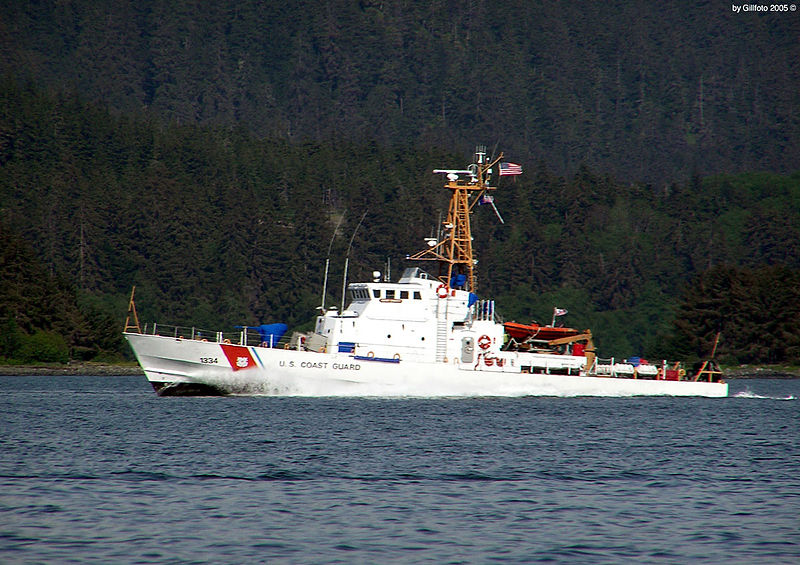
USCGC LIBERTY (WPB 1334), Credit to Gillfoto, 23 November 2012

USCGC LIBERTY (WPB 1334), Credit to Gillfoto, 23 November 2012

Still, if completing 84% percent of your drills, firing 100% of your training ammuntion, and doing 93% of your engineering maintenance are notable achievements, doesn’t that tell us that something is wrong? (Plus, how can you have a 200% reduction in mission limiting casualties?)


United States-Canada Joint Arctic Leaders’ Statement

Below you will find a verbatim press release. The US and Canadian Coast Guards are mentioned prominantly, particularly in regard to the formation of Low impact shipping corridors. Certainly the Coast Guard will enforce the fisheries restrictions as well. 

THE WHITE HOUSE

Office of the Press Secretary

FOR IMMEDIATE RELEASE
December 20, 2016

In March, President Obama and Prime Minister Trudeau announced a new partnership to embrace opportunities and confront challenges in the changing Arctic, with Indigenous and Northern partnerships, and responsible, science-based leadership. Over the past year, both countries have engaged a range of partners and stakeholders, including Indigenous peoples and Northern communities, state, provincial and territorial governments, nongovernmental organizations and businesses. Those consulted have expressed a strong desire for real and long-term opportunities to build strong families, communities, and robust economies. Today, President Obama and Prime Minister Trudeau are proud to launch actions ensuring a strong, sustainable and viable Arctic economy and ecosystem, with low-impact shipping, science based management of marine resources, and free from the future risks of offshore oil and gas activity. Together, these actions set the stage for deeper partnerships with other Arctic nations, including through the Arctic Council.

Science-based approach to oil and gas:

In March, the United States and Canada committed that commercial activities will occur only if the highest safety and environmental standards are met, and if they are consistent with national and global climate and environmental goals. Today – due to the important, irreplaceable values of its Arctic waters for Indigenous, Alaska Native and local communities’ subsistence and cultures, wildlife and wildlife habitat, and scientific research; the vulnerability of these ecosystems to an oil spill; and the unique logistical, operational, safety, and scientific challenges and risks of oil extraction and spill response in Arctic waters – the United States is designating the vast majority of U.S. waters in the Chukchi and Beaufort Seas as indefinitely off limits to offshore oil and gas leasing, and Canada will designate all Arctic Canadian waters as indefinitely off limits to future offshore Arctic oil and gas licensing, to be reviewed every five years through a climate and marine science-based life-cycle assessment.[i]

Supporting strong Arctic communities:

In March, both countries committed to defining new approaches and exchanging best practices to strengthen the resilience of Arctic communities and continuing to support the well-being of Arctic residents, in particular respecting the rights and territory of Indigenous peoples.

Recently, in direct response to requests from Alaska Native communities, President Obama created the Northern Bering Sea Climate Resilience Area protecting the cultural and subsistence resources of over 80 tribes as well as one of the largest seasonal migrations of marine mammals in the world of bowhead and beluga whales, walrus, ice seals, and sea birds. The United States also launched an interagency Economic Development Assessment Team in the Nome region of Alaska to identify future investment opportunities, with other regions to follow. In addition, the Arctic Funders Collaborative (AFC), a group of 11 U.S., Canadian, and international philanthropic foundations, announced the coordination and mobilization of an estimated $27 million in resources for programs across the Arctic over the next three years.

Today, for its part, Canada is committing to co-develop a new Arctic Policy Framework, with Northerners, Territorial and Provincial governments, and First Nations, Inuit, and Métis People that will replace Canada’s Northern Strategy. The Framework will include priority areas identified by the Minister of Indigenous and Northern Affairs’ Special Representative, such as education, infrastructure, and economic development. The Framework will include an Inuit-specific component, created in partnership with Inuit, as Inuit Nunangat comprises over a third of Canada’s land mass and over half of Canada’s coast line, and as Inuit modern treaties govern this jurisdictional space. In parallel, Canada is reducing the reliance of Northern communities on diesel, by deploying energy efficiency and renewable power. Canada will also, with Indigenous and Northern partners, explore how to support and protect the future of the Arctic Ocean’s “last ice area” where summer ice remains each year.

Low impact shipping corridors:

In March, the United States and Canada committed to working together to establish consistent policies for ships operating in the region. Today, both countries are launching the first processes ever to identify sustainable shipping lanes throughout their connected Arctic waters, in collaboration with Northern and Indigenous partners. The U.S. Coast Guard is launching a Port Access Route Study (PARS) in the Beaufort and Chukchi Seas.[ii] Results from this analysis may be used to establish vessel routing measures including traffic separation schemes, recommended routes, Areas To Be Avoided, or other instruments such as fairways where no structures may be erected. The Canadian Coast Guard and Transport Canada is implementing Northern Marine Transportation Corridors, determining what infrastructure and navigational and emergency response services are needed.  Canada is also launching a new program to support training curriculum for Northerners, particularly Indigenous peoples, to join the marine field, as well as programming to support marine infrastructure and safety equipment for communities.

In addition, the U.S. Coast Guard, in consultation with industry, Indigenous communities, and the State of Alaska, has begun a strategy to phase down the use of Heavy Fuel Oil (HFO) in the Arctic. The Canadian Coast Guard is conducting similar outreach and consultations to develop proposals to phase down the use of HFO in 2017. The United States and Canada will each, or jointly, propose a plan for consideration at the International Maritime Organization’s spring 2017 meeting.

Science-based management of Arctic fisheries:

In March, the United States and Canada called for a binding international agreement to prevent the opening of unregulated fisheries in the Central Arctic Ocean and to build on a precautionary, science-based approach to commercial fishing that both countries have put in place in their Arctic waters. Today, the United States commits to supporting and strengthening existing commercial fishing closures in the Beaufort and Chukchi Seas, and to conducting scientific research to improve our understanding of the Arctic. Canada commits to working with Northern and Indigenous communities to build world-leading and abundant Arctic fisheries – based on science – that firstly benefit Northern communities. Together, the United States’ and Canada’s actions will create the largest contiguous area of well-regulated fisheries in the world.

Both countries reaffirm their commitment to a legally binding agreement to prevent unregulated commercial fisheries in the Arctic High Seas until an internationally recognized Regional Fishery Management Organization is in place to provide effective management. Both countries are working towards such an agreement in the coming months.

(Below are apparently footnotes–Chuck)

[i] Taking into account the respective obligations of the United States and Canada under international law to protect and preserve the marine environment, these steps also support the goals of various international frameworks and commitments concerning pollution, including those reflected in the 1990 International Convention on Oil Pollution Preparedness, Response, and Cooperation, the 2013 Agreement on Cooperation on Marine Oil Pollution Preparedness and Response in the Arctic, and the U.S.-Canada Joint Marine Pollution Contingency Plan.  Furthermore, with respect to areas of the Beaufort Sea where the U.S.-Canada maritime boundary has not yet been agreed, these practical arrangements are without prejudice to either side’s position and demonstrate self-restraint, taking into account the principle of making every effort not to jeopardize or hamper reaching a final maritime boundary agreement.

[ii] In conducting this study, and consistent with existing authorities, the Coast Guard will consider traditional knowledge from local communities, the effects of shipping and vessel pollution on the marine environment, marine mammal migratory pathways and other biologically important areas, subsistence whaling, hunting, and fishing, and the needs of maritime safety and commerce.

This came to my attention through the Bryant’s Maritime Consulting Blog.

Maritime Domain Awareness–Seapower Magazine

SEAPOWER Digital Edition

The Navy League’s Magazine, Seapower, has a nice update on Maritime Domain Awareness. This is an area where the Coast Guard is both an active participant and a user. It has also becoming an asset we can offer international partners. You can read the article here.

Nice to see that they both recognize the difficulties in creating a complete picture and that they seem to be making some progress.