“Report to Congress on Coast Guard Cutter Procurement” –CRS, Updated August 17, 2021

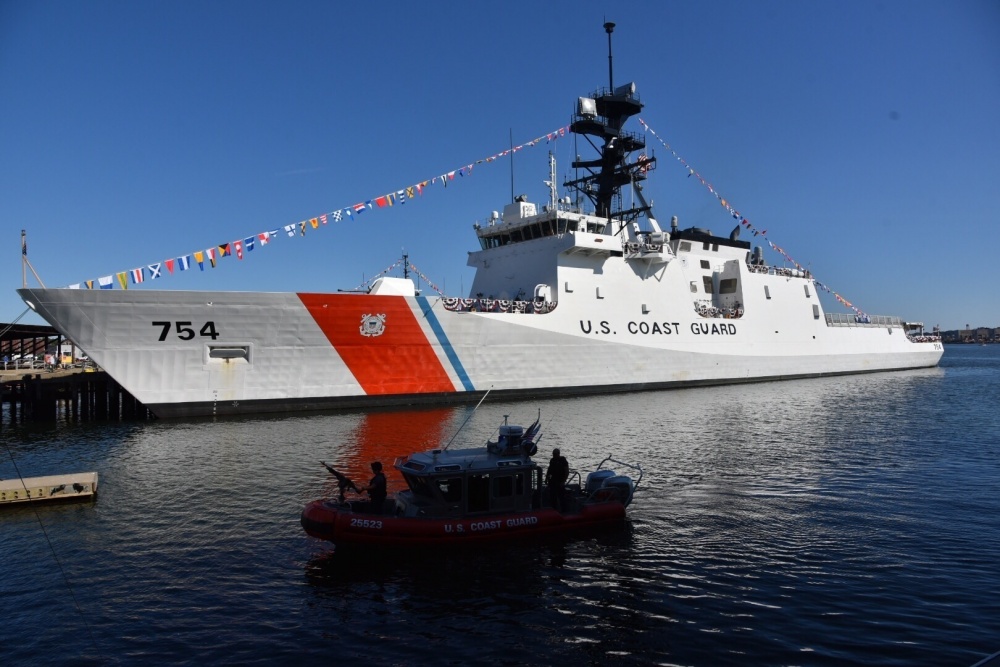
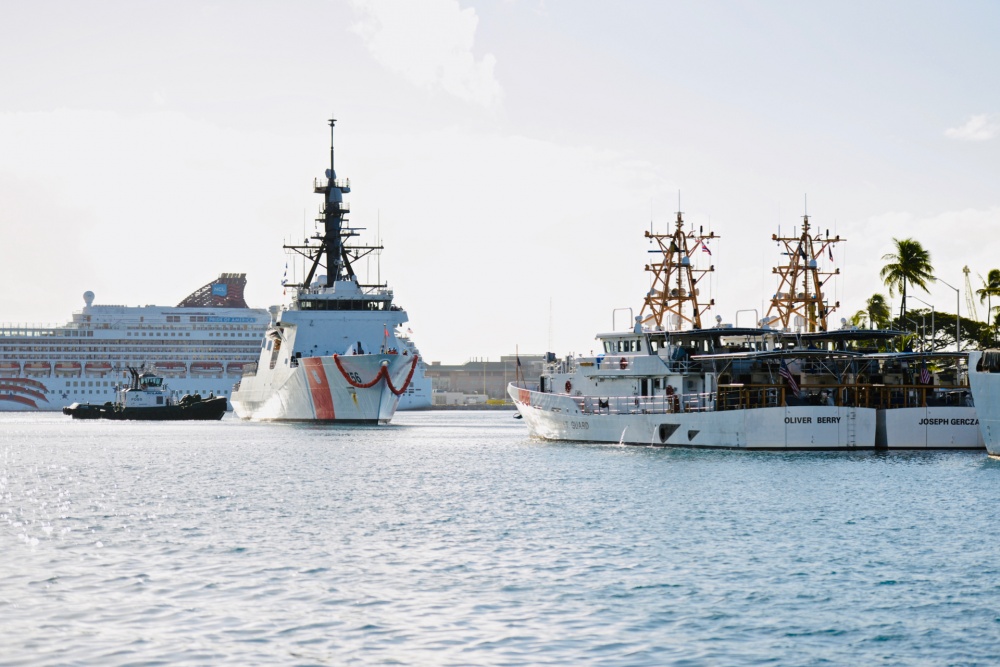
The crew of USCGC Kimball (WMSL 756) arrive in Honolulu for the first time Dec. 22, 2018. Known as the Legend-class, NSCs are designed to be the flagships of the Coast Guard’s fleet, capable of executing the most challenging national security missions, including support to U.S. combatant commanders. (U.S. Coast Guard photo by Chief Petty Officer Sara Muir/Released)

The Congressional Research Service has again updated their “Report to Congress on Coast Guard Cutter Procurement”. (This link will always take you to the most recent edition of the report.) My last post on this evolving document was in reference to an 8 June 2021 update. I have reproduced the one page summary in full below. But first,

Comments:

It appears this report is little changed from the previous edition. The significant change is a reflection of the actions of the House Appropriations Committee and this change is relatively small. The Administration’s FY2022 Procurement Funding Request was:

  • NSC (Bertholf Class) program   $78.0M
  • OPC (Argus Class) program    $597.0M
  • FRC (Webber Class) program   $20.0M
  • TOTAL                                      $695.0M

The House Appropriations Committee mark up increased the total to $716M adding $21M to the NSC program.

An explanation included in House Report 117-87 of July 15, 2021 states

“National Security Cutter (NSC).—The Committee provides $99,000,000, which is $21,000,000 above the request, for the NSC program. This funding will support Post Delivery Activities to missionize and operationalize NSCs 10 and 11. The shortfall for these activities is currently over $200,000,000. The $21,000,000 is funded in the bill as a rescission and re-appropriation of prior-year funds to extend their availability.” (Page 57)

So while construction of the eleven National Security Cutters have be funded, we can expect to see future funding requests totaling over $100M to make #10 and #11 fully operational.

The rescission referred to is from funds earmarked for long lead time items for a possible future NSC#12. This seems to put an end to any possibility of a NSC.

The House Appropriations Committee action leaves in place the Administration’s plan to fund OPC#4 and procure long lead time items for OPC#5, but adds no additional NSCs or FRCs.

Summary (Below is the one page summary contained in the report–Chuck)

The Coast Guard’s program of record (POR), which dates to 2004, calls for procuring 8 National Security Cutters (NSCs), 25 Offshore Patrol Cutters (OPCs), and 58 Fast Response Cutters (FRCs) as replacements for 90 aging Coast Guard high-endurance cutters, medium-endurance cutters, and patrol craft. The Coast Guard’s proposed FY2022 budget requests a total of $695.0 million in procurement funding for the NSC, OPC, and FRC programs, including $597 million for the OPC program.

NSCs are the Coast Guard’s largest and most capable general-purpose cutters; they are replacing the Coast Guard’s 12 Hamilton-class high-endurance cutters. NSCs have an estimated average procurement cost of about $670 million per ship. Although the Coast Guard’s POR calls for procuring 8 NSCs to replace the 12 Hamilton-class cutters, Congress through FY2021 has fully funded 11 NSCs, including the 10th and 11th in FY2018. In FY2020, Congress provided $100.5 million for procurement of long lead time materials (LLTM) for a 12th NSC, so as to preserve the option of procuring a 12th NSC while the Coast Guard evaluates its future needs. The Coast Guard’s proposed FY2022 budget requests $78.0million in procurement funding for activities within the NSC program; this request does not include further funding for a 12th NSC. The Coast
Guard’s proposed FY2022 budget also proposes rescinding $65.0 million of the $100.5 million in FY2020 funding for LLTM for a 12th NSC, “allowing the Coast Guard to focus investments on building, homeporting, and crewing Polar Security Cutters and Offshore Patrol Cutters.” The remaining $35.5 million appropriated in FY2020 for LLTM would be used to pay NSC program costs other than procuring LLTM for a 12th NSC. Nine NSCs have entered service; the ninth was commissioned into service on March 19, 2021.

OPCs are to be less expensive and in some respects less capable than NSCs; they are intended to replace the Coast Guard’s 29 aged medium-endurance cutters. Coast Guard officials describe the OPC and PSC programs as the service’s highest acquisition priorities. OPCs have an estimated average procurement cost of about $411 million per ship. The first OPC was funded in FY2018. The Coast Guard’s proposed FY2022 budget requests $597.0 million in procurement funding for the fourth OPC, LLTM for the fifth, and other program costs. On October 11, 2019, the Department of Homeland Security (DHS), of which the Coast Guard is a part, announced that DHS had granted extraordinary contractual relief to Eastern Shipbuilding Group (ESG) of Panama City, FL, the builder of the first four OPCs, under P.L. 85-804 as amended (50 U.S.C. 1431-1435), a law that authorizes certain federal agencies to provide certain types of extraordinary relief to contractors who are encountering difficulties in the performance of federal contracts or subcontracts relating to national defense. The Coast Guard is holding a full and open competition for a new contract to build OPCs 5 through 15. On January 29, 2021, the Coast Guard released a Request for Proposals (RFP) for this Stage 2 contract, as it is called. Responses to the RFP were due by May 28, 2021. The Coast Guard plans to award the Stage 2 contract in the second quarter of FY2022.

FRCs are considerably smaller and less expensive than OPCs; they are intended to replace the Coast Guard’s 49 aging Island-class patrol boats. FRCs have an estimated average procurement cost of about $65 million per boat. A total of 64 have been funded through FY2021, including four in FY2021. Six of the 64 are to be used by the Coast Guard in the Persian Gulf and are not counted against the 58-ship POR quantity for the program, which relates to domestic operations. Forty-four of the 64 have been commissioned into service. The Coast Guard’s proposed FY2022 budget requests $20.0 million in procurement funding for the FRC program; this request does not include funding for any additional FRCs.

“Coast Guard continues providing lifesaving support to Haiti following 7.2 earthquake” News Release

Just passing this along.

united states coast guard

Multimedia Release

U.S. Coast Guard 7th District Southeast
Contact: 7th District Public Affairs
Office: 305-415-6683
After Hours: 305-202-3735
7th District online newsroom

Coast Guard continues providing lifesaving support to Haiti following 7.2 earthquake

Coast Guard responds to Haiti for humanitarian aid following 7.2 earthquake

Editor’s Note: Click on images to download high-resolution video.

Coast Guard responds to Haiti with humanitarian aid 2

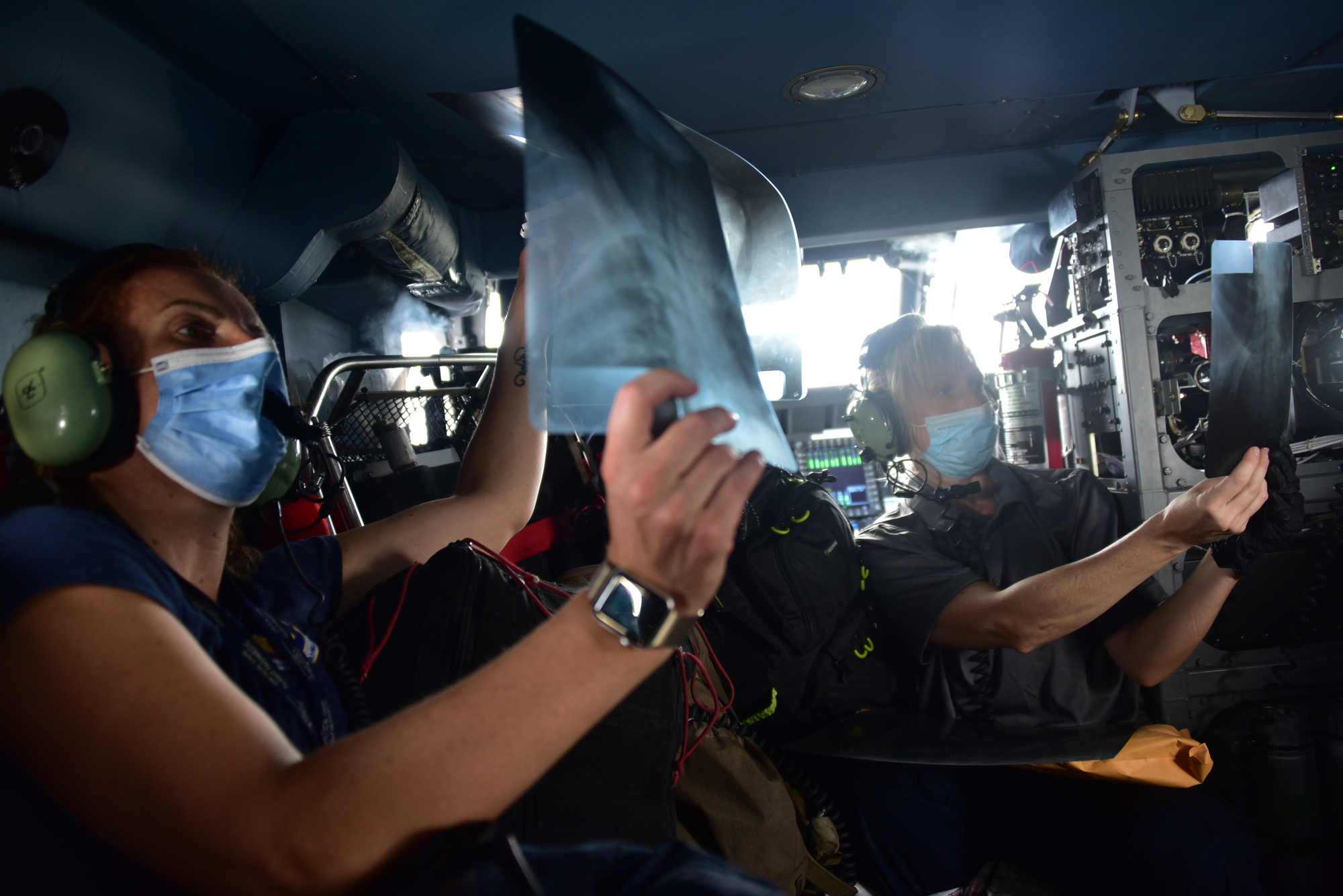
Coast Guard members share supplies with Haitian civilians in Haiti, Aug. 17, 2021. Coast Guard helicopters and aircrews are transporting medical personnel and evacuating those requiring higher levels of care. (U.S. Coast Guard photo by Lt. David Steele) U.S. Coast Guard Air Station Clearwater helicopter crew members embark a critically injured Haitian citizen requiring a higher level of care from an impacted area in Haiti, Aug. 17, 2021. Coast Guard helicopters and aircrews are transporting medical personnel and evacuating those requiring higher levels of care. (U.S. Coast Guard photo by Lt. David Steele)

A Coast Guard Air Station Clearwater C-130 on the tarmac in Guantanamo, Cuba, Aug. 17, 2021. Air crews awaited the passing of poor weather in order to continue patrol flights in support of Coast Guard Operations in Haiti. (U.S. Coast Guard photo by Lt. David Steele)

Editor’s Note: Click on images to download high-resolution version.

MIAMI — The Coast Guard continues humanitarian efforts in impacted areas of Haiti following a magnitude 7.2 earthquake, Saturday. 

“On August 15, at the request of the Haitian Government, the Coast Guard surged aircraft and personnel to help critically injured patients from impacted areas to Port au Prince where they may obtain higher levels of care,” said Coast Guard Seventh District Commander, Rear Adm. Brendan C. McPherson. “Additionally, we are coordinating with USAID and U.S. Southern Command to move urban search and rescue responders, medical personnel and supplies to impacted areas. Our crews are trained and empowered to use sound on-scene initiative to judge the risks as they respond to the most urgent requests for help. Our people have a true bias for action and know how to lead through a crisis.”
Coast Guard efforts from Sunday to Monday evening include more than:

  • 38 Coast Guard members deployed
  • 34 aviation evolutions
  • 51 people saved
  • 12 people assisted
  • 72 Fairfax County Fire Department’s urban search and rescue crews, USAID Disaster Assistance Response Teams, medical personnel and first responders transported
  • 5,500 pounds of medical supplies transported

Coast Guard assets includes:

  • Two Coast Guard Air Station Clearwater MH-60 Jayhawk helicopter aircrews
  • Coast Guard Air Station Borinquen MH-60 Jayhawk helicopter aircrew
  • Coast Guard Air Station Miami HC-144 Ocean Sentry aircrew
  • Coast Guard Air Station Clearwater HC-130 Hercules aircrew
  • Coast Guard Cutter Reliance
  • Coast Guard Cutter Winslow Griesser
  • Coast Guard Cutter Margaret Norvell

For more breaking news follow us on Twitter and Facebook.

Multimedia Release: Coast Guard responds to Haiti for humanitarian aid following 7.2 earthquake

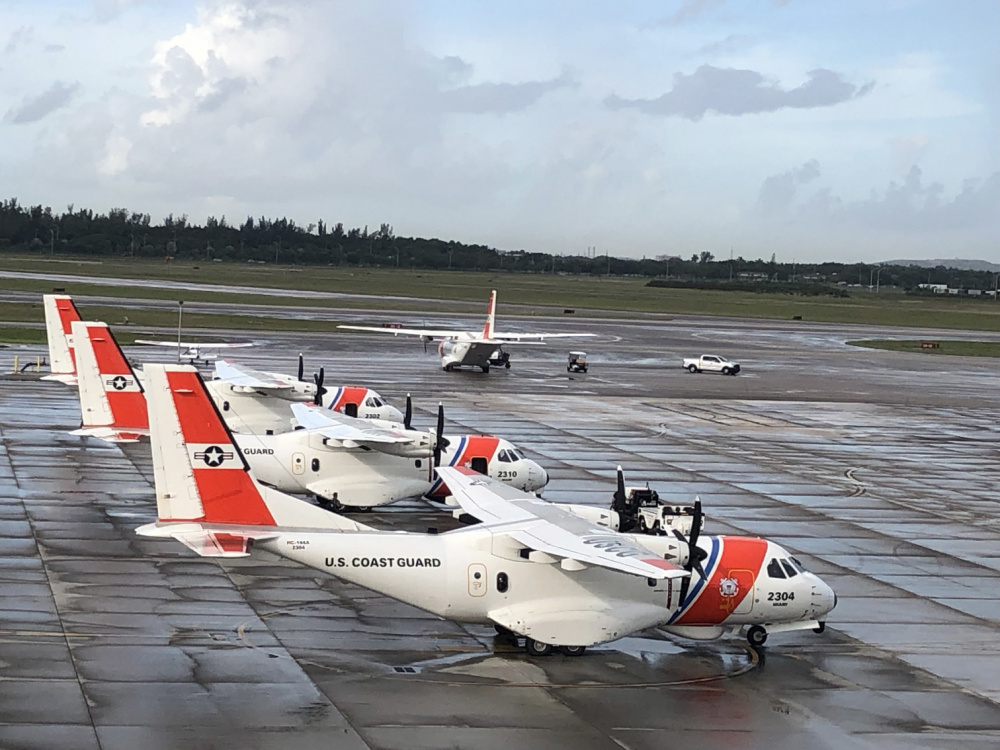
Coast Guard HC-144 Ocean Sentries at Air Station Miami are staged to deploy to Haiti to assist in response efforts, Opa-locka, Florida, Aug. 15, 2021. The Coast Guard committed numerous aircraft and surface ships to assist and surge to support critical live saving missions. (U.S. Coast Guard photo)

Figured the Coast Guard had responded to the Earth Quake in Haiti. Some info in this news release from D7.

Multimedia Release: Coast Guard responds to Haiti for humanitarian aid following 7.2 earthquake

Multimedia Release

U.S. Coast Guard 7th District 

Coast Guard responds to Haiti for humanitarian aid following 7.2 earthquake

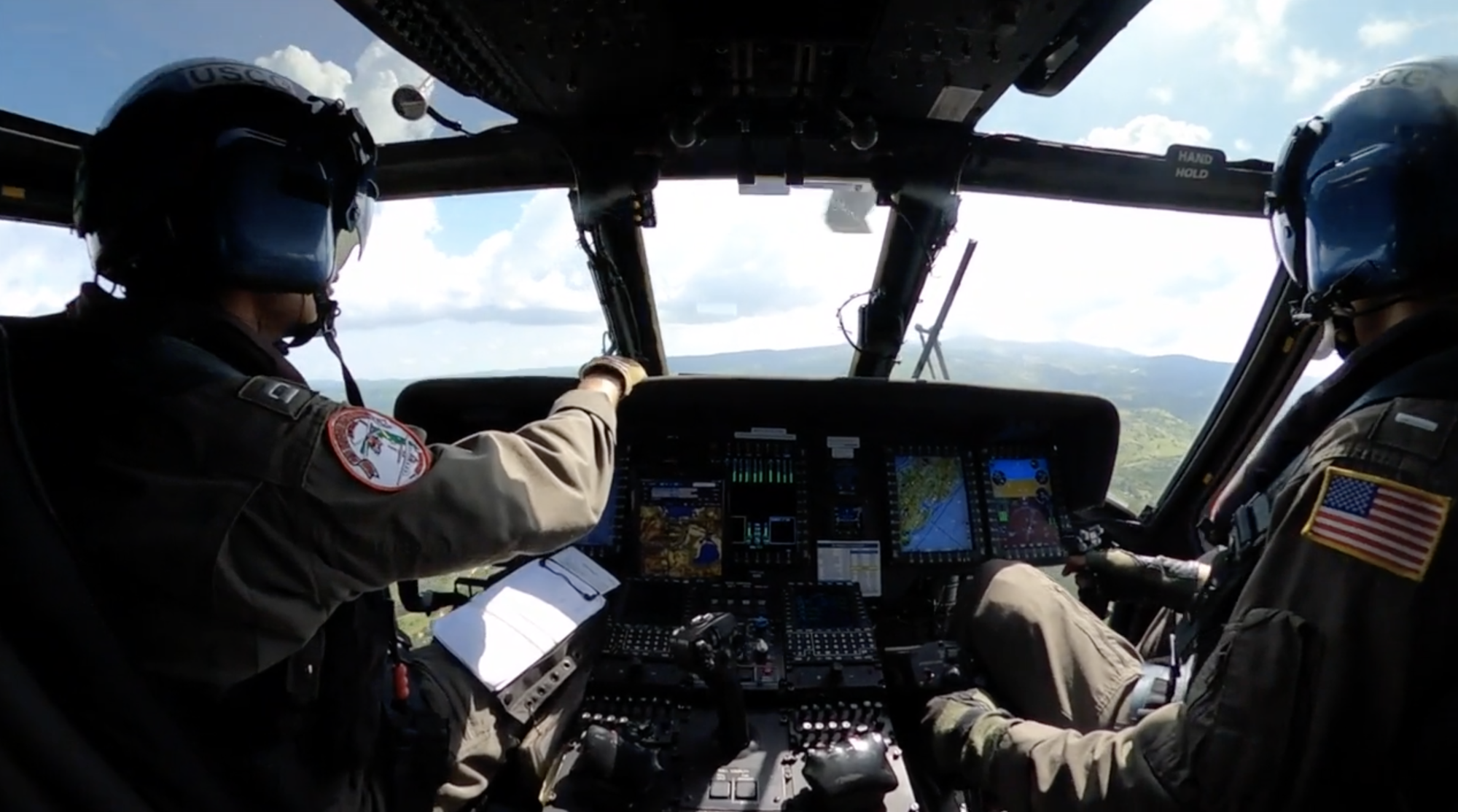
A Coast Guard aircrew member transports a critically injured child to emergency medical services, Port au Prince, Haiti, Aug. 15, 2021. U.S. Coast Guard forward deployed Jayhawk helicopter crews are from Air Station Clearwater, Florida. (U.S. Coast Guard photo by Lt. David Steele) Video of Air Station Miami HC-144 Ocean Sentry crew taking off from Opa-locka, Florida to Haiti, Aug. 15, 2021. Our helicopters and aircrews are transporting medical personnel and evacuating those requiring higher levels of care. (U.S. Coast Guard video by Lt. Cmdr. Corey McPartlin)

Editor’s Note: Click on images to download high-resolution video.

Coast Guard HC-144 Ocean Sentry crews from Air Station Miami load the plane with gear for operations in Haiti, Opa-Locka, Florida, Aug. 15, 2021. The Coast Guard committed numerous aircraft and surface ships to assist and surge to support critical live saving missions. (U.S. Coast Guard photo) Coast Guard HC-144 Ocean Sentry flight crew members prepare and load the aircraft for deployment to Haiti, Opa-locka, Florida, Aug. 15, 2021. Our helicopters and aircrews are transporting medical personnel and evacuating those requiring higher levels of care. (U.S. Coast Guard photo) Coast Guard Air Station Miami HC-144 Ocean Sentry crews are preparing to deploy to Haiti, Opa-locka, Florida, Aug. 15, 2021. Aircraft was reconfigured for medical transport. (U.S. Coast Guard photo)
Coast Guard HC-144 Ocean Sentries at Air Station Miami are staged to deploy to Haiti to assist in response efforts, Opa-locka, Florida, Aug. 15, 2021. The Coast Guard committed numerous aircraft and surface ships to assist and surge to support critical live saving missions. (U.S. Coast Guard photo) A Coast Guard air crew member helps transport a critically injured child from the helicopter to awaiting emergency medical services at Port au Prince, Haiti, Aug. 15, 2021. U.S. Coast Guard forward deployed Jayhawk helicopter crews are from Air Station Clearwater, Florida. (U.S. Coast Guard photo by Lt. David Steele) A Coast Guard aircrew member gives water to an injured Haitian citizen waiting to be transported to emergency medical services, Port au Prince, Haiti, Aug. 15, 2021. U.S. Coast Guard forward deployed Jayhawk helicopter crews are from Air Station Clearwater, Florida. (U.S. Coast Guard photo by Lt. David Steele) Coast Guard members and Haiti emergency medical services members remove a critically injured Haitian citizen from the helicopter, Port au Prince, Haiti, Aug. 15, 2021. U.S. Coast Guard forward deployed Jayhawk helicopter crews are from Air Station Clearwater, Florida. (U.S. Coast Guard photo by Lt. David Steele)
A Coast Guard MH-60 Jayhawk helicopter aircrew stands by on the tarmac to transport medical personnel and supplies in Port-au-Prince, Haiti, Aug. 15, 2021. U.S. Coast Guard forward-deployed Jayhawk helicopter crews are from Air Station Clearwater, Florida. (U.S. Coast Guard photo by Lt. David Steele) Haiti's government requested U.S. Coast Guard assistance following a magnitude 7.2 earthquake in Port-au-Prince, Haiti, Aug. 15,2021. U.S. Coast Guard forward-deployed Jayhawk helicopter crews are from Air Station Clearwater, Florida.  (U.S. Coast Guard photo by Lt. David Steele) A medical team is being transported in a Coast Guard helicopter to Port au Prince, Haiti, Aug. 15, 2021. U.S. Coast Guard forward deployed Jayhawk helicopter crews are from Air Station Clearwater, Florida. (U.S. Coast Guard photo by Lt. David Steele) U.S. Coast Guard aircrews evacuating injured citizens to higher lever of care facilities in Port-au-Prince, Haiti, Aug.15,2021. U.S. Coast Guard forward-deployed Jayhawk helicopter crews are from Air Station Clearwater, Florida.  (U.S. Coast Guard photo by Lt. David Steele)

Editor’s Note: Click on images to download high-resolution version.

MIAMI — Haitian’s government requested Coast Guard assistance following a magnitude 7.2 earthquake. The Coast Guard committed numerous air and surface assets to help in transporting medical personnel and supplies, and transporting critically injured citizens to facilities needing a higher level of care in Port au Prince, Haiti.  

“On behalf of the United States Coast Guard I express our deepest sympathies to the people of Haiti,” said Coast Guard District Seven Commander, Adm. Brendan McPherson. “Our hearts go out to our Haitian diaspora here in Miami and to those tragically impacted in Haiti. We are supporting USAID humanitarian relief efforts, U.S. Southern Command’s ENDURING PROMISE, and coordinating closely with Ambassador Sison and her country-team to assist in every way that we can. Our helicopters and aircrews are transporting medical personnel and evacuating those requiring higher levels of care. Our cutters remain offshore and on standby to assist the citizens of Haiti and to support agency response locally. Our unity of effort, our commitment to our neighbors, and our ability to lead through a crisis will help see us all through this tragic event.”

For more breaking news follow us on Twitter and Facebook.

“Alameda-based Coast Guard cutter arrives in Western Pacific for months-long deployment”–PACAREA

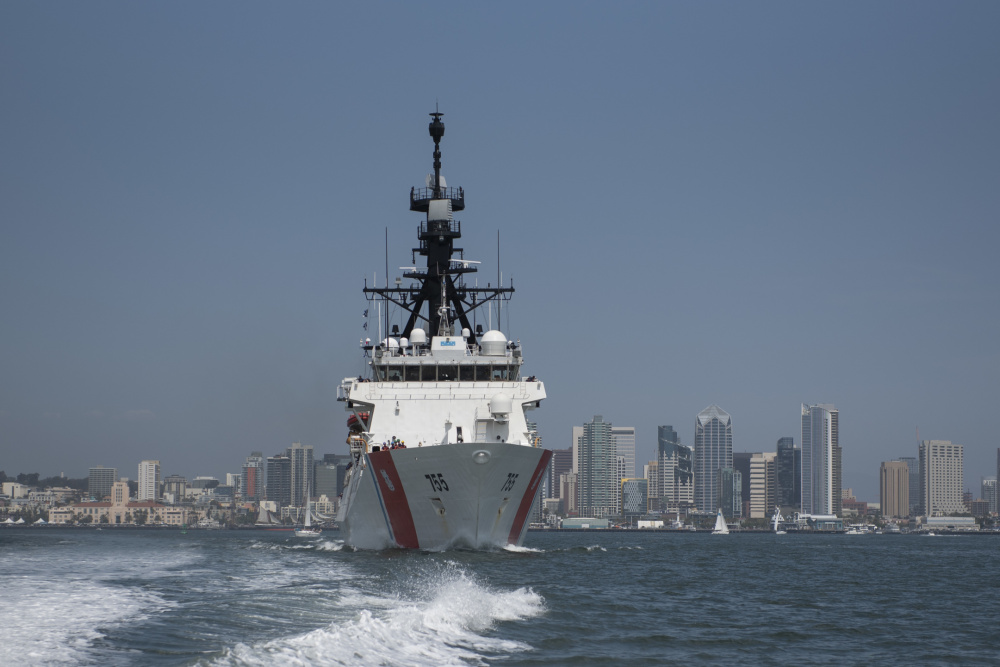
Coast Guard Cutter Munro gets underway July, 23, 2021, for a scheduled deployment in the Western Pacific Ocean. An increased presence throughout the Indo-Pacific strengthens our alliances and partnerships through improved interoperability, which will enhance regional stability, promote rule-based order, and improve maritime governance and security in the region and globally. (U.S. Coast Guard photo by Marine Corps Sgt. Kevin G. Rivas)

Below is a Pacific Area news release. Another unusual deployment though it looks like it may be becoming more routine.

united states coast guard

News Release

U.S. Coast Guard Pacific Area

Alameda-based Coast Guard cutter arrives in Western Pacific for months-long deployment

Photo of USCGC Munro Photo of fast-roping Photo of training
Photo of boat crew Photo of training Photo of training

Editors’ Note: Click on images to download high resolution versions. Subscribe here to receive notifications when new photographs from the deployment are added to the DVIDS feature page.

ALAMEDA, Calif. – The Legend-class Cutter Munro (WMSL 755) arrived in the Western Pacific Sunday from its homeport in Alameda for a months-long deployment to the region.

The crew is operating in support of United States Indo-Pacific Command, which oversees military operations in the region.

Operating under the tactical control of Commander, 7th Fleet, the cutter crew plans to engage in professional exchanges and capacity-building exercises with partners and allies and will patrol and operate as directed.

“Forward-deployed Naval Forces routinely and seamlessly integrate as one maritime force with a proud heritage of serving and fighting together,” said Vice Adm. Karl Thomas, commander U.S. 7th Fleet. “It is a fitting nod to that heritage that Munro joins us following the U.S. Coast Guard celebration of its 231st birthday on August 4.”

The Coast Guard’s deployment to the Indo-Pacific theater aligns with the Integrated All-Domain Naval Power of the Naval Service and increases the traditional influence of sea power regionally.

“The U.S. Coast Guard’s unique authorities, capabilities, and missions position us to collaborate on maritime safety and security with partners around the world,” said Vice Adm. Michael F. McAllister, commander, Coast Guard Pacific Area. “An increased presence throughout the Indo-Pacific strengthens our alliances and partnerships through improved interoperability, which will enhance regional stability, promote rules-based order, and improve maritime governance and security in the region and globally.”

Coast Guard forces provide expertise within the mission sets of search and rescue; illegal, unreported, and unregulated fishing; maritime environmental response; maritime security; and humanitarian assistance and disaster relief. Deployable Coast Guard cutters, port security units, and advanced interdiction teams are also highly capable in augmenting naval operations in theater.

As both a federal law enforcement agency and an armed force, the Coast Guard is uniquely positioned to conduct defense operations and security cooperation in support of combatant commanders on all seven continents. The service routinely provides forces in joint military operations worldwide, including the deployment of cutters, boats, aircraft and deployable specialized forces.

The U.S. Coast Guard has a 150-year enduring role in the Indo-Pacific. The service’s ongoing deployment of resources to the region directly supports U.S. foreign policy and national security objectives in the Indo-Pacific Strategy and the National Security Strategy.

Commissioned in 2017, Munro is one of four Coast Guard legend class national security cutters homeported in Alameda. National security cutters are 418-feet long, 54-feet wide, and have a 4,600 long-ton displacement. They have a top speed in excess of 28 knots, a range of 12,000 nautical miles, endurance of up to 90 days and can hold a crew of up to 170. Munro is the second cutter named for Signalman First Class Douglas A. Munro, the only Coast Guardsman awarded the Congressional Medal of Honor.

National security cutters feature advanced command and control capabilities, aviation support facilities, stern cutter boat launch and increased endurance for long-range patrols to disrupt threats to national security further offshore.

Since 2018, three other Coast Guard Cutters – Bertholf, Stratton and Waesche – have deployed to the Western Pacific.

“U.S. Coast Guard patrols U.S. Arctic” –D17 News Release

The Coast Guard Cutter Midgett and the Canadian coast guard ship Sir Wilfrid Laurier conduct a joint maritime security patrol in the Chukchi Sea on July 20, 2021. US Coast Guard photo.

Below is a D17 news release. If Midgett is in the Chukchi Sea, which is North of the Bering Strait and all above the Arctic Circle, this is no normal Alaska Patrol. Midgett also got to rendezvous with USCGC Healy, which is conducting a circumnavigation of North America (more Healy photos here).  (I don’t recognize the type boat below, presume it is one of Healy’s boats, any info appreciated.)

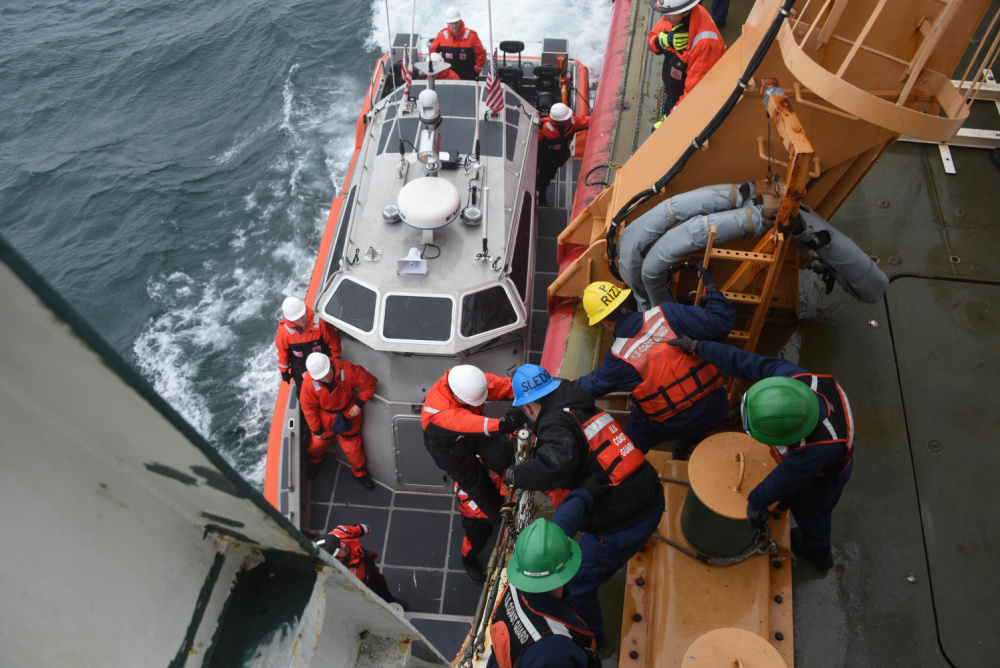
Coast Guard Cutter Healy crew members assist Coast Guard Cutter Midgett crew members while they climb aboard from the cutter boat in the Bering Strait, July 25, 2021. The Midgett is a national security cutter that ensures U.S. presence to assure U.S. sovereignty and resource security in remote Pacific regions. U.S. Coast Guard photo by Petty Officer 3rd Class Janessa Warschkow.

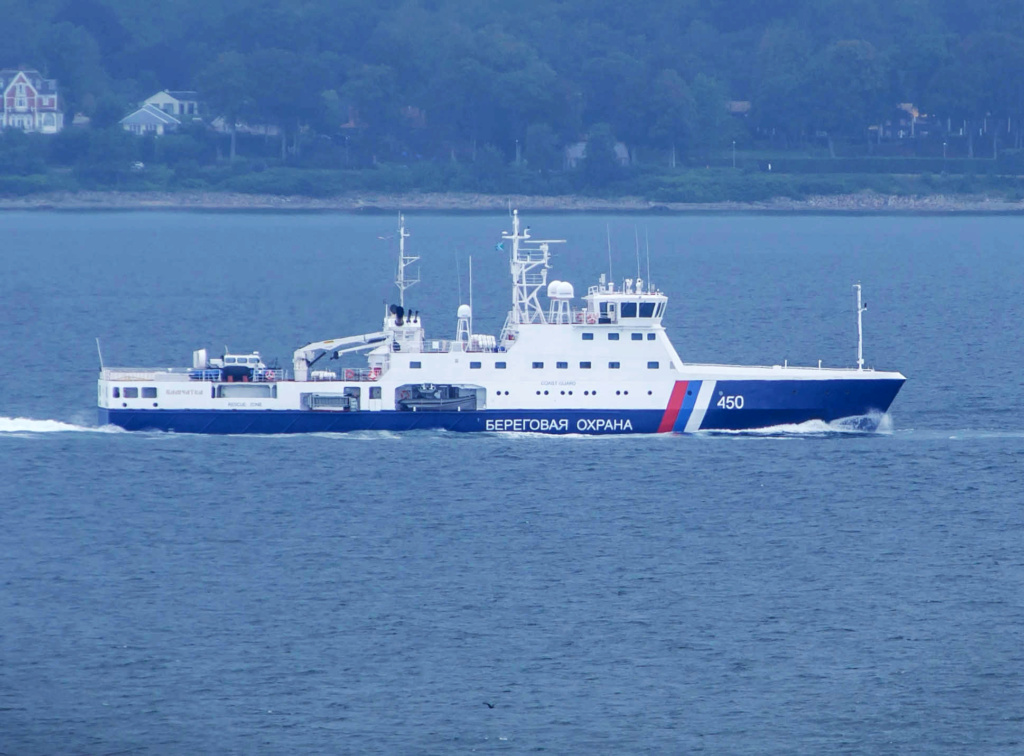
The Russian patrol ship Kamchatka, mentioned in the story, is pictured below. It is a member of the 1066 ton Purga class.

The Kamchatka border patrol ship (serial number 052) of project 22120 of the Coast Guard of the Russian Federal Border Guard Service crosses the Öresund Strait, heading from the Baltic Sea to the North, 08/20/2019 (c) frankmh

News Release

U.S. Coast Guard 17th District Alaska

U.S. Coast Guard patrols U.S. Arctic

JUNEAU, Alaska — Crews aboard Coast Guard Cutters Midgett and Healy patrolled the Bering and Chukchi Seas off the coast of Alaska this summer to demonstrate the Coast Guard’s commitment to ensuring a safe and secure Arctic and to work respectively with Canadian and Russian counterparts on shared maritime interests. 

In late July, the crew of Coast Guard Cutter Midgett, one of the Service’s National Security Cutters, conducted combined operations and training with the Canadian coast guard Ship Sir Wilfrid Laurier in the Chukchi Sea, a joint patrol of the U.S.-Russia maritime boundary north of the Diomede Islands with the Russian Border Guard vessel Kamchatka, and a joint transit of the Bering Strait with the Coast Guard Cutter Healy, one of the service’s two operational polar icebreakers. In each case, Coast Guard Air Station Kodiak crews forward-deployed to Kotzebue, Alaska in an HC-130J Hercules airplane supported the operations.

The simultaneous presence of Healy and Midgett in the Arctic region signals the increasing demand for the merged icebreaking and maritime security capability required of future Polar Security Cutters.

Midgett is the Coast Guard’s eighth National Security Cutter and is homeported in Honolulu. Featuring advanced command-and-control capabilities, national security cutters are the flagship of the Coast Guard’s fleet, deploying globally to confront national security threats, strengthen maritime governance, and promote economic prosperity. While National Security Cutters possess advanced operational capabilities, more than 70% of the Coast Guard’s offshore presence is the service’s aging fleet of medium endurance cutters, many of which are over 50 years old and approaching the end of their service life. Replacing the fleet with new Offshore Patrol Cutters is one of the Coast Guard’s top acquisition priorities. The first Offshore Patrol Cutter is scheduled to be delivered in 2022.

Healy is a medium icebreaker capable of conducting a wide range of Coast Guard operations including search and rescue, ship escorts, environmental protection, and enforcement of laws and treaties in the polar regions. Uniquely equipped to conduct scientific operations, Healy is also the Nation’s premiere high-latitude research vessel. Healy is the only U.S. military surface vessel that routinely deploys to the ice-covered waters of the Arctic to provide access and secure national interests related to our maritime borders and natural resources.  Check here for photo updates from Healy’s Arctic deployment or subscribe to receive updates in your inbox here.

Russian Coast Guard Website

Project 22460, new version of Rubin. Armed with one 57mm gun and two 30mm guns (in the turret of the Taifun-VDV).

If you are interested in the Russian Coast Guard, I ran across a website that seems to have a lot of information. It is definitely a pro-Russian site. You may want to be careful about clicking on any of the photos, my software stopped a “malicious download.”

“Coast Guard Station Scituate closure will have a ‘dire effect,’ South Shore officials warn” –WickedLocal

Obviously people like having the Coast Guard around. It seems the Coast Guard is again attempting to close “redundant” stations, in this case the seasonal station at Scituate, Massachusetts, situated between Boston and Plymouth. You can see the typical result here.

February 2020, we had a similar story.

Thanks to Paul for bringing this to my attention. 

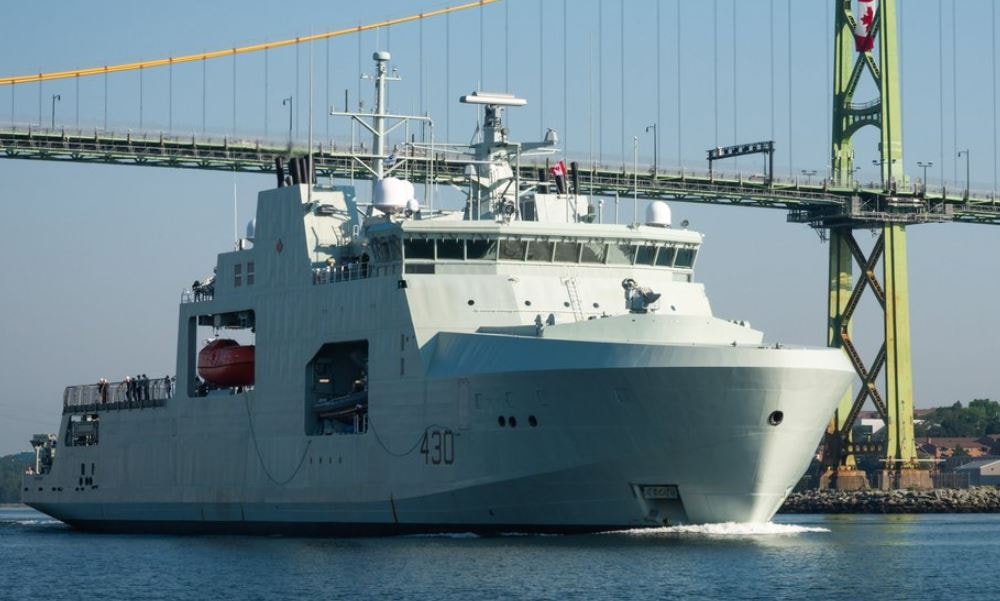
“Royal Canadian Navy HMCS Harry DeWolf Departs On Her Maiden Operational Deployment” –Naval News

HMCS Harry DeWolf, leaving HMC Dockyard in Halifax and steaming under Angus L. Macdonald
suspension bridge crossing Halifax Harbour in Nova Scotia, Canada

Naval News reports the first of Canada’s planned eight Arctic Offshore Patrol Ships (AOPS) (six for their Navy and two for their Coast Guard) departed on its first operational deployment on August 3. The deployment is expected to take four months and will include participation in the annual Nanook Exercise with partners including the USCG, transit of the North West Passage, counter clockwise circumnavigation of North America, and drug operations in the Eastern Pacific transit zone and the Caribbean again in cooperation with the USCG.

USCGC Healy departed for a clockwise circumnavigation of North America on July 10. Presumably these two will arrange to say hello as they pass. Hopefully both crews will be home by Christmas.

“A NEW U.S. NAVY PLANNING MODEL FOR LOWER-THRESHOLD MARITIME SECURITY OPERATIONS” –CIMSEC

CIMSEC has published a two part discussion of planning for Maritime Security Operations written by retired US Coast Guard Captain Andrew Norris.

Much of the discussion is about the inadequacies of the current planning guidance. It picks up in Part 2 with a discussion of the “Constraint-Restraint-Enabler-Imperative (C-R-E-I) Model.”

While written as guidance for the planner, it might also serve as a checklist for the operator, as he prepares execute Maritime Security Operation. Have constraints, restraints, enablers, and imperatives been identified and are they adequately understood? Has training in these consideration been adequate? Do I have everything I need to implement and exploit the enablers?

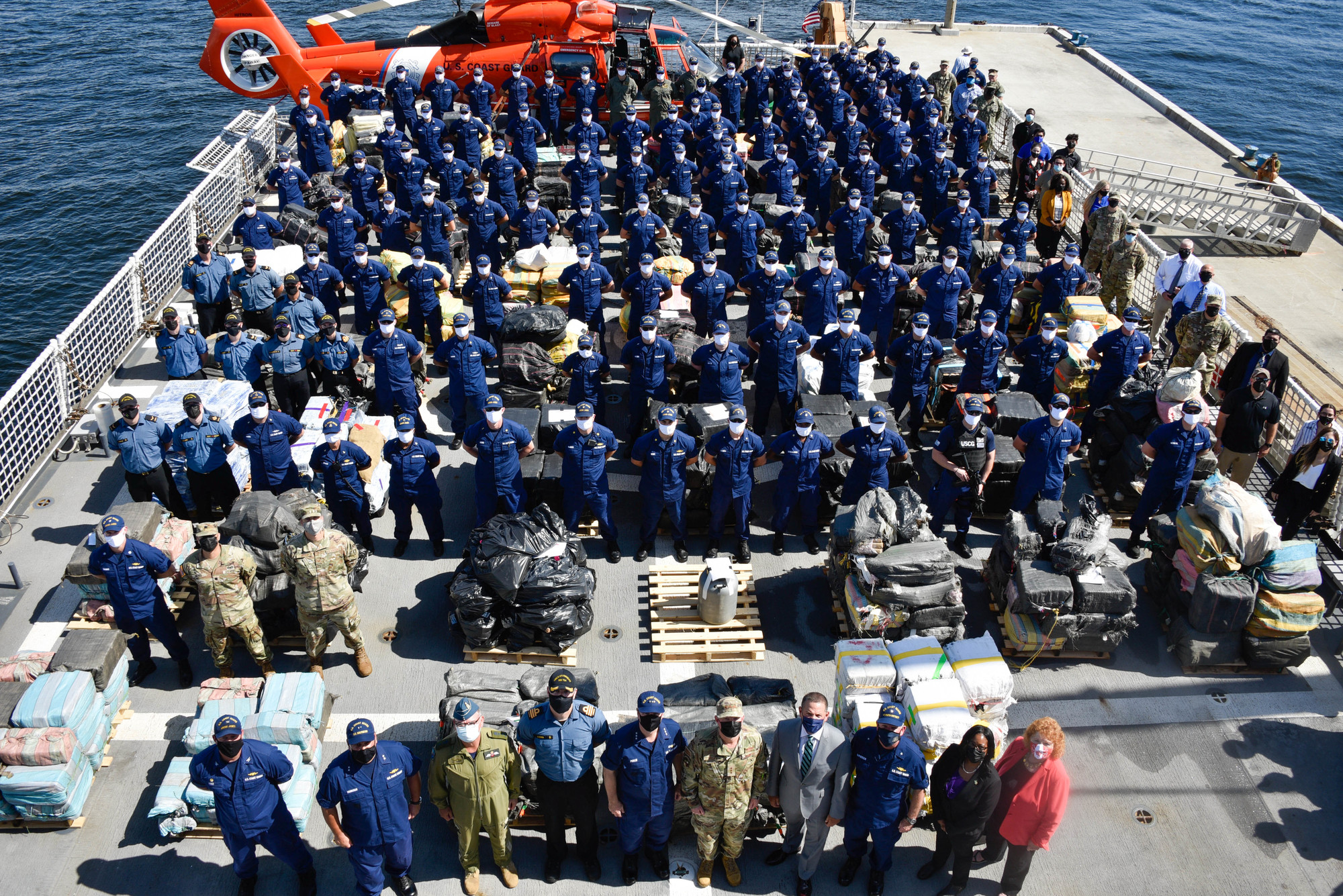
“Coast Guard Cutter James conducts largest illegal narcotic offload in Coast Guard history worth more than $1.4 billion at Port Everglades” –News Release

The Coast Guard Cutter Joshua James moored during its commissioning ceremony at Base Boston, Aug. 8, 2015. The Cutter Joshua James is a 418-foot National Security Cutter that will be homeported in Charleston, S.C. (Coast Guard photo by Petty Officer 2nd Class Patrick Kelley)

Below is a news release from District Seven. I don’t normally pass these along, but this one is a bit unusual, in the quantity of the offload and the ships involved in the 27 seizures or recoveries.

Almost 30 tons of Cocaine, plus a bit of Marijuana, and it came from the usual locations, “international waters of the Eastern Pacific Ocean off the coasts of Mexico, Central and South America, and the Caribbean Sea.

All the ships involved here came from the Atlantic side. All four WMECs and the three LCS involved were all based in Florida. This reminds us that, using the Panama Canal, the Eastern Pacific drug transit zones are actually closer to Florida than to California.

It may be significant that the three Navy ships are all Freedom class LCS, which up until now seem to have had more than their share of problems, yet they appear to have succeeded here. On the other hand it may be that this is the least demanding type of deployment they can do.

Nice to see recognition for our Dutch and Canadian friends as well. The Canadian ship is actually smaller than a 210. The Dutch ship is in many ways similar to the Offshore Patrol Cutter, only slightly smaller with a much smaller crew.

united states coast guard 
Multimedia Release U.S. Coast Guard 7th District Southeast

Coast Guard Cutter James conducts largest illegal narcotic offload in Coast Guard history worth more than $1.4 billion at Port Everglades
234      Editor’s Note: Due to Defense Visual Information Distribution Service experiencing technical difficulties, we are unable to provide a full-resolution link to our images.

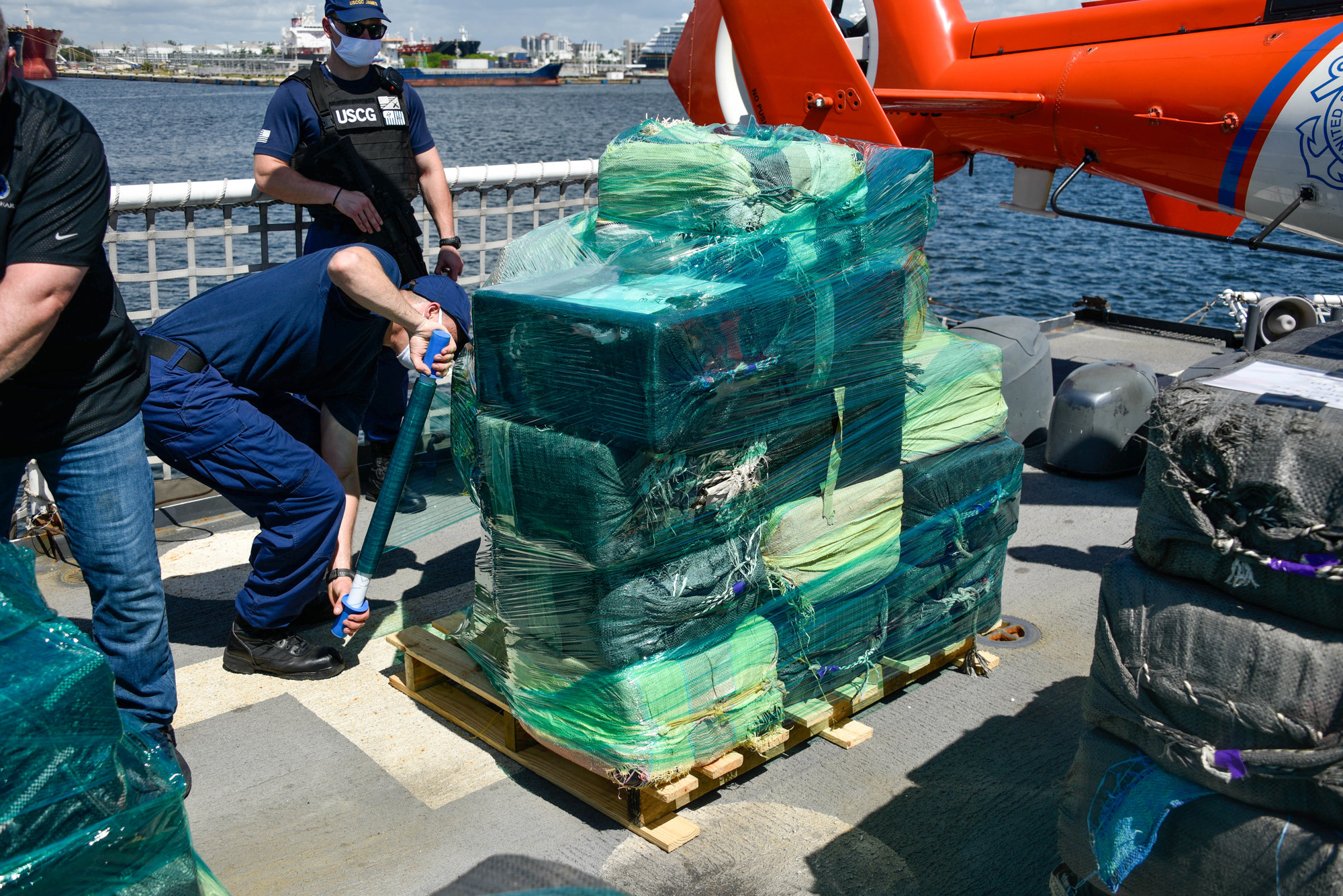
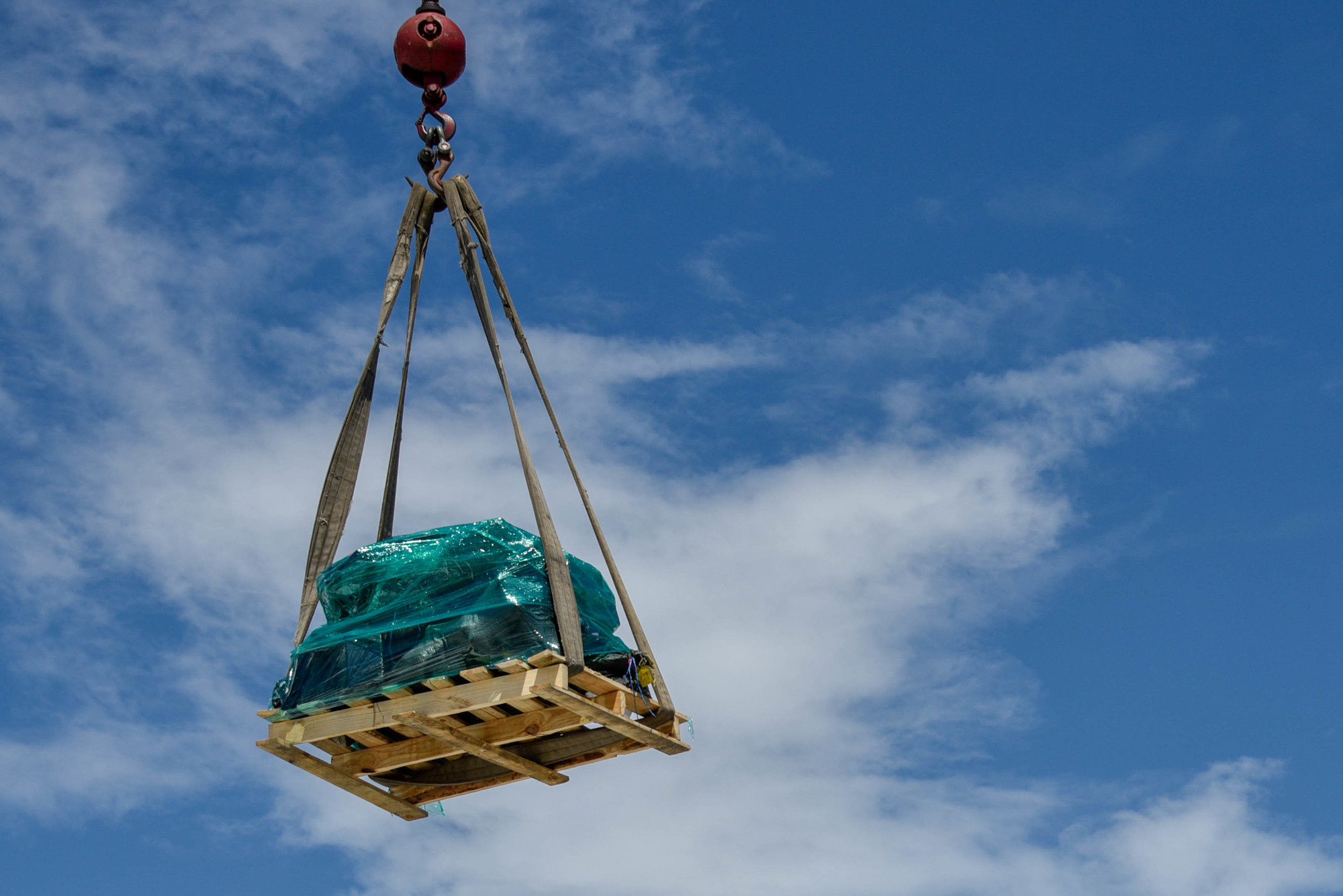
MIAMI — Coast Guard Cutter James’ crew offloaded approximately 59,700 pounds of cocaine and 1,430 pounds of marijuana worth more than $1.4 billion, Thursday, at Port Everglades, which is the largest offload in Coast Guard history.

The Coast Guard’s strong international relationships, with key partners like Canada and the Netherlands, along with our specialized capabilities and unmatched authorities, allow for a unity of effort to disrupt transnational crime organizations, which threaten America and our partner nations.

“Today’s offload is a result of our combined efforts of our inter-agency partners and a dedicated international coalition,” said Vice Adm. Steven Poulin, Commander Atlantic Area. “The Canadian government and Canadian Defence Forces brings an incredible capability in defeating transnational organized crime, and I’m grateful to HMCS Shawinigan to showcase Canada’s commitment. Together we will disrupt, defeat and degrade transnational organized crime. We will strengthen our efforts and continue to build collaboration and capability.”

“Canada and America are committed to expanding cooperation on defending North America against illicit trafficking and transnational crime and working together within our alliances,” said Maj. Gen. Paul Ormsby, Canadian Defence Attache. “We know that no nation can do it alone, and we know that we are stronger together. The kind of cooperation that we see on the pier today is one of the thousands of impressive examples of cooperation every day.

“The drugs were interdicted in international waters of the Eastern Pacific Ocean off the coasts of Mexico, Central and South America, and the Caribbean Sea including contraband seized and recovered during 27 interdictions of suspected drug smuggling vessels by 10 American, Dutch and Canadian ships:

Coast Guard Cutter James
Coast Guard Cutter Mohawk
Coast Guard Cutter Dauntless
Coast Guard Cutter Thetis
Coast Guard Cutter Confidence 
USS Wichita
USS Sioux City
USS Billings
HNLMS Holland (I added the link for this one–Chuck)
HMCS Shawinigan

Numerous U.S. agencies from the Departments of Defense, Justice and Homeland Security cooperated in the effort to combat transnational organized crime. The Coast Guard, Navy, Customs and Border Protection, FBI, Drug Enforcement Administration, and Immigration and Customs Enforcement, along with allied and international partner agencies, play a role in counter-drug operations. The fight against drug cartels in the Eastern Pacific Ocean requires unity of effort in all phases from detection, monitoring and interdictions, to criminal prosecutions by U.S. Attorneys in districts across the nation.

During at-sea interdictions, a suspect vessel is initially detected and monitored by allied, military or law enforcement personnel coordinated by Joint Interagency Task Force-South based in Key West, Florida. The law enforcement phase of counter-smuggling operations in the Eastern Pacific is conducted under the authority of the Coast Guard 11th District, headquartered in Alameda, California. The interdictions, including the actual boardings, are led and conducted by members of the U.S. Coast Guard.

The fight against drug cartels in the Eastern Pacific Ocean and the Caribbean Sea requires unity of effort in all phases from detection, monitoring and interdictions, to criminal prosecutions by international partners and U.S. Attorneys’ Offices in districts across the nation. The law enforcement phase of counter-smuggling operations in the Eastern Pacific Ocean is conducted under the authority of the Coast Guard 11th District, headquartered in Alameda, California, and the law enforcement phase of operations in the Caribbean is conducted under the authority of the Coast Guard 7th District, headquartered in Miami. The interdictions, including the actual boardings, are led and conducted by members of the U.S. Coast Guard. 

The cutter James is a 418-foot national security cutter home ported in Charleston, South Carolina. The cutter Mohawk is a 270-foot medium endurance cutter home ported in Key West, Florida. The cutter Dauntless is a 210-foot medium endurance cutter homeported in Pensacola, Florida. The cutter Thetis is a 270-foot medium endurance cutter homeported in Key West, Florida. The cutter Confidence is a 210-foot medium endurance cutter homeported in Port Canaveral, Florida. The USS Wichita is a 378-foot freedom-class littoral combat ship homeported in Naval Station Mayport, Florida. The USS Sioux City is a 378-foot Freedom-class littoral combat ship homeported in Naval Station Mayport, Florida. The USS Billings is a 378-foot Freedom-class littoral combat ship homeported in Naval Station Mayport, Florida. The Royal Netherlands Navy HNLMS Holland is a 356-foot Holland-class offshore patrol vessel homeported in Den Helder, Netherlands. The HMCS Shawinigan is a 181-foot Kingston-class coastal defence vessel homeported in Halifax, Canada. For more breaking news follow us on Twitter and Facebook.